Bohol is the island I send people to when they want the Philippines to deliver on every front at once. In a single easy trip you can stand in front of a thousand cocoa-coloured hills, hold your breath while a tarsier the size of your fist blinks at you from a branch, drift down a jungle river behind a plate of grilled fish, and still be back on a white-sand beach in time for sunset. This Bohol Philippines travel guide is the one I wish someone had handed me before my first visit: what to do, when to go, how to get there, where to stay, what it honestly costs in 2026, and the trade-offs that the tour brochures quietly leave out.
The short version: Bohol is a big, friendly island in the central Visayas that packs an absurd amount into a small space. Its little sister island, Panglao — joined by a bridge and home to the airport — handles the beaches, the diving and most of the hotels, while the Bohol mainland holds the Chocolate Hills, the tarsiers, the river and the old Spanish-era churches. You can see the famous stuff in two days, slow down and enjoy it in three or four, and happily disappear for a week if you push out to the quieter east coast. It is one of the most rewarding first islands in the country, and it pairs naturally with neighbouring Cebu just across the water.

Bohol Philippines: an island that does a bit of everything
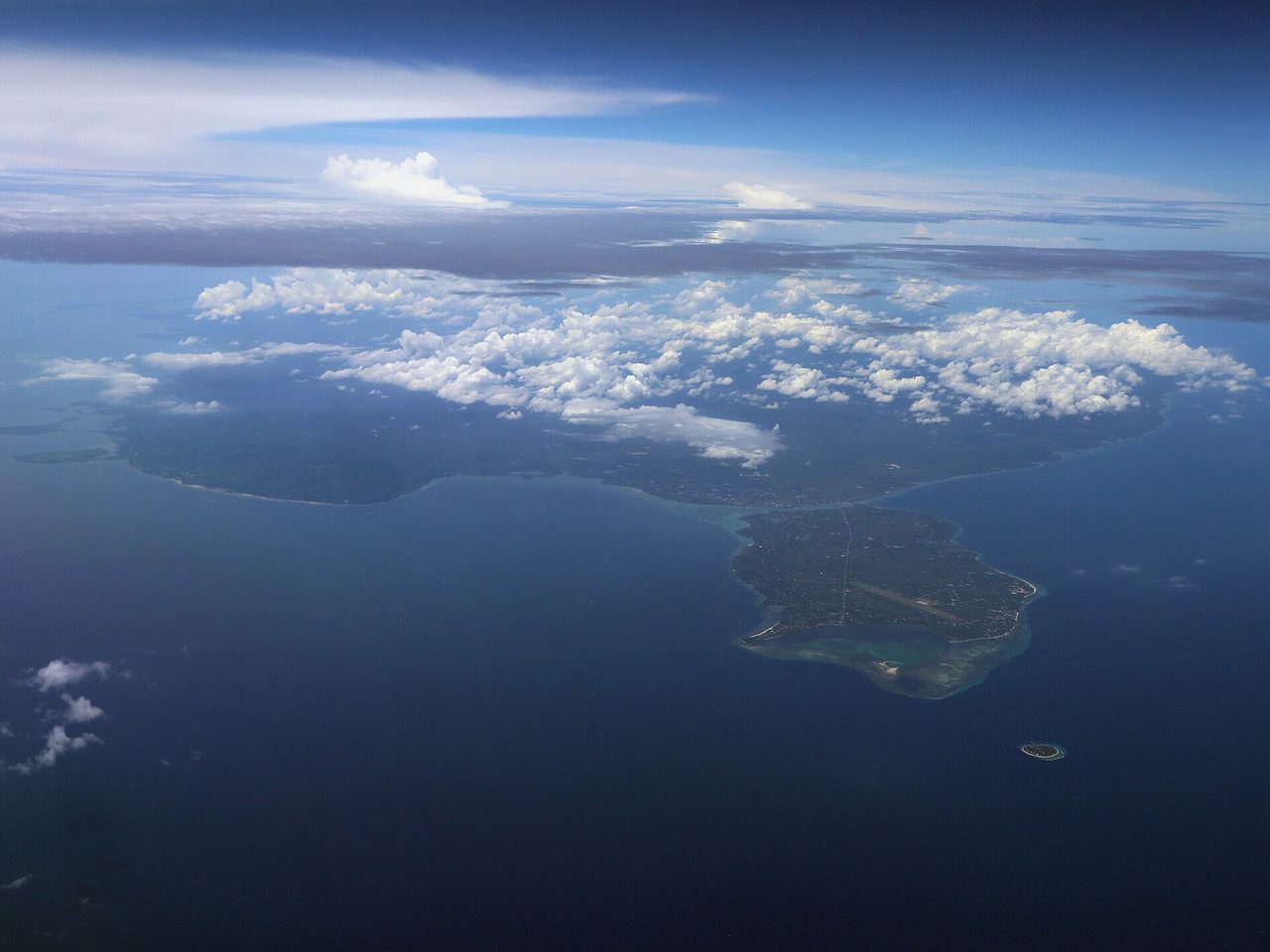
Bohol sits in the heart of the Visayas, the cluster of islands in the middle of the Philippine archipelago, a couple of hours by fast ferry from Cebu City. The provincial capital, Tagbilaran, is a workaday port city most travellers pass straight through; the action is split between Panglao Island in the south-west (beaches, dive shops, resorts) and the green interior of the main island (hills, river, tarsiers, rice country). The whole province was declared the Philippines’ very first UNESCO Global Geopark in 2023, recognition of a landscape built on ancient uplifted coral reef — which is exactly why it’s riddled with caves, springs and those improbable hills.
What keeps Bohol on my short list of the best islands in the Philippines is the range. Most Philippine islands are good at one thing — surfing, or diving, or partying, or doing nothing. Bohol quietly does land and sea, nature and culture, big-ticket sights and lazy beach days, and it does them within an hour’s drive of each other on genuinely good roads. That makes it forgiving for first-timers, easy with kids, and a reliable second stop after the chaos of Manila or alongside a Cebu trip.
It is worth knowing the recent history, because some older guides still carry a whiff of disaster about the place. In October 2013 a magnitude-7.2 earthquake struck Bohol, killing more than 200 people and collapsing several of the island’s centuries-old stone churches. In December 2021, Typhoon Odette (Rai) raked across the Visayas and did fresh damage. Both chapters are essentially closed on the ground in 2026: the churches have been painstakingly rebuilt, the resorts are long since repaired, and the island feels prosperous and busy again. The visible legacy is mostly in the heritage churches, where you can still see the old and the reconstructed stone side by side.
The best things to do in Bohol
Here are the Bohol tourist spots worth your time, roughly in the order I’d work them into a first trip. The classic move is to spend one day on a “countryside” loop of the mainland sights (hills, tarsiers, river, churches) and another day or two on Panglao for the beach, the diving and an island-hopping boat. You can book the countryside loop as a packaged tour, but hiring your own car-and-driver or renting a scooter gives you the freedom to dodge the crowds, and it’s where Bohol is at its best.
The Chocolate Hills
These are the reason most people have heard of Bohol: somewhere between 1,200 and 1,800 near-identical grass-covered mounds (the official count is 1,776) spread across the centre of the island, each one a rounded cone 30 to 120 metres high. In the wet season they’re green; through the dry months from roughly February to May the grass browns off and they turn the chocolate-truffle colour that gave them their name. Geologically they’re weathered limestone — that old uplifted reef again — though I’m fond of the local legend about two feuding giants hurling boulders at each other and never cleaning up.
The main viewing deck is the Chocolate Hills Complex in Carmen, about 55 km and 90 minutes from Panglao, where a stairway climbs to a 360-degree viewpoint over the densest field of hills. Entrance is small, around ₱100–150 (under US$3) in 2026. The single best piece of advice I can give you is about timing: come for sunrise or late afternoon, not the middle of the day. Between about 11am and 1pm the light is flat, the heat is brutal and the tour buses are stacked three-deep in the car park. At golden hour you get soft light, long shadows that make the cones pop, and a fraction of the crowd. There’s a second, quieter viewpoint at Sagbayan Peak if Carmen is heaving.
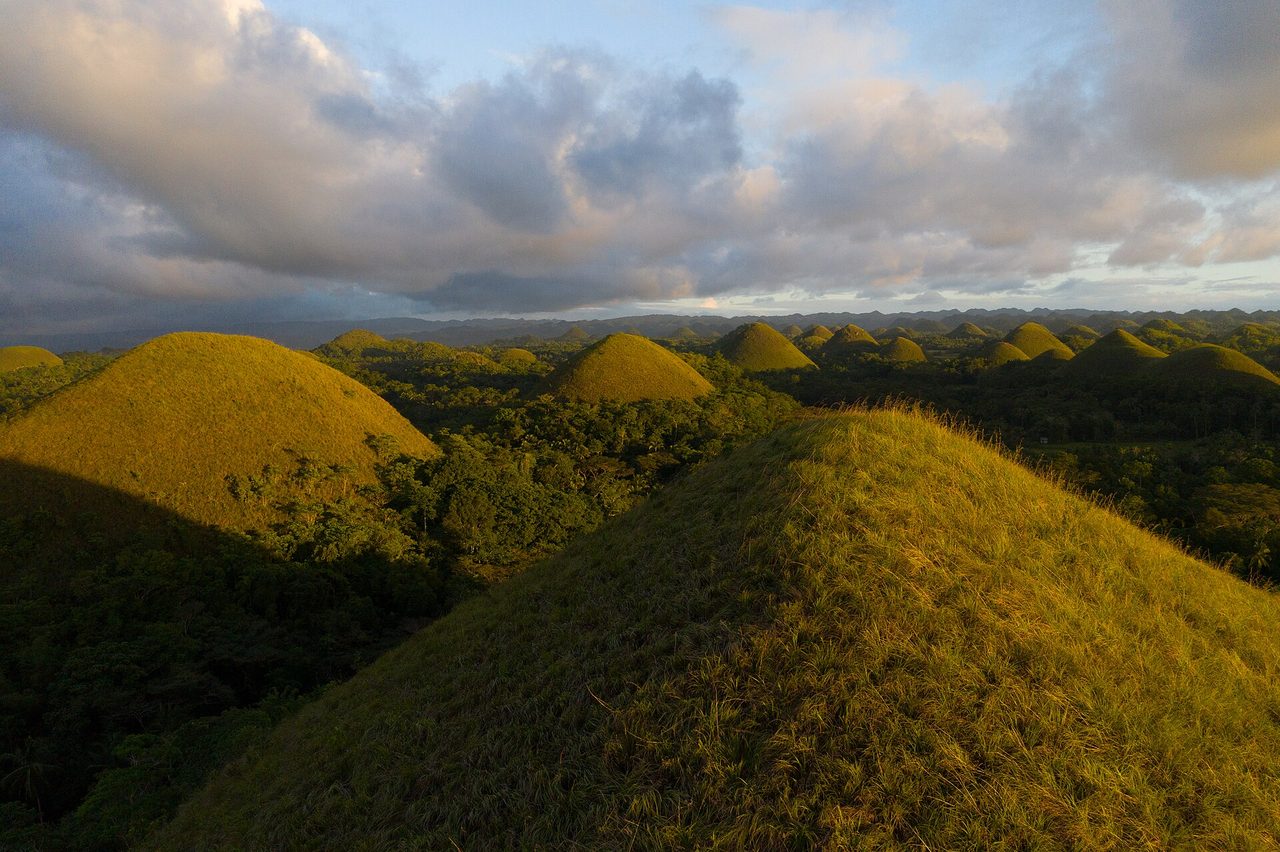
One honest, current note. In 2024 a resort called Captain’s Peak, built years earlier right in the middle of the protected Chocolate Hills landscape near Sagbayan, went viral and triggered a national outcry over how it ever got permits inside a protected area and a UNESCO Geopark. Regulators ordered it shut, business permits were pulled, and in 2025 the national Ombudsman dismissed the local mayor and several officials over the affair. The resort has stayed closed. It’s a useful reminder that the Philippines is still figuring out how to protect its headline landscapes from the tourism boom that sights like this generate — and a small argument for visiting the official complex rather than chasing private “secret viewpoint” deals.
Seeing the tarsiers — and doing it ethically
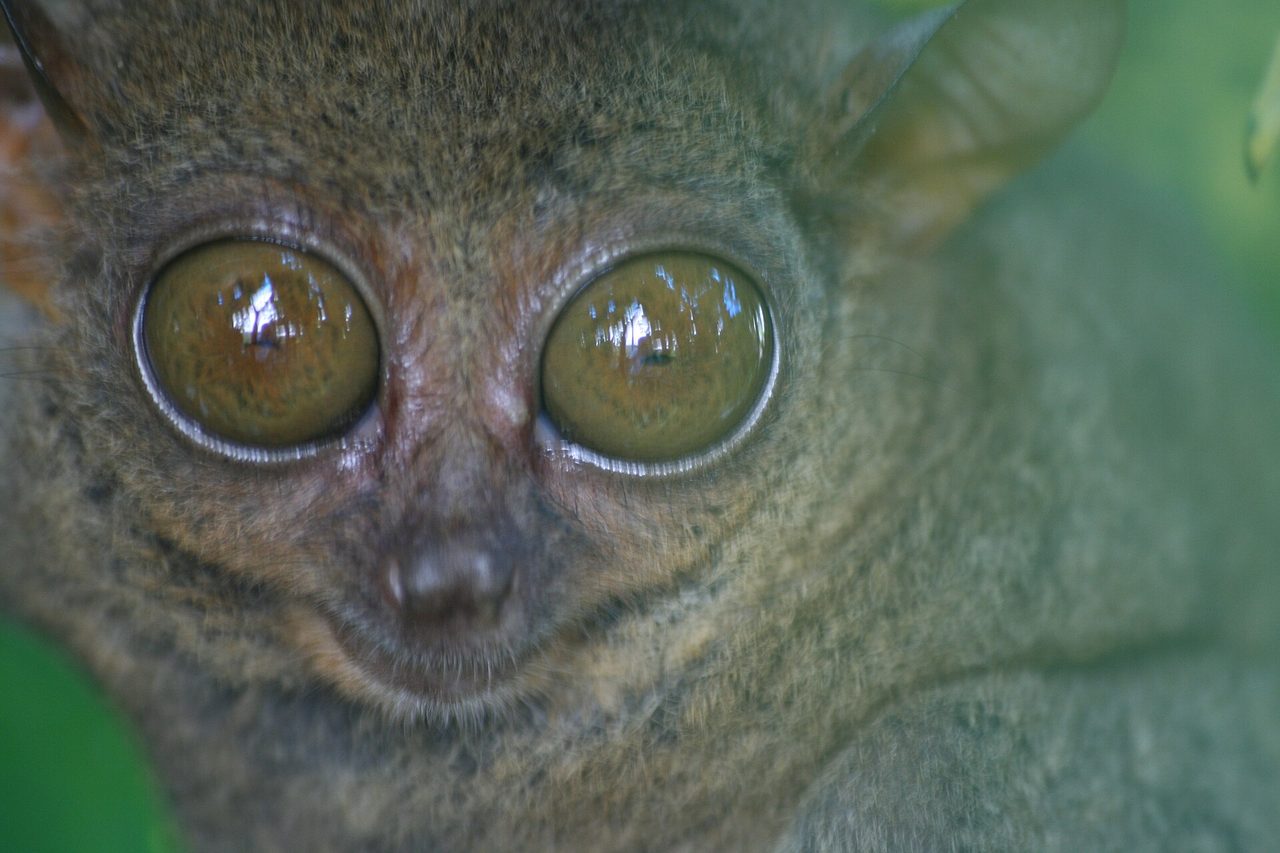
The Philippine tarsier is one of the smallest primates on earth: a saucer-eyed, twig-fingered ball of fur that fits in a human palm, with eyes so large (each is bigger than its brain) that it can’t move them in their sockets and instead swivels its head almost all the way round, owl-style. They’re nocturnal, which is the whole ethical crux of visiting them. By day they’re trying to sleep, clinging to a branch, and they are acutely sensitive to noise, touch and camera flash. Stressed tarsiers in captivity are known to injure themselves, and their lifespans drop sharply.
So where you go matters enormously. Visit the Philippine Tarsier & Wildlife Sanctuary in Corella, run by the Philippine Tarsier Foundation, where the animals live in a protected patch of forest and guides walk you quietly along a trail to spot a handful resting in the trees, with strict rules: no flash, no touching, hushed voices. Entrance is about ₱150. Avoid the roadside “tarsier” operations around Loboc that hand-place stressed animals on branches at eye level for photos — they look convenient on a countryside tour, but you’re paying to harm the thing you came to admire. If your tour includes a Loboc tarsier stop, ask to swap it for Corella; a good operator will oblige.
The Loboc River cruise
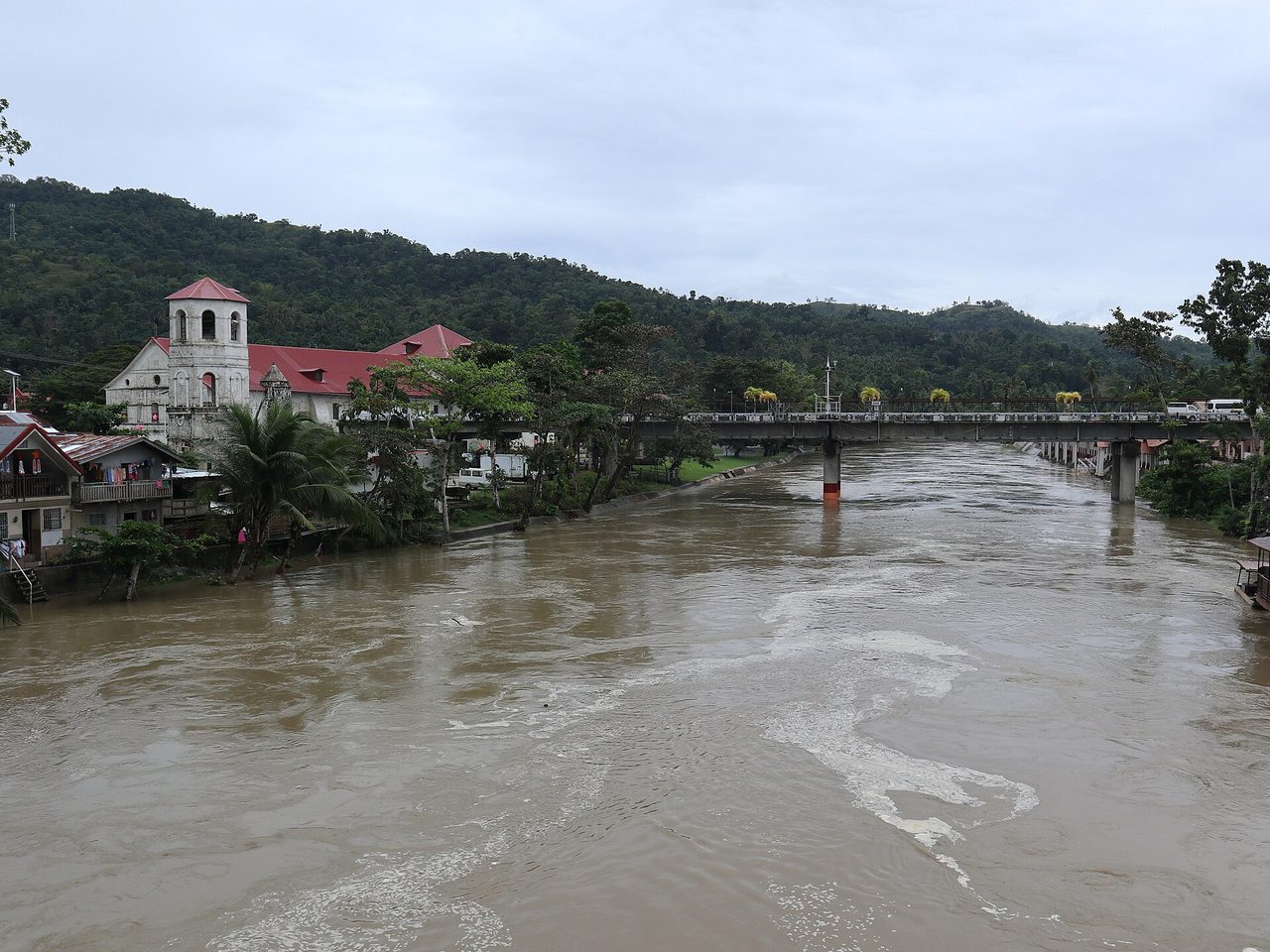
About 45 minutes inland from Panglao, the jade-green Loboc River threads through coconut country, and the classic way to see it is aboard a floating-restaurant raft: you board near the old Loboc church, drift upstream to a small waterfall and back over an hour or so, eat a Filipino buffet lunch of grilled fish, chicken and rice, and get serenaded by a live local band. It is unapologetically touristy and I still think it’s worth doing once, especially in a group or with kids — the scenery is genuinely lovely and the whole thing runs about ₱850–1,000 (roughly US$15–18) including the meal. For something quieter, some operators run paddleboard and kayak trips on the same river, and there’s an evening firefly-watching cruise downstream near the river mouth.
The countryside loop: man-made forest, churches and rice terraces
Strung along the road between Loboc and the Chocolate Hills are the supporting cast of the countryside tour, and a couple of them are highlights in their own right. The Bilar Man-Made Forest is a two-kilometre stretch of densely planted mahogany that arches over the highway into a cool green tunnel — it’s a free roadside photo stop, and on a scooter, riding through it is one of those small, perfect travel moments. It costs nothing and takes ten minutes.

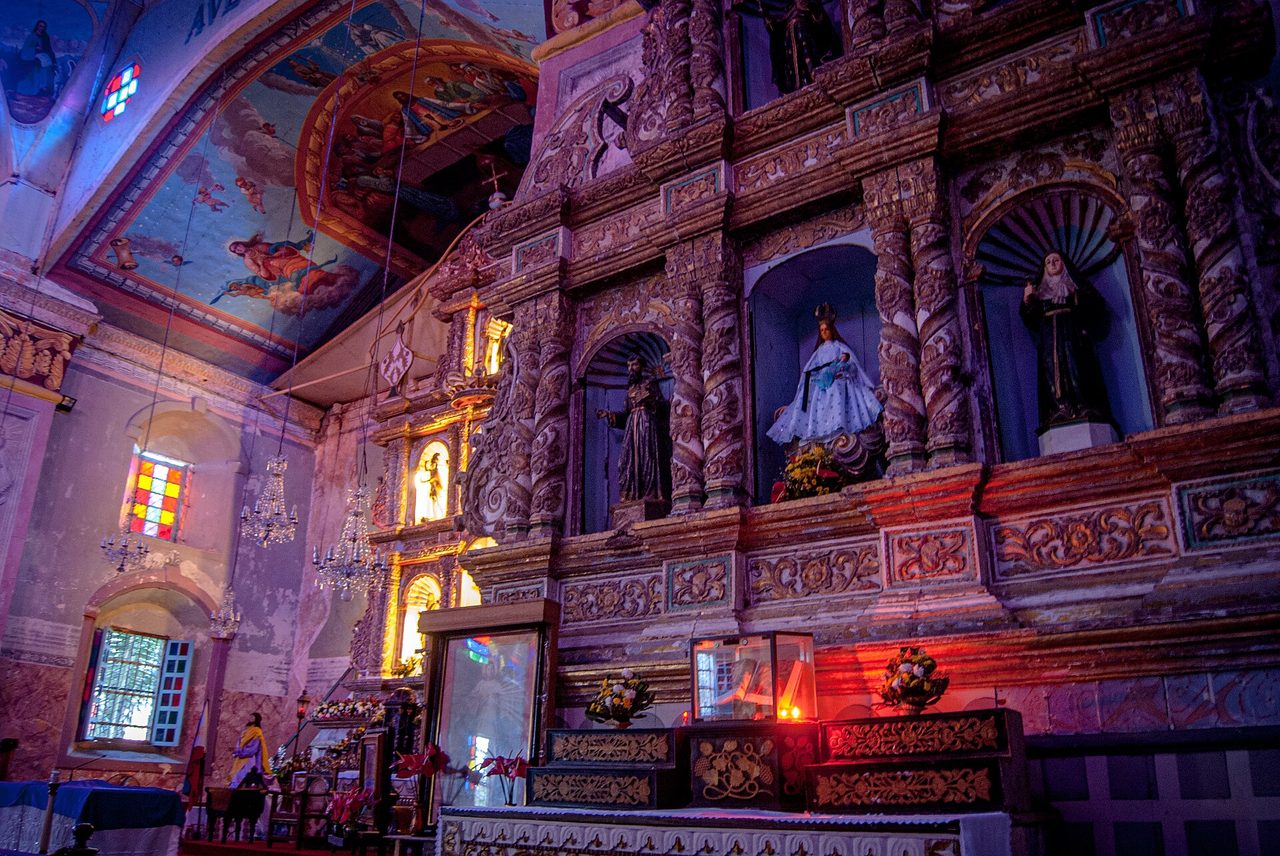
Bohol’s Spanish-colonial churches are the island’s cultural anchor. The Baclayon Church, parts of which date to the early 1700s, is one of the oldest stone churches in the country, built from coral blocks bound with lime mortar and egg white; it was badly damaged in the 2013 earthquake and has since been restored, with a small museum of religious relics alongside. The Loboc and Loon churches were also hit hard and rebuilt. Even if you’re not the church-touring type, they’re a moving record of how much the quake took and how carefully it was put back.
For the energetic, the road east climbs into proper countryside: the Cadapdapan rice terraces near Candijay, with the tall Can-umantad Falls tumbling below them, and the Danao Adventure Park, where “The Plunge” canyon swing fires you out over a 200-metre gorge. These are a full day from Panglao and best saved for a longer trip, but they’re where you leave the tour buses behind.
Panglao: Alona Beach and the better beaches behind it
Panglao is where you’ll likely sleep, eat and swim. Alona Beach is its beating heart: a 1.5 km curve of white sand backed by a wall of dive shops, beach bars and restaurants, with outrigger boats lined up on the sand waiting to take you island-hopping. It’s lively, convenient and a little overdeveloped — the strip can feel busy at night and the swimming area gets crowded with moored boats — but it’s the easy, sociable base, and the sunsets are excellent.

If Alona feels too much, the quieter, wider beaches are a short ride away on the same island. Dumaluan and Bingag beaches to the east have longer stretches of sand and a calmer, more local feel; Momo and Bikini beaches are small and pretty. Many of the bigger resorts sit on these calmer shores, with Alona kept as the night-out option a ten-minute trike ride away. For a guide to how Bohol’s sand stacks up nationally, it earns a place among the best beaches in the Philippines, even if it isn’t quite Palawan.
Balicasag, Virgin Island and the island-hopping boat
The signature Panglao day out is the early-morning island-hopping tour, and the star is Balicasag Island, a marine sanctuary about 45 minutes offshore with steep coral walls, resident sea turtles and, if you’re lucky, a swirling “tornado” of jackfish. It’s one of the best easy-access dive and snorkel sites in the country — reason enough that Bohol features on any serious list of where to go diving in the Philippines.
Two things to know for 2026. First, Balicasag is now strictly capped to protect the reef: the snorkelling areas take a limited number of visitors per day and the dive sites fewer still, so on a busy morning boats queue for a slot. The practical upshot is simple — go early, ideally on the first boats out, and book a day or two ahead in high season. Second, the classic tour usually bundles Balicasag with a dawn dolphin watch in the strait and a stop at Virgin Island (Pungtud), a long white sandbar that’s genuinely beautiful at low tide but has become a floating market of vendors selling sea urchins and souvenirs; manage your expectations and it’s still a fun morning. Reckon on roughly ₱2,000–3,500 for a small private boat split among your group, plus per-person entrance and snorkel fees of a few hundred pesos.
Hinagdanan Cave and Panglao’s odds and ends
On Panglao itself, Hinagdanan Cave is a limestone chamber with an underground lagoon you can swim in, lit by shafts of daylight through holes in the roof. It’s a quick stop — entrance plus a swimming fee comes to well under ₱100 — and it can get busy and a touch slippery, but it’s an easy add-on near the airport. Round out the island with the Bohol Bee Farm for lunch and organic ice cream, the Nova Shell Museum, and the South Farm if you’re travelling with children.
Bohol tourist spots at a glance
Here’s the quick reference I’d hand a friend planning their days, with rough 2026 prices. Treat fees as ballpark — they creep up year to year and most are payable in cash.
| Spot | What it is | Rough fee (2026) | Worth it? |
|---|---|---|---|
| Chocolate Hills (Carmen) | Viewpoint over 1,700+ hills | ₱100–150 | Yes — at sunrise/sunset |
| Tarsier Sanctuary (Corella) | Wild tarsiers, ethical | ~₱150 | Yes — the only one to visit |
| Loboc River cruise | Buffet lunch raft cruise | ₱850–1,000 | Once, especially in a group |
| Bilar Man-Made Forest | Mahogany tree tunnel | Free | Yes — a 10-min stop |
| Baclayon Church | 1700s coral-stone church | ~₱100 (museum) | If you like history |
| Balicasag Island | Turtles, walls, snorkel/dive | Boat + fees, ~₱2,000+ | Yes — go early |
| Hinagdanan Cave | Cave swimming lagoon | Under ₱100 | Quick, easy add-on |
| Danao Adventure Park | Canyon swing, zipline | Per activity | For thrill-seekers |
How to get to Bohol in 2026
There are two front doors to Bohol: a fast ferry from Cebu, or a direct flight into Panglao. Which you use depends on where you’re coming from.
By fast ferry from Cebu
If you’re already in or flying via Cebu, the ferry is the obvious choice — it’s cheap, frequent and scenic. Fast craft run by OceanJet and a couple of competitors leave Cebu City’s Pier 1 for Tagbilaran roughly every hour from early morning until late afternoon, and the crossing takes about two hours. Fares run from around ₱800 up to about ₱1,600 (US$14–28) depending on operator and whether you book economy or business class. Book online or through an app a day ahead in peak season; turn up 45–60 minutes early for the terminal fee and security. Because Cebu and Bohol slot together so neatly, plenty of people combine them — my Cebu travel guide covers the other half of that trip.
One detail worth checking: a few ferries run to Bohol’s northern port at Getafe rather than Tagbilaran, which is handy only if you’re headed for the north coast. For Panglao and the main sights, you want Tagbilaran, from which it’s a 30–45 minute taxi or van transfer to your Panglao hotel.
By air into Bohol-Panglao
Bohol-Panglao International Airport (airport code TAG) opened in 2018 on Panglao itself, which means you can skip Cebu entirely. There are frequent direct flights from Manila — roughly an hour and a half, flown by Cebu Pacific, Philippine Airlines and PAL Express, with fares from about US$35 one way if you book ahead and travel light. There are usually direct hops from Cebu and a handful of other domestic hubs too, plus seasonal international links. The airport sits about 20 minutes from Alona Beach, so flying in is the fastest way onto the sand. For the bigger picture on routes, baggage and booking tricks across the country, see my guide to getting around the Philippines.
So which is better? If you’re Cebu-bound anyway, take the ferry — it’s cheaper and the timing is flexible. If you’re coming straight from Manila or want to save half a day, fly into Panglao. I’ve done both more than once and rarely regret either.
Getting around Bohol once you arrive
Bohol is bigger than it looks on a map, and the sights are spread out, so plan your transport before you plan your days. For the countryside loop, the easiest option is to hire a car and driver for the day — around ₱2,500–3,500 for an air-conditioned car that’ll cover the hills, tarsiers, river and churches at your own pace, split between up to four people. Group “countryside tour” packages are cheaper per head (₱1,000–1,500 with lunch) but run on a fixed schedule and hit the spots at their busiest.
On Panglao, a scooter is the fun, cheap way to get about — around ₱400–500 a day — and perfect for beach-hopping and the cave. Be realistic about your riding ability, wear the helmet, and carry an international licence; police checkpoints do happen. For short hops there are tricycles everywhere (agree the fare first; a ride within the Alona area is usually ₱50–150), and ride-hailing is limited compared with the big cities, so don’t count on a Grab pulling up on demand.
When is the best time to visit Bohol?
The sweet spot is the dry season, roughly February to May, when the seas are calm, the skies are clear, and Balicasag’s visibility is at its best for snorkelling and diving. March to May is the most reliably sunny window (and the hottest); it’s also when the Chocolate Hills turn their famous brown. The flip side is that this is peak season, so prices climb and Alona is at its liveliest — Holy Week, in particular, is a domestic-tourism stampede.
The wet season runs roughly June to November, with the heaviest rain late in that span. Bohol sits south of the main typhoon corridor that batters Luzon, so it’s relatively sheltered — though, as Typhoon Odette showed in 2021, “relatively” is not “never.” June and the shoulder months can be a smart compromise: greener hills, lighter crowds, lower room rates, and rain that often comes in short afternoon bursts rather than all-day greyness. December and January are pleasantly cool and dry but busy with the holidays. If your dates are flexible, I’d aim for late February, March, or June. For a month-by-month breakdown across the country, my guide to the best time to visit the Philippines goes deeper.
Where to stay in Bohol
For a first trip, base yourself on Panglao — it puts you on the beach and within easy reach of the airport, the dive boats and the day-tour pickups. Within Panglao you’re really choosing between the buzz of Alona Beach (walk to dinner, dive shops and bars) and the calmer resort beaches like Dumaluan and Danao a few minutes away. Tagbilaran, the port city, is convenient for ferries but has little reason to detain a tourist overnight.
| Base | Best for | Trade-off |
|---|---|---|
| Alona Beach, Panglao | First-timers, nightlife, diving, walkable dining | Busiest, most built-up strip |
| Dumaluan / Danao, Panglao | Couples, families, calmer resort beaches | Quieter at night; you’ll ride to Alona |
| Tagbilaran City | Early ferries, budget transit | Not a beach; little to do |
| Anda (east Bohol) | Escape, long empty beaches | 2–3 hrs from the airport |
| Loboc / interior | Riverside calm, nature stays | No beach; need transport |
For room types, Panglao runs the full range: social hostels with dorms from around ₱500–900, a deep bench of mid-range hotels and boutique resorts at roughly ₱2,500–5,000 a night, and polished beach resorts — the likes of Amorita, The Bellevue and Henann — from ₱8,000 and up. If you want a true away-from-it-all stretch, the east-coast town of Anda has some of the island’s best empty white-sand beaches and a growing handful of small resorts, at the cost of a two-to-three-hour transfer.
What it costs: a real Bohol budget for 2026
Bohol is mid-priced by Philippine standards — cheaper than Boracay or El Nido, a touch dearer than truly off-grid islands because Panglao is so developed. These are realistic per-person daily figures in 2026, excluding your flights to the country; I’ve hedged them because fuel, fees and exchange rates all wander. (Rough conversions assume about ₱57 to US$1.)
| Style | Per person / day | What that buys |
|---|---|---|
| Backpacker | ₱2,000–2,800 (US$35–50) | Dorm bed, scooter share, carinderia meals, one paid tour |
| Mid-range | ₱4,500–7,500 (US$80–130) | Nice double room, daily tours, restaurant meals, a few drinks |
| Comfortable couple | ₱9,000–15,000 (US$160–260) | Beach resort, private car-and-driver, diving, spa |
Where the money actually goes: a sit-down meal at a mid-range Alona restaurant runs ₱300–600, while a Filipino carinderia plate is ₱100–150; a local beer is ₱80–120; a fun-dive two-tank trip to Balicasag is roughly ₱3,000–4,500 with gear; and the big one-off sights (hills, tarsiers, river, cave) together come to only a few hundred pesos in entrance fees — it’s the transport and tours, not the tickets, that add up. Bring cash: there are ATMs in Tagbilaran and around Alona, but smaller spots, fees and tricycle drivers are cash-only, and machines do run dry on weekends. For how Bohol fits a wider trip budget, see my full Philippines itinerary guide.
Bohol for different travellers
Part of why I recommend Bohol so often is that it bends to fit very different trips. Here’s how I’d play it depending on who you are.
First-timers and short trips
Bohol is one of the gentlest introductions to the Philippines: short transfers, good roads, English spoken everywhere, and the country’s “greatest hits” — weird landscape, rare wildlife, river, beach — all in one place. Base on Panglao, do one countryside day and one beach-and-Balicasag day, and you’ll leave feeling you’ve seen something. It’s a natural pairing with Cebu, and a sane first or second stop on a bigger loop through the best things to do in the Philippines.
Couples and honeymooners
Stay on a quieter Panglao resort beach, splurge on a sunset cruise or a private island-hopping boat, and slow the countryside day down to half a day. Anda is the move if you want genuine seclusion for a few nights.
Families
Few Philippine islands are as kid-friendly. The tarsiers, the river-lunch cruise, the cave swim, the bee farm and the calm resort beaches all play well with children, and the short driving distances mean fewer meltdowns. Bohol’s calm, reef-protected shallows are far better for small swimmers than a surf island would be.
Divers and snorkellers
Panglao is a bona-fide dive base. Balicasag’s walls and turtles are the headline, Pamilacan and Cabilao add variety, and there’s easy shore snorkelling off Alona at the right tide. Certify here cheaply, or just rent a mask and join the morning boat.
Budget backpackers
Dorm beds on Panglao are plentiful, a shared scooter cracks the island open for a few hundred pesos, and the countryside sights are nearly free once you’re there. Skip the packaged tours, ride the loop yourself, and eat where the locals do.
Nature and adventure lovers
Push east and inland: the Cadapdapan rice terraces and Can-umantad Falls, the Danao canyon swing, cave-pools at Anda, and birdwatching in the Rajah Sikatuna forest. This is the Bohol most day-trippers never reach, and it’s worth the extra driving.
A simple 3-day Bohol itinerary
Three days is the sweet spot for a first visit — enough to see the headline sights without sprinting. Here’s the plan I’d give a friend, assuming a Panglao base.
Day 1 — Countryside loop. Start early to beat the heat and the buses. Drive inland to the Tarsier Sanctuary at Corella, then on through the Bilar Man-Made Forest to the Chocolate Hills at Carmen for late-morning views (or flip the order to catch sunrise at the hills if you’re keen). Loop back via a Loboc River buffet lunch and a stop at Baclayon Church, and be back on Panglao for sunset drinks at Alona.
Day 2 — Sea day. Take the early island-hopping boat: dolphin watch at dawn, snorkel or dive Balicasag before the daily cap fills, and a sandbar stop at Virgin Island. Back by lunch, spend the afternoon beach-hopping Panglao — Dumaluan for swimming, Hinagdanan Cave for a cool-off — and have your big dinner on the Alona strip.
Day 3 — Your choice. Either slow right down (beach, spa, bee-farm lunch, a last swim) or push for adventure: drive east for the rice terraces, Can-umantad Falls and the Danao canyon swing. If you’ve got a fourth and fifth day, this is where you decamp to Anda for empty beaches, or hop the ferry to Cebu to keep the trip going.
Eating in Bohol: what to try
Bohol won’t headline a Philippine food tour the way Cebu’s lechon does, but it eats well, and a few things are worth seeking out. On the savoury side, look for fresh seafood — grilled tuna belly (panga), kinilaw (the Filipino ceviche of raw fish cured in vinegar and calamansi), and the island’s own take on lechon at any fiesta. The famous local sweets are the ones to take home: peanut kisses, the little pointed peanut meringues shaped like the Chocolate Hills, and calamay, a sticky coconut-and-rice dessert sold in painted half-coconut shells — both are everywhere around Tagbilaran and make good cheap gifts. For a proper sit-down meal, the Bohol Bee Farm on Panglao is the institution: organic garden food, honey-everything, and an ice cream menu that runs to flavours like spicy ginger and malunggay. Around Alona you’ll find the full spread of traveller-friendly restaurants — Italian, Indian, seafood grills, smoothie bowls — while the cheapest, most authentic eating is at the carinderia turo-turo spots where you point at trays of home-style stews for a hundred pesos a plate.
The honest downsides
Bohol is wonderful, but it isn’t flawless, and you’ll enjoy it more if you arrive clear-eyed. The headline sights are busy and packaged — the Chocolate Hills viewpoint, the Loboc cruise and Virgin Island can feel like conveyor belts at peak times, which is exactly why I push the early starts and the do-it-yourself scooter loop so hard. Alona Beach is over-developed and the swimming there is compromised by all the moored boats; the better beaches take a little effort to reach. The distances surprise people — it’s 90 minutes each way to the hills, and the east coast is a half-day commitment. And the island wrestles, visibly, with the tensions of fast tourism: the Chocolate Hills resort scandal, the tarsier-welfare problem, and reef pressure at Balicasag are all live issues. None of this is a reason to skip Bohol. It’s a reason to travel it thoughtfully — go early, choose the ethical option, tip the boatmen, and spend a night somewhere quiet.
So, is Bohol worth visiting?
Yes — emphatically, and for more travellers than almost any other island in the country. If you want one place that shows you the strange and the beautiful and the easy all at once, somewhere you can bring your parents or your kids and still find an adventure of your own, Bohol is hard to beat. It won’t give you Palawan’s knockout lagoons or Siargao’s surf-town cool, but it gives you range, comfort and a genuinely good-natured welcome, all within a short hop of Cebu. Get the timing right, go early to the big sights, push past the day-tour circuit at least once, and Bohol pays you back generously.
Frequently asked questions about Bohol
How many days do you need in Bohol?
Three days is the sweet spot — one for the countryside loop, one for the sea, and one flexible day to relax or explore east Bohol. Two days covers the absolute highlights if you’re tight; four or five lets you add Anda or day-trip to Cebu.
Is Bohol worth visiting?
Very much so. It packs the Chocolate Hills, the tarsiers, a jungle river, heritage churches and world-class snorkelling into one compact, easy-to-travel island, which makes it one of the best all-round destinations in the Philippines, especially for first-timers and families.
How do you get from Cebu to Bohol?
Take a fast ferry from Cebu City’s Pier 1 to Tagbilaran. OceanJet and others run roughly hourly through the day; the crossing is about two hours and costs around ₱800–1,600 depending on class. From Tagbilaran it’s a 30–45 minute transfer to Panglao.
Should I fly or take the ferry to Bohol?
If you’re routing through Cebu, take the ferry — it’s cheaper and flexible. If you’re coming from Manila or want to save time, fly direct into Bohol-Panglao airport (about 90 minutes from Manila) and you’ll be on the beach within half an hour of landing.
Where should I see the tarsiers in Bohol?
Go to the Philippine Tarsier & Wildlife Sanctuary in Corella, run by the Philippine Tarsier Foundation, where the animals live wild in protected forest under strict no-flash, no-touch rules. Avoid the commercial roadside spots near Loboc that keep stressed tarsiers for photos.
Is Bohol or Cebu better?
They’re better together — they’re a two-hour ferry apart. Bohol is calmer, greener and more nature-focused; Cebu is bigger, livelier and a major transport hub with its own beaches, waterfalls and diving. Many travellers do both in one trip.
Is Bohol safe?
Yes. Bohol is one of the calmer, more tourist-friendly provinces in the Philippines, with low crime and a long track record with visitors. The usual sensible precautions apply — watch your footing on wet cave and waterfall rocks, ride scooters cautiously, and respect the sea conditions on island-hopping days.
What is Bohol famous for?
The Chocolate Hills and the tiny, saucer-eyed Philippine tarsier above all, plus the Loboc River cruise, Panglao’s beaches and the diving at Balicasag. The whole island is the country’s first UNESCO Global Geopark.
When is the best time to visit Bohol?
February to May for the calmest seas and clearest water (March–May is hottest and busiest, and turns the hills brown). June and the shoulder months trade a little rain for greener scenery, smaller crowds and lower prices.
Photo credits
All images are used under their respective Creative Commons or public-domain licences, sourced from Wikimedia Commons:
- Chocolate Hills — Vyacheslav Argenberg, CC BY 4.0 (source)
- Chocolate Hills at golden hour — rogel tura, CC0 (source)
- Philippine tarsier — John Martin Perry, CC BY-SA 4.0 (source)
- Loboc River and church — Patrickroque01, CC BY-SA 4.0 (source)
- Bilar Man-Made Forest — Deng45, CC BY-SA 4.0 (source)
- Baclayon Church interior — Philip Nalangan, CC BY 4.0 (source)
- Alona Beach, Panglao — Marife Altabano, CC BY-SA 4.0 (source)
- Panglao Island from the air — Patrickroque01, CC BY-SA 4.0 (source)
Sources and further reading
- Bohol Island UNESCO Global Geopark — official geopark site
- Philippine Tarsier Foundation, Corella sanctuary — visiting information
- OceanJet ferry schedules and fares — oceanjet.net
- Chocolate Hills resort controversy — Mongabay and Wikipedia summary
- Balicasag visitor caps — Manila Bulletin
- Bohol Provincial Tourism — bohol.gov.ph
About this guide: this is part of PhilippinesTourism.org, an independent guide to travelling the Philippines, written from repeat first-hand visits and cross-checked against official sources. Prices are 2026 estimates in Philippine pesos with rough US-dollar conversions, and should be treated as ballpark figures — always confirm fees, ferry times and flight schedules locally before you travel.