
Scuba Diving in the Philippines
Ask a hundred divers where they would spend their next trip and a huge share will name the same country. I’ve logged dives across half of Southeast Asia, and scuba diving Philippines wide still catches me off guard every season — pelagic thresher sharks circling a cleaning station at first light, a living wall of a million sardines wheeling overhead, intact Japanese warships resting in clear water, and more coral and fish species crammed into one archipelago than anywhere else on the planet. This is my honest, road-tested guide to where to dive, when to go, what it costs in 2026, and how to do it well.
The short version: the Philippines belongs at or near the top of any serious diver’s list. It is the cheapest world-class diving in Asia, it works for total beginners and grizzled tec divers alike, and the variety is almost unfair — muck, walls, wrecks, reef sharks, mantas, turtles and big schooling fish, often within the same week. The catch is that “the Philippines” is 7,641 islands spread across three very different weather zones, so the single most useful skill is knowing which region to dive in which month. I’ll come back to that a lot.
Scuba diving Philippines: why divers rate it the world’s best
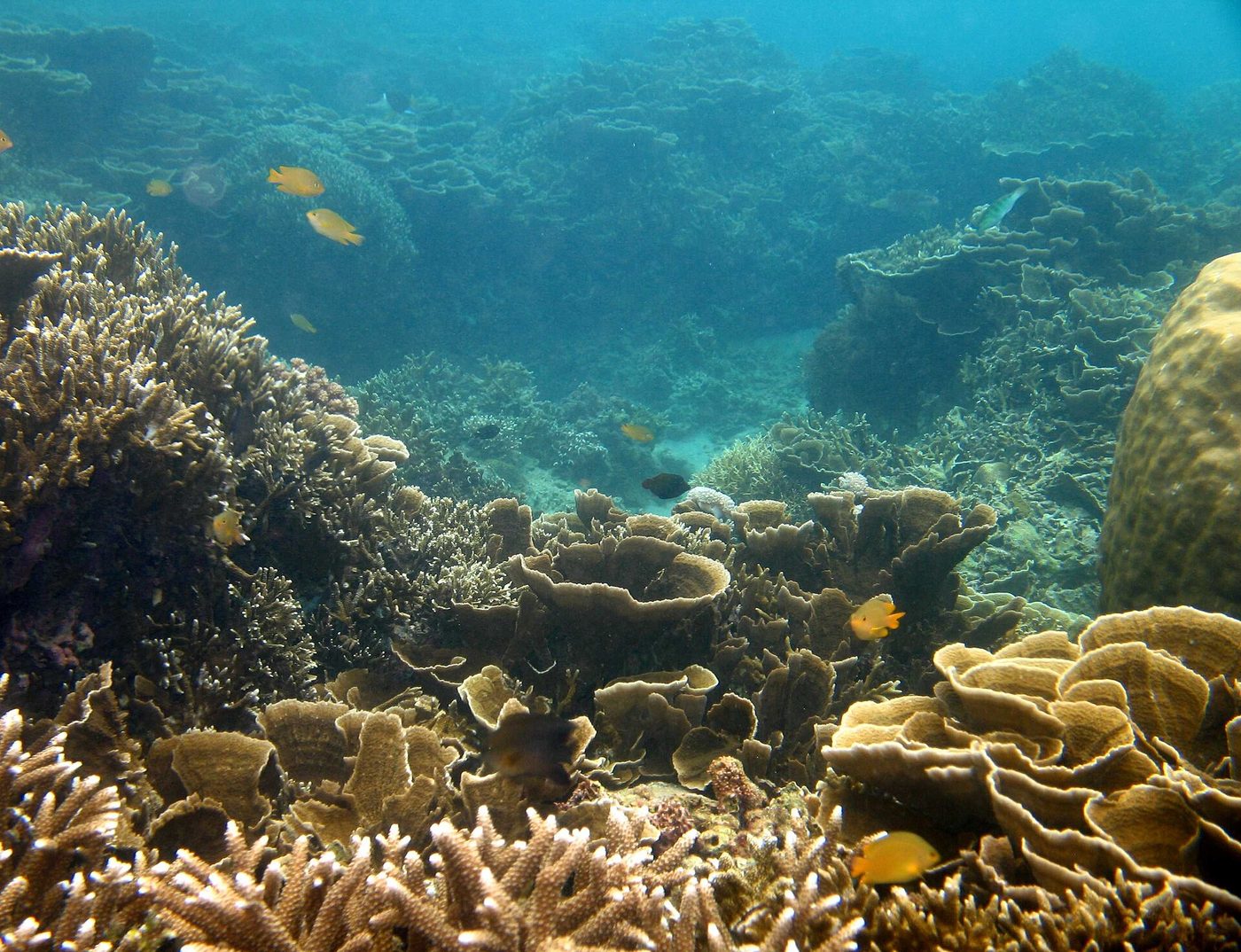
The reason is geography. The Philippines sits inside the Coral Triangle, the most biodiverse marine region on Earth, and right in the middle of it lies the Verde Island Passage between Luzon and Mindoro — a strait marine scientists have nicknamed the “centre of the centre of marine shorefish biodiversity.” That isn’t tourism-brochure language; it comes from peer-reviewed survey work. The passage alone holds well over 300 species of coral and an extraordinary share of the world’s shorefish species in an area you could cross by ferry in an afternoon.
What that biodiversity means underwater is range. In one trip you can do dawn dives with sharks, then spend an afternoon hunting thumbnail-sized pygmy seahorses on a muck slope. You can drift a current-swept wall thick with trevally and then potter around a shallow coral garden full of turtles. Few destinations switch registers like this. Indonesia’s Raja Ampat may edge it on sheer coral cover, and the Maldives wins on guaranteed manta and whale-shark aggregations, but for variety-per-peso the Philippines is hard to beat.
It is also genuinely affordable. A single guided “fun dive” runs around ₱1,500–2,500 (roughly US$26–44) in 2026, and a full beginner certification course costs a fraction of what you’d pay in Europe or Australia. Add warm water (26–30°C most of the year, so a 3mm wetsuit or even a rash guard does the job), widespread English, and a deep bench of professional dive centres, and you have a place that is as good for your very first breaths underwater as it is for your thousandth dive.
The best diving in the Philippines: 12 destinations worth the airfare
Below are the regions I send people to, roughly in order of how often I recommend them. None of these is a bad choice; the right one depends on what you want to see, your certification level, and the month you’re travelling. I’ve flagged the skill level and the rough season for each, and there’s a comparison table at the end of this section so you can scan it all at once. Many of these sites sit within islands I’ve covered in more detail in our guide to the best islands in the Philippines.
1. Tubbataha Reefs Natural Park — the crown jewel
If you only ever do one big diving trip in the Philippines, make it Tubbataha. This UNESCO World Heritage site sits alone in the middle of the Sulu Sea, a long way from anything, and it is reachable only by liveaboard. The reward for the journey is the closest thing to pristine reef left in the region: sheer walls dropping into blue, reef sharks on nearly every dive, schooling jacks and barracuda, the chance of mantas and whale sharks, and coral that hasn’t been touched by day-boat traffic because there are no day boats. The park protects roughly 360 coral species and more than a dozen species of sharks and rays.
The hard constraint is the season. Tubbataha is open to divers only from around mid-March to mid-June, when the Sulu Sea is calm enough to cross; the exact dates are set each year by the Tubbataha Management Office. Outside that window the park is closed. Trips run 5–7 nights out of Puerto Princesa in Palawan, and the good boats sell out 9–12 months ahead for the prime April–May weeks. You’ll want an Advanced certification and some current/blue-water comfort before you go. It is not cheap — expect roughly US$1,700–3,000+ for a six-night trip — but nobody I know has come back disappointed.
2. Malapascua — thresher sharks at dawn
Malapascua is a tiny island off the northern tip of Cebu, and it is the only place in the world where you can reliably dive with pelagic thresher sharks — those wide-eyed, scythe-tailed sharks that usually live deep and shy. They rise each morning to a seamount called Monad Shoal (some operators also report sightings at nearby Kimud Shoal) to visit cleaning stations, and the sighting rate on the dawn dive is famously high. The catch: you’re rolling off the boat in the dark around 5 a.m. to be at 25–30 metres by sunrise, so you’ll want your Advanced ticket and good air consumption.
Beyond the threshers, Malapascua quietly over-delivers: Gato Island with its swim-through tunnel and whitetip reef sharks, manta and devil-ray sightings in season, and some of the best mandarinfish dusk dives anywhere. It’s reached overland and by short banca ride from Cebu; see our Cebu travel guide for the logistics of getting up there.

3. Coron — the wreck-diving capital of Southeast Asia
In September 1944 a US air strike sank a Japanese supply fleet sheltering in the bays around Coron, in northern Palawan. Eighty years on, that fleet is one of the great wreck-diving playgrounds on Earth — roughly a dozen ships lying in 10 to 40 metres of sheltered, often startlingly clear water. The Akitsushima (a flying-boat tender, the deepest and most advanced of the group), the Okikawa Maru tanker, and the Kogyo Maru with its cargo of construction equipment are the classics. Several wrecks are shallow enough to enjoy on a single tank, but to penetrate the engine rooms and holds you’ll want Advanced plus wreck training.
Coron town also makes a spectacular surface interval: limestone islands, hidden lagoons and the eerie, freshwater-and-saltwater layers of Barracuda Lake, where you can literally feel the thermocline. It pairs naturally with the rest of a Palawan trip.
4. Moalboal — the sardine run you can dive every day
Most “sardine runs” are seasonal events you chase for one week a year. Moalboal, on Cebu’s west coast, has one that lives just off the beach all year round — a shimmering, shape-shifting bait ball of millions of sardines you can free-dive into from shore or hang beneath on scuba at barely 10 metres. It is one of the few genuinely guaranteed big-animal spectacles in diving, and beginners can do it. Pescador Island, a short boat ride out, adds a pretty wall, the occasional thresher, and turtles that seem entirely unbothered by divers.
Moalboal is also one of the cheapest, easiest places in the country to log a lot of dives, which makes it a favourite for people building experience. A guided dive on the sardines runs around ₱1,500–2,500; snorkellers can join the same spectacle for the price of a beach environmental fee and some rental gear.

5. Anilao — the macro and muck capital
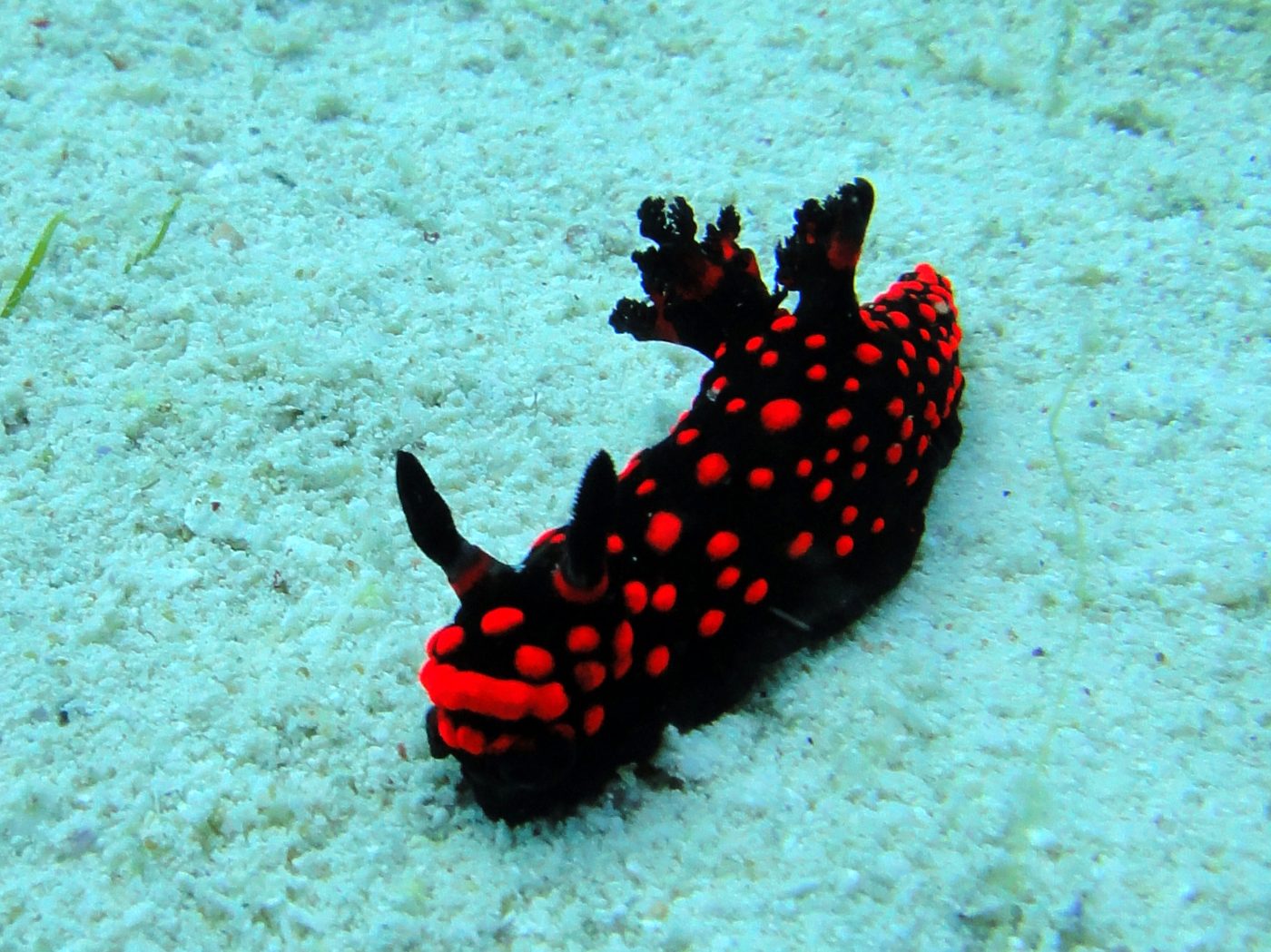
Anilao, in Batangas, is the closest serious diving to Manila — about two to three hours by road — and it is the spiritual home of Philippine muck diving. This is where underwater photographers come to lose their minds over nudibranchs (the Philippines is a global hotspot, with hundreds of species), flamboyant cuttlefish, blue-ringed octopus, frogfish, and a roll-call of weird critters most divers never see. There are 40-plus sites packed into a small stretch of coast, and the more adventurous shops run blackwater dives at night, drifting over open water with lights to photograph larval creatures rising from the deep. It’s advanced, eerie and unforgettable.
Anilao works year-round but shines from roughly November to May. It’s the best weekend-from-Manila option in the country, and a brilliant place to slow down and learn to actually look.
6. Puerto Galera — the best all-rounder
If I had to pick one base for a diver who wants a bit of everything, it might be Puerto Galera on the north coast of Mindoro. It sits right on the Verde Island Passage, so the biodiversity is off the charts, and within a short boat ride you have drift dives, walls, a couple of small wrecks, muck sites, and shallow coral gardens for training. It’s also only a few hours from Manila by road and ferry, which makes it the easiest “real” diving trip to reach. The Verde Island wall itself, out in the middle of the passage, is a genuinely world-class drift when the current cooperates.
7. Bohol & Balicasag — turtles, walls and a jackfish tornado
Panglao Island, off Bohol, is one of the most comfortable dive bases in the country: good resorts, an easy airport, and excellent diving a few minutes offshore. The star is Balicasag Island, a marine sanctuary ringed by steep walls where you’ll see green and hawksbill turtles in numbers that feel almost staged, plus a resident swirling “tornado” of bigeye trevally and schooling barracuda. Diver numbers at Balicasag are now capped to protect it, so book ahead. Cabilao and Pamilacan add more walls and seasonal big stuff.

8. Dauin & Dumaguete — muck with a side of Apo Island
On the Negros Oriental coast, Dauin is the other great muck destination alongside Anilao — black volcanic sand slopes, artificial reefs, and a critter list to rival anywhere. What makes the area special is the one-two punch: muck in the morning at Dauin, then a boat out to Apo Island for clean reef in the afternoon. Dumaguete is an easy, friendly city base with its own small airport.
9. Apo Island — community conservation that worked
Not to be confused with Apo Reef (below), Apo Island off Negros is one of the Philippines’ oldest community-run marine sanctuaries, and the recovery here is a genuine conservation success story. The hard-coral cover is superb, and the turtle population is so habituated that snorkellers regularly share the shallows with them. It’s mostly easy, current-permitting diving and a lovely place to remember why marine protection matters.
10. Apo Reef — the “little Tubbataha”
Apo Reef Natural Park, off Occidental Mindoro, is the second-largest contiguous coral reef in the country and one of the largest in the world. It delivers a lot of what makes Tubbataha special — walls, sharks, big schools and clear water — with a shorter, cheaper trip, usually as a short liveaboard or expedition out of Sablayan. Sites like Shark Ridge and Hunter’s Rock (famous for sea snakes) are the draws. It’s quieter and more rugged than the marquee names, which is exactly the appeal.

11. Donsol — whale sharks, done right
Donsol, in Sorsogon, is where you go to swim with whale sharks the ethical way — wild, unfed animals that gather to feed on natural plankton blooms, on tours run under WWF-Philippines guidelines with trained interaction officers. It’s snorkelling rather than scuba, and sightings are seasonal and never guaranteed (roughly November to May, with February to April the peak), which is precisely the point: these are wild animals on their own terms. I’ll come back to why this matters when we get to Oslob.
12. Off the beaten track: Siquijor, Camiguin, El Nido, Ticao & Southern Leyte
When you’ve ticked the headliners, the Philippines keeps giving. Siquijor offers laid-back coral and macro with hardly a crowd. Camiguin, a volcanic island off northern Mindanao, has drift dives over soft coral and a sunken cemetery. El Nido in Palawan is better known for its scenery but has lovely reef dives, nurse sharks and the occasional manta. Ticao Island near Donsol has the Manta Bowl, a cleaning station where mantas queue up. And Southern Leyte (around Padre Burgos and Sogod Bay) is a quiet macro-and-whale-shark spot that feels like the Philippines did twenty years ago. None of these should be your first stop, but any of them could be the highlight of a return trip.
Philippines dive sites at a glance
| Destination | Famous for | Level | Best months | Access |
|---|---|---|---|---|
| Tubbataha (Sulu Sea) | Untouched walls, sharks, pelagics | Advanced | Mid-Mar – mid-Jun only | Liveaboard from Puerto Princesa |
| Malapascua (Cebu) | Thresher sharks at dawn | Advanced (deep) | Oct – May; threshers year-round | Bus + banca from Cebu City |
| Coron (Palawan) | WWII wrecks | Open Water – Tec | Oct – May (Nov–Apr best) | Fly to Busuanga |
| Moalboal (Cebu) | Daily sardine run, walls | Beginner-friendly | Year-round; Nov – May best | ~3 hrs from Cebu City |
| Anilao (Batangas) | Muck, macro, nudibranchs | All levels; blackwater advanced | Nov – May | 2–3 hrs road from Manila |
| Puerto Galera (Mindoro) | All-round variety, drift | All levels | Year-round; Nov – May best | Road + ferry from Manila |
| Bohol / Balicasag | Turtles, jack tornado, walls | All levels | Year-round; Nov – Jun best | Fly to Panglao/Tagbilaran |
| Dauin / Dumaguete (Negros) | Muck + Apo Island reef | All levels | Year-round; spring best viz | Fly to Dumaguete |
| Apo Reef (Occ. Mindoro) | “Little Tubbataha”, sharks | Advanced | Dec – May | Liveaboard/expedition from Sablayan |
| Donsol (Sorsogon) | Ethical whale-shark snorkelling | Snorkel | Nov – May (peak Feb–Apr) | Fly to Legazpi |
Philippines diving season: when to go (and the myth to ignore)
Here is the single most common mistake I see: treating the Philippines as if it has one dive season. It doesn’t. The country spans three weather patterns, and a date that’s perfect for one coast can be a washout on another. Broadly, two monsoons shape the year — the Amihan (the cooler, drier northeast monsoon, roughly November to April/May) and the Habagat (the wetter southwest monsoon, roughly June to October) — plus a typhoon risk that’s highest from about July to November and mostly affects the eastern and northern Philippines.
As a rule of thumb, November to May is the most reliable window for the majority of dive destinations, because that’s when seas are calmest and visibility is best across Cebu, Bohol, Negros, Palawan and Batangas. But there are important exceptions, and the smart move is to match the region to the month rather than the other way round. This is the same logic behind our wider guide to the best time to visit the Philippines — it’s worth reading alongside this if you’re planning a longer trip.
| Region | Prime season | Avoid / weak | Notes |
|---|---|---|---|
| Tubbataha | Mid-March – mid-June | All other months (closed) | Hard seasonal window; book ~9–12 months ahead |
| Malapascua & Cebu | October – May | Peak typhoon spells (Jul–Nov) | Threshers appear year-round; viz can dip Nov–Dec |
| Bohol / Negros / Dumaguete | Year-round; best Nov – June | Heaviest rain spells | Spring brings the clearest water |
| Palawan (Coron, El Nido) | October – May (Nov–Apr best) | Aug – Sep (Habagat rain) | Coron wrecks are sheltered, so divable most of the year |
| Anilao & Puerto Galera | November – May | Habagat (Jun–Oct) swell | Easiest from Manila in the dry season |
| Donsol / Ticao (whale sharks) | November – May (peak Feb–Apr) | Jun – Oct (off-season) | Wild, plankton-driven and never guaranteed |
Water temperature barely changes the planning: it sits between about 26°C and 30°C nearly everywhere, all year. Most divers are comfortable in a 3mm wetsuit; on Tubbataha liveaboards and long repetitive days people often add a hood or a 5mm for warmth. Visibility is the real variable, and it tracks the seasons above — 20–40 metres on a good day at the offshore reefs, less on muck sites where the silty bottom is the whole point.
What you’ll actually see underwater
This is the part that sells the country. The Philippines is one of very few places where a single trip can deliver the big, the small and the strange. Here’s a quick reference for the headline marine life and where your odds are best.
| What | Best places | When |
|---|---|---|
| Pelagic thresher sharks | Malapascua (Monad/Kimud Shoal) | Year-round, dawn dives |
| Whale sharks (wild) | Donsol, Southern Leyte | Nov – May |
| Manta rays | Ticao (Manta Bowl), Tubbataha | Dec – May |
| Sardine run | Moalboal | Year-round |
| WWII wrecks | Coron, Subic Bay | Year-round (best Nov–Apr) |
| Turtles | Balicasag, Apo Island, Moalboal | Year-round |
| Reef & whitetip sharks | Tubbataha, Apo Reef, Gato Island | Year-round |
| Macro: nudibranchs, frogfish, pygmy seahorse, blue-ringed octopus | Anilao, Dauin, Puerto Galera | Year-round; Nov–May calmest |
| Dugong | Busuanga (Coron area) | Year-round (rare, snorkel) |
How much does scuba diving in the Philippines cost in 2026?
Cheap, by world standards — that’s the headline. The Philippines is one of the best-value dive destinations anywhere, which is a big reason so many people choose to get certified here. Prices below are rough 2026 figures in Philippine pesos with an approximate US-dollar conversion (around ₱57 to US$1); treat them as ballpark, because rates vary by region, resort tier and fuel costs, and the best operators aren’t always the cheapest. For how diving fits into a wider trip budget, our Philippines travel cost guide breaks down everything else.
| Activity | Typical 2026 price (PHP) | Approx. USD |
|---|---|---|
| Single guided “fun dive” | ₱1,500 – 2,500 | $26 – 44 |
| Discover Scuba (try-dive, no cert) | ₱3,000 – 4,500 | $53 – 79 |
| PADI/SSI Open Water course (3–4 days) | ₱15,000 – 23,000 | $265 – 405 |
| Advanced Open Water (2 days) | ₱14,000 – 18,000 | $245 – 315 |
| Nitrox / specialty course | ₱8,000 – 16,000 | $140 – 280 |
| Malapascua thresher dawn dive (2 tanks) | ₱3,500 – 5,000 | $60 – 88 |
| Marine-park / environmental fee (per dive or per day) | ₱100 – 350 | $2 – 6 |
| Tubbataha conservation fee (per trip) | ~₱5,000+ | ~$90+ |
| Tubbataha liveaboard (6 nights) | ₱95,000 – 170,000+ | $1,700 – 3,000+ |
A few money notes from experience. Multi-dive packages almost always beat per-dive prices — if you plan to dive a lot, buy a 5- or 10-dive package up front. Gear rental usually adds ₱500–1,000 a day, so bringing your own mask, computer and exposure suit pays off quickly on a longer trip. And budget for the small stuff: marine-park fees, banca fuel surcharges, and tips for guides who put you on a thresher at 5 a.m. are all real and all worth it.
Learning to dive: why the Philippines is one of the best places to start
If you’ve never breathed underwater, this is a fantastic place to begin. The water is warm and calm in season, the shallow training sites are excellent, courses are cheap, and instructors are plentiful and used to teaching nervous first-timers in English. Here’s the ladder:
Discover Scuba Diving is a half-day taster — a short briefing and a shallow guided dive, no certification. It’s the right call if you just want to see whether you like it. Open Water is the real entry certification: three to four days of theory, pool/confined skills and open-water dives, after which you can dive to 18 metres anywhere in the world. Advanced Open Water adds two days, takes you to 30 metres, and crucially unlocks the deeper sites — threshers, the better Coron wrecks, Tubbataha. Enriched Air (Nitrox) is the single most useful add-on for this country, because it extends your bottom time on the repetitive, slightly-deep dives that the Philippines specialises in.
Where to learn? Moalboal, Panglao (Bohol), Puerto Galera and Dauin are my top picks for beginners: cheap, calm, well-organised, and surrounded by easy sites you’ll actually enjoy as a new diver. Anilao is superb but its best diving is macro and night/blackwater work that rewards experience. Tubbataha and Malapascua’s thresher dive are not beginner trips — come back for those once you have your Advanced ticket and a few dozen dives under your weight belt.
Which destination fits your kind of diving?
Rather than rank everything for everyone, here’s how I’d steer different divers. Find yourself in this list and you’ve got your shortlist.
| If you are a… | Go to | Why |
|---|---|---|
| Complete beginner / certification seeker | Moalboal, Panglao, Puerto Galera, Dauin | Cheap, calm, easy sites, lots of instructors |
| Macro lover / underwater photographer | Anilao, Dauin, Puerto Galera | The world’s best muck and critter diving |
| Wreck diver | Coron, Subic Bay | A whole WWII fleet at recreational depths |
| Shark & big-animal hunter | Malapascua, Tubbataha, Donsol, Ticao | Threshers, reef sharks, whale sharks, mantas |
| Advanced / liveaboard diver | Tubbataha, Apo Reef | Remote, pelagic-rich walls |
| Non-diver or snorkeller in the group | Moalboal, Apo Island, Donsol, Bohol | World-class snorkelling from shore or boat |
| Budget backpacker | Moalboal, Malapascua, Siquijor | Cheap dives, cheap beds, easy island-hopping |
| Comfort / resort diver | Panglao (Bohol), Anilao, Puerto Galera | Strong resorts and short boat rides |
The whale shark question: Oslob versus Donsol
This is the one ethical decision every visiting diver should make consciously, so I’m going to be direct about it. In Oslob, in southern Cebu, operators hand-feed whale sharks tiny shrimp every morning so that tourists are practically guaranteed an encounter a few metres from the beach. It is wildly popular, and it is also widely criticised by conservation scientists. The concerns are well documented: feeding alters the animals’ natural migratory and feeding behaviour, the sharks cluster around boats and pick up propeller and hull scars, and studies have recorded poor compliance with the minimum-distance rules that are supposed to protect them.
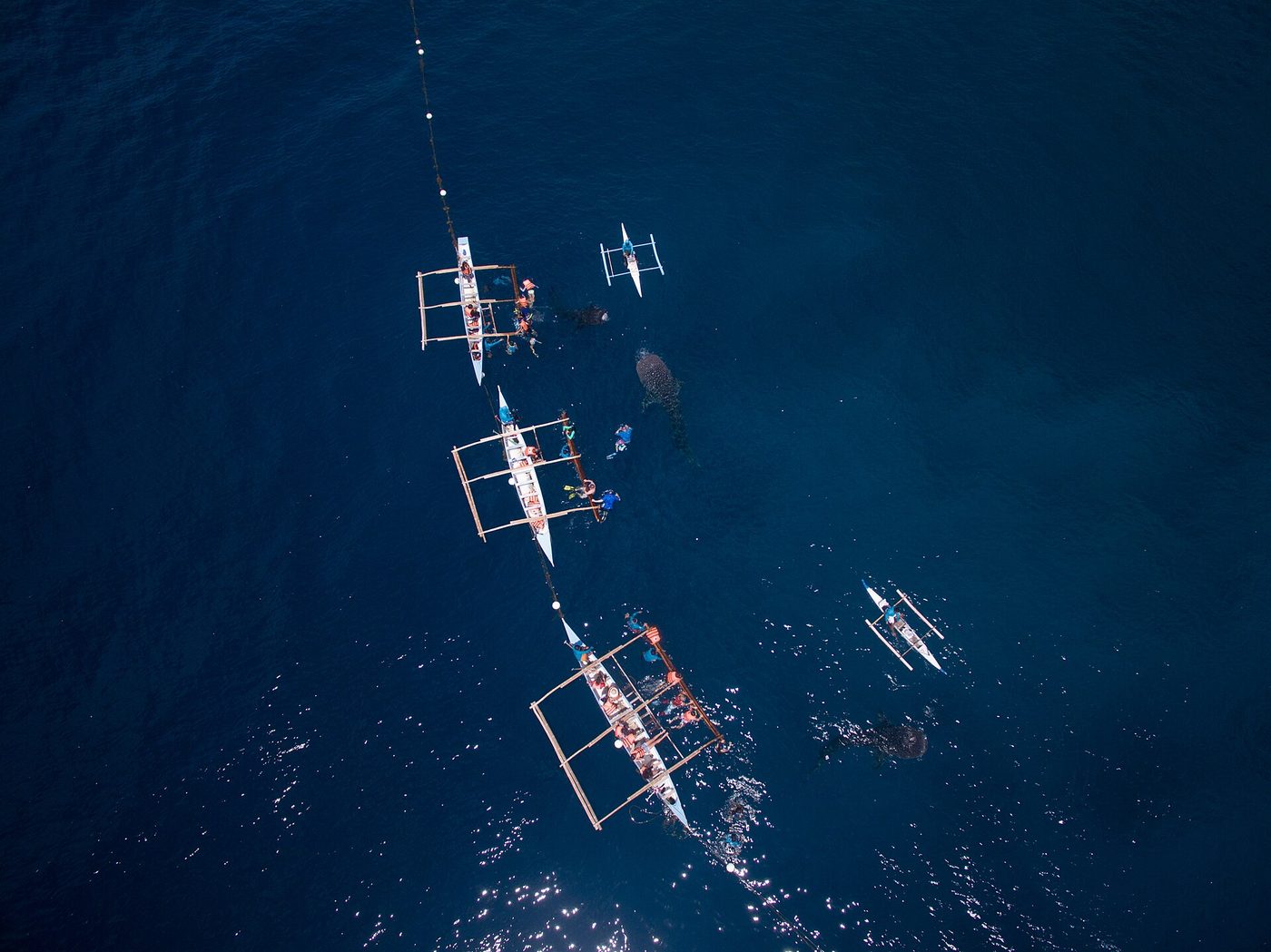
The alternative is Donsol, a few hours away in Sorsogon, where whale sharks gather naturally to feed on seasonal plankton, no one feeds them, and tours follow WWF-Philippines guidelines with trained interaction officers. The trade-off is honest: at Donsol sightings are seasonal and never guaranteed, while Oslob “guarantees” them by baiting. My own view — and that of most divers I respect — is that a wild, uncertain encounter at Donsol is worth far more than a staged one, and that voting with your money matters. I’d skip Oslob. You’re welcome to weigh it differently; just make it a deliberate choice rather than a default. Either way, never touch a whale shark, and stay the regulated distance away.
Staying safe: dive safety and decompression chambers
Most diving in the Philippines is very safe, but it’s a developing country with thousands of operators of varying quality, so a little diligence goes a long way. Choose centres affiliated with PADI, SSI or equivalent, look for good kit and small group sizes, and don’t be shy about asking when their gear was last serviced. Trust your gut: if a boat or briefing feels sloppy, dive with someone else tomorrow.
A few non-negotiables. Carry dive insurance that explicitly covers scuba and chamber treatment — DAN (Divers Alert Network) Asia-Pacific is the usual choice, and a policy costs far less than one chamber ride. Don’t fly within 24 hours of your last dive; this matters constantly here because trips are stitched together with domestic flights. Watch your nitrogen loading on the repetitive deep-ish dives the country specialises in (this is exactly where Nitrox earns its keep). And respect currents — the same passages that pull in big fish can pull a diver off a wall fast.
Know where the recompression chambers are, too, because they’re not on every island. The Philippines has hyperbaric/recompression facilities including the AFP medical facilities and the Lung Center in Metro Manila (Quezon City), a long-running chamber at Camp Lapu-Lapu in Cebu City, the Batangas hyperbaric centre (handy for Anilao and Puerto Galera), facilities at Subic Bay, and a chamber at a dive resort in Coron. Remote spots like Tubbataha are a long way from any of them, which is another reason to dive conservatively offshore. Your liveaboard or resort will have an emergency plan — ask what it is on day one. This sits alongside the broader picture in our honest look at whether the Philippines is safe.
Diving responsibly in the Philippines
The diving here is this good because, in the places that get it right, people have protected it — Apo Island and Balicasag are living proof that marine sanctuaries work. Do your part. Master your buoyancy before you go anywhere near coral, and never touch, stand on or chase anything. Use reef-safe (oxybenzone-free) sunscreen, or better, cover up with a rash guard. Don’t buy shells, coral or turtle products on land. Those small marine-park and conservation fees you’ll pay everywhere are not a scam; they fund the rangers, patrols and research that keep places like Tubbataha wild, so pay them gladly. And follow the local rules even when they’re stricter than you’re used to — the gloves and reef-hook bans, the diver caps, the strobe limits around the threshers all exist for a reason.
Getting there and getting around
Most dive trips route through one of two hubs: Manila (best for Anilao, Puerto Galera, and flights to Palawan and the Visayas) or Cebu (best for Malapascua, Moalboal, Bohol and the central islands). Cebu is the more convenient base for the classic Visayas dive circuit, and you can often skip Manila entirely. From either hub, cheap domestic flights on the local carriers connect you to Busuanga (Coron), Puerto Princesa, Dumaguete, Panglao/Tagbilaran and Legazpi (Donsol).
Once you’re in a region, expect a mix of vans, the local outrigger boats called bangkas, and inter-island ferries. It’s all workable but slower than the map suggests, and connections don’t always line up — build in buffer days, especially before an international flight home. Our guide to getting around the Philippines covers the ferries, flights and apps in detail, and if you’re planning a multi-stop dive trip it’s worth reading our Philippines itinerary routes too.
On entry: most nationalities get a visa-free stay on arrival (commonly 30 days, extendable), but rules change, so confirm the current requirements before you book — we keep them updated in our Philippines visa and entry guide. Grab a local eSIM at the airport for data; just know that out on a Tubbataha liveaboard or a remote island, you’ll have no signal at all, which is part of the charm.
The honest downsides
I love diving here, but it isn’t flawless and you should go in clear-eyed. Weather can wreck plans — typhoon season (roughly July to November) can cancel boats and flights at short notice, so travel insurance and flexible dates matter. Logistics eat time: that “quick hop” between two dive regions is often a flight, a van and a ferry, and a lost day. Operator quality is uneven; the great shops are world-class and the bad ones cut corners, so research rather than booking the cheapest banner you see. Popular sites get busy — the thresher dive and Oslob in particular can feel crowded — and like reefs everywhere, some Philippine sites have suffered coral bleaching and damage in recent years. None of this should put you off. It should just shape how you plan.
How the Philippines compares to other diving in Asia
People often ask whether to choose the Philippines or its neighbours. My honest take: for variety and value, the Philippines wins — nowhere else gives you threshers, a sardine run, WWII wrecks and world-class muck this cheaply in one country. Indonesia (Raja Ampat especially) edges ahead on sheer coral cover and untouched remote reefs, but it costs more to reach. The Maldives is the pick for guaranteed manta and whale-shark aggregations and luxury liveaboards, but it’s pricey and less varied. Thailand is easier and more polished but simply doesn’t have the biodiversity. If it’s your first big Asian dive trip, the Philippines is the most forgiving on both skills and budget. If you’ve already done Raja Ampat, the Philippines still has threshers and a sardine run that it doesn’t.
Frequently asked questions about diving in the Philippines
Is the Philippines good for scuba diving?
It’s one of the best diving destinations in the world. It sits in the heart of the Coral Triangle, has the highest marine biodiversity on Earth, and offers thresher sharks, whale sharks, WWII wrecks, a daily sardine run and world-class macro — usually at lower prices than anywhere comparable in Asia.
Do you need to be certified to dive in the Philippines?
To dive independently, yes — you’ll need at least an Open Water certification, and an Advanced certification for deeper sites like the threshers, the better Coron wrecks and Tubbataha. If you’re not certified, you can still do a Discover Scuba try-dive with an instructor, or take a full course on the spot; the Philippines is one of the cheapest and easiest places in the world to learn.
When is the best time for diving? Philippines diving season explained
For most of the country, November to May offers the calmest seas and best visibility. The big exception is Tubbataha, which is only open from about mid-March to mid-June. Whale sharks at Donsol run roughly November to May. Avoid the peak typhoon months (July to November) in the eastern and northern Philippines if you can.
Is scuba diving in the Philippines safe?
Generally yes, with sensible precautions. Dive with reputable, well-equipped operators, carry dive insurance that covers chamber treatment (DAN Asia-Pacific is standard), don’t fly within 24 hours of diving, and respect currents and depth limits. Recompression chambers exist in Manila, Cebu, Batangas, Subic and Coron, but remote sites are far from help, so dive conservatively offshore.
How much does diving in the Philippines cost?
As of 2026, a single fun dive runs around ₱1,500–2,500 (about US$26–44), and an Open Water course around ₱15,000–23,000. A six-night Tubbataha liveaboard is a different scale entirely — roughly US$1,700–3,000+ — but most diving here is very affordable.
Can complete beginners dive in the Philippines?
Absolutely. Calm, warm, shallow sites at places like Moalboal, Panglao, Puerto Galera and Dauin make it an ideal place to learn, and there are instructors everywhere. Save the advanced sites — Tubbataha and the Malapascua thresher dive — for once you’ve built up some experience.
Is Oslob or Donsol better for whale sharks?
Donsol is the responsible choice: the whale sharks there are wild and unfed, and tours follow WWF guidelines. Oslob guarantees sightings by hand-feeding the sharks, a practice conservationists widely criticise for harming the animals. Sightings at Donsol are seasonal and not guaranteed, which is exactly as it should be with wild animals.
Philippines or Indonesia for diving?
For value and variety in one trip, the Philippines. For the most unspoiled remote coral, Indonesia’s Raja Ampat has the edge but costs more to reach. Many divers do both over time; if it’s your first big Asian dive trip, the Philippines is the easier and cheaper place to start.
How many days does it take to get Open Water certified?
Usually three to four days — some of it classroom and confined-water skills, the rest open-water dives. Build in a buffer day, and remember the no-fly rule: don’t schedule a flight within 24 hours of your final dive.
Sources and photo credits
Photo credits
All images are used under their respective free licences via Wikimedia Commons. Thanks to the photographers who share their work:
- A scuba diver swimming above a vibrant reef wall in the clear waters of the Philippines — photo by NOAA Fisheries/Damaris Torres-Pulliza, Public domain, via Wikimedia Commons.
- A healthy tropical coral reef teeming with fish in the Philippines, part of the Coral Triangle — photo by andre oortgijs, CC BY-SA 3.0, via Wikimedia Commons.
- A dense swirling school of sardines during the sardine run at Moalboal, Cebu, Philippines — photo by Iampjanz, CC BY-SA 4.0, via Wikimedia Commons.
- Outrigger boats and snorkellers gathered around a whale shark in Philippine waters, seen from above — photo by choypictures, CC0, via Wikimedia Commons.
- A colourful nudibranch sea slug photographed during muck diving in Anilao, Batangas, Philippines — photo by Matt Kieffer, CC BY-SA 2.0, via Wikimedia Commons.
- A green sea turtle gliding over hard coral, a common sight at Apo Island and Balicasag in the Philippines — photo by Brocken Inaglory, CC BY-SA 3.0, via Wikimedia Commons.
- A whitetip reef shark cruising a tropical reef — photo by Jan Derk, Public domain, via Wikimedia Commons.
- A giant Napoleon wrasse at Apo Reef, one of the Philippines’ premier reef-diving sites — photo by Ervin Malicdem, CC BY-SA 4.0, via Wikimedia Commons.
Sources and further reading
Facts in this guide were checked against official and authoritative sources, including:
- Tubbataha Management Office — season dates, permits and conservation fees (tubbatahareefs.org)
- UNESCO World Heritage Centre — Tubbataha Reefs Natural Park listing (whc.unesco.org)
- WWF-Philippines — Donsol whale-shark interaction guidelines
- Divers Alert Network (DAN) Asia-Pacific — dive safety, insurance and chamber network (danap.org)
- PAGASA — Philippine monsoon (Amihan/Habagat) and typhoon seasonality
- Peer-reviewed surveys of the Verde Island Passage and Coral Triangle marine biodiversity
2026 prices are indicative and were cross-checked against current Philippine dive-operator rates; they will vary, so confirm with your chosen centre when booking.
About this guide. This is part of PhilippinesTourism.org, where we write practical, honest, on-the-ground travel guides to the Philippines. We don’t take payment to feature operators or destinations, and we flag the trade-offs as well as the highlights. Got an update or a correction from your own dive trip? We’d love to hear it.