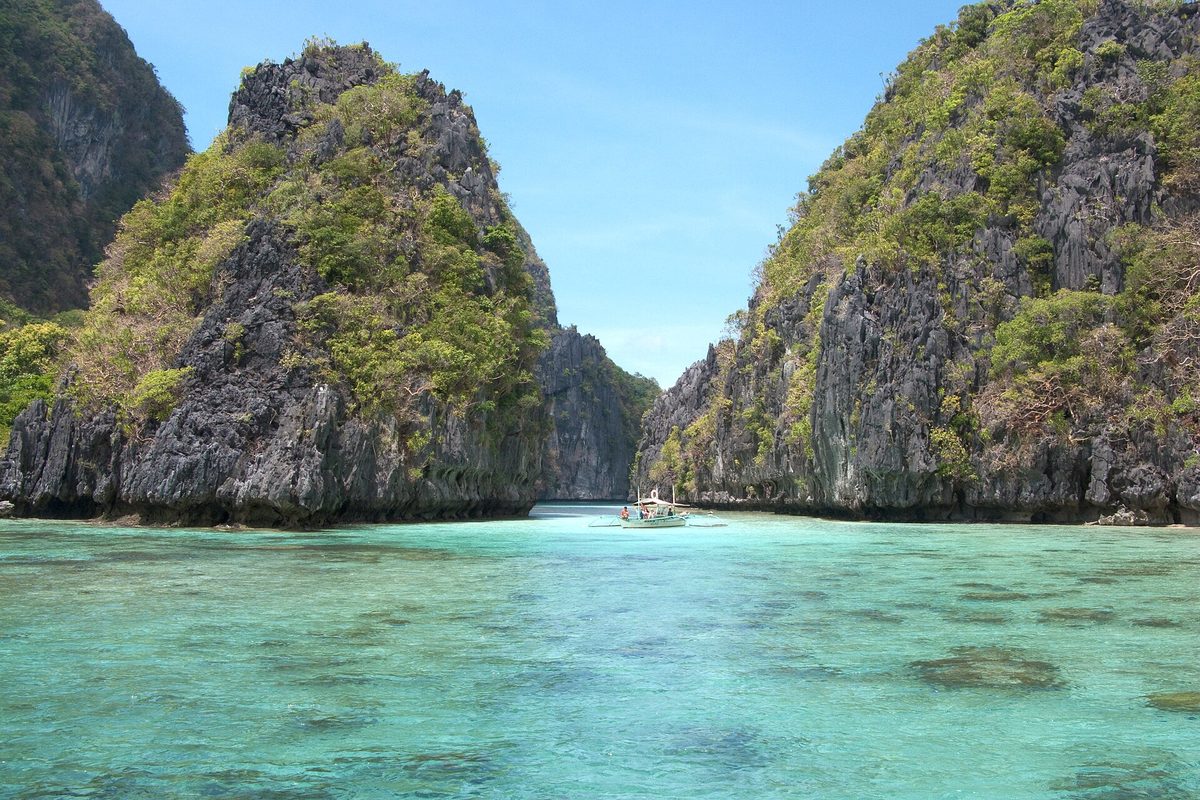
Palawan Travel Guide: El Nido, Coron and Beyond (2026)
The complete Palawan Philippines travel guide
mdash; last updated June 2026, researched and fact-checked by the PhilippinesTourism.org editorial team.
Every traveler keeps a private list of places that actually beat their own hype. Mine is short, and Palawan sits at the top of it, smugly, like it knows. The limestone is taller than the photos suggest, the water clearer, the pace slower — and the logistics, if nobody warns you, messier. Consider this your warning, and your map.
Palawan, Philippines is the country’s westernmost province and its most spectacular: a 450-kilometer sliver of karst, jungle and reef holding El Nido’s lagoons, Coron’s wrecks and lakes, the UNESCO-listed Puerto Princesa Underground River, and sleepy Port Barton. Visit December through May, give it five days minimum, and fly into Puerto Princesa, El Nido or Busuanga.
(If you found this by typing
That’s the executive summary.ldquo;Palawan Philippines
That’s the executive summary.rdquo; into a search bar at 1am: welcome, you typed correctly.) That is the executive summary. The rest of this guide is everything I’d tell a friend over coffee before their first trip: which of the four bases deserve your nights (and which one most people over-allocate), exactly how the lettered island-hopping tours work, the 2026 flight change that’s quietly stranding people at the wrong Manila airport, what everything costs, and the itineraries that don’t waste a single precious morning.
Fair warning: Palawan was voted the world’s best island so many times the trophies stopped being news. It earned them. It will also test your patience with vans, boats and brownouts — and you’ll forgive it before the first sunset. Everyone does.
Palawan at a Glance: One Province, Four Very Different Bases
First, orient. Mainland Palawan runs long and thin from southwest to northeast; Puerto Princesa, the capital and main airport, sits mid-island. Port Barton hides on the west coast a few hours north. El Nido crowns the mainland’s northern tip, facing the karst islands of Bacuit Bay. And Coron — technically the town on Busuanga Island, across a strait from the cliffs of Coron Island proper — floats off the northern end, reachable by ferry, expedition boat or its own airport. Far south, the Balabac islands trail toward Borneo like an afterthought the crowds haven’t found.
| Base | The vibe | Signature experience | Nights needed | Best for |
|---|---|---|---|---|
| El Nido | Backpacker boomtown beneath cathedral cliffs | Island-hopping Tours A & C through the lagoons | 3–4 | First-timers, scenery chasers |
| Coron | Working harbor town with otherworldly day trips | Kayangan Lake, Twin Lagoon, WWII wreck snorkeling | 2–3 | Divers, clear-water addicts |
| Puerto Princesa | Provincial city, springboard more than destination | The Underground River day trip | 1–2 | Arrival night, UNESCO box-tickers |
| Port Barton | Sandy-street village on generator time | Turtle snorkeling and a four-boat bay at sunset | 2–3 | Budget travelers, the crowd-averse |
If your trip is about deciding between whole islands rather than bases within Palawan, start with our ranked guide to the best islands in the Philippines — Palawan wins for scenery, but it’s not the right island for everyone.
When to Visit Palawan
Palawan runs on the classic Philippine calendar with a generous twist: it sits far enough southwest to dodge the worst typhoon traffic that rakes the country’s east.
- December–March (peak): Dry, calm seas, every tour running daily. Also peak prices and shared lagoons. Book El Nido beds and the Underground River permit ahead from Christmas through Easter.
- April–May (hot shoulder): My pick. The amihan crowds thin after Holy Week, the water turns to glass, and mangoes hit peak season. Hot at midday — structure days around morning tours and afternoon swims.
- June–September (wet): Greener, cheaper, moodier. Most days still deliver usable mornings, but west-facing bases (Port Barton especially) catch the habagat swell, and multi-day boat expeditions pause or reroute in rough spells. Coron stays the most reliable of the four.
- October–November (drying out): The gamble that usually pays. Shoulder rates, returning sun, occasional late typhoon passing far north of the province.
Getting to Palawan (Including the 2026 Airport Change Nobody Tells You About)
Three airports serve the province, and a fourth detail now matters more than any of them:
The big 2026 change: as of March 29, 2026, AirSwift and Cebu Pacific moved their turboprop operations out of Manila’s NAIA to Clark International Airport, about 80 kilometers north of the capital. In practice: most direct flights to El Nido’s Lio airport — and the ATR services to Busuanga — now leave from Clark, not NAIA. If you booked an international arrival into NAIA with a same-day El Nido hop, you now have an inter-airport transfer of two to three hours (longer in traffic) in the middle of it. Jet services to Puerto Princesa and Busuanga still use NAIA, and Cebu connections are unaffected. Triple-check which airport your domestic ticket actually departs from before you land in Manila — this change is recent enough that plenty of 2025-era blog advice is now quietly wrong.
- Puerto Princesa (PPS): The workhorse — cheap, frequent jets from Manila (NAIA) and Cebu, ~75–90 minutes. Gateway for the Underground River, Port Barton and overland routes north.
- El Nido / Lio (ENI): The shortcut. Turboprops from Clark (post-March 2026) plus Cebu and seasonal Boracay/Caticlan links. Pricier per kilometer than anything else in the country and worth it on a short trip — you step off the plane fifteen minutes from town.
- Busuanga / Coron (USU): Jets and turboprops from Manila (check NAIA vs Clark on booking), plus Cebu links. A 30–45 minute van ride drops you in Coron town.
- By sea: 2GO sails Manila–Puerto Princesa and Manila–Coron overnight if you enjoy slow travel with karaoke; most travelers fly.
Getting around once you’re there
The Puerto Princesa–El Nido van is the spine of mainland travel: 5–6 hours, around PHP 600–800, hourly departures, knees optional. Port Barton splits off that road about three hours north of PPS. Between El Nido and Coron you have two beautiful options — the fast ferry (3.5–4.5 hours, roughly PHP 1,800–2,300, book a day ahead in peak) and the multi-day expedition boats we’ll get to shortly. Locally, everything is tricycles, rented scooters (PHP 350–500/day) and bangkas. There is no ride-hailing north of Puerto Princesa; embrace the tricycle economy.
El Nido: The Main Event

El Nido is what happens when a fishing town wakes up inside a screensaver. The settlement itself is a dense little grid of dive shops, smoothie bars and tour desks wedged between a beach and a 200-meter limestone wall — charming in a chaotic way, but nobody flies here for the town. They fly for Bacuit Bay: forty-five islands of vertical karst hiding lagoons, coves and beaches that have monopolized “world’s best” lists for a decade. Our dedicated El Nido guide goes deeper on the town, the beaches and the day-to-day logistics.
The island-hopping tours, decoded (A, B, C, D)
El Nido standardized its boat tours into four lettered menus with fixed government rates — every operator runs the same stops for the same price, so you’re choosing a route, not a company. The 2026 rates run around PHP 1,400–2,000 per person including lunch, plus a PHP 400 Eco-Tourism Development Fee (ECTDF) valid ten days. Stop by stop, our guide to El Nido island hopping unpacks which menu is worth your day.
| Tour | Headline stops | Worth it? |
|---|---|---|
| A | Big Lagoon, Secret Lagoon, Shimizu Island, Seven Commandos Beach | Essential. The Big Lagoon kayak is the postcard. |
| B | Snake Island sandbar, Cudugnon Cave, Pinagbuyutan | Pleasant filler — only on a 4+ day stay. |
| C | Hidden Beach, Secret Beach, Matinloc Shrine, Helicopter Island | Essential. Arguably edges Tour A on drama. |
| D | Cadlao Lagoon, Paradise Beach, Small Lagoon | Quietly lovely, closest to town, fewest boats. |
Hard-won tips: book the morning departure and be on the beach by 7:30 — the lagoons before the 10am armada are a different universe. Pay the few hundred pesos for kayak rental inside Big Lagoon (engines are banned past the mouth). Bring reef shoes, a dry bag and cash for fees. And if two tours are your budget, the correct answer is A and C — this is the rare exam where everyone agrees on the cheat sheet. For how these tours stack against everything else in the country, see our full guide to things to do in the Philippines.
Beyond the boats
Nacpan Beach, forty minutes north by scooter or shuttle, is the mainland’s answer to the islands: four golden kilometers sharing a skinny isthmus with Calitang Beach — the twin-beach viewpoint is one of Palawan’s great free sights. Las Cabañas handles sunset duty with beach bars and a zipline across the bay. The Taraw Cliff via ferrata gets you up the limestone wall above town for sunrise (guided, harnessed, around PHP 1,500 — skip the old free scramble; people got hurt for a reason). Inland, the Nagkalit-kalit waterfalls fill the rare rainy morning.
Where to stay in El Nido
Three honest tiers: El Nido town for tour-desk convenience and nightlife within flip-flop distance (noisy, dense); Corong-Corong, one ridge south, for sunset-facing calm ten minutes from the action — my default recommendation; and the Nacpan/Duli north for resort seclusion where the road quality filters the crowds. Budget beds run PHP 800–1,500, solid doubles PHP 2,500–5,000, and the island resorts out in the bay itself (Miniloc, Pangulasian and friends) play an entirely different sport at $400+ a night.
Coron: Clearer, Deeper, Stranger
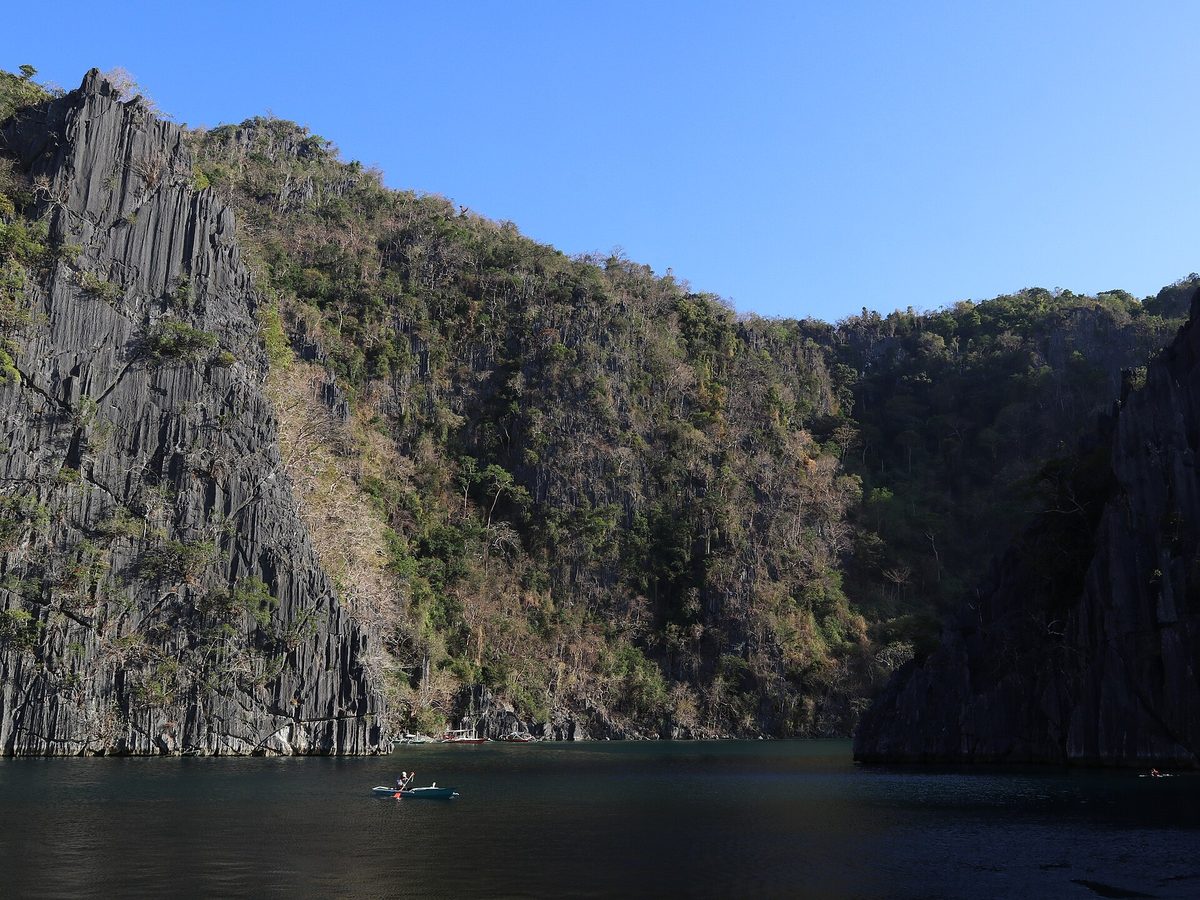
Coron does not ease you in. Day one typically includes a lake so clear you’ll check your mask for tricks, a lagoon entered through a crack in a cliff, and lunch over a coral garden — and that’s the standard tour. The town itself is a salty, functional harbor strip (fix your expectations accordingly); the magic all lives a bangka ride away. Our full Coron guide covers the wrecks, the lakes and how many days the town really needs.
The non-negotiables
- Kayangan Lake: Routinely titled the cleanest lake in Asia. Climb the 300-ish steps to the saddle viewpoint — yes, the famous photo is from here, and no, the lake in that photo is actually the bay behind you; the real lake is better. Go first slot of the morning or accept a queue.
- Twin Lagoon: Two basins of glassy brack water joined by a swim-through gap; haunting at high tide when you duck beneath the rock. Thermoclines shimmer like oil — entirely normal, entirely surreal.
- Barracuda Lake: The connoisseur’s stop and a bucket-list freshwater dive — volcanic walls, a 4–8 meter thermocline where the water jumps from 28°C to a bathtub 38°C, and one resident barracuda of legend.
- The WWII wrecks: In September 1944, a US air raid sank a Japanese supply fleet across Coron Bay. Eighty years on, a dozen wrecks sit at recreational depths — Okikawa Maru and Irako for divers, Lusong Gunboat shallow enough for snorkelers to trace its outline from the surface. War history you float over: nowhere else in Asia does it this accessibly.
- Maquinit Hot Springs: A 38–40°C saltwater soak under mangroves, ten minutes from town — oddly perfect after a day in the water. ~PHP 300.
Day tours bundle these in various combinations (PHP 1,500–2,500 with lunch); private bangkas run PHP 7,000–9,000 split between a group and buy you the empty-lagoon morning slots. Divers: two-tank wreck days run around PHP 4,500–6,000 with gear.
Where to stay in Coron
Coron town proper puts every tour pier and turo-turo eatery in walking range — the practical pick. Across the water, Coron Island’s Banol-area camps and the outlying island resorts (Club Paradise, Two Seasons, El Rio y Mar) trade convenience for serious castaway beauty. Budget PHP 700–1,200 for dorms, PHP 2,000–4,000 for good doubles in town.
El Nido or Coron? The Honest Verdict
The question every Palawan planner eventually types at 1am. Short version: El Nido wins on variety and beaches; Coron wins on water clarity and underwater life. El Nido’s forty-five-island bay simply offers more kinds of stop — lagoons, sandbars, snorkel walls, secret coves — and the better mainland beaches for non-boat days. Coron counters with the three clearest swimming holes in the country, the wrecks, and roughly two-thirds the crowd density on equivalent days.
First trip, five days or fewer: El Nido. Divers and repeat visitors: Coron. The long-form answer, category by category, is in El Nido vs Coron. Seven days or more: this is a false choice — the ferry takes four hours, and the better answer is both, ideally connected the slow way…
The El Nido–Coron Expedition: Palawan’s Best Idea
Between the two famous bays lie the Linapacan islands — arguably the clearest water in the archipelago, villages that see a handful of boats a week, and not one souvenir stand. The multi-day expedition boats (Tao Philippines pioneered it; Big Dream Boatman and others run excellent versions) cross this gap over 3–5 days: you snorkel untracked reefs, eat what the crew catches, sleep in stilt huts or beach tents on islands without names you’d recognize, and discover on night two that a guitar, a fire and fourteen strangers is a complete entertainment system.
Around PHP 14,000–28,000 per person depending on operator, route and bunk — which sounds steep until you realize it replaces transport, lodging, meals and every activity for the duration, and outclasses all of them. Book weeks ahead December–April. If one splurge makes the budget, make it this one; it’s the single most recommended experience on this site. For every way to make the crossing — fast ferry, flight or expedition boat — see El Nido to Coron.
Puerto Princesa: More Than a Layover (Just Barely)
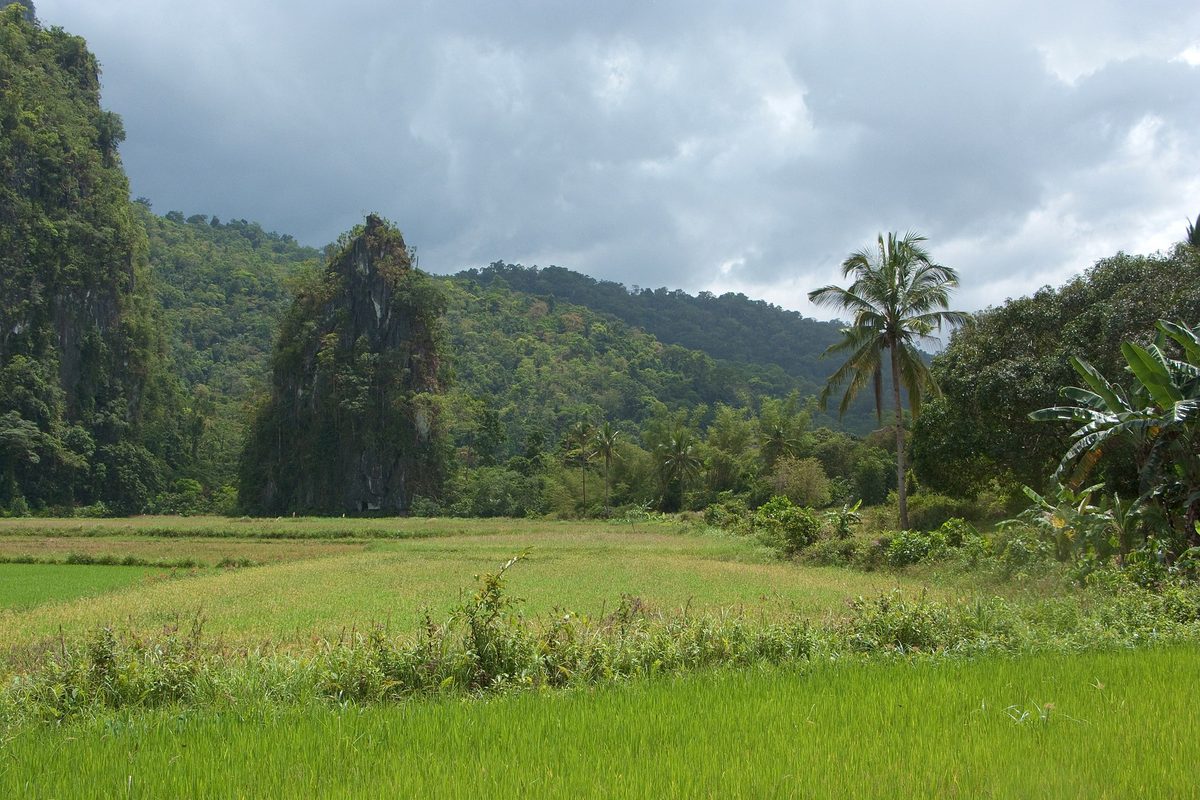
Be honest with your expectations and Puerto Princesa treats you well. It’s a real provincial city — tricycles, markets, malls — whose tourism heart beats 80 kilometers north in the village of Sabang, where the Puerto Princesa Underground River earns both its UNESCO listing and its New7Wonders-of-Nature badge. You drift by paddle boat into a cave mouth beneath a karst mountain and follow a navigable river through cathedral chambers of glittering rock, escorted by swiftlet echoes and the occasional unbothered bat. The standard tour covers 1.5 of the river’s 8.2 kilometers in about 45 minutes — brief, genuinely otherworldly, and smartly capacity-capped.
The permit reality: daily visitor numbers are limited, so book the tour (PHP 2,000–3,000 with transfers and lunch) at least a day or two ahead — more in peak weeks and around Chinese New Year. Independent visits are possible but fiddly; this is the rare case where the package van genuinely wins. Our full guide to the Puerto Princesa Underground River covers permits, timings and whether it earns the detour.
Round out a Puerto stay with Honda Bay island hopping (sandbars, starfish, easy snorkeling — the gentlest boat day in Palawan, ideal with kids), the Iwahig firefly paddle after dark, and dinner at the city’s famous seafood gardens — kinilaw (Filipino ceviche) and a kilo of grilled prawns repair any travel day. One full day plus your arrival evening covers it; the city is a springboard, and it knows it.
Port Barton: The Palawan That Time Forgot (For Now)

Halfway up the west coast, down its own winding road, Port Barton is four sandy streets, one generator grid that mostly behaves, a bay full of bangkas and a travelers’ mood best described as “El Nido, fifteen years ago.” Wi-Fi wobbles. Nobody minds. The island-hopping tour (around PHP 1,200–1,500) visits turtle seagrass beds where sightings are near-daily, the reef off German Island, and sandbars you’ll share with a dozen people instead of a dozen boats. White Beach and the pig-patrolled sands of nearby coves fill the off-days.
Stay two or three nights in beach huts from PHP 800. Go now-ish: the road got paved, the boutique stays are arriving, and sentences like this one have a shelf life. Our Port Barton guide has the van times, the tour options and where to sleep.
Further Out: Balabac, San Vicente and the Deep Cuts

Balabac is Palawan’s final boss — a southern scatter of islands where sandbars run pink-white into mirror lagoons (Onok Island is the cover shot) and tourism still operates on expedition logic: multi-day trips staged from Rio Tuba, generator power, pack-in supplies, and local guides whose crocodile-country briefings you will respect. It rewards the effort with the emptiest world-class beaches in the country.
San Vicente, between Port Barton and El Nido, hides Long Beach — at 14 kilometers, the Philippines’ longest white-sand beach, so undeveloped that your footprints may be the morning’s first. It ranks high in our roundup of the best beaches in Palawan, alongside Nacpan, Duli and the Bacuit coves. An airport exists, a masterplan exists; the crowds don’t yet. Culion, an old leprosarium island near Coron with a moving museum and quiet reefs, and the Calauit giraffe-and-antelope safari park (a strange 1970s Marcos artifact; decide your own ethics) round out the north’s odd, interesting margins.
Palawan Itineraries That Actually Work
| Days | Route | The shape of it |
|---|---|---|
| 5 | Fly into El Nido, out of Coron (or reverse) | 2 El Nido tour days + ferry + 2 Coron days. Tight, brilliant, zero slack. |
| 7 | PPS → El Nido → Coron | Underground River day, van north, Tours A & C, ferry, full Coron loop + wreck snorkel. |
| 10 | PPS → Port Barton → El Nido → Coron | The full ladder at a human pace — my favorite version for first-timers. |
| 12–14 | As above + expedition boat instead of the ferry | Swap 4 hours of ferry for 3–5 days of deserted islands. The trip people write home about. |
Two structural rules: travel south to north so the scenery escalates, and never book an international departure within 24 hours of your last boat leg — Palawan weather rewrites timetables without consulting your airline. For fully built routes at 5, 7, 10 and 14 days, see our Palawan itinerary guide.
What Palawan Costs (June 2026 Ballparks)
| Item | Budget | Mid-range |
|---|---|---|
| Bed, per night | PHP 800–1,500 (dorm/hut) | PHP 2,500–5,000 (double) |
| Meals, per day | PHP 500–800 (turo-turo, market) | PHP 1,200–2,000 (restaurants) |
| El Nido lettered tour | PHP 1,400–2,000 + PHP 400 ECTDF (10 days) | |
| Coron day tour | PHP 1,500–2,500 (private bangka 7,000–9,000) | |
| Underground River package | PHP 2,000–3,000 incl. transfers + lunch | |
| El Nido–Coron fast ferry | PHP 1,800–2,300 | |
| PPS–El Nido van | PHP 600–800 | |
| Scooter rental, per day | PHP 350–500 | |
| Expedition boat (3–5 days, all-in) | PHP 14,000–28,000 | |
Daily totals land around PHP 2,500 ($43) lean and PHP 6,000 ($103) comfortable — reliably 20–30% above Visayas prices for equivalent comfort. The island resorts of Bacuit Bay and Busuanga’s private islands operate on another planet entirely; if you have to ask, the answer is “more than the flight.”
Diving in Palawan: From First Bubbles to Bucket List
Palawan justifies a dive certification all by itself. Coron is the headline act — the 1944 wreck fleet gives recreational divers a dozen swim-through time capsules, with Okikawa Maru’s long deck and the engine rooms of Irako on every serious logbook’s wishlist, and Barracuda Lake adding the strangest thermocline dive in Asia. El Nido’s reefs and walls run gentler — turtle traffic, cabbage corals, the occasional reef shark at Dilumacad tunnel — ideal Open Water territory, with courses around PHP 20,000–25,000 and fun dives at PHP 1,500–1,800 a tank.
And then there’s the one that outranks everything: Tubbataha Reefs Natural Park, the UNESCO-listed atoll system 150 kilometers out in the Sulu Sea, accessible only by liveaboard departing from Puerto Princesa mid-March to mid-June. Sharks on every dive, walls into the abyss, visibility that feels dishonest — and berths around $2,000+ for the week that sell out close to a year ahead. If your trip brushes the season and your wallet survives the sentence, it is the best diving in the Philippines, full stop.
What a Real Week Costs: One Honest Worked Example
Numbers from the tables are abstract; here’s a concrete mid-range week for one person, June 2026 prices, PPS–El Nido–Coron route:
- Flights MNL–PPS + USU–MNL: ~PHP 6,500 booked three weeks out
- Underground River package + PPS night: ~PHP 4,500
- Van to El Nido + 3 nights Corong-Corong double: ~PHP 9,700
- Tours A and C + ECTDF + kayak: ~PHP 4,600
- Fast ferry to Coron + 2 nights in town: ~PHP 6,800
- Coron super-ultimate tour + Maquinit + wreck snorkel add-on: ~PHP 3,500
- Food, beer, tricycles, fees, sunscreen guilt: ~PHP 7,000
Total: roughly PHP 42,600 — about $735 for seven days in the most beautiful province in Southeast Asia, flights included. Swap dorms in and doubles out and the same week runs near PHP 28,000 ($480); swap the ferry for the expedition boat and add PHP 12,000–25,000 while upgrading the whole trip’s story. Worth knowing what the money actually buys.
Five Palawan Mistakes I Keep Watching People Make
- Allocating Puerto Princesa more than two nights. The Underground River is a day, Honda Bay a half. Spend the surplus anywhere north — every base above PPS out-delivers it per hour.
- Booking the 10am island-hopping slot. The lagoons at 7:30 belong to you and the swiftlets; by 10:30 they belong to everyone with a later alarm. Morning departures cost nothing extra and double the magic.
- Landing at NAIA with a same-day Lio connection booked pre-2026. The turboprops moved to Clark in March 2026; that “90-minute layover” is now a two-airport sprint across Luzon traffic. Re-check old bookings and any blog advice published before this year.
- Treating the ferry day as disposable. The 3.5–4.5-hour El Nido–Coron crossing cancels and reschedules with the swell; stacking your Busuanga flight the same evening is how refund emails get written. Buffer it.
- Doing all four lettered tours back to back. Four consecutive boat days blur into one long lunch of grilled fish. Two tours, spaced, with a Nacpan scooter day and a Taraw sunrise between them, beats the completionist sweep every time.
Palawan by Traveler Type
Honeymooners: split between a Corong-Corong boutique stay and one genuine splurge night — an island resort in Bacuit Bay or Busuanga’s private-island properties. Book a private bangka for one tour day; the difference between sharing Secret Beach with six people versus forty is the whole honeymoon. April–May trades February’s crowds for warmer, stiller water.
Families: Palawan works better with kids than its adventure reputation suggests — base in Puerto Princesa (Honda Bay’s calm sandbars and starfish stops are made for short attention spans) and El Nido’s quieter north, pick Tour D over A for shorter hops and closer swims, and pack double the snacks for van days. Skip Balabac and the expedition boats until everyone swims confidently.
Backpackers: Port Barton is your capital — cheapest beds, communal dinners, tours at two-thirds El Nido prices — with dorms in El Nido town and Coron rounding the loop. Hostel boards fill expedition-boat last-minute spots at discounts in shoulder season. The van network and a refillable water bottle keep daily burn near PHP 2,000 without trying hard.
Divers: structure the whole trip around Coron’s wrecks with an El Nido warm-up — or, in the March–June window, around a Tubbataha liveaboard out of Puerto Princesa with Coron as the celebratory landing. Surface intervals conveniently look like the best lagoons on Earth.
Your First 48 Hours in El Nido, Solved
Day one: arrive, drop bags in Corong-Corong, book tomorrow’s Tour A for the earliest slot at any beachfront desk (pay the kayak supplement now), then walk the sand south for sunset at Las Cabañas with a mango shake and modest expectations of leaving early. Day two: 7:15 beach call, lagoons before the fleet, Seven Commandos until the light goes gold; tricycle home, halo-halo, early night. Day three’s choice — Tour C if the sea is calm, Nacpan scooter day if your balance is better than the road — will make itself over breakfast. That rhythm, repeated with variations, is the entire secret to this town.
What to Eat in Palawan
Palawan eats simply and well. Order kinilaw (raw fish cured in vinegar, calamansi and ginger — the archipelago’s answer to ceviche) anywhere near a market, and grilled anything at El Nido’s beachfront barbecue stands where dinner is priced by the skewer. Puerto Princesa’s seafood gardens do lobster and prawns at provincial prices; the city’s infamous tamilok — the woodworm-looking mangrove mollusk served raw — is a dare wearing a delicacy costume (the flavor: oyster, with backstory). Crocodile sisig exists for the curious; the crocodiles are farmed, the dish is honestly mostly sizzle. Vegetarians fare best at the traveler cafés of El Nido and Port Barton — chickpea curries and smoothie bowls have colonized every second menu.
Drink buko (young coconut) by default, San Miguel by sunset, and the local cashew everything — Palawan grows the country’s best — by the bagful for the van rides.
Practical Notes That Save Trips
- Cash rules. ATMs exist in Puerto Princesa, El Nido and Coron town but queue long and empty often; Port Barton and the islands are cash-only. Carry more pesos than feels reasonable, in small bills — nobody can change a 1,000 note on a sandbar.
- Connectivity is regional, not general. Towns have workable LTE (Smart edges Globe up north); the lagoons, expedition routes and Balabac have blissful nothing. Download offline maps before the van leaves Puerto Princesa.
- Fees are layered and legitimate: the PHP 400 El Nido ECTDF, small barangay and lake fees in Coron (often bundled into tours), Underground River permits. Budget a loose PHP 1,000 for the trip’s accumulated tickets.
- Brownouts happen, especially El Nido evenings and Port Barton by design. Mid-range places run generators; a power bank is non-negotiable kit.
- Reef rules are enforced and right: reef-safe sunscreen (some tours check), no touching coral or turtles, no drone without asking your boat crew about permits. Palawan’s whole value is that it still looks like this; be part of why.
- Health basics: bottled/refill water only, motion-sickness tablets for the ferry, and decent travel insurance — the nearest serious hospital to most of this chapter is a flight away. (Standard advisories for the Philippines apply; Palawan’s tourist corridor sits comfortably within the safe, well-trodden zone.)
Keeping Palawan Like This
Everything this guide sells — the clarity, the empty sandbars, the turtles that don’t flee — exists because layers of protection actually function here: the ECTDF fees fund El Nido’s patrols, Coron Island is ancestral Tagbanwa domain managed by the community that owns it, Tubbataha runs a strict no-take zone, and capacity caps gate the Underground River. Travelers keep the bargain by booking accredited operators, taking every “don’t touch, don’t take, don’t feed” briefing literally, packing out what they pack in on expedition routes, and treating reef-safe sunscreen as mandatory kit rather than virtue signaling. The province has watched neighbors love their lagoons to death; it’s choosing differently, and the least we can do is cooperate enthusiastically.
One specific ask: skip wildlife encounters that promise touching or feeding — including the occasional roadside “hold the bearcat” photo ops. Palawan’s endemic species (the bearcat-lookalike binturong among them) belong in the canopy, not on Instagram shoulders.
Palawan Philippines FAQ: Quick Answers
Is Palawan worth visiting?
Unreservedly — it’s the single most spectacular destination in the Philippines and among the best islands anywhere. The honest caveats: logistics demand patience (vans, boats, weather), prices run above the national average, and the famous spots share their beauty with crowds in peak season. None of this has ever sent anyone home disappointed.
How many days do you need in Palawan?
Five at absolute minimum (El Nido + Coron, moving briskly), seven for comfort, ten to add Port Barton and the Underground River without rushing. Two weeks unlocks the expedition boat crossing — the version of Palawan people get tattoos about. Day-trip visits don’t meaningfully exist; the province is too big and too good.
Which is better, El Nido or Coron?
El Nido for first-timers, beach variety and sheer density of postcard stops; Coron for water clarity, the WWII wrecks and thinner crowds. With seven or more days, do both — they’re four hours apart by fast ferry and complement rather than repeat each other.
How do I get from Manila to El Nido now?
Since March 29, 2026, the direct turboprops (AirSwift, Cebu Pacific ATRs) fly from Clark airport — about 2–3 hours north of Manila proper — not NAIA. Alternatives: jet from NAIA to Puerto Princesa then the 5–6 hour van, or route via Cebu. Confirm your departure airport before booking anything else around it.
Is Palawan expensive?
By Philippine standards, somewhat: plan PHP 2,500/day lean or PHP 6,000/day comfortable — roughly 20–30% over Visayas equivalents, driven by tours and remoteness. By global island-paradise standards, it remains a bargain: the day you spend kayaking Big Lagoon costs less than a mainland-Europe museum ticket with lunch.
Is the Underground River worth it?
Yes, with calibrated expectations: it’s a 45-minute paddle through genuinely magnificent cave chambers, wrapped in a half-day of transfers. UNESCO listing deserved; life-changing, no. If your itinerary skips Puerto Princesa entirely, skip it without guilt — El Nido and Coron carry the trip regardless.
When should I avoid Palawan?
No month is forbidden, but July–September brings the highest odds of cancelled boats and grey lagoons, especially on the west coast. Holy Week and Christmas–New Year bring the opposite problem: everything runs, fully booked, at peak prices. The sweet spots: February–early March and late April–May.
Do I need to book tours in advance?
Island-hopping day tours: no — walk in the afternoon before, everywhere except Christmas week. Underground River permits: yes, 1–2 days minimum. Expedition boats: yes, weeks ahead in high season. El Nido accommodation December–April: book early and thank yourself at check-in.
Final Thoughts
Palawan is the place I measure other coastlines against, and the comparison is rarely close. But the trips that work here share one trait: they respect the province’s size and pace. Pick three bases at most, travel south to north, leave a slack day for weather, and spend the savings on the expedition boat. The lagoons have been doing this for twenty million years — give them more than a long weekend.
Start with the at-a-glance table above, cross-check your island shortlist against our ranked guide to the Philippines’ best islands, and when the trip is booked, the full menu of things to do in the Philippines will fill whatever days Palawan somehow leaves unclaimed.
Sources and photo credits
Photo Credits
- Bacuit Bay, El Nido — CC BY 4.0, via Wikimedia Commons
- Nacpan and Calitang twin beaches — CC BY 2.0, via Wikimedia Commons
- Twin Lagoon, Coron — CC BY-SA 4.0, via Wikimedia Commons
- Puerto Princesa Underground River — CC BY 4.0, via Wikimedia Commons
- Port Barton — CC BY 4.0, via Wikimedia Commons
- Barracuda Lake, Coron — CC BY-SA 4.0, via Wikimedia Commons
- Balabac sandbar — CC BY-SA 4.0, via Wikimedia Commons
Sources and Further Reading
- Philippine Department of Tourism — Palawan
- UNESCO: Puerto-Princesa Subterranean River National Park
- Clark International Airport (turboprop departures since March 2026)
- eTravel — official Philippine arrival registration
- US State Department — Philippines travel advisory
About this guide: PhilippinesTourism.org is an independent resource for planning Philippine travel. Prices, schedules and the 2026 flight changes verified June 2026 and reviewed quarterly — confirm current details before booking. Spotted a change? Tell us.
1 response
Comments are closed.