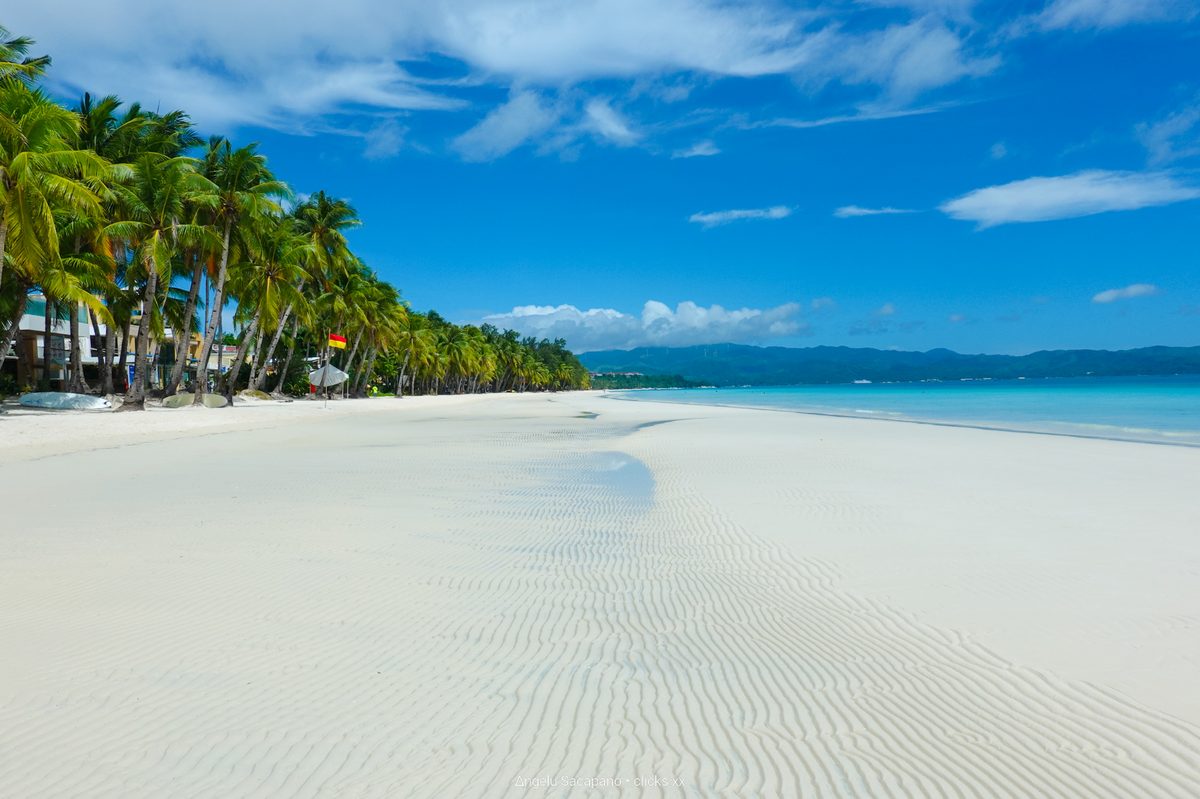
The complete Boracay Philippines travel guide — last updated June 2026, researched and fact-checked by the PhilippinesTourism.org editorial team.
I have a complicated relationship with Boracay. I rolled my eyes at it for years — too famous, too busy, too many selfie sticks — and then I watched a sunset off Station 1 turn the entire sky the color of a ripe mango, ordered a second calamansi shake, and quietly admitted defeat. Some places are famous for a reason.
The short version: Boracay, Philippines is a 10-square-kilometer island off the northwest tip of Panay, built around White Beach — four kilometers of genuinely powder-soft sand split into three “stations.” You fly to Caticlan (or Kalibo), cross by boat in 10–15 minutes, and everything on the island sits within a 20-minute tricycle ride. It is the easiest world-class beach trip in the Philippines.
This guide is for first-timers who want the stations decoded, returners curious what changed since the 2018 cleanup, and anyone trying to work out the new 2026 flight situation (it changed in March; most blogs haven’t noticed). I’ll cover how to get in, where to sleep, what to do beyond the beach towel, what it costs, and the rules that now come with paradise — plus the honest downsides nobody puts on a postcard.
Boracay at a Glance
| Essentials | The 2026 reality |
|---|---|
| Where | Off the northwest tip of Panay island, Aklan province, Western Visayas |
| Size | About 10.3 km² — seven kilometers tip to tip, walkable in parts, e-trike everywhere else |
| The main event | White Beach: ~4 km of fine white sand on the west coast, divided into Stations 1, 2 and 3 |
| Gateway airports | Caticlan (MPH, 10 minutes from the jetty) and Kalibo (KLO, ~1.5–2 hours away by bus or van) |
| The crossing | Caticlan Jetty Port → Cagban Port, Boracay: 10–15 minutes by pumpboat, 3–5 by speedboat |
| Entry fees | Around ₱510 total — ₱300 environmental fee + ₱150 terminal fee + ₱60 boat fare (raised April 2026) |
| Best months | November to May (dry, kite season Nov–Apr); quieter and cheaper June–October with rain-roulette |
| Typical stay | 3 days / 2 nights covers the hits; 4–5 days if you want to exhale properly |
| Daily budget | Backpacker ~₱2,500–3,500; midrange ~₱5,000–8,000; beachfront-and-cocktails ~₱12,000+ |
Is Boracay Still Worth It in 2026?
Yes — and arguably more than it was a decade ago.
Quick history, because it explains everything about how the island works now. By 2017 Boracay was drowning in its own success: two million visitors a year, sewage running into the sea, buildings crowding the sand. In February 2018 the president called it a “cesspool,” and that April the government did something almost unheard of — it closed one of Asia’s most famous islands entirely for six months of rehabilitation. Pipes were dug up, hundreds of structures demolished, the beachfront pushed back 30 meters from the waterline.
The island that reopened in October 2018 is the one you visit today: cleaner water than most veterans ever saw, a wide-open beach with no massage tables or bonfires on the sand, and a rulebook to keep it that way. Old-timers miss the anarchy. I don’t. The sand is the same impossible texture — fine as sifted flour, cool underfoot even at noon because it’s coral-based rather than silica — but now you can actually see it.

What Boracay is not: wild. If you want empty lagoons and a sense of discovery, that’s Palawan, and I say so honestly in the comparison further down. Boracay is the polished, convenient, everything-within-reach version of Philippine paradise — resort breakfasts, reliable Wi-Fi, a hundred restaurants within a sandy stroll. There are trips where that is exactly what you want.
The Lay of the Land: Stations, Beaches and What the Maps Don’t Tell You
Boracay is shaped like a dog bone or a drumstick, depending on your appetite — long and skinny with a knobby north end. Nearly everything that matters to a visitor sits on or near the narrow middle, where White Beach faces west and Bulabog Beach faces east, barely 800 meters apart. You can walk coast to coast in ten minutes.
White Beach and its three stations
The “stations” are old boat-stop names that stuck, and they’re the island’s entire postcode system. Same sand, very different personalities:
| Zone | Personality | Stay here if | Typical double room |
|---|---|---|---|
| Station 1 (north) | The widest, quietest stretch of sand; upscale resorts; Willy’s Rock at low tide | You want the classic postcard and don’t mind paying for it | ~₱6,000–15,000+ |
| Station 2 (middle) | The engine room: D’Mall, restaurants, live music, the densest crowds | You want everything within five barefoot minutes | ~₱3,000–8,000 |
| Station 3 (south) | Cheaper, slower, more local; the sand narrows but the sunsets don’t | You’re on a budget or allergic to crowds | ~₱1,500–4,000 |
| “Station 0” / Diniwid | Unofficial name for the serene cove just past Station 1’s headland | Honeymoon mode, cliffside sundowners | ~₱4,000–12,000 |

Two practical notes. First, the entire beachfront path is pedestrian-only, so “beachfront” means genuinely on the beach — but it also means luggage gets hand-carted from the road. Second, at low tide Station 1 grows a football field of extra sand and you can walk out to Willy’s Rock, the volcanic outcrop with its little Marian grotto that appears on roughly 40 percent of all Boracay photos ever taken. Go at high tide and it’s an island; go at dawn and you’ll have it to yourself.
Bulabog: the other coast
Cross the island’s waist and you hit Bulabog Beach, which from November to April is one of Asia’s best kitesurfing arenas — steady amihan (northeast monsoon) wind, a reef-protected lagoon, and a row of kite schools where you can go from zero to riding in a three-day course (figure around ₱20,000–25,000 for IKO-certified instruction; book ahead in January and February). Swimmers, look elsewhere: the lagoon is shallow, seagrassy and busy with lines and boards all season.

The north: Puka, Diniwid and the quiet coves
The island’s knobby north end (barangay Yapak) is hillier, greener and where Boracay hides its escape hatches. Puka Beach at the very tip is the anti–White Beach: coarser shell-flecked sand (puka shells — the 1970s necklace craze started here), proper waves, a handful of drink shacks and no resort wall. It’s a ₱150-ish tricycle ride from Station 1 and the single best place on the island to watch the sun go down without a cover charge.

Diniwid, reachable via a paved cliff path from the north end of Station 1 (ten minutes, sandals fine), is a 200-meter cove with a couple of low-key resorts and the kind of evening light that makes people reconsider their flight home. Further around sit Ilig-Iligan (clear water, weekday-empty) and Balinghai, a resort-owned pocket cove where the entrance fee converts to food and drink credit. The mega-resorts — Shangri-La, Crimson, Mövenpick — claim the far-north coves of Punta Bunga and Banyugan.

Newcoast and the rest
The east side beyond Bulabog is the Newcoast development — condo-hotels, a golf course and Ilig-Iligan’s gateway arch — useful for deals on newer rooms if you don’t mind shuttling to the action. The south end around Manoc-Manoc and Cagban port is workaday Boracay: this is where your boat docks, where locals live, and where backpacker pesos stretch furthest.
Getting to Boracay (Including the March 2026 Flight Change)
There’s no airport on Boracay itself. You fly to the mainland, take a short boat hop, and you’re on the island within an hour of landing — if you picked the right airport.
Caticlan vs Kalibo, settled
| Caticlan (MPH) | Kalibo (KLO) | |
|---|---|---|
| Distance to jetty | 5–10 minutes by tricycle or shuttle | ~67 km; 1.5–2 hours by bus or van |
| Who flies there | Cebu Pacific, Philippine Airlines, AirAsia and others from Manila, Cebu, Clark and more | Fewer domestic flights; most international charters and some budget routes |
| Fares | Usually ₱500–1,500 more than Kalibo | Cheapest seats, especially on promos |
| Transfer cost/time | Tricycle ~₱50–150/head; you’re on the boat fast | Bus ~₱100–120, shared van ~₱220–400, then the same jetty |
| My verdict | Worth the fare premium for stays under a week | Fine for promo-fare hunters and long stays |
Now the 2026 change most guides have missed. On 29 March 2026, under a Department of Transportation directive to decongest NAIA, all turboprop (propeller) flights were moved out of Manila’s main airport to Clark International, two to three hours north of the capital. That swept up PAL’s and Cebu Pacific/AirSwift’s propeller services and Sunlight Air’s Caticlan runs. What it means in practice:
- Jet flights from Manila (NAIA) to Caticlan still operate normally — Cebu Pacific flies the route with A320neos, so most travelers booking “Manila to Boracay” notice nothing.
- If your booking shows an ATR or Q400 turboprop, check the departure airport. It now almost certainly leaves from Clark (CRK), not NAIA — a brutal surprise if you’ve planned a tight same-day connection through Manila.
- Connecting internationally? Confirm your domestic leg departs from the same airport you land at. NAIA-to-Clark is a 2–3 hour road transfer (or the new airport rail link segments, still partial as of mid-2026).
Direct Caticlan flights also run from Cebu, Clark and seasonally elsewhere; AirSwift links Boracay with El Nido a few times weekly if you’re island-chaining toward Palawan. Fares move around: booked a month out, Manila–Caticlan is typically ₱2,000–5,000 base each way, falling under ₱1,500 in seat sales. Set a fare alert and pounce.
The jetty gauntlet, itemized
At Caticlan Jetty Port (or Tabon Port in rough weather), you’ll queue for a small stack of fees before boarding. As of mid-2026, budget around ₱510 per adult, one-way:
| Fee | Amount (2026) | Notes |
|---|---|---|
| Environmental fee | ₱300 | Goes to the Municipality of Malay; paid once per visit; discounted for Filipino travelers and waived for Aklanons |
| Terminal fee | ₱150 | Provincial port fee; charged again (smaller) on the way out |
| Boat fare | ₱60 | Pumpboat to Cagban Port — raised from ₱50 on 16 April 2026 on fuel costs; speedboats cost more |
Two ways to skip the queues. The official Boracay iPass (boracayipass.ph, a joint project of the Aklan provincial government, Malay municipality and the boat cooperative) lets you register your party, pay every statutory fee online and walk through with one QR code — genuinely useful on peak-season mornings when the fee windows snake out the door. Alternatively, door-to-door transfer packages (bookable at the airport or cheaper online via Klook and similar) bundle the van, fees and boat for roughly ₱800–1,000 per person from Caticlan, more from Kalibo. With kids and luggage, that’s money well spent.
Requirements beyond money are mercifully light in 2026: a valid ID or passport and a confirmed booking at a DOT-accredited accommodation, which staff may verify against the manifest. (Boracay’s room stock is capacity-managed post-rehab; unaccredited guesthouses can’t host tourists, so book off a reputable platform and you’re automatically fine.) Foreign visitors should already hold their Philippines eTravel QR from international arrival. Rules here have flip-flopped over the years — if you’re reading this long after our last update, give the official Aklan tourism pages a 60-second check before flying.
Getting around once you’re on island

From Cagban Port, hop-on shuttles and e-trikes run up the spine road. Boracay converted its tricycle fleet to electric after the rehab, which is why the island sounds weirdly peaceful compared to the mainland’s two-stroke chorus. Short hops between stations cost about ₱20–30 per person on a shared e-trike; chartering one runs a couple hundred pesos, and an informal two-hour land tour loop (Mount Luho, Puka, the east-side viewpoints) costs around ₱400–600 — agree on the price before wheels move. Walking the White Beach path end to end takes about 45 unhurried minutes and is, frankly, one of the island’s best free activities. There’s no Grab on Boracay; you won’t miss it.
Where to Stay in Boracay, Honestly
Boracay has more rooms per square kilometer than anywhere else in the Philippines, which is great news disguised as a headache. Here’s how I’d actually choose:
First trip, want the works: Station 2, one or two rows back from the beach. You give up the beachfront view (and its noise) and save 30–40 percent, while staying three minutes from both the sand and D’Mall. Solid midrange options hover around ₱3,000–5,000 a night with breakfast.
The postcard splurge: Station 1 beachfront — think Discovery Shores, The Lind, the Henann flagships — where ₱10,000–20,000 a night buys you the widest sand, sunset from your daybed and staff who remember your shake order. Worth it once.
Full seclusion: the northern coves. Shangri-La Boracay and Crimson have private beaches and speedboat transfers straight from Caticlan; you’ll forget Station 2 exists, which is the point (and the price, from ~₱20,000).
Budget without grimness: Station 3 and the streets behind it. Clean fan rooms and small hotels at ₱1,200–2,500, hostel dorm beds (Frendz, Mad Monkey and friends) around ₱700–1,200 including the social scene. The sand out front is narrower but identical in composition, and you’re 15 minutes’ stroll from the action.
Couples hiding from everyone: Diniwid or “Station Zero.” Kitesurfers: stay on Bulabog itself November–April and roll out of bed onto the lagoon.
One non-negotiable: book DOT-accredited accommodation only. It’s an entry requirement, not a quality award — unaccredited rentals can mean trouble at the jetty manifest check. Anything on the major booking platforms with recent reviews will be accredited; the bargain “homestay” a friend-of-a-friend DMs you about might not be.
Things to Do in Boracay Beyond the Beach Towel
You could do nothing but rotate between sand, shake and supper and have a perfect trip. But the island earns its keep off the towel too — here’s what’s worth your pesos, drawn from our bigger list of things to do in the Philippines.
On the water
Paraw sailing at golden hour is the Boracay ritual. A paraw is the local double-outrigger sailboat — fast, silent, wet in the best way — and a sunset group sail runs around ₱350–600 a head (private boats ~₱2,500–3,500). The boats trampoline you out on mesh nets between the hulls while the sky performs. Skipping this on a clear evening should be a finable offense.

Island hopping here is shorter and gentler than El Nido’s epics: a half-day loop typically strings Puka Beach, snorkeling over Crocodile Island’s reef (named for its profile, not its residents) and a stop near Crystal Cove or Magic Island, with grilled-seafood lunch on deck. Group tours run about ₱900–1,500 per person; private bangkas from roughly ₱4,000–6,000 split among friends. Snorkeling is pleasant rather than spectacular — manage expectations and enjoy the boat day.
The full adrenaline menu lives off Stations 1 and 3: parasailing (~₱2,000–2,500 for 15 airborne minutes), helmet diving (~₱700–900 — you walk the seabed in a goldfish-bowl helmet while fish mug for your photos), banana boats, jet skis, the transparent crystal kayaks that make your Instagram look expensive. Operators are licensed and posted prices are real, but everything is politely negotiable midweek and off-season.
Scuba is bigger here than people expect — 20-plus dive shops, easy warm-water sites like Crocodile Island and Angol Point for beginners, deeper walls at Yapak for the licensed. Discover dives run around ₱3,500–4,500; open-water courses about ₱18,000–22,000. And yes, the Philippine Mermaid Swimming Academy will teach you to swim in a tail (~₱1,500–2,500), which sounds ridiculous right up until you watch someone exit the water grinning like a seven-year-old.
Kitesurfing season on Bulabog
From November through April the amihan blows 15–25 knots across Bulabog’s flat, reef-fenced lagoon nearly every day, and the beach becomes a happy chaos of kites. It’s among the best places on earth to learn: warm waist-deep water, sand bottom, schools every 50 meters. Come May the wind dies, the schools shutter, and Bulabog goes back to being a sleepy fishing beach — if kiting is your reason for coming, the calendar is everything.
On land

Mount Luho, the island’s 100-meter high point, charges a small entrance fee (around ₱120–150) for a viewing deck over Bulabog, the north coves and on clear days the spine of Panay. Go by e-trike or rented e-bike in the morning before haze builds. The Motag Living Museum just across on the mainland (bundled tours from the island) walks you through pre-tourism Aklan village life — rice pounding, weaving, coconut everything — and is far better than the phrase “cultural demonstration” suggests. Families consistently rate it a sleeper hit.
Ariel’s Point is the famous cliff-diving day trip: a 40-minute outrigger ride to a coastal camp on Panay with five platforms from 3 to 15 meters, kayaks, snorkeling and a buffet-and-drinks package for roughly ₱3,300–3,800. It books out in high season; reserve a couple of days ahead and let the 15-meter board remain theoretical until you’ve watched a few launches.
After dark
Boracay’s nightlife survived the rehab with its volume knob turned from 11 to a civilized 8. The beachfront fire dancers still spin at most Station 2 bar fronts after sunset (tip ₱50–100 if you linger), the pub crawl remains the fastest friend-maker for solo travelers (~₱990 with shirt and shots), and live acoustic sets roll down the beach path nightly. Closing time is enforced now, beach drinking isn’t allowed outside licensed frontages, and honestly the island is better for both. Night owls gravitate to Station 2; everyone else is asleep by eleven, sun-tired and happy.
What to Eat: Chori Burgers, Shakes and the D’Talipapa Trick
Boracay’s food scene is broad rather than deep — every cuisine a tourist island needs, plus a few genuine local rituals worth seeking out:
- The chori burger. Grilled chorizo patty, sweet-spicy sauce, soft bun, about ₱60–100 from the legendary beachfront grills near the Station 1/2 boundary. Is it haute cuisine? No. Is it correct at 4 p.m. with sandy feet? Completely.
- A real mango shake — the benchmark is Jonah’s, an institution since before the rehab; expect around ₱150 and a line at sunset.
- Calamansi muffins from Real Coffee & Tea Café, the island’s oldest café — tart, dense, dangerously stackable. Take a box for the boat out.
- The D’Talipapa move: buy your seafood live at the wet market behind Station 2 — prawns, crab, the day’s catch, haggling expected — then pay one of the surrounding “paluto” restaurants a per-kilo cooking fee to grill, butter-garlic or chili it. Dinner for four under ₱1,500 that out-eats most ₱4,000 beachfront set menus.
- Filipino classics done properly: look for sinigang and kinilaw at the smaller carinderias along the main road — half the price of the beach path, twice the seasoning.
Beachfront dinner-with-toes-in-sand restaurants charge a 30–50 percent view tax. Pay it at least once for the sunset table; eat the rest of your meals one row back.
The Best Time to Visit Boracay
The two-season cheat sheet: amihan (roughly November–April) brings dry days, glassy water on White Beach and the kitesurfing wind on Bulabog — this is peak Boracay. Habagat (June–October) flips the wind: White Beach gets chop and occasional rain curtains, Bulabog goes calm, prices drop 30–50 percent and the island exhales. I’ve had soggy Julys and flawless Septembers; the southwest monsoon is a gambler’s season, with typhoon watch peaking August–October.
Two crowd warnings and one algae note. Christmas through Chinese New Year and Holy Week are full-capacity, book-months-ahead, queue-at-the-jetty periods — magical energy, zero serenity. And in the hot months (roughly February through May) parts of White Beach grow a morning fringe of green algae, locally called “lumot” — a natural, harmless seasonal bloom the crews rake daily; it photographs worse than it swims. If pristine-at-dawn matters to you, aim for November–January. For the full month-by-month breakdown, wind charts and typhoon math, see our complete guide to the best time to visit the Philippines.
How Many Days, and Two Itineraries That Work
Three days and two nights covers the canon. Five days lets you stop performing tourism and start vacationing. A week is lovely if you treat doing nothing as an activity; restless types should pair Boracay with another island instead — our Philippines itinerary guide shows how it slots into one- and two-week routes.
The Greatest Hits (3D/2N): Day one — land Caticlan by noon, cross, check in, claim your patch of White Beach, paraw sail at golden hour, dinner in D’Mall. Day two — morning island-hopping loop with Puka stop, afternoon massage or helmet dive, sunset at Diniwid, fire dancers after dark. Day three — dawn walk to Willy’s Rock at low tide, calamansi muffins, boat out by mid-morning.
The Exhale (5D/4N): add a Bulabog morning (kite lesson in season, or just coffee watching the kites), the Mount Luho–Puka e-trike loop with a long lazy Puka lunch, Ariel’s Point if you have the nerve, and one entire day with no plan, which on Boracay is the whole point.
What Boracay Costs in 2026
Boracay runs 20–40 percent pricier than mainland Philippines — everything arrives by boat, and the audience can pay. Honest June-2026 ballparks, per person per day excluding flights:
| Style | Daily budget | What that buys |
|---|---|---|
| Backpacker | ~₱2,500–3,500 | Dorm bed or fan double in Station 3, carinderia meals, shared e-trikes, one group activity every other day |
| Midrange | ~₱5,000–8,000 | Air-con hotel near Station 2, restaurant meals, a paraw sail and island hop, nightly shakes |
| Comfortable | ~₱10,000–15,000 | Beachfront or pool resort, seafood dinners, daily activities, spa hour |
| Luxury | ₱20,000+ | Northern-cove resorts, private boats, the works |
Add the ₱510 entry-fee stack each way, and tip in cash — ATMs cluster around D’Mall and run dry on peak weekends, so arrive with pesos. Cards and GCash are widely taken at established places, rarely at trike stands and beach grills.
The Rules: What You Can’t Do on Boracay Anymore
The post-rehab rulebook is real and enforced with fines (commonly ₱500–2,500). The ones travelers actually trip over:
- No eating, drinking or smoking on the beach itself — take the picnic to the licensed frontages or your room. Yes, that includes beers on the sand at sunset; bars exist for a reason.
- No sandcastles (commercial ones were a racket; all are now banned), no digging, no bonfires.
- No single-use plastics in many establishments — bring a refillable bottle; refill stations are common.
- No littering, obviously — and the island means it now.
- Water sports zones are mapped — swimmers between the flags, vendors must stay off the first 30 meters of sand. If a “masseuse” or sunglasses seller approaches you mid-nap on the sand proper, a polite no is the entire required transaction.
Behind the rules sits a carrying-capacity policy — on paper, around 19,000 tourists on-island at any one time with daily arrival ceilings. Enforcement is light in normal months and tightens at peaks, which is one more argument for the shoulder seasons.
Boracay by Traveler Type
Families: close to ideal. Calm shallow water in season, sand soft enough for barefoot toddlers, helmet diving and glass-bottom boats for the picky, pediatric clinics and pharmacies near D’Mall, and resorts (the Henanns, Mövenpick, Astoria) that have kids’ clubs down to a science. Station 1 or the quieter north suits naps; avoid Holy Week crowds with small children.
Couples: Diniwid or Station Zero for the hideout, one Station 1 beachfront splurge night, sunset paraw for two, dinner at a cliffside table over Balinghai. Boracay does honeymoon-without-trying better than anywhere this convenient has a right to.
Party people: Station 2, full stop. Pub crawl on night one for your crew, beachfront bars until the (now enforced) close, recovery shake at noon. It’s tamer than the pre-2018 legend — “LaBoracay” May-madness died with the rehab — but it remains the most reliable going-out island in the country.
Budget backpackers: Station 3 dorms, carinderia meals, the free show (sunset) nightly, one splurge on a group island hop. A genuinely good time on ₱3,000 a day is very doable; Boracay only punishes budgets that try to live beachfront.
Kitesurfers and windsurfers: November to April, Bulabog, end of conversation. Book rooms on the east side early — the kite crowd block-books season-long.
Luxury travelers: the northern coves deliver real five-star isolation (private beach, boat transfer, no vendors) while keeping White Beach a ten-minute buggy ride away. That combination — seclusion with a famous beach on tap — is rarer than it sounds.
Who should skip Boracay? Divers chasing world-class walls (Coron and Tubbataha out-dive it), solitude purists, and anyone whose heart sinks at the sight of other humans enjoying themselves. You want the wilder pages of our guide to the best islands in the Philippines instead.
The Honest Cons
Every guidebook owes you this paragraph and most won’t write it. It’s crowded — two million visitors a year on ten square kilometers; Station 2 at Christmas feels like a beautiful queue. It’s commercial — the walk down the beach path is punctuated by activity touts (post-rehab rules moved them off the sand, not out of earshot). The algae months are real — February to May mornings can green the shallows before the rakes pass. It’s pricier than nearly everywhere else in the Philippines. And it isn’t an adventure — the island has been optimized for comfort, which is either its flaw or its entire value proposition depending on the week you’ve had. I’ve stopped pretending it’s a guilty pleasure. It’s just a pleasure with caveats.
Boracay Philippines FAQ: Quick Answers
Is Boracay worth visiting in 2026?
Yes. The post-2018 cleanup held: water quality, beach width and order are all dramatically better than the island’s cautionary-tale years, while the food, resorts and logistics remain the most polished in the Philippines. If your priorities are a flawless beach with zero friction, it’s the country’s best single answer.
How many days do you need in Boracay?
Three days and two nights covers White Beach, an island-hopping loop and a paraw sunset. Four or five days adds the north coves, Mount Luho and actual rest. Beyond a week, restlessness sets in unless doing nothing is your favorite sport — pair it with another island instead.
Which is better, Boracay or Palawan?
Different species. Boracay is one perfect, convenient beach with everything attached; Palawan is raw scenery — lagoons, karst, wrecks — spread across distances that demand effort. First trip with limited time and a beach-first agenda: Boracay. Scenery hunters and adventurers: Palawan. Greedy and sensible: AirSwift links Caticlan and El Nido directly. For how its sand stacks up nationally, see our roundup of the best beaches in the Philippines.
Why did Boracay close in 2018?
Decades of unregulated growth had overwhelmed its sewerage and shoreline — the government closed the island to tourists for six months (April–October 2018), rebuilt the pipes and roads, demolished encroaching structures and reopened it under strict environmental rules: the no-eating-drinking-smoking beach policy, vendor-free sand and visitor caps you’ll notice today.
Do I need a permit or QR code to enter Boracay?
No permit — entry requires only a valid ID and a confirmed DOT-accredited hotel booking, plus the fee stack at the jetty (~₱510). The optional Boracay iPass QR (boracayipass.ph) just lets you prepay those fees online and skip the payment queues. Foreign arrivals need the standard Philippines eTravel registration they already completed at immigration.
Is Boracay expensive?
By Philippine standards, yes — figure 20–40 percent above mainland prices, with ₱2,500–3,500 a day workable on a backpacker setup and ₱5,000–8,000 buying genuine midrange comfort. By Maldives-or-Bali-beach-club standards, it’s a bargain for the sand quality.
Is Boracay safe?
Among the safest tourist destinations in the country — petty theft and occasional overcharging are the realistic risks, not violent crime. Swim between the flags in habagat chop, watch your phone at crowded bars, agree on trike prices upfront, and the island is about as low-stress as travel gets.
Can you swim at White Beach year-round?
Mostly. November to May the water is calm and pool-clear. June to October the southwest monsoon can bring chop, occasional seaweed and red-flag days on the west coast — many travelers simply swim mornings and watch the drama from a bar by afternoon. Bulabog is the calm side in those months, though it’s seagrassy.
Which airlines fly to Boracay (Caticlan)?
Cebu Pacific and Philippine Airlines lead the Manila and Cebu routes, with AirAsia and smaller carriers seasonally; AirSwift connects El Nido. Since 29 March 2026, propeller-aircraft services from the Manila area depart Clark, not NAIA — double-check which airport your turboprop booking uses.
Is Boracay good for kids?
One of Asia’s best beach islands for them: gentle gradients, soft sand, short transfers, kid-fluent resorts and food for every level of pickiness. The main cautions are sun (that white sand reflects hard) and Holy Week/New Year crowds.
Final Thoughts
Boracay is the Philippines with the difficulty setting turned all the way down — and after years of chasing harder islands, I’ve made peace with how good that feels. The 2018 reset gave the place a second chance most over-loved destinations never get, and eight years on, the bet has mostly paid off: the sand is still absurd, the sunsets still stop foot traffic, and the systems — fees, boats, caps, rules — mostly hum. Go in season for the postcard, off-season for the price, and at least once in your life for that first barefoot step onto White Beach, which no amount of internet preparation actually spoils. Build the rest of your route around it with our Philippines itinerary guide — the archipelago’s other 7,640 islands are waiting when you’re ready to work a little harder.
Photo Credits
- White Beach: Jhun Sacapano / CC BY-SA 4.0, via Wikimedia Commons
- Willy’s Rock: Wallpaperhd.io / CC0, via Wikimedia Commons
- Paraw at sunset: Ray in Manila / CC BY 2.0, via Wikimedia Commons
- Puka Beach: Tuderna / CC BY 3.0, via Wikimedia Commons
- Bulabog kitesurfing: Alexey Komarov / CC BY 3.0, via Wikimedia Commons
- Diniwid Beach: Christopher Punzalan / CC BY-SA 4.0, via Wikimedia Commons
- Mount Luho view: Tuderna / CC BY 3.0, via Wikimedia Commons
- Puka Beach road tricycles: Tuderna / CC BY 3.0, via Wikimedia Commons
Sources and Further Reading
- Philippine Department of Tourism
- Boracay iPass — official online fee payment (Province of Aklan / Municipality of Malay)
- Province of Aklan — tourist guidance
- Philippine Daily Inquirer — Caticlan–Boracay boat fare increase (April 2026)
- AvGeek Philippines — NAIA turboprop transfer to Clark, 29 March 2026
- eTravel — official Philippine arrival registration
About this guide: PhilippinesTourism.org is an independent resource for planning Philippine travel. Fees, fares and the 2026 flight changes were verified in June 2026 and are reviewed quarterly — prices on the island move with fuel and seasons, so treat figures as close ballparks and confirm anything mission-critical before booking. Spotted a change? Tell us.