Things to Do in Boracay
I have lost count of how many times I have watched the sun drop into the sea from a low plastic stool on White Beach, mango shake sweating in one hand. The best things to do in Boracay are not complicated: you sail a paraw at golden hour, you walk under Willy’s Rock at low tide, you eat your weight in grilled seafood at D’Talipapa, and you give the four-kilometre beach the lazy days it deserves. This guide is the honest version, written for August 2026.
Boracay is a small island in Aklan province in the western Visayas, reached by a short boat hop from the Caticlan jetty. It is tiny, walkable, and far more rule-bound than it was a decade ago after the 2018 six-month closure and clean-up. That is good news: the sand is whiter, the water is clearer, and there is still plenty to keep you busy for three or four days. This is the activities chapter of our full Boracay travel guide; below I rank the activities, flag the few I would skip, and price everything in pesos and dollars (roughly PHP 58 = USD 1) with honest 2026 framing.
The Best Things to Do in Boracay, Ranked
Here is my personal ranking after many trips. “Worth it?” is my call, not a tour operator’s. Prices are typical 2026 per-person rates and move with the season, fuel and how hard you haggle, so treat them as ballparks.
| Activity | Rough 2026 price (PHP / USD) | Worth it? |
|---|---|---|
| Sunset on White Beach (Station 1) | Free (a drink is ~PHP 150–300 / $3–5) | Essential |
| Paraw sailboat at sunset | ~PHP 3,700–4,700 / $64–81 per boat | Essential |
| Island hopping (Crocodile Is., Puka, Magic Island) | ~PHP 1,500–2,500 / $26–43 group | Yes |
| Helmet diving (15 min) | ~PHP 1,400 / $24 | Yes, once |
| Ariel’s Point cliff-diving day trip | ~PHP 2,500–3,000 / $43–52 | Yes (thrill-seekers) |
| Kitesurfing lesson (Bulabog or White Beach by season) | ~PHP 3,000–5,000 / $52–86 per hour group | Yes (wind-dependent) |
| Puka Shell Beach half-day | Free + ~PHP 300 / $5 tricycle round trip | Yes |
| Mount Luho view deck | ~PHP 120 / $2 entry + ~PHP 300 / $5 tricycle | Maybe |
| Parasailing | ~PHP 2,500 / $43 solo | Maybe |
| Beach massage | ~PHP 350–500 / $6–9 per hour | Yes |
| Helicopter island tour | ~PHP 6,000+ / $103+ for ~10–15 min | Skip (for most) |
If you only have a single full day, my order would be: a slow morning swim and breakfast on White Beach, an island-hopping boat or helmet dive around midday, then a sunset paraw and dinner at D’Talipapa. That is Boracay at its best, and it costs less than most people fear.
White Beach: The Reason Everyone Comes
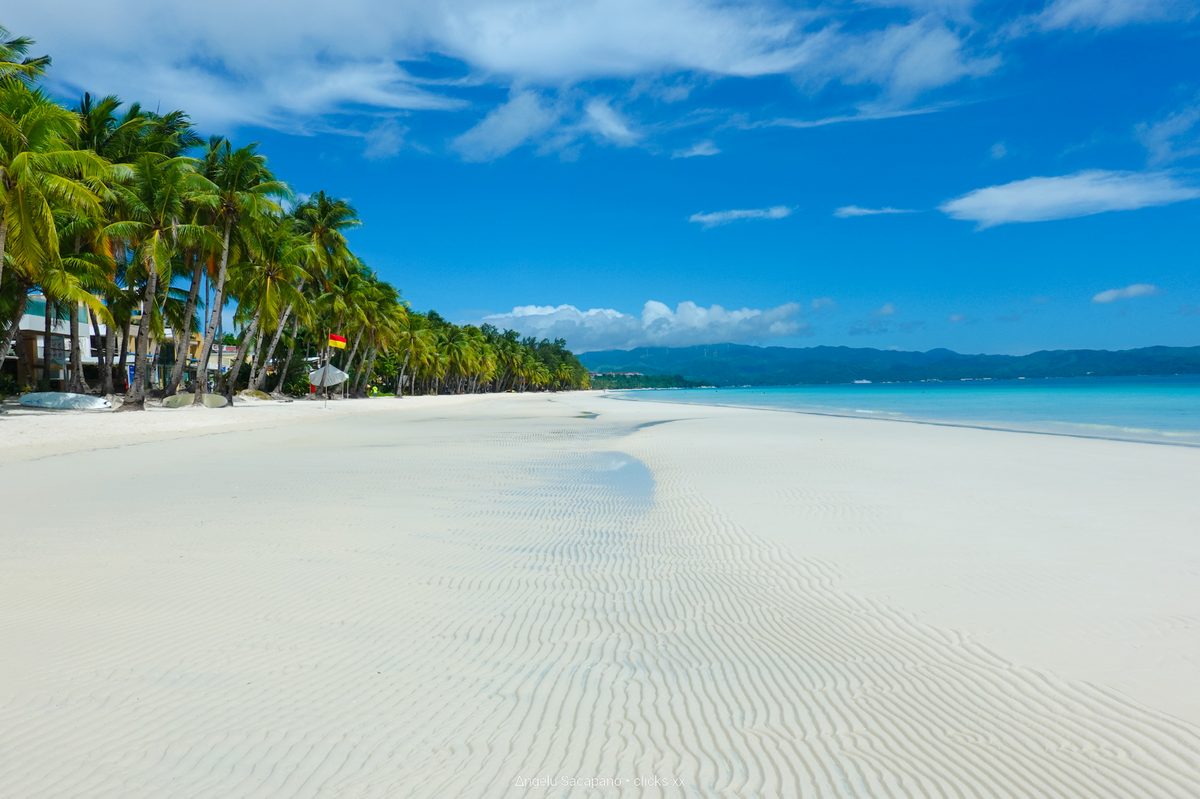
White Beach is the four-kilometre west-facing strip that made Boracay famous, and it earns its reputation. The sand is genuinely powder-fine and stays cool underfoot even at noon, which is the detail that sticks with first-timers. The beach is split into three informal sections, still called Stations 1, 2 and 3, and knowing the difference saves you a lot of walking.
Station 1, 2 and 3, decoded
Station 1 (the northern end) has the widest sand, the upscale resorts, and the calmest, most photogenic stretch. It is where I send anyone chasing the classic Boracay sunset shot. Station 2 is the busy middle: D’Mall, the most restaurants and bars, the loudest energy, and the spot for people-watching. Station 3 (the southern end) is quieter, cheaper and more local, good for budget rooms and a calmer evening drink with the waves close by. None are walled off; the whole beach is a continuous, free, public 20-minute stroll end to end.
A few rules to know before you go, because they are enforced with real fines: no smoking or drinking alcohol directly on the sand (there are designated areas set back from the beach), no littering, no single-use plastics from accommodations, and famously, no building sandcastles. The beachfront is also kept free of the masseuses, hawkers and bonfires that used to crowd it. It feels tamer than the old Boracay, but the trade-off is a beach that actually looks like the postcard again, which is most of the reason I still think Boracay is worth visiting.
Willy’s Rock
At the Station 1 end sits Willy’s Rock, a weathered volcanic outcrop topped with a small shrine to the Virgin Mary. It is Boracay’s most photographed landmark, and at low tide you can walk right out to it across a thin sheet of water that mirrors the sky. Go at sunrise or in the hour before sunset; at midday it is a queue of people waiting for the same photo. It costs nothing and takes 15 minutes, which makes it one of the best-value things to do in Boracay.

Water Activities: From Gentle to Genuinely Thrilling
This is where Boracay over-delivers. The west side of the island is a watersports menu, and most operators cluster along White Beach so you can compare prices on foot. Haggle politely, confirm exactly what is included, and never pay the full first quote.

Paraw sailing (do this one)
A paraw is a traditional Visayan sailboat: a slim wooden hull with two bamboo outriggers and twin triangular sails. Sailing one at sunset is, for my money, the single most memorable thing you can do here. There is no engine noise, just the sails snapping and the water hissing under the outrigger as you tip toward the horizon. A boat takes up to about six people and an hour-long trip runs roughly PHP 3,700–4,700 ($64–81) for the whole boat, so it is cheap split between a group. Book the late-afternoon slot so you are on the water as the sun goes down.
Helmet diving
Helmet diving (sometimes called sea walking or “aquanaut”) is the gimmicky-sounding activity that I actually love recommending, because it works for absolute non-swimmers and kids. You wear a weighted glass helmet fed with air from the surface and simply walk along the seabed a few metres down while reef fish swarm around you. No skill, no certification, about 15 minutes underwater for around PHP 1,400 ($24), usually including hotel pickup and souvenir photos. It is touristy and a little staged, but the grin on everyone’s face afterwards is real. Do it once.

Kitesurfing, and the August twist most guides get wrong
Here is a seasonal detail that trips up visitors. For most of the year (the Amihan, roughly November to May) the steady northeast wind blows onto Bulabog Beach on the east side, turning it into one of Asia’s great kitesurfing spots while White Beach stays glassy and calm. But in August you are in the Habagat (the southwest monsoon, roughly June to October), and the wind flips. White Beach catches the weather and the chop, while Bulabog becomes the sheltered, calmer side. Serious kiting in August generally moves to the west side or quiets down on Bulabog entirely. If kitesurfing is your main reason to come, the best time to visit Boracay for it is the Amihan, not now. Lessons run roughly PHP 3,000–5,000 ($52–86) per hour and the schools at Bulabog are well-run and safety-conscious.
Parasailing, jet ski, banana boat and the rest
The classic towed-and-flown activities are all here. Parasailing gives you about 15 minutes in the air with a wide view of the island for around PHP 2,500 ($43) solo. Jet skis, banana boats and “fly fish” inflatables round out the adrenaline menu. Honest take: parasailing is fun but brief, and the views from a paraw or from Mount Luho are nearly as good for a fraction of the price. If you only pay for one aerial thrill, I would put the money toward an island-hopping day instead.
Island Hopping and the Quieter Beaches
Boracay has 17-odd beaches, and almost everyone only sees one of them. Spreading out is the easiest way to feel like you have the island to yourself, even in peak season. The standard island-hopping boat tour leaves from White Beach each morning and loops the coast, usually hitting a snorkel stop, a quiet beach for lunch, and a viewpoint or two for around PHP 1,500–2,500 ($26–43) on a shared boat with buffet lunch included. A private boat costs more but lets you control the stops and the timing, which is worth it for families or a group of friends.

Puka Shell Beach
Puka (officially Yapak Beach) is the long, wild stretch on the island’s northern tip, named for the puka shells that wash up in the coarser sand. It is everything White Beach is not: fewer people, bigger surf, a more natural feel, and almost no development beyond a row of simple stalls. The sand is rougher because of the shell fragments, so it is less of a barefoot-lounging beach and more of a walk-and-swim one. A tricycle from White Beach is about 15 minutes and PHP 300 ($5) round trip. During the August Habagat, Puka on the north coast can actually be calmer and clearer than the exposed west side, which makes it a smart bad-weather backup.
Diniwid and the small coves
Diniwid Beach is a tiny, pretty cove just around the headland north of Station 1, reachable on foot via a clifftside path at low tide or by a short tricycle ride. It is a 10-minute walk that buys you a noticeably quieter sunset and a couple of good beach bars. Further along, coves like Balinghai and Ilig-Iligan are even more secluded, though several are tied to resorts and charge an entrance fee that usually converts to food-and-drink credit. These are the spots for couples who want the beauty without the Station 2 crowd.
Ariel’s Point: the cliff-diving day trip
Ariel’s Point is an eco-adventure spot on the Panay mainland, about a 40-minute traditional outrigger ride south from Boracay. It has five diving platforms from roughly 3 to 15 metres above the water, plus kayaks, paddleboards and snorkelling, usually sold as an all-inclusive day trip with a BBQ buffet and drinks for around PHP 2,500–3,000 ($43–52). It is the best pure-adrenaline day on offer, and the lower platforms make it approachable even if you are nervous; lifeguards watch every jump. Book a day or two ahead in season because trips sell out and the boat ride can be cancelled in rough Habagat seas.
Mount Luho and Dry-Land Boracay
Boracay is famously flat, but it does have one proper viewpoint. The Mount Luho view deck sits at the island’s highest point, around 100 metres up, with a 360-degree panorama over White Beach, Bulabog and the surrounding sea. Entry is about PHP 120 ($2) and a round-trip tricycle from the beach is roughly PHP 300 ($5). You can also reach it by ATV, but I would skip the ATV: the route is short, dusty and not especially scenic, and the view is the same one you get for a fraction of the cost in a tricycle. Go for the panorama, not the off-roading.
Back at sea level, D’Mall is the open-air warren of shops, souvenir stalls and food counters behind Station 2, good for a flip-flop replacement, a cheap chori-burger or a mango shake. It is more bazaar than mall and pleasant to wander in the early evening. For getting between all of this, remember that Boracay’s main road runs only electric tricycles now; the island phased out gas-powered trikes as part of its environmental clean-up, so the ride is quiet and fume-free. Short hops cost a few dozen pesos shared, or a few hundred to charter.
Sunset, Dining and Nightlife
White Beach faces due west, which means the entire strip is a front-row seat for sunset every single evening. This is the non-negotiable Boracay ritual. My honest advice: do not fight the crowd at Station 2. Walk up to the north end of Station 1 or down to the quiet end of Station 3, grab a stool and a drink, and watch the sky burn down over the water in relative peace. A paraw or a sunset cruise puts you right in the middle of it if you want to go all in.

Eating well
The standout food experience is D’Talipapa, the wet market near Station 2 where you buy fresh fish, prawns, crab and shellfish by the kilo and hand it to one of the surrounding “cook-it” restaurants to grill or steam for a small fee. It is the most fun you will have eating on the island and, if you shop carefully, some of the best value. Beyond that, the beachfront is wall-to-wall restaurants from cheap Filipino canteens to proper international kitchens. Chase down a chori-burger, a fresh calamansi or mango shake, and at least one halo-halo on a hot afternoon.
Nightlife, tamer but alive
Boracay was once a hard-partying island, and the post-2018 rules toned that down considerably (no more bonfires and parties directly on the sand). But the night scene is far from dead. Stations 1 and 2 still have lively beach clubs, live music and the odd fire-dancing show on terraces set back from the water. A pub crawl is the easy social option for solo travellers and small groups, hopping several bars with a built-in crowd. Want a quiet drink instead? Station 3 and the smaller coves give you the sound of the waves and not much else, which is exactly the point.
Boracay by Traveller Type
Boracay flexes to fit very different trips. Here is how I would steer each kind of visitor.
| You are… | Build your Boracay around |
|---|---|
| A family with kids | Station 1’s calm shallow water, helmet diving, a gentle island-hopping boat, Puka Beach shell-hunting, and an early sunset before bedtime |
| A couple | Diniwid or a cove resort, a private sunset paraw, a beachfront massage, and dinner away from the Station 2 crowd |
| Party travellers | Station 2 base, a pub crawl, beach clubs, and a recovery day of island hopping |
| Adrenaline seekers | Ariel’s Point cliff diving, kitesurfing (best in the Amihan), parasailing, and the Mount Luho viewpoint |
| Budget backpackers | Station 3 rooms, free White Beach days, Willy’s Rock, a shared island-hop, and D’Talipapa self-catering |
If you are still deciding between islands altogether, our Palawan vs Boracay comparison lays out which one suits which kind of trip, and Boracay’s sand earns its place on our list of the best beaches in the Philippines.
What to Skip in Boracay (An Honest List)
Not everything sold on the beach is worth your money. A few honest calls:
- The helicopter tour. It is genuinely scenic, but PHP 6,000-plus for 10 to 15 minutes is steep when Mount Luho and a paraw give you most of the view for pocket change. Skip it unless money is no object.
- The ATV ride to Mount Luho. Short, dusty and underwhelming. Take a tricycle to the same view for far less.
- Crowded midday Willy’s Rock photos. Not the activity, the timing. Go at sunrise or you will queue behind dozens of people for the same shot.
- The mermaid swimming “academy” is a fun novelty for some, but it is pricey for what it is. Fine if it is on your bucket list; otherwise it is the first thing I would cut.
- Overpriced “island hopping” touts on the beach. The activity is great; the random hard-sell guys are not always. Compare a couple of operators and confirm what is included before you pay.
Practical Things to Know Before You Go
Boracay is more regulated than most Philippine islands, and a little planning saves friction at the door. Most visitors fly into Caticlan (the closest airport, about a 10-minute drive from the jetty) or Kalibo (cheaper flights, roughly a two-hour land transfer). From the Caticlan jetty you cross to Boracay in about 15 minutes by boat.

Fees at the jetty
At the Caticlan terminal you pay, in addition to the small boat fare of around PHP 50–100, a terminal/port fee of about PHP 150 ($2.50) and a one-time environmental fee of around PHP 300 ($5) that covers your whole stay. As of 2026 these are increasingly collected through the Boracay iPass system, which you can settle online in advance to skip a queue. Budget roughly PHP 500–600 ($9–10) in fees per person on top of your transfers, and keep the receipt; you may be asked for proof.
Accreditation and the tourist cap
One quirk that catches people out: Boracay enforces an ecological carrying capacity, with the island capped at roughly 19,000 visitors at any one time, and you are generally expected to have a confirmed booking at a DOT-accredited hotel before you arrive. Book a legitimate, accredited place to stay and this is a non-issue; turn up without a reservation in peak season and you can be turned away at the port. It is worth choosing your room before you fly, and our guide on where to stay in the Philippines covers how to pick well.
Is August a good time to visit?
August sits in the Habagat (southwest monsoon), so expect warm temperatures around 25–32°C, higher humidity, and short heavy downpours rather than all-day rain. The big advantage is fewer crowds and softer prices. The catch is that White Beach can get choppy and weedy when the wind blows onshore, and some boat trips get cancelled in rough seas. The fix is local knowledge: when the west side is rough, the north (Puka) and the sheltered east side are often calm, so you simply follow the calm water, which is also why an island hopping in the Philippines boat day can save a grey afternoon here.
Frequently Asked Questions
What are the top activities on Boracay island?
The essentials are a sunset on White Beach, a paraw sailboat trip, an island-hopping boat tour to Puka and Crocodile Island, and a walk out to Willy’s Rock at low tide. Add helmet diving for non-swimmers, cliff diving at Ariel’s Point for thrill-seekers, and the Mount Luho viewpoint. Most are cheap, and you can fit the highlights into two or three relaxed days.
How many days do you need in Boracay?
Three to four days is the sweet spot. That gives you a couple of slow beach days, one island-hopping or watersports day, and a quieter-beach day at Puka or Diniwid, without feeling rushed. Two days works if you are only after the beach and a sunset sail. Longer than five days and most people start running out of new things to do, since the island is small.
How much does a trip to Boracay cost?
Boracay is pricier than most Philippine islands but still good value. Budget travellers manage on roughly PHP 2,500–3,500 ($43–60) a day with a Station 3 room and cheap eats; mid-range comfort runs PHP 5,000–8,000 ($86–138) a day. Add the jetty fees of around PHP 500–600 per person and your individual activities on top. Sunsets, beach time and Willy’s Rock are free.
Is Boracay worth visiting after the rehabilitation?
Yes, and arguably more than before. The 2018 closure and clean-up restored the water clarity and sand, removed the beachfront clutter, and enforced rules that keep it that way. It is calmer and more orderly than the old party island, which disappoints a few nostalgists but delights almost everyone else. The beach genuinely looks like the postcards again.
What is there to do in Boracay when it rains?
August showers are usually short. When one rolls through, head to D’Mall to shop and eat, book a beachfront or spa massage, or treat yourself to a long D’Talipapa seafood lunch. Helmet diving and many watersports still run between squalls, and the north and east sides are often calmer than a rough White Beach, so you can sometimes just relocate to better weather.
Do I need to book a hotel before arriving in Boracay?
Effectively, yes. Boracay expects visitors to have a confirmed reservation at a DOT-accredited hotel, and you can be denied entry at the port without one, especially in busy periods. The island also enforces a daily visitor cap. Booking an accredited place in advance keeps everything smooth and is simply the sensible way to plan a Boracay trip.
Sources and photo credits
Photo Credits
- White Beach, Boracay — Jhun Sacapano, CC BY-SA 4.0, via Wikimedia Commons
- Paraw sailboats, Boracay — Constantine Agustin, CC BY-SA 2.0, via Wikimedia Commons
- Puka Shell Beach, Boracay — Sarahr, Public domain, via Wikimedia Commons
- Sunset over White Beach, Boracay — User:CollingsCamillaMs, Public domain, via Wikimedia Commons
- Bulabog Beach kitesurfing, Boracay — Alexey Komarov, CC BY 3.0, via Wikimedia Commons
- Willy’s Rock, Boracay — Wallpaperhd.io, CC0, via Wikimedia Commons
- Aerial view of Boracay — Patrickroque01, CC BY-SA 4.0, via Wikimedia Commons
Sources
- Philippine Department of Tourism — official travel portal
- Boracay iPass — official environmental and terminal fee portal (Aklan Provincial Government)
- Department of Environment and Natural Resources (DENR) — Boracay rehabilitation and ordinances
- PHIVOLCS — volcano and seismic bulletins for the Philippines
About this guide: PhilippinesTourism.org is an independent Philippines travel resource. This guide was researched and verified August 2026.