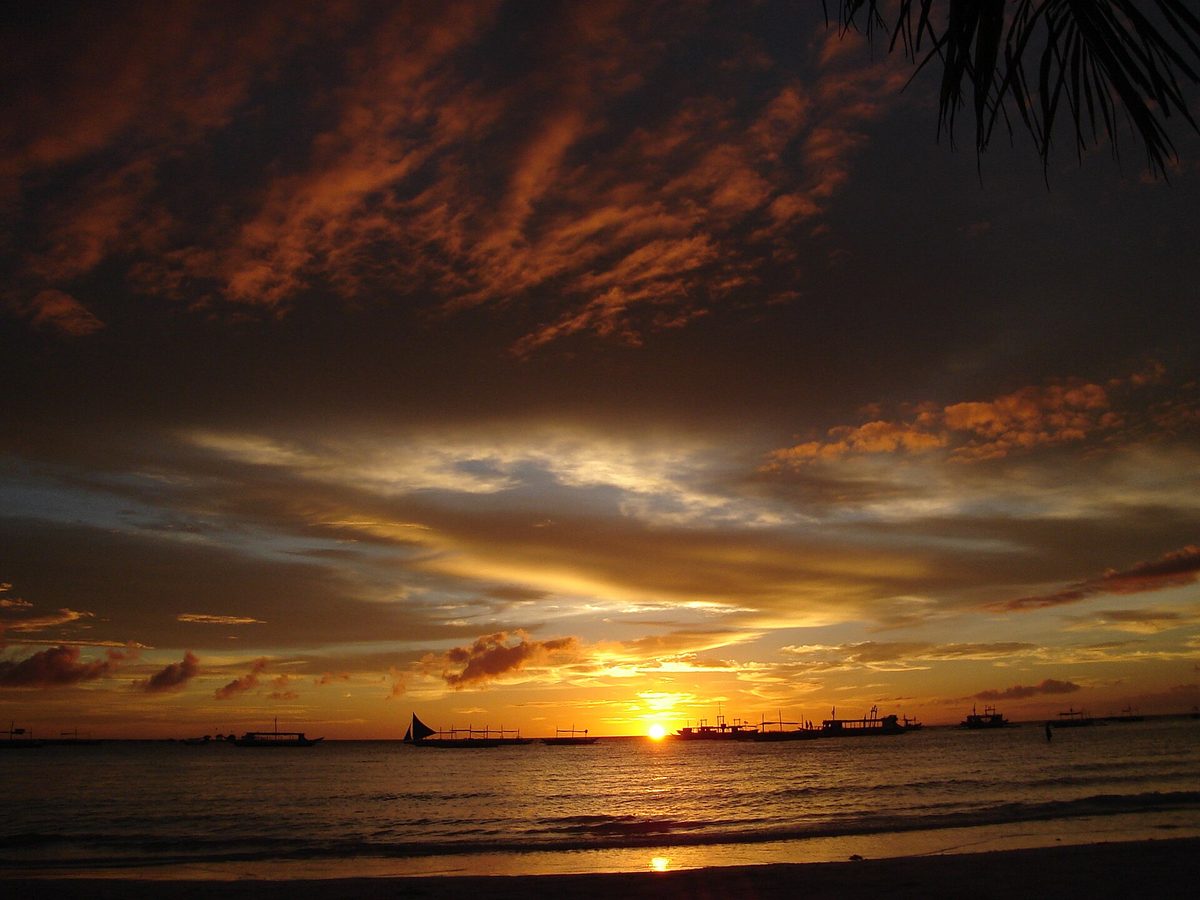
Best Time to Visit Boracay
The sweet spot for Boracay is late November through April, when the cool northeast amihan wind flattens White Beach into the postcard everyone comes for: dry, sunny, glassy water you can wade into for hours. The honest catch is that the calmest months are also the busiest and priciest, with December to February the most crowded of all. Pick your week around that trade-off and you can have the island either glossy or cheap, but rarely both.
The best time to visit Boracay really comes down to one thing most guides barely mention: the wind. I’ve watched the island flip from a flat turquoise pool to a wind-chopped, seaweed-strewn shore in the space of a season, and almost none of that is random. Get the wind right and you’ve basically chosen your trip. So below is a real month-by-month table, the amihan-versus-habagat insight that decides which beach is even usable, an honest word on the seaweed nobody photographs, and the 2026 fees and crowd caps as they actually stand.
Boracay month by month, at a glance
Here’s the quick version. “White Beach” is the famous 4 km west-facing strip; “Bulabog” is the east-facing bay on the other side of the island, ten minutes away, where the kite crowd lives. They behave like opposites depending on the season, which is the whole trick to timing Boracay well.
| Month | Weather | White Beach | Bulabog | Crowds | Prices | Verdict |
|---|---|---|---|---|---|---|
| January | Dry, breezy, ~26-28°C, coolest | Calm to lightly breezy, mostly swimmable | Windy, prime kiteboarding | High | High | Excellent weather, peak prices |
| February | Dry, sunny, low humidity | Usually calm and clear | Strong steady wind, kite season | High | High | One of the best all-rounders |
| March | Hot-dry begins, very sunny | Calm; some seaweed possible | Wind easing but still good | High | High | Sunniest, hot, watch for algae |
| April | Hottest & driest, up to ~9h sun | Calm; lumot can show up | Wind fading late month | Very high | High | Great sun, Easter & Love Boracay crowds |
| May | Hot, first showers possible late | Calm early, choppier late May | Wind largely gone | High early, easing late | Dropping late | Strong shoulder value after Labor Day |
| June | Habagat starts, wettest month begins | Waves & seaweed push in, choppier | Calmer, sheltered side | Low | Low | Cheap and quiet, rain trade-off |
| July | Wet, frequent afternoon storms | Choppy, weedy in stretches | Calmer, boats may shift here | Low | Lowest | Bargains, expect rain & some closures |
| August | Wettest stretch, typhoon risk | Roughest of the year at times | Calmer, protected | Low | Lowest | Cheapest, most weather disruption |
| September | Still wet, storms ease slightly | Often choppy, variable | Calmer side | Low | Low | Quiet; gamble on the forecast |
| October | Habagat winding down late month | Settling by late Oct | Wind returning late | Low to medium | Rising late | Improving fast toward month’s end |
| November | Amihan returns, drying out | Calming, clearing up | Wind builds, kite season starts | Medium | Medium | Best shoulder pick of the year |
| December | Dry, cool, sunny | Calm and glassy | Windy, kiteboarding on | Very high (holidays) | Highest | Gorgeous but packed and dear |
If you only remember one row: November gives you most of the dry-season magic before the holiday surge and the Christmas pricing.
Amihan vs habagat: the wind decides which beach you actually get
This is the part the weather widgets miss. Boracay sits on a narrow island with two main beaches facing opposite directions, and the monsoon wind direction flips twice a year. Which beach is calm, swimmable and photogenic depends entirely on where that wind is blowing from.
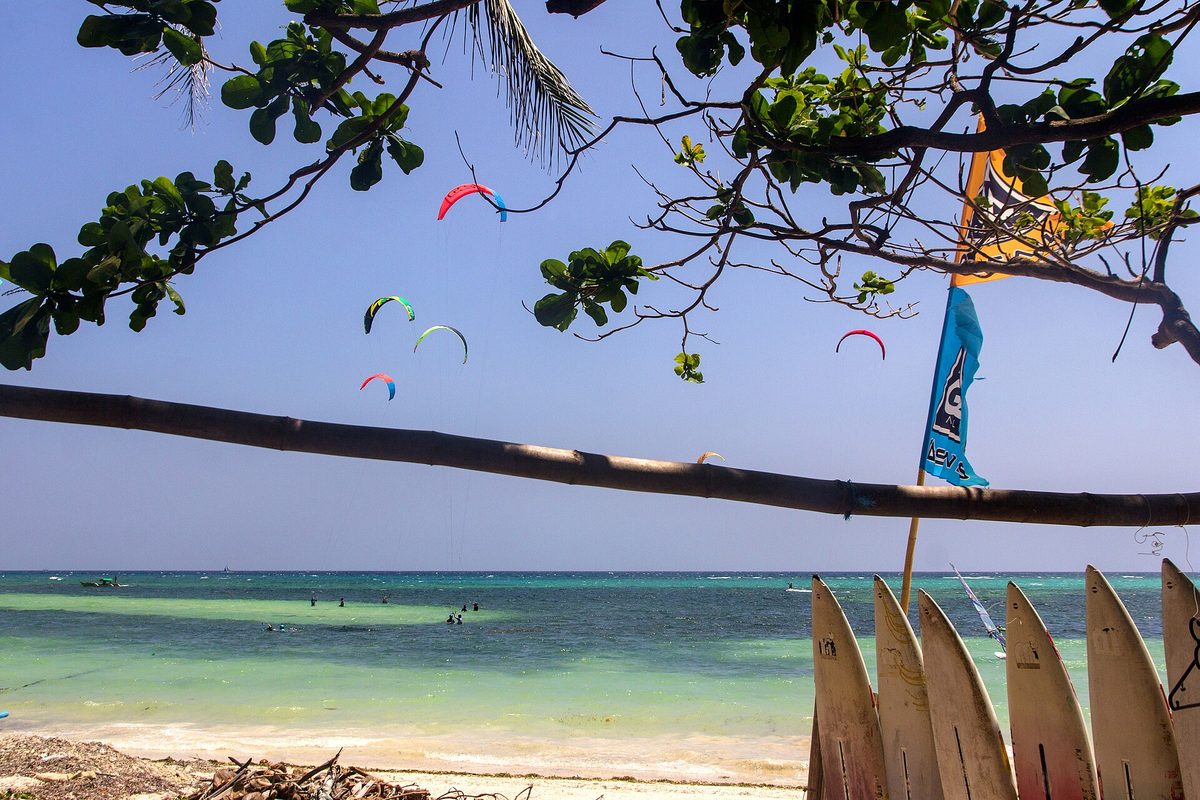
During amihan (the northeast monsoon, roughly November to May, strongest December to February), the wind comes over the island’s east side and out across Bulabog. That leaves White Beach on the sheltered, lee side: flat, clear, calm, exactly the glassy turquoise you’ve seen in every photo. The same wind that protects White Beach turns Bulabog into a world-class wind sports arena, which is why kiteboarders and windsurfers show up November through April. Two beaches, one wind, opposite results.
Then habagat (the southwest monsoon, roughly June to October) reverses everything. The wind now blows in off the sea straight onto White Beach. That pushes waves, chop and drifting seaweed onto the famous strip, clouds the water, and on rougher days makes swimming there less appealing. Now it’s Bulabog and the back-beach coves that sit in the shelter. The change is so reliable that the boats themselves move: in amihan, arrivals use the southern Caticlan Jetty side and Cagban, while in habagat operations shift to Tabon and Tambisaan ports on the calmer side of the island. If a transfer drops you at a different jetty than your friend’s trip did, the monsoon is the reason.
So the real timing question isn’t only “when is it dry?” It’s “which beach do I want, and will the wind be on my side?” For lounging and swimming on White Beach, you want amihan. For kiting, you also want amihan, just on the other coast. For the cheapest quiet escape and you don’t mind that White Beach is rougher, habagat will do it.
A practical tip flows straight from this: when you book a beachfront room, check which beach it actually faces and in which season. A White Beach hotel is glorious in amihan and exposed in habagat; a Bulabog spot is a kiter’s dream in winter and a quiet swim in summer. Reading the wind before you reserve is the single most useful thing you can do to time a Boracay trip well.
The month-by-month walkthrough
December to February: peak amihan, peak everything
These are the glossy months. Cool by Philippine standards (high twenties Celsius, low eighties Fahrenheit), low humidity, reliable sun, and White Beach at its calmest. It’s also the busiest and most expensive window of the year, and the Christmas-New Year fortnight is the single most packed stretch, with hotels charging their top rates and the beachfront genuinely shoulder-to-shoulder at sunset. January and February ease off the holiday peak slightly while keeping the same lovely weather, which makes February my favourite all-round month if budget is secondary.
March to May: hot, dry, and crowded in bursts
The hot-dry season brings the sunniest skies of the year, with April pushing up to around nine hours of sunshine a day and afternoon heat that’s genuinely strong. White Beach stays calm, but this is also when green algae is most likely to appear (more on that below), and the crowds spike hard around two events: Holy Week (Easter) and the Love Boracay festival in late April to early May. Come for the sun, but book early and brace for company. By late May the first stray showers can arrive and prices start to soften as the season turns.
June to October: habagat, rain, and real bargains
The southwest monsoon settles in and the rhythm changes to bright mornings, building cloud, and afternoon or evening downpours that can be heavy. June is statistically the wettest month, with averages well north of 400 mm. White Beach gets choppier and weedier; the water loses some of its clarity. The flip side is real: this is the cheapest, quietest, greenest Boracay, with room rates at their lowest and the beach paths actually walkable. It overlaps the Philippine typhoon season, and while the western Visayas is less exposed than the Pacific-facing east, where the best time to visit Siargao runs on an almost inverted calendar, storms do pass through and can suspend boats and activities for a day or two, so flexible plans matter. If you want to gauge that risk properly before booking, our typhoon season in the Philippines guide lays out which months carry the most exposure and how to build a buffer into your itinerary. In practice, plenty of habagat days still deliver hours of sun between systems, and the rain often clears as fast as it arrives, so a wet-season trip is far from a write-off, just less predictable than the glassy amihan months.
November: the shoulder I’d book first
November is the quiet hero. The rains taper, the amihan wind returns to calm White Beach and wake up Bulabog, and the island is noticeably cheaper and emptier than it will be a month later. You’re taking a small gamble on a late-season shower, but in exchange you get near-peak conditions without near-peak prices or crowds. If someone asks me for one month that balances weather, value and elbow room, this is it.
Peak vs shoulder vs low season: crowds and prices
Boracay’s calendar splits cleanly into three pricing tiers, and knowing them is half of timing your trip.
- Peak (mid-December to mid-May): best weather, highest prices, biggest crowds. The Christmas-New Year window and Holy Week are the absolute summits for both rates and density.
- Shoulder (November, and late May into June): the value zone. Conditions are still good or improving, but you dodge the worst of the pricing and the queues. November leans dry; late May-June leans gradually wetter.
- Low (June to October): cheapest and quietest, with the rain and rougher White Beach as the trade. Genuine discounts on rooms, tours and dining, and a slower, more local feel.
One reality worth knowing: Boracay still has a government carrying-capacity figure from its post-rehabilitation reforms of roughly 19,215 visitors on the island at any time and around 6,405 daily arrivals. In practice those caps were breached again during Holy Week 2026 and aren’t being strictly enforced while authorities review new numbers. Translation: at peak, the island really does fill up, so “peak crowds” is not marketing caution, it’s the lived experience. For the wider seasonal picture across the country, our best time to visit the Philippines guide sets Boracay in context, and the Philippines weather by month breakdown is handy if you’re island-hopping beyond Boracay.
Kiteboarding and windsurfing season on Bulabog
If you’re coming for wind sports rather than sunbathing, your calendar inverts in a satisfying way: the busy, breezy amihan months that make White Beach calm are exactly what power Bulabog Bay. Reliable northeast wind blows across Bulabog from roughly November to April, with the strongest, steadiest conditions usually in December through February. That’s the window the schools and the international kite crowd target, and it’s when the bay fills with kites from morning to late afternoon.
Beginners do best earlier and later in that window when the wind is a touch friendlier; confident riders chase the peak. Outside amihan, from about May onward the wind drops off and the bay goes quiet for kiting, though the sheltered water then suits beginners learning other paddle sports. The neat thing is you don’t choose between calm beach and wind sports: in amihan you get both, one on each coast.
The seaweed question, answered honestly
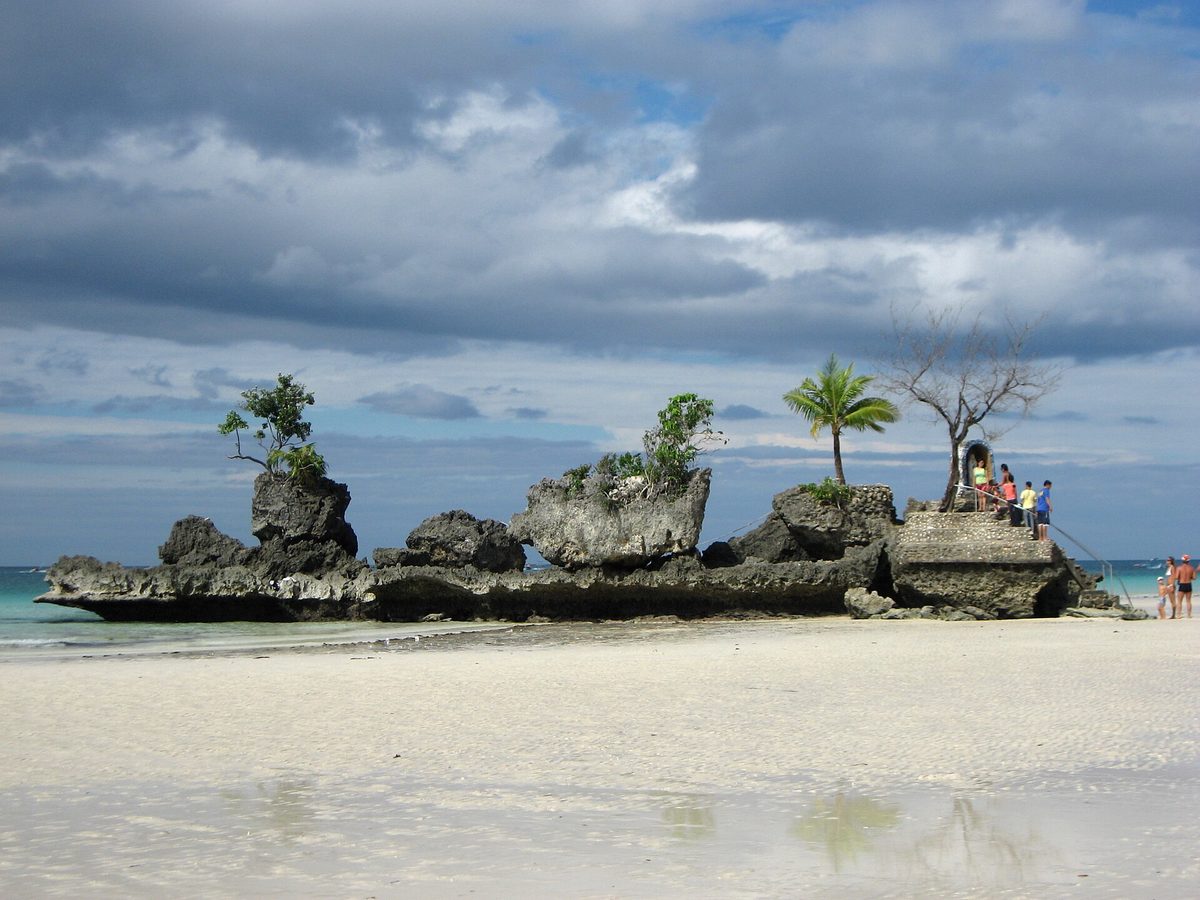
Nobody’s brochure shows it, so here it is straight. Boracay does get seaweed and green algae, locally called lumot, washing up on White Beach. The counterintuitive part is the timing: the algae tends to be most noticeable from roughly February to May, right in the middle of the “best” dry season, when warmer water and the amihan currents and winds push it toward the shore. It varies a lot year to year and even hour to hour, and it usually clings to certain stretches rather than the whole beach.
Two things keep this from ruining a trip. First, municipal crews rake and clear White Beach regularly, and natural flushing tends to restore clarity within days. Second, because it concentrates in patches, you can often just walk a few hundred metres to a clean stretch, or swim off a different beach entirely. Post-2018 reforms, including far better sewage treatment, have also reduced the worst blooms compared with the island’s grimmer years. My advice: don’t let the seaweed change your month, but do go in knowing March-May can bring some, and pick accommodation with a few beach access points nearby. If a pristine swim is non-negotiable, the calm clear water of December-January is your safest bet.
Love Boracay, LaBoracay and events to plan around
The island’s biggest party has rebranded. What used to be called LaBoracay, the wild Labor Day weekend blowout around May 1, has evolved into Love Boracay, a more managed multi-day festival. In 2026 it runs roughly April 25 to May 3, with dragon-boat races, beach sports, sunset sessions and parties packing the island. If that’s your scene, this is the week to come. If it absolutely isn’t, this is the week to avoid: rooms are dear, the beach is dense, and the music runs late.
The other crowd magnets to factor in are Christmas through New Year (peak of peaks), Holy Week / Easter (which moves each year and packs the island), and Chinese New Year, which brings a regional wave. If you want the dry-season weather without the festival energy, aim for late January, early March, or November and you’ll thread the needle nicely.
Getting to Boracay in 2026: access and fees
You can’t land on Boracay itself. You fly into one of two mainland airports and finish by boat:
- Caticlan (MPH): the close one. From the airport it’s a short tricycle or van hop to Caticlan Jetty Port, then a roughly 10-15 minute pump-boat crossing to the island. This is the fast, easy route.
- Kalibo (KLO): often cheaper flights, but it’s about a two-hour land transfer to Caticlan before the same boat crossing. Budget the extra time.
At the jetty you pay a small stack of fees before boarding, and as of 2026 they run approximately: a terminal fee around ₱150 (about $2.60, charged each way), an environmental/eco fee around ₱300 (about $5.20, a one-time charge for your stay; foreign-visitor rate), and the boat fare itself around ₱50-60 (roughly $1). All told you’re looking at well under $15 to get across, fees included. These figures drift, so treat them as a guide and confirm at the port. Remember the seasonal port switch too: in habagat your boat may use Tabon or Tambisaan rather than the usual Caticlan-side jetty.
Worth knowing for context: Boracay closed entirely for a six-month environmental rehabilitation in 2018 (April 26 to October 26), which is where today’s fees, caps and cleaner water all originate. For the full logistics, where to stay and what to do once you’re across, see our Boracay travel guide.
Best time to visit Boracay by traveler type
The “best” month genuinely depends on who you are and what you came to do.
- Beach loungers and swimmers: December to February. Calmest White Beach, clearest water, lowest seaweed odds, coolest air. You pay for it in crowds and rates, but the conditions are unbeatable.
- Sun-chasers and photographers: March to early May for the longest, brightest days, accepting the heat and the chance of some algae.
- Kiteboarders and windsurfers: December to February on Bulabog for the strongest, most reliable wind; shoulder of November or March for friendlier learning conditions.
- Families: late November or early December (before the holiday peak), or the post-Easter lull in late May, for calm water, manageable crowds and gentler prices.
- Party and festival fans: the Love Boracay week, late April to early May.
- Budget travelers: July to September. The lowest prices of the year if you can roll with rain and a rougher White Beach, with September often offering decent weather windows between systems.
Deciding between islands? Our Palawan vs Boracay comparison weighs the two head to head, and if Palawan’s lagoons are calling, the best time to visit Palawan follows a slightly different seasonal rhythm worth checking before you commit.
The verdict
For most travelers, late November through April is when Boracay is the place from the photos: dry, calm, sunny, with White Beach at its glassy best. Inside that window, December to February is the most beautiful and the most expensive, while November and late May hand you almost the same conditions for noticeably less money and far fewer people. If you want the island nearly to yourself and the rain doesn’t scare you, July to September is cheap, green and quiet, just expect a rougher front beach and the odd washed-out afternoon. Match the wind to what you came for, build in a flexible day during storm season, and Boracay rarely disappoints.
Frequently asked questions
What is the best month to visit Boracay?
For the best balance of weather and value, November. For flawless calm-water conditions regardless of cost, December to February. February is the standout all-rounder: dry, sunny, low humidity and a calm White Beach, just past the Christmas pricing peak. March to May are sunniest but hotter and can bring green algae and big festival crowds.
What is the rainy season in Boracay?
The rainy season is the habagat (southwest monsoon), roughly June to October, peaking around June to August. Expect bright mornings and heavy afternoon or evening downpours, choppier water on White Beach, and the lowest prices of the year. It overlaps typhoon season, so build a flexible day or two into wet-season plans.
Is there seaweed on White Beach in Boracay?
Sometimes, yes. Green algae (lumot) is most likely from about February to May, ironically during the dry season, when warm water and amihan currents push it ashore. It clings to patches rather than the whole beach, crews clear it regularly, and clarity usually returns within days. December to January are your safest bets for clean, clear water.
When is kiteboarding season in Boracay?
Roughly November to April on Bulabog Beach, when the northeast amihan wind blows reliably across the bay. The strongest, steadiest conditions are usually December to February, which is when the international kite crowd arrives. From about May the wind fades and the bay quietens for kiting until the next amihan returns.
How much does it cost to enter Boracay in 2026?
Budget roughly ₱150 (about $2.60) terminal fee each way, a one-time environmental fee around ₱300 (about $5.20) for foreign visitors, and a boat fare around ₱50-60 (about $1). That is under $15 total to cross, fees included. Amounts change, so confirm the current figures at Caticlan Jetty Port.
Is Boracay worth visiting during the rainy season?
It can be, if your priority is price and quiet over guaranteed sun. June to October brings the cheapest rooms, the emptiest beaches and a lush, green island, with rain usually falling in heavy bursts rather than all day. The trade is a rougher, weedier White Beach and the small risk of a storm disrupting boats for a day.
Sources and photo credits
Photo credits
- White Beach sunset — User:CollingsCamillaMs (public domain) via Wikimedia Commons
- Bulabog Beach kitesurfing — Alexey Komarov (CC BY 3.0) via Wikimedia Commons
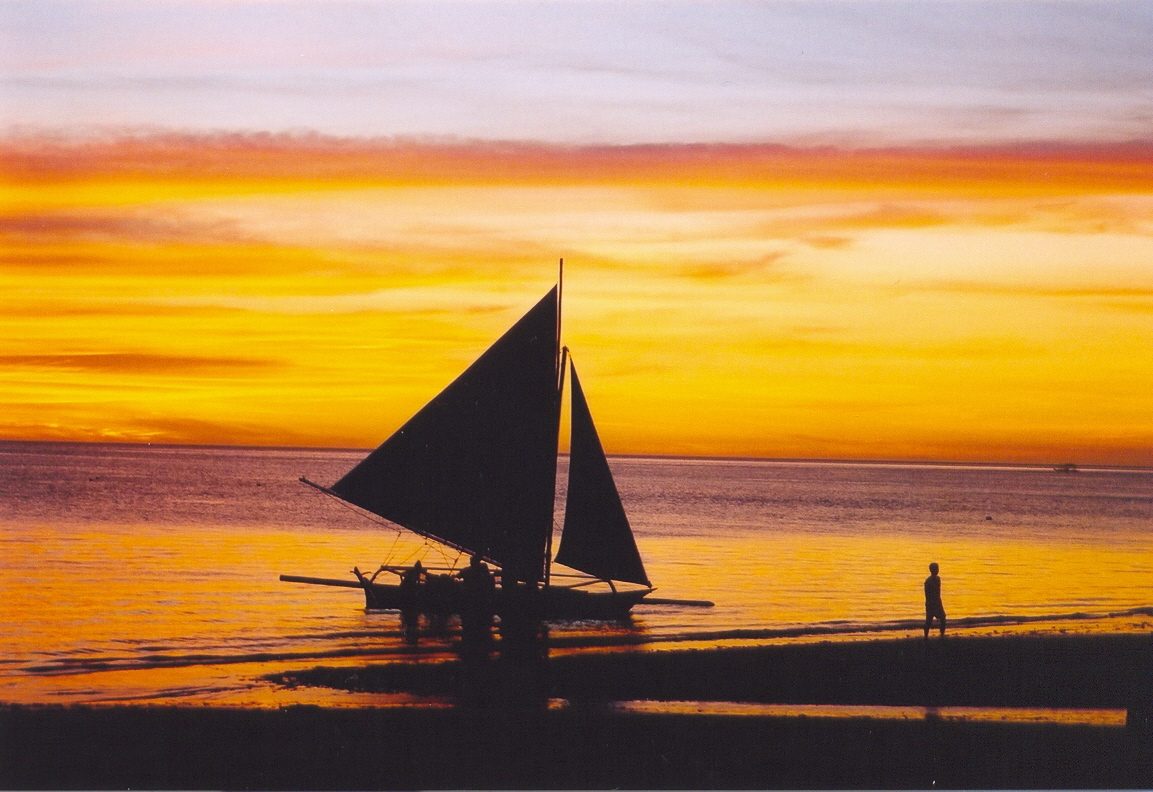
- Paraw sailboat at sunset — Magalhães (public domain) via Wikimedia Commons
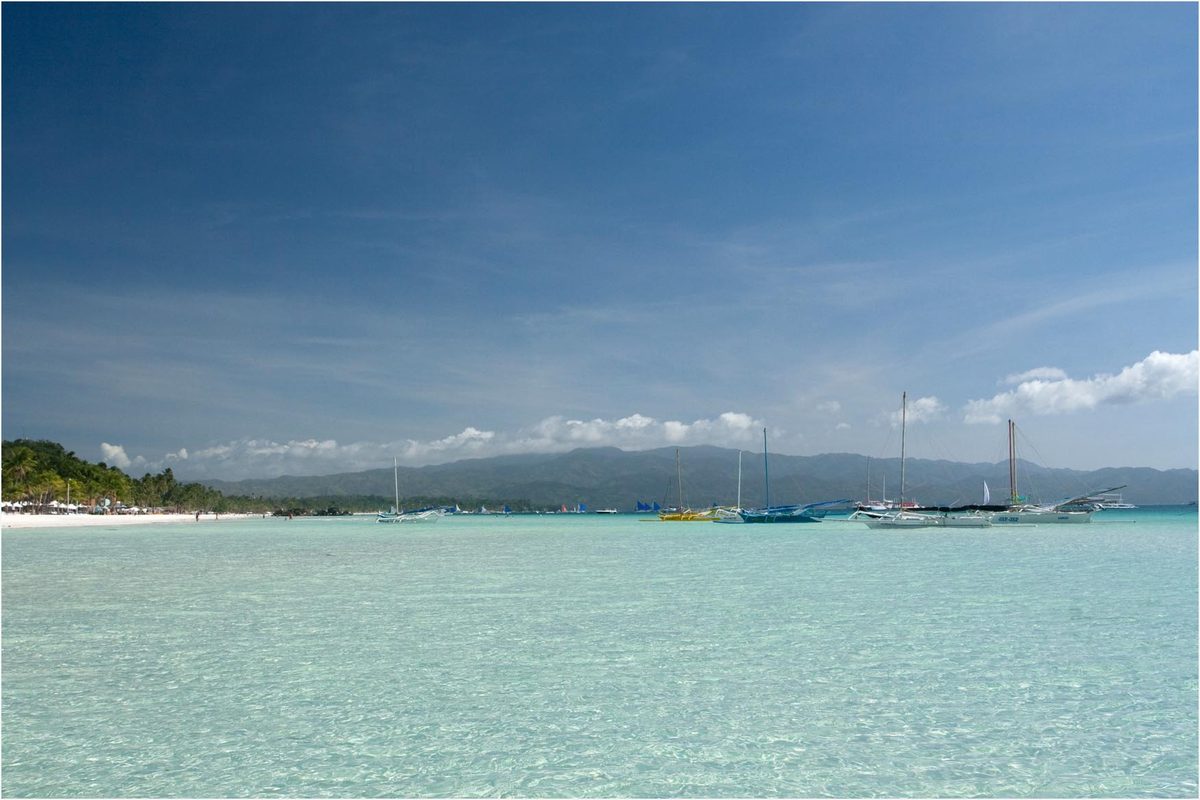
- Boracay White Beach — Tuderna (CC BY 3.0) via Wikimedia Commons
- Willy’s Rock at low tide — Eugene Alvin Villar (seav) (CC BY-SA 4.0) via Wikimedia Commons
- Sunset at Diniwid Beach — Christopher Punzalan (CC BY-SA 4.0) via Wikimedia Commons
Sources
- PAGASA — Climate of the Philippines (monsoon seasons)
- Department of Environment and Natural Resources (DENR) — Boracay rehabilitation and carrying capacity
- Philippine Department of Tourism
- Province of Aklan official portal (Boracay, Malay)
About this guide: PhilippinesTourism.org is an independent Philippines travel resource. Facts and prices were verified July 2026 and hedged in PHP and USD (~58 PHP = $1); seasons and fees change, so confirm current details before you go.