
Best Time to Visit Palawan
If you want one clean answer: visit Palawan between November and May, the dry season, when the seas calm down and the island-hopping boats actually run. The sweet spot for glassy water and reliable tours is December through March, while November and May give you most of that good weather for noticeably less money. The wet season (June to October) is greener, cheaper, and far less crowded, and I’ll make the honest case for it below.
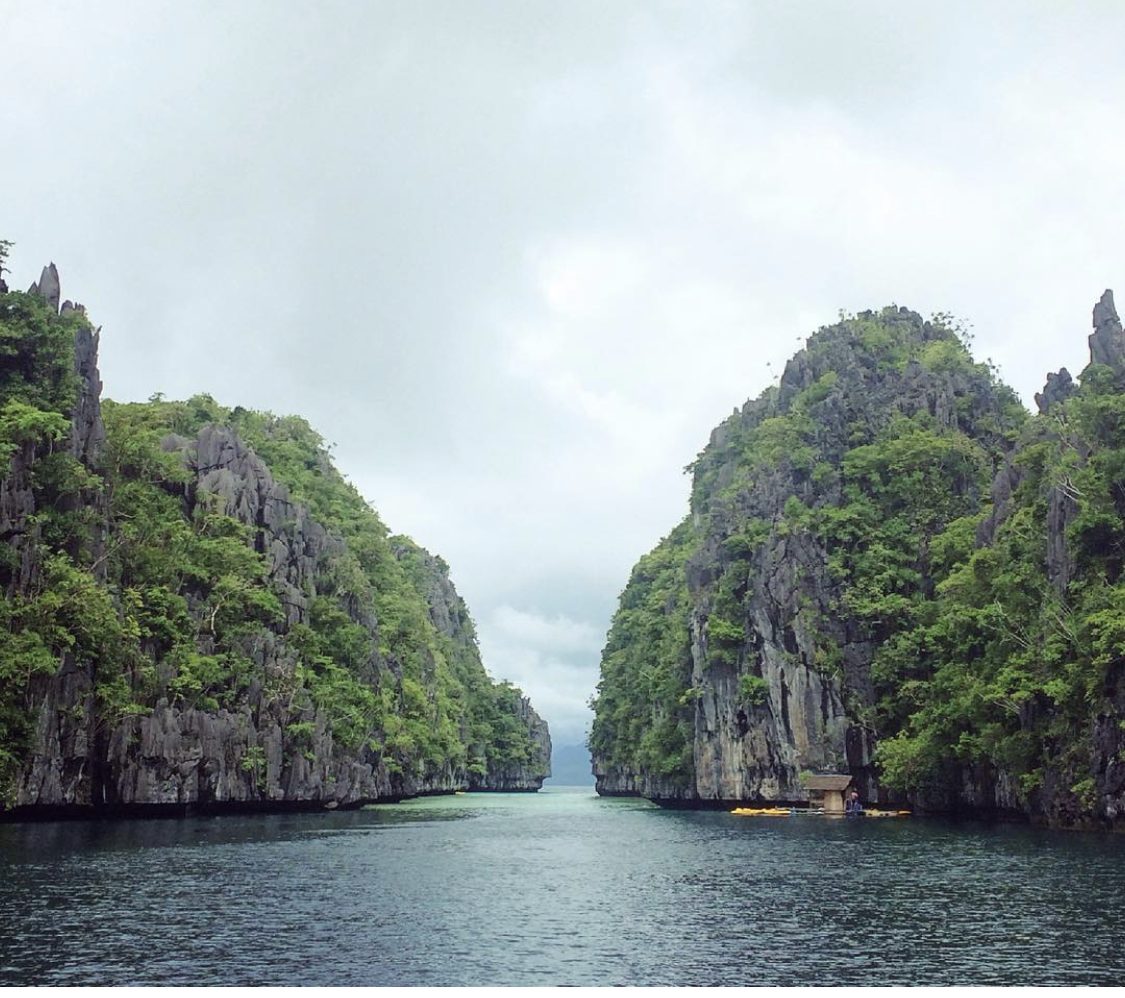
Palawan’s weather at a glance: a month-by-month table
I built this table the way I’d actually use it to plan a trip. It’s weighted toward the things that make or break a Palawan vacation: whether the island-hopping boats run, how thick the crowds are in El Nido, and what you’ll pay. Temperatures barely move here (it’s tropical, it’s warm, every month), so I’ve kept the focus on seas, crowds, and value rather than degrees.
| Month | Weather | Seas & island-hopping | Crowds | Prices | My verdict |
|---|---|---|---|---|---|
| January | Dry, sunny, the coolest air of the year | Calm; tours run almost daily | High (eases after New Year) | High | One of the best all-round months |
| February | Dry, sunny, low humidity | Calm; even Tour C usually runs | High | High | Peak conditions; book ahead |
| March | Dry, sunny, warming up | Calm; visibility climbing | High (Holy Week can fall here) | High | Excellent for diving and tours |
| April | Hot and dry; best underwater visibility | Calm; prime diving | Very high around Holy Week | High (peaks at Easter) | Stunning water, biggest crowds |
| May | Hottest month; first afternoon storms creep in | Mostly calm; odd choppy day late in the month | Moderate | Shoulder (good value) | Underrated; warm seas, fewer people |
| June | Wet season opens; frequent showers | More habagat swell; some cancellations | Low | Low | Green and cheap, weather a gamble |
| July | Wet; rainy stretches, sticky humidity | Choppier; cancellations more common | Low | Low | Budget trip with flexible plans only |
| August | Wet and unpredictable; sun between storms | Variable; build in backup days | Low | Low | A genuine gamble |
| September | Wettest stretch; occasional distant typhoon | Most cancellations of the year | Lowest | Lowest | Cheapest, riskiest for tours |
| October | Still wet, but sun returns later in the month | Improving toward month’s end | Low | Low | Late October starts to turn the corner |
| November | Dry season returns; drying out week by week | Settling down; tours growing reliable | Low to moderate | Shoulder (great value) | My favorite value month |
| December | Dry, sunny, pleasant | Calm; tours run well | High (spikes over the holidays) | High (peaks late December) | Great weather, holiday premium |
For a national view of how Palawan fits the country’s wider rhythm, our guide to the best time to visit the Philippines is the companion piece to this one, and our Philippines weather by month breakdown goes deeper on the numbers region by region.
Dry season vs wet season in Palawan
Palawan sits in what the national weather service, PAGASA, calls a Type I climate: two seasons, sharply drawn. There’s a pronounced dry season from roughly November to May and a wet season from June to October. That’s the single most useful fact for planning a trip here, and it’s worth internalizing because it does not match every Philippine island. Siargao and much of the eastern seaboard run on the opposite schedule, so island-hoppers routinely get caught out assuming “dry season in the Philippines” means the same dates everywhere. Boracay, by contrast, broadly shares Palawan’s calendar, which is one reason the two pair so neatly; our guide to the best time to visit Boracay walks through its own shoulder weeks. In Palawan, it means winter into late spring.
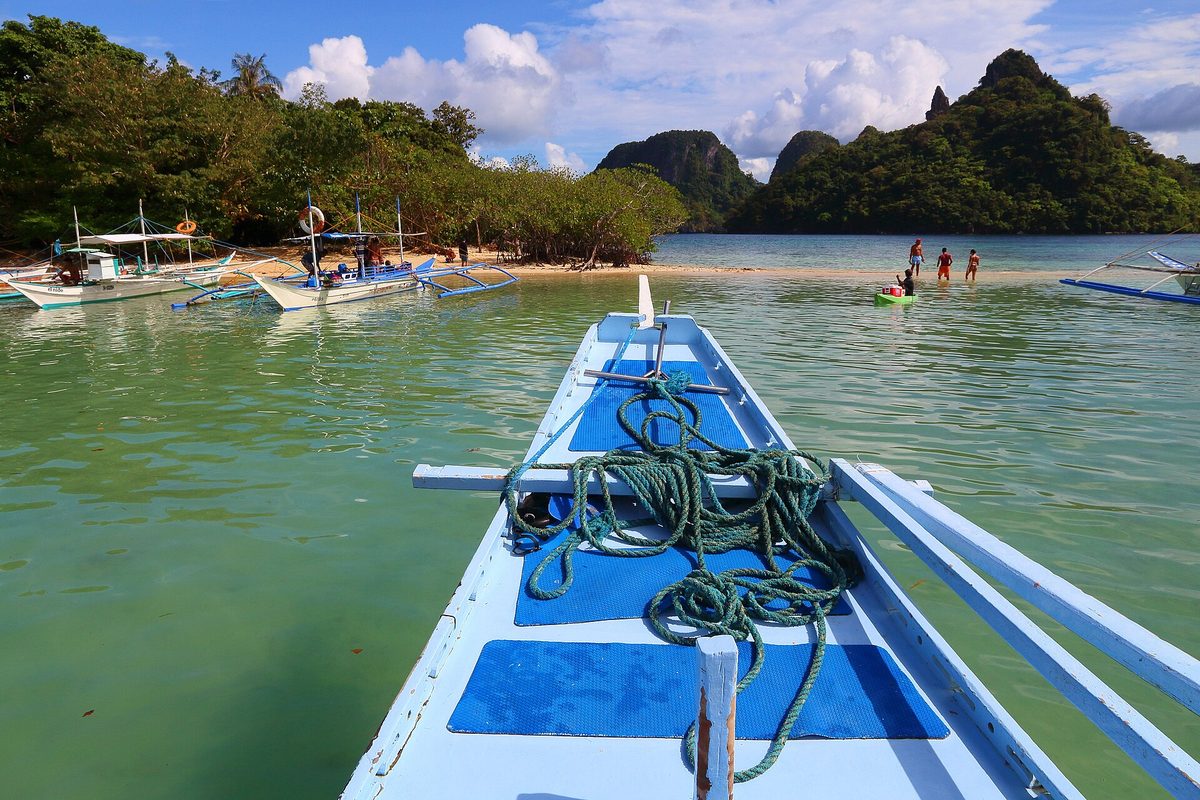
The seasons are driven by two monsoon winds. The amihan, the northeast monsoon, brings the cool, dry, settled weather of the high season. The habagat, the southwest monsoon, brings the wet season’s showers and the swell that turns the seas choppy. When people ask me about Palawan weather, what they’re really asking is which wind is in charge during their dates, because that’s what decides whether the island-hopping boats leave the bay.
One reassuring quirk: Palawan is comparatively sheltered from typhoons. It’s the long, thin island off to the southwest, and when storms barrel across the Philippines they usually track north of it. That’s why Palawan often gets recommended as the country’s wet-season refuge. “Sheltered” does not mean immune, though. It still gets real monsoon rain from June to October, and the occasional late storm can still graze it, with the knock-on effect of cancelled ferries and tours. If you want the bigger picture on storm risk and timing, our typhoon season in the Philippines guide covers it properly.
What “dry season” actually feels like
Sun most days, short refreshing showers at worst, and water that turns those postcard shades of turquoise the moment the light hits it. Air temperatures sit in the high 20s to low 30s Celsius (low-to-mid 80s Fahrenheit) and the sea is bathwater-warm year-round. The cooler, less humid stretch is December to February; April and May are the hot ones, when the midday heat starts to feel like a physical thing.
What “wet season” actually feels like
Not the washout people imagine, but not a sure thing either. A lot of the rain falls overnight or in heavy hour-long bursts that clear to sunshine. The real cost isn’t getting drizzled on; it’s the swell. When the habagat is blowing, the Philippine Coast Guard can issue no-sail advisories, and El Nido’s island-hopping tours simply don’t go out. You can lose a day or two of your trip to weather, which matters a lot if island hopping is the whole reason you came.
A closer month-by-month walkthrough
December to March: the heart of the high season
This is Palawan at its most photogenic and most expensive. The amihan keeps skies clear and the bay calm, so El Nido’s Tour A, B, C and D run with the kind of reliability you can build an itinerary around. December carries a holiday premium and a crowd surge around Christmas and New Year; I’d avoid those specific weeks if value matters to you. January settles back down once the holiday travelers go home and is, for my money, one of the two or three best weeks of the entire year to be in El Nido. February brings the lowest humidity and some of the steadiest seas of all. March is gorgeous too, with one asterisk: if Holy Week lands in late March, brace for it (more on that below).

April and May: hot, clear, and quietly the value window
April delivers the best underwater visibility of the year, which is why divers love it, alongside the most intense heat and, around Easter, the heaviest domestic crowds of the season. May is the hottest month full stop, and the first afternoon thunderstorms begin sneaking in toward the end of it. But here’s the thing most guides undersell: May is still mostly dry-season weather at shoulder-season prices, with warm seas and thinner crowds. If you can handle the heat, late April into May is a smart, slightly-off-peak pick.
June to October: the wet months
The habagat takes over. June and July are the rainiest, August is a coin-flip, and September into early October is the true low season, the cheapest and the most likely to cost you a tour day to weather. The flip side is real: the landscape goes impossibly green, the beaches empty out, and room rates can fall by something like a third to a half versus peak. Late October usually starts turning the corner back toward dry.
November: the value month I keep recommending
November is the changeover. It can open damp and breezy and finish dry and lovely as the amihan reasserts itself. Hotels are often half-full, prices are still gentle, and by late November the seas have usually settled enough for dependable island hopping. If you want high-season conditions without high-season prices or crowds, this is the month to gamble on.
The best time to visit Palawan for island hopping and diving
Island hopping is the reason most people come to Palawan, so let me be blunt about it. These are open-boat trips on traditional bangka outriggers, and they live and die by sea conditions. Even a cloudy day dulls the water from electric turquoise to a flat grey-blue. A windy day can cancel the trip outright. So for island hopping specifically, the answer is firmly the dry season, and ideally December through March, when calm seas mean even the more exposed routes (El Nido’s Tour C runs farther into open water and is the first to get scrubbed when it’s rough) go out almost every day.
Diving follows a slightly different curve. Visibility is good throughout the dry season but tends to peak from March to May, when the water is clearest and warmest. Coron’s famous WWII shipwrecks and the remote Tubbataha Reefs both shine in this window; Tubbataha in particular has a short liveaboard season that runs only in those calmer spring months. If your trip is built around a mask and fins rather than a camera on a beach, lean later into the dry season than you might otherwise.
For the specifics of which El Nido tour goes where, what’s included, and how to pick, a dedicated El Nido island-hopping guide breaks down Tours A through D in detail.
Peak, shoulder, and low season: crowds and prices
Weather is only half the planning question. The other half is how many other people are sharing your “secret” lagoon and what you’ll pay to be there.
Peak season (December to April) brings the best conditions and the biggest bills. El Nido in January or February is wall-to-wall boats heading out of the bay each morning, and the lagoons that look so serene in photos can be properly busy. Rooms and tours book out weeks ahead. This is not a hidden gem anymore, and pretending otherwise sets you up for disappointment; come for the nature, expect the crowds, and book early.
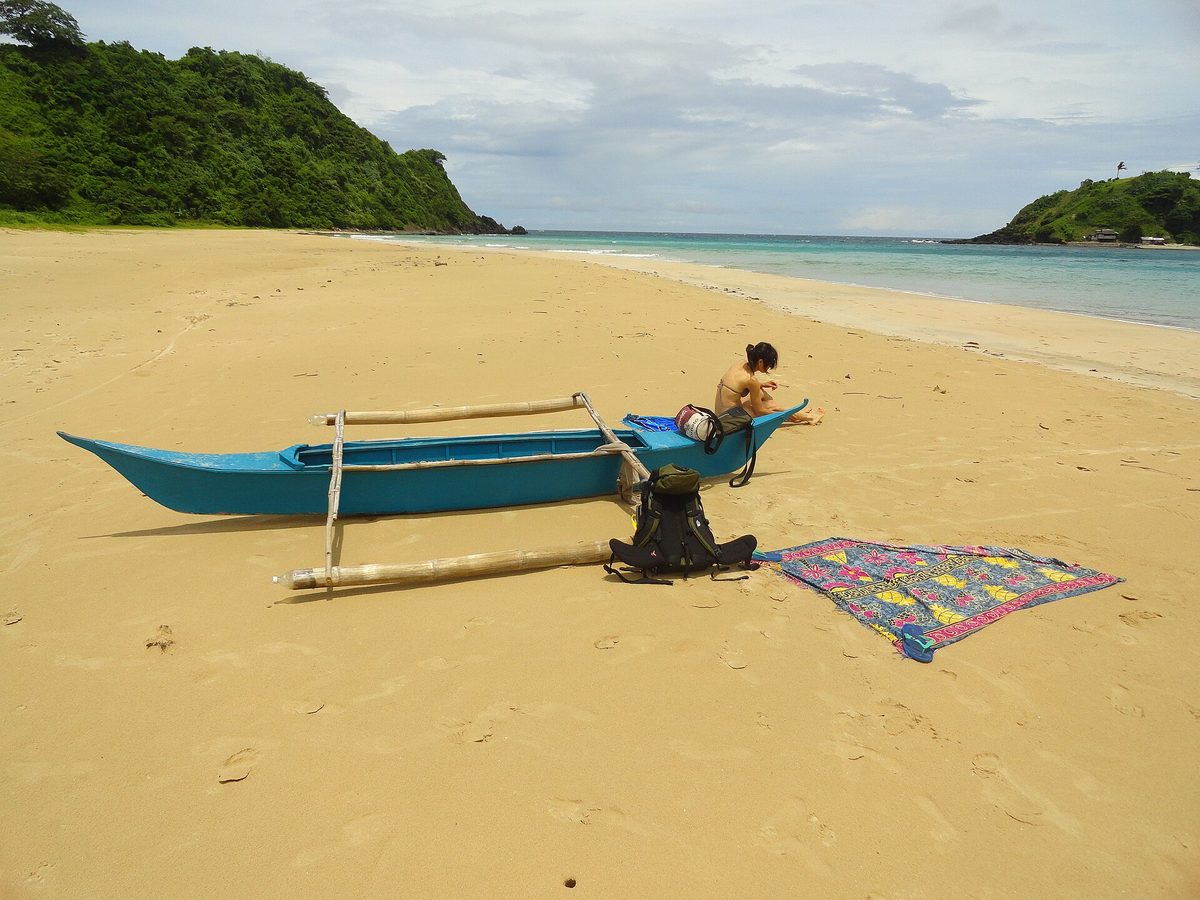
Shoulder season (November and May) is the sweet spot I keep nudging people toward. You get most of the dry-season upside, meaningfully fewer people, and prices that haven’t yet spiked (November) or have just come back down (May). For travelers who want good weather without the peak-season circus, these two months are the move.
Low season (June to October) is for the budget-minded and the crowd-averse who are willing to roll the dice. Accommodation can be dramatically cheaper, you’ll have beaches closer to yourself, and the island is at its greenest. The trade is real risk of lost tour days. If you go now, build slack into your itinerary so a rained-out day isn’t a wasted trip. If saving money is the priority, this is the window where the deals are deepest, and it is the same stretch we point to in our guide to the cheapest time to visit the Philippines.
El Nido vs Coron: do the seasons differ?
Broadly, no. El Nido and Coron sit at opposite ends of northern Palawan and share the same Type I climate, the same dry-season-best logic, and the same December-to-March prime window. If you’re planning the classic El Nido-plus-Coron combination, you don’t need to time them separately.
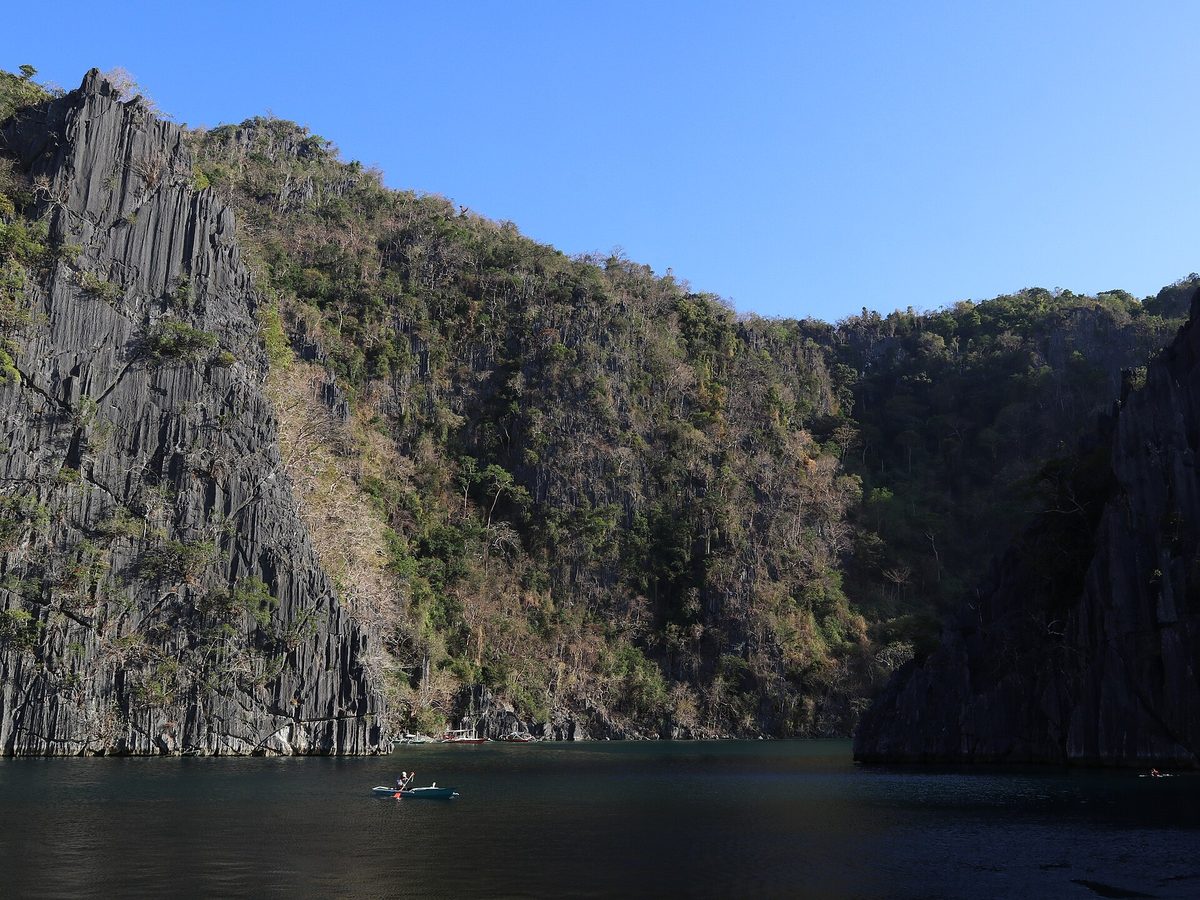
A couple of small distinctions are worth knowing. Coron’s headline experiences, Kayangan Lake’s viewpoint and the sheltered Twin Lagoon, sit in protected inlets that handle a breezy day a little better than El Nido’s more open island-hopping routes, so Coron can feel marginally more weather-resilient at the edges of the season. And the El Nido-to-Coron fast ferry that ties the two together (a roughly three-and-a-half to four-and-a-half-hour crossing, around ₱1,760 to ₱3,600, so very roughly $30 to $62) is itself weather-dependent. In the wet season that boat is cancelled more often, which can strand a tightly-planned itinerary. One more practical reason to favor the dry season if you’re doing both. Our El Nido guide and Coron guide dig into each base in depth.
The case for the rainy season (it’s not a write-off)
I don’t want to talk anyone out of the wet season, because for the right traveler it’s genuinely good. Here’s the honest pitch. The rain mostly comes in concentrated bursts, often overnight, and clears to sun more than the forecasts suggest. The island is luminously green in a way it simply isn’t in the dry months. Crowds thin out to the point where Nacpan Beach or a Coron lagoon can feel like yours. And because Palawan is the country’s relative typhoon refuge, it’s often the most sensible place in the Philippines to be during the storm season anyway.
The conditions for making it work: come with flexible dates, pad your schedule with a spare day or two so a cancelled tour can be rescheduled, pack a dry bag and a rain layer, and keep an eye on a marine-forecast app so you can grab the good-weather windows when they open. If a perfect-postcard island-hopping day is non-negotiable, the wet season isn’t your season. If you value an empty beach and a half-price room over a guaranteed forecast, it absolutely can be.
2026 access, fees, and the Clark move you need to know
A few logistics have shifted for 2026, and they change how you actually get to Palawan.
The biggest one: AirSwift’s turboprop flights that used to run from Manila’s NAIA Terminal 2 to El Nido completed their move to Clark International Airport on 29 March 2026, part of a wider relocation of Cebgo and AirSwift turboprop operations out of NAIA. In practice, the route most people think of as “Manila-El Nido” is now effectively Clark-El Nido, redesignated as Clark-El Nido-Clark services. If you’re connecting through Manila on an international flight, factor in the ground transfer up to Clark (north of the capital) rather than assuming a domestic hop from the same airport. AirSwift also flies into El Nido from Cebu and Caticlan, and runs a handy direct Busuanga (Coron)-El Nido connection. Coron itself is reached via Busuanga’s airport (USU). None of this is weather-related, but getting it wrong can cost you a missed connection.
On fees: El Nido charges an Eco-Tourism Development Fee (ETDF) of around ₱400 (roughly $7), introduced under Municipal Ordinance 01 series of 2024, valid for ten days and used to fund local environmental protection. You pay it on arrival. Separately, the island-hopping tours are regulated: it’s one tour per day (the old A-plus-C combos are banned), and the Big Lagoon is kayak-only with engines prohibited inside, both rules aimed at easing pressure on the lagoons. Expect a joiner (shared) tour to run roughly ₱1,200 to ₱1,800 plus the various lagoon and eco fees, while a private boat ranges from about ₱5,000 to ₱11,600 depending on the tour and group size. Prices drift, so confirm current rates when you book.
When to go, by traveler type
First-timers who want the postcard. Aim for January to March. Calm seas, reliable tours, and the turquoise-water conditions you’ve seen in every photo. Book well ahead and accept the crowds as the price of certainty.
Divers. March to May for peak visibility and the warmest water, with April the standout. If Tubbataha is on your list, that liveaboard season is spring-only.
Budget travelers. November and May are the value champions in the dry season. If you’ll trade weather risk for the lowest prices of all, June to October, with September the cheapest, is your window.
Crowd-avoiders. November and late May give you thinner crowds with decent weather. The truly empty months are June to October, if you can live with the gamble.
Families. The dry season’s calm seas make boat days less fraught with kids. I’d lean to December to early April, sidestepping the Christmas and Holy Week crush if you can.
The verdict: when should you go?
Go in the dry season, November to May, and you’ll have a good trip. If you want the surest conditions for island hopping and don’t mind sharing the lagoons, target December to March. If you’d rather keep some money in your pocket and dodge the worst of the crowds, book the shoulder weeks of November or May, which is honestly where I’d send a friend. And if you’re a flexible traveler chasing empty beaches and low prices, the wet season is a real, defensible choice rather than a mistake, as long as you go in with backup days and the right expectations. Whatever month you pick, start your planning with our Palawan travel guide and then map out your days from there.
Frequently asked questions
What is the rainiest month in Palawan?
June and July are the wettest, with the most rainy days and the heaviest monsoon downpours. September can feel just as soggy and carries a slightly higher chance of a distant typhoon disrupting flights and tours. If avoiding rain is your priority, steer well clear of June through September and aim for the December-to-April core of the dry season instead.
Is May a good time to visit El Nido?
Yes, with a caveat. May is mostly still dry-season weather (warm seas, good island hopping, lower crowds and prices than peak) which makes it quietly one of the better-value months. The catch is heat: it’s the hottest month, and the first afternoon thunderstorms start creeping in late in the month. Go early-to-mid May for the best odds.
Does it rain all day during Palawan’s wet season?
Rarely. Wet-season rain tends to come in concentrated bursts, often overnight or in heavy hour-long spells that clear to sunshine, rather than all-day grey. The bigger disruption is the swell, which can trigger Coast Guard no-sail advisories and cancel island-hopping tours. Build a spare day or two into your plans and you can still have a great wet-season trip.
When is El Nido the most crowded?
The peak crunch is the December holidays and Holy Week (late March or April), when both international and domestic travelers descend at once and rooms book out far in advance. January, February and April are busy throughout. For thinner crowds with good weather, target November or May; for near-empty beaches, the June-to-October low season.
Is Palawan safe to visit during typhoon season?
Generally yes. Palawan sits off to the southwest and most typhoons track north of it, which is why it’s often recommended as the country’s wet-season refuge. It still gets monsoon rain and the rare grazing storm, which can cancel ferries and tours, so it isn’t risk-free. Stay flexible, watch the marine forecast, and you’ll usually be fine.
El Nido or Coron: which has better weather?
They share the same dry-season-best climate, so neither has a meaningfully better season. The small edge: Coron’s headline spots (Kayangan Lake, Twin Lagoon) sit in sheltered inlets that handle a breezy day a little better than El Nido’s more open routes. If you’re doing both, the dry season serves them equally and keeps the connecting ferry running reliably.
Sources and photo credits
Photo credits
Images in this guide are sourced from Wikimedia Commons under their respective Creative Commons licenses. Full attribution for each photograph, including photographer and license, is listed with the image metadata. We’re grateful to the photographers who share their work freely.
Sources
- PAGASA (Philippine Atmospheric, Geophysical and Astronomical Services Administration) – Climate of the Philippines and climate types
- Municipality of El Nido – official site (Eco-Tourism Development Fee and local tourism rules)
- Philippine Department of Tourism
- Cebu Pacific / AirSwift – transfer of Cebgo and AirSwift turboprop flights from Manila to Clark
About this guide: PhilippinesTourism.org is an independent Philippines travel resource. Facts and prices were verified July 2026 and hedged in PHP and USD (~58 PHP = $1); seasons and fees change, so confirm current details before you go.