Category: Things to Do in the Philippines

  • Things to Do in the Philippines: 40+ Unforgettable Experiences

    Things to Do in the Philippines: 40+ Unforgettable Experiences

    Last updated: June 2026 · Researched and fact-checked by the PhilippinesTourism.org editorial team

    The first time a bangka boat swings you into a Palawan lagoon and the engine cuts out, you understand why people get evangelical about this country. I’ve been lucky enough to bounce around a lot of Southeast Asia, and nowhere — nowhere — packs as much variety into one passport stamp as the Philippines.

    The best things to do in the Philippines are island hopping El Nido’s lagoons, snorkeling Moalboal’s sardine run, canyoneering to Kawasan Falls, meeting whale sharks ethically in Donsol, surfing Siargao’s Cloud 9, trekking the Banaue rice terraces, and eating lechon in Cebu — with festivals, reefs and 7,641 islands beyond that.

    That’s the short answer. The long answer is this guide: a full menu of what to do in the Philippines, organized by the kind of experience you’re after rather than a lazy numbered countdown. I’ve included honest costs in pesos and dollars, the right season for each, the tourist traps worth skipping, and the ethics calls (looking at you, Oslob) that most listicles tiptoe around.

    Who this is for: first-timers trying to build a trip that makes sense, repeat visitors looking past the big three islands, and anyone who suspects — correctly — that the Philippines is more than a beach screensaver.

    Island hopping through the Big Lagoon in El Nido, Palawan - the classic image of things to do in the Philippines

    The Quick List: 15 Best Things to Do in the Philippines

    If you read nothing else, these are the experiences I’d defend in an argument:

    1. Island hop El Nido’s Bacuit Archipelago — lagoons, secret beaches, limestone drama (Palawan)
    2. Swim through the sardine run — millions of fish, 20 meters from shore (Moalboal, Cebu)
    3. Canyoneer down to Kawasan Falls — cliff jumps into improbably blue water (Badian, Cebu)
    4. See whale sharks the right way — wild encounters in season (Donsol, Sorsogon)
    5. Take the multi-day boat expedition between El Nido and Coron — deserted islands, beach camps, rum
    6. Surf (or watch the pros) at Cloud 9 — the wave that made Siargao famous
    7. Stand inside the Batad rice terrace amphitheater — 2,000 years of hand-built engineering (Ifugao)
    8. Dive with thresher sharks at dawn — deep-sea elegance on a budget (Malapascua, Cebu)
    9. Gawk at the Chocolate Hills — 1,200+ identical mounds that look Photoshopped (Bohol)
    10. Paddle into the Puerto Princesa Underground River — a UNESCO-listed cave river (Palawan)
    11. Lose your voice at Sinulog — the country’s biggest street party (Cebu City, January)
    12. Eat lechon in Cebu — the roast pig Anthony Bourdain raved about
    13. Walk Intramuros at golden hour — 450 years of history inside Manila’s walls
    14. Kayak Coron’s Kayangan Lake and Twin Lagoon — the cleanest water you’ll ever float in
    15. Ride a jeepney, sing karaoke, say yes to things — the Philippines’ best moments aren’t ticketed

    Plan at a Glance: What, Where, How Much, When

    Prices are typical 2026 rates per person — treat them as ballparks and check current rates when you book. Peso figures convert at roughly PHP 58 = USD 1.

    Experience Where Typical cost Best months
    El Nido island hopping (Tour A) Palawan ~PHP 1,400–1,800 ($24–31) + eco fee Dec–May
    Coron island hopping day tour Palawan ~PHP 1,500–2,500 ($26–43) Dec–May
    El Nido–Coron boat expedition (3D/2N) Palawan ~PHP 14,000–28,000 ($240–480) Nov–May
    Sardine run snorkel Moalboal, Cebu ~PHP 200–300 ($4–5) gear + fee Year-round
    Kawasan canyoneering Badian, Cebu ~PHP 1,800–2,500 ($31–43) Dec–May
    Thresher shark dives (2–3 dives) Malapascua, Cebu ~PHP 4,500–6,000 ($78–103) Year-round
    Whale shark interaction Donsol, Sorsogon ~PHP 4,000 ($69) shared boat + fees Dec–May
    Surf lesson at Cloud 9 Siargao ~PHP 800–1,500 ($14–26)/hour Aug–Nov
    Underground River permit + tour Puerto Princesa, Palawan ~PHP 2,000–3,000 ($34–52) Dec–May
    Banaue/Batad trek with guide Ifugao, N. Luzon ~PHP 1,500–3,000 ($26–52)/day Mar–May, Oct–Nov
    Chocolate Hills + Bohol countryside tour Bohol ~PHP 2,500–3,500 ($43–60) private Dec–May
    Open Water dive certification Moalboal, Panglao, Puerto Galera ~PHP 18,000–25,000 ($310–430) Year-round

    Island Hopping and Lagoons: The Main Event

    Let’s start with the obvious: you don’t come to a country of 7,641 islands and stay on one of them. Island hopping here isn’t an excursion, it’s the entire point — and the Philippines does it better than anywhere on Earth.

    El Nido’s Tours A, B, C and D — yes, they’re lettered like exam answers

    El Nido’s island hopping is famously bureaucratic: four standardized routes, A through D, every operator running the same stops at the same prices. Don’t let that put you off. Tour A (Big Lagoon, Secret Lagoon, Shimizu Island, Seven Commandos Beach) and Tour C (Hidden Beach, Matinloc Shrine, Secret Beach) are the bangers. My honest advice: do A and C on separate days, skip B and D unless you’re staying a week, and pay the small premium for a morning departure — the lagoons before 9am are a different religion than the lagoons at noon.

    Expect around PHP 1,400–1,800 per person plus a PHP 400 eco-tourism fee that covers ten days. Kayak rental in the Big Lagoon runs a few hundred pesos more and is worth every centavo: engines are banned inside, and gliding under those 200-meter karst walls in silence is a top-five life moment.

    Coron: Kayangan Lake, Twin Lagoon and the cleanest water in the country

    Across the bay, Coron’s day tours one-up El Nido on water clarity. Kayangan Lake is routinely called the cleanest lake in Asia, and floating over its thermocline — where warm and cool water layers shimmer like oil — feels mildly supernatural. Twin Lagoon, where you swim through a crack in the rock between two basins, is the other non-negotiable. Day tours run PHP 1,500–2,500 depending on stops and lunch.

    The El Nido–Coron expedition: three days of barefoot piracy

    Here’s the one I’d sell a kidney to redo: the multi-day bangka expedition between El Nido and Coron. Operators like Tao Philippines and Big Dream Boatman run 3-to-5-day crossings where you sleep in beach huts on islands with no names you’d recognize, eat fish grilled by the crew, and spend evenings with rum, guitars and a karaoke machine someone inevitably produces. Around PHP 14,000–28,000 all-in depending on operator and comfort level. It replaces the ferry, your hotel and your itinerary in one move — the math works out to surprisingly little for what might be the best three days of your year.

    Beyond Palawan

    Island hopping isn’t a Palawan monopoly. Siargao’s trio — Naked Island (a sandbar with delusions of grandeur), Daku (lunch under palms) and Guyam (a cartoon desert island) — makes a perfect half day for around PHP 1,500–2,000 shared. Honda Bay out of Puerto Princesa is a gentle starfish-and-sandbars day. And in the far south of Palawan, Balabac is the expedition-grade version: harder to reach, pinker sandbars, fraction of the crowds.

    Beaches Worth Crossing the Planet For

    Paraw sailboats off White Beach, Boracay at sunset

    White Beach, Boracay — yes, it’s still worth it

    Boracay’s four-kilometer White Beach is the most famous stretch of sand in the country, and post-rehabilitation (the island was famously closed for six months in 2018 and cleaned up) it has the infrastructure to match: powder-fine sand, paraw sailboats at sunset, and water the temperature of a comfortable bath. Is it busy? Absolutely. Does it deserve the hype anyway? Watch one sunset from Station 1 with a fresh mango shake and argue with me. It tops our roundup of the best beaches in the Philippines, but it is far from the only contender.

    The ones the brochures undersell

    Nacpan Beach (45 minutes north of El Nido town) is four kilometers of golden sand with a fraction of White Beach’s development — rent a scooter and make a day of it. Puka Shell Beach is Boracay’s quieter northern escape hatch. Paradise Beach on Bantayan Island and the long, empty sand of San Vicente, Palawan — at 14 kilometers, the longest white-sand beach in the country — reward anyone willing to go one ferry further than the crowd.

    Calaguas: camp on the beach you thought only existed in ads

    The Calaguas Islands off Camarines Norte are the Philippines’ great castaway experience: a long curve of flour-white sand, no resorts to speak of, and overnight camping trips where your evening entertainment is a bonfire and a sky full of stars. Around PHP 2,000–3,500 for a weekend trip with tent and meals from Vinzons port. Bring cash, a power bank and low expectations for plumbing — that’s the deal.

    Port Barton: Palawan with the volume turned down

    Halfway between Puerto Princesa and El Nido, Port Barton is what travelers mean when they say a place is “like El Nido fifteen years ago.” A handful of sandy streets, generator electricity until recently, beach dogs (and, on nearby Coconut Beach, famously opinionated pigs), and island hopping tours at two-thirds the price with a tenth of the boats. Go before everyone else reads this paragraph.

    Under the Water: Sardines, Sharks and Reefs

    The Philippines sits at the heart of the Coral Triangle, the most biodiverse marine real estate on the planet, and it has the trophies to prove it — including the World Travel Awards’ title of the world’s leading dive destination. The kicker: it’s also one of the cheapest places anywhere to get underwater.

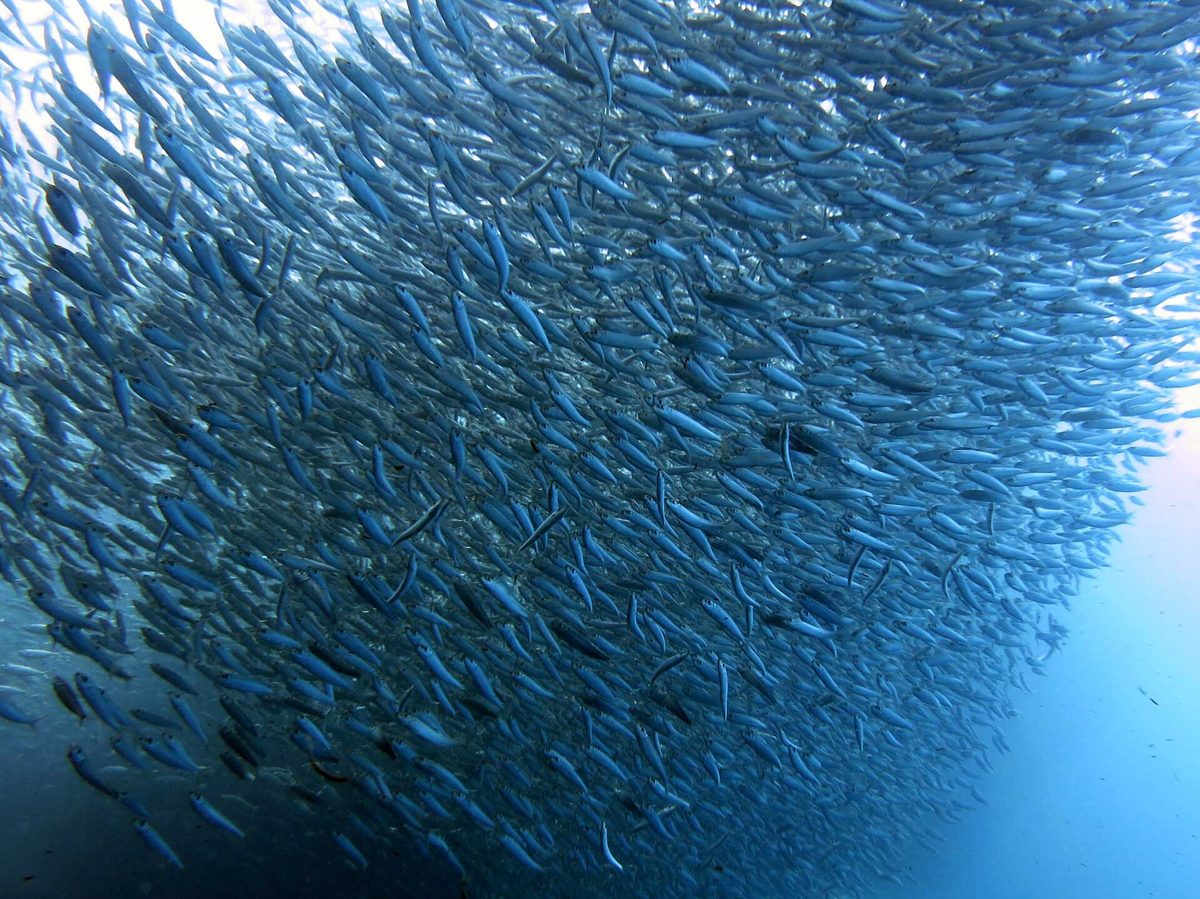
    Snorkeler surrounded by the sardine run off Panagsama Beach, Moalboal

    The Moalboal sardine run: the best $4 you’ll ever spend

    Twenty meters off Panagsama Beach in Moalboal, a bait ball of several million sardines swirls in permanent residence. You rent a mask for about PHP 100, pay roughly the same in fees, kick out from shore, and suddenly the ocean is a living tornado of silver that parts around you. Sea turtles drift through like commuters. No boat, no schedule, no minimum spend. For value per peso, nothing in this guide comes close.

    Thresher sharks at dawn off Malapascua

    Malapascua, a sleepy island off Cebu’s northern tip, is the only place on Earth where divers reliably see pelagic thresher sharks almost every morning. You roll off the boat in the pre-dawn dark, descend to a cleaning station around 20–30 meters, and wait as these absurdly elegant animals — half of their length is tail — circle out of the blue. Around PHP 4,500–6,000 for the morning’s dives. Advanced certification helps for depth; complete it here and the shark dive becomes your training ground.

    Whale sharks: Donsol, not Oslob — an honest take

    A whale shark cruising in Philippine waters

    Swimming beside the biggest fish in the sea is bucket-list royalty, and the Philippines offers two very different versions. In Oslob (south Cebu), operators hand-feed whale sharks daily, guaranteeing sightings on a conveyor-belt schedule. It’s the easy option, and I understand the temptation — but feeding alters migration and surface behavior, and marine scientists have criticized the practice for years. I’ll give you the straight version: I don’t recommend it.

    In Donsol (Sorsogon, southern Luzon), interactions are wild: spotters scan, you slip into the water when a shark cruises past, and some days you get skunked. That uncertainty is the point — it’s a real encounter on the animal’s terms, regulated with no-touch, no-feed rules. Season runs roughly December to May, peaking February–April. Registration plus a shared six-person boat works out around PHP 3,500–4,500 each. Sogod Bay in Southern Leyte is the connoisseur’s third option: fewer people, healthy ethics, gorgeous reef.

    Learn to dive for less than your flight

    An Open Water certification in the Philippines costs roughly PHP 18,000–25,000 ($310–430) — among the lowest prices in the world, with warm water and house reefs that put training pools to shame. Moalboal, Panglao (Bohol) and Puerto Galera are the classic classrooms. Already certified? Apo Island’s marine sanctuary serves turtles on practically every dive, Coron’s WWII Japanese wrecks are a haunting museum at recreational depths, and Anilao — three hours from Manila — is the macro photography capital of the country.

    Tubbataha: the holy grail

    If you’re a serious diver, the UNESCO-listed Tubbataha Reefs in the middle of the Sulu Sea are the pilgrimage: sharks on every dive, walls that drop into the abyss, visibility that feels illegal. It’s liveaboard-only, runs mid-March to mid-June, and books out close to a year ahead at $2,000+ for a week. File under “someday” — then actually do it.

    Snorkeling for the rest of us

    No tank required: Balicasag Island off Panglao (turtles, dramatic wall), Apo Island day trips from Dumaguete, the giant clams of Honda Bay, Coron’s shallow Lusong Gunboat wreck — snorkelable history in three meters of water — and basically anywhere in the Bacuit Archipelago. Bring reef-safe sunscreen; several sanctuaries rightly insist on it.

    Waterfalls and Canyoneering

    Turquoise water at Kawasan Falls, the finale of the Badian canyoneering route in Cebu

    Kawasan canyoneering: jump first, overthink later

    The signature adrenaline experience in the Visayas: four hours descending the Matutinao River canyon near Badian — swimming through gorges, sliding natural chutes, and jumping from ledges that start at polite heights and escalate to a knee-wobbling 10–12 meters (every jump optional, no shame in the walk-around). The finale is Kawasan Falls itself, a triple-drop cascade pouring into pools of cartoon-blue water. Around PHP 1,800–2,500 with guide, helmet and life vest. Book with an accredited operator in Moalboal or Badian, go on the first morning slot, and wear shoes you can swim in.

    The waterfall deep cuts

    Tumalog Falls (Oslob) is a misty curtain best at mid-morning. Cambugahay Falls on Siquijor stacks three tiers of swimmable turquoise with rope swings (PHP 50 entry, a few pesos more for the swing). Tinago Falls near Iligan hides in a gorge you descend 300 steps to reach — the name literally means “hidden.” And Tinuy-an Falls in Surigao del Sur is the Philippines’ answer to Niagara: a 95-meter-wide white wall that flows like a curtain. In the north, Pagsanjan Falls near Manila comes with a thrilling canoe run through the gorge, paddled by boatmen who deserve every peso of their tip.

    Volcanoes, Mountains and the Rice Terraces

    The hand-carved rice terraces of Banaue, northern Luzon

    Banaue and Batad: the terraces that rewrite your sense of time

    The rice terraces of the Ifugao highlands were carved into these mountains by hand roughly two thousand years ago, and they’re still farmed by descendants of the people who built them. The UNESCO-listed clusters around Banaue get the postcards, but Batad — a village inside a perfect amphitheater of terraces, reachable only on foot — is the one that flattens people. Stay overnight in a village guesthouse, hike to Tappiya Falls, and listen to a silence you can’t buy in the lowlands. Overnight buses run Manila–Banaue (around nine hours, ~PHP 1,000); local guides charge ~PHP 1,500–3,000 a day and are worth it for the route-finding alone.

    Sagada: hanging coffins, caves and mountain coffee

    Two hours on from Banaue, Sagada is the Cordillera’s mellow mountain town: pine forests, cold mornings, strong local arabica. The famous hanging coffins — an Igorot burial tradition that suspends the dead on cliff faces, closer to the ancestors — are viewed respectfully from Echo Valley with a local guide. The Sumaguing Cave spelunking circuit (2–4 hours of scrambling, wading and squeezing by lantern light) is the best adventure bargain in the north at a few hundred pesos. Sunrise at Kiltepan viewpoint, sea of clouds included on good days, costs only your alarm clock’s dignity.

    Volcanoes, from drive-by to summit

    The Philippines sits on the Ring of Fire and owns some of its most photogenic vents. Mt. Pinatubo — whose 1991 eruption was the century’s second largest — now cradles a surreal crater lake you reach via 4×4 across ash fields plus a one-to-two-hour hike (day trips from Manila ~PHP 2,500–4,000; the crater swim is no longer allowed, the view needs no swim). Taal, the famous lake-within-a-volcano-within-a-lake south of Manila, is best admired with Tagaytay coffee in hand — access to the volcano island itself opens and closes with alert levels, so check PHIVOLCS before planning anything ambitious. Mayon in Albay is the world’s most perfect cone; ride an ATV across its lava fields or frame it through the ruined belfry at Cagsawa. And Mt. Pulag, Luzon’s highest summit, serves a dawn sea of clouds to anyone willing to camp at 2,900 meters and secure permits ahead.

    Easy wins

    Not every mountain demands a pilgrimage. Osmeña Peak — Cebu’s highest point — is a twenty-minute walk from the trailhead through hills that look borrowed from Bohol, all for about PHP 50. Masungi Georeserve outside Manila threads rope courses through jagged karst (book ahead online; conservation fees apply). Both fit inside otherwise lazy itineraries.

    Culture, History and City Life

    Intramuros: Manila’s 450-year-old heart

    Most travelers treat Manila as a layover with traffic. Give it one golden hour inside Intramuros and it will explain itself. The Spanish walled city — battered by WWII, patiently restored — packs Fort Santiago, the dungeons-and-gardens citadel where national hero José Rizal spent his last night; San Agustin Church, the country’s oldest stone church and a UNESCO site; and cobbled streets best explored by rented bamboo bike or kalesa (horse-drawn carriage — agree the price first). Entry fees are pocket change; the perspective is not.

    Binondo: eat your way through the world’s oldest Chinatown

    Founded in 1594, Manila’s Binondo district predates every other Chinatown on Earth, and it remains gloriously ungentrified: lumpia rolled to order, hand-pulled noodles at Dong Bei Dumpling, kiampong rice at quietly legendary Café Mezzanine. Go hungry, go with small bills, and consider one of the guided “Big Binondo Food Wok” style crawls if decision paralysis is a risk.

    Corregidor, Vigan and the deep past

    History buffs have options. Corregidor Island, the fortress at the mouth of Manila Bay where US and Filipino forces made their WWII stand, tours as an open-air museum of ruined barracks and gun batteries — ferry services have been intermittent in recent years, so verify schedules before promising it to your group. Up north, Vigan is the best-preserved Spanish colonial town in Asia: UNESCO-listed Calle Crisologo by lamplight, ancestral houses, and empanadas fried in front of you. Pair it with the heritage churches of Ilocos — Paoay’s buttressed bulk is the showstopper.

    The everyday culture that’s secretly the best part

    Ride a jeepney at least once — the chrome-grilled, hand-painted ex-military jeeps are rolling folk art, fares start around PHP 13–15, and passing coins hand-to-hand up the cabin (“bayad po!”) is a tiny civics lesson in trust. Accept the karaoke invitation; declining is technically legal but socially radical, and nobody cares about your range. Watch a barangay basketball game on a court with more passion than backboard. These cost nothing and stick longer than any lagoon.

    A classic hand-painted jeepney on a Manila street

    Festivals: The Philippines at Full Volume

    Costumed dancers at Cebu City's Sinulog Festival in January

    Filipino fiestas are not spectator events — the street decides you’re a participant. If your dates are flexible, planning a trip around one is the single best cultural decision you can make. Book rooms months ahead and triple-check prices; the big ones sell cities out.

    • Sinulog (Cebu City, third Sunday of January): the country’s grandest festival — millions of people, thunderous drum lines, dancers honoring the Santo Niño. The grand parade lasts all day; the street parties last longer.
    • Ati-Atihan (Kalibo, mid-January): older, rawer and more participatory than Sinulog — soot-painted revelers pull you into the drum circles. Often called the mother of Philippine festivals.
    • Panagbenga (Baguio, February): a month of flower floats and street dancing in the cool mountain capital.
    • MassKara (Bacolod, October): grinning masks, electro-Latin beats, and the self-styled City of Smiles living up to the billing.
    • Kadayawan (Davao, August): a thanksgiving of fruit, flowers and indigenous culture in Mindanao’s biggest city.

    Can’t hit the marquee names? Every town has a fiesta for its patron saint — ask locally. Lechon, processions and videoke until sunrise are practically guaranteed.

    Eat Like You Mean It: Filipino Food Experiences

    The lechon pilgrimage

    Whole pig, slow-roasted over coals until the skin shatters like caramel glass: lechon is the national celebration dish, and Cebu’s version — stuffed with lemongrass and garlic, needing no sauce — is the one Anthony Bourdain famously crowned the best pig he’d eaten. Carcar’s market stalls and Cebu City institutions like Rico’s or Zubuchon will settle the argument for around PHP 200–400 a plate. Plan a nap after.

    Street food: start brave, stay sensible

    Work through the canon: isaw (grilled chicken intestine skewers, better than they sound), fish balls with spicy vinegar, kwek-kwek (orange-battered quail eggs), banana-cue, and — the boss level — balut, the fertilized duck egg eaten warm with salt and a swig of courage. My honest verdict on balut: the broth is genuinely delicious, the rest is a texture negotiation, and you only have to do it once. Choose busy stalls with high turnover and you’ll almost always be fine.

    Tables worth traveling for

    Eat a kamayan feast (also called a boodle fight) at least once: rice and grilled everything piled on banana leaves, cutlery confiscated, strangers becoming friends by the second handful. Order halo-halo — the gloriously chaotic shaved-ice tower of beans, jellies, leche flan and purple ube ice cream — on the hottest afternoon you’ve got. Start mornings with silog breakfasts (garlic rice + egg + your choice of cured meat; tapsilog is the gateway). And yes, try Jollibee once — the fried-chicken-and-sweet-spaghetti combo is a national love language, and you should understand what 1,200 branches of devotion taste like.

    Wildlife Encounters, Done Right

    Tarsiers: tiny, ancient, easily stressed

    Bohol’s Philippine tarsier — a fist-sized primate with satellite-dish eyes that’s haunted these forests for 45 million years — is best met at the Philippine Tarsier Sanctuary in Corella, where they live wild in a protected forest. Speak in whispers, skip the flash, and never touch: tarsiers are heartbreakingly fragile under stress. Entry runs around PHP 150–200. Skip any roadside stop offering tarsier selfies; the sanctuary exists precisely because of those.

    Dolphins, fireflies and a very big eagle

    Dawn dolphin-watching off Pamilacan Island (Bohol) or in the Tañon Strait regularly turns up spinner pods a hundred strong — choose boats that keep respectful distance. After dark, firefly river tours on Bohol’s Abatan River or in Donsol drift you past mangroves strung with synchronized living fairy lights. And in Davao, the Philippine Eagle Center works to save the planet’s largest eagle — a meter-tall raptor with a two-meter wingspan — one captive-bred chick at a time; visiting funds the fight.

    Offbeat and Unforgettable

    The Chocolate Hills of Bohol stretching to the horizon

    The Chocolate Hills — mainstream, still mandatory

    Fine, more than 1,200 near-identical grassy mounds rolling to the horizon isn’t exactly a secret — but Bohol’s Chocolate Hills earn the crowds, especially late in the dry season when the grass toasts to the namesake brown. The main complex viewpoint costs around PHP 100; beat the tour buses by arriving before 8am, then spend the saved hours on the quieter countryside loop — the Loboc River, hanging bridges, and roadside buko stands are half the charm.

    Surf-town Siargao, beyond the surf

    Siargao made its name on Cloud 9 — a hollow, world-championship right-hander breaking off General Luna — but the island converts non-surfers daily. Beginners get pushed into whitewater at gentler breaks like Jacking Horse for around PHP 800–1,500 an hour with a local coach (surf season peaks August–November). Off the board: paddle the jungle-walled Sugba Lagoon, time Magpupungko’s natural rock pools to low tide, and ride the palm-tree road with no particular destination. The island runs on island time squared.

    Siquijor and Camiguin: the islands with backstories

    Siquijor leans into its folk-magic reputation — healers, love potions, a 400-year-old balete tree with a fish-spa pool at its feet — and backs it up with Cambugahay Falls and some of the Visayas’ mellowest beaches. Camiguin, an island built by seven volcanoes, counters with a Sunken Cemetery marked by a cross in the sea, hot soda springs you can swim in, and the dazzling White Island sandbar. Both reward two unhurried days.

    The blue hour at Hinatuan’s Enchanted River

    In Surigao del Sur, the Enchanted River erupts from an underwater cave system in a shade of sapphire that looks rendered. Locals say enchantment keeps the fish unafraid; hydrogeologists say karst springs — either way, swim before the day-trip vans arrive.

    Batanes: the Philippines that doesn’t look like the Philippines

    The northernmost province — closer to Taiwan than to Manila — swaps palms for wind-scoured green headlands, stone Ivatan houses and honesty shops where you leave coins in a box. Cycling Batan Island’s coastal road is the kind of day that recalibrates your whole trip. Flights from Manila are short but weather-prone; build in slack.

    Free (and Nearly Free) Things to Do in the Philippines

    • Sunsets, professionally consumed: White Beach, Nacpan, or any west-facing seawall. The nightly show costs nothing and never repeats.
    • The sardine run — PHP 200 all-in remains this country’s greatest entertainment bargain.
    • Intramuros wandering and Rizal Park people-watching in Manila.
    • Public beaches: most Philippine sand is free; even famous stretches charge at most a token barangay fee.
    • Fiesta crashing: street processions and drum lines are public property. Smile and you’ll be handed food.
    • Sunrise viewpoints: Kiltepan (Sagada), Osmeña Peak (PHP 50), Coconut Tree Road (Siargao) — all essentially free, all unforgettable.
    • Karaoke with new friends — someone else already paid for the machine. Your only cost is dignity.

    Matching Experiences to Your Trip

    You are… Build your trip around
    A first-timer (10–14 days) Cebu’s south loop (sardines, Kawasan, Osmeña) + Bohol day trips + El Nido or Coron to finish big
    A diver Malapascua threshers + Moalboal + Coron wrecks; Tubbataha liveaboard if budget allows; Anilao for macro
    A honeymooner El Nido island resorts + a private Coron tour + Boracay Station 1 sunset sails
    Traveling with kids Bohol (tarsiers + Chocolate Hills + calm Panglao beaches) + Boracay’s shallow, lifeguarded White Beach
    A backpacker Port Barton + the El Nido–Coron expedition + Siargao’s hostel scene + Moalboal’s $4 sardines
    A culture-and-history traveler Intramuros + Binondo + the Banaue–Sagada–Vigan northern loop + a festival, any festival

    Practical Planning: Days, Seasons, Costs and Bookings

    How many days do you actually need?

    Two weeks is the sweet spot for a first trip: one region done properly (say, Cebu–Bohol) plus Palawan, without spending half your holiday in transit. Ten days works with discipline — two bases, maximum three. One week means one region, full stop, and that’s not a defeat: south Cebu alone can fill seven days with half this article. A month unlocks the north loop and the slow boat between El Nido and Coron.

    When to come

    The national dry season runs roughly December through May — January to April is safest for island hopping, with March–May hottest. June to November brings the southwest monsoon and typhoon exposure, but it’s not a write-off: surf season on Siargao peaks August–November, crowds thin, and prices drop. Two windows to plan around: Christmas–New Year and Holy Week (the week before Easter), when the whole country travels at once, transport sells out and rates can triple. Book those months ahead — or steer around them entirely.

    What it all costs

    The Philippines remains one of Asia’s best-value destinations. Backpackers manage on PHP 1,700–2,600 ($30–45) a day; a comfortable mid-range trip with private rooms, daily tours and domestic flights lands around PHP 4,000–5,800 ($70–100). The experiences in this guide mostly cost between “pocket change” and “nice dinner at home” — the splurges (liveaboards, multi-day expeditions, island resorts) announce themselves clearly. Carry cash outside cities; GCash and cards thin out fast past the last 7-Eleven.

    What to book ahead (and what to wing)

    Book ahead: Tubbataha liveaboards (months–a year), the El Nido–Coron expeditions in high season, Underground River permits (a day or two minimum, more in peak weeks), Mt. Pulag permits, festival-week accommodation (months), and any Christmas/Holy Week transport. Wing it: island hopping day tours, surf lessons, canyoneering, ferries outside holidays — walking in the day before routinely beats online prices.

    Getting around & staying sensible, in one breath

    Domestic flights (Cebu Pacific, PAL, AirAsia) link the hubs cheaply if you pack light; fast ferries stitch the Visayas together; Grab handles the cities; tricycles, habal-habal and jeepneys do the last mile everywhere else. On safety: the tourist heartland — Palawan, the Visayas, Siargao, Manila’s main districts — is welcoming and well-trodden; standard advisories flag specific areas of western and southern Mindanao, which no itinerary in this guide touches. Drink bottled or filtered water, respect the sun, and triple-check ferry schedules in monsoon season.

    Frequently Asked Questions

    What is the Philippines best known for?

    Beaches and islands, above all: 7,641 of them, including world-list regulars like Palawan and Boracay. Beyond sand, the country is famous for world-class diving in the Coral Triangle, the hand-carved Banaue rice terraces, riotous festivals like Sinulog, lechon and a culture of karaoke-grade hospitality — all navigable in English, which is an official language.

    What should I not miss in the Philippines on a first trip?

    If forced to pick five: island hopping in El Nido or Coron, the Moalboal sardine run, Kawasan canyoneering, the Chocolate Hills with a tarsier sanctuary stop, and one big sunset on White Beach. That set fits a standard two-week Cebu–Bohol–Palawan route without rushing.

    How many days do you need in the Philippines?

    Plan two weeks for a comfortable first visit covering two regions; ten days minimum if you limit yourself to two bases. Inter-island travel eats time — a flight plus ferry plus van can consume most of a day — so fewer stops, held longer, always beats a checklist sprint.

    Is the Philippines cheap to travel?

    Yes, by most standards: $30–45 a day sustains backpacking, $70–100 buys genuine comfort, and headline experiences are bargains — $4 sardine runs, $30 canyoneering, $300 dive certifications. Domestic flights and island resorts are where budgets inflate; everything street-level stays kind to your wallet.

    When is the best time to visit the Philippines for activities?

    December through May covers most of this list: calm seas for island hopping, peak visibility for diving, dry trails for the terraces, and January’s mega-festivals. Surfers flip the calendar — Siargao works best August through November. Avoid booking around Holy Week and Christmas unless you’ve reserved far ahead.

    Oslob or Donsol for whale sharks?

    Donsol — or Sogod Bay — if you care how the encounter happens. Oslob guarantees sightings by hand-feeding wild animals daily, a practice marine researchers have long criticized for altering natural behavior. Donsol’s regulated, no-feed swims are wilder, cheaper than you’d expect, and let you meet the world’s biggest fish on its own schedule.

    Is the Philippines safe for these activities?

    The destinations in this guide sit firmly on the well-trodden tourist trail, where millions travel without incident each year. Apply normal sense: vet tour operators, wear the life vest, respect surf and current advice, and check official travel advisories for the handful of flagged areas in Mindanao — none of which feature here.

    Final Thoughts

    Here’s the thing no listicle tells you: the Philippines’ best attraction isn’t on this list. It’s the unscheduled hour — the jeepney driver who waves off your fare confusion, the lola who refills your plate uninvited, the boat crew harmonizing to a guitar with three strings. Build your trip from the experiences above, then leave room for the country to improvise. It always does.

    Salamat for reading — now go book the flight. The lagoons are patient, but you shouldn’t be.

    Photo Credits

    • Big Lagoon, El Nido — Fabio Achilli, CC BY 2.0, via Wikimedia Commons
    • White Beach paraw at sunset, Boracay — public domain, via Wikimedia Commons
    • Sardine run, Moalboal — Iampjanz, CC BY-SA 4.0, via Wikimedia Commons
    • Kawasan Falls, Badian — public domain, via Wikimedia Commons
    • Chocolate Hills, Bohol — Vyacheslav Argenberg, CC BY 4.0, via Wikimedia Commons
    • Banaue rice terraces — CEphoto, Uwe Aranas, CC BY-SA 3.0, via Wikimedia Commons
    • Whale shark, Donsol — Shubert Ciencia, CC BY 2.0, via Wikimedia Commons
    • Sinulog dancer, Cebu — Jumelito Capilot, CC BY-SA 4.0, via Wikimedia Commons
    • Jeepney, Manila — Chmernootz, CC BY-SA 4.0, via Wikimedia Commons

    Sources and Further Reading

    About this guide: PhilippinesTourism.org is an independent resource for planning Philippine travel. We verify prices, schedules and entry rules against official sources at the time of writing and on a quarterly review cycle — but fees and rules change, so always confirm current details before you book. Found something outdated? Tell us and we’ll fix it.