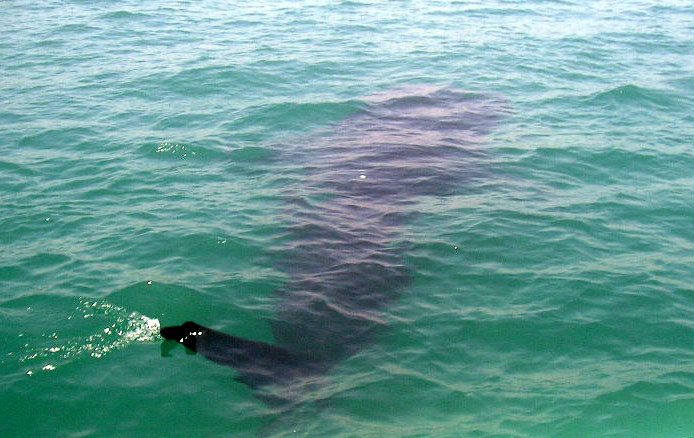
Swimming With Whale Sharks in the Philippines: Oslob vs Donsol
Swimming with whale sharks in the Philippines comes down to one choice most guides refuse to make for you: the wild, regulated encounters at Donsol in Sorsogon and Sogod Bay in Southern Leyte, or the hand-fed, guaranteed sightings at Oslob in south Cebu. I’ll save you the suspense. Go to Donsol, or to Sogod Bay. Here is the honest, sourced reasoning, plus everything you need to plan the trip.
I’ve watched the biggest fish in the sea cruise past me in open water, the way it is supposed to happen, and I’ve stood on the shore at Oslob watching a very different scene play out. The difference matters more than any single photo you bring home. So this guide does the thing the listicles won’t: it takes a side, explains why with the science, and then helps you book whichever encounter you choose with your eyes open.
This is a marquee experience on any list of things to do in the Philippines, and it deserves more than a shrug about “personal choice.” Let’s get into it.
Whale Sharks Philippines: Oslob vs Donsol, the Honest Verdict
Here is the quick version for the people skimming before a long bus ride. There are three places worth your time, and they are not equivalent.
Donsol (Sorsogon, southern Luzon) is the original community-run, wild encounter. Spotters scan the water, you slip in when a shark passes, nobody feeds anything. It is the one I send most people to. Sogod Bay (Southern Leyte) is the connoisseur’s pick: fewer boats, the same no-feed ethics, a longer day on the water, and a real reward when your timing is good. Oslob (south Cebu) is the easy, guaranteed, hand-fed option that marine scientists have criticized for over a decade. It delivers a photo and, for a lot of people, a queasy feeling afterward.
The whole debate hinges on one practice: provisioning, the polite word for hand-feeding wild animals to keep them in one place. At Oslob, fishermen in small boats feed the sharks tiny shrimp (locally called uyap) every morning so paying tourists are guaranteed an encounter. At Donsol and Sogod Bay, feeding is banned outright; the sharks are there because the plankton is there, and some days you do not find them. That uncertainty is not a flaw in the system. It is the entire ethical difference.
The 60-second comparison table
Prices are typical 2026 rates and should be treated as ballparks; confirm current fees when you book. Peso figures convert at roughly PHP 58 = USD 1.
| Donsol (Sorsogon) | Sogod Bay (S. Leyte) | Oslob (Cebu) | |
|---|---|---|---|
| Encounter type | Wild, snorkel-only, spotter-led | Wild, snorkel or freedive, spotter-led | Hand-fed; sharks held by daily feeding |
| Sighting odds | Good in peak season, never guaranteed | Good in season, never guaranteed | Near-guaranteed, year-round |
| Ethics | Strong; no feeding, strict rules | Strong; no feeding, low volume | Criticized by marine scientists |
| Season | Dec–May, peak Feb–Apr | ~Nov–May | Year-round |
| Cost (per person) | ~PHP 300 reg + shared boat; boat ~PHP 3,500–5,000 for 6 | ~PHP 1,500–3,500 incl. boat share | From ~PHP 1,000 (~$18) snorkel rate |
| Crowd | Moderate; spikes in peak weeks | Low | Very high; hundreds per day |
If you remember one line: guaranteed sightings come at the animal’s expense. Everything below is the long answer to why, and how to make the better trip happen.
What Swimming With a Whale Shark Is Actually Like
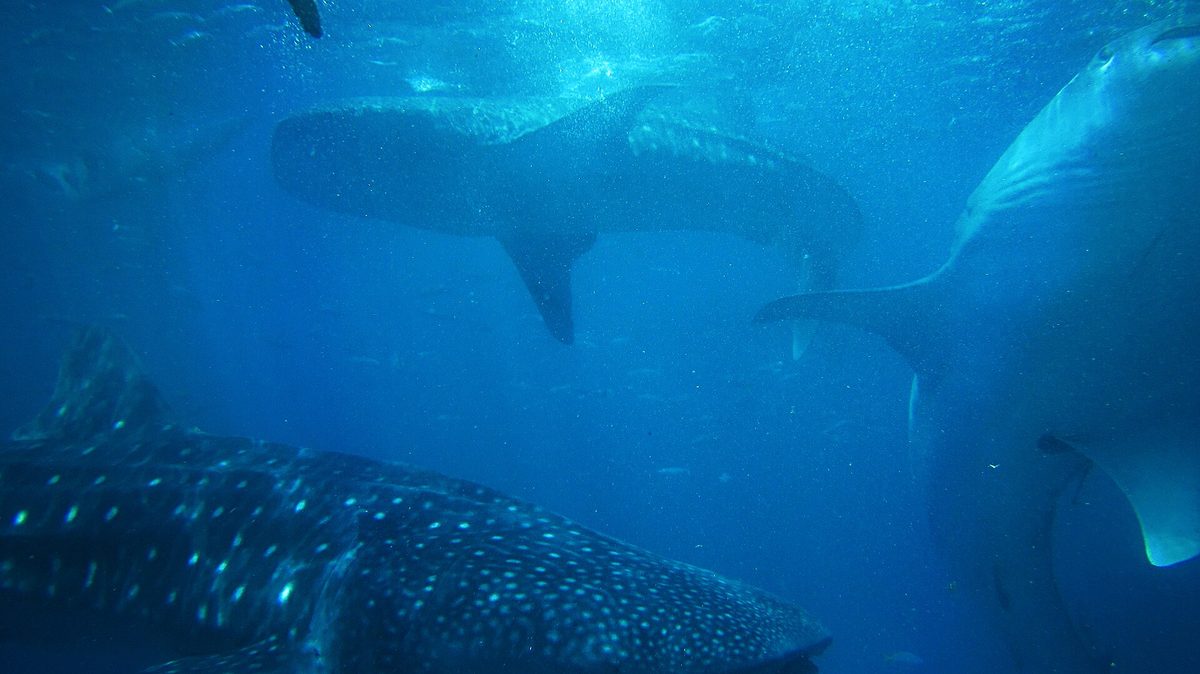
Forget the word “shark.” A butanding (the Filipino name, and you will hear it constantly) is a filter feeder that eats plankton and small fish, has no interest in you, and moves with the slow, deliberate grace of something that has never needed to hurry. Adults here commonly run 5 to 9 meters; the biggest verified individuals worldwide pass 12. The Philippines holds one of the densest known populations on Earth, with well over a thousand individuals identified by their unique spot patterns.
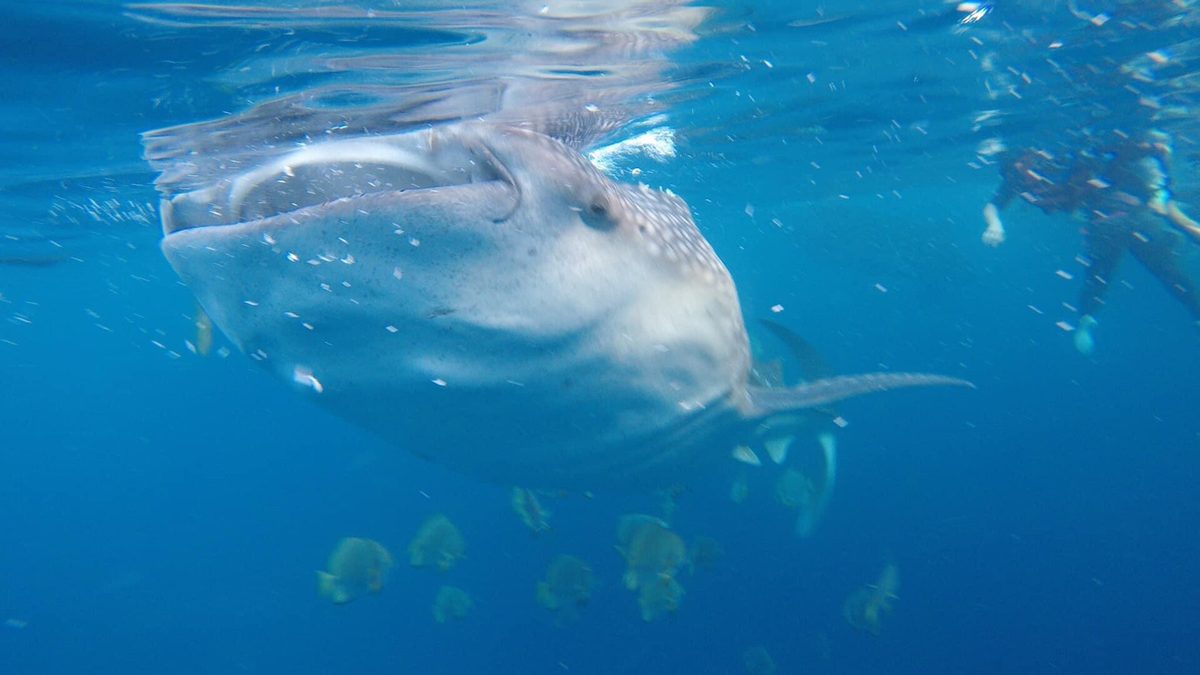
The encounter itself is a snorkel, not a dive. You float at the surface in a mask, fins and usually a life vest. On a wild trip the boat creeps along while a spotter reads the water for a shadow or a dorsal fin. When one appears, the guide calls it and you slide in quietly, swim to a respectful distance, and finny alongside as the animal glides beneath you. Visibility varies wildly: on a green-water plankton day you might get three to five meters and a ghostly shape; on a clear day the whole animal materializes and you forget to breathe through the snorkel. Either way, you do not touch, you do not chase, and you let it set the pace. It usually wins the swimming contest within a minute or two and slips into the blue.
That is the honest texture of a wild encounter: a lot of scanning, sudden adrenaline, a brief and electric few minutes in the water, then quiet again. People who go to Oslob expecting that and land in a floating queue of a hundred selfie-takers are often the ones who come away uneasy. Knowing which experience you are buying is half the battle.
Donsol: The Original, and Still the Best Wild Encounter
Donsol is a quiet fishing town on the coast of Sorsogon, at the southern tip of Luzon, and it is where ethical whale shark tourism in the Philippines was effectively invented. In the late 1990s the bay’s seasonal gathering of butanding was a local secret and, briefly, a target for poachers. WWF stepped in around 1998, helped the town build a community-run interaction program, trained former fishermen as guides and spotters, and turned the animals into a living asset worth far more swimming than slaughtered. It worked. Dynamite fishing stopped, the reef recovered, and Donsol became the template the rest of the country still measures itself against.
How a Donsol trip works
You start at the Donsol Whale Shark Visitor Center, fill in a registration form, and watch a short briefing video on the rules. Staff then group you into boatloads of up to six swimmers. Each boat carries a captain, a spotter (often up in a crow’s nest scanning for hours), and a Butanding Interaction Officer, or BIO, whose job is to read the shark and tell you exactly when and where to enter the water. The BIO is included in the boat fee and is the reason the encounters stay orderly.
The rules are simple, strict, and the whole point: a maximum of six swimmers per shark, one boat per shark, no scuba diving (snorkel only), no flash photography, no touching or riding, and interactions capped at around ten minutes. You keep roughly three meters from the head and four from the tail. Feeding or baiting the animals in any way is forbidden. Trips run about three hours, and if you do not find a shark, that is simply how a wild day goes.
Donsol costs and the cash you need
Donsol is refreshingly affordable. Expect a registration and interaction fee of around PHP 300 (about $5) per person, plus the boat. A whale shark boat seats up to six and runs roughly PHP 3,500 to PHP 5,000 (about $60 to $86) for the vessel, so splitting it six ways lands near PHP 600 to PHP 850 each. Snorkel gear rental is about PHP 300 if you did not bring your own. Solo or as a couple, ask the center to pair you with others to share a boat and the cost.
One practical warning that trips people up every season: bring cash. Donsol has limited ATM access and the system runs on pesos, from the center fees to the crew tips. Draw what you need in Legazpi before you come. A tip for the spotter and BIO after a good trip is customary and deserved, especially when they have stood in the sun for three hours to find you a shark.
Getting to Donsol
The gateway is Legazpi, in Albay, served by Bicol International Airport with roughly hour-long flights from Manila and Cebu. From Legazpi it is about an hour by van or bus to Donsol town (vans from the Legazpi grand terminal are the quickest). Many visitors pair the whale sharks with Legazpi’s other headline act, the near-perfect cone of Mayon volcano, and the firefly river tours on the Ogod River back in Donsol make a magical evening counterpart to the morning on the water. Build in a buffer day: if your first boat trip gets skunked, you want the option to try again, and most people who stay two or three days do connect.
Sogod Bay: The Quiet Connoisseur’s Choice in Southern Leyte
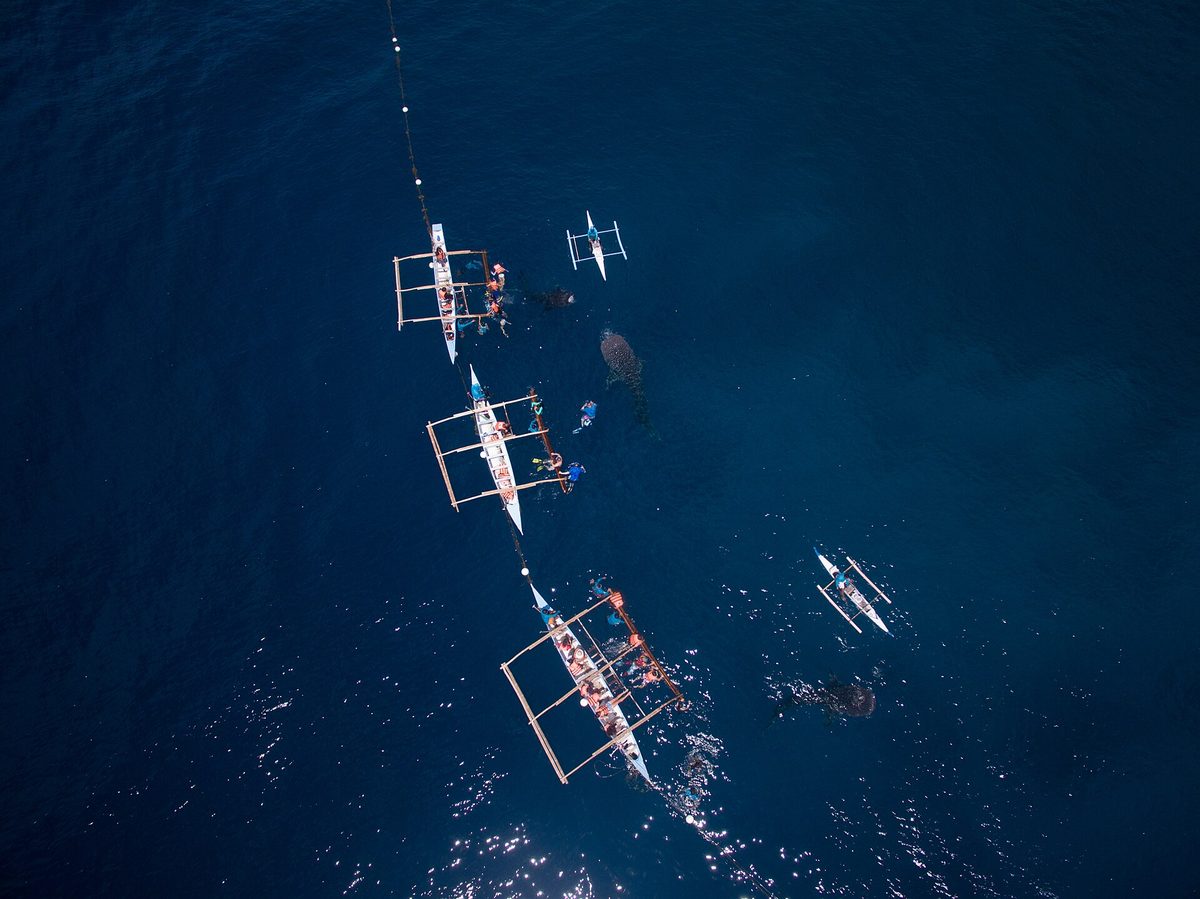
If Donsol is the people’s champion, Sogod Bay in Southern Leyte is the option for travelers who want the wild encounter with almost none of the crowd. It is not famous, it is not commercialized, and it has quietly kept the same ethics: no feeding, ever. The trade-off is effort. You work harder to get here and you spend a longer day searching, but on a good day you are sharing a magnificent animal with a handful of people instead of a hundred.
The whale sharks gather to feed on plankton off Pintuyan, on Panaon Island at the bay’s southern mouth. Tours formally launch from Pintuyan, but most visitors base themselves up the coast in Padre Burgos, where the dive resorts cluster and organize the trips. It is a whole-day affair: from the resort it can take 90 minutes or more by boat to cross to the Pintuyan side, where your boat links up with local spotters in small outriggers who know where the animals have been working. Then you search. When a butanding surfaces, you slip in under the same playbook as Donsol: stay about three meters off, no touching, no flash, no feeding.
Sogod Bay season, cost and access
Season here runs a touch earlier and longer than Donsol, roughly November through May, though a weak plankton year can end it early without warning, so go in the heart of the season (February to April) if you can. Many people combine the whale sharks with Sogod Bay’s superb diving; this is a renowned wall-and-muck destination, and pairing it with a few days underwater is the move. For more on the country’s marine experiences, our guide to diving in the Philippines covers where Southern Leyte sits among the heavyweights.
Costs run a bit higher than Donsol because of the long boat crossing, typically PHP 1,500 to PHP 3,500 per person depending on group size and whether it is folded into a resort package. Getting here means flying to Tacloban (Daniel Z. Romualdez Airport) and then a road transfer of around three to three and a half hours south to Padre Burgos. It is a real journey. The reward is a whale shark encounter that still feels like a discovery rather than a turnstile.
Oslob: Why Marine Scientists Keep Sounding the Alarm
Now the hard part, told straight. Oslob, in the barangay of Tan-awan in south Cebu, is the easiest place on the planet to be photographed beside a whale shark, and that is precisely the problem. Since around 2011, local operators have hand-fed the sharks tiny shrimp from boats every single morning. The feeding keeps a resident group of animals in the bay year-round and delivers near-guaranteed sightings to a tourist volume that has run into the hundreds of thousands annually. It is a genuine economic lifeline for the community, and it is fair to say so. It is also, by the weight of the science, bad for the sharks.
This is not a vague “some people worry” situation. The Large Marine Vertebrates Research Institute Philippines (LAMAVE) has studied Oslob in the water since 2012. A long-term study led by Christine Legaspi, published in Royal Society Open Science in 2020, analyzed 358 in-water surveys from 2015 to 2017 and reached blunt conclusions. The hand-feeding has measurably changed the animals’ behavior: provisioned sharks learn to associate boats and people with food, spend more time at the surface, and adopt an unnatural vertical posture to feed directly beneath the boats rather than cruising horizontally as they do in the wild. And compliance with the rules meant to protect them is dismal. The study found 93% of tourists came closer than the minimum distance the local ordinance requires. An earlier LAMAVE study had already flagged the same behavior change and a 97% non-compliance rate. Across six years, the researchers found no meaningful improvement.
Why it matters, in plain terms. Conditioning an endangered animal to approach boats makes it more vulnerable to propeller strikes and to poachers once it leaves the protected bay. A diet of one food source lacks the variety of a wild plankton diet. Constant human contact and friction against boat hulls can strip the protective mucus layer and cause injury and infection. And keeping animals resident in one cove may interfere with the natural migration and breeding movements the species depends on. The whale shark was uplisted from Vulnerable to Endangered on the IUCN Red List in 2016, on the back of a population decline of more than half over three generations. These are not animals with margin to spare.
The honest counterargument deserves air: “better fed than dead.” Tourism gave the community a reason to protect sharks that were once worth more as meat and fins, and it funds real livelihoods. I take that seriously. But the wild encounters at Donsol and Sogod Bay protect the animals and employ the community, without the feeding. You do not have to choose between conservation and a paycheck. Oslob is simply the version that took the shortcut.
And about “ethical” alternatives that are really Oslob in disguise
Be skeptical of any operator promising guaranteed sightings, because in this country a guarantee almost always means feeding. The point was driven home in early 2025, when the governor of Bohol signed an executive order indefinitely halting whale shark interactions in the towns of Lila, Alburquerque and Dauis after an inter-agency team confirmed operators were luring the sharks with krill, in violation of provincial and national rules. Activity there is expected to resume only under a stricter ordinance that bans feeding outright. The lesson for travelers: whale shark tourism rules and suspensions change, so verify the current status of any site before you book, and if a tour leans on a guarantee, ask pointedly how they manage it. For trip-planning context around the island, our Bohol travel guide is the place to start; Oslob and Moalboal sit within the orbit of our Cebu travel guide.
Whale Shark Season in the Philippines and How to Choose Your Spot
Timing makes or breaks this trip, because the wild encounters are seasonal and the sharks do not read your itinerary. Here is the whale shark season Philippines travelers should plan around, site by site.
- Donsol (Sorsogon): the interaction season officially runs roughly December to May, with the broader plankton window stretching November to June. Peak numbers and your best odds fall February to April. A quietly useful tip: April and May often deliver the clearest water, because months of feeding have thinned the plankton that clouds visibility earlier in the season.
- Sogod Bay (Southern Leyte): a touch earlier and longer, roughly November to May, again best in the February-to-April heart of it. Weak plankton years can shorten it without warning.
- Oslob (Cebu): “year-round,” but only because the animals are fed daily to keep them there. That permanence is the very thing the science objects to.
This window sits squarely inside the country’s dry season, which is convenient, since it is the best stretch for almost everything else too. If you are building a wider trip, our guide to the best time to visit the Philippines lines up the whale shark months against island hopping, diving and festival season so you can stack the experiences.
So which one should you actually pick?
Decide by what you value most. Choose Donsol if you want the best balance of a genuinely wild, ethical encounter with reasonable access and cost; it is the right answer for most first-timers. Choose Sogod Bay if you will trade extra travel and a longer day for low crowds and a more discovery-like feel, ideally paired with diving. Skip Oslob unless a guaranteed photo outranks the welfare of an endangered animal for you; if you do go, go informed about what you are supporting. Whichever wild site you pick, give it two or three days. One boat trip is a coin flip; three is how most people connect.
The Responsible-Encounter Rules (Memorize These)
The wild programs run on a short code of conduct that exists to keep both you and the animal safe. None of it is complicated, and following it is the difference between tourism the sharks can sustain and the kind they cannot.
- No touching, no riding. Contact strips the protective mucus layer that guards a shark against infection. Hands to yourself, always.
- No feeding or baiting. The single rule that separates a wild encounter from a managed one. Do not support trips that feed.
- Keep your distance. Roughly three meters from the head and four from the tail. A tail fluke that size can hurt you, and crowding stresses the animal.
- No flash photography. It can disturb and disorient the shark. Switch it off before you get in.
- Don’t block its path or chase it. Swim alongside, never head-on, and let the animal choose when the encounter ends.
- Six swimmers per shark, one boat per shark. If your operator ignores group limits, that tells you what kind of operator they are.
- Wear reef-safe sunscreen and skip the gloves. Protect the water you are floating in.
A wild encounter asks a little patience and a little humility in exchange for the real thing. That is a fair trade for a few minutes beside the biggest fish in the sea.
Frequently Asked Questions
Is Oslob or Donsol better for whale sharks?
Donsol, if you care how the encounter happens. Oslob guarantees sightings by hand-feeding wild sharks daily, a practice marine scientists have criticized for over a decade for altering the animals’ natural behavior. Donsol’s encounters are wild, regulated and feed-free; you might get skunked, but the experience is honest and the animals are healthier for it.
What is the best time to see whale sharks in the Philippines?
Aim for February to April, the peak of the whale shark season Philippines wide. Donsol’s wild season runs roughly December to May, with plankton present November to June, and Sogod Bay’s runs about November to May. April and May often bring the clearest water in Donsol. Oslob runs year-round only because the sharks are fed to stay.
How much does it cost to swim with whale sharks in Donsol?
Donsol is a bargain. Budget around PHP 300 (about $5) per person for registration plus the boat, which seats six and runs roughly PHP 3,500 to PHP 5,000 for the vessel; split six ways that is about PHP 600 to PHP 850 each. Gear rental adds about PHP 300. Bring cash, as ATM access is limited.
Are whale sharks dangerous to swim with?
No. Whale sharks are gentle filter feeders that eat plankton and tiny fish and have no interest in humans. The only real hazards are practical: a powerful tail you should stay clear of, boat traffic on crowded days, and your own swimming ability, which is why life vests are standard. Keep your distance and you are perfectly safe.
Can you see whale sharks in the Philippines without feeding them?
Yes, and you should. Donsol and Sogod Bay both run strictly no-feed, wild encounters where spotters find naturally occurring sharks and you snorkel at a respectful distance. These are the ethical choices. Be wary of any operator promising guaranteed sightings, since in the Philippines a guarantee usually means feeding.
Do I need to know how to dive to swim with whale sharks?
No. The wild encounters at Donsol and Sogod Bay are snorkel-only; scuba is actually banned at Donsol to keep interactions at the surface and orderly. You float in a mask and fins, usually with a life vest, so confident swimming helps but a diving certificate is not required. Sogod Bay’s freedivers do go deeper, but that is optional.
Sources and photo credits
Photo Credits
- Whale shark at the surface, Donsol — Shubert Ciencia, CC BY 2.0, via Wikimedia Commons
- Snorkeler beside a whale shark — Eurasic, CC BY-SA 4.0, via Wikimedia Commons
- Boats and snorkelers around wild whale sharks, aerial — choypictures, CC0, via Wikimedia Commons
- Whale sharks underwater — Jake Gaviola, CC0, via Wikimedia Commons
Full attribution for each image is recorded in the media library credit field. Images illustrate Philippine whale shark encounters.
Sources and Further Reading
- LAMAVE (Large Marine Vertebrates Research Institute Philippines) — whale shark research and the Oslob behavior studies
- Legaspi et al. (2020), Royal Society Open Science — provisioning and whale shark behavior at Oslob
- IUCN Red List — whale shark (Rhincodon typus), Endangered
- Philippine Department of Tourism — official travel portal
- WWF Philippines — Donsol Butanding ecotourism background
About this guide: PhilippinesTourism.org is an independent resource for planning Philippine travel. Operator practices and seasons change — verify current details before booking. Verified June 2026.