Tubbataha Reef: The Liveaboard Diving Guide
Tubbataha is the dive trip Filipino divemasters save up years for. It sits in the middle of the Sulu Sea, reachable only by liveaboard, open barely three months a year, and it delivers shark-and-wall diving that most people fly to remote Pacific atolls to find. This is my honest guide to planning that trip in 2026.
I have watched a lot of divers obsess over Tubbataha for a decade, and the short version is this: if you can dive a current and you can spare the budget, it lives up to the hype. Below I will lay out the season, the best dive sites, the marine life, what a liveaboard actually costs, and who should probably dive somewhere else instead.
Tubbataha at a glance
| Detail | What to expect (2026) |
|---|---|
| Season window | Mid-March to mid-June only (set yearly by the management office) |
| Trip length | About a week |
| Typical cost | ~$2,000 to $3,500+ per person for the boat alone |
| Conservation fee | ₱5,000 (~$79) per diver, paid locally; vessel fees separate |
| Departure port | Puerto Princesa, Palawan (10 to 12 hours each way) |
| Skill level | Advanced; ~50+ logged dives and comfort in current strongly advised |
| Marine highlights | Reef sharks, schooling jacks and barracuda, turtles, walls, occasional pelagics |
What Tubbataha is, and why divers rate it number one
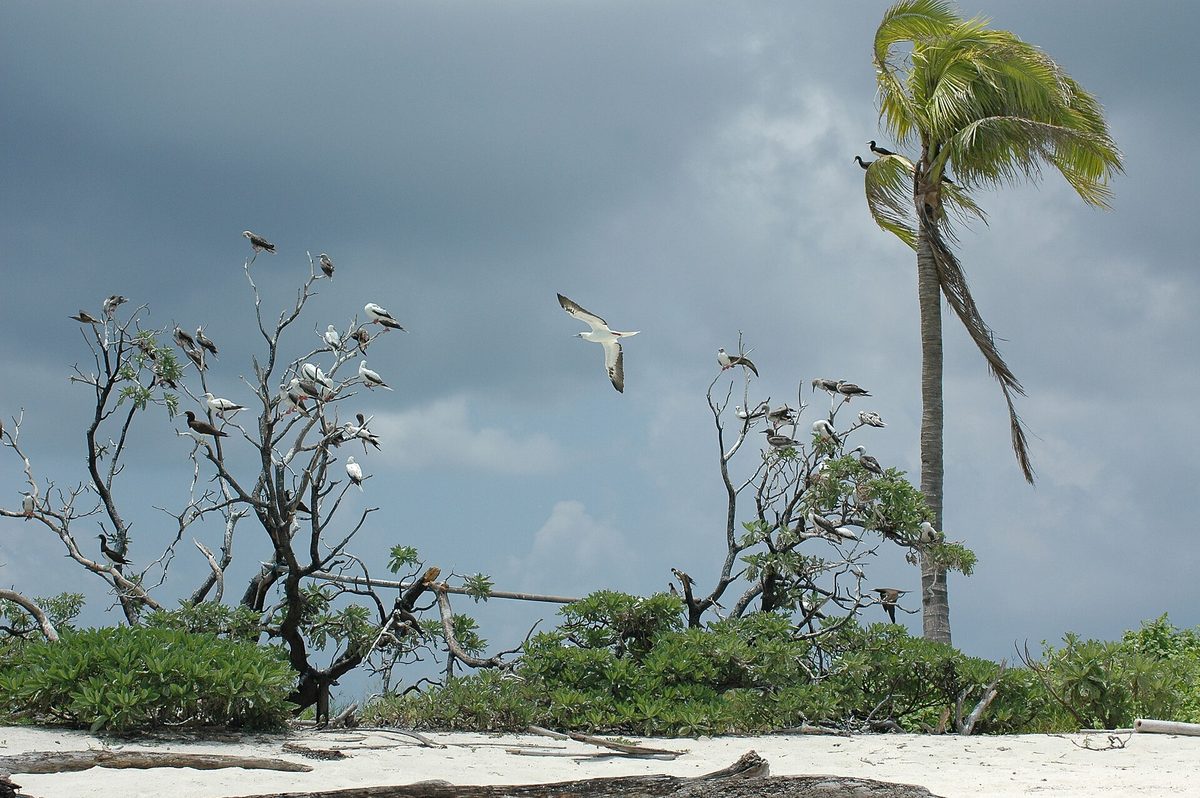
Tubbataha Reefs Natural Park is a protected marine park in the Sulu Sea, roughly 150 km (about 10 hours by boat) southeast of Puerto Princesa, the capital of Palawan. It became a UNESCO World Heritage Site in 1993, and its no-take zone covers 97,030 hectares of open-ocean reef. There are no resorts, no jetties, and no day boats. The only structures are a ranger station and a lighthouse.
The park is built around two large coral atolls, the North Atoll and the South Atoll, plus a separate emergent reef called Jessie Beazley to the north. Because the reefs rise from deep water in the middle of nowhere, they catch nutrient-rich currents that feed an enormous amount of life. The official tallies are genuinely hard to beat: more than 350 species of coral and over 600 species of fish, along with sharks, turtles, and seasonal pelagics. For context, that is a meaningful slice of all the coral species on Earth concentrated in one park.
So why do experienced divers rank it as the best diving in the Philippines, and one of the best dive sites on the planet? Three reasons. First, the walls. Tubbataha’s reefs drop into deep blue almost vertically, so you fly along coral cliffs that are completely intact, not bleached or bombed like so many Asian reefs. Second, the fish density. Healthy reef-shark numbers and schools of jacks and barracuda are normal here, not a lucky day. Third, the remoteness itself does the work: limited access and strict no-take rules mean you are diving a reef that behaves the way reefs did before mass tourism. If you are mapping out the wider picture of scuba diving in the Philippines, Tubbataha is the crown at the top.
Is it overhyped? Honestly, only in one sense. People expect to see schooling hammerheads and giant mantas on every dive, and that is not the deal. Tubbataha is reliably excellent for reef sharks, walls, and big schools, but the pelagic megafauna is occasional, not guaranteed. Set that expectation correctly and you will come home thrilled. I rank it above every resort-based dive area in the country, and it earns a spot on any list of the best dive sites in the Philippines.
The liveaboard-only reality (there is no other way in)
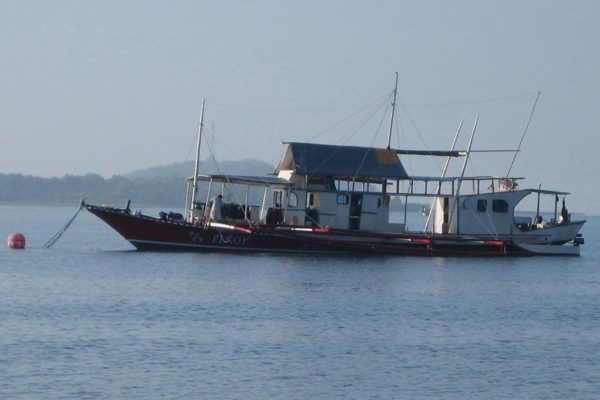
This is the single most misunderstood thing about Tubbataha, so let me be blunt: you cannot day-trip it, and you cannot stay in a resort and zip out in the morning. The reef is too far from land, and the park has no accommodation of its own. The usual way to dive Tubbataha is on a multi-day liveaboard boat that sails out from Puerto Princesa and runs your dives from the mother boat and its tenders for the whole trip.
The crossing is the part people underestimate. Depending on the vessel’s speed and the sea state, it takes roughly 10 to 12 hours of open-water cruising to reach the park, usually done overnight on the first evening so you wake up at the reef. The Sulu Sea can be flat and glassy or genuinely lumpy, and there is no sheltering coastline once you leave Palawan. If you are prone to seasickness, start your medication before you board, not when the swell picks up.
Once you are at the reef, the rhythm is the best part of any liveaboard: roll out of bed, dive, eat, dive, nap, dive. Philippine Siren’s six-night itinerary, for example, schedules up to four dives a day on days 2 to 5 and two morning dives on day 6, for up to 18 dives in all, with night dives prohibited. You are completely off-grid. Internet is minimal to nonexistent on most boats, which I consider a feature.
One consequence of the liveaboard model: your boat is your hotel, your restaurant, and your dive shop for a week, so the vessel you choose matters more than at any resort destination. I will get into how to choose one further down.
The Tubbataha diving season: mid-March to mid-June, and nothing else
Tubbataha has a short dive season. The park is open to divers only from roughly mid-March to mid-June. Outside that window it is closed, full stop, because the southwest monsoon (the habagat) churns the Sulu Sea into crossings that are dangerous and dive conditions that are pointless. The exact opening and closing dates shift a little each year and are set by the park management office, so confirm the precise dates with your operator rather than booking flights around a guess.
Within that roughly three-month window, here is how I would think about timing by month:
- Mid-to-late March: The season opener. Seas are settling and the reef has been undived for nine months, which some people love. Conditions can still be a touch transitional, with the odd windy day.
- April: My pick for the sweet spot, and the most popular month, so cabins book out early.
- May: Another strong choice, still well inside the season.
- Early-to-mid June: The tail end. Still divable and often quieter on the boats, but you are racing the arrival of the monsoon and conditions can become less predictable as the season closes.
If you want the safest bet for calm seas and gin-clear water, aim for April or May. If you would trade a little weather risk for fewer boats and lower last-minute prices, the very start or very end of the season can work. Either way, this is a destination you plan around the calendar, not one you slot in whenever. For the bigger picture across the archipelago, see our guide to the best time to visit the Philippines.
One practical warning that has nothing to do with weather: book your Tubbataha liveaboard as early as you can. The season is short, so the best boats and the prime April and May weeks go first. If your dates are already tight, plan for next season rather than settling for a boat you are unsure about.
The best dive sites in Tubbataha Reef
The park is compact enough that a week of diving covers most of the signature sites, and your cruise director will read the currents and tides to decide the daily order. These are the spots that come up on almost every trip report, and the ones I would not want to miss.
North Atoll: the all-rounder
The North Atoll is where many trips start, and it is a fair introduction to what the park does well: sloping reef tops that fall away into sheer walls, big bommies covered in healthy hard coral, and reliable reef-shark traffic in the blue. Sites around the North Atoll suit a range of dives, from gentle drifts along the top of the reef to deeper wall hangs where whitetip and grey reef sharks cruise past. It is also good for turtles, which seem unbothered by divers here.
South Atoll and the lighthouse
The South Atoll, marked by its old lighthouse, holds some of the densest fish life in the park. Expect walls dropping into deep water, schooling jacks and snapper, and the chance of larger pelagics patrolling the edge of the reef. The southern end of the park can carry more current, which is exactly why the fish stack up there.
Jessie Beazley Reef
Jessie Beazley is a separate emergent reef a couple of hours north of the main atolls, and boats often run it as a dedicated day or as a transit dive. It is a small reef with a big reputation for sharks and schooling fish in the blue, plus pristine coral on top. Reaching it depends on conditions and your itinerary, so treat it as a bonus rather than a guarantee.
Delsan Wreck
Delsan Wreck, on the South Atoll, is less about the wreckage itself (there is not much intact to see) and more about what gathers there. It is known as a spot for jacks, tuna, and the occasional bigger visitor in the current, and it can be one of the more action-packed dives of the week when the water is moving.
Black Rock and Amos Rock
Black Rock and Amos Rock are classic Tubbataha wall dives, the kind of sites that sell the destination. You drop in, the reef falls away into deep blue, and you fly along an immaculate coral cliff with sharks below and schools above. Amos Rock in particular has a reputation for beautiful soft and hard coral cover and good odds on reef sharks. These are the dives I picture when I think of the park.
Washing Machine
The Washing Machine is named exactly for what it does. When the tide runs, converging currents create a swirling, churning ride that funnels nutrients and fish into a tight zone. Done right and at the right tide, it is a thrilling drift surrounded by schooling fish. Done at the wrong moment, it is a reminder that this is advanced diving. Listen to your guide on timing and entry.
Marine life: sharks, jacks, turtles, and the occasional giant
Tubbataha’s marine life is the whole point, so here is a realistic picture of what you will actually see versus what you might get lucky with.
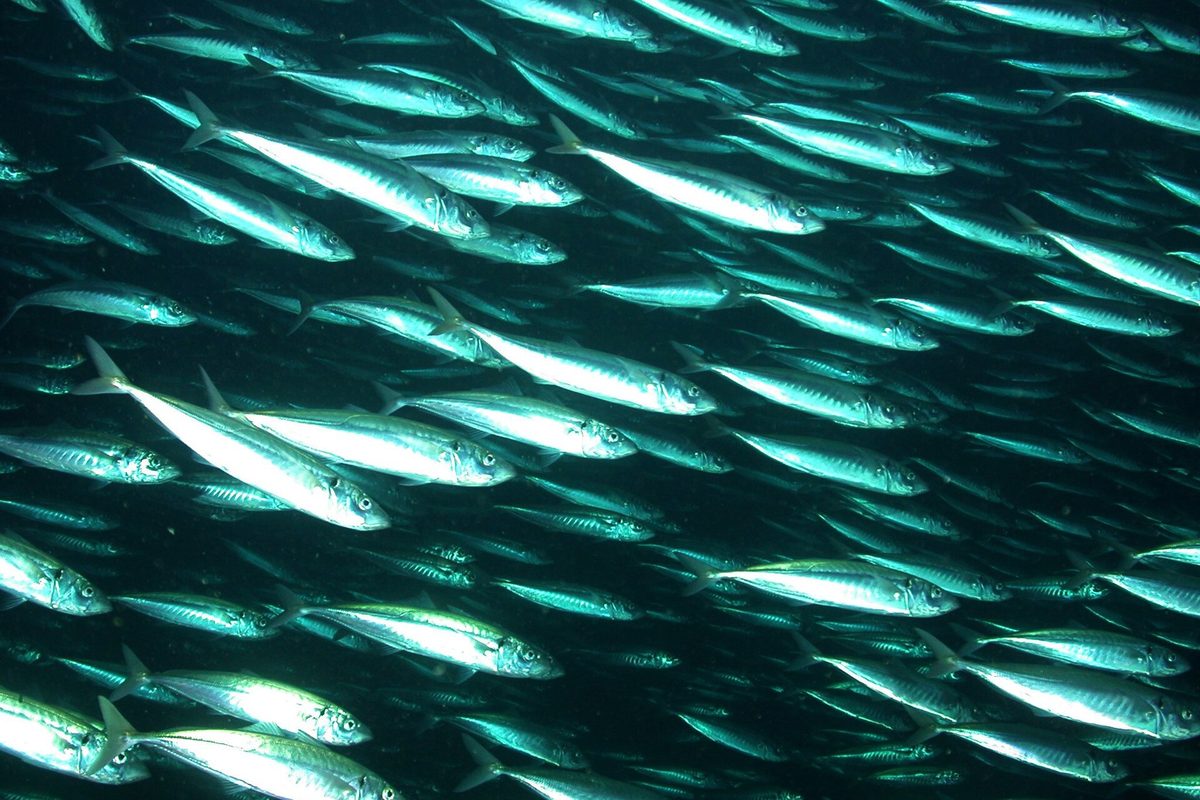
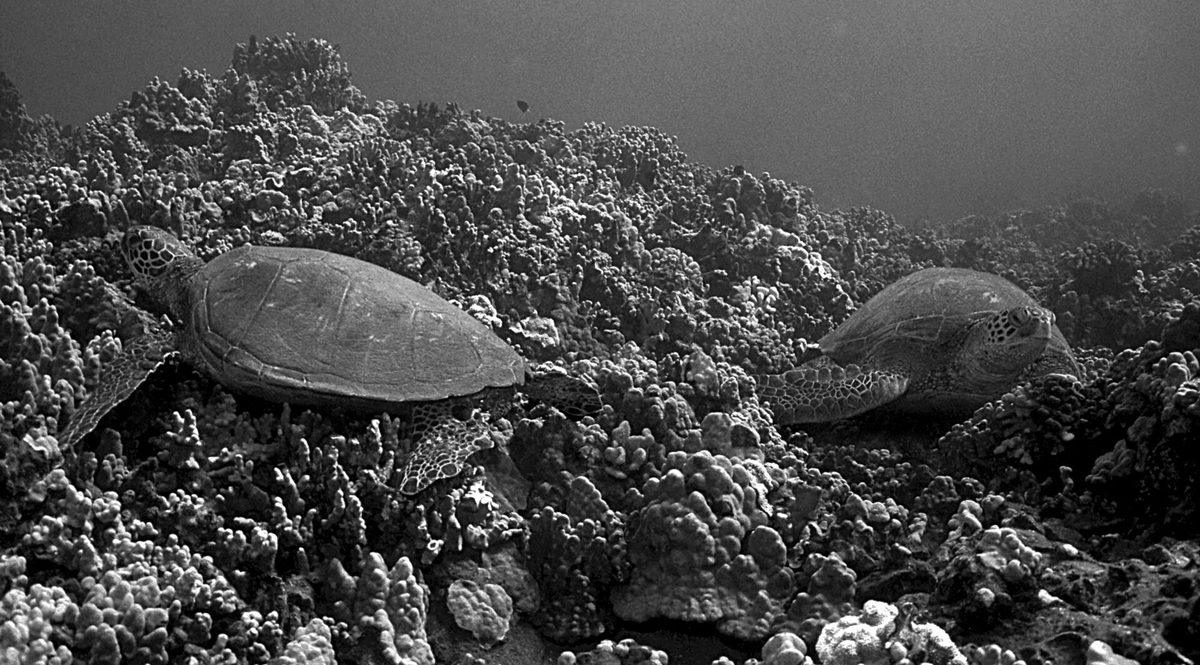
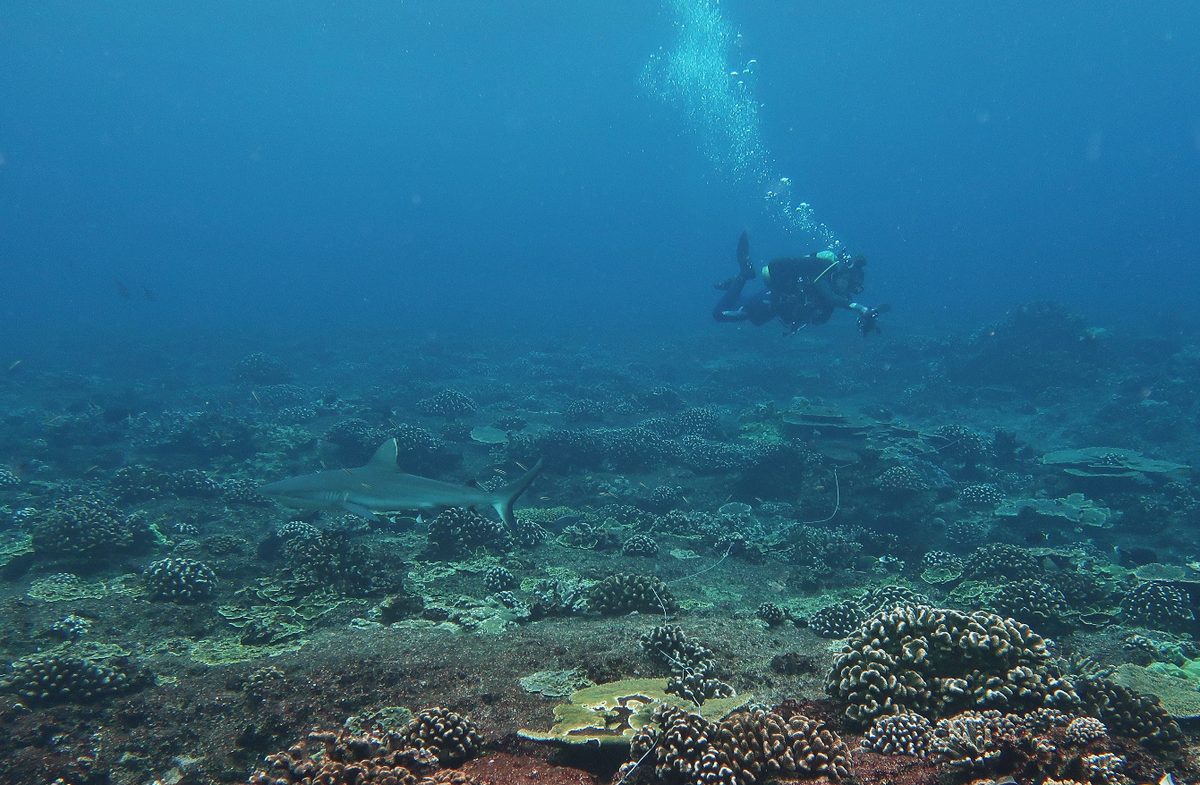
What you can reliably expect: reef sharks are the headline act, and whitetip and grey reef sharks are a near-daily sight, often in the blue off the walls or resting on sandy ledges. Schooling fish are everywhere, with big aggregations of bigeye jacks, snapper, and barracuda that can blot out the sun when they tornado. Green and hawksbill turtles are common and notably relaxed. The hard and soft coral cover is among the healthiest you will dive anywhere in Southeast Asia, which is its own reason to go.
What you might get, with luck: this is where honesty matters. Tubbataha is not a guaranteed hammerhead or manta destination the way some marketing implies. That said, divers do encounter larger pelagics here, including the odd manta ray, the occasional whale shark passing through, and, for the very fortunate, scalloped hammerheads in the deeper blue, more often early in the season. Treat any of these as a brilliant bonus rather than the reason you booked.
The takeaway: come for the walls, the reef sharks, and the sheer density and health of the reef, and you will be impressed every single day. Come expecting a parade of giants and you may feel let down on the calmer dives. The reef itself is the star.
Choosing a Tubbataha liveaboard: an honest comparison
Because your boat is everything for a week, this is the decision to get right. The Tubbataha fleet is small, and the boats sort cleanly into three tiers. They all dive the same reef, so what you are really buying is comfort, cabin quality, food, group size, and crew experience. Here is how I would frame the choice without naming a single “best” boat, because the right pick depends on your budget and tolerance for roughing it.
Budget and classic-style boats
The lower tier covers the older, simpler vessels and a couple of sailing-style boats. Cabins are smaller, some share bathrooms, and the comforts are basic, but the diving is identical and the price is the gentlest entry to the park. Expect roughly $2,000 to $2,500 per person for a 6-night trip on these boats, sometimes less on a genuine last-minute deal. If you care more about the reef than the linens, this is where the value is.
Midrange boats
This is the sweet spot for most divers and where the bulk of the fleet sits. You get private en-suite cabins, air conditioning, solid food, a dedicated camera table, and crews who run the park year after year. Budget somewhere around $2,600 to $3,200 per person for the week. For comfort-to-cost, I think this tier is the smart default.
Luxury boats
At the top you have the larger, premium liveaboards with spacious staterooms, en-suite everything, generous deck space, nitrox often included, and hotel-grade service. Prices climb to roughly $3,300 to $3,800 or more per person, and a top suite can run higher. Worth it if you value space and service and you are doing this once; less essential if you would rather put the money toward a longer trip elsewhere.
My honest steer: most people are happiest on a well-run midrange boat. The reef does not care what you paid, and the difference between budget and midrange is mostly sleep quality and bathroom privacy, while the jump to luxury is about space and polish. Whatever tier you pick, weight crew experience and recent reviews above the brochure photos, and confirm exactly what the fare includes (more on that next). If you want to extend your time in the region, pairing Tubbataha with the wrecks of Coron makes a superb back-to-back, since both sit within reach of Palawan.
Costs and fees: what a Tubbataha trip really runs
Tubbataha is not a budget destination, and the headline boat price is only part of it. Here is the realistic full picture for 2026, hedged because operators package things differently and prices shift. Rough conversions use about 63 pesos to the US dollar.
- The liveaboard itself: roughly $2,000 to $3,800+ per person for a 6-night trip, depending on tier and cabin. This is the big-ticket item.
- Conservation (park) fee: the official Tubbataha Management Office rate is ₱5,000 (about $79) per visiting diver, paid in pesos locally before entry. Note that some operators quote a higher bundled figure in US dollars, so ask whether the park fee is included in your fare or paid on top.
- Fuel and other surcharges: several boats add a fuel surcharge or environmental levy on top of the cabin price. Confirm the all-in number before you book.
- Nitrox, gear rental, and alcohol: nitrox is sometimes included and sometimes charged. Gear rental, soft drinks beyond water, and any beer or wine are usually extra.
- Flights to Puerto Princesa: a domestic round trip from Manila or Cebu typically runs a modest fare, but add it to your budget.
- Pre- and post-trip nights in Puerto Princesa: a night or two on land before you sail is wise, so budget a hotel and meals.
- Crew tips and dive insurance: tipping the crew is customary, and dive insurance that covers liveaboard and chamber evacuation is effectively mandatory here.
Add it up and a realistic all-in cost for a week diving Tubbataha lands somewhere from about $2,500 at the genuine budget end to well over $4,500 for a luxury cabin with extras. It is a splurge, but per dive it can compare favorably to a string of resort day trips. For broader budgeting across a longer trip, see our breakdown of Philippines travel costs.
How to get to Tubbataha
Every Tubbataha liveaboard departs from and returns to Puerto Princesa, the capital of Palawan, so your job is simply to get yourself there a day before the boat sails. The route is straightforward:
- Fly into the Philippines via Manila or Cebu. These are the main international gateways.
- Take a domestic flight to Puerto Princesa (PPS). There are frequent daily connections from Manila and Cebu, and the hop is short.
- Arrive at least 24 hours early. Domestic flights can be delayed, and you do not want to miss the boat, literally. Book a morning flight where you can.
- Spend the night in Puerto Princesa. Most operators include or arrange a pre-departure briefing and transfer to the pier. Stay close to the city or the port.
- Board and cross overnight. The boat handles the rest, cruising the 10-to-12-hour passage to the reef while you sleep.
Puerto Princesa is worth a day on its own if you have time, and Palawan more broadly rewards tacking on extra travel before or after your dive week.
Who should dive Tubbataha, and who should skip it
I will save you a disappointing trip with a frank assessment by experience level.
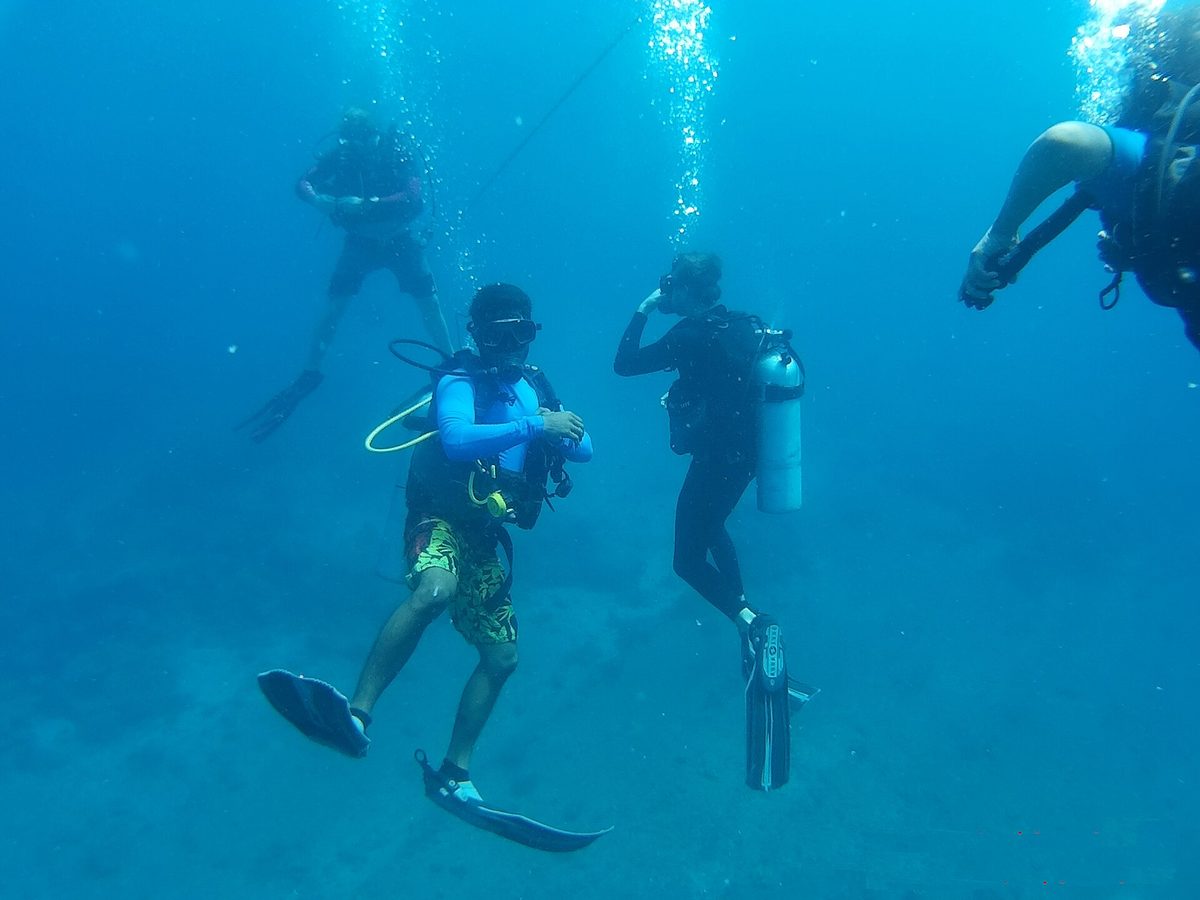
Skip it for now if you are a brand-new or occasional diver. Tubbataha involves blue-water wall dives, real currents, and tender entries far from any land or chamber. Requirements are set boat by boat (Master Liveaboards, for one, asks for Advanced Open Water or equivalent, 50 logged dives and experience in strong currents), so check yours, and some sites are genuinely advanced. If you have a dozen dives and last got wet two years ago, build experience somewhere gentler first. The good news is the Philippines is a brilliant place to do exactly that.
It is ideal if you are a confident intermediate-to-advanced diver who is comfortable in current, happy on a multi-day boat, and chasing healthy reefs, walls, and sharks rather than guaranteed megafauna. Underwater photographers do very well here given the reef health and the fish density. So do divers ticking off the world’s best sites.
Think twice if you get badly seasick, need reliable internet, or want a flexible “dive when you feel like it” holiday. The crossing is long, the boat is your world for a week, and the season and itinerary are fixed. If that sounds more like a chore than an adventure, a resort-based area will serve you better.
If you are still building toward this trip, log some current dives at gentler Philippine sites first, then commit to the Sulu Sea when your skills are solid.
Frequently asked questions
Is Tubbataha worth the money?
For confident divers, yes. You are paying for a remote, strictly protected reef with healthy walls, reliable reef sharks, and huge fish schools, diving the way reefs looked decades ago. It is a genuine splurge at roughly $2,500 to $4,500+ all-in for the week, but the diving quality and the once-a-year access justify it for most who make the trip. Casual divers will likely find better value elsewhere.
When is the best time to dive Tubbataha?
The season runs only mid-March to mid-June, with exact dates set yearly by the park management office. Within that window, April and May are the months I would aim for, though conditions vary, so ask your operator what to expect on your dates. Late March can be slightly transitional, and June risks the early monsoon. Book as early as you can, especially for April and May.
Do I need to be an experienced diver for Tubbataha?
Effectively yes. Requirements are set boat by boat; Master Liveaboards, for one, asks for Advanced Open Water or equivalent, 50 logged dives and experience in strong currents, so check the requirements of the boat you book. The park involves blue-water wall dives, real currents, and tender entries far from land. Newer divers should build experience and current skills at gentler Philippine sites before committing to a Tubbataha liveaboard.
How much is the Tubbataha conservation fee in 2026?
The official Tubbataha Management Office conservation fee is ₱5,000 (about $86) per visiting diver, paid in pesos locally before you enter the park. Divemasters pay a reduced rate and children 12 and under are exempt. Some operators quote a higher bundled US-dollar figure, so always confirm whether the park fee is included in your fare or charged on top.
Are there sharks in Tubbataha?
Yes, and they are the highlight. Whitetip and grey reef sharks are a near-daily sight, usually cruising the walls or resting on sandy ledges. Lucky divers also see the occasional whale shark or, more rarely, scalloped hammerheads in the deeper blue early in the season. The reef-shark population is one of the healthiest and most reliable in the Philippines.
How far is Tubbataha from Puerto Princesa?
Tubbataha sits roughly 150 km out in the Sulu Sea, which translates to about 10 to 12 hours of cruising by liveaboard from Puerto Princesa. Liveaboards usually make the passage overnight, sailing on the first evening. If you are prone to seasickness, prepare for an open-water crossing and medicate before you sail.
Sources and photo credits
Photo credits
- Tubbataha Reefs Natural Park, aerial: Photo: Ron Van Oers / CC BY-SA 3.0 igo via Wikimedia Commons (source)
- Liveaboard dive boat: Photo: (WT-shared) Johnycanal at wts wikivoyage / CC BY-SA 1.0 via Wikimedia Commons (source)
- Coral reef wall: Photo: Subro89 / CC BY-SA 4.0 via Wikimedia Commons (source)
- Green sea turtle: Photo: LASZLO ILYES from Cleveland, Ohio, USA / CC BY 2.0 via Wikimedia Commons (source)
- School of jacks: Photo: NMFS/Southwest Fisheries Science Center (CC0) via Wikimedia Commons (source)
- Grey reef shark: Photo: NOAA Fisheries/Dani Escontrela (CC0) via Wikimedia Commons (source)
Sources
- Tubbataha Management Office – Permits and Fees (official conservation and vessel fees)
- UNESCO World Heritage Centre – Tubbataha Reefs Natural Park
- Tubbataha Management Office – About Tubbataha (park area, biodiversity, season)
About this guide: PhilippinesTourism.org is an independent Philippines travel resource. Routes, prices and dive-site conditions were verified October 2026; confirm current details with operators before you book.