The Philippines Bucket List: 25 Unforgettable Experiences
Some trips you tick off. The Philippines bucket list is the rare one you keep adding to. After enough crossings of this 7,641-island country I’ve stopped pretending I can rank its greatest hits one through twenty-five, so this guide does it by feeling instead: water and islands, adventure and heights, wildlife and nature, culture and festivals, and the slow, soulful stuff that sneaks up on you. Honest costs, real seasons, no filler.
This is the opinionated version, not the algorithm’s. I’ve left off a few famous names that don’t earn their spot and added deep cuts most lists skip, because the goal here isn’t a checklist sprint — it’s the short list of experiences I’d genuinely cross oceans to repeat. For the full menu of what to do once you land, the complete guide to things to do in the Philippines is the companion piece to this one; consider this the highlight reel.
A note on numbers: prices are typical 2026 rates per person, meant as ballparks, not quotes. Pesos convert at roughly PHP 58 = USD 1, and I’ve rounded the dollars. Confirm current fees before you book — they drift, and eco-fees in particular keep creeping up.
The Ultimate Philippines Bucket List, by Theme: Top Picks at a Glance
If you read nothing else, start here. These are the experiences I’d defend in an argument, sorted by the kind of day you’re in the mood for. Detail, costs and seasons follow in the sections below.
| Experience | Theme | Where | Typical cost | Best months |
|---|---|---|---|---|
| El Nido & Coron island hopping | Water & Islands | Palawan | ~PHP 1,400–2,500 ($24–43) | Dec–May |
| El Nido–Coron expedition boat (3–5 days) | Water & Islands | Palawan | ~PHP 14,000–28,000 ($240–480) | Nov–May |
| Moalboal sardine run snorkel | Water & Islands | Cebu | ~PHP 200–300 ($4–5) | Year-round |
| Kawasan canyoneering | Adventure & Heights | Badian, Cebu | ~PHP 1,800–2,500 ($31–43) | Dec–May |
| Tubbataha liveaboard diving | Adventure & Heights | Sulu Sea | ~$2,000+ / week | Mid-Mar–mid-Jun |
| Cloud 9 surfing | Adventure & Heights | Siargao | ~PHP 800–1,500 ($14–26)/hr lesson | Aug–Nov |
| Whale sharks the ethical way | Wildlife & Nature | Donsol, Sorsogon | ~PHP 3,500–4,500 ($60–78) | Dec–May |
| Banaue & Batad rice terraces | Wildlife & Nature | Ifugao, N. Luzon | ~PHP 1,500–3,000 ($26–52)/day | Mar–May, Oct–Nov |
| Mt. Pulag sea of clouds | Adventure & Heights | Benguet, N. Luzon | ~PHP 3,000–5,000 ($52–86) | Dec–Feb |
| Chocolate Hills + tarsiers | Wildlife & Nature | Bohol | ~PHP 2,500–3,500 ($43–60) tour | Dec–May |
| A town fiesta (Sinulog, Ati-Atihan) | Culture & Festivals | Nationwide | Free to watch | Jan, varies |
| Beach-camping on Calaguas | Slow & Soulful | Camarines Norte | ~PHP 2,000–3,500 ($34–60) | Mar–May |
That’s the trailer. Here’s the film.
Water & Islands: The Reason Everyone Comes
You don’t fly to a country of 7,641 islands and stay on one of them. The water is the headline act here, and the Philippines plays it better than anywhere I’ve been in Southeast Asia. For the deeper dive on routes and operators, the island hopping guide goes stop by stop; below are the days I’d build a whole trip around.
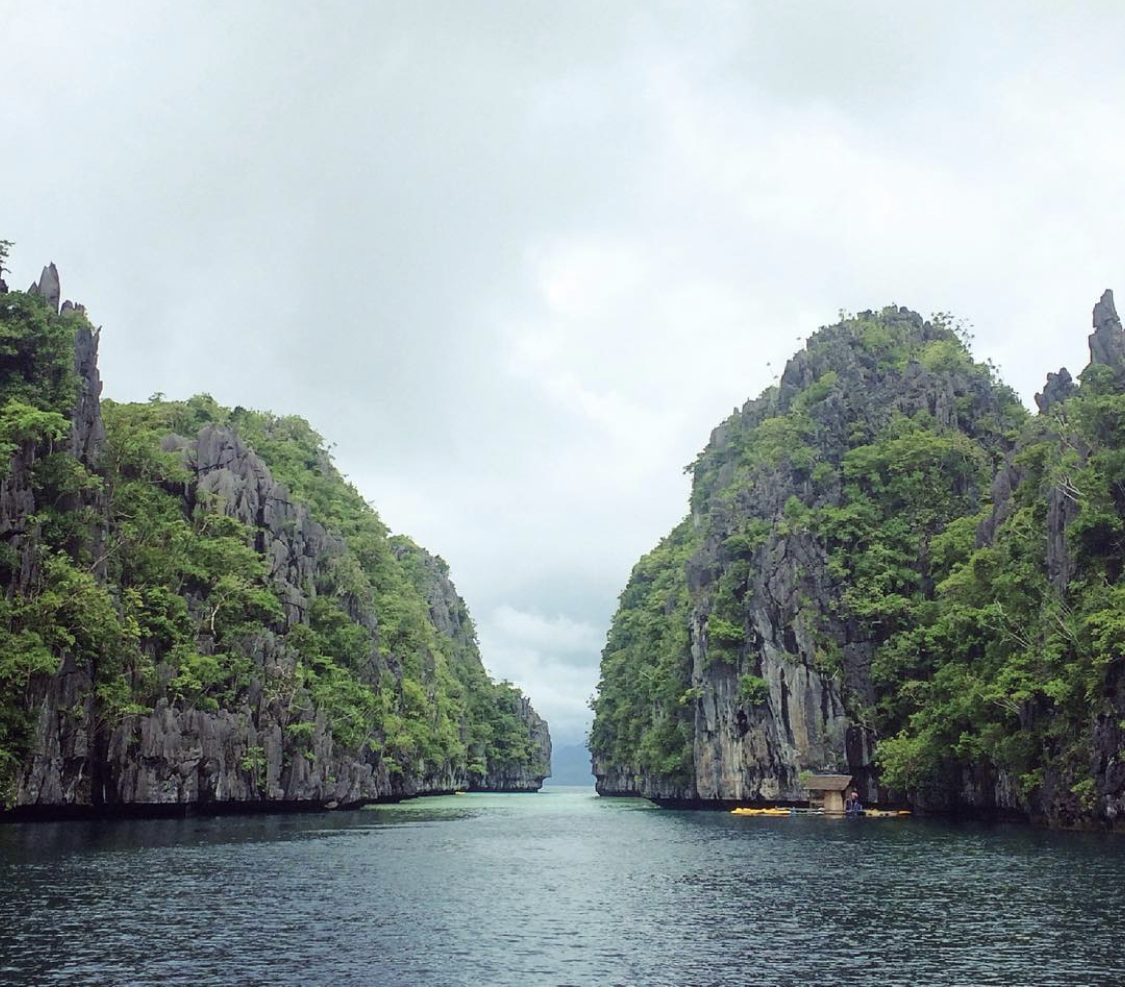
Island-hop the Bacuit Archipelago in El Nido
The bangka swings you into Big Lagoon, the engine cuts, and the silence under 200-meter limestone walls reorganizes your priorities. El Nido’s island hopping is famously bureaucratic — four lettered routes, A through D, every operator running the same stops at the same prices — but don’t let the admin fool you. Tour A (Big Lagoon, Secret Lagoon, Seven Commandos) and Tour C (Hidden Beach, Matinloc, Secret Beach) are the keepers; do them on separate mornings and pay the small premium to leave early, because the lagoons before 9am are a different country than the lagoons at noon.
Where & when: El Nido, northern Palawan; best December to May. Cost-ish: ~PHP 1,400–1,800 ($24–31) per tour, plus a PHP 400 eco-fee that covers ten days. Kayak rental in Big Lagoon (engines banned inside) runs a few hundred pesos more and is the best money you’ll spend all trip. The whole Palawan region rewards a week if you have it.
Float Coron’s Kayangan Lake and Twin Lagoon
Across the water, Coron one-ups El Nido on sheer clarity. Kayangan Lake — reached up and over a short jungle staircase past a viewpoint that launched a million photos — is routinely called the cleanest lake in Asia, and floating over its shimmering thermocline, where warm and cool layers blur like oil and water, feels mildly supernatural. Twin Lagoon, where you duck through a crack in the rock between two basins at low tide, is the other non-negotiable. The limestone here is older, sharper, more dramatic than almost anywhere.
Where & when: Coron, northern Palawan; December to May for the calmest seas. Cost-ish: ~PHP 1,500–2,500 ($26–43) for a day tour with lunch, depending on stops.
Take the El Nido–Coron expedition boat
Here’s the one I’d sell a kidney to redo. Instead of flying or taking the fast ferry between El Nido and Coron, you spend three to five days crossing the Linapacan island chain by slow bangka — sleeping in bamboo huts on islands with no names you’d recognize, eating fish the crew grills on the beach, and ending each night with rum, a guitar, and a karaoke machine someone inevitably produces. Operators like Tao Philippines and Big Dream Boatman pioneered it. It replaces your transport, your hotel and your itinerary in one move, and the math works out to startlingly little for what might be the best three days of your year.
Where & when: between El Nido and Coron; November to May, books out in high season. Cost-ish: ~PHP 14,000–28,000 ($240–480) all-in depending on operator and comfort. Reserve months ahead for peak weeks.
Swim through the Moalboal sardine run
Twenty meters off Panagsama Beach in Moalboal, several million sardines hang in permanent residence — a living silver tornado that parts around you and re-forms behind. You rent a mask for about a hundred pesos, pay roughly the same in fees, kick out from shore, and that’s it: no boat, no schedule, no minimum spend. Sea turtles drift through like commuters, and the whole spectacle sits comfortably at the top of any list of the best snorkelling in the Philippines. For value per peso, nothing else in this guide comes within a mile of it, and unlike most marine spectacles, it’s there every single day.
Where & when: Moalboal, southwest Cebu; year-round, calmest December to May. Cost-ish: ~PHP 200–300 ($4–5) for mask rental and the marine fee. Snorkel from shore at Panagsama or nearby Basdaku.
Sail a Boracay paraw into the sunset
Boracay earns its crowds, and the cleanest way to feel why is from the water. The traditional paraw — a slim double-outrigger sailboat with bright canvas sails — runs sunset cruises off the four-kilometer sweep of White Beach, tacking out as the sky goes molten and the whole island pauses to watch. It’s touristy. It’s also genuinely lovely, and at this price it’s almost rude not to. Hold out for an actual sail rather than a motorized substitute.
Where & when: White Beach, Boracay; year-round, best in the dry season for reliable sunsets. Cost-ish: ~PHP 1,200–2,500 ($21–43) for a shared 30–45 minute sail, more to charter the boat privately. For where this beach ranks among the rest, see the best islands in the Philippines.
Chase pink sand on the Balabac sandbars
At the far southern tip of Palawan, where the country trails off toward Borneo, Balabac is the expedition-grade version of everything El Nido does — harder to reach, fraction of the crowds, and beaches where the sand genuinely blushes pink, tinted by crushed red coral and Homer’s-wine-dark organ-pipe fragments. Onuk and Patawan are the showstoppers. Getting here means a long land transfer plus a boat and a tolerance for rough edges, which is precisely why it still feels like a secret.
Where & when: Balabac, southern Palawan; March to May for the calmest crossings. Cost-ish: multi-day tours run ~PHP 8,000–15,000 ($138–259) all-in from Puerto Princesa. Go before everyone else reads this paragraph.
Adventure & Heights: Jump, Climb, Descend
The Philippines sits on the Ring of Fire and at the edge of the Coral Triangle, which means the highs and the depths are equally extravagant. This is the section for people who’d rather earn the view.
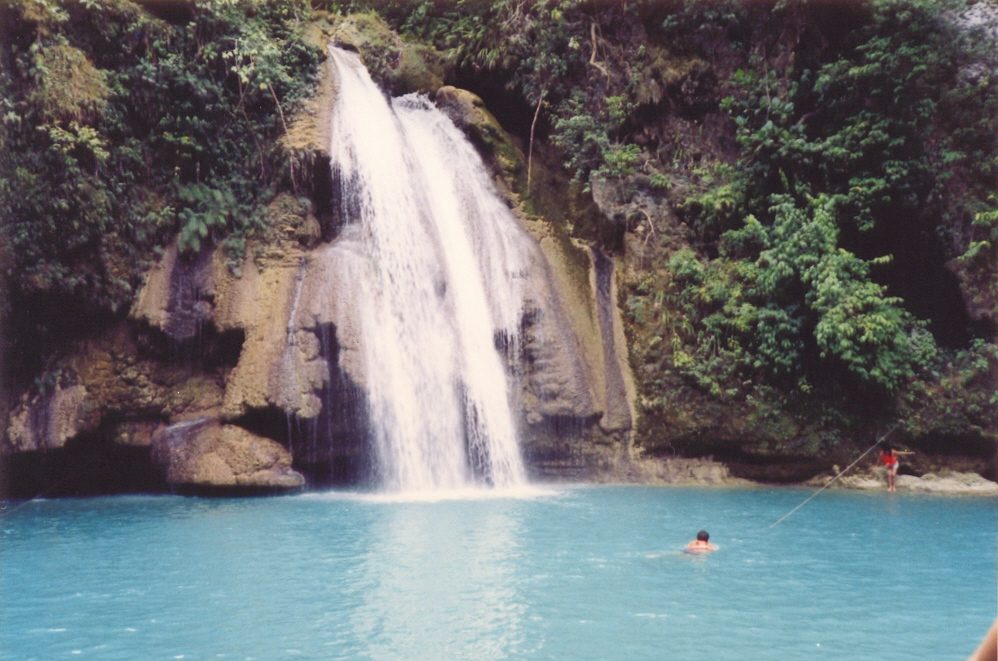
Canyoneer down to Kawasan Falls
The signature adrenaline day in the Visayas: four hours descending the Matutinao River canyon near Badian, swimming through gorges, sliding natural rock chutes, and jumping from ledges that start polite and escalate to a knee-wobbling 10–12 meters — every leap optional, no shame in the walk-around. The finale is Kawasan Falls itself, a triple-drop cascade pouring into pools of a turquoise so saturated it looks color-graded. Book an accredited guide, take the first morning slot before the crowds, and wear shoes you can swim in.
Where & when: Badian, southwest Cebu; December to May (the river runs dangerous after heavy rain). Cost-ish: ~PHP 1,800–2,500 ($31–43) with guide, helmet and life vest. More on the country’s cascades in the waterfalls guide.
Surf (or just watch) Cloud 9 in Siargao
Cloud 9 is the hollow, world-championship right-hander that put Siargao on the map, breaking over a shallow reef off General Luna and best appreciated — if you’re not a confident surfer — from the wooden viewing tower as the experts disappear inside the barrel. Beginners don’t go anywhere near it; gentler breaks like Jacking Horse push you into whitewater with a local coach until standing up stops being theoretical. The island runs on island time squared, and converts non-surfers daily.
Where & when: Siargao; surf season peaks August to November, though there’s rideable swell most of the year. Cost-ish: ~PHP 800–1,500 ($14–26) per hour for a lesson with board and coach.
Dive Tubbataha on a liveaboard
For serious divers this is the pilgrimage. The UNESCO-listed Tubbataha Reefs sit alone in the middle of the Sulu Sea, reachable only by liveaboard, and they deliver the kind of diving that ruins you for ordinary reefs: sharks on practically every dive, walls dropping into blue nothing, visibility that feels faintly illegal. The season is brutally short and the boats book out close to a year ahead, which only adds to the mystique. File it under “someday,” then actually put down the deposit.
Where & when: Sulu Sea, out of Puerto Princesa; the weather window is mid-March to mid-June only. Cost-ish: from ~$2,000 for a week-long trip. The full picture is in the diving in the Philippines guide.
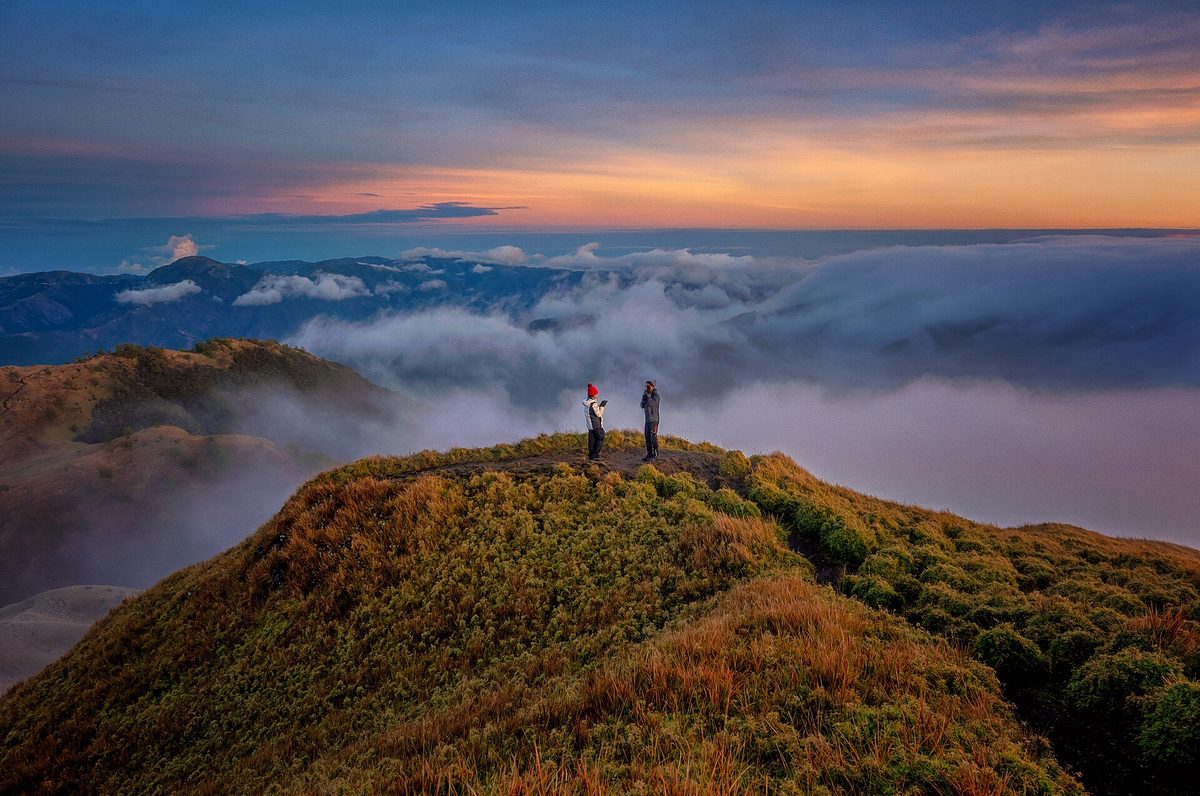
Catch the sea of clouds from Mt. Pulag
Luzon’s highest peak rewards the cold and the early start with one of the country’s most photographed sunrises: a dawn ocean of clouds pooling between the Cordillera summits while the sky cycles through pink and gold and you stand at 2,922 meters in borrowed layers, breath fogging. The classic Ambangeg trail is a manageable overnight rather than a mountaineering epic, but it’s genuinely cold up top — think near-freezing — and permits are capped, so this is one to arrange well ahead.
Where & when: Benguet, northern Luzon; the cloud inversions are most reliable December to February. Cost-ish: ~PHP 3,000–5,000 ($52–86) for a guided overnight with permit, transport and a tent; secure the DENR permit in advance.
Wildlife & Nature: The Once-in-a-Lifetime Encounters
Some of these are megafauna moments you’ll narrate for years; others are landscapes that quietly rearrange your sense of scale and time. The thread connecting them is that the Philippines does them on the animal’s terms when you choose the right operator — and badly when you don’t.
Meet whale sharks the ethical way in Donsol
Swimming beside the biggest fish in the sea is bucket-list royalty, and the Philippines offers two very different versions. In Oslob, south Cebu, operators hand-feed whale sharks daily and all but guarantee a sighting on a conveyor-belt schedule; marine scientists have criticized the feeding for years because it alters the animals’ migration and surface behavior, and I won’t recommend it. In Donsol, the encounters are wild — spotters scan the bay, you slip into the water when a shark cruises past, and some days you get skunked. That uncertainty is the whole point. It’s a real meeting, regulated with strict no-touch, no-feed rules, on a creature that owes you nothing.
Where & when: Donsol, Sorsogon, southern Luzon; season runs roughly December to May, peaking February to April. Cost-ish: ~PHP 3,500–4,500 ($60–78) per person for a shared six-seat boat plus the interaction fee. The honest, side-by-side case is in the whale sharks guide.
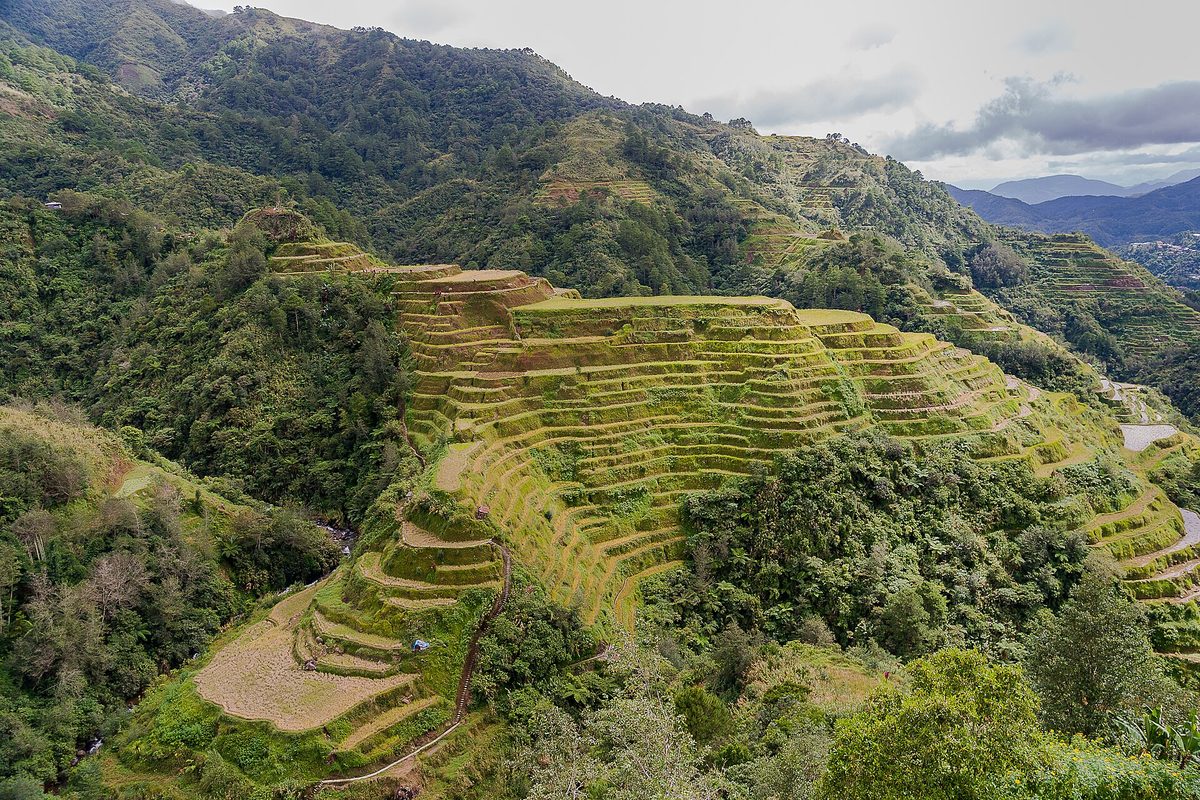
Stand inside the Banaue and Batad rice terraces
The Ifugao terraces were carved into these mountains by hand roughly two thousand years ago and are still farmed by descendants of the people who built them — earth-and-stone amphitheaters climbing the slopes like the world’s most patient staircase. The roadside viewpoints around Banaue get the postcards, but Batad is the one that flattens people: a village cradled inside a perfect bowl of terraces, reachable only on foot, where the silence after the lowlands feels almost physical. Stay overnight in a village guesthouse, hike out to Tappiya Falls, and let the place set its own pace.
Where & when: Ifugao, northern Luzon; greenest in the growing season, gold near harvest (target March–May or October–November). Cost-ish: overnight buses run Manila–Banaue (~9 hours, ~PHP 1,000 / $17); local guides charge ~PHP 1,500–3,000 ($26–52) a day and are worth it for the route-finding alone.
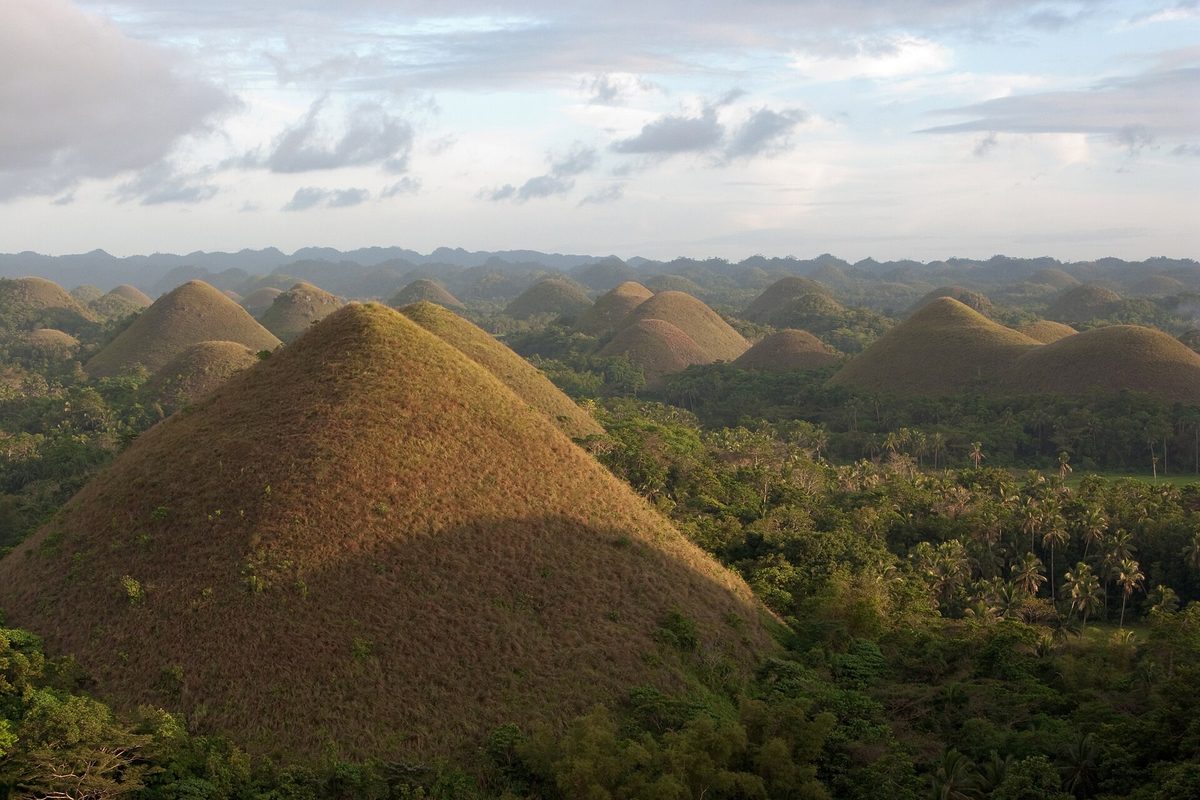
Gawk at Bohol’s Chocolate Hills
More than 1,200 near-identical grassy mounds rolling to the horizon isn’t exactly a secret, but the Chocolate Hills earn the crowds anyway — especially late in the dry season when the grass toasts to the chocolate-brown that names them. Beat the tour buses to the main viewpoint before 8am, then spend the saved hours on Bohol’s quieter countryside loop: the Loboc River, the bamboo hanging bridges, roadside stands selling young coconut. It pairs naturally with the tarsiers below into one of the country’s great easy-win days.
Where & when: central Bohol; best December to May, brownest March to May. Cost-ish: ~PHP 100 ($2) for the main complex viewpoint; a private countryside tour covering hills, tarsiers and the river runs ~PHP 2,500–3,500 ($43–60).
Find a tarsier in the wild
Bohol’s tarsier is a fist-sized primate with satellite-dish eyes that has haunted these forests for some 45 million years, and meeting one is a study in restraint: whisper, kill the flash, never touch. They’re heartbreakingly fragile under stress, and the difference between a good experience and a cruel one is entirely about where you go. Choose the Philippine Tarsier Sanctuary in Corella, where they live wild in protected forest, and skip any roadside cage promising a tarsier selfie — those are exactly what the sanctuary exists to undo.
Where & when: Corella, Bohol; year-round (they’re nocturnal, so you’re watching them doze). Cost-ish: ~PHP 150–200 ($3–3.50) entry, often bundled into a countryside tour.
Paddle the Puerto Princesa Underground River
A UNESCO World Heritage Site and one of the New7Wonders of Nature, the Puerto Princesa Subterranean River is among the longest navigable underground rivers on Earth — a dark, dripping cathedral of limestone where your paddled boat slides past stalactites, cathedral-sized chambers, and the occasional swiftlet or bat overhead while the guide narrates the rock formations by torchlight. It’s a managed, permit-gated experience precisely because it’s so fragile, which keeps it feeling more wonder than theme park.
Where & when: north of Puerto Princesa, Palawan; December to May for easiest access. Cost-ish: ~PHP 2,000–3,000 ($34–52) for the permit and tour; arrange the permit at least a day or two ahead, more in peak weeks.
Culture & Festivals: The Philippines at Full Volume
The country’s culture isn’t a museum you observe — it’s a street party that decides you’re a participant. These are the experiences that turn a beach holiday into an actual encounter with the place.
Throw yourself into a town fiesta
Filipino fiestas are participatory by design: the drum lines, the costumed dancers, the all-day processions, and the strangers who hand you food and pull you into the crowd. Sinulog in Cebu City (third Sunday of January) is the grandest — millions of people, thunderous percussion, dancers honoring the Santo Niño. Ati-Atihan in Kalibo a week or two earlier is older, rawer and soot-painted, often called the mother of Philippine festivals. MassKara in Bacolod (October) trades reverence for grinning masks and electro-Latin beats. Time a trip to any one of them and it becomes the story you lead with.
Where & when: nationwide; January is festival high season, but every town fetes its patron saint at some point. Cost-ish: free to watch — but book accommodation months ahead and expect the big-city rates to triple over festival weekends.
Eat a kamayan boodle feast with your hands
At least once, eat a kamayan feast — also called a boodle fight: rice and grilled everything piled straight onto banana leaves down the middle of a long table, cutlery confiscated, the rule being that you eat with your hands and the social barriers come down by the second handful. It’s communal, slightly competitive, and the fastest way I know to turn a table of strangers into friends. Most provincial towns and many resorts will lay one on; ask the day before.
Where & when: nationwide, often arranged for groups; year-round. Cost-ish: ~PHP 400–800 ($7–14) per head at a casual spot, depending on the spread.
View the hanging coffins of Sagada
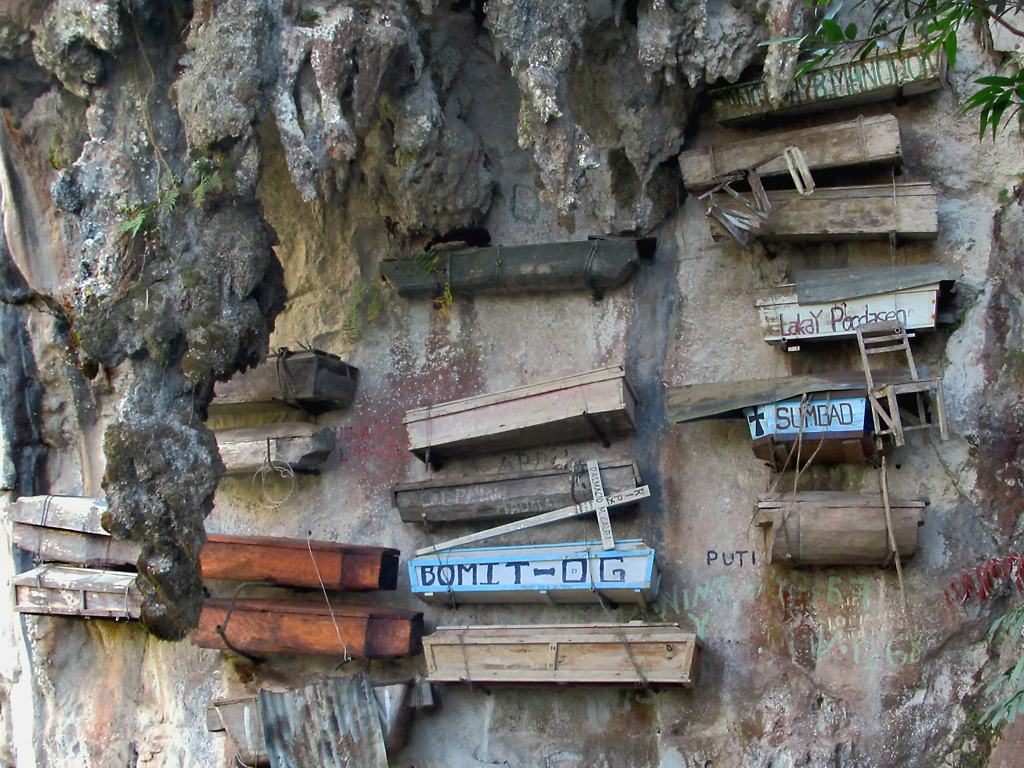
In the cool pine-clad highlands of the Cordillera, the Igorot people of Sagada have for centuries buried their dead in coffins lashed and nailed to the faces of limestone cliffs, closer to the ancestors and the sky. Viewed respectfully from Echo Valley with a local guide, it’s a quietly profound counterpoint to the beach-and-boat circuit — and Sagada itself, with its strong local arabica, cold mornings and the squeeze-and-wade Sumaguing Cave spelunking circuit, is worth two unhurried days on the way to or from Banaue.
Where & when: Sagada, Mountain Province, northern Luzon; the dry months (December to May) make the trails safest. Cost-ish: a few hundred pesos for a guided Echo Valley walk; ~PHP 800 ($14) for the Sumaguing Cave circuit.
Slow & Soulful: The Trips That Sneak Up on You
Not every bucket-list moment arrives with a drumroll. Some of the experiences that stay with me longest are the quiet ones — the islands you explore at scooter pace, the beach with no resort on it, the morning you do absolutely nothing on a sandbar. This is the section for the back half of a long trip.
Circle Siquijor by scooter
Siquijor leans cheerfully into its old reputation as the island of healers and folk magic, then backs it up with the kind of day that converts skeptics: rent a scooter, fill the tank for pocket change, and loop the whole island in an afternoon. You’ll hit Cambugahay Falls and its rope swings, the centuries-old balete tree with a cold fish-spa pool at its roots, quiet white-sand coves, and old coral-stone churches, all on roads empty enough to stop wherever the view demands. It’s one of the most relaxed days in the Visayas.
Where & when: Siquijor, central Visayas (ferries from Dumaguete); December to May. Cost-ish: ~PHP 250–400 ($4–7) a day for a scooter plus fuel; Cambugahay entry is PHP 50, a few pesos more for the swing.
Cycle Batanes, the Philippines that doesn’t look like the Philippines
The northernmost province sits closer to Taiwan than to Manila and swaps palms for wind-scoured green headlands, stone Ivatan houses, lighthouses, and roadside honesty shops where you leave your coins in a box. Renting a bike and pedaling Batan Island’s coastal road past rolling hills and cliff-edge views is the kind of day that recalibrates a whole trip — quiet, clean-aired, and utterly unlike the beach circuit further south. Flights from Manila are short but weather-prone, so build in slack days.
Where & when: Batanes, far northern Luzon; March to June for the calmest, clearest weather. Cost-ish: ~PHP 300–500 ($5–9) a day for a bike; budget for flexible flights, as fog and wind cancel them regularly.
Camp on the beach at Calaguas
The Calaguas Islands off Camarines Norte are the country’s great castaway experience: a long curve of flour-white sand, no resorts to speak of, and overnight camping where the evening entertainment is a bonfire and a ceiling of stars uninterrupted by a single streetlight. Bring cash, a power bank and low expectations for plumbing — that’s the deal, and it’s exactly why the place still feels earned. Mornings here, with nothing on the agenda but the tide, are the antidote to an over-planned holiday.
Where & when: Calaguas, Camarines Norte, southern Luzon; March to May for the calmest seas. Cost-ish: ~PHP 2,000–3,500 ($34–60) for a weekend package with boat, tent and meals from Vinzons port.
Find Camiguin’s sunken cemetery
Camiguin is an island built by seven volcanoes, and its strangest, most affecting sight is the Sunken Cemetery — an old graveyard swallowed by the sea after an 1870s eruption, now marked only by a large white cross standing offshore that you can swim or paddle out to, with headstones still visible to snorkelers below. Pair it with the island’s cold soda springs, the dazzling White Island sandbar at dawn, and Katibawasan Falls, and you have two of the most quietly rewarding days in Mindanao’s north.
Where & when: Camiguin, off northern Mindanao; December to May. Cost-ish: small boat-and-marker fees of a few hundred pesos; White Island boat transfers run ~PHP 400–800 ($7–14) round trip.
How to Plan Your Bucket List: It Takes 2–3 Trips, Honestly
Here’s the part the listicles skip: you cannot do this list in one holiday, and you shouldn’t try. The Philippines is enormous and gloriously badly connected — a single move between regions can eat a flight plus a ferry plus a van, most of a day gone. Chasing all 25 of these in one go would leave you with a passport full of stamps and no actual memories. So plan in trips, not in a single sprint.
Think in regions, not pins on a map
Most of these experiences cluster into three broad regions. Palawan holds El Nido, Coron, the expedition boat, the Underground River and Balabac. The Visayas — Cebu, Bohol, Siquijor, Camiguin, Boracay — packs in the sardine run, Kawasan, Chocolate Hills, tarsiers and most of the easy wins. Northern Luzon owns the rice terraces, Sagada, Mt. Pulag and Batanes. Siargao and Donsol sit slightly apart and reward dedicated detours. A realistic first trip picks one region and does it properly; a second trip takes another; the deep cuts fill a third.
A rough three-trip arc
Trip one (10–14 days): the greatest hits — a Cebu and Bohol loop (sardines, Kawasan, Chocolate Hills, tarsiers) finished with El Nido or Coron. Trip two: go deeper — Siargao’s surf and lagoons, Donsol’s whale sharks, the northern Luzon terraces-and-mountains circuit. Trip three: the slow, hard-won stuff — the El Nido–Coron expedition, Batanes, Calaguas, Balabac, Camiguin. You’ll notice the trips get quieter and more remote as they go; that’s the natural arc of falling for this country.
When to come
The national dry season runs roughly December through May, and that window covers most of this list: calm seas for island hopping, peak visibility for diving, dry trails for the terraces, and January’s mega-festivals. March to May is hottest and best for the brown Chocolate Hills and the calmest remote-island crossings. Surfers flip the calendar entirely — Siargao’s Cloud 9 peaks August to November. Two periods to plan around or avoid: Holy Week (the week before Easter) and Christmas–New Year, when the whole country travels at once, transport sells out and prices spike. Either book those months ahead or steer clear.
A few honest logistics
Carry cash once you leave the cities; cards and GCash thin out fast past the last convenience store. Pack light enough for the strict domestic-flight baggage limits — Cebu Pacific, Philippine Airlines and AirAsia link the hubs cheaply if you do. Book the genuinely scarce things well ahead (Tubbataha liveaboards, the expedition boat in high season, Mt. Pulag and Underground River permits, festival-week rooms) and happily wing the rest, because walking up the day before routinely beats online prices for day tours, surf lessons and ferries.
Frequently Asked Questions
What is the number one thing to do in the Philippines?
If I had to pick one, it’s island hopping the lagoons of El Nido and Coron in Palawan — the limestone-and-turquoise scenery that defines most people’s mental image of the country, and the experience first-timers rank highest. The Moalboal sardine run is the best-value runner-up. Both belong near the top of any Philippines bucket list.
How many days do you need to see the Philippines?
Plan two weeks for a satisfying first trip covering one region plus Palawan, and accept that you’ll only scratch the surface. Inter-island travel eats time — a flight, ferry and van can swallow most of a day — so fewer stops held longer always beats a checklist sprint. The full bucket list realistically takes two or three separate trips.
What is the best month to visit the Philippines?
January and February are the sweet spot: dry, relatively cool, calm seas for island hopping and diving, and prime festival season with Sinulog and Ati-Atihan. March to May is hotter but excellent for remote-island crossings. Avoid Holy Week and the Christmas–New Year period unless you’ve booked well ahead, when domestic travel peaks.
Is the Philippines expensive to travel?
No — it’s one of Asia’s best-value destinations. Backpackers manage on roughly $30–45 a day, and a comfortable mid-range trip with private rooms, daily tours and domestic flights lands around $70–100. The headline experiences here are bargains: a $4 sardine run, $30 canyoneering, $3 tarsiers. The splurges — liveaboards, multi-day expeditions, island resorts — announce themselves clearly.
Is it ethical to swim with whale sharks in the Philippines?
It depends entirely where you go. Skip Oslob, where operators hand-feed wild whale sharks daily — a practice marine scientists have long criticized for altering the animals’ natural behavior. Choose Donsol in Sorsogon or Sogod Bay in Southern Leyte instead, where encounters are wild, regulated and strictly no-feed, no-touch. The wait is the price of doing it right.
What are the most unique things to do in the Philippines?
For genuinely unusual experiences beyond the beaches, aim for the deep cuts: the multi-day El Nido–Coron expedition boat, cycling Batanes, Sagada’s cliffside hanging coffins, beach-camping on Calaguas, Camiguin’s offshore sunken cemetery, and the pink-tinged sandbars of Balabac. These are the experiences that separate a Philippines bucket list from a standard beach holiday.
Sources and photo credits
Photo Credits
- El Nido lagoon, Palawan — via Wikimedia Commons (see file page for author and license)
- Kawasan Falls canyoneering, Cebu — via Wikimedia Commons (see file page for author and license)
- Banaue rice terraces, Ifugao — via Wikimedia Commons (see file page for author and license)
- Chocolate Hills, Bohol — via Wikimedia Commons (see file page for author and license)
- Mt. Pulag sea of clouds, Benguet — via Wikimedia Commons (see file page for author and license)
- Hanging coffins, Sagada — via Wikimedia Commons (see file page for author and license)
Sources
- Philippine Department of Tourism — official travel portal
- UNESCO: Rice Terraces of the Philippine Cordilleras
- UNESCO: Puerto-Princesa Subterranean River National Park
- Tubbataha Reefs Natural Park — official site
About this guide: PhilippinesTourism.org is an independent resource for planning Philippine travel. Prices and access verified June 2026 and reviewed quarterly — confirm current details before booking.