Snorkeling in the Philippines: The 12 Best Spots
The best snorkeling in the Philippines needs no tank and barely any budget: kick out from a Cebu beach into a tornado of a million sardines, float beside a green turtle off Bohol, or drift over giant clams in Palawan. This guide ranks the 12 spots I’d send a friend to, shore or boat.
I’ve spent a lot of the last few years with a mask fogging on Philippine reefs, and the thing that surprised me most is how much of the country’s marine headline acts are reachable on a snorkel. You don’t need to be a diver to swim with turtles here, or to hang over a wall that drops into blue nothing. You just need to know which reefs deliver from the surface, when to go, and how not to wreck the coral on your way through. That’s what this is.
Below you’ll find the spots organized by region, a dedicated section on where snorkeling fits among the country’s best experiences, a turtle-odds breakdown, the reef etiquette and reef-safe sunscreen rules that several sanctuaries now enforce, and the practical stuff: gear, season, visibility, and what it all costs. Prices convert at roughly PHP 58 = USD 1 and are 2026 ballparks; reefs and fees change, so treat them as a starting point.
At a Glance: The 12 Best Snorkeling Spots in the Philippines
If you read nothing else, here’s the comparison I wish someone had handed me. “Turtle odds” is my honest read from repeat visits and current local reports, not a guarantee; turtles are wild animals and some days they sleep in.
| Spot | Island / Province | Highlight | Shore or boat | Turtle odds |
|---|---|---|---|---|
| Moalboal (Panagsama) | Cebu | The sardine run — millions of fish from the beach | Shore | Good |
| Balicasag Island | Bohol (off Panglao) | Turtles plus a dramatic vertical wall | Boat | Very high |
| Apo Island | Negros Oriental | Turtle metropolis in a 40-year sanctuary | Boat (then shore) | Very high |
| Honda Bay (Pandan / Luli) | Palawan | Giant clams and easy reef for beginners | Boat | Low |
| Lusong Gunboat & Coron Reefs | Palawan | A WWII wreck in 3 meters of water | Boat | Low |
| Bacuit reefs (El Nido) | Palawan | Coral gardens between the famous lagoons | Boat | Low–moderate |
| Tubbataha Reefs | Sulu Sea | Bucket-list wall, snorkelable off a liveaboard | Boat (liveaboard) | Moderate |
| Tubod Marine Sanctuary | Siquijor | Clownfish, giant clams, a healthy shore reef | Shore | Low–moderate |
| Sumilon Sandbar | Cebu (off Oslob) | Sandbar plus a protected reef drop-off | Boat | Low |
| Dauin | Negros Oriental | Muck and artificial reefs, macro hunting | Shore | Low |
| Pescador Island | Cebu (off Moalboal) | Coral pinnacle, often paired with the sardines | Boat | Moderate |
| Port Barton reefs | Palawan | Community turtle sanctuary, quiet reefs | Boat | High (seasonal) |
A quick orientation before the deep dive. The country’s snorkeling splits into three rough zones: the central Visayas (Cebu, Bohol, Negros, Siquijor), where most of the turtle-and-reef magic and the cheapest shore access live; Palawan in the west (Coron, El Nido, Honda Bay, Port Barton), where snorkeling rides along on the island-hopping circuit; and the remote Sulu Sea, home to Tubbataha, which only opens for a few months a year. If you’re choosing one base for reefs, make it the Visayas. If you’re already going to Palawan for the lagoons, the snorkeling is a bonus that comes with the boat.
Snorkeling Philippines: The Best Reefs by Region
Here’s the honest regional breakdown, starting with the spot that converts more skeptics than any other.
Moalboal, Cebu — the sardine run you swim to from the beach
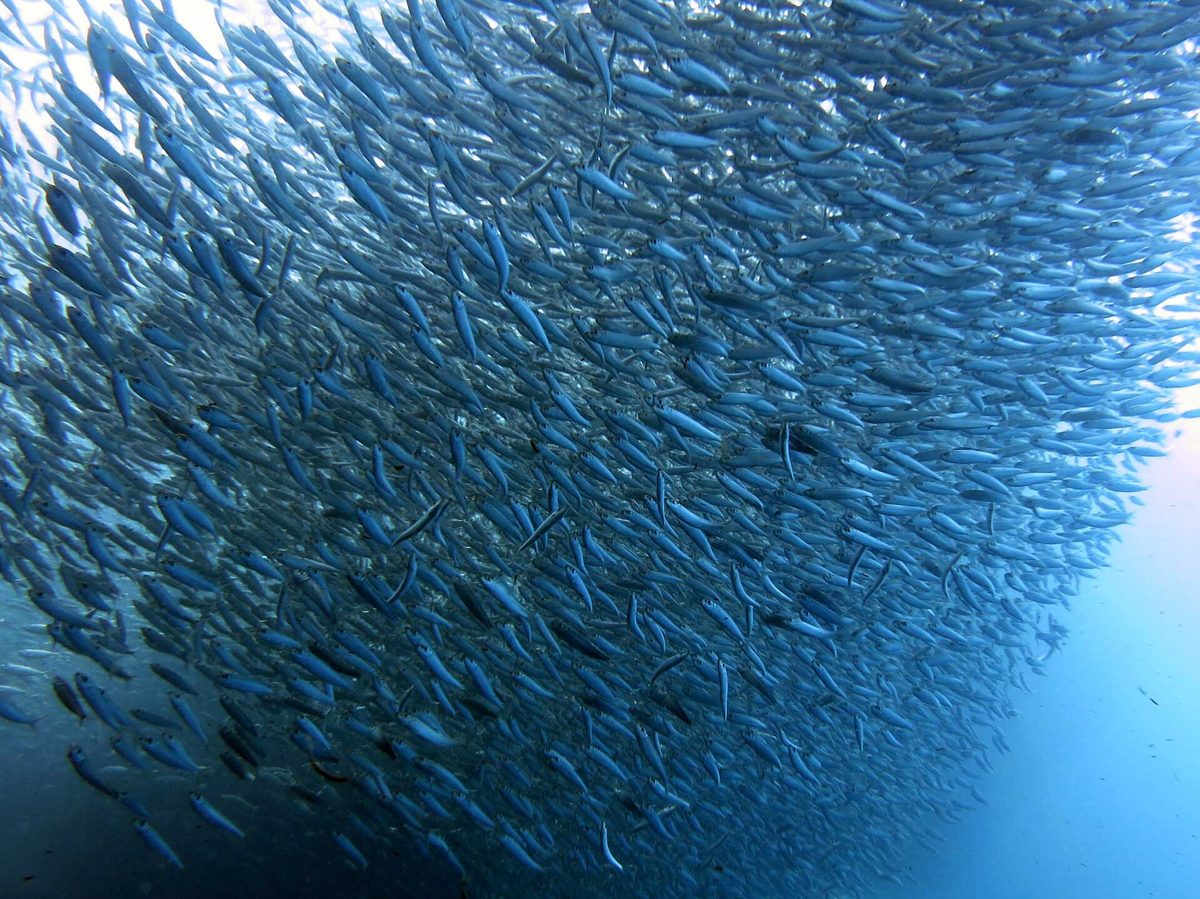
If you do one thing on this list, do this. Twenty-odd meters off Panagsama Beach in Moalboal, a bait ball of several million sardines hangs in permanent residence, and it has for years. You rent a mask for about PHP 100 ($1.70), pay a similar token for the marine fee, walk in off the rocks, and within a few fin-kicks the water turns into a living silver tornado that opens and closes around you like a curtain. There’s no boat to book, no schedule to catch, no minimum spend. It is, peso for peso, the best snorkeling value in the country, and it runs year-round.
What people don’t tell you: the sardines move along the wall, so on any given morning the bait ball might be a five-minute surface swim left or right of the main entry. Ask a local divemaster or beach vendor where it’s “sitting” that day. Mornings are calmer and clearer. Green turtles cruise the same drop-off like commuters, so this doubles as a turtle spot (more on that below). The reef here is a wall that falls away fast, which means you should stay horizontal and never try to stand — there’s nothing to stand on but living coral, and a fin-kick to the wall does real damage.
For a few hundred pesos more you can hire a bangka out to Pescador Island, a coral pinnacle 20 minutes offshore that’s usually paired with the sardines on a half-day trip. Pescador is more of a “boat snorkel” — deeper, with schooling jacks and the occasional turtle — and on a calm day the visibility is superb. If you’re already in Moalboal to dive, this is also the gateway to some of the country’s most affordable scuba; our guide to diving in the Philippines covers the certification math, which is genuinely cheaper than your flight.
Balicasag Island, Bohol — turtles on demand and a wall into the blue
Balicasag is a near-perfect circle of an island about 45 minutes by bangka off Alona Beach on Panglao, and it has been a marine sanctuary since 1985. That four-decade head start shows the moment you put your face in the water. Two things make it special for snorkelers: the resident green turtles, which graze the seagrass and reef shallows so reliably that operators sell the trip as a turtle encounter, and the wall — a sheer coral cliff that drops from a few meters to well over a hundred, so you float on the edge of a blue void with schooling jacks and snappers stacked along the rim.
The catch is access and crowds. Balicasag is boat-only, the local authority caps daily visitor numbers, and you’ll be assigned a community boatman who paddles you over the turtle area in a smaller craft. Budget roughly PHP 1,500–2,500 ($26–43) for the boat shared among your group, plus marine and guide fees in the PHP 250–400 range, and gear rental around PHP 150–200 if you didn’t bring your own. Go early; by mid-morning the turtle zone can have more snorkelers than turtles. It pairs naturally with Panglao’s beaches and the rest of the island — our Bohol travel guide maps out how to slot it into a few days with the Chocolate Hills and tarsiers.

Apo Island, Negros Oriental — the turtle metropolis
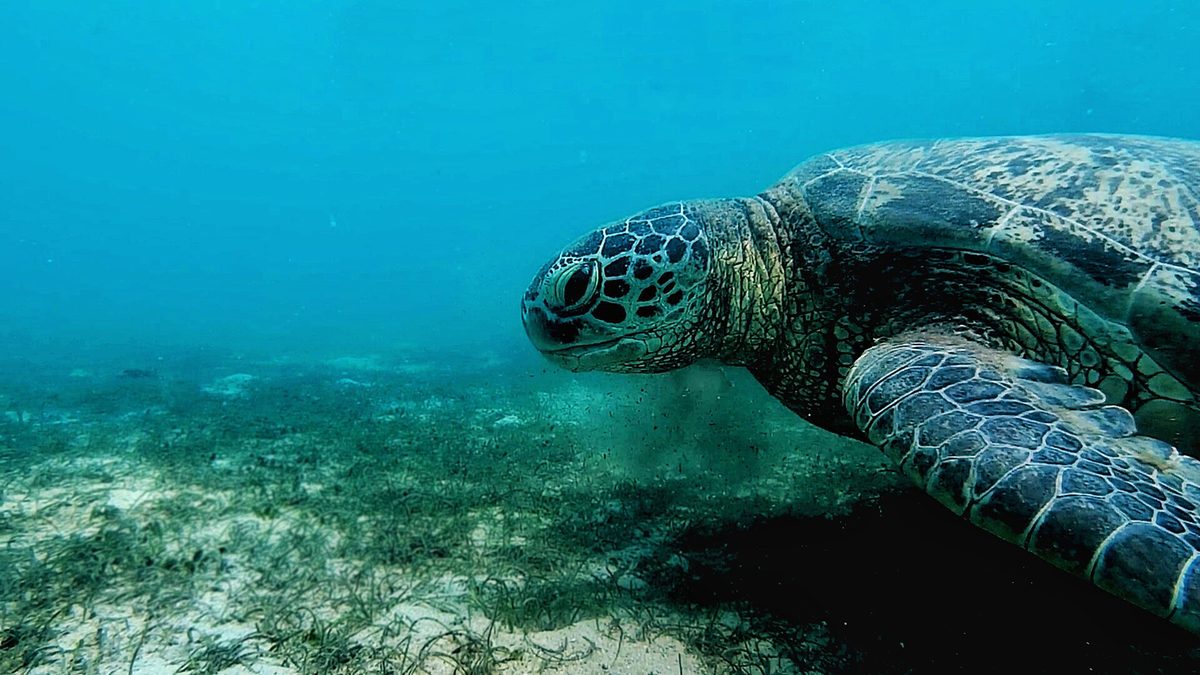
Apo Island is the one that ruins you for other turtle spots. It’s a tiny volcanic island off the southern tip of Negros, reached on a 30-to-45-minute boat from the Dauin or Malatapay area near Dumaguete, and it has been community-protected for over 40 years. The result of all that conservation: green turtles so habituated and so numerous that you can often see them from the shallows before you’ve even properly kicked off the beach. They graze the seagrass meadows in numbers, ignore you completely, and surface for air an arm’s length away.
Practically, Apo runs on a fee structure that’s risen over the years and is worth checking fresh: budget around PHP 100 for the island/marine fee (foreign visitors typically pay more, in the PHP 300 range) plus a mandatory local guide fee around PHP 300 per group for the turtle sanctuary, on top of the boat from the mainland. The sanctuary rules are strict and enforced — reef-safe sunscreen only, no touching the turtles, and stay horizontal so you don’t kick the coral. Honestly, those rules are why it’s still this good. Visibility is usually excellent, and beyond the turtles you’re floating over one of the healthiest hard-coral gardens in the Visayas.
Honda Bay, Palawan — giant clams and the gentle introduction
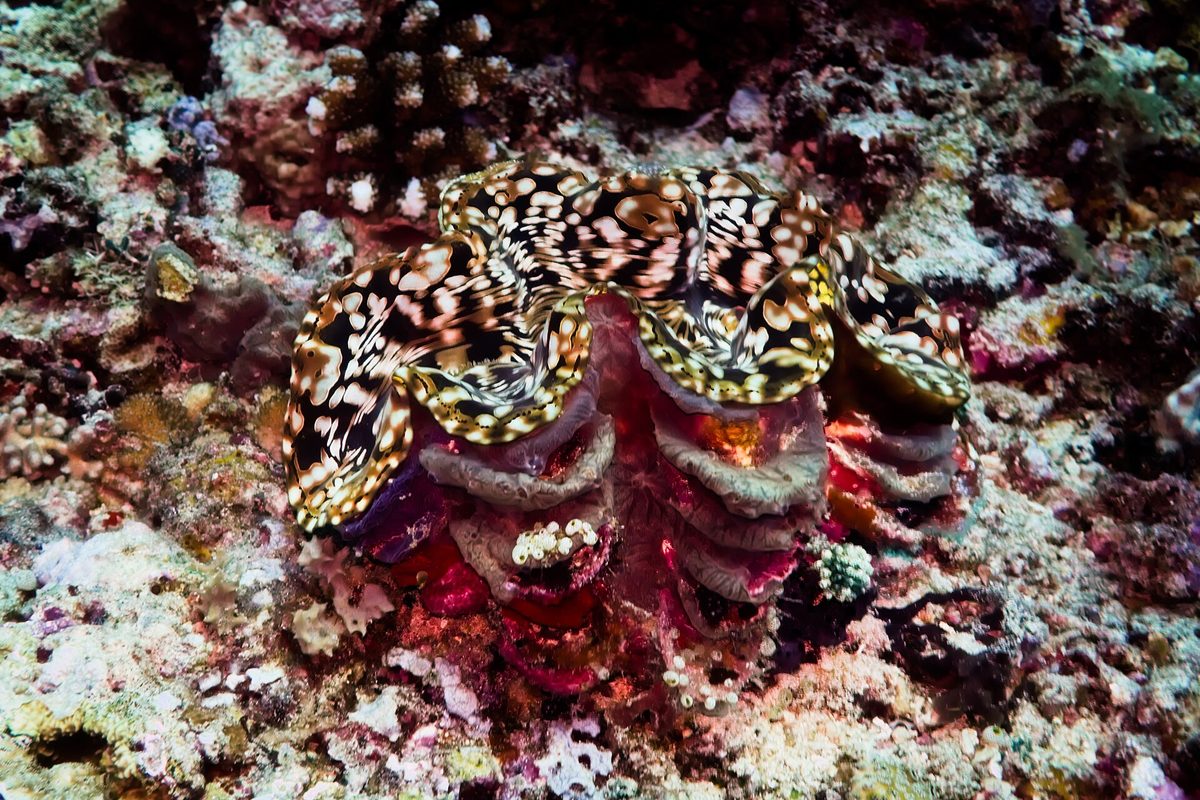
If Apo and Balicasag are the advanced class, Honda Bay is kindergarten in the best way. Out of Puerto Princesa, a string of small islands and sandbars — Luli, Cowrie, Pandan, Starfish — makes a relaxed boat day where the snorkeling is shallow, calm, and forgiving, which makes it ideal for kids, nervous first-timers, or anyone who just wants warm water and easy fish. The headline act is the giant clams: a managed clam garden where bivalves the size of a suitcase sit on the sandy bottom with electric-blue mantles, in water shallow enough to free-dive down for a closer look.
Honda Bay is firmly boat-access. You register at the wharf, pay a small environmental fee (around PHP 150), and hire a bangka — roughly PHP 1,300–1,500 ($22–26) for the boat, split among your group, plus per-island landing fees. Visibility varies with the tide and isn’t the country’s clearest, but the ease and the clams earn it a spot. It folds neatly into a Puerto Princesa stay alongside the Underground River; our Palawan travel guide sequences Honda Bay, Coron, and El Nido so you’re not backtracking across the province.
Coron, Palawan — snorkeling a shipwreck in three meters of water
Coron is famous among divers for its fleet of WWII Japanese wrecks, most of which sit too deep for snorkelers. But there’s one glorious exception: the Lusong Gunboat, a small wreck whose stern rises to within a meter or two of the surface, encrusted in coral and swarming with fish. You float directly over a piece of 1944 history, looking down on a hull that’s become an artificial reef, no tank required. It’s routinely the highlight of Coron’s “reef and wreck” island-hopping tours.
The same boat day usually strings together genuine reef stops — Siete Pecados, a marine park of seven islets with some of Coron’s best hard coral and densest fish, and the coral gardens off Lusong Island itself. Coron’s snorkeling is all boat-based and comes bundled into day tours running roughly PHP 1,500–2,500 ($26–43) per person with lunch and fees; pick the “reef and wreck” itinerary specifically, because the famous Kayangan Lake and Twin Lagoon tour is scenery rather than coral. The limestone backdrop is half the experience here — you surface from the gunboat to towering karst cliffs.
El Nido, Palawan — coral between the lagoons
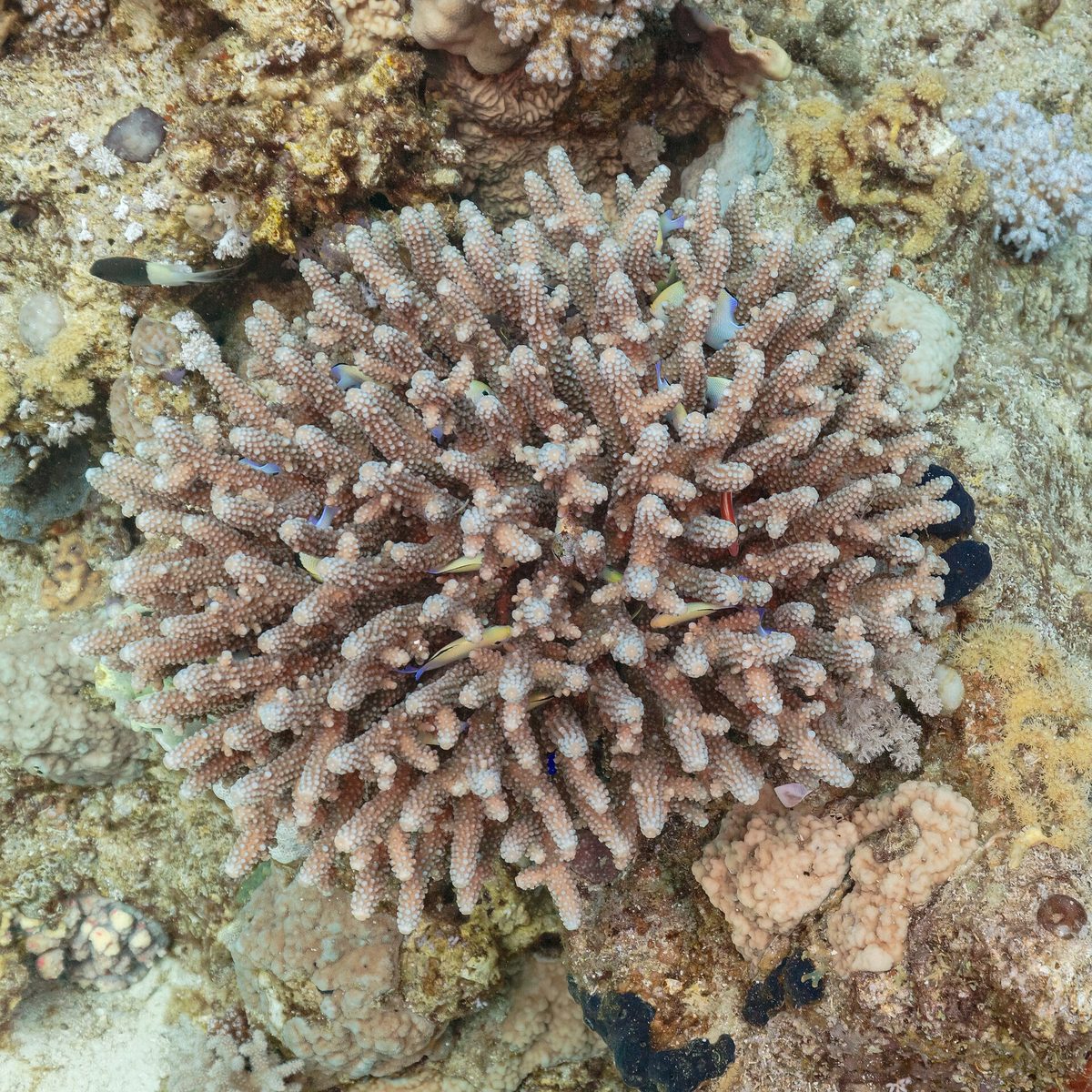
El Nido sells itself on the Bacuit Archipelago’s lagoons and limestone, and rightly so, but there’s real coral threaded between the postcard stops. The standard Tours A through C all include snorkeling breaks, and a few sites stand out: the reef off Shimizu Island, the coral around Matinloc, and the famous fish at the Big Lagoon’s mouth where the boats moor. It’s not the densest coral in the country — years of heavy boat traffic have taken a toll on the most popular moorings — but on the quieter Tour C stops you’ll float over healthy gardens with good fish life and the occasional turtle.
Manage expectations: in El Nido, snorkeling is a supporting act to the island hopping, not the main event. You’ll get masks included on most tours, swim breaks of 20–30 minutes per stop, and scenery that no reef elsewhere can match. If reef quality is your priority, do El Nido for the lagoons and save your serious snorkeling for the Visayas. Either way, an island-hopping day here is one of the great experiences in the country, mask or no mask.
Tubbataha Reefs, Sulu Sea — the bucket-list wall, briefly
A quick word on the holy grail. The UNESCO-listed Tubbataha Reefs, marooned in the middle of the Sulu Sea, are a world-class dive destination — and yes, you can snorkel them, but only off a liveaboard during the short March-to-June season when the boats run. From the surface you’ll float over the tops of walls that plunge into the abyss, with reef sharks, turtles, and clouds of fish below. It is spectacular and it is not casual: a week aboard runs $2,000-plus, books out close to a year ahead, and is really designed for divers. If you’re a snorkeler-only, file Tubbataha under “someday.” For everyone else, it’s the apex of Philippine reef travel, and the one reef that earns a place on any Philippines bucket list.
Siquijor, Sumilon and Dauin — the underrated Visayan trio
Three more Visayan spots round out the list, each with its own character. On Siquijor, the Tubod Marine Sanctuary on the island’s southwest coast is the standout: a healthy, protected shore reef where the resident clownfish, giant clams, and the occasional turtle sit just off the beach. Entry is a token PHP 100 or so for snorkelers, and because you walk in from shore it’s one of the easiest “real reef” experiences in the country. Pair it with Siquijor’s waterfalls and you’ve got a perfect slow day.
Sumilon Island, off Oslob in southern Cebu, is best known for its shifting white sandbar, but the island wraps a protected marine reserve with a healthy reef drop-off that’s lovely on a calm morning. It’s boat-access, usually run as a day trip from the Oslob area, and a good add-on if you’re already down south. And Dauin, on the Negros mainland near Apo, is a different animal entirely: dark volcanic sand and “muck” snorkeling over artificial reef structures, where the reward is macro life — frogfish, nudibranchs, weird critters — rather than sweeping coral. It’s a connoisseur’s spot, best from shore at one of the dive resorts, and a brilliant counterpoint to a turtle day at Apo.
Snorkeling With Turtles in the Philippines: Where the Odds Are Best
Floating beside a wild sea turtle is, for most people, the single best moment of a snorkeling trip here, so it deserves its own section. The Philippines is genuinely one of the best places on Earth to do it on a snorkel, because several sites combine seagrass meadows (turtle food), decades of protection (calm, habituated animals), and shallow water you can reach without a tank. Green turtles are the usual stars; you’ll also see the occasional hawksbill. Below are the four spots I’d rank for turtle encounters, from near-certain to seasonal.
Balicasag Island (Bohol) — very high odds
This is the closest thing to a sure bet. The community boatmen know exactly where the turtles graze and paddle you straight over them, and the green turtles here are so used to the daily traffic that they barely register snorkelers. Go on the first boats of the morning for the best behavior and the fewest crowds. The trade-off is that “guaranteed” comes with company — you’ll share the turtle zone — so keep your distance, stay horizontal, and let the boatman position you rather than chasing.
Apo Island (Negros) — very high odds
Apo’s turtles are the most relaxed I’ve encountered anywhere. Because they’re protected and fed by nature (those seagrass meadows), they often graze in the shallows right off the beach, which means you can sometimes snorkel with them straight from shore rather than from a boat. The density is remarkable — multiple turtles in a single swim is normal. This is the spot if seeing turtles is the entire reason for your trip.
Moalboal (Cebu) — good odds, and free
The sardines get the headlines, but the same Panagsama wall is patrolled by resident green turtles, and seeing one is common rather than lucky. The beauty here is that it’s all shore-access and costs almost nothing — you might swim the sardine run and find a turtle grazing the coral on the same kick-out. No boat, no guide, no fee beyond your mask rental. It won’t match Apo or Balicasag for sheer numbers, but for “turtle plus a million sardines on a PHP 200 budget,” nowhere beats it.
Port Barton (Palawan) — high but seasonal
Port Barton, the mellow town between Puerto Princesa and El Nido, runs a community turtle sanctuary, and its island-hopping tours include a dedicated turtle-spotting stop over the seagrass beds. Sightings are common but more weather- and season-dependent than the Visayan spots, and the encounters are wilder and less choreographed, which some people prefer. It’s the turtle option for travelers already on the Palawan circuit who want something quieter than the El Nido crowds.
One rule everywhere: never touch, ride, chase, or block a turtle’s path to the surface — they breathe air, and cutting them off from a breath is genuinely dangerous for the animal. Keep a few meters back, stay horizontal, and let it come to you. Confident, unbothered turtles are exactly what makes these sites special, and that confidence only survives if visitors behave. The same ethic that makes our whale shark guide push hard for no-touch, no-feed encounters applies in miniature to every turtle you’ll meet.
Protecting Philippine Coral Reefs: Etiquette and Reef-Safe Sunscreen
The Philippines sits in the heart of the Coral Triangle, the most biodiverse marine region on the planet, and the reefs you’ve come to see are alive and fragile in equal measure. The single biggest threat from a visiting snorkeler isn’t dramatic — it’s the accidental fin-kick, the steadying hand on a coral head, the squirt of the wrong sunscreen. Healthy Philippines coral reefs are the entire reason these spots are worth the trip, and a handful of habits keep them that way. None of this is hard; it’s mostly about staying horizontal and paying attention.
Don’t touch, stand on, or kick the coral
Coral is an animal, not a rock, and a single touch can scrape away the protective layer that keeps it alive; a fin-kick or a standing foot can snap growth that took decades to form. The fix is simple: snorkel horizontal, like you’re lying on a glass floor, with your fins behind you and your hands tucked or folded. If you need to rest, float on your back or head for sand or open water — never stand on the reef. Keep your fin strokes shallow and slow near shallow coral; big downward kicks stir up sediment and can clip the reef even when you think you’re clear. Take only photos, and don’t collect shells, coral, or “souvenirs” from the seabed.
Reef-safe sunscreen: what it means and why sanctuaries enforce it
Several chemicals common in ordinary sunscreen — chiefly oxybenzone, octinoxate, and octocrylene — are toxic to coral, contributing to bleaching and disrupting larval development even in tiny concentrations. That’s why protected sites like Apo Island and Balicasag now actively ask for reef-safe sunscreen, and some sanctuaries will turn you away or ask you to rinse off if you turn up slathered in the wrong stuff. “Reef-safe” generally means a mineral sunscreen using non-nano zinc oxide or titanium dioxide, free of those three chemicals.
Two practical notes. First, the most reef-safe approach of all is to cover up: a long-sleeve rash guard (a “rashie”) does more for both your skin and the reef than any lotion, and the sun here is strong. Save the mineral sunscreen for your face, neck, and the backs of your legs. Second, you can buy reliable reef-safe brands inside the Philippines — local labels like Magwai are sold in dive towns — so you don’t have to haul it from home, though stock can be patchy in smaller spots. Apply it 20–30 minutes before you get in so it bonds to your skin rather than washing straight onto the reef.
The rest of the reef etiquette in one breath
Don’t feed the fish (it skews the ecosystem and the bread-trained sergeant-majors will nip you anyway), don’t chase or grab marine life, give turtles and bigger animals room, and choose operators who use mooring buoys or anchor on sand rather than dropping iron onto coral. Pack out everything you bring, including fruit peels. And if a sanctuary has rules posted — designated entry points, roped lanes, guide requirements — follow them; they exist because someone watched the reef get loved to death and decided to do something about it.

Gear, Season and Practicalities: Planning Your Snorkel Trip
The logistics of snorkeling here are mercifully simple, but a few decisions make the difference between a great day and a fogged-mask, sunburned slog. Here’s what actually matters.
When to go: season and visibility
The national dry season runs roughly December through May, and that’s prime time for snorkeling almost everywhere: calmer seas, clearer water, and the best underwater visibility, which can reach 20–30 meters on a good day at the better sites. March to May is hottest and clearest but also busiest. The southwest monsoon (the habagat) brings rain and bigger swell from roughly June to October, with typhoon risk layered on top, mostly affecting Luzon and the western seaboard.
That said, “rainy season” doesn’t mean “no snorkeling.” Water temperatures stay a bathtub-warm 26–29°C year-round, and the Visayas in particular often have workable conditions outside the dry months — the Moalboal sardine run is genuinely year-round, and Apo and Balicasag are snorkelable most of the year when the crossing is calm. The practical rule: check the local sea state the morning of, go early before the afternoon wind picks up, and stay flexible. A choppy surface kills visibility faster than rain does.
Gear: rent or bring your own?
For a casual trip, renting is completely fine and cheap — a mask and snorkel run about PHP 100–200 ($2–3) at any beach or on most tour boats, and fins a little more. The downside is that rental masks are hit-or-miss on fit, and a mask that doesn’t seal to your face will leak and fog and ruin the experience. If snorkeling is a real priority for your trip, bring your own mask at minimum. A mask you’ve tested for fit is the one piece of gear genuinely worth the suitcase space; everything else you can rent on arrival.
What I’d actually pack: your own well-fitting mask, a long-sleeve rash guard (sun and reef protection in one), reef-safe sunscreen for the exposed bits, and a cheap anti-fog or the old spit-and-rinse trick. Fins are optional for shore spots with easy entry but worth renting for anywhere with current or a swim out to a bait ball. A dry bag for your phone and a float or pool noodle for weaker swimmers round it out. Skip the disposable underwater “film” cameras; a phone in a proper waterproof case takes far better photos.
Shore versus boat access — and a safety word
As the table up top shows, the country’s spots split between shore-access (walk in from the beach: Moalboal, Tubod on Siquijor, Dauin, often Apo) and boat-access (Balicasag, Honda Bay, Coron, El Nido, Sumilon, Pescador, Port Barton). Shore spots are cheaper, more flexible, and let you go at your own pace; boat spots usually mean a bundled tour with fees, fixed timing, and a group. Neither is better — it depends on the reef — but if you’re on a tight budget, the shore spots in the Visayas deliver the most for the least.
On safety: respect the current. Some of these sites sit on walls and drop-offs where the water can move, and it’s easy to drift further out than you realize while you’re absorbed in the fish. Snorkel with a buddy, keep one eye on your distance from your entry point or boat, wear a brightly colored rash guard or a snorkel vest if you’re not a strong swimmer, and don’t push out past your comfort in chop. Boatmen at the organized sites watch their guests, but at free shore spots you’re your own lifeguard. None of this should scare you off — it’s warm, gentle water most of the time — but the ocean rewards a little humility.
Snorkeling in the Philippines: Frequently Asked Questions
Where is the best snorkeling in the Philippines?
For the best mix of accessibility, marine life, and value, the central Visayas wins: Moalboal in Cebu for the shore-access sardine run, plus Balicasag (Bohol) and Apo Island (Negros) for near-guaranteed turtles over healthy reef. Palawan’s Coron and Honda Bay are excellent too, but their snorkeling rides along with island hopping rather than being the main event.
Can you snorkel with turtles in the Philippines?
Yes, and the odds are among the best anywhere. Balicasag Island and Apo Island offer very high chances of seeing green turtles, often within an arm’s reach, thanks to decades of protection and seagrass meadows they feed on. Moalboal and Port Barton are strong runners-up. Always keep your distance, never touch, and let the turtle surface freely to breathe.
How much does snorkeling cost in the Philippines?
It’s one of the cheapest places on Earth to snorkel. Shore spots like Moalboal cost as little as PHP 200 ($3.50) for mask rental and the marine fee. Boat-based sites such as Balicasag, Honda Bay, or Coron run roughly PHP 1,300–2,500 ($22–43) for the boat split among your group, plus modest environmental and guide fees. Bringing your own mask saves rental money everywhere.
What is the best time of year for snorkeling in the Philippines?
December through May, the dry season, brings the calmest seas and clearest visibility, with March to May the hottest and busiest. That said, water stays warm year-round, the Moalboal sardine run never stops, and the Visayas are often snorkelable in the off months. Go early in the morning before the wind picks up for the best conditions regardless of season.
Do I need to be a strong swimmer to snorkel here?
Not for the gentle, shallow spots — Honda Bay’s calm islands and Siquijor’s Tubod sanctuary suit beginners, and a snorkel vest or float adds confidence. Sites on walls and drop-offs like Moalboal, Balicasag, and Apo involve deeper water and sometimes current, so weaker swimmers should wear a flotation vest, stay near the boat or entry point, and snorkel with a buddy. Comfort in the water matters more than distance.
Is snorkeling or scuba diving better in the Philippines?
For turtles, the sardine run, giant clams, and shallow reefs, snorkeling delivers almost everything a diver sees, for a fraction of the cost and no certification. Diving opens up the deeper wrecks of Coron, the thresher sharks of Malapascua, and walls like Tubbataha. Many of the best spots — Apo, Balicasag, Moalboal — are superb for both, so you don’t have to choose on a single trip.
Photo Credits
- Moalboal sardine run, Cebu — Lakshmi Sawitri / CC BY 2.0 via Wikimedia Commons
- Green sea turtle, Philippine reef — Wiki.mjmasangkay / CC BY-SA 4.0 via Wikimedia Commons
- Hard-coral garden, Coral Triangle — Diego Delso / CC BY-SA 4.0 via Wikimedia Commons
- Snorkeler over a Philippine reef — Ray in Manila / CC BY 2.0 via Wikimedia Commons
- Balicasag Island, Bohol — Ric V Obedencio / CC BY-SA 4.0 via Wikimedia Commons
- Giant clam on a Philippine reef — Enrico Strocchi / CC BY-SA 2.0 via Wikimedia Commons
Sources and Further Reading
- Philippine Department of Tourism — official travel portal
- Tubbataha Reefs Natural Park — official management office
- UNESCO: Tubbataha Reefs Natural Park (World Heritage listing)
- Bureau of Fisheries and Aquatic Resources — marine protected areas
About this guide: PhilippinesTourism.org is an independent resource for planning Philippine travel. Prices and reef access verified June 2026 and reviewed quarterly — confirm current details before booking.