
El Nido to Coron: Ferry and Expedition Boats
For most travellers the fast ferry from El Nido to Coron is the sane choice: a roughly four-hour crossing for around ₱3,000–3,600 ($52–62), running daily from El Nido’s town pier. Have a spare three or four days and the budget? Take a multi-day expedition boat through Linapacan instead. Flying exists but isn’t the easy shortcut people assume.
I have done this crossing both ways, in both seasons, and I’ll be honest up front: the route between these two corners of northern Palawan is one of the great travel decisions of a Philippines trip, not a chore to grind through. Get it right and the journey becomes the best part. Get it wrong and you lose a day to a cancelled boat or a sold-out plane. This guide lays out every realistic option with 2026 schedules, ballpark fares, and the mistakes that catch people out.
El Nido to Coron at a glance: ferry, expedition or fly
Three ways across, and they could not be more different in price, time and spirit. This crossing is one of the most-asked logistics questions in our full Palawan travel guide, so here’s the quick comparison I wish someone had handed me the first time.
| Option | Duration | Rough 2026 price (one way) | Best for | The downside |
|---|---|---|---|---|
| Fast ferry | ~3.5–4.5 hours on the water | ~₱3,000–3,600 ($52–62) | Most people: cheap, direct, one morning gone | Open-water chop; cancels in bad weather; seats sell out in peak season |
| Expedition boat | 3–5 days, camping en route | ~₱19,000–40,000 ($330–690) | Travellers with time who want the journey to BE the holiday | Cost; basic comfort; no fixed schedule; paused Aug–Sept |
| Fly | ~40 min in the air (half a day door to door) | ~₱3,900–6,000+ ($67–105+) | Tight schedules, rough-sea season, anyone who hates boats | Few seats and sells out; direct flight only runs a few days a week, so you may need a hub connection |
Prices are typical 2026 rates per person and move with season and demand, so treat them as ballparks and confirm current fares when you book. Peso figures convert at roughly ₱58 = $1. Now let’s take each option apart.
The fast ferry: the default for good reason
If you only remember one line from this guide, make it this: the fast ferry is the right answer for the large majority of travellers. It’s direct, it’s affordable, it leaves you a whole afternoon in Coron, and the route itself, threading north through the Linapacan strait, is genuinely lovely on a calm day.
Who runs it in 2026
As of mid-2026 the El Nido to Coron run is shared by a handful of operators that locals lump together as the “fast ferries”: Atienza Interisland Ferries, Jomalia Shipping, Phimal, and Montenegro Shipping Lines. Names come and go on this route, and any one company can pause sailings for maintenance or low demand, so don’t pin your trip to a specific brand. On a typical day at least two of them sail. Phimal, in particular, has run a reduced calendar (think Monday/Wednesday/Friday rather than daily), so check which company actually operates on your travel date before you build plans around it.
Crossing time and what the ride is actually like
Scheduled crossing time is usually quoted at around 3.5 to 4 hours, and that’s accurate on a good day. Add a buffer: in choppier conditions, or when a boat loads slowly, four-and-a-half hours is realistic. These are not luxury catamarans. They’re sturdy fast craft with airline-style indoor seating, a basic toilet, and open deck space at the back. The first and last stretches, gliding out of Bacuit Bay and into the Calamian Islands, are postcard stuff. The middle, across open water, is where a swell will find you.
The schedule reality (and the low-season thinning)
Departures from El Nido cluster around midday, typically somewhere in the noon-to-1pm window, arriving in Coron mid-to-late afternoon. Going the other way, Coron departures run in the morning, roughly 6am to 8:30am. That timing matters: there is no useful late boat, so a cancelled morning sailing can cost you the day.
Frequency is the part nobody warns you about. In high season (roughly December through May) you’ll usually find a daily option or two. As the southwest monsoon settles in from around June, sailings thin out, get consolidated, or vanish for days when seas are rough. I cannot stress this enough: the schedule you screenshot in March is not the schedule in August. Always confirm the current week’s departures, ideally directly with the operator or a reputable local agency, within a few days of travelling.
Fares and where to book
Expect to pay somewhere around ₱2,800 to ₱3,600 ($48–62) one way in 2026, with the tourist-class fast ferries clustering near the top of that band and edging up in peak weeks. There’s usually a small port fee (a few dozen pesos) on top, paid at the pier.
You can book three ways. Walk-in at the ferry ticket office near El Nido’s pier is cheapest and fine in low season, when boats rarely fill. In high season (and especially around Christmas, New Year and Holy Week, when the whole country travels at once), seats genuinely sell out, so book a day or two ahead, either at the office in town or through a trustworthy local travel agency. Online booking platforms work too and are convenient, but they add a markup and sometimes list “ferries” that are really resold seats on the same handful of boats, so read the fine print on operator and departure before you pay.
On the day, arrive at the pier at least an hour before departure. Seats can be reassigned to the waitlist if you’re late, and I’ve watched it happen to a stunned couple who rolled up fifteen minutes out and lost the boat entirely. Luggage rules are relaxed, with no strict weight limit, but bags go in an open area at the back rather than a sealed hold, so dry-bag anything that must not get splashed and keep documents and electronics on your lap. Seats aren’t pre-assigned either, so being early also wins you a smoother spot near the middle of the boat.
The slow cargo ship: the budget back-up
There’s a quieter fourth option most guides skip: a passenger-cargo ship, a RORO-style vessel that hauls both people and freight between the two ports. Historically Atienza has run one on a roughly weekly overnight schedule (think a Coron departure late evening, arriving around eight hours later), with non-aircon seats from around ₱2,400 ($41) and a small premium for the air-conditioned section. It’s slower and far less comfortable than the fast ferry, but it’s the cheapest way across and runs to its own timetable, which can help when the fast boats are full or weather-cancelled. Treat it as a back-up rather than a plan, and confirm it’s actually sailing before you count on it.
Seasickness: the honest briefing
The middle of this crossing can roll. If you’re at all prone to motion sickness, take something an hour before boarding (the non-drowsy tablets sold in any Philippine pharmacy do the job), grab a seat low and central rather than up the back, keep your eyes on the horizon, and skip the giant greasy breakfast. A cabin full of green faces on a rough day is not a myth. On a calm dry-season morning, though, it’s a smooth and beautiful ride. One more small thing: bring a light layer. The aircon cabins on the fast ferries run cold, and four hours in a wet swimsuit and a fierce blast of air conditioning is its own kind of misery.
Expedition boats: when the crossing becomes the trip
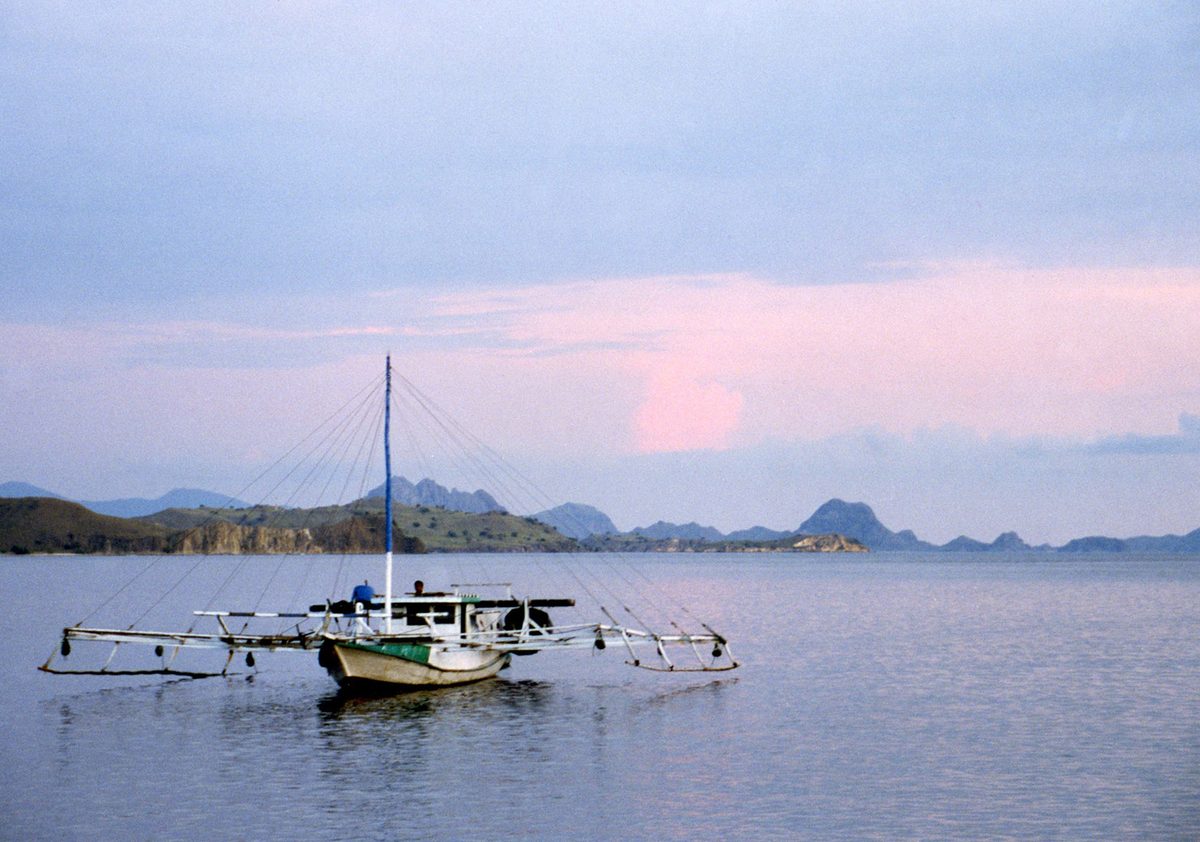
Here’s the one I’d sell a kidney to redo. Instead of powering straight across in four hours, the multi-day expedition boats turn the gap between El Nido and Coron into a three-to-five-day, off-grid island-hopping adventure through the Linapacan archipelago, widely rated to have some of the clearest water on Earth and a scattering of the best beaches in Palawan with nobody standing on them. You sleep in beach huts or tents on islands with names you won’t recognise, eat fish the crew grills on the sand, and trade wifi for bonfires and a guitar with too few strings. It is, for the right traveller, the best three or four days of the entire trip.
The route and what a day looks like
The boats run a loose course north through Linapacan and the Culion area toward the Calamianes, stopping at deserted beaches, snorkel reefs and fishing villages along the way. There’s rarely a fixed itinerary, by design: the crew reads the weather and the crowds and picks the day’s stops. You’ll snorkel, kayak, maybe try a bit of spearfishing or cliff jumping, then beach up before sunset for dinner and a fire. Accommodation is basic and that’s the point: clean mattresses, mosquito nets, cold-water bucket showers, limited or no electricity.
Operators, length and 2026 prices
A few names dominate. Big Dream Boatman runs a popular 4-day/3-night crossing capped at around 20 guests, usually priced near $599–649 with all meals (and even some drinks) included; you bring a small environmental fee of about ₱200. Buhay Isla and Keelooma run 3-day/2-night versions in the rough ₱19,000–23,000 ($330–400) range for joining (open) trips, more for private. At the higher-comfort, more famous end, Tao Philippines runs multi-day expeditions closer to ₱40,000 ($690). So your menu runs from a 3D/2N join-in trip around ₱19,000 to a flagship 4D expedition near ₱40,000, all-inclusive.
What’s typically included: the one-way transfer, all meals, snorkel gear, kayaks, island camping or hut accommodation, and a crew that becomes the best part of the story. Bring cash for fees and tips, motion-sickness tablets, a dry bag, reef-safe sunscreen and a power bank, because charging is scarce.
Two expectations worth setting before you book. First, comfort really is rustic: shared kubos or tents, bucket showers, squat or manual-flush toilets, sand in everything. People who go in expecting a floating resort come back grumbling; people who go in expecting a camping trip with extraordinary scenery come back glowing. Second, the social side is half the experience. These trips throw a small group of strangers together for days with no wifi, and the bonds that form (over card games, snorkel trips and that inevitable bonfire) are exactly why so many travellers rate it the highlight of their Philippines trip. If you’re travelling solo and worried about that, don’t be: solo travellers are the norm on these boats, not the exception.
Who it suits, and the catch
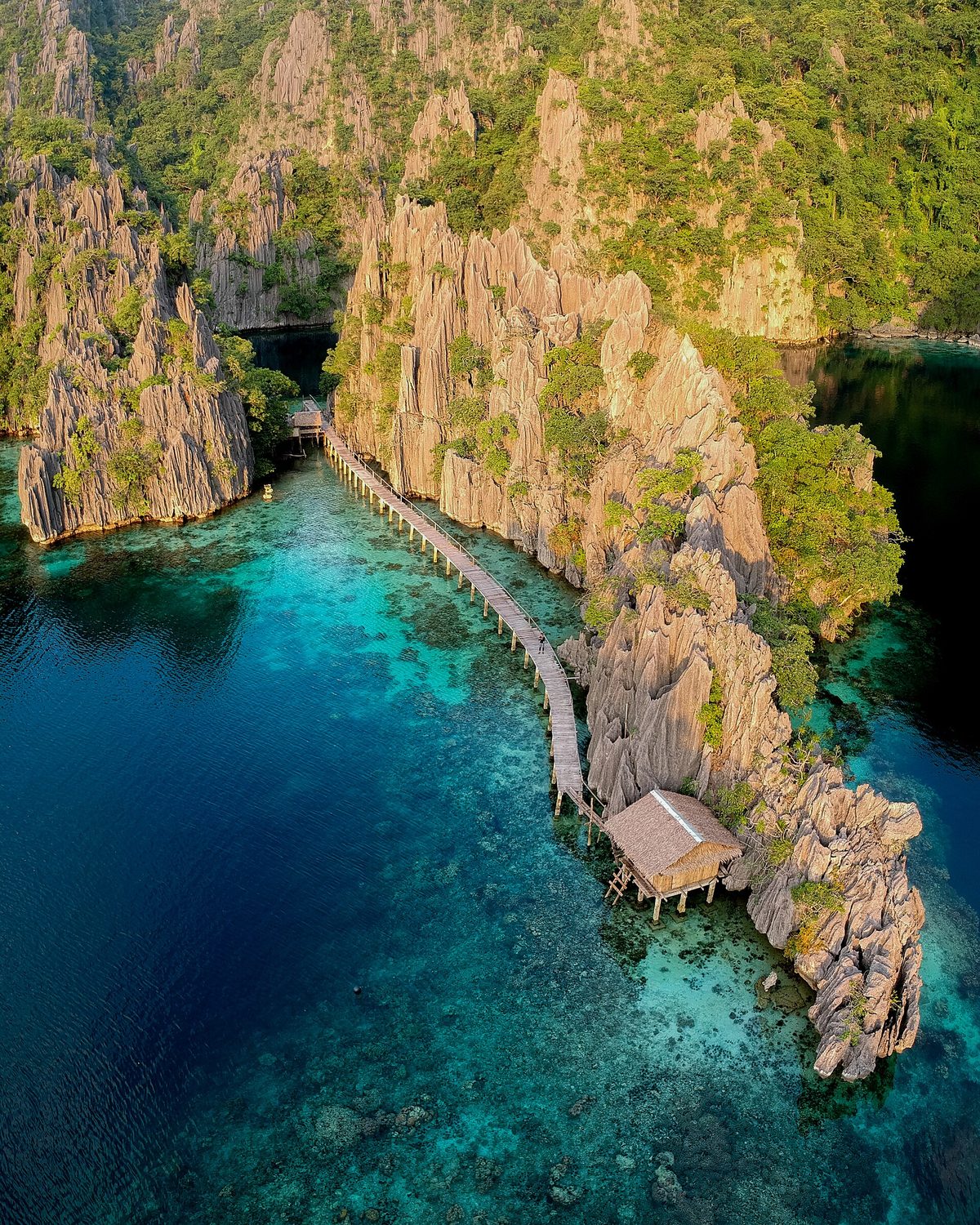
This is for travellers with time, an easy relationship with rustic comfort, and a wish to meet people. It is not for tight schedules, fussy sleepers, or anyone who needs a daily shower and a socket. The other catch is seasonal: most operators run roughly October to late July and pause entirely in August and September, when the monsoon makes open-water camping genuinely unsafe. Spots are limited and the good operators sell out, so book the expedition well ahead in high season, often a month or more out for the popular departures. If you only have time for a single day on the water at one end instead, the standard A-through-D day tours out of El Nido and the Kayangan Lake circuit out of Coron cover the highlights for a fraction of the cost.
Flying: real, but rarely the easy shortcut
Most people assume there’s a quick El Nido to Coron flight you can just book like a bus. The reality in 2026 is messier, and worth understanding before you bank on it.
The direct flight is real, but limited
Both ends have tiny airports served by light aircraft: El Nido Airport (ENI), privately run by the AirSwift group, and Busuanga/Francisco B. Reyes Airport (USU) for Coron. AirSwift does fly the direct hop between them, around six flights a week in 2026 rather than several a day, with roughly 40 minutes in the air. The catch is capacity: these are small propeller planes with few seats, and the popular departures sell out well ahead, especially in high season. So the flight is real, but don’t treat it like a guaranteed daily bus. The practical rule: if a direct seat is available for your exact dates, book it early; if it isn’t, don’t assume one will open up at the last minute, and have a ferry or a hub connection as a backup rather than building your whole plan around a seat you don’t yet hold.
The routing you’ll actually end up flying
When the direct seats are gone, “flying between El Nido and Coron” instead means connecting through a hub, usually Cebu or Manila/Clark, which turns a 40-minute hop into the better part of a day with a layover and a second set of transfers. There’s also a moving part to flag for 2026: AirSwift’s small-plane operations to and from El Nido have been shifting their Luzon hub from Manila (NAIA) to Clark International Airport (CRK), a change that took full effect on 29 March 2026. If you’re connecting via the capital region, double-check whether your El Nido flight uses Manila or Clark, because they’re a long, traffic-clogged transfer apart and people have missed connections assuming the wrong one.
Fares and the verdict on flying
When a same-route flight is bookable, fares typically start around ₱3,900 ($67) if you grab it early and climb steeply in high season; routings via a hub can land anywhere from there to well over ₱6,000 ($105) once you add the connecting leg. Add airport transfers at both ends and the time cost is real. My honest verdict: fly only if your schedule is genuinely tight, if it’s the rough-sea season and ferries are unreliable, or if the open-water crossing is a hard no for you. Otherwise the ferry is cheaper, simpler and often barely slower once you count the layover. For the wider picture of moving around the archipelago, our guide to getting around the Philippines is the companion read.
Doing it in reverse: Coron to El Nido
Everything above runs both directions, with two practical differences. First, timing flips: the fast ferries leave Coron in the morning (roughly 6–8:30am) and reach El Nido around midday, so you’ll want an early night and a tricycle to Coron Port, about 2km from town. Second, the expedition boats run Coron-to-El Nido just as readily as the reverse, and several travellers actually prefer this direction because it ends in El Nido’s lagoons rather than starting there.
The ports themselves are easy. In El Nido the fast-ferry terminal sits right in town, a short walk or quick tricycle ride from most accommodation. In Coron the pier is about two kilometres from the town centre, an easy tricycle hop for a few dozen pesos, or fifteen minutes on foot if you travel light. Both ends levy a small port or terminal fee paid on the spot, so keep a little cash handy and don’t expect a card reader.
Which way round should you go? If your flights in and out of Palawan are flexible, I’d plan the direction that lets you fly home from the more convenient airport, then slot the crossing in between — our Palawan itinerary routes show how the days fall either way. There’s no scenic “right way” on the ferry; both directions show you the same water. A practical tip either way: going Coron to El Nido, the morning arrival leaves you a full afternoon and evening in El Nido, which is the better base for a sunset and dinner. Going El Nido to Coron, the late-afternoon arrival means you’ll likely just settle in and eat, then start fresh the next morning. Read up on each end first with our El Nido travel guide and Coron travel guide so you arrive knowing what you actually want to do with the time the crossing leaves you.

Best season and the rough-sea warnings that matter
This is an open-water crossing in a part of the world with real weather, so season is not a footnote, it’s central to whether your boat sails at all.
The sweet spot is the dry season, roughly December through May, when seas are generally calmer and the fast ferries run most reliably. Within that, January to April is the safest bet for a smooth crossing. Two caveats keep it honest. First, even in the dry months the northeast monsoon (locally amihan) can throw up a shearline and a few days of rough, windy seas, especially December through February, occasionally enough to disrupt sailings. Second, the southwest monsoon (habagat), roughly June to October, is the genuinely tricky stretch: seas turn rough, cancellations become common, and the typhoon season overlaps it. The expedition operators stop entirely in August and September for exactly this reason.
Typhoons add their own layer from roughly June to November. A storm doesn’t have to make landfall on Palawan to matter: a system passing well to the north can still kick up the swell that shuts the crossing for a day or two. In that window, check the forecast in the days before travelling and keep the plan loose. None of this should scare you off the trip; it just means the crossing rewards a flexible itinerary far more than a rigid one.
The practical rule: if you’re travelling in monsoon season, build slack into your plans. Don’t book a same-day onward connection out of Coron or El Nido; leave a buffer day so a weather cancellation costs you a beach afternoon, not a flight home. For the bigger-picture calendar, see our guide to the best time to visit the Philippines.
Common mistakes to avoid
- Booking a tight onward connection. The single biggest error. Ferries and small planes both cancel for weather. Always leave a buffer day in monsoon season, and don’t book the last flight out of Coron on your ferry-arrival day.
- Trusting an old schedule. The route thins dramatically in low season and timetables shift. Confirm the current week’s departures within a few days of travelling, not from a blog dated two years ago.
- Assuming you can fly on a whim. The same-route flight isn’t a guaranteed daily service and sells out. If flying is your plan, book it early or have a ferry backup.
- Arriving at the pier late. Show up at least an hour before the fast ferry. Late arrivals can lose their seat to the waitlist.
- Underestimating the swell. Take motion-sickness tablets before boarding if you’re prone; don’t wait until you’re already green in open water.
- Paying a “guide” who finds you at the pier. Buy ferry tickets at the official office or a known agency, not from someone who approaches you with a clipboard and a great story.
Which option I’d pick
If I had a normal week in Palawan and wanted to see both ends properly, I’d take the fast ferry on a dry-season morning, no hesitation: it’s cheap, it’s quick, and it leaves the budget intact for island hopping at both ends. If I had three or four spare days and the money, I’d skip the ferry entirely and take an expedition boat, because that crossing is the single best thing I’ve done in Palawan and the ferry simply can’t compete with sleeping on a deserted beach. I’d only fly if I were short on time, travelling in the rough-sea months, or physically unable to face open water. That’s the honest hierarchy.
A couple of concrete cases, since the right answer depends on your trip. Backpacking in March with a loose schedule and a tight budget? The expedition boat is the obvious call, and you’ll talk about it for years. Squeezing Palawan into a packed two-week loop in July and watching the forecast turn? Book a flight with a hub connection, eat the cost, and protect the rest of your itinerary from a weather-cancelled boat. For where this crossing sits in a wider trip, our Philippines itinerary routes show how to slot it in without wasting days.
Frequently asked questions
How long is the ferry between El Nido and Coron?
Plan on roughly 3.5 to 4 hours on the water for the fast ferry, which is what’s usually scheduled. On a rough day, or with slow loading, four-and-a-half hours is realistic. It’s an open-water crossing, so weather is the deciding factor in both duration and comfort, and a rough sea can stretch the trip noticeably.
Is there a flight between El Nido and Coron?
Yes. AirSwift flies a direct light-aircraft hop (about 40 minutes), though only around six days a week in 2026 rather than several times a day, and the small planes sell out fast. When the direct seats are gone you’ll connect through Cebu or Manila/Clark, turning it into a half-day journey. If flying matters to you, book early or keep the ferry as a backup.
How much does it cost to get between El Nido and Coron?
The fast ferry runs around ₱3,000–3,600 ($52–62) one way in 2026. Flights, when bookable, start near ₱3,900 ($67) and climb with demand. A multi-day expedition boat costs far more, roughly ₱19,000–40,000 ($330–690), but that fare covers several days of meals, accommodation and island hopping, not just transport.
What’s the best way to travel between El Nido and Coron?
For most people, the fast ferry: it’s cheap, direct and leaves an afternoon in Coron. If you have three to five spare days and want the journey to be a highlight, take an expedition boat through Linapacan instead. Fly only if you’re short on time, travelling in rough-sea season, or set against an open-water crossing.
Can the ferry between El Nido and Coron be cancelled?
Yes, and it does, mainly in the southwest monsoon (roughly June to October) when seas turn rough, and occasionally during the northeast monsoon’s windy spells from December to February. Cancellations are far less common in the calm dry months. Always leave a buffer day before any onward flight so a weather cancellation doesn’t strand you.
When is the best time to do the crossing between El Nido and Coron?
The dry season, roughly December through May, gives the calmest seas and the most reliable ferry sailings, with January to April the safest window. The southwest monsoon from June to October brings rough water and frequent cancellations, and the expedition boats pause altogether in August and September.
Sources and photo credits
Photo credits
- Coral and clear water, Bacuit Bay, El Nido — Photo: Vyacheslav Argenberg / CC BY 4.0 via Wikimedia Commons
- Outrigger boat, Palawan — Photo: arnoldent / CC BY-SA 2.0 via Wikimedia Commons
- Island on the El Nido–Coron route, Calamian Group — Photo: Tuderna / CC BY 3.0 via Wikimedia Commons
- Calamian Islands near Coron — Photo: Nicko Melendres / CC BY-SA 4.0 via Wikimedia Commons
- Kayangan Lake viewpoint, Coron — Photo: André Héroux / CC BY 3.0 via Wikimedia Commons
- Coron town and harbour at night — Photo: Patrickroque01 / CC BY-SA 4.0 via Wikimedia Commons
Sources
- Travel Palawan — El Nido–Coron ferry schedules and fares
- Big Dream Boatman — El Nido to Coron expedition operator
- Buhay Isla — multi-day Linapacan expedition schedule
- Philippine Department of Tourism — official travel portal
About this guide: PhilippinesTourism.org is an independent Philippines travel resource; details were researched and verified July 2026.