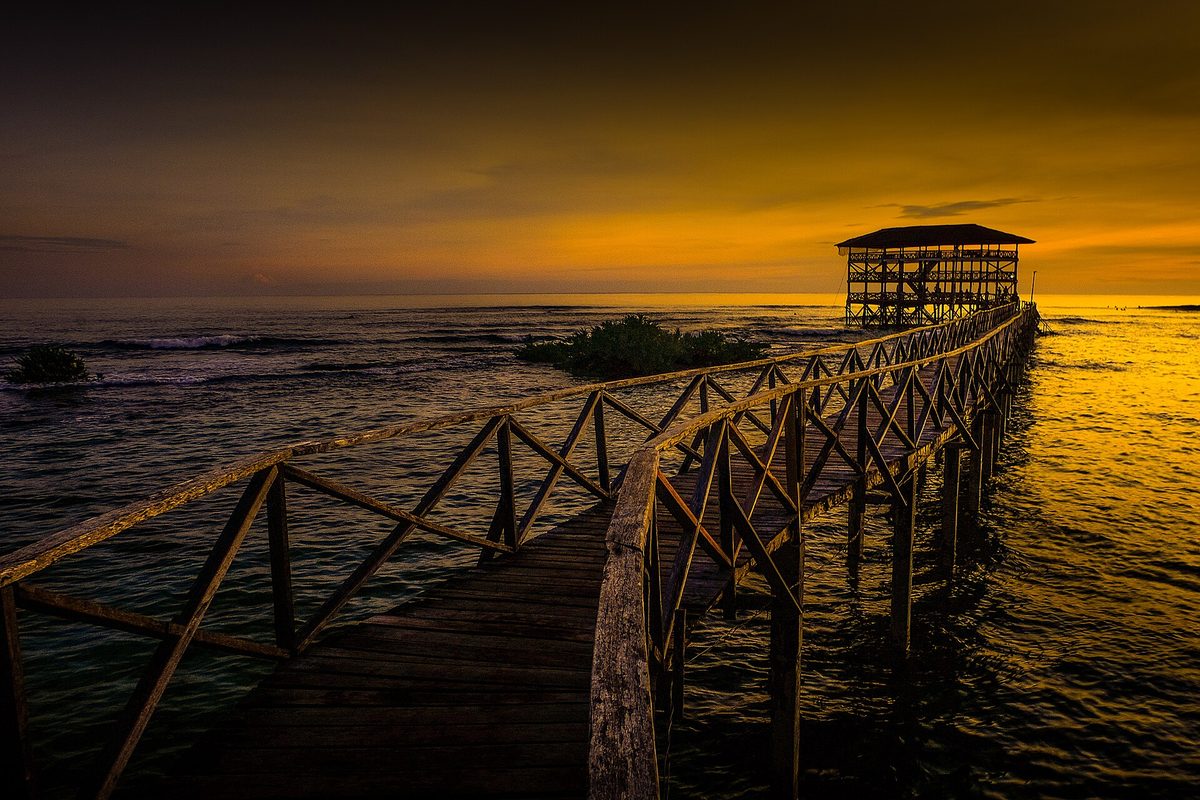
Siargao for Digital Nomads and Long Stays
Siargao has quietly turned into one of Southeast Asia’s most talked-about remote-work islands, and the reason is simple: you can surf a world-class wave before breakfast, answer emails on Starlink by mid-morning, and eat a 120-peso plate of rice and grilled fish for lunch. As of 2026, life as a Siargao digital nomad is genuinely workable in a way it was not five years ago. This guide lays out the connectivity, costs, visas, and honest downsides so you can decide whether the island fits your work and your sanity.
Why Siargao pulls remote workers in
I’ll be blunt about the appeal, because it’s not the same thing as Bali or Canggu. Siargao is smaller, rougher around the edges, and more committed to surf culture than to laptop culture. That is exactly why a certain kind of person ends up extending a two-week trip into six months. The draw is the combination: consistent, all-level surf at Cloud 9, Jacking Horse, and a dozen quieter reef breaks, plus a tight community of other remote workers who actually leave their laptops to go in the water.
The lifestyle here is low-friction once you settle in. You rent a scooter, you find a cafe with reliable wifi, you learn which days the surf is good, and you slot work around the swell instead of the other way round. There’s a real sunrise-surf, work-the-middle-of-the-day, sunset-beer rhythm to it. People are friendly, the food scene has exploded over the last few years, and the island is small enough that you’ll keep running into the same faces. If you want anonymity, this is the wrong island. If you want a built-in social life within a week of landing, it’s one of the best in the region.
Before you get carried away, read the downsides section near the bottom honestly. Siargao rewards a specific temperament and punishes another. For the full lay of the land beyond remote work, our Siargao travel guide covers the island end to end.
At-a-glance monthly budget for a Siargao digital nomad
Here’s a realistic 2026 monthly breakdown for one person staying a month or longer. I’ve split it into a budget tier (simple long-term room, mostly local food, cook some meals) and a comfortable tier (a nicer apartment or villa room, coworking membership, regular cafes and restaurants out). Figures are in Philippine pesos with rough US-dollar equivalents at around 58 PHP to the dollar, and they are estimates for 2026, not quotes. Prices on the island have been climbing, so treat the comfortable column as the more honest number if you like air-con and good coffee.
| Expense | Budget (PHP / USD) | Comfortable (PHP / USD) | Notes |
|---|---|---|---|
| Long-stay accommodation | around 12,000-18,000 / ~$210-310 | around 28,000-45,000 / ~$480-780 | Monthly rate; utilities often extra |
| Electricity & water | around 2,500-4,000 / ~$43-69 | around 5,000-9,000 / ~$86-155 | Air-con is the big swing factor |
| Food (mix of local + cafes) | around 12,000-18,000 / ~$210-310 | around 25,000-40,000 / ~$430-690 | Carinderias are cheap; Western food is not |
| Scooter rental | around 5,000-7,000 / ~$86-120 | around 5,000-7,000 / ~$86-120 | Monthly rate; fuel on top |
| Mobile data (SIM plans) | around 800-1,500 / ~$14-26 | around 1,500-2,500 / ~$26-43 | Globe or Smart top-ups |
| Coworking membership | 0 (cafe-work) | around 6,000-12,000 / ~$100-210 | Monthly pass at a dedicated space |
| Fun (surf, gym, yoga, nights out) | around 6,000-10,000 / ~$100-170 | around 12,000-25,000 / ~$210-430 | Surf lessons and board rental add up |
| Rough monthly total | around 38,000-58,000 / ~$650-1,000 | around 85,000-140,000 / ~$1,450-2,400 | Excludes flights and visa runs |
Most working travelers I’ve met land somewhere in the middle, around $900 to $1,500 a month all in, depending on how often they eat Western food and whether they pay for coworking. You can absolutely do it for less if you commit to local food and a basic fan room, and you can spend a great deal more if you rent a villa. For how island prices compare to the rest of the country, see our breakdown of the cost of traveling in the Philippines.
The wifi and connectivity reality in 2026 (read this carefully)
This is the section that actually decides whether Siargao works for your job, so I’m going to be specific and honest. The island’s old reputation, slow DSL, congested fiber, signal that fell over every afternoon, was earned. For years, remote work here meant tethering to a phone and praying. That reputation is now out of date, but the truth in 2026 is more nuanced than “it’s fine now.”
Starlink changed the game. Since it arrived in early 2023, Starlink has become the backbone of serious remote work on the island. A property or coworking space with a Starlink dish can deliver fast, low-latency connection good enough for video calls and uploads, often in the tens to low hundreds of Mbps. This is the single biggest reason the digital-nomad scene took off here. When you’re booking a long-term place or choosing where to work, “Do you have Starlink, and do you have a generator?” are the two questions that matter most.
The catch is power. Starlink needs electricity, and Siargao still has brownouts. Some are short, ten or fifteen minutes; some are scheduled maintenance cuts that last most of a day. And the island’s power supply has a real single-point weakness: in December 2024, a fault in the submarine cable that feeds Siargao knocked out electricity island-wide for days and pushed local officials to consider a state of calamity. That kind of multi-day outage is the exception, not the norm, but it is a reminder that when the power goes, a Starlink dish without backup goes dark with it. This is why the places worth working from run a generator, and it’s why I’d never rely on a single connection for an important call. Heavy tropical downpours can also cause brief “rain fade” on the satellite signal. It’s usually short, but it happens.
Cafe wifi is the everyday workhorse. Plenty of cafes and restaurants in General Luna are set up for laptop work now, often running their own fiber plus a generator. The quality varies, so the move is to find two or three spots you trust and rotate between them. Bring a charged battery; outlets get fought over at the popular places, and a few cafes politely cap laptop seating to specific tables.
Mobile data is your safety net. A local SIM with a decent data plan is non-negotiable insurance. When the cafe wifi drops or the power cuts, you hotspot off your phone. More on which network to buy below. The honest summary for 2026: connectivity is good enough for most remote jobs if you stack your options (a Starlink-backed base or coworking space, two trusted cafes, and mobile data as backup) and stay flexible about where you work on any given day. If your job cannot tolerate a single dropped call ever, build in redundancy or reconsider an island this remote.
Coworking spaces and the best cafes to work from
For a long time Siargao had no real coworking spaces and you just worked from cafes. That has changed. As of 2026 there are a few dedicated spaces, almost all clustered in and around General Luna. New spots open and old ones close on this island faster than anywhere I know, so confirm hours and that a place is still operating before you build your week around it.
Dedicated coworking spaces
- CocoSpace (Libertad, just north of the General Luna strip) is the most full-featured option I’ve come across. Large open-plan area, rooftop, on-site cafe and a pool, Starlink connection, call booths and focus rooms. It bills itself as solar-powered and runs the most active community calendar, including a regular nomad dinner. Memberships range from hourly and day passes up to weekly and monthly.
- AlterSpace (General Luna, near the Cloud 9 end) runs effectively 24/7, with a generator to ride out power cuts, private meeting rooms and free coffee. The vibe is colorful and creative. Useful if your hours don’t match normal business hours.
- WaveWork, inside the Rucksack Inn on Tourism Road, is a smaller air-conditioned space with high-speed wifi, meeting pods and flexible daily, three-day, weekly and monthly passes. The hostel runs events, so it’s a sociable base.
Expect a monthly membership at a proper space to land somewhere around 6,000 to 12,000 PHP (roughly $100 to $210) in 2026 depending on the space and whether you want a dedicated desk. Day passes are widely available if you’d rather not commit. The real value isn’t just the desk and the generator; it’s the community. The nomad scene here largely organizes itself through these spaces and their events.
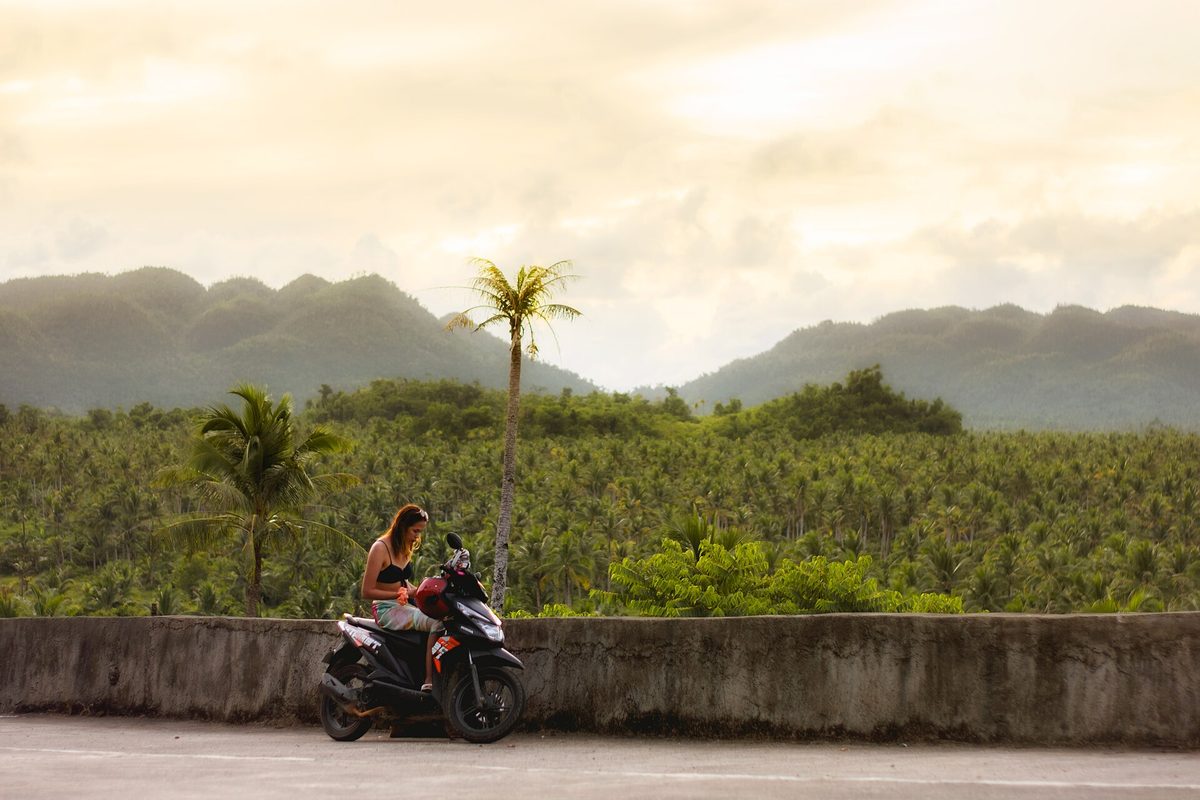
Cafes worth a working session
If you’d rather not pay for coworking, the cafe scene in General Luna carries you. Spots that regularly come up among working travelers include Pwesto (centrally located, you can use the air-conditioned room of the restaurant next door), Naga (a dedicated work area with outlets, best in the morning before it fills up and the music starts), Amon (great pastries, limited laptop seating so check the rules), The Ohm Cafe and Sunday, both with proper work areas and reliable wifi, and Lamari, a roomy restaurant-resort that’s calm for an afternoon shift. Etiquette matters here: order regularly, don’t camp at a four-top for six hours during lunch rush, and tip the staff who keep refilling your water while you work.
Where Siargao nomads actually base themselves
Almost everyone working remotely bases in the south, in or around General Luna (locals call it GL). This is where the coworking spaces, the cafes, the surf schools, the gyms, the pharmacies, the banks and the nightlife are. If it’s your first stint on the island, base in GL. You’ll have everything in scooter range and you won’t feel isolated while you find your feet.
Within the south, the neighboring barangays of Catangnan (where Cloud 9 sits), Malinao and Tourism Road are all walkable-to-scootable from the action while being a notch quieter than the busiest stretch of GL. Many long-stayers drift slightly out of the center for a calmer place to sleep, then scooter in to work and eat.
If you genuinely want quiet and don’t mind being far from services, the north of the island, villages like Pacifico and Alegria, is slower, cheaper and emptier, with great uncrowded surf. The honest trade-off: most places close early, the connectivity is more hit-or-miss, and a run to a well-stocked pharmacy or a bank means an hour or more on the bike back to GL. I’d only recommend the far north for a second or third stay, once you know the island and have your connectivity sorted. For a full neighborhood breakdown, see our guide to where to stay in Siargao.
Finding a long-term rental
The cheapest long-term deals are almost never online. They’re found by being on the island, asking in Facebook groups, walking or scootering around looking for signs, and getting numbers from people you meet. A simple long-term house can run around 20,000 to 22,000 PHP a month (roughly $345 to $380), with electricity and water usually on top. Air-conditioned apartments and nicer villa rooms climb from there into the tens of thousands. A common play is to book a coliving or a short Airbnb for your first week or two, then lock in a cheaper monthly place once you’ve seen it in person and tested the wifi yourself.
Getting your SIM and data sorted
Buy a SIM the moment you land, either at the airport or at any mini-mart on the island, for around 50 PHP, then load a data plan on top. You’ll need to register the SIM (a quick process tied to your passport, required under Philippine law). Download the Globe or Smart app to manage plans; you can buy rolling weekly, two-week or larger data bundles rather than committing to a contract.
On which network to choose: Globe has historically been strong in the General Luna corridor where most nomads spend their time, so it’s a safe default for the south. Smart often has better reach in the rural north and quieter parts of the island, so if you plan to spend time up around Pacifico or out exploring, a Smart SIM (or a second SIM) earns its keep. DITO is cheaper but its Siargao coverage remained patchy and unreliable as of 2025, so I wouldn’t make it your only line. Both Globe and Smart offer eSIM options now, which is convenient if your phone supports it and you’d rather not swap a physical card. Many long-stayers simply carry two SIMs, one of each major network, and switch to whichever has signal where they are.
Visas: how long you can legally stay in 2026
This is where people get tripped up, so here’s the current picture. There are two routes, and most remote workers still use the tourist one.
The tourist-visa route (what most nomads do)
Citizens of many countries enter the Philippines visa-free for 30 days, granted on arrival. From there you extend at a Bureau of Immigration office, and the Philippines is unusually generous about how long you can keep extending: visa-free nationals can stack extensions up to a total of around 36 months without leaving (nationals who needed a visa before arrival are generally capped lower, around 24 months). You typically extend in one- or two-month increments at first, and longer six-month Long-Stay Visitor Visa Extensions are available at selected BI offices at the officers’ discretion. Once your stay passes 59 days you’ll also need an ACR I-Card (the alien registration card). Crucially, there is a Bureau of Immigration office on Siargao in Dapa, so for routine extensions you don’t have to fly to the mainland. Apply a week or so before your current stamp expires to avoid overstay fees.
The catch you must respect: a tourist visa does not let you work for Philippine clients or companies. Remote work for employers and clients based outside the Philippines, with foreign-sourced income, is the norm and what virtually everyone does, but local employment is off-limits. Our dedicated guide to the Philippines visa extension process walks through the steps, fees and the ACR I-Card in detail.
The Digital Nomad Visa (new, and worth understanding)
The Philippines introduced a dedicated Digital Nomad Visa via Executive Order No. 86, signed in April 2025, with the program opening to applicants later that year. It lets qualifying remote workers stay for up to one year, renewable once. As of 2026 the broad eligibility requirements are: you’re at least 18, you work remotely using digital technology, your income comes from foreign employers or clients (recent guidance points to a minimum of around US$24,000 a year), you hold valid health insurance, you have a clean criminal record, and you’re a national of a country that offers a comparable visa to Filipinos and where the Philippines has a Foreign Service Post. DNV holders get multiple-entry rights and are treated as non-tax-residents on foreign income, but still can’t take local employment.
Honest take for 2026: the DNV is a genuine, welcome development, and the e-visa system is up and processing, but it’s still relatively new, so documentation and turnaround can be slower and less predictable than the well-worn tourist-extension path. For a one-year stay it may be worth the paperwork; for a flexible few months, most people still find the tourist route simpler. We track the latest on the program in our Philippines digital nomad visa guide, and you should always confirm current rules and income thresholds with the Bureau of Immigration before you commit, because this is exactly the kind of policy that changes.
Community, surf and staying sane
The community is the thing people underestimate before they arrive and rave about after. For an island this size, the remote-work scene is dense and welcoming. Much of it organizes through the coworking spaces and a few recurring events, the regular nomad dinners (a Thursday gathering that started through CocoSpace is a well-known one), plus active Facebook and WhatsApp groups you can find before you even land. Show up to one dinner and you’ll have a friend group inside a week.
Then there’s the surf, which is the whole point for a lot of people here. Siargao caters to every level, from the beginner-friendly Jacking Horse to the heavy reef of Cloud 9 and a string of quieter breaks up and down the coast. If you’ve never surfed, lessons are cheap and everywhere; a one-hour lesson runs around 500 PHP and a board rental for the day around 500 to 600 PHP. Working travelers tend to surf the dawn or late-afternoon sessions and work the middle of the day. Cloud 9 and the surrounding breaks are the heart of it, and most long-stayers settle into a routine of riding the right wave for their level around the work that pays the rent.
Beyond the water there are gyms, yoga studios, a genuinely good and varied restaurant scene, and a nightlife that runs every night of the week if you want it. The thing that keeps long-stayers healthy is balance: it’s easy to either burn out on the party scene or get island fever from too much sameness. The ones who last treat it like a life, not a holiday, with a routine, a workspace, exercise and a couple of off-island trips to reset.
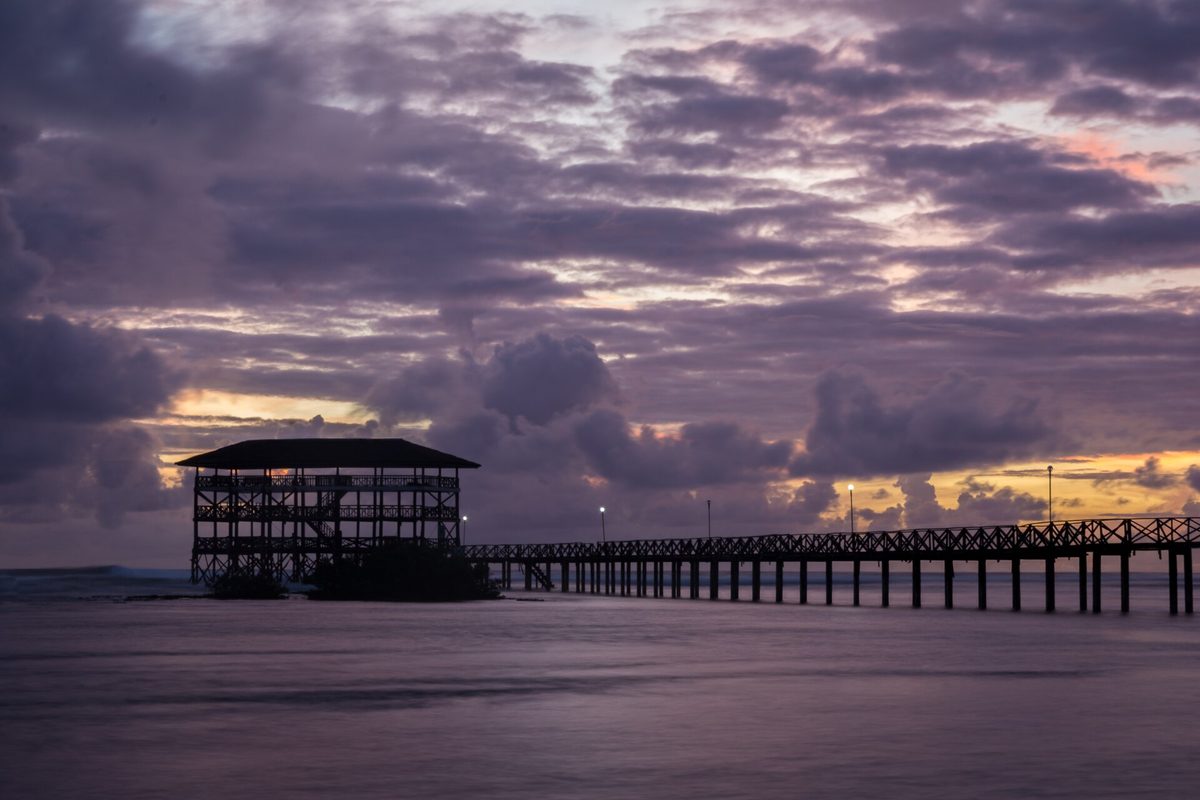
Healthcare and safety, honestly
You should know what the island can and can’t handle medically before you commit to months here. The good news is that healthcare has improved sharply since the rebuild (more on the typhoon below). Siargao now has the Siargao Island Medical Center in Dapa, a major facility that has come online with services like ultrasound, lab diagnostics, a CT scanner and emergency surgical capability, plus a handful of private clinics in General Luna and Dapa for everyday consultations and minor issues.
That said, this is still a small island. For anything serious or specialized, the realistic plan is to stabilize locally and fly to Cebu or Manila. Comprehensive travel or nomad health insurance is not optional here; treat it as a fixed cost of the lifestyle. Pharmacies in GL cover the basics. Bring any specific prescription medication you rely on, because stock of less common drugs is unreliable.
On general safety, Siargao is relaxed and the main risks are the ordinary tropical ones: scooter accidents (wear a helmet, the roads have sand, dogs and the occasional pothole, and LTO checkpoints are increasingly common), strong currents and reef cuts in the water, sunburn, and the usual petty-theft caution about leaving valuables on the beach. Siargao sits in the broader Mindanao region, which carries an outsized reputation, but the island itself is a well-touristed, easygoing place that feels a world away from the conflict-affected areas people picture.
The honest downsides: who should NOT come
I love this island, which is exactly why I won’t oversell it. Siargao is the wrong call for some people, and a month of remote work here can go badly if you ignore these.
- Typhoon season is real. The wet and storm-prone stretch runs roughly November into December, and the island sits in a typhoon corridor. On 16 December 2021, Super Typhoon Odette (Rai) hit Siargao as a Category 5 with winds around 195 km/h and flattened huge parts of it, hospital included. The island has rebuilt impressively, but if you’re planning a long stay, understand that late-year storm risk is genuine and build flexibility into those months.
- Brownouts and infrastructure gaps will test your patience. Power cuts happen, water can be intermittent, and “island time” applies to deliveries, repairs and bureaucracy. The December 2024 island-wide outage, when a submarine-cable fault cut power for days, showed how fragile the supply can be. If unreliable infrastructure spikes your stress, this is not your island.
- Limited healthcare for anything major. Improved, but still small. If you have a condition that needs regular specialist care, base somewhere with a major hospital.
- Island fever is a thing. Siargao is small. The same faces, the same handful of restaurants, the same strip. Some people find that cozy; others climb the walls by month two. Plan reset trips.
- Prices are rising and over-tourism is straining the place. It’s no longer the dirt-cheap secret it was. Rents, food and the general squeeze have all gone up, and the popularity that makes the community great also brings traffic, waste pressure and development. Come with realistic expectations, not a 2015 budget.
- It’s genuinely remote. Getting here means a flight plus connections, and leaving for a meeting or an emergency is not quick. If your work or life needs you to be reachable and mobile at short notice, weigh that hard. Start with our guide on how to get to Siargao to gauge the journey.
If none of that scares you off, and the surf-plus-community trade for a bit of infrastructure friction sounds like a fair deal, you’ll probably love it like the rest of us do.
Frequently asked questions
Is the wifi good enough in Siargao to work remotely in 2026?
For most remote jobs, yes, if you stack your options. A base or coworking space on Starlink with a backup generator handles video calls and uploads well, trusted cafes carry your everyday work, and a local SIM is your hotspot fallback when power or wifi drops. The old slow-internet reputation is outdated, but brownouts, including a multi-day island-wide outage in December 2024, mean you should always keep a backup connection rather than relying on a single line.
How long can a digital nomad legally stay in the Philippines?
On the tourist route, visa-free nationals can extend at a Bureau of Immigration office up to a total of around 36 months without leaving (about 24 months for nationals who needed a visa to enter), with an ACR I-Card required after 59 days. Alternatively, the Digital Nomad Visa allows up to one year, renewable once, for those who meet its income and insurance requirements. Always confirm current rules with Immigration.
How much does it cost to live in Siargao per month?
Budget around $650 to $1,000 a month if you take a simple long-term room, eat mostly local food and skip paid coworking. A comfortable setup with a nicer apartment, coworking membership and regular cafes and restaurants runs roughly $1,450 to $2,400. Most working travelers land in the middle, near $900 to $1,500, excluding flights and visa runs. Prices have been rising, so budget on the higher side.
Where do digital nomads stay in Siargao?
Almost everyone bases in or around General Luna in the south, where the coworking spaces, cafes, surf schools, banks and nightlife are. Neighboring Catangnan, Malinao and Tourism Road are slightly quieter but still close to everything. The far north (Pacifico, Alegria) is cheaper and calmer but more isolated, with patchier services and connectivity, so it suits a second stay rather than a first.
Are there coworking spaces in Siargao?
Yes. As of 2026 the main dedicated spaces are CocoSpace in Libertad (rooftop, pool, on-site cafe, Starlink), AlterSpace in General Luna near Cloud 9 (open around the clock with a generator), and WaveWork inside the Rucksack Inn on Tourism Road. Monthly memberships run roughly 6,000 to 12,000 PHP. Spaces open and close quickly here, so confirm a place is still operating before you rely on it.
Has Siargao recovered from Typhoon Odette?
Yes. Typhoon Odette (Rai) devastated the island in December 2021, but by 2026 Siargao has largely rebuilt, with restored resorts, businesses and an upgraded healthcare network including the new Siargao Island Medical Center. The island is fully open and thriving as a travel and remote-work destination. The main lingering caution is seasonal: November and December carry real typhoon risk, so plan long stays around it.
Sources and photo credits
Photo credits
General Luna street: Billy Palatino (CC BY-SA 4.0), via Wikimedia Commons · Coconut palms viewpoint: Michael Angelo Luna (CC BY-SA 4.0), via Wikimedia Commons · Beach near General Luna: ChaasPrime (CC BY-SA 4.0), via Wikimedia Commons · Cloud 9 boardwalk: JupitReyes (CC BY-SA 4.0), via Wikimedia Commons · Dapa town: Lucky Ambago Purok Otso (CC BY-SA 4.0), via Wikimedia Commons
Sources
- Bureau of Immigration, Republic of the Philippines – tourist visa extensions, ACR I-Card and long-stay rules.
- Official Gazette of the Republic of the Philippines – Executive Order No. 86 (2025) establishing the Digital Nomad Visa.
- Philippine Department of Tourism – Siargao destination and post-typhoon recovery information.
- PAGASA – Philippine weather and typhoon-season guidance.
About this guide: PhilippinesTourism.org is an independent Philippines travel resource. Prices and schedules were verified June 2026; confirm current details before you travel.