How to Get to Siargao: Flights, Ferries and Tips
Reaching Siargao used to mean a direct flight from Manila. As of 2026 that route is gone, and old blog posts will steer you wrong. The short version: fly into Cebu, then take the one-hour hop to Sayak Airport. Below is every realistic route, with honest 2026 costs and the trade-offs nobody mentions.
How to get to Siargao in 2026: the at-a-glance picture
Siargao sits off the northeast tip of Mindanao, in the province of Surigao del Norte. There is no jet airport and no bridge, so you arrive one of two ways: a small turboprop into Sayak Airport (airport code IAO, also signposted as Siargao Airport), or a ferry crossing from the mainland port of Surigao City to Dapa on the island. Almost everyone flies. The ferry is a backup, a budget play, or a way to combine Mindanao stops.
The single most important 2026 change: there is no longer a direct flight from Manila’s NAIA airport to Siargao. The old direct service moved to Clark, and even that got thinner mid-year. The practical effect is that Cebu has become the gateway that makes everything work. Here is the comparison I wish someone had handed me, with rough 2026 costs converted at around 58 pesos to the US dollar.
| Route | How | Rough door-to-door time | Rough 2026 cost (per person) | Best for |
|---|---|---|---|---|
| Cebu (CEB) → Siargao | Direct flight, ~1 hr in the air | 2.5–3 hrs from Cebu city | Around PHP 1,300–2,000 one-way base ($22–$35); ~PHP 8,000–12,000 round-trip all-in with a bag ($140–$215) | Almost everyone — the main gateway |
| Manila → Cebu → Siargao | Two short flights, connect in Cebu | 5–7 hrs from central Manila | Around PHP 14,000–20,000 round-trip, both legs ($250–$360) | Travelers starting in Manila |
| Clark (CRK) → Siargao | Direct flight, ~2 hr 20 min in the air | 5–6 hrs from central Manila incl. the bus to Clark | Around PHP 10,000–14,000 round-trip all-in ($175–$250) | People already north of Manila / in Pampanga |
| Davao (DVO) → Siargao | Direct flight, ~1 hr 15 min | Half a travel day | Around PHP 7,000–11,000 round-trip all-in ($120–$190) | Travelers already in southern Mindanao |
| Cebu → Surigao → Dapa (sea) | Overnight ferry, then fastcraft | 12–14 hrs minimum | Around PHP 1,500–3,000 total ($26–$52) | Budget travelers, sold-out flights, slow-travel fans |
| Surigao City → Dapa (sea, last leg) | Fastcraft ~1.5 hr or RORO ~2–3 hr | ~2 hrs incl. transfer to General Luna | Fastcraft around PHP 420–520 ($7–$9); RORO around PHP 260–300 ($4.50–$5) | Everyone arriving by sea |
All prices are framed as ranges and were checked in June 2026. Airfares in particular swing wildly with how far ahead you book and the season, so treat the figures as a planning guide, not a quote. If you only skim one section on how to get to Siargao, make it this table, then read the route that matches where you’re starting from. For the bigger picture of moving between islands, our guide to getting around the Philippines covers ferries, buses and domestic flights in detail.
By air: the fastest way to get to Siargao
Flying is how roughly nine in ten visitors arrive, and it is what I recommend unless you have a specific reason to take the sea route. The catch is that Sayak’s short runway only takes small turboprop aircraft, which caps the number of seats and pushes fares up. Booking four to six weeks ahead is the single biggest thing you can do to keep the cost reasonable.
Cebu to Siargao: the route that makes everything work
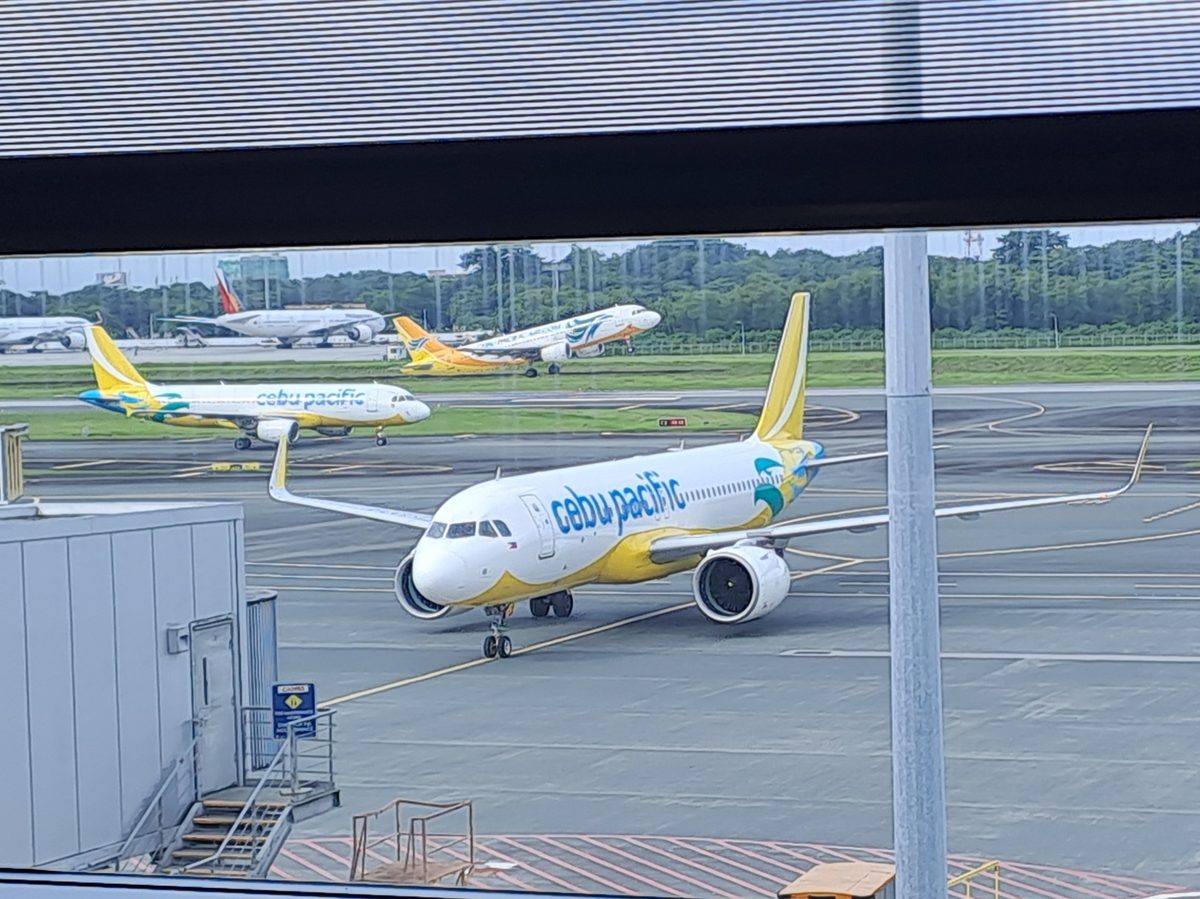
This is the easiest and usually the cheapest way onto the island. Direct flights leave Mactan-Cebu International Airport (Terminal 1) for Sayak several times a day, and the hop takes about an hour. As of 2026 three carriers fly it: Cebu Pacific’s regional arm Cebgo, PAL Express (Philippine Airlines), and the smaller Sunlight Air. That redundancy matters more than the price. When monsoon weather cancels the morning flight, having two or three other departures the same day is what saves your trip.
Booked a few weeks out, expect a base fare around PHP 1,300 to 2,000 one-way (roughly $22 to $35). Book last-minute in peak season and that climbs fast. Cebu Pacific usually has the most flights and the most competitive headline price; Sunlight Air is worth checking on less popular dates when the bigger carriers are full. If you are flying internationally, several Asian hubs (Singapore, Hong Kong, Tokyo, Seoul, Taipei) connect straight to Cebu without going through Manila at all, which is the cleanest possible routing.
Manila to Siargao: why there’s no direct flight anymore
If you only remember one fact from this guide, make it this one. As of 2026 there is no direct flight from Manila’s Ninoy Aquino International Airport (NAIA) to Siargao. Two things drove the change. Cebu Pacific moved its Manila–Siargao service to Clark back in early 2025. Then Philippine Airlines pulled all of its turboprop flights out of NAIA when new slot rules reserved the airport for jets, completing that exit in late March 2026, and Siargao is a turboprop route.
So from Manila you have two sensible options. The first, and the one I’d pick, is to fly NAIA to Cebu and connect to Siargao. Manila–Cebu flights are frequent and competitive, the Cebu–Siargao leg has multiple daily departures, and if one leg slips you have room to rebook. Budget five to seven hours door-to-door from central Manila to General Luna depending on your layover, and give yourself at least three hours between flights in Manila because NAIA’s terminals are far apart and a domestic departure rarely shares a terminal with an international arrival.
The second option is to fly from Clark instead, covered next. Either way, Manila is no longer a one-flight trip. Build your Philippines itinerary around that reality rather than discovering it at the airport.
Clark to Siargao: the other Manila-area option
Clark International Airport (CRK), about two hours north of central Manila, is now the Manila-area hub for the few remaining direct Siargao flights. The flight itself is longer than from Cebu, around two hours twenty minutes, because Clark is further from the island. As of 2026, after Philippine Airlines suspended its own Clark–Siargao route mid-year, the operators on this route are Cebgo and Sunlight Air. Always confirm the schedule when you book, because this is exactly the kind of thin route that shifts with the season.
The honest catch with Clark is the ground transfer. If your international flight lands at NAIA, getting to Clark means a P2P bus from Trinoma, Pasay or NAIA Terminal 3, around two to two and a half hours and roughly PHP 250 to 450. That bus ride usually eats whatever schedule advantage Clark offered over routing through Cebu. Clark makes sense if you are already in Pampanga or north of Manila, or if your long-haul flight happens to land at Clark itself, which is still rare. Otherwise, go via Cebu.
Davao and the other island connections
Cebgo flies Davao (DVO) to Siargao, a roughly one-hour-fifteen hop that is genuinely useful if you are already in southern Mindanao. It is a thin route with limited frequency, so book ahead and watch the fares. Note that on some thinner routes the base fare does not include any checked baggage at all, so add a bag at booking rather than the counter.
From everywhere else in the country, the pattern is the same: you connect through Cebu. From Bohol, take the two-hour ferry from Tagbilaran to Cebu, then fly across. From Palawan or El Nido, fly to Cebu (AirSWIFT serves El Nido) and connect. Budget a full travel day from anywhere in Palawan, and remember that Cebu is the hub that ties the whole network together. If you are island-hopping the country, plan your route map with Cebu as the pivot.
Airport realities: Sayak to General Luna
Sayak Airport sits in the municipality of Del Carmen on the northwest of the island, about 45 to 50 kilometres from General Luna, where the surf, restaurants and most accommodation are. It is small. There is almost no food beyond a couple of stalls and water dispensers, so eat before you fly. A new, larger passenger terminal has been built to ease the peak-season crush, but the fundamentals do not change: one runway, turboprops only, and weather can still close it.
When you land, shared white vans wait outside arrivals running to General Luna. The fixed rate is around PHP 300 to 400 per person as of 2026, and the drive takes 45 minutes to an hour. They leave when full, so off a busy flight you’ll be moving quickly; off a quiet one, you might wait. A private van for your whole group runs roughly PHP 2,000 to 2,500, which is the right call for three or more people, anyone landing after dark, or anyone traveling with surfboards and bulky gear. There’s also a small environmental fee, around PHP 20 per person, collected on arrival in cash, plus roughly PHP 350 per excess luggage piece on the shared vans. None of it is much in absolute terms, but it’s worth having small bills ready.
Two practical notes. First, there is no Grab or ride-hailing on the island, so don’t plan around it. Second, ask your accommodation to arrange a transfer when you book. Most will sort it at the standard rate, and a driver who waits for a delayed flight is worth a lot when you land on the last service of the day.
Flying with a surfboard
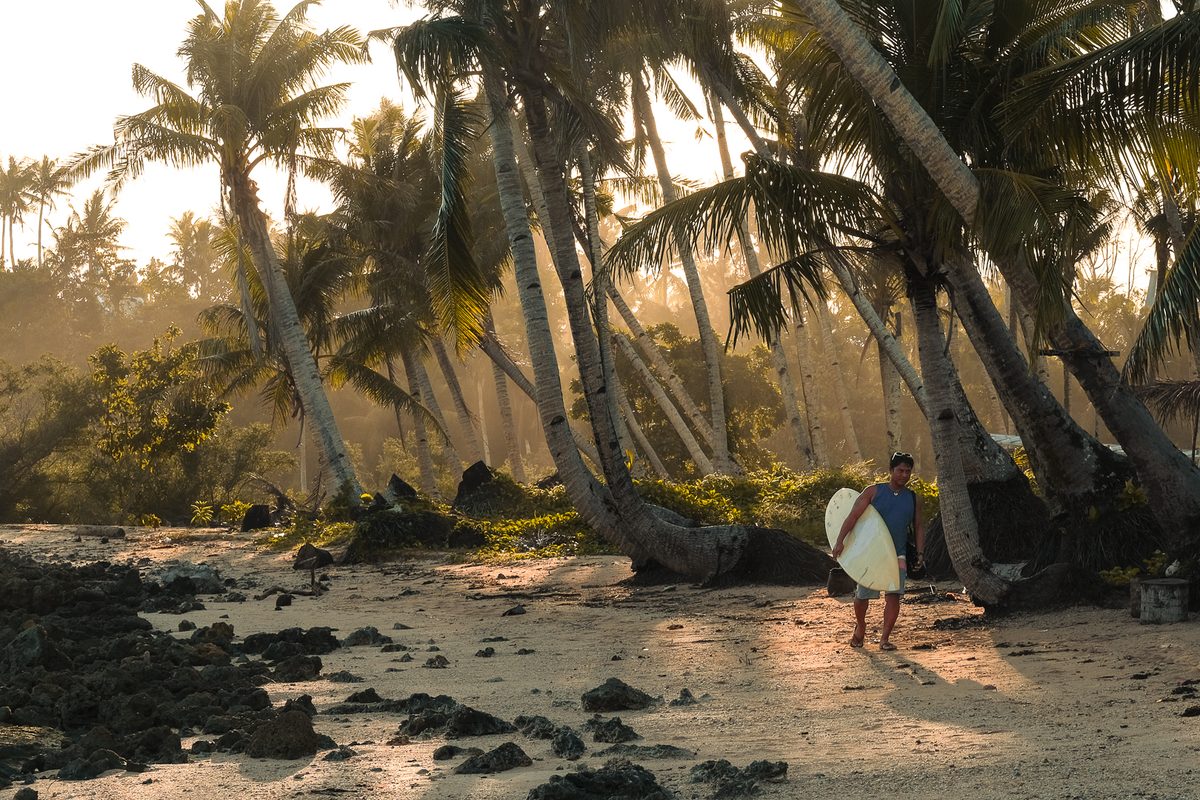
Siargao is a surf island, so this matters to a lot of arrivals. The blunt advice from people who do this regularly: if you’re bringing a board, Philippine Airlines (PAL Express) is the easier carrier. PAL tends to treat surfboards as part of your standard checked-baggage allowance if they fit the size and weight limits, the counter staff know what a surfboard is, and the Q400 turboprop it flies on the Cebu route has more cargo room than the smaller ATR.
Cebu Pacific and Cebgo are stricter on the ATR-72. As of 2026 their policy runs to a firm six-foot length cap, around 20 kg per board, and a limit of only two surfboard slots on the whole flight, booked through the app well ahead and not addable at the counter. If you’re the third surfer to book that flight, your board doesn’t fly even if it’s under six feet. Longboards over six feet simply can’t go on Cebu Pacific to Siargao, which is why most visiting longboarders rent on the island instead. Sunlight Air accepts sports baggage with similar size limits but publishes less detail, so contact them directly. Whichever carrier you choose, add the surfboard the moment you book; these slots sell out for the October Surfing Cup and peak season.
By sea: the Surigao to Siargao ferry route
The ferry is not the romantic option people imagine. It’s the backup, the budget choice, and the way to fold in a Mindanao stop. It also matters in monsoon season: when the morning flight cancels and you’re stuck in Cebu, knowing the sea route exists has rescued more than one trip. The route always works in two legs. First you reach Surigao City on the Mindanao mainland, then you cross the strait to Dapa Port on Siargao.
The Surigao City to Dapa crossing
This is the leg everyone arriving by sea shares. Surigao City Pier to Dapa Port on Siargao is about 63 kilometres of water, and two boat types run it. The fastcraft (Evaristo & Sons is the main operator) takes around 1.5 hours and costs roughly PHP 420 to 520 depending on seat class, with departures spread across the day, commonly around 6:00 am, 10:00 am and 1:00 pm. The RORO ferry (Evaristo or Montenegro) is slower at two to three hours and cheaper at around PHP 260 to 300, and is really only worth it if you’re bringing a vehicle.
Schedules shift with the season and the weather, so verify the current times the day before rather than trusting an old blog. Miss the last afternoon departure and you’re spending a night in Surigao City. Arrive at the pier 30 to 60 minutes ahead, have cash ready, and during the typhoon months expect that crossings get cancelled when the Coast Guard raises a small-craft advisory. From Dapa Port to General Luna it’s a 20 to 45 minute tricycle or habal-habal, around PHP 250 to 300, or a shared van at roughly PHP 300 per person. Confirm the fare before you climb in; the first quote at the port tends to be inflated.
Reaching Surigao City first
You get to Surigao two ways. The faster is to fly: Surigao Airport (SUG) is served by Cebgo from Cebu, a roughly 50-minute flight. From the airport it’s a short ride to the pier. The slower, cheaper way is the overnight ferry from Cebu. Cokaliong Shipping Lines and Starlite Ferries both run overnight sailings from Cebu Port to Surigao City, taking roughly eight to ten hours and departing in the evening to arrive early the next morning, which lines up neatly with the first fastcraft to Dapa. Fares run around PHP 1,200 for a reclining seat up to PHP 1,900 or more for a cabin.
There’s also a daytime fastcraft option: OceanJet runs Cebu to Surigao via Maasin in Southern Leyte, around 5.5 hours, with tourist class around PHP 1,900 to 2,800. It’s faster and more comfortable than the overnight boat, but you arrive in Surigao in the afternoon, which usually means sleeping there before catching the morning fastcraft to Siargao. Whichever you choose, the full Cebu-by-sea journey to General Luna runs 12 to 14 hours minimum once you count the connection waits.
Combo routes from Davao, Butuan and Bohol
If you’re already in Mindanao, an overland-and-ferry chain can make sense. From Davao, a bus to Butuan (three to four hours) then a van to Surigao City (two to three hours) puts you at the pier for the fastcraft. Butuan itself is an underrated backup when direct Siargao flights are sold out or absurdly priced: fly Manila or Cebu into Bancasi Airport in Butuan, take a van to Surigao City (around two to three hours, roughly PHP 250), then the fastcraft to Dapa. These combos are legitimate if you have the time and want to combine stops; they’re not worth it if a reasonably priced direct flight is available.
Mistakes that cost time and money
Most Siargao travel horror stories trace back to the same handful of avoidable errors. Here’s where people lose days and pesos.
- Booking the last flight of the day in monsoon season. If the afternoon flight cancels, there’s no recovery until tomorrow. From November to February especially, take a morning flight so a weather delay still leaves you options.
- Cutting the Manila connection too tight. NAIA’s terminals are far apart and domestic departures rarely share a terminal with international arrivals. Give yourself at least three hours, and use Grab between terminals.
- Assuming Clark is convenient for Manila. Clark is two hours north of the city. The ground transfer usually cancels out any schedule advantage over going through Cebu.
- Booking Cebu Pacific when you’re carrying a surfboard. The two-board-per-flight cap and the six-foot limit have stranded more surfers than any other booking mistake. Book PAL Express, or rent on the island.
- Missing the last fastcraft from Surigao. Afternoon is the cutoff. Miss it and you’re paying for an unplanned night in Surigao City.
- Not pulling out cash before you fly in. Island ATMs run dry in peak periods. Withdraw what you’ll need in Cebu before the domestic leg.
- A non-refundable first night with an unconfirmed flight. Cancellations happen. Book a refundable first night and lock it in once you’ve actually landed.
Travel insurance with trip-interruption and adventure-sports cover is the cheap hedge against most of this, and on a surf island it’s worth having medical evacuation cover too, since serious cases get flown to Cebu.
Best time to go, and the typhoon-season caveat
When you travel changes how reliably you’ll actually get to Siargao, not just the weather once you’re there. The dry, calmer months run roughly March to October. The northeast monsoon, November to February, is when low-pressure systems and the occasional typhoon can delay or cancel Sayak flights, sometimes closing the airport for a day or more. Industry estimates put weather-related delays or cancellations at around one in ten Sayak flights across the year, concentrated heavily in that monsoon window.
Siargao’s sharpest typhoon risk is roughly December into January rather than the generic national typhoon season, a quirk of weather systems pushing storms across the southern Philippines. October is the busiest month because of the Siargao International Surfing Cup, when flights and accommodation both sell out months ahead. If you’re traveling for the contest, book the domestic leg the day you book your international flight. For a fuller month-by-month breakdown, see our guide to the best time to visit Siargao, and if you have any safety questions about the region, our piece on whether Siargao is safe addresses them directly.
Getting around once you’ve arrived
You’ve made it to General Luna. Now you need to move around an island where, again, there’s no Grab. The default is renting a scooter or motorbike, which run around PHP 300 to 500 per day from shops along the main road, excluding fuel. It’s how most visitors get to Cloud 9, the rock pools, and the boat launches. Bring your driving licence; a foreign licence in English is valid for 90 days from entry, and an International Driving Permit helps at the occasional police checkpoint.
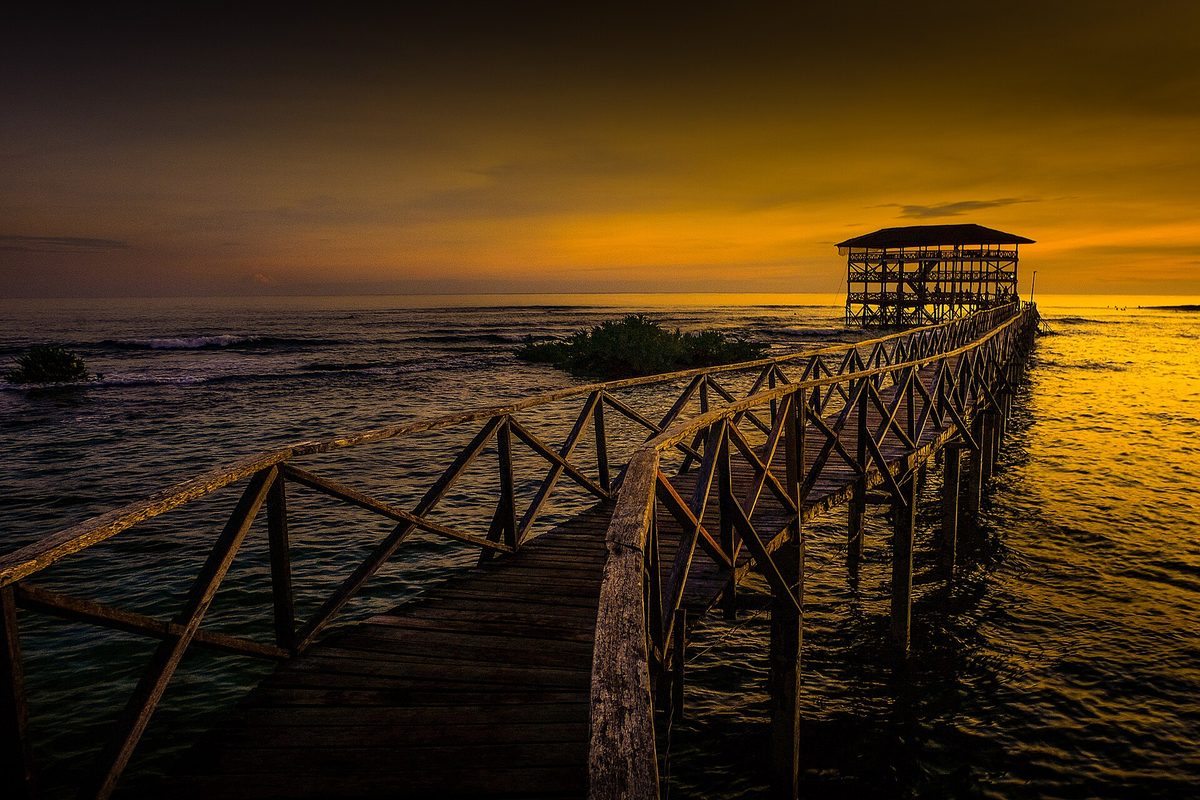
If you’d rather not drive, habal-habal (motorcycle taxis) and tricycles handle short hops for as little as PHP 10 to 20 within General Luna and a couple of hundred pesos for longer runs. For groups or families, a daily van with a driver runs roughly PHP 2,500 to 4,000. Once you’ve got wheels, the island opens up: our guide to Siargao island hopping covers the boat trips to Naked, Daku and Guyam islands, and the wider Siargao travel guide ties together where to stay, what to do, and how to plan your days.
Frequently asked questions
Is there a direct flight from Manila to Siargao?
No, not from Manila’s NAIA airport. As of 2026 all turboprop flights, which includes the Siargao route, have moved out of NAIA. Philippine Airlines suspended its own Clark–Siargao service mid-2026, so the Manila-area flights to Siargao now leave from Clark International Airport on Cebgo and Sunlight Air, or you connect through Cebu, which is usually cheaper anyway. Plan on two flights, or a flight plus a bus to Clark, from Manila. Confirm current schedules before you book, because this route has shifted repeatedly through 2026.
What is the easiest way to get to Siargao?
Fly into Mactan-Cebu (CEB) and take the roughly one-hour hop to Sayak Airport (IAO). Three airlines fly the Cebu–Siargao route as of 2026, giving you backup departures if weather cancels one. From there it’s a 45 to 60 minute van transfer to General Luna. This is the route to default to unless you have a specific reason to go by sea.
Which airlines fly to Siargao in 2026?
Three carriers serve Sayak Airport: Cebu Pacific via its regional arm Cebgo, PAL Express (Philippine Airlines), and Sunlight Air. Between them they fly from Cebu, Clark and Davao. No airline flies direct from Manila NAIA anymore, and neither AirAsia nor AirSWIFT serves Siargao directly. Always confirm the current schedule with the airline before booking.
Can you take a ferry from Cebu to Siargao?
Not directly. There’s no single boat from Cebu to Siargao. The sea route runs in two legs: an overnight ferry from Cebu to Surigao City (around 8 to 10 hours with Cokaliong or Starlite), then a separate fastcraft from Surigao to Dapa Port on Siargao (about 1.5 hours). Counting the wait between connections, the whole journey is 12 to 14 hours minimum.
How long is the ferry from Surigao to Siargao?
The fastcraft from Surigao City to Dapa Port takes around 1.5 hours and costs roughly PHP 420 to 520 as of 2026. The slower RORO ferry takes two to three hours at around PHP 260 to 300 and is mainly for vehicles. From Dapa Port, add another 20 to 45 minutes by tricycle or van to reach General Luna.
Do I need a car or scooter to get around Siargao?
There’s no Grab on the island, so you’ll want your own transport. Most visitors rent a scooter for around PHP 300 to 500 a day to reach Cloud 9, the rock pools and the boat launches. For short hops, habal-habal motorcycle taxis and tricycles are cheap. Groups often hire a van with a driver for roughly PHP 2,500 to 4,000 a day.
Sources and photo credits
Photo credits
All images are sourced from Wikimedia Commons under their respective licenses.
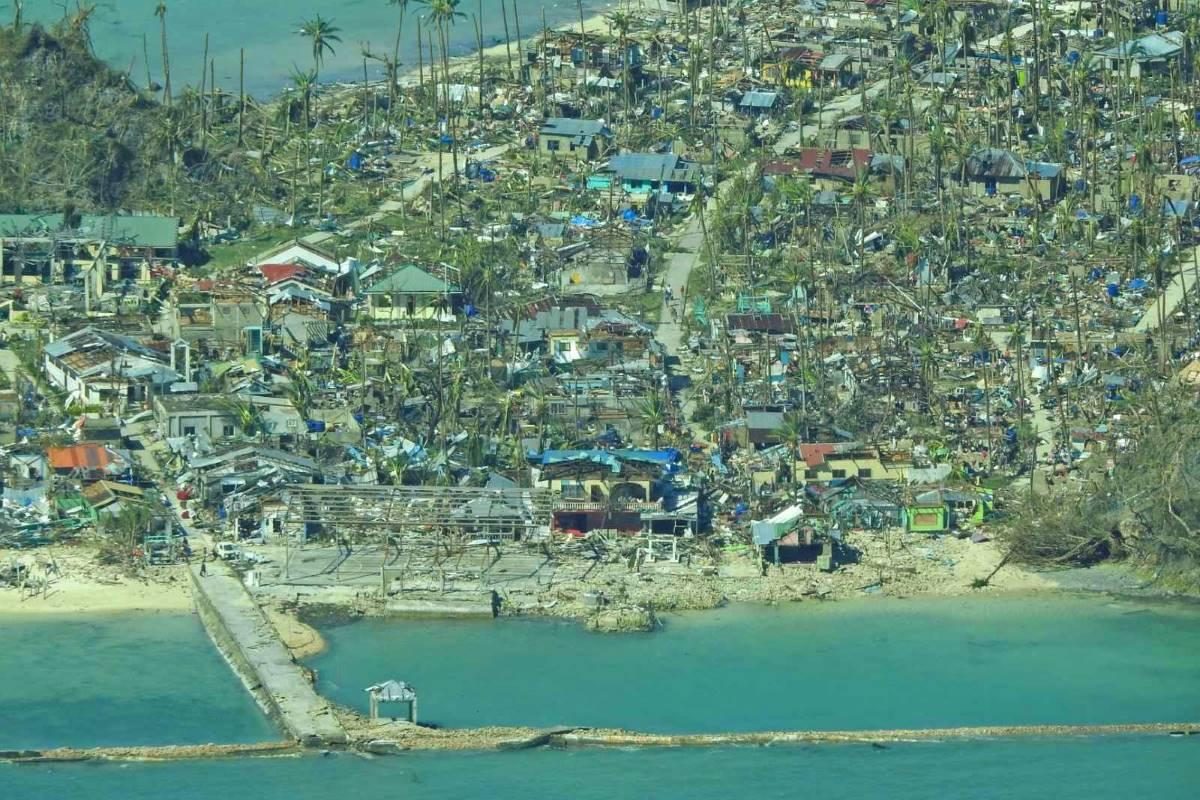
- Aerial view of Siargao Island — Photo: Philippine Coast Guard (CC0) via Wikimedia Commons.
- Cebu Pacific aircraft — Photo: LMP 2001 / CC BY-SA 4.0 via Wikimedia Commons.
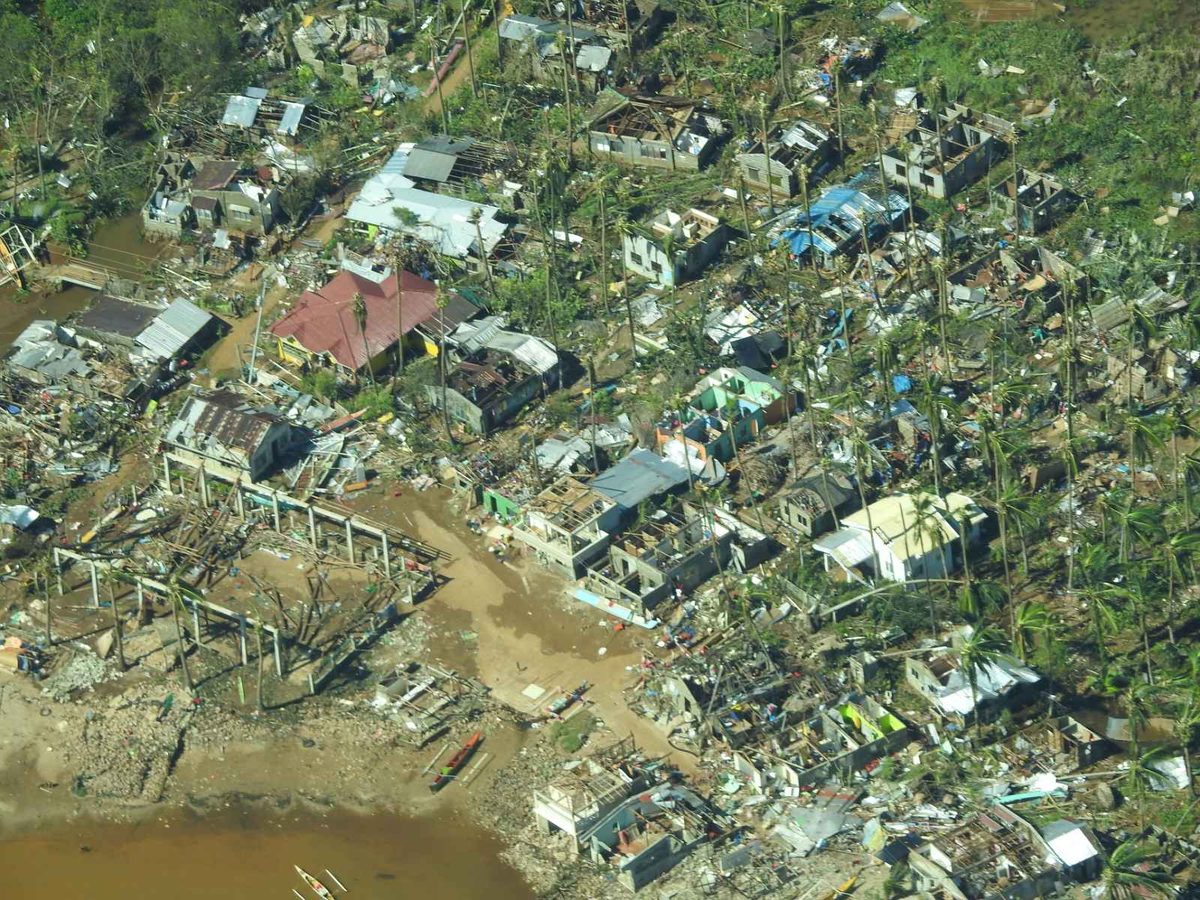
- Surigao City — Photo: Philippine Coast Guard (CC0) via Wikimedia Commons.
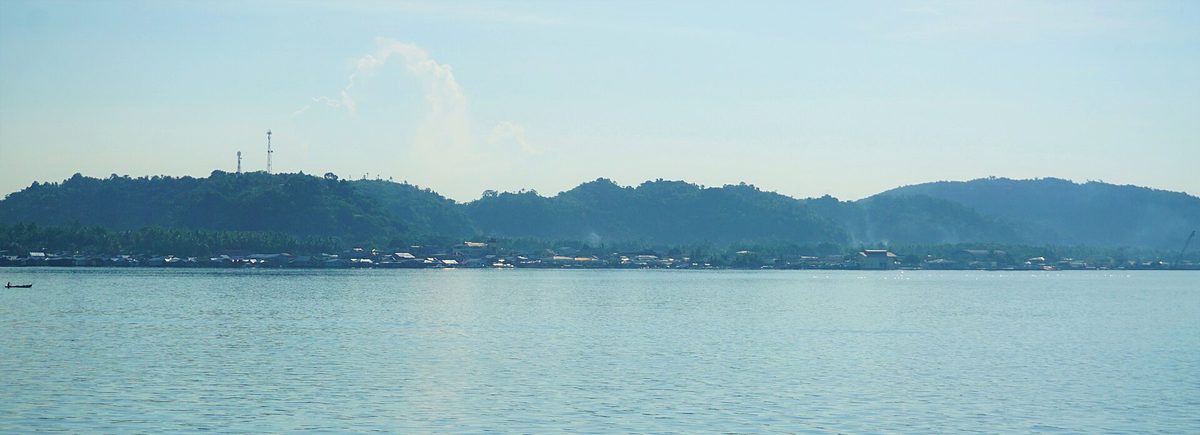
- Dapa, Siargao — Photo: Lucky Ambago Purok Otso / CC BY-SA 4.0 via Wikimedia Commons.
- General Luna / Cloud 8, Siargao — Photo: Billy Palatino / CC BY-SA 4.0 via Wikimedia Commons.
- Siargao Island coast — Photo: CharMel Creations / CC BY-SA 4.0 via Wikimedia Commons.
Sources
- Cebu Pacific — routes, schedules and special (sports) baggage policy.
- Philippine Airlines — PAL Express routes and sports-equipment baggage policy.
- Philippine News Agency — reporting on the NAIA turboprop phase-out and Clark transfer.
- Pamasahe — current Surigao–Dapa ferry schedules and fares.
About this guide: PhilippinesTourism.org is an independent Philippines travel resource. Prices and schedules were verified June 2026; confirm current details before you travel.