
Getting Around the Philippines: The Transport Guide
Here’s the short version of how to get around the Philippines: fly between regions, take fast ferries between neighboring islands, use vans and buses overland, and switch to jeepneys, tricycles and Grab once you’re in town. There is no national rail network to lean on and no single booking site that covers everything, which is why the country intimidates first-time route-planners. But 7,641 islands have forced Filipinos to build one of the densest, cheapest transport webs in Asia — and once you understand its half-dozen moving parts, stitching Manila to El Nido to Cebu to Siargao stops being scary and starts being one of the genuine pleasures of traveling here.
I’ve crossed this country by almost every conveyance it offers: overnight ferries out of Tondo, 4am vans over the Palawan spine, prop planes into runways with goats grazing the verges, a habal-habal ride in Bukidnon I still think about when I close my eyes. This guide is everything I know, organized so you can actually use it — every mode of transport with current 2026 prices, the route playbooks for the trips you’re most likely to take, and the recent changes (new fares, a major airport shuffle) that most guides published even a year ago get wrong.
What Changed in 2026 (Read This Even If You’ve Been Before)
Two pieces of news this year affect almost every traveler, and I’d rather you hear them now than at a check-in counter.
First: small-plane flights out of Manila moved to Clark. As of March 29, 2026, all turboprop (propeller) flights have left Ninoy Aquino International Airport (NAIA) for good, completing a phase-out ordered by the Department of Transportation to decongest Manila’s main runway. Cebgo (Cebu Pacific’s prop subsidiary), AirSwift and PAL’s turboprop routes now operate out of Clark International Airport in Pampanga — roughly 80–100 km north of Metro Manila, a 2–3 hour drive depending on traffic. The headline casualties for tourists: direct flights to Coron (Busuanga) and El Nido (Lio) no longer leave from NAIA. If your international flight lands at NAIA and you’re connecting to Coron the same day, that connection now involves a cross-region land transfer — plan for it (the route playbooks below cover your options). Jet routes from NAIA — Cebu, Puerto Princesa, Kalibo, Caticlan, Siargao, Davao, Tagbilaran and the other major airports — are unaffected.
Second: fares went up almost everywhere in March 2026. On March 19, the LTFRB (the land-transport regulator) approved fare increases across nearly every mode after fuel-price spikes: traditional jeepneys now start at ₱14, modern jeepneys at ₱17, ordinary city buses at ₱15, air-conditioned city buses at ₱18, and the base fare on ride-hailing sedans (Grab, mostly) rose from ₱45 to ₱65. The coupon taxis at NAIA jumped from ₱75 to ₱115 flagdown. None of this will wreck a travel budget — we’re talking centavos in dollar terms — but if a blog quotes you 2024 fares, they’re stale. One pleasant surprise in the other direction: fares on Manila’s MRT-3 and LRT-2 commuter lines were halved from March 23, 2026 under a government subsidy program, making the trains almost comically cheap while it lasts.
One more structural note: the old PNR commuter railway through Metro Manila has been suspended since March 2024 while the new North–South Commuter Railway is built on its alignment, and the replacement isn’t expected to start partial service until late 2026 or 2027 at the earliest. If an older guide suggests “taking the train south from Manila,” ignore it — there is currently no intercity passenger rail in the Philippines worth planning around.
Domestic Flights: The Backbone of Any Multi-Island Trip
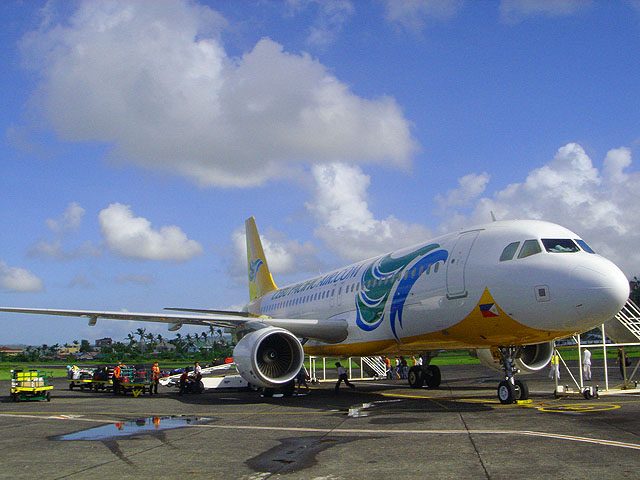
For any hop longer than about 200 km, flying is almost always the right call. The domestic network is genuinely good: three carrier groups, aggressive price competition, and fares that — booked a few weeks out — routinely undercut what the equivalent ferry cabin would cost you in time and pesos.
The airlines, honestly compared
Cebu Pacific is the budget king and the airline you’ll probably fly most. It has the biggest domestic route map, and its promo fares (the famous “piso sales,” where base fares drop to nearly nothing) are real, if irregular — follow their app and socials early in the week; seat sales tend to drop Tuesday and Wednesday mornings. The catch is the unbundling: base fares include nothing but you and 7 kg of cabin baggage. A 20 kg checked bag adds roughly ₱700–1,500 per leg depending on route and when you buy it (airport rates are brutal — always prepay online). Seats are tight, on-time performance is mediocre in the rainy season, and changes cost money. For a one-hour hop, none of that matters much.
Philippine Airlines (PAL) is the full-service option: checked baggage included on most fares, actual snacks, slightly better punctuality, and the only business class worth the name domestically. It’s usually ₱1,000–3,000 more per leg than Cebu Pacific’s base fare — but run the math with bags included before you dismiss it. If you’re a diver hauling 25 kg of gear, the “expensive” PAL ticket is often the cheap one.
AirAsia Philippines sits between the two on price and matches Cebu Pacific’s model: strong on trunk routes (Manila to Cebu, Kalibo, Caticlan, Puerto Princesa, Davao, Bohol), occasionally the cheapest of the three, same baggage-fee arithmetic. Worth a comparison click on every route it flies.
Cebgo and AirSwift are the prop operators — Cebgo wears Cebu Pacific livery and shares its booking site; AirSwift (now also Cebu Pacific-owned) is the boutique carrier built around El Nido. Since March 2026 their Manila-area flights leave from Clark, not NAIA. AirSwift’s Clark–El Nido fares run roughly ₱3,500–10,000 one-way depending on demand and lead time, on 78-seat ATRs where baggage allowances are strict and excess is expensive.
The hub logic (this is the part that saves you days)
Almost everything routes through Manila (MNL) or Cebu (CEB), and the single most useful trick in Philippine trip-planning is using Cebu as your Visayas hub instead of backtracking to Manila. Cebu has nonstops to Siargao, Boracay (Caticlan), Bohol’s Panglao, Camiguin, Dumaguete, Coron (Busuanga) and more — so a route like Boracay → Cebu → Siargao flows naturally, while trying to do the same trip through Manila burns half a day and a few thousand pesos. Davao is a distant third hub for Mindanao. When I sketch a multi-week itinerary, I start by anchoring it to one or both hubs and let the islands arrange themselves around them.
Booking tactics that actually move the price
- Book 3–6 weeks out for popular routes. Walk-up fares can be triple the advance price; conversely, genuinely last-minute seats on off-peak departures are sometimes cheap. The dangerous zone is 3–7 days out in high season.
- Price the whole ticket, not the base fare. Cebu Pacific’s ₱1,500 fare plus ₱1,200 of bags and seat selection is not cheaper than PAL at ₱2,900 with 23 kg included.
- Fly carry-on only on short hops. Seven kilos, straight past the bag-drop queue, and you’ve saved enough for a very good dinner.
- Pad rainy-season connections. June through November, afternoon thunderstorms and typhoon disruptions make tight same-day connections a gamble. Give yourself 3–4 hours between a domestic arrival and an onward ferry, and never book the last flight of the day before something unmissable.
- Small airports, small planes, small allowances. Busuanga, El Nido, Camiguin, Batanes: weight limits are enforced to the kilo, and weather diversions are part of life. Build slack into either end of a prop-plane leg.
Ferries: Overnight Ships, Fast Craft and the Mighty Bangka

Ferries are the connective tissue of the archipelago, and the system has three distinct tiers. Knowing which tier you’re booking is the difference between a comfortable crossing and a long, damp education.
Tier one: the big overnight ships
2GO Travel is the heavyweight, running large RoPax vessels out of Manila’s North Harbor (Pier 4, Tondo) to Cebu, Iloilo, Bacolod, Cagayan de Oro, Coron and Puerto Princesa, among others. The flagship Manila–Cebu run takes roughly 22–24 hours, and 2026 fares start around ₱2,900 for an air-conditioned bunk in a shared area (meals included, somewhat institutionally) and climb to ₱8,000+ for proper cabins. It is not faster or much cheaper than flying. What it is: a rolling piece of Filipino life, with karaoke, a canteen, sunrise over the Sibuyan Sea, and zero baggage anxiety — divers, surfers with multiple boards, and anyone relocating a household swear by it. Book on 2GO’s site or at the pier; for Friday and holiday sailings, book well ahead. The Manila–Coron leg (about 12–14 hours, overnight) deserves a special mention now that the NAIA prop flights are gone — you board in the evening and wake up in Busuanga without ever dealing with Clark.
Tier two: fast craft between neighboring islands
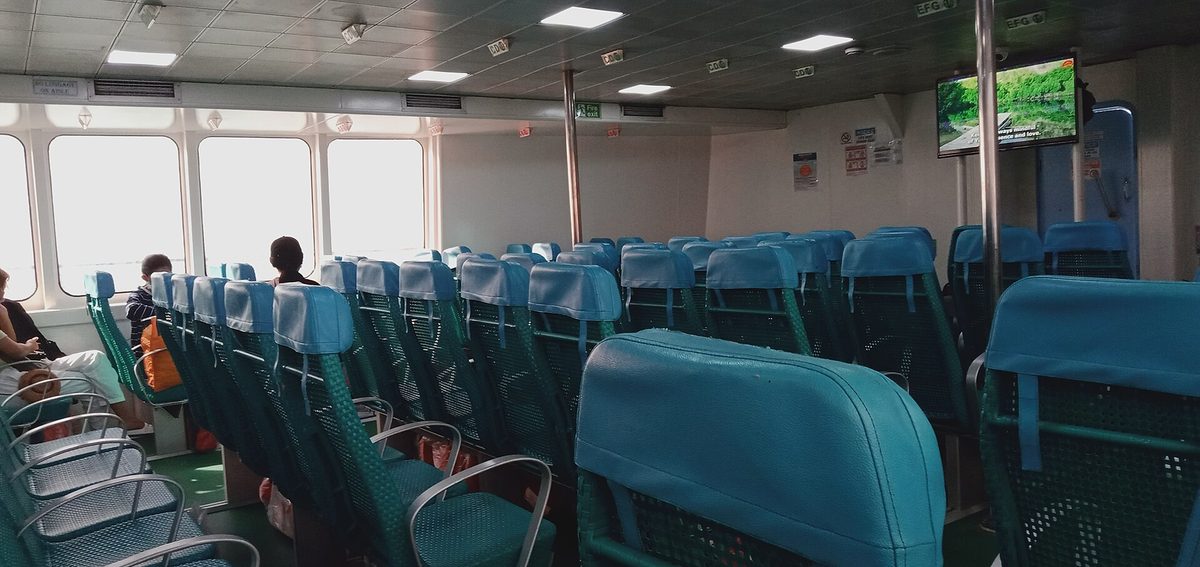
OceanJet, SuperCat, Weesam Express and Montenegro Lines run air-conditioned catamarans and fast monohulls on the short straits, mostly in the Visayas. The classic is Cebu City–Tagbilaran (Bohol): about 2 hours, departures every 30–60 minutes from Cebu’s Pier 1, around ₱800 in tourist class and ₱1,000–1,500 for business or open-air seats in 2026. Other workhorse routes: Cebu–Ormoc, Cebu–Dumaguete, Dumaguete–Siquijor, Batangas–Calapan (for Puerto Galera), and Iloilo–Bacolod. Buy at the pier for off-peak weekday sailings, online (or via aggregators like 12Go and the operators’ own sites) for weekends. Add the small port terminal fee — usually ₱25–100, paid separately at most piers — and bring a valid ID; ferry manifests are taken seriously here.
Tier three: bangkas and RoRos
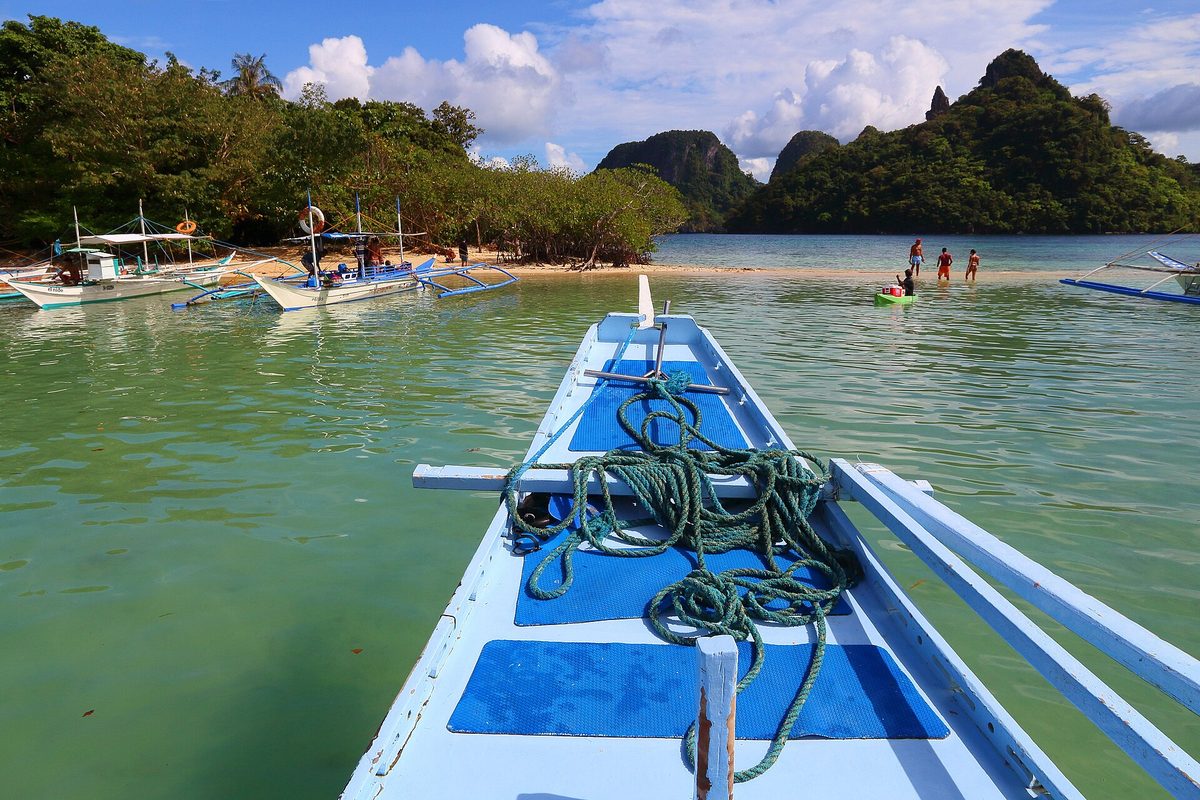
The wooden outrigger bangka handles the last mile of Philippine travel: Caticlan jetty to Boracay (15 minutes), island-hopping day tours in Palawan, crossings to islands with no port to speak of. Fares run ₱50–300 for short public crossings. The famous El Nido–Coron link is now served by enclosed fast ferries (about 4–5 hours, roughly ₱2,000–2,500) alongside multi-day island-hopping expedition boats that turn the crossing into the trip itself. Bangkas are weather-dependent above all else: when the coast guard suspends sailings — and in habagat season they do — everything waits, and the only correct response is to build buffer days and not argue with the ocean.
RoRo (roll-on/roll-off) ferries carry vehicles plus passengers and knit together the “nautical highway” — the chain of short crossings that lets buses (and you, with a motorbike or car) travel from Luzon through the Visayas to Mindanao. Foot-passenger fares are cheap (Batangas–Calapan around ₱200–400; Matnog–Allen similar), motorbikes add a few hundred pesos, and the boats are slow, sociable and reliable outside of storms.
A word on ferry safety, because friends always ask: the headline operators — 2GO, OceanJet, SuperCat, Montenegro, Starlite — run modern, regulated vessels, and the Philippine Coast Guard has tightened standards considerably over the past decade. My personal rules: stick to established companies, don’t board an overloaded boat, skip open-water bangka crossings in rough weather even if a freelancer offers, and treat a coast guard suspension as a holiday rather than an obstacle. Within those rules, I take Philippine ferries constantly and happily.
Buses and Vans: The Overland Workhorses
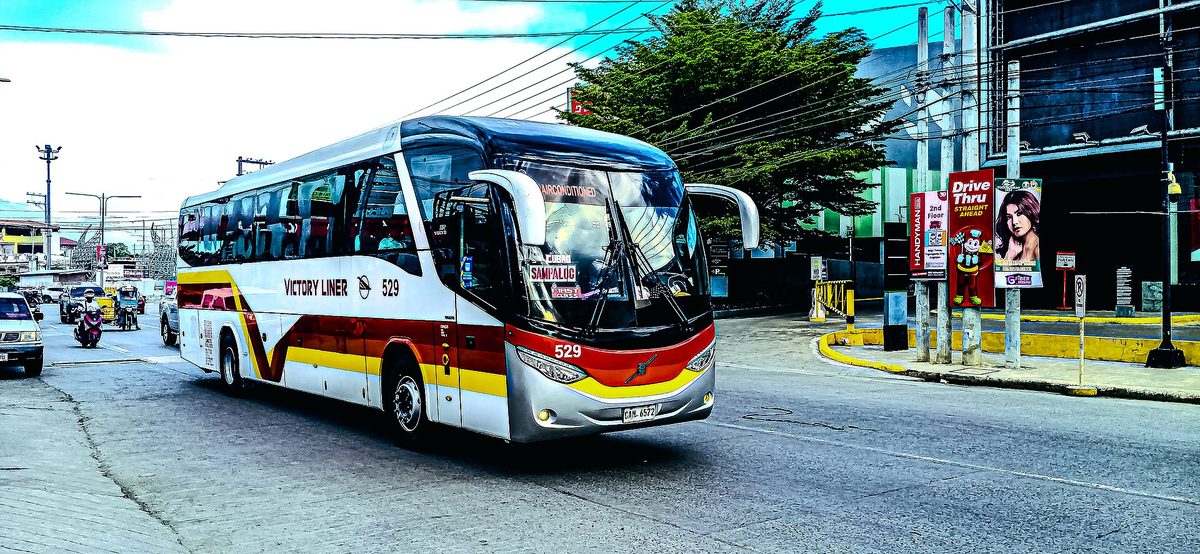
Where there’s a road, there’s a bus on it, and Luzon especially rewards overland travel — the run north to Baguio, Vigan and the mountain provinces is half the experience. The provincial bus ecosystem sorts into a few types:
Provincial coaches. Victory Liner, Genesis, Philtranco, Partas, Ceres (the yellow empire of the Visayas) and dozens of regional lines run everything from rattly ordinaries to plush sleepers. Figure on Manila–Baguio at around ₱700–900 in a standard air-con coach (5–7 hours depending on traffic), with premium “Joybus”-style executive coaches — reclining seats, toilet on board, fewer stops — at roughly ₱1,000–1,300. Long-haul routes like Manila–Bicol run overnight sleepers. The big operators sell seats online now (their own sites plus aggregators like 12Go and biyaheroes), which I’d use for weekends and holidays; otherwise turning up at the terminal an hour early still works fine.
P2P (point-to-point) buses are the premium nonstops: guaranteed seats, no pickups en route, card payment accepted. The most tourist-relevant routes: NAIA to the city (UBE Express from Terminal 3, ₱150–200 to PITX, Robinsons Manila or Cubao — pay cash or tap a Beep card) and Metro Manila to Clark airport (Genesis/Bataan Transit P2P from Trinoma and Megamall, around ₱500–700, 2–3 hours), which matters a lot more now that Coron and El Nido flights leave from Clark.
UV Express and shared vans fill the gaps buses don’t: airport-to-town runs in the provinces, the Puerto Princesa–El Nido corridor (₱500–700, 5–6 hours, vans leave when full or on the half-hour from the airport), Kalibo–Caticlan for Boracay (₱250–400, about 2 hours). They’re faster than buses, tighter on legroom, and the middle of the back row is a punishment seat — board early. On any van route, “aircon” is a promise of degree, not of kind.
City Transport: Jeepneys, Tricycles, Grab and the Trains
However you arrive, the last few kilometers belong to a different ecosystem entirely, and it’s the part of Philippine transport with the most personality per peso.
Jeepneys
The jeepney — descended from rebuilt WWII jeeps, painted like carnival floats, running fixed routes painted on the side — is the national icon for a reason, and at ₱14 minimum fare (₱17 for the newer “modern” minibus versions, as of the March 2026 fare adjustment) it’s the cheapest motorized transport in the country. The protocol: flag it down anywhere, squeeze in, pass your fare forward with a “bayad po,” knock on the roof or call “para po” to stop. Routes confuse everyone at first — locals will help the moment you look lost, and Google Maps now plots jeepney routes in the major cities. The classic chrome originals are gradually giving way to air-conditioned modern units under the government’s modernization program, so ride the loud, gorgeous old ones while you can.
Tricycles and habal-habal
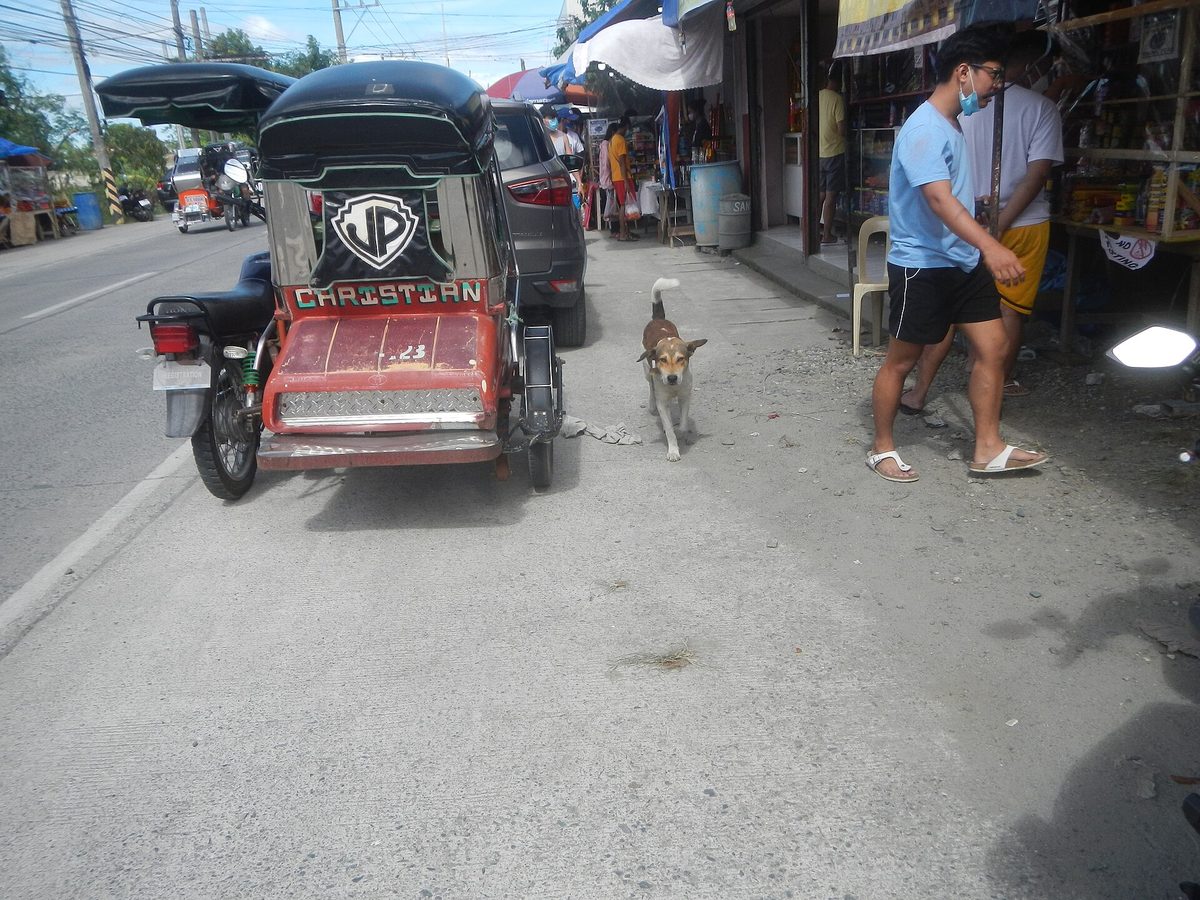
The motorcycle-and-sidecar tricycle is the provincial taxi. Shared on a fixed in-town route, it’s ₱15–30 per person; chartered (“special trip”), it’s whatever you agree on before you get in — and you should always agree before you get in. Around ₱100–150 for a short charter and ₱150–300 for an airport-to-beach run in tourist towns is the honest range; the first quote to a sunburned foreigner is often double, delivered with a smile that suggests negotiation is expected and unhateful. The habal-habal — riding pillion on a bare motorcycle — covers the roads tricycles can’t, especially in the mountains and rural Visayas/Mindanao; ₱50–200 by distance, helmets optional in practice if not in law. Hold the rack, not the driver.
Grab, taxis and the motorcycle apps
Grab (Southeast Asia’s Uber) is the sanity-preserver in Metro Manila, Cebu, Davao, Iloilo, Bacolod, Baguio and a growing list of cities. Fares rose in March 2026 — sedan base fare is now ₱65 plus distance and time, so a cross-Makati hop runs ₱150–250 and the airport to Makati around ₱350–550 depending on traffic and surge — but you get a fixed upfront price, GPS tracking and card payment, which is worth every centavo at 11pm at Terminal 3. Regular metered taxis are cheaper when the meter actually runs; insist on it or get out. At NAIA, the yellow airport taxis now flag down at ₱115. For solo travelers in Manila traffic, the motorcycle-taxi apps — Angkas, JoyRide, Move It — are the cheat code: base fares around ₱50–60, helmets provided, and they slice through gridlock at three times the speed of anything with four wheels. Cash still rules smaller operators; load GCash or keep small bills.
Manila’s trains

Metro Manila has three useful urban rail lines — LRT-1 (Baclaran/Cavite up the bay side), LRT-2 (east–west to Antipolo) and MRT-3 (the EDSA spine past Makati and Ortigas) — plus stored-value Beep cards (₱30 for the card) that work across all three and on P2P buses. They’re crowded at rush hour and gloriously immune to traffic, and with the 50% fare subsidy on MRT-3 and LRT-2 since March 2026, a full crosstown run costs less than ₱15 — the best transport bargain in the capital. There’s no rail link to NAIA yet; the under-construction Metro Manila Subway and North–South Commuter Railway will eventually fix that, but “eventually” in Philippine infrastructure is a word to respect. For arrival-day logistics, our Manila travel guide has a full airport-survival section.
Renting Your Own Wheels
Scooters are the best way to explore almost any island destination, full stop. Rentals run ₱350–700 a day for a 110–125cc automatic (cheaper by the week), plus a deposit or a passport photocopy — never leave your actual passport. The legal fine print matters more than rental shops let on: you need a motorcycle-endorsed license, meaning an International Driving Permit backed by a home-country motorcycle entitlement; a plain car license doesn’t cover you, and in enforcement-heavy spots like Siargao, checkpoints are routine and fines are real. So is the medical math — scooter spills are the most common serious tourist injury in the islands, and your travel insurance almost certainly excludes riding without the proper license. If you’ve never ridden before, a remote island with gravel switchbacks is not the classroom; take tricycles and habal-habals instead and enjoy the view.
Self-drive cars rent from about ₱1,800–2,500 a day (international agencies at the airports, plus local outfits everywhere). Your home license works for up to 90 days as a tourist. Whether you want to drive is another question: Manila traffic is a contact sport played at 11 km/h, and provincial highways feature overtaking conventions best described as faith-based. Where a car shines is rural Luzon — the Ilocos coast, the Cordillera — and Bohol or Cebu’s far south. The smarter splurge for most travelers is a car with driver: ₱3,000–5,000 for a day of airport runs and waterfalls, arranged through any hotel, with fuel and the driver’s encyclopedic shortcut knowledge included in practice if not on the receipt.
How to Get Around the Philippines, Route by Route
Theory is nice; here are the actual plays for the routes travelers ask about most, current as of mid-2026.
| Route | Best option | Time | Cost (pp) | The play |
|---|---|---|---|---|
| Manila → El Nido | Jet to Puerto Princesa + van | 8–9 hrs door to door | ₱2,500–4,500 | Fly MNL–PPS (1h20), van north (5–6h). The AirSwift direct now leaves from Clark (₱3,500–10,000) — worth it if you’re already north of Manila |
| Manila → Coron | Clark prop flight or overnight 2GO | Flight ~1h + Clark transfer; ferry ~13h | Flight ₱3,000–7,000; ferry from ~₱1,800 | Since March 2026 there are no NAIA–Busuanga flights. Either P2P bus to Clark + Cebgo prop, or the evening 2GO ship from North Harbor — wake up in Coron |
| Manila → Boracay | Jet to Caticlan | 3–4 hrs door to sand | ₱2,500–5,000 + ~₱500 fees/boat | Caticlan (MPH) beats Kalibo by 2 hours of van time; Kalibo fares are cheaper and the savings are usually not worth it |
| Manila → Cebu | Jet (or 2GO if time-rich) | 1h25 flight / ~23h ferry | ₱1,500–4,000 / from ~₱2,900 | Up to 20 flights daily across three carriers — the most competitive route in the country |
| Cebu → Bohol | OceanJet/SuperCat fast craft | 2 hrs | ~₱800–1,000 | Pier 1, sailings every 30–60 min; no reason to fly |
| Cebu → Siargao | Nonstop jet | ~1 hr | ₱1,500–3,500 | Skip Manila entirely; this is the Visayas-hub logic at work |
| El Nido ↔ Coron | Fast ferry | 4–5 hrs | ~₱2,000–2,500 | Or do it as a 3-day expedition boat — the best slow travel in the country |
| Manila → Baguio/North Luzon | P2P or executive coach | 4–6 hrs | ₱700–1,300 | Overnight executive coaches put you in the mountains by sunrise |
The pattern worth internalizing: fly the long legs, ferry the short straits, never waste a night-time hour. Overnight ferries and night buses convert travel time into sleep; budget airlines convert money into daylight. The best itineraries alternate the two. (For how these routes chain into full trips, our day-by-day Philippines itineraries do exactly that.)
Every Mode at a Glance
| Mode | Typical cost (2026) | Best for | Honest drawback |
|---|---|---|---|
| Domestic jet | ₱1,500–5,000/leg | Any hop over 200 km | Baggage fees; rainy-season delays |
| Turboprop (Clark) | ₱3,000–10,000/leg | Coron, El Nido direct | The 2–3 hr schlep to Clark; strict weight limits |
| Overnight ferry | ₱1,800–8,000 | Time-rich travelers, surfboards, romance of it | Slow; spartan food; holiday sellouts |
| Fast craft | ₱300–1,500 | Visayas island-hopping | Choppy in swell; luggage fees on some lines |
| Bangka | ₱50–2,500 | Last-mile islands, tours | Weather cancellations rule your schedule |
| Provincial bus | ₱200–1,300 | Luzon overland | Traffic; arctic aircon — bring a jacket |
| Shared van (UV) | ₱150–700 | Airport corridors | Knee-room rationing; drivers in a hurry |
| Jeepney | ₱14–50 | City and town hops | Route-decoding learning curve |
| Tricycle/habal-habal | ₱15–300 | The last 3 km anywhere | Negotiation required; no meters |
| Grab/taxi | ₱65 base + distance | Cities, airports, nighttime | Surge pricing; rush-hour crawl |
| Scooter rental | ₱350–700/day | Island freedom | License/insurance fine print; real injury risk |
| MRT/LRT (Manila) | ₱7–35 | Beating EDSA traffic | Rush-hour crush; no airport line yet |
Airport Logistics: NAIA, Clark, Mactan and the Ones With Goats
A quick orientation to the gateways, because they each have a personality. NAIA (Manila) is four terminals connected by nothing in particular — allow a full hour for an inter-terminal transfer via the shuttle or a Grab, and confirm which terminal your domestic flight uses (Terminal 2 lost its turboprops in 2026; assignments still shuffle). The private operator that took over in 2024 has visibly improved queues and aircon, but I’d still land internationally no less than three hours before any onward domestic departure. Getting downtown: Grab from the official pickup zones, the ₱115-flagdown yellow taxis, or the UBE Express P2P from Terminal 3.
Clark (CRK), the new home of prop flights, is a genuinely pleasant modern terminal with one complication: it’s 80–100 km from Metro Manila. P2P buses run from Trinoma and Megamall (2–3 hours, around ₱500–700); for a dawn Coron or El Nido departure, sleep in Angeles City the night before and take a ₱300–400 Grab to the terminal at sunrise. Treat Clark as its own destination city, not a Manila terminal, and the schedule stops fighting you.
Mactan-Cebu (CEB) is the easiest major airport in the country — one resort-style terminal pair, 30–45 minutes from Cebu City by Grab (₱300–450), with the white-sand resorts of Mactan ten minutes away if your connection deserves a swim; our Cebu travel guide covers the island side. The provincial airports — Siargao, Busuanga, El Nido’s tiny Lio strip, Camiguin — are single-room affairs where checked bags arrive by trolley and the security line is six people long. Budget extra time anyway: small airports close early, weigh everything, and reschedule around weather without apology.
Money, Apps and the Practical Kit
The Philippine transport stack runs on a few tools worth setting up before you land. Grab for cities; Angkas or JoyRide for Manila and Cebu solo trips; GCash (the national e-wallet) if you can register it — increasingly accepted for ferries, vans and even tricycle drivers with a QR code taped to the sidecar, though foreigner registration takes patience and a passport. A Beep card from any Manila rail station handles trains and P2P buses. For inter-island bookings, the operators’ own sites are cheapest; aggregators like 12Go earn their small markup by accepting foreign cards that Philippine booking engines sometimes reject, and pamasahe.com is the local cheat-sheet for current ferry schedules and fares. Download offline Google Maps for every island on your route — signal vanishes exactly where the roads get interesting.
Cash strategy matters more than app strategy. ATMs cluster in cities and charge ₱250–300 per withdrawal for foreign cards; small islands may have one machine (frequently empty before payday weekends) or none. My rule: leave every city with enough pesos for the whole island stay plus an extra ferry ticket, broken into denominations a tricycle driver can change. The ₱1,000 note fresh from the ATM is a beautiful, useless object in a barangay sari-sari store.
What a week of moving around actually costs
Three honest 2026 examples, per person, transport only. Budget Visayas week (Cebu → Bohol → Siquijor → Dumaguete → Cebu by fast craft and bus, jeepneys and tricycles locally): around ₱3,500–5,000. Standard Palawan-plus-Boracay fortnight (two domestic jets, vans, one fast ferry, island-hopping tours, Grab in cities): ₱12,000–18,000 spread over two weeks. Comfort-tier two weeks (four jet legs, business-class fast craft, private transfers everywhere): ₱25,000–40,000. On every tier, the single biggest saving is the same: book the flights three to six weeks early and carry less luggage than you think you need.
The Right Mix by Traveler Type
Backpackers: night buses and overnight ferries are your accommodation budget’s best friends; fly only when a piso-sale fare appears or the geography forces it. The jeepney-tricycle-habal triad covers everything local for pocket change. Carry small bills relentlessly — nobody can change ₱1,000 at 6am. A realistic transport budget is ₱3,000–5,000 a week moving at hostel pace; our Philippines budget guide breaks this down properly.
Families: fly the long legs without guilt — a ₱2,000 fare against a 12-hour ferry with a toddler is not a real choice. Use Grab and hotel-arranged vans for ground transfers, book fast-craft business class for the calmer cabin, and treat one short bangka hop and one jeepney ride as the cultural curriculum. Caticlan over Kalibo for Boracay, every time.
Divers and surfers: gear changes the math. PAL’s included baggage often beats budget-carrier fees; 2GO ferries take boards and full kit without blinking. Boards under 6’0″ fly as sports equipment for ₱500-ish per leg on the budget carriers — over that, measure twice, book PAL once.
Comfort-first travelers: jets everywhere, business class on fast craft, hotel transfers pre-arranged, and a standing rule against any departure before 8am. The premium over backpacker logistics on a two-week trip is maybe ₱15,000–25,000 — cheap, as serenity goes. Resorts in the major island destinations all run airport pickup; use it.
The Honest Frustrations (So They Don’t Surprise You)
I love traveling this country, and it will still test you. Delays are structural, not exceptional: afternoon storms stack domestic flights, ferries wait on weather, and “the van leaves when full” is a sincere scheduling philosophy. Holiday travel is a different sport — Holy Week, Christmas through New Year, and All Saints’ weekend sell out planes, ships and buses days ahead while prices spike; book early or stay put and enjoy the fiesta. Everything routes through chokepoints: when NAIA sneezes or the Coast Guard grounds boats, plans cascade, which is why the buffer day before your international flight home is non-negotiable. Small fees ambush you — port terminal fees, environmental fees (Boracay’s ₱300, El Nido’s eco fee), tricycle “special trip” pricing — nothing big, just keep a ₱500 float of coins and small notes. And distances deceive: 200 km can be five hours. The travelers who struggle here are fighting the clock; the ones having the time of their lives padded the schedule and packed a book. Timing your trip into the dry months helps enormously — see our guide to the best time to visit the Philippines for the month-by-month picture.
FAQ: How to Get Around the Philippines
Is it easy to travel between islands in the Philippines?
Easier than the map suggests. The Manila and Cebu flight hubs cover the long distances, fast ferries handle the short straits, and the well-worn tourist corridors (Palawan, Cebu–Bohol, Boracay, Siargao) have polished, frequent connections. What it isn’t is spontaneous in high season — the good routes reward booking a few days to a few weeks ahead.
How do you get around the Philippines without flying?
Genuinely possible and genuinely slow: the “nautical highway” chains buses and RoRo ferries from Luzon through the Visayas to Mindanao, and 2GO’s big ships connect Manila to most major ports. Manila to Cebu overland-and-sea takes about a day; the same trip flies in 85 minutes. Do it for the experience on one leg, not as your default.
Can tourists use Grab in the Philippines?
Yes — download it before you land, register with an international card or pay cash, and it works in Metro Manila, Cebu, Davao and most large cities. It does not operate on the small islands; there you’re in tricycle and habal-habal country, and agreeing the fare up front is the whole game.
How long is the ferry from Manila to Cebu?
About 22–24 hours on 2GO’s overnight ships, with 2026 fares from roughly ₱2,900 including basic meals. It sails a few times a week, not daily — check the current schedule before building a plan around it.
Are domestic flights in the Philippines expensive?
No — booked 3–6 weeks out, most jet routes cost ₱1,500–3,500 ($26–60), and promo sales go lower. The gotchas are baggage fees (pay online, never at the counter) and peak-season spikes around holidays. Prop routes to small airports like El Nido and Coron cost more and now leave from Clark rather than NAIA.
Is it safe to rent a scooter as a tourist?
It’s legal with a motorcycle-endorsed license (an IDP backed by a real motorcycle entitlement — a car license isn’t enough) and safe in proportion to your experience. Helmets always, no night riding on unfamiliar roads, and know that unlicensed riding usually voids travel insurance. Inexperienced? Tricycles cost a few dollars and crash much less.
What is a jeepney and how do I ride one?
A shared minibus descended from WWII jeeps, running fixed routes for a ₱14–17 minimum fare. Flag it anywhere on the route, hand your fare forward (“bayad po”), say “para po” to stop. Ask any bystander which jeepney goes your way — being helped onto the right one is a Philippine welcome ritual.
Do I need to book ferries in advance?
For overnight 2GO sailings, weekend fast craft and anything near a holiday: yes, online, days ahead. For weekday Visayas fast craft, walking up an hour early is usually fine. Bring a government ID or passport — it’s required for the manifest on every sailing.
Sources and photo credits
Photo Credits
Bangka boats in El Nido: Marek Ślusarczyk / CC BY 3.0 via Wikimedia Commons · Cebu Pacific A320: Carabaopower (public domain) via Wikimedia Commons · MV 2GO Masagana at North Harbor: Patrickroque01 / CC BY-SA 4.0 via Wikimedia Commons · OceanJet fast craft: Howhontanozaz / CC BY-SA 4.0 via Wikimedia Commons · Victory Liner provincial bus: MaloxDayag / CC BY 4.0 via Wikimedia Commons · Jeepney in Manila: Aliceinthealice (CC0) via Wikimedia Commons · Tricycle: Judgefloro (CC0) via Wikimedia Commons · MRT-3 train: patrickroque01 / CC BY-SA 4.0 via Wikimedia Commons.
Sources and Further Reading
- PortCalls Asia — Cebu Pacific turboprop flights from NAIA all moving to Clark by March 29 (2026)
- Rappler — March 19, 2026 fare increases for jeepneys, buses and ride-hailing
- Philippine News Agency — LTFRB fare adjustments for land transport (March 2026)
- Rappler — 50% MRT-3 and LRT-2 fare discount from March 23, 2026
- 2GO Travel — official schedules and fares
- OceanJet — official fast-craft schedules
- The Poor Traveler — UBE Express NAIA P2P routes and fares (2026)
- Philippine News Agency — AirSwift Clark–El Nido service
- PAGASA — official weather and typhoon bulletins
About this guide: This transport guide is part of PhilippinesTourism.org, an independent travel resource covering every region of the Philippines. We verify prices and schedules against official operator sources and current local reporting, and update this page as fares and routes change. Found something out of date? Things move fast here — check the operator links above for the live numbers, and build a buffer day either way.
1 response
Comments are closed.