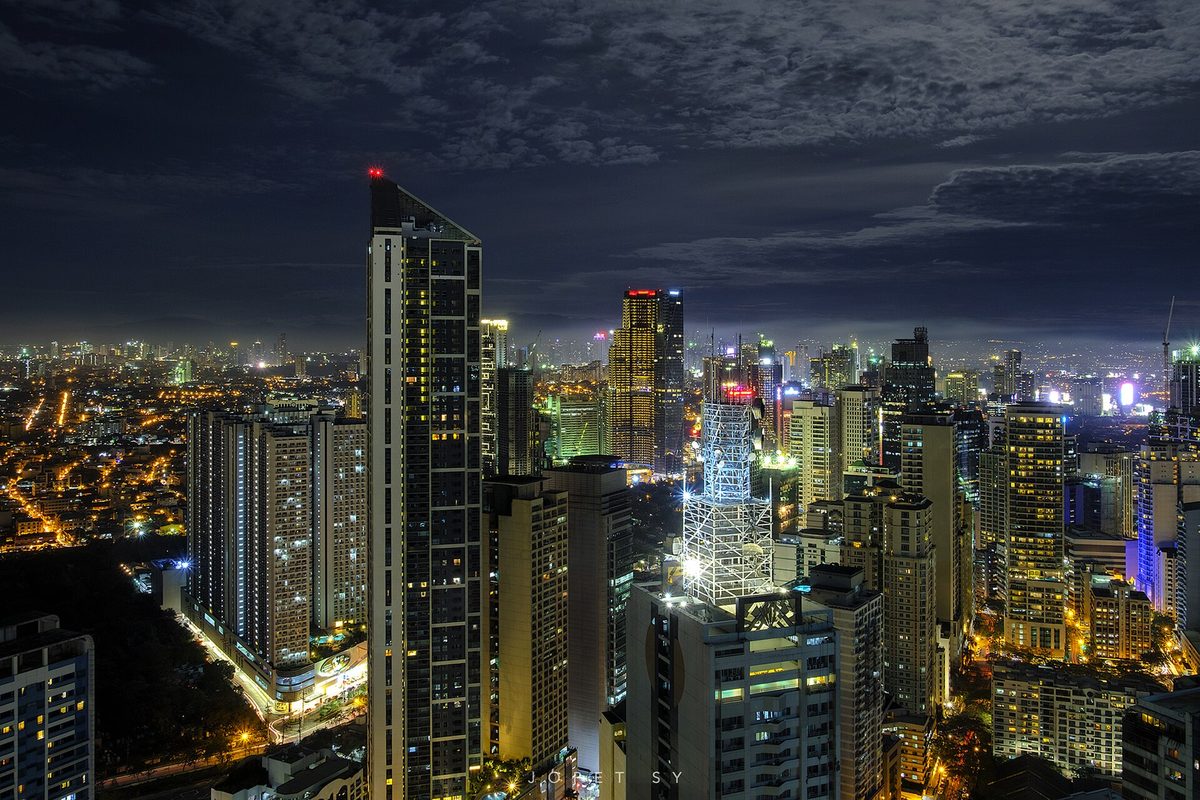
Manila Travel Guide
I’ll say the quiet part first: most travelers are told to skip Manila, and most of the people doing the telling spent one gridlocked taxi ride here in 2014. The Manila of 2026 made National Geographic’s Best of the World list, picked up the country’s first Michelin stars last October, and opened a riverside esplanade that lets you walk from the world’s oldest Chinatown to a 450-year-old walled city without touching a highway. It is still loud, still traffic-choked, still chaotic. It is also the most misread city in Southeast Asia, and if you give it 48 well-planned hours instead of a resentful layover, it will repay you with better food, stranger history and warmer people than almost any stop on your itinerary.
Manila is the capital of the Philippines and the gateway through which most of the country’s international visitors arrive. “Manila” in practice means Metro Manila — sixteen cities stitched into one megacity of around 13 million people — of which the City of Manila proper (Intramuros, Binondo, Rizal Park) is just one piece. That distinction confuses every first-timer, so this guide treats the metro as locals do: a handful of distinct neighborhoods worth your time, connected by Grab rides you should schedule around rush hour.
Manila at a Glance: One Megacity, Sixteen Cities
Here’s the mental map that took me three visits to build and that I wish someone had handed me on day one. Almost everything a traveler wants from Manila sits in five zones:
| Area | What it is | Why you’d go |
|---|---|---|
| Old Manila (Intramuros, Binondo, Rizal Park, Ermita) | The historic core, in the City of Manila proper | The walled city, the world’s oldest Chinatown, the national museums — the actual sightseeing |
| Makati | The established business district | Best all-round base: hotels at every price, Poblacion nightlife, greenbelt malls, Michelin-listed dining |
| BGC (Bonifacio Global City, Taguig) | The newer, master-planned district | Walkable streets (a Manila rarity), street art, craft beer, families and digital nomads |
| Bay Area / Pasay | Reclaimed land along Manila Bay | Closest to the airport, Mall of Asia, casino resorts, sunset over the bay |
| Quezon City | The sprawling north | Maginhawa food street and local life — worth it on a longer stay, skippable on a first visit |
The honest geometry: Old Manila and Makati are about 8 km apart, which can mean 20 minutes on a Sunday morning or 90 in Friday rain. Build your days around neighborhoods, not a checklist scattered across the metro, and Manila gets dramatically easier.
Is Manila Worth Visiting? An Honest Answer
Yes — for one to three days, with a plan. I’d put it this way: Manila is not a postcard city, it’s a texture city. You don’t come for skyline views or beaches (the islands have those covered, and better than almost anywhere on earth). You come for the layers: a Spanish fortress where the national hero spent his last night, a Chinatown that’s been frying lumpia since 1594, brutalist landmarks from the Marcos era, a basement-level speakeasy scene, and a food culture that the Michelin Guide finally got around to certifying in 2026.
Skip Manila — or compress it to a single airport-adjacent night — if you have under ten days in the country and the islands are the point of the trip. With a two-week-plus itinerary, two Manila days at the start (jet-lag recovery plus Intramuros and Binondo) is the play I recommend to almost everyone.
Intramuros: Start Where the City Started
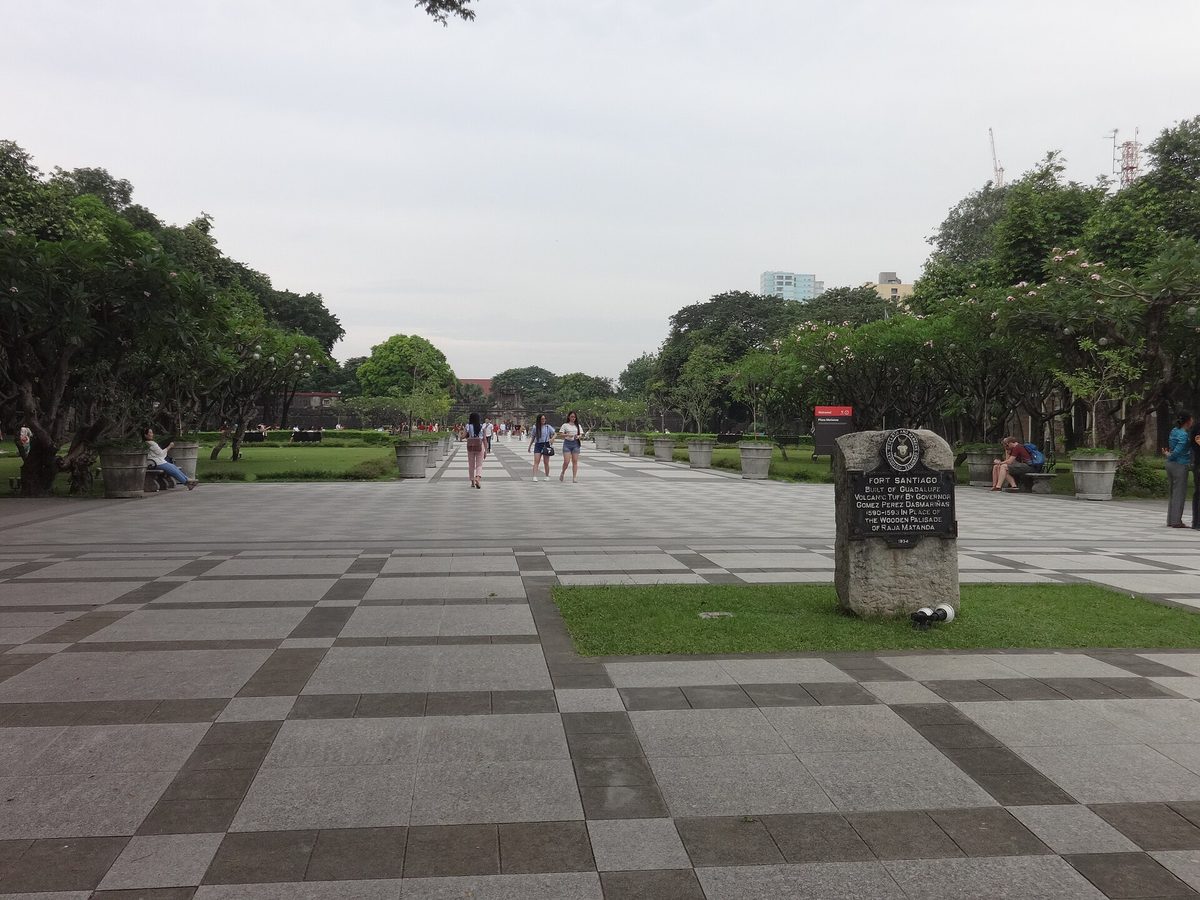
Intramuros — “within the walls” — is the 64-hectare stone city the Spanish built from 1571, flattened in the 1945 Battle of Manila, and patiently restored ever since. It’s the one part of Manila that works exactly the way a traveler wants a historic district to work: compact, walkable, and dense with stories. Give it half a day, and go early; by 10am the heat means business year-round.
Fort Santiago is the anchor. This is where José Rizal, the national hero, was held before his execution in 1896 — you can trace his final walk, marked in bronze footsteps, from his cell to the execution ground. The dungeons by the Pasig River, used brutally during the Japanese occupation, are open again and worth the chill. Entry runs around PHP 75 (about $1.30) for adults, PHP 50 for students and seniors, and as of 2026 the fort stays open to 10pm on weekends — the walls at dusk, with the Makati skyline glowing across the river bend, are a genuinely great photo that almost nobody stays for. Check current hours on the Intramuros Administration’s official page; they shift around events.
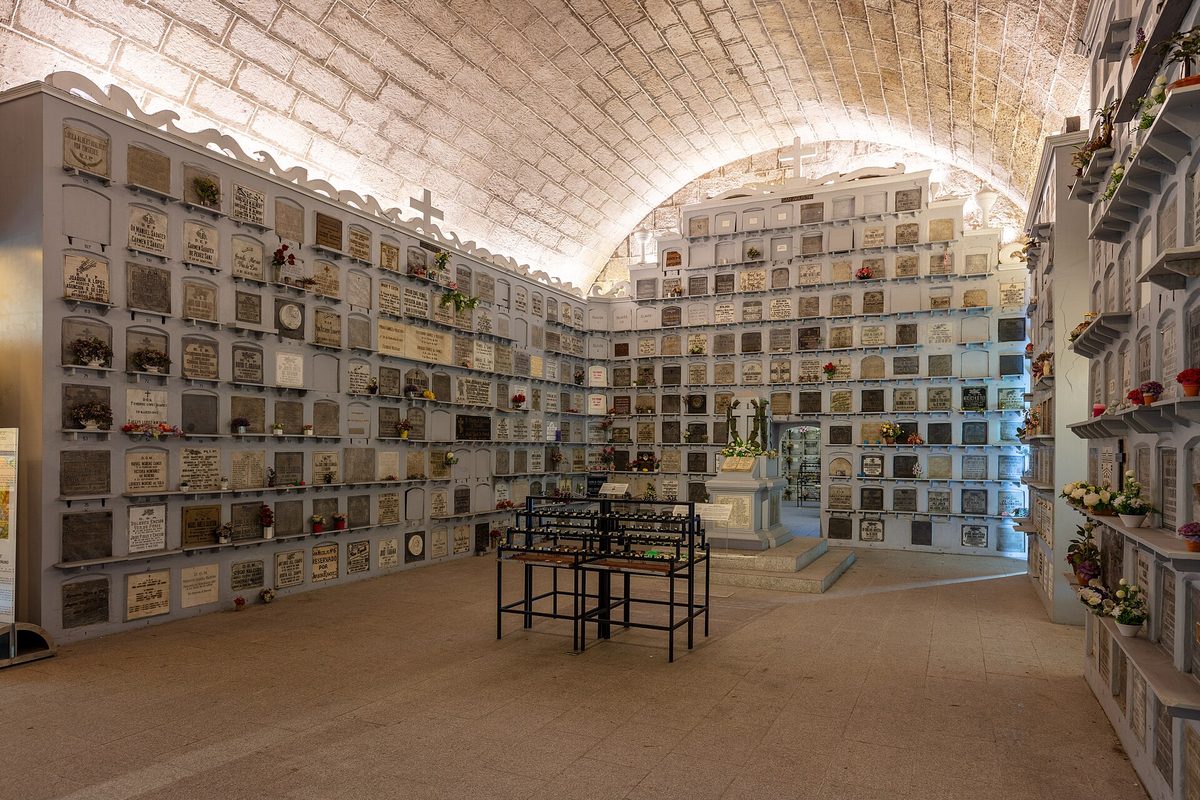
San Agustin Church, finished in 1607, is the oldest stone church in the Philippines and a UNESCO World Heritage Site. The church itself is free when mass isn’t on; the adjoining museum — cloisters, religious art, a crypt — charges around PHP 200 (about $3.50) and is better than it has any right to be. Two blocks away, Casa Manila recreates a 19th-century merchant’s house so convincingly you’ll want to move in (closed Mondays, like most Intramuros museums).
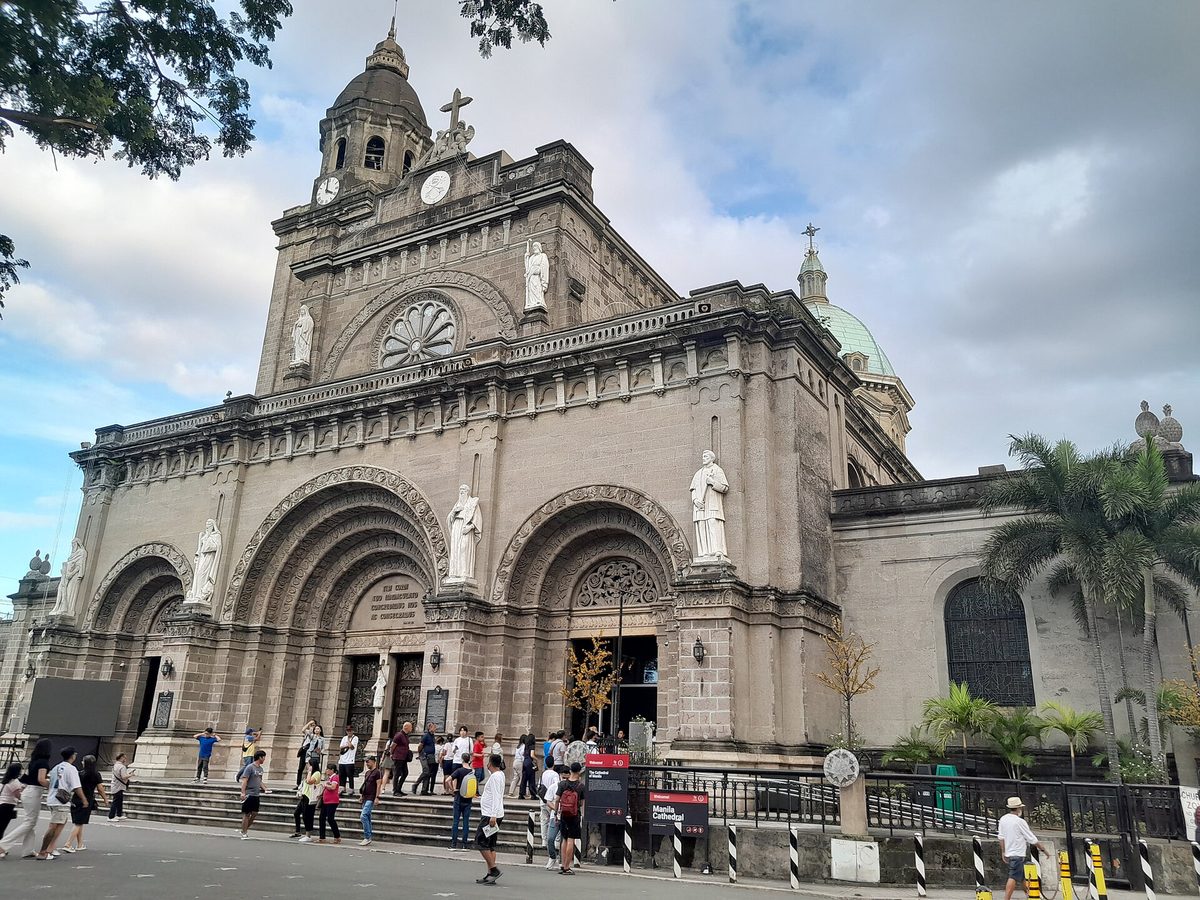
Manila Cathedral — the eighth cathedral on this exact spot, its predecessors lost to fires, earthquakes and war — faces Plaza Roma and is free to enter. From there, the move I always recommend: rent a bamboo bicycle from Bambike Ecotours by the Cathedral, or take their guided loop (around PHP 1,500, roughly $26, for two hours). The guides are sharp, the bikes are handmade by a social enterprise, and you’ll cover the walls, the golf-course moat and the plazas with a breeze instead of a heatstroke. Calesa (horse-drawn carriage) drivers will quote you tourist prices — agree on the fare and the duration before you climb in, or skip it.
Binondo: Eat Your Way Through the World’s Oldest Chinatown
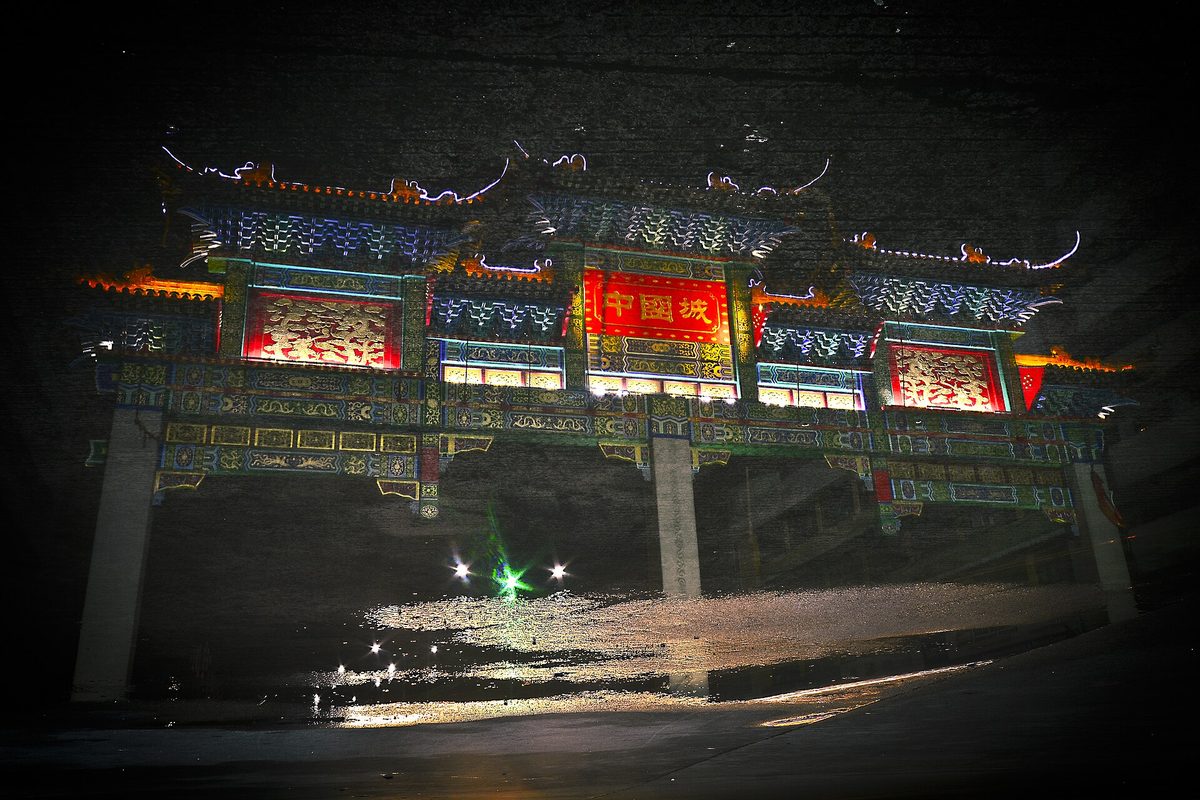
Across the Pasig from Intramuros — ten minutes by Grab, or a short walk over the Jones Bridge, which has been restored to its beaux-arts glory and is lovely at night — sits Binondo, founded in 1594 and generally recognized as the oldest Chinatown anywhere. This is not a tourist-district Chinatown of souvenir shops. It’s a working wholesale neighborhood with some of the best cheap food in the country, and the right way to do it is hungry and on foot.
My standing Binondo crawl, refined over many visits: start at Eng Bee Tin for ube hopia (purple-yam pastry) to carry as insurance. Walk Ongpin Street to Sincerity Cafe for the fried chicken that’s been the house specialty since 1956. Dumplings and hand-pulled noodles at one of the Lan Zhou-style noodle houses, fresh lumpia at New Po-Heng in the Uy Su Bin building’s tiled courtyard, and — if you trust me on exactly one thing — the soup dumplings at whichever no-frills spot has the longest local queue that day. Budget PHP 500–800 (about $9–14) for a crawl that will defeat you before it defeats your wallet. If you’d rather have it narrated, the long-running “Big Binondo Food Wok” style walking tours run most days and add real history to the dumplings.
Rizal Park and the National Museums (Still Free, Still Underrated)
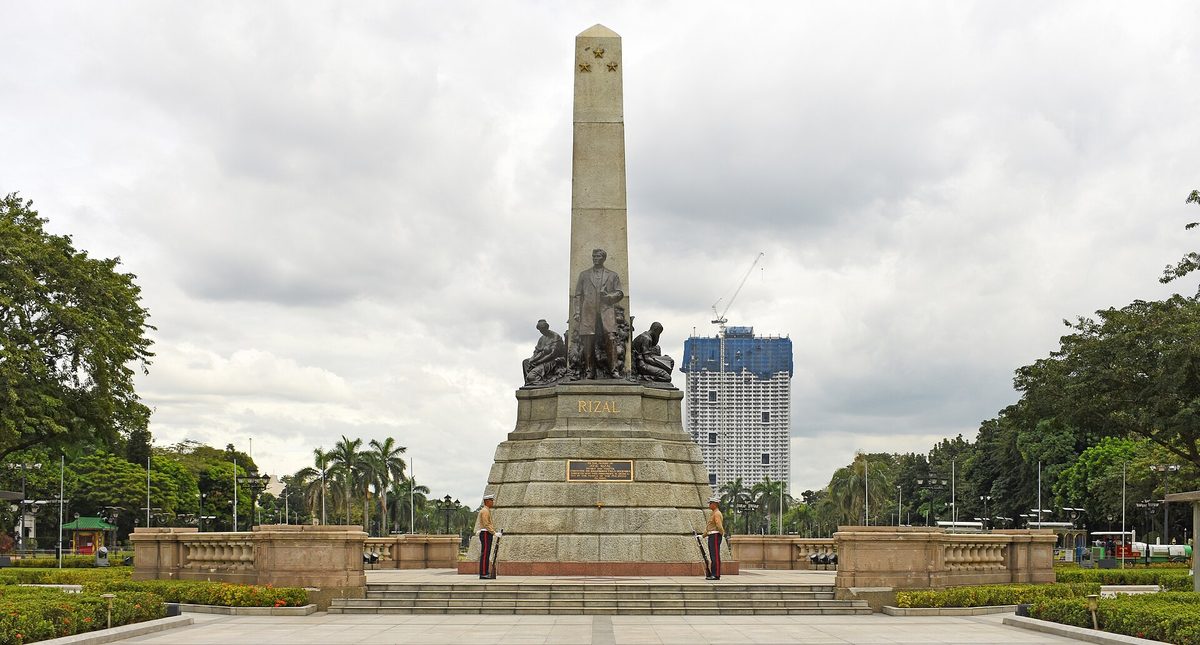
Rizal Park (Luneta) is Manila’s central green: the Rizal Monument and its honor guard, the exact spot of his execution rendered in life-size dioramas, Chinese and Japanese gardens, and on weekend afternoons half the city out for picnics and free concerts at the open-air auditorium. It’s the most Filipino public space in the country, and it bookends a museum row that embarrasses cities with ten times the tourism budget.
The National Museum of Fine Arts (home of Juan Luna’s room-sized Spoliarium, the most famous painting in the Philippines), the National Museum of Anthropology (the Manunggul burial jar, pre-colonial gold) and the National Museum of Natural History (that photogenic “Tree of Life” atrium) cluster around the park’s east end. All three are free — no tickets, no catch, closed Mondays. If you have energy for exactly one, make it Fine Arts. If it’s a brutal-heat afternoon, all three are air-conditioned, which in Manila terms makes them attractions twice over.
Manila’s Food Scene: The Michelin Guide Finally Showed Up
In October 2025, the Michelin Guide published its first Philippine edition — “Manila & Environs and Cebu 2026” — and confirmed what anyone eating here already knew. Helm by Josh Boutwood took two stars, the country’s first. Eight restaurants earned one star, most of them in Metro Manila: Toyo Eatery (Filipino fine dining that started the modern movement), Hapag, Gallery by Chele (also the country’s first Green Star for sustainability), Linamnam, Celera, Kasa Palma and Inato among them, with Asador Alfonso out in Cavite. Twenty-five more spots made the Bib Gourmand list, which is where the value hides — several are sub-PHP-1,000 meals.
What that means practically: tasting menus at the starred rooms run roughly PHP 4,000–12,000 ($70–210) and now book out weeks ahead, so reserve before you fly if one is on your list. But the soul of Manila eating stays cheap and unstarred. For regional Filipino classics in comfort, Manam (multiple branches; the sour-rich sinigang with watermelon is the gateway drug) rarely misses. In Poblacion and Binondo, PHP 300 still buys a memorable dinner. And if your trip continues to the islands, calibrate here first — my full things to do in the Philippines guide has a whole section on eating your way through the regions.
Nightlife: Poblacion, BGC and the Speakeasy Problem
Manila’s nightlife centers on Poblacion, Makati’s former red-light district turned bar quarter, where a dozen of Asia’s-50-Best-type cocktail rooms hide above karinderias and behind unmarked doors. The neighborhood rewards wandering: rooftops, natural-wine bars, basement clubs and PHP 80 beers within the same two blocks. It’s busiest Thursday through Saturday; it doesn’t really start before 9pm. BGC’s scene is glossier and earlier — craft-beer taprooms and restaurants that become bars. The speakeasy problem, such as it is: the best rooms are deliberately hard to find and some take bookings via Instagram DM only. Ask your hotel bartender, who invariably knows the door code.
Manila Bay: The Sunset, the Esplanade and MOA
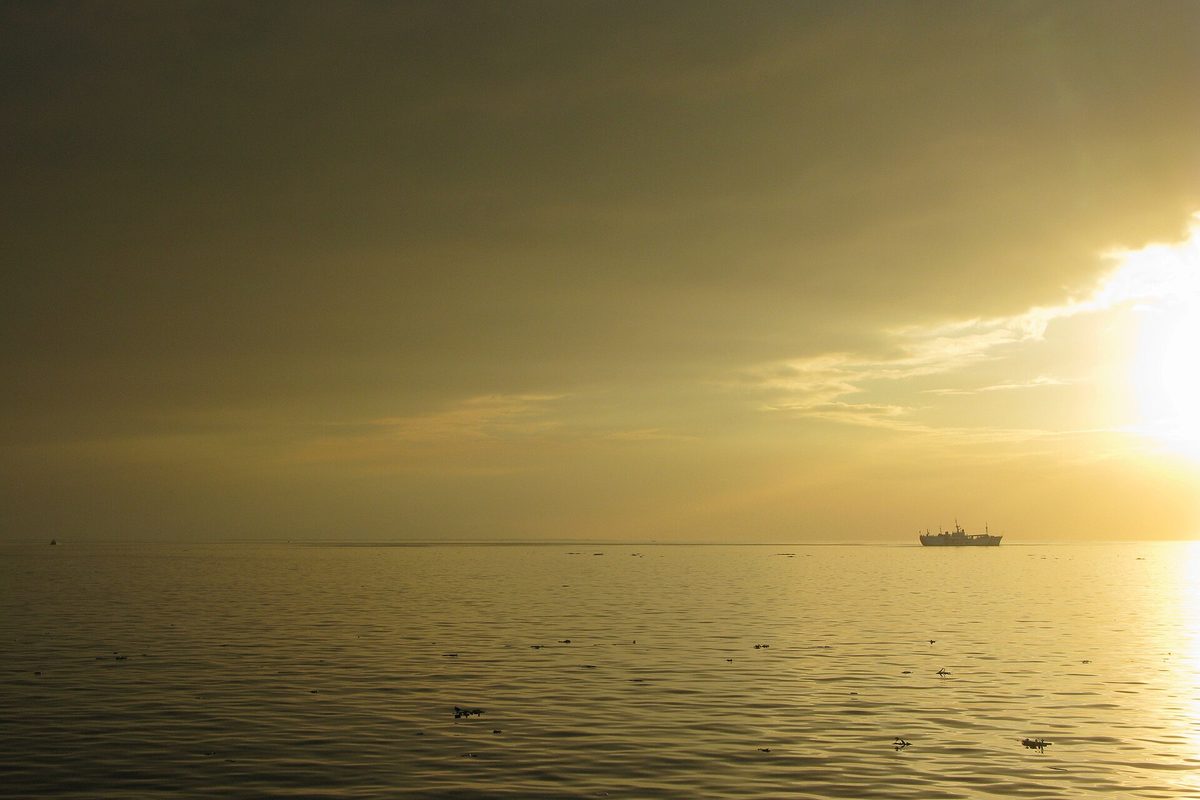
The Manila Bay sunset is the city’s one undisputed natural spectacle — a daily, vividly orange production best watched from the baywalk along Roxas Boulevard or, my preference, with a drink at one of the bayfront hotel terraces. Further south, the Mall of Asia complex is one of the world’s largest malls and a legitimate cultural experience of modern Filipino life: families promenading the seaside boulevard, an Olympic-sized ice rink, and an IMAX, all of it air-conditioned.
The newer development worth knowing: the Pasig River Esplanade, opened in stages since 2024, now lets you walk a landscaped riverside path connecting the Binondo side and Intramuros, with weekend bazaars near the walls. It quietly fixed the oldest complaint about Old Manila — that its sights were close together but miserable to walk between.
Getting There in 2026: The NAIA Changes Nobody Tells You About
Almost everyone arrives through Ninoy Aquino International Airport (NAIA), and 2026 brought the biggest reshuffle in years. Two changes matter to travelers:
First, the terminal swap (March 29, 2026): AirAsia’s international flights moved from Terminal 3 to Terminal 1, while Japan Airlines, Vietnam Airlines, Royal Brunei, Air China, China Eastern and Shenzhen Airlines moved from Terminal 1 to Terminal 3. If your booking or an old blog post says otherwise, trust your airline’s latest email. Terminal assignments now change often enough under the airport’s new operator that I check the NAIA website the week of every flight.
Second — and this one bites island-hoppers: as of March 29, 2026, all turboprop flights left NAIA for Clark International Airport, about two to three hours north of the city. That includes Cebgo’s Manila–Coron (Busuanga) and Manila–Naga routes and AirSwift’s El Nido service. If you’d planned to land in Manila and hop a small plane straight to Coron or El Nido the same afternoon, that connection no longer exists from NAIA — you either transfer to Clark (P2P buses run from several Metro Manila points), take a jet to Puerto Princesa and travel overland, or rebook entirely. My Palawan guide walks through the new routings in detail.
Getting from NAIA into the city: the sane default is Grab (the regional Uber): around PHP 300–600 ($5–10) to Makati depending on terminal, traffic and surge, booked from marked pickup zones. Metered yellow airport taxis work but queue-roulette applies. The UBE Express P2P bus runs an airport loop and selected routes for around PHP 50–150, though its Makati route has been on-and-off — verify it’s running before you build a plan around it. And since late 2024, the LRT-1 Cavite Extension gives a rail option: the new Redemptorist-ASEANA and PITX stations sit a short ride from Terminal 1, useful if you’re heading to anywhere along Taft Avenue and allergic to traffic. Many hotels also do fixed-price pickups (PHP 800–1,500) — worth it after a red-eye.
One practical note for arrivals: the Philippines requires the free eTravel registration within 72 hours before landing, and most nationalities get 30 days visa-free. The current rules, extensions and the airport-arrival flow are in my Philippines visa and entry requirements guide.
Getting Around Manila Without Losing Your Mind
Manila is most travelers’ first taste of Philippine transport; for moving between cities and islands across the rest of the country, see our guide to getting around the Philippines.
Manila traffic is real, ranked among the world’s worst, and the single biggest factor in whether you enjoy this city. The strategies that work:
Grab is your default. Cars are clean, prices are upfront, and a cross-town ride typically runs PHP 150–400 ($2.50–7). Book with patience at rush hour (7–10am, 5–8pm weekdays), when surge pricing and 20-minute wait times kick in. Motorcycle taxis via Grab, Angkas or JoyRide cut through gridlock for solo travelers with small bags and a tolerance for adrenaline — often half the price, a third of the time.
The trains are better than their reputation. The LRT-1 (which now runs from Fernando Poe Jr. in the north through Carriedo — for Binondo — and Central Terminal — for Intramuros — all the way to Dr. Santos in Parañaque via the 2024 Cavite Extension) and the MRT-3 (the EDSA line serving Makati and the BGC-adjacent stops) cost roughly PHP 15–35 a ride. They’re crowded at peak but they are immune to traffic, and for Old Manila sightseeing the LRT-1 is legitimately the fastest door-to-door option from Makati: MRT to Taft, transfer to LRT-1, off at Central Terminal. Single-journey tickets are sold at stations; a stored-value Beep card saves the queue and works across both lines.
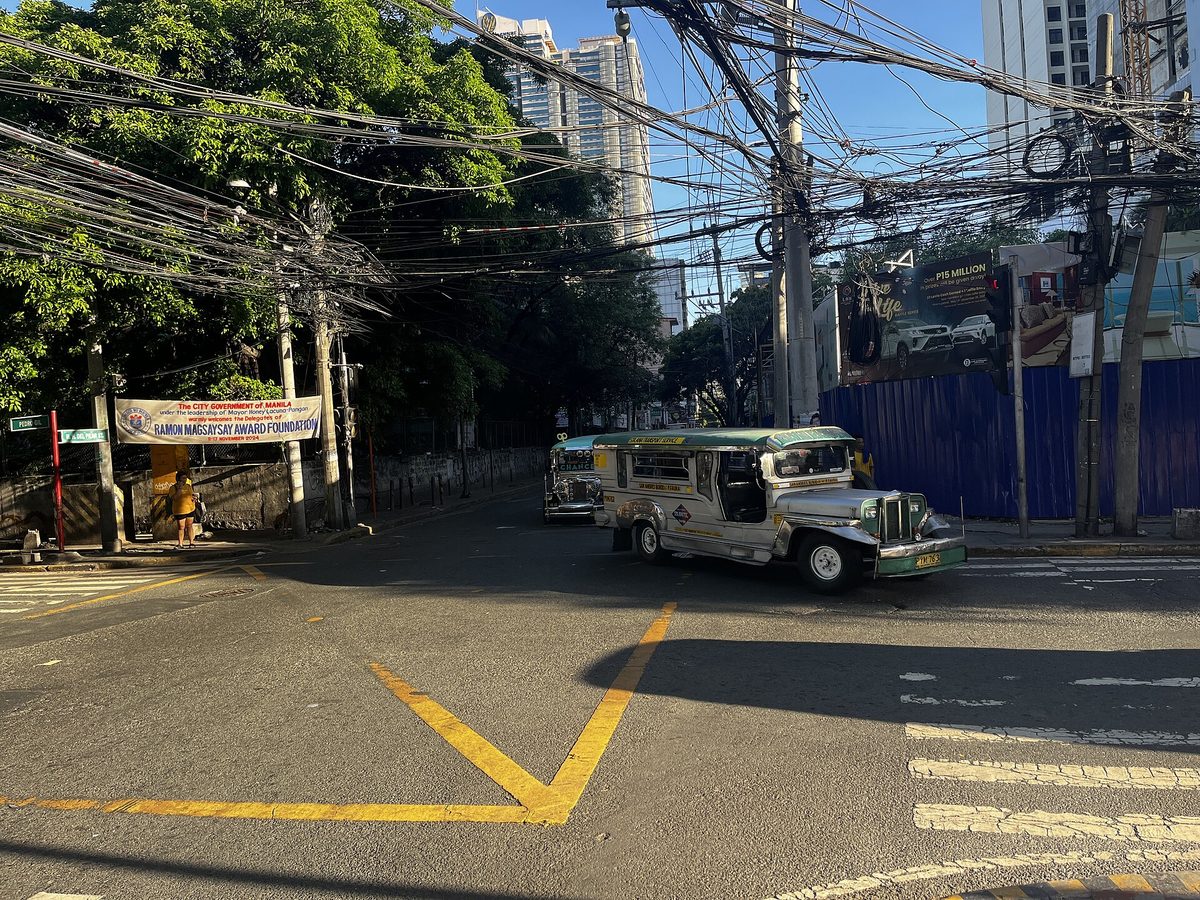
Jeepneys — the WWII-surplus-turned-folk-art minibuses — cost about PHP 13–15 base fare and are a cultural experience worth having once, ideally on a short, simple route with a local SIM and Google Maps open. The fleet is gradually modernizing into air-conditioned versions, but the classic chrome originals still rule the side streets. Say “para po” to stop, pass coins forward, enjoy the chandelier of rosaries.
Walk selectively. Intramuros, BGC, Poblacion and the Esplanade are good walking; most everything else, with narrow or missing sidewalks in tropical heat, is not. Manila is a city you walk within neighborhoods, not between them.
Where to Stay in Manila
The neighborhood decision matters more than the hotel here. My honest matrix:
| Base | Best for | Typical double (2026) | The catch |
|---|---|---|---|
| Makati (Poblacion / Legazpi / Ayala) | First-timers, food and nightlife | PHP 2,500–9,000 ($45–160); hostels from PHP 800 | 30–60 min from Old Manila sights |
| BGC | Families, longer stays, walkability | PHP 4,000–12,000 ($70–210) | Farthest from the airport and Intramuros; least “Manila” |
| Bay Area / Pasay | Short layovers, casino resorts, MOA | PHP 3,000–10,000 ($55–175) | Soulless between the malls; traffic to everywhere |
| Ermita / Malate | Budget travelers, museum proximity | PHP 1,200–3,500 ($20–60) | Faded and seedy in patches; choose streets carefully |
| Newport (across from NAIA T3) | One-night transits | PHP 5,000–15,000 ($90–260) | It’s an airport resort bubble, and that’s the point |
Two 2026 notes: the luxury tier is in a building boom — the Mandarin Oriental’s return to Makati is the headline reopening — and rates citywide still undercut Bangkok or Singapore for equivalent rooms. For how Manila prices fit a whole-trip budget, see my Philippines travel cost guide.
The Manila Layover, Solved (6, 12 and 24 Hours)
Manila is Asia’s most underrated layover city precisely because expectations are so low. The math: immigration plus bag drop runs 30–60 minutes; Intramuros is 20–40 minutes from the airport outside rush hour. My field-tested plans:
| Layover | The plan |
|---|---|
| 6 hours | Don’t risk the city. Eat properly at Newport across from T3, or just enjoy the lounge. A 6-hour window minus transfer and check-in buffers leaves no margin for EDSA traffic. |
| 12 hours | Grab to Intramuros (go before 3pm or after it cools): Fort Santiago, San Agustin, a Bambike hour, halo-halo break. Early dinner in Binondo ten minutes away. Back at the airport 3 hours before departure. |
| 24 hours | The 12-hour plan, plus a Poblacion night and a National Museum of Fine Arts morning, sleeping in Makati. This is the version that converts Manila skeptics. |
Manila by Traveler Type
History and culture travelers get the most: two full days (Intramuros, the three national museums, Binondo, a Quiapo wander) barely covers the core. Food travelers should anchor on a Binondo crawl, one starred or Bib Gourmand booking, and Poblacion — Manila is arguably now Southeast Asia’s best-value serious-eating city. Families do better based in BGC: the Mind Museum, open lawns, safe cycling, then one escorted Intramuros morning. Nightlife travelers won’t need convincing past their first Poblacion rooftop. Beach people should treat Manila as a functional gateway, recover from the flight, and move on fast — the right season for the islands matters more than anything this city can offer them.
Day Trips That Actually Work
Tagaytay (1.5–3 hours south, traffic-dependent) is the classic: a ridge town staring down into Taal Lake and its island volcano, with a cool microclimate and an entire economy of view restaurants serving bulalo. Check Taal’s current alert status before planning anything closer than the ridge; the volcano has active phases. Corregidor Island, the WWII fortress at the bay’s mouth, reopened to organized day tours and is the best military-history day in the country — verify current ferry schedules as operators have changed since the pandemic. Antipolo (1–1.5 hours east) pairs the Pinto Art Museum — whitewashed galleries spilling down a hillside garden — with pilgrimage-church views over the metro. I’d skip Pagsanjan Falls on a short trip; it’s a long day for a heavily commercialized canoe ride.
The Honest Cons
Every guide owes you this list. The traffic is genuinely bad and will eat any plan that crosses the metro twice in a day. The heat and humidity are relentless from March through May, and the June–November wet season can flood streets in an afternoon. Poverty is visible and the inequality jarring — gleaming malls beside informal settlements — and pretending otherwise does the city no favors. Petty theft happens in crowds (Divisoria, jeepneys, LRT at rush hour): front pockets, crossbody bags, no phone at the curb. Taxi overcharging persists, which is why everyone — including locals — defaults to Grab. And the sidewalk situation outside the planned districts is hostile. None of this is dangerous so much as fatiguing; for the fuller picture, including the regions advisories actually flag (none of them are Manila’s tourist zones), read my honest is the Philippines safe guide.
A Sample Manila Itinerary: Two Days, Done Right
Day one — Old Manila. Beat the heat to Intramuros by 8am: Fort Santiago first (an hour, more if the dungeons and the Rizal Shrine pull you in), then San Agustin and its museum, then Casa Manila and a coffee in the Plaza San Luis courtyard. Bambike or walk the walls before noon. Lunch and the afternoon in Binondo — cross the Jones Bridge, do the crawl, duck into Binondo Church, and browse the dried-goods chaos of Ongpin. Late afternoon: the Pasig Esplanade back toward the walls, then a Roxas Boulevard or hotel-terrace seat for the bay sunset around 6pm. Evening: collapse, or rally for Poblacion.
Day two — museums and modern Manila. National Museum of Fine Arts at 9am opening (the Spoliarium with nobody in front of it is worth the alarm clock), then Anthropology or Natural History next door, then Rizal Park’s monuments and gardens before the midday sun wins. Afternoon: Makati — Ayala Museum if you have a culture gear left (its pre-colonial gold floor is exceptional), Greenbelt’s gardens if not. Evening: your booked tasting menu, or Manam, then cocktails up an unmarked Poblacion staircase.
With a third day, choose by temperament: Tagaytay or Corregidor for the day, BGC’s street art and bookshops at strolling pace, or the Quiapo–Divisoria deep end with a local guide for Manila with all filters off. My country-wide Philippines itinerary guide shows where these days slot into a longer route.
What to Eat in Manila: A Short, Opinionated List
Beyond the crawl and the starred rooms, the dishes I steer first-timers toward, and where: sinigang (the sour tamarind soup that explains Filipino food in one bowl — Manam’s version with watermelon converts skeptics); lechon (yes, Cebu claims the crown, but Manila’s specialists hold their own — look for a Pepita’s or Elar’s); halo-halo (the kitchen-sink shaved-ice dessert; the Razon’s style, minimal and milky, versus the maximalist classic is a worthwhile personal research project); sisig (sizzling chopped pork, the national beer chaser, best in its crispy Kapampangan form); kare-kare (oxtail in peanut sauce, non-negotiable with bagoong); and a proper Filipino breakfast — tapsilog or longsilog with garlic rice and a runny egg — from any 24-hour tapsihan, ideally at an hour you’d rather not admit. Street-food rules of thumb: busy stall, high turnover, cooked in front of you, bottled water. Fishball skewers and banana-cue are low-risk entry points; balut is a dare with cultural credit attached.
Practical Manila: Money, SIMs, Tipping and Timing
Money: ATMs are everywhere (most charge PHP 250–300 per foreign withdrawal; BPI and Metrobank machines in malls are reliable), cards work in malls and restaurants, but Binondo, jeepneys, markets and small eateries run on cash. Keep small bills; nobody can break a PHP 1,000 note at a fishball cart. Connectivity: grab a Globe or Smart eSIM or airport SIM on arrival — tourist packages with generous data run around PHP 300–500 for a couple of weeks, and you need data for Grab from minute one. Tipping: not obligatory; 5–10% appreciated where no service charge is added, and rounding up a Grab fare is a kindness. Power and water: 220V with mostly US-style plugs; drink bottled or filtered. Timing: December to February is the sweet spot — dry, relatively cool, and festive in a city that takes Christmas more seriously than anywhere on earth (the carols start in September, and I am not exaggerating). March to May scorches; June to November brings afternoon downpours and the occasional typhoon shutdown — the full seasonal calculus is in my best time to visit the Philippines guide.
Safety, briefly: the tourist zones — Intramuros, Makati, BGC, the Bay Area, Binondo by day — are routinely fine with city common sense. The genuine risks are unglamorous: pickpockets in crowds, phone-snatching at curbs, the occasional rigged taxi meter, and traffic itself (look four ways; right of way is a theory here). Solo women travelers I know rate Makati and BGC as comfortable, with standard big-city night precautions. Tap 911 for emergencies.
Beyond the Postcard Stops: Quiapo, Escolta and Marcos-Era Manila
If the first-tier sights leave you wanting the city with its sleeves rolled up, three add-ons. Quiapo, around its basilica and the Black Nazarene, is Manila at maximum density: herbal-folk-remedy stalls beside the church, camera shops in arcaded buildings, the handicraft sprawl of Ilalim ng Tulay under the bridge. Go with day-bag discipline and you’ll be rewarded; the Quiapo of January’s Traslación procession, when millions pack these streets, is one of the planet’s great religious spectacles. Escolta, once “the Queen of Streets,” is mid-revival: art-deco survivors like the Capitol Theater facade, the First United Building’s creative bazaar and Saturday markets, and a young crowd betting on Old Manila’s comeback. And scattered along the bay sits the concrete legacy of the Marcos years — the Cultural Center of the Philippines complex and its brutalist siblings — architecturally fascinating, historically heavy, and increasingly the subject of excellent guided tours that don’t sand off the history.
One more that took me too long to try: Manila American Cemetery in BGC, the largest American WWII cemetery anywhere — 17,000 graves and mosaic battle maps in immaculate grounds. It’s free, moving, and pairs naturally with a BGC afternoon.
Shopping: From Greenbelt to Divisoria
Manila shops at every conceivable altitude. At the top: Greenbelt and Power Plant in Makati and the luxury wings of BGC’s malls, where the brands are global but the air-conditioning is the real amenity. The middle is the great Filipino mall ecosystem — SM and Robinsons branches that function as de facto town squares, with supermarkets that make superb pasalubong (edible-souvenir) hunting grounds: dried mangoes, Barako coffee, calamansi anything. For crafts with provenance, Kultura (inside SM stores) does fair-trade weaves, capiz-shell work and barong shirts without the haggling; the Sunday Legazpi Village market in Makati adds small-batch food producers. And at the gloriously chaotic bottom: Divisoria, the wholesale district where the entire archipelago buys in bulk — fabric by the bolt, toys by the gross, Christmas decor in August. It is not relaxing. It is unforgettable. Bring small bills, zero valuables and your sharpest elbows; go on a weekday morning or don’t go at all.
Timing Your Visit Around Manila’s Calendar
A few dates reshape the city. January 9, the Feast of the Black Nazarene, pours millions of devotees into Quiapo for the Traslación — extraordinary to witness from a respectful distance, impossible to move through; don’t book a Quiapo-adjacent hotel that week unless you’re there for it. Holy Week (March or April) half-empties the metro as Manileños head home to the provinces: traffic evaporates, but so do many restaurants from Maundy Thursday through Black Saturday — quietly one of the best sightseeing windows of the year if you plan meals ahead. June 12, Independence Day, brings parades and free museum programming around Rizal Park. And from September through New Year, the world’s longest Christmas season builds to a crescendo of lights (the Ayala Triangle display is the classic), parol lantern stalls, and mall crowds that require pilgrim-grade patience. February’s Chinese New Year, meanwhile, is Binondo’s biggest day — dragon dances down Ongpin and tikoy in every bakery window.
Where Manila Fits in Your Philippines Route
Practically, almost every itinerary touches Manila twice — international arrival and departure — so the smart question isn’t “if” but “which end and how long.” My default recommendation: put your Manila days at the start, when jet lag makes a slow museum morning a feature rather than a waste, and keep your final pre-flight night in the city as pure buffer (domestic delays are routine in typhoon season, and missing an international connection to save one island hour is a terrible trade). Pair Manila with northern trips naturally — the buses to Banaue, Sagada and Vigan leave from here — while Visayas-heavy routes can often route around it via Cebu. However you slice it, build the full skeleton first; the day-by-day templates in my Philippines itinerary guide all show exactly where the Manila buffer days sit, and the master list of Philippine experiences helps you decide what’s worth detouring for.
Manila Philippines FAQ: What Travelers Actually Ask
Is Manila worth visiting, or should I skip straight to the islands?
Worth one to three days for history, food and museums — with a neighborhood-based plan. Skip or minimize it on island-focused trips under ten days. The worst version of Manila is the unplanned version.
How many days do I need in Manila?
Two well-built days cover the essentials: Intramuros and Binondo on one, museums plus Makati or BGC on the other. A third adds a day trip or deeper neighborhoods. Five days is for people who’ve fallen for the place (it happens).
Is Manila safe for tourists?
The areas tourists actually visit are generally fine with standard big-city precautions; petty theft in crowds is the realistic concern, not violent crime against visitors. Use Grab at night, watch your phone at curbs, and read a current, honest breakdown before you go — mine is linked above — rather than decade-old forum posts.
Is a Manila layover enough to see anything?
Twelve hours or more: yes — Intramuros and a Binondo meal are comfortably doable outside rush hour. Under eight hours, stay airport-side at Newport and eat well instead of gambling on EDSA traffic.
What is Manila best known for?
Intramuros (the 16th-century walled city), Binondo (the world’s oldest Chinatown, founded 1594), the free national museums, the Manila Bay sunset, jeepneys, a heavyweight food scene that earned the country’s first Michelin stars in the 2026 guide — and, less romantically, the traffic.
What’s the best month to visit Manila?
January or February: dry, the coolest temperatures of the year, post-holiday calm but pre-summer heat. December is magical and chaotic in equal measure. Avoid planning tight connections in typhoon-peak months (roughly July to October) without buffer days.
Manila or Cebu as a first gateway?
Manila has more international routes and the bigger cultural payload; Cebu puts you 30 minutes from beaches and is the smoother soft landing. If your itinerary is Visayas-centric (Cebu, Bohol, Siargao), flying into Cebu and skipping Manila entirely is a legitimate play.
Do I need to speak Filipino to get around?
No — English is an official language, signage is in English, and you can do an entire trip without a phrasebook. A “salamat po” (thank you) earns smiles anyway.
Photo credits
Makati skyline: jopetsy / CC BY 2.0 · Fort Santiago, Plaza Moriones: patrickroque01 / CC BY-SA 4.0 · San Agustin Church: Diego Delso / CC BY-SA 4.0 · Filipino-Chinese Friendship Arch: Ranieljosecastaneda / CC BY-SA 4.0 · Rizal Monument: Adamdaley / CC BY-SA 4.0 · Manila Bay sunset: Vyacheslav Argenberg / CC BY 4.0 · Jeepney: Aliceinthealice / CC0 · Manila Cathedral: Markadan / CC BY 4.0 — all via Wikimedia Commons.
Sources and further reading
Hours and fees verified June 2026 against the Intramuros Administration; Michelin selections from the Michelin Guide Manila & Environs and Cebu 2026; NAIA terminal and turboprop changes from DOTr/NNIC announcements reported by The Philippine Star and industry press; LRT-1 Cavite Extension details from Light Rail Manila Corporation. Prices are 2026 estimates and drift — treat every peso figure as “around.”
About this guide: PhilippinesTourism.org is an independent travel resource built on first-hand research and obsessive fact-checking. Start with our complete Philippines travel guide to plan the whole trip.
1 response
Comments are closed.