Money in the Philippines: Currency, ATMs, GCash and Tipping
The Philippine peso (₱) is the only currency you’ll spend here, running at roughly ₱58–60 to US$1 in 2026. The one-line takeaway: bring cash, top up at a mall ATM, and expect each foreign-card withdrawal to cost about ₱200–250 (US$3.50–4.50) in local fees. Cards work in cities; cash runs everything else.
I’ve handed over a thousand-peso note for a ₱15 fishball skewer and watched a vendor laugh at me, and I’ve stood at the one broken ATM on an island with ₱300 in my pocket and a ferry to catch. This guide is the money playbook I wish someone had drilled into me: what the peso looks like, which banks sting you least at the ATM, when to use cards, the honest truth about GCash for tourists, how to tip, and the scams worth knowing. Numbers are current for 2026 and hedged where they move.
The money cheat-sheet: ATM fees and caps at a glance
If you read nothing else, read this table. These are the per-withdrawal fees Philippine banks charge foreign cards and the typical per-transaction cash limits, as of mid-2026. Fees drift and machines vary, so treat them as close ballparks and always check the on-screen fee before you confirm.
| Bank | Foreign-card fee (per withdrawal) | Typical per-transaction cap | My take |
|---|---|---|---|
| BDO | ~₱250 (US$4.30) | ₱10,000–20,000 | Everywhere; reliable; highest fee |
| Metrobank | ~₱200 (US$3.50) | ₱10,000–20,000 | Good cap, lower fee — a solid default |
| BPI | ~₱200, or 1.75% / US$3.50 on its side | ₱10,000–20,000 | Common in malls; reliable |
| UnionBank | ~₱200 (US$3.50) | ₱10,000–20,000 | Fine where you find one |
| Landbank / China Bank | ~₱200 (US$3.50) | ₱10,000–20,000 | Workable backups |
| HSBC | No foreign-card fee | up to ₱40,000 | Best by far — but only in Manila & Cebu |
The one-line strategy: withdraw the maximum the machine allows so the flat ₱200–250 fee stings less per peso, use a mall or in-branch ATM, and always choose to be charged in pesos (PHP), never your home currency. More on each of those below.
The Philippine peso: notes, coins and the small-bills problem
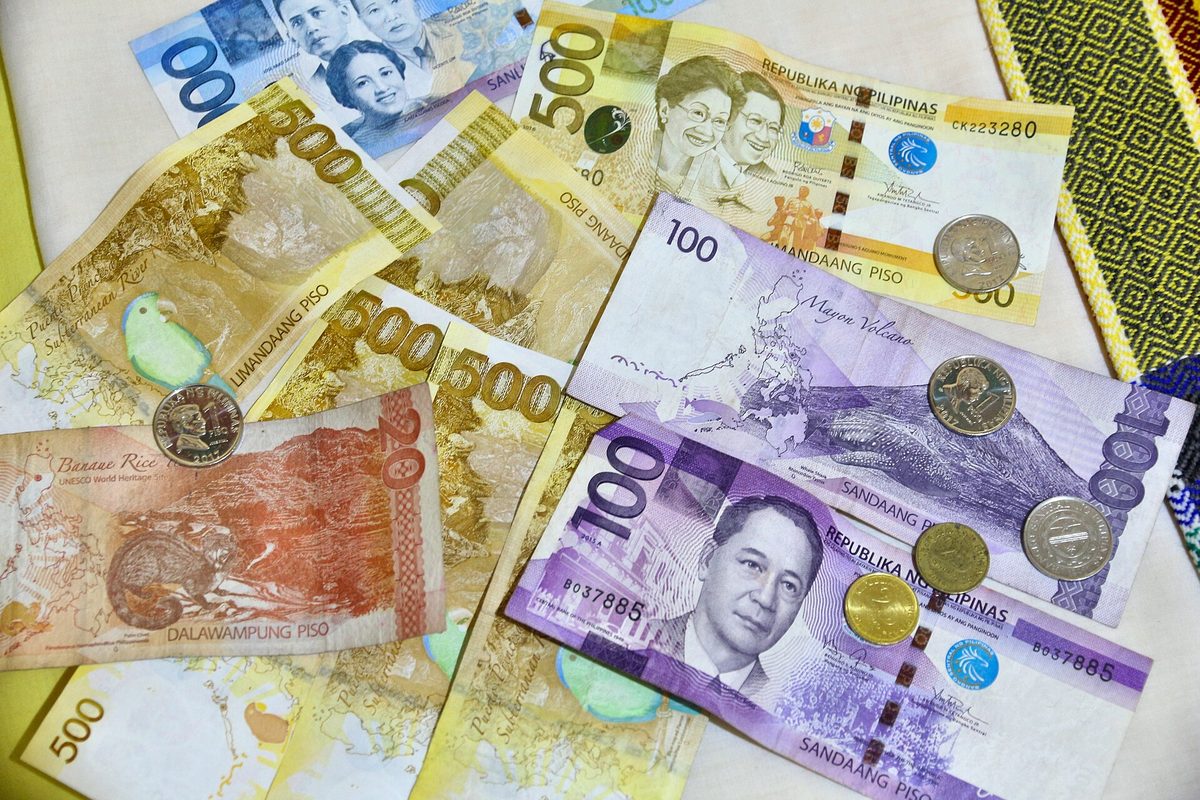
The currency is the Philippine peso, written ₱ and abbreviated PHP. It’s a free-floating, fully convertible currency issued by the Bangko Sentral ng Pilipinas (BSP), the country’s central bank. One peso splits into 100 centavos, though centavos barely exist in practice now — prices round to the nearest peso almost everywhere.
Banknotes come in ₱20, ₱50, ₱100, ₱200, ₱500 and ₱1,000. Here’s a 2026 wrinkle worth knowing: in December 2024 the BSP launched its First Philippine Polymer banknote series — plastic ₱1,000, ₱500, ₱100 and ₱50 notes featuring native wildlife like the Philippine eagle and the sampaguita flower. They now circulate right alongside the older paper notes, so you’ll get a mix in your change and both are perfectly valid. The polymer notes are slipperier and harder to fold into a tight wad; don’t mistake them for fakes. Coins run ₱1, ₱5, ₱10 and ₱20, plus the near-useless centavo pieces.
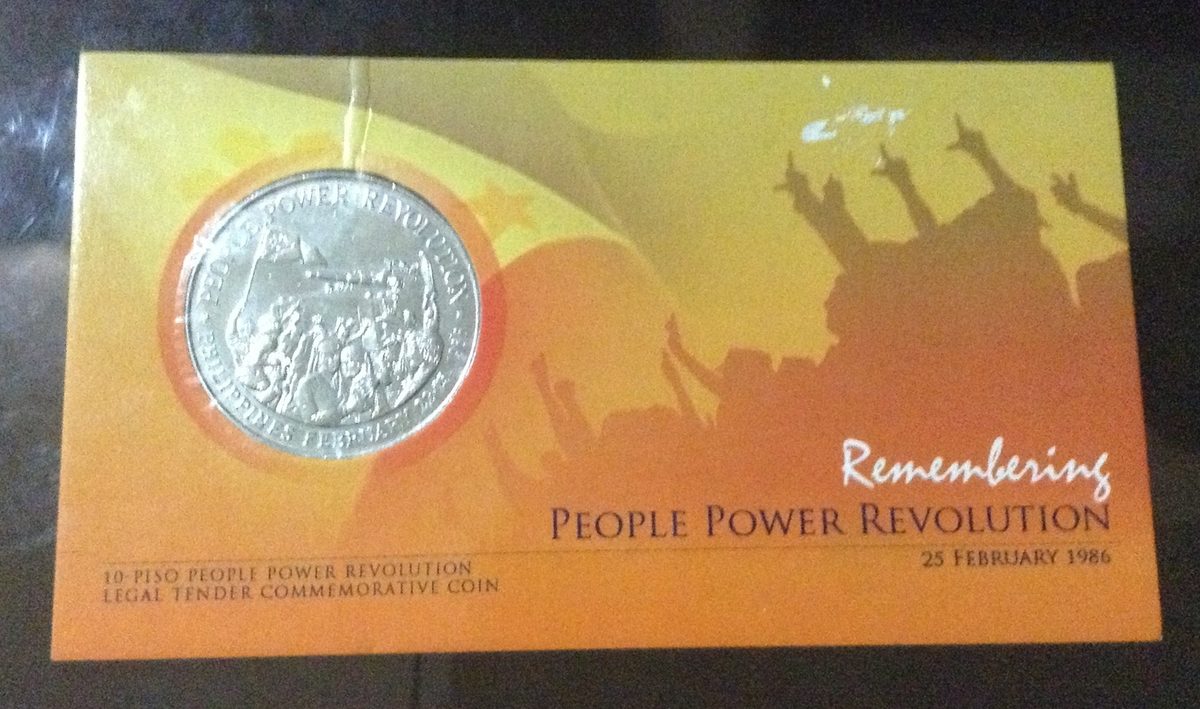
Now the rule that will save you more hassle than any exchange-rate trick: hoard your small bills. The ₱1,000 note is what ATMs spit out, but it’s a headache to spend. Tricycle drivers, sari-sari stores, market stalls and carinderias (small eateries) routinely can’t break it, and you’ll hear “walang barya” — no change — constantly. Break big notes at malls, chain convenience stores and supermarkets, and keep a working float of ₱20s, ₱50s and ₱100s for transport, tips and street food. The ₱200 note is oddly uncommon, so some vendors fumble it too.
On the exchange rate: budget at around ₱58–60 = US$1 for planning, but know it’s a moving target. Through 2026 the peso has mostly traded in the high-50s to low-60s against the dollar, drifting nearer ₱60–61 at points mid-year. For a live figure, glance at the BSP reference rate or a currency app the morning you exchange — never the rate posted in a hotel lobby.
ATMs in the Philippines: which banks charge the least
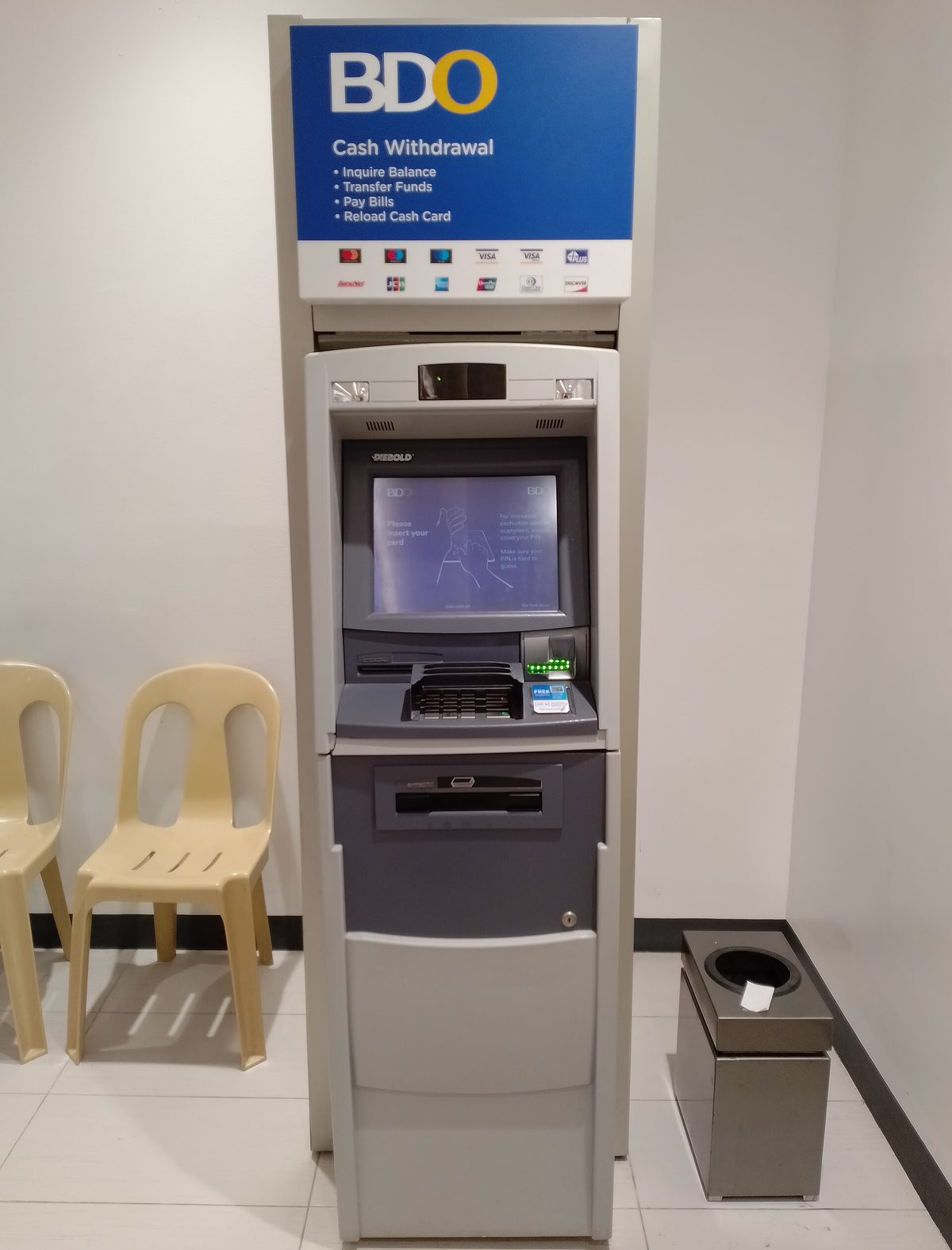
Here’s the blunt truth: there are effectively no fee-free ATMs in the Philippines for foreign cards, with one rare exception. Almost every machine charges your foreign card a flat fee, currently around ₱200–250 (US$3.50–4.30) per withdrawal, and that’s before your home bank piles on its own overseas-ATM fee or currency markup. So your real cost per visit might be ₱400–600 once both ends take their cut.
The Philippines runs on the BancNet interbank network, and Visa- and Mastercard-backed cards work at virtually any bank ATM. (UnionPay acceptance is patchier — mainly BDO and some malls.) The fee gap between the big banks is small, so don’t go hunting for a particular logo to save ₱50. From the cheat-sheet above, Metrobank, BPI and UnionBank sit around ₱200; BDO is the priciest at about ₱250 but has the densest network; and HSBC is the genuine outlier — no foreign-card fee and a generous ₱40,000 per-transaction cap — but with a handful of branches in Manila and Cebu only, you can’t plan a trip around finding one.
The bigger pain isn’t the fee, it’s the per-transaction cap. Many Philippine ATMs limit you to ₱10,000–20,000 (US$170–345) a withdrawal, which is low by global standards. ₱10,000 is common, and a single pull often won’t cover even a few days. Metrobank and BDO machines frequently allow up to ₱20,000, so if you spot one, max it out.
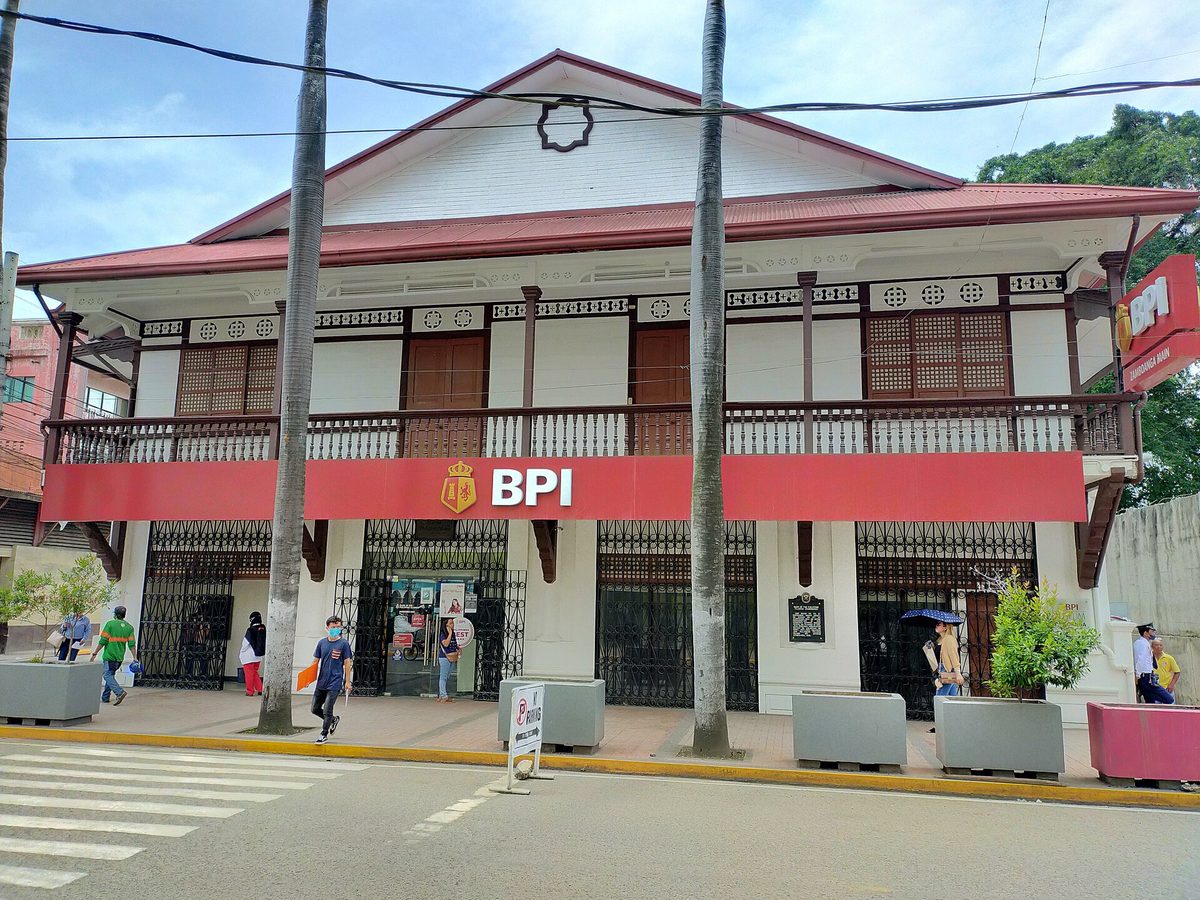
How to keep ATM costs down:
- Withdraw big, withdraw rarely. The fee is flat, so one ₱20,000 pull beats two ₱10,000 pulls. Fewer transactions, less total fee.
- Always choose pesos, never your home currency. If the screen offers to charge you in USD/GBP/EUR — that’s Dynamic Currency Conversion (DCC), and it bakes in a terrible rate. Decline it every time and select PHP.
- Use a low-fee travel card like Wise or Revolut for the home-bank side. You’ll still pay the local ₱200–250, but you skip the 1–3% foreign-transaction markup most ordinary debit cards add.
- Tell your bank you’re travelling. Philippine transactions are a classic fraud trigger that can freeze your card mid-trip.
- Stick to mall and in-branch machines — cheaper-feeling and far safer (see scams, below).
Cash vs card: what actually takes plastic
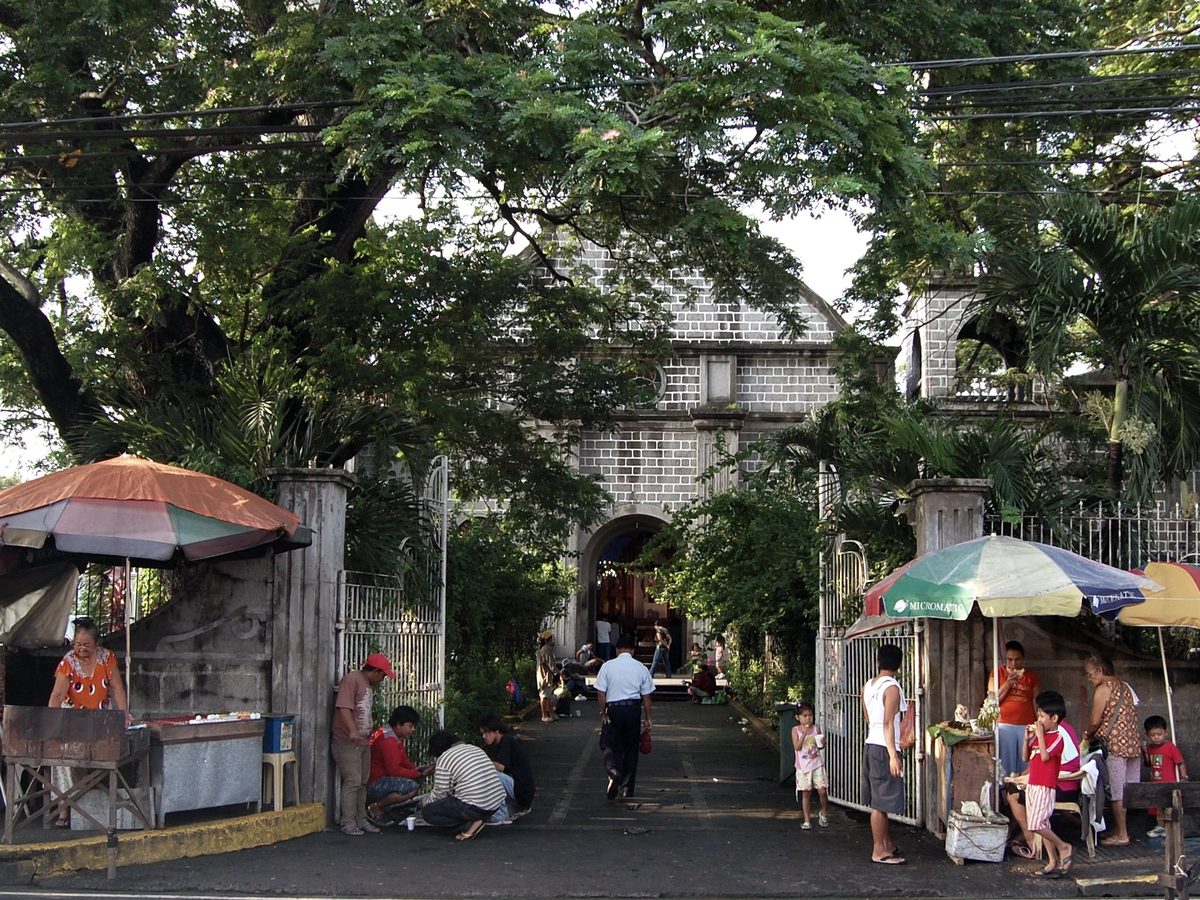
Card acceptance in the Philippines follows a sharp geography. In the metro cores — BGC, Makati and Ortigas in Manila, Cebu’s IT Park, and the bigger Boracay resorts — Visa and Mastercard sail through at hotels, malls, chain restaurants, supermarkets and Grab. Step outside those bubbles and the POS terminals vanish.
Reliably takes cards: mid-range and upscale hotels, SM / Ayala / Robinsons malls, Grab rides, chain restaurants, larger tour operators, airline offices, and most resorts above the budget tier.
Cash only, basically always: jeepneys, tricycles, habal-habal (motorbike taxis) and UV Express vans; public markets (palengke) and street food; small carinderias; sari-sari stores; ferry and bangka tickets bought at the pier; island guesthouses; and entrance or environmental fees. American Express is accepted in far fewer places than Visa/Mastercard, so don’t rely on it as your only card.
My rough split: for a Manila- or Cebu-city trip, you can run maybe 60% on card and 40% cash. Flip that for an island itinerary — Palawan, Siargao, Bohol’s backroads — where cash quietly pays for almost everything once you leave the resort lobby. If you want the bigger picture on daily spending, our Philippines travel cost and budget guide breaks down what a trip actually runs, and Is the Philippines Cheap? What Everything Costs puts real prices on meals, transport and rooms.
Cash on remote islands: a by-region reality check
This is where travelers get genuinely stuck, so plan for it. ATM coverage doesn’t fade gently as you leave the cities — it falls off a cliff. On smaller islands there may be exactly one machine in the whole municipality, and it can be out of cash, offline, or capped low. I’ve seen the lone ATM in a town run dry by mid-afternoon on a fiesta weekend.
- Palawan: Puerto Princesa and El Nido town have ATMs, but they jam up and run out, especially in high season. Coron town is okay; the smaller barangays are not. Load up in the city before heading out.
- Siargao: General Luna has several machines now, but they’re notorious for being empty after a big weekend. Don’t arrive with ₱500 and a prayer.
- Batanes, Siquijor, Camiguin and the like: assume one or two temperamental ATMs per island and bring the bulk of your cash with you.
- Bantayan, Malapascua, the tiny dive islands: often zero reliable ATMs. Card? Forget it.
The rule: withdraw your island budget in the last real city you pass through — Cebu, Puerto Princesa, Manila — and carry a buffer of ₱10,000–15,000 (US$170–260) as a reserve once you’re out in the islands. Split it across pockets and your bag; don’t keep it all in one wallet. For how the islands connect (and where the last ATM tends to be), our guide to getting around the Philippines is the companion piece to this one, and budget-minded readers should also see the cheapest islands and destinations in the Philippines.
GCash for tourists: the honest workaround
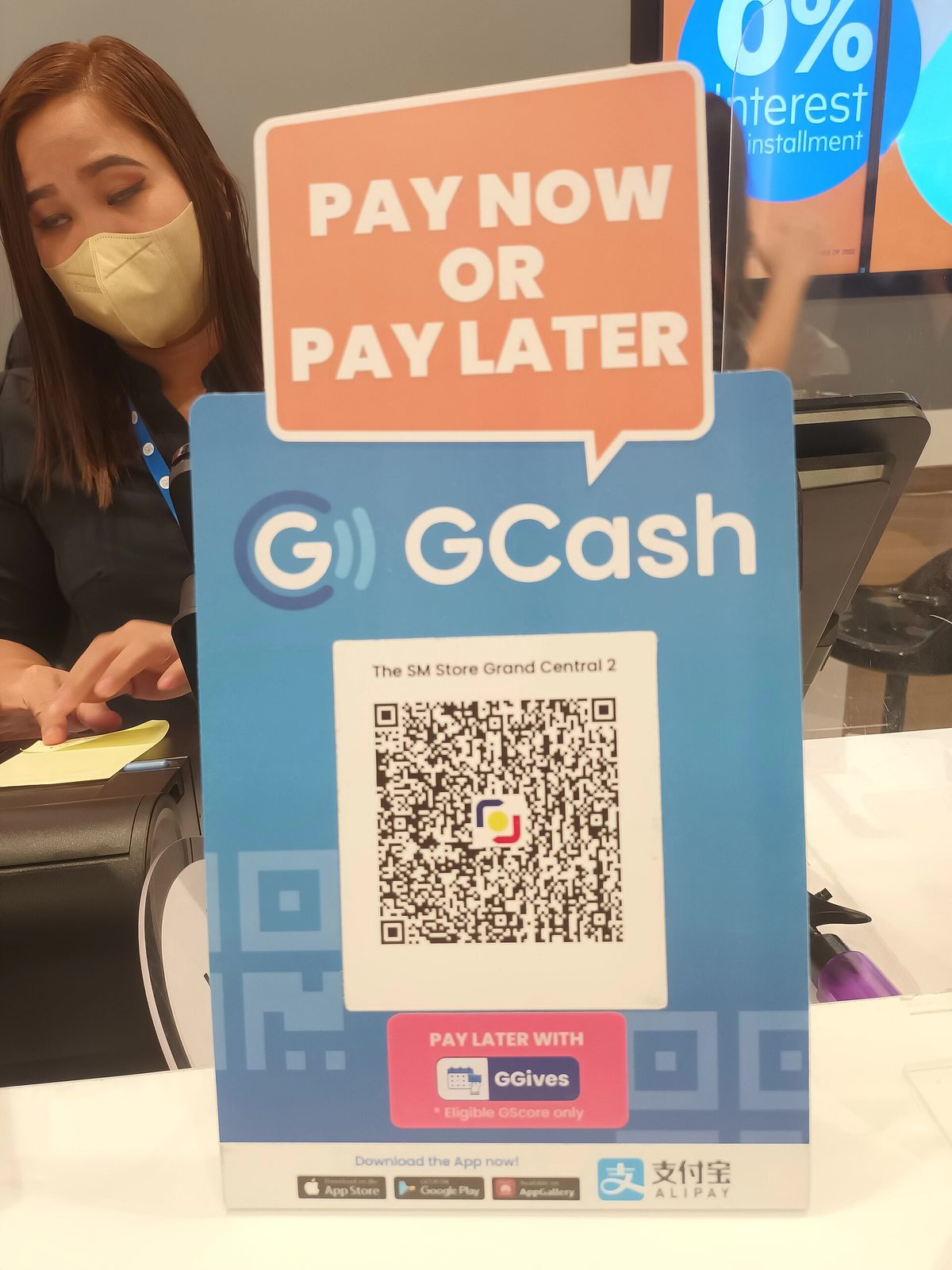
GCash is the Philippines’ dominant mobile wallet. Locals use it for everything — Grab, sari-sari stores, market stalls, bills — and you’ll see its QR code taped to counters all over the country. Naturally, tourists ask: can I use it? Here’s the unvarnished 2026 answer.
Can foreigners register? Yes, but with a catch. You can open a basic GCash account on a foreign passport — but registration absolutely requires a Philippine SIM card, because GCash sends the one-time verification code (OTP) by SMS to a local number. There’s no way around the local-SIM requirement. So the realistic sequence is: land, buy a cheap Globe, Smart or DITO prepaid SIM at the airport or a mall (a 10-minute errand), then register GCash with that number and your passport.
The real friction is funding it. A basic foreign account has lower limits, and full verification — which unlocks higher caps — generally wants a Philippine government ID or local bank account that most short-term visitors don’t have. You can still load cash without a local bank: GCash partner outlets like 7-Eleven, Cebuana Lhuillier and Palawan Express let an agent top up your wallet over the counter for a small fee. As of 2026, GCash’s overseas integrations (including Visa Direct) also let some foreign Visa cards fund a wallet through the GCash app — useful for longer stays, fiddly for a quick trip.
My honest call: for a one- or two-week holiday, GCash usually isn’t worth the setup. Grab, malls and mid-range restaurants take cards; everything else takes cash; and you’ll spend your first afternoon wrestling OTPs instead of swimming. If you’re staying a month or more, a digital nomad, or a repeat visitor, then yes — get the SIM, set up GCash, and you’ll blend right in. Either way you’ll want a local SIM; our budget guide to backpacking the Philippines covers the connectivity-and-cash combo for long, cheap trips.
Where to change money: making the most of Philippines currency exchange
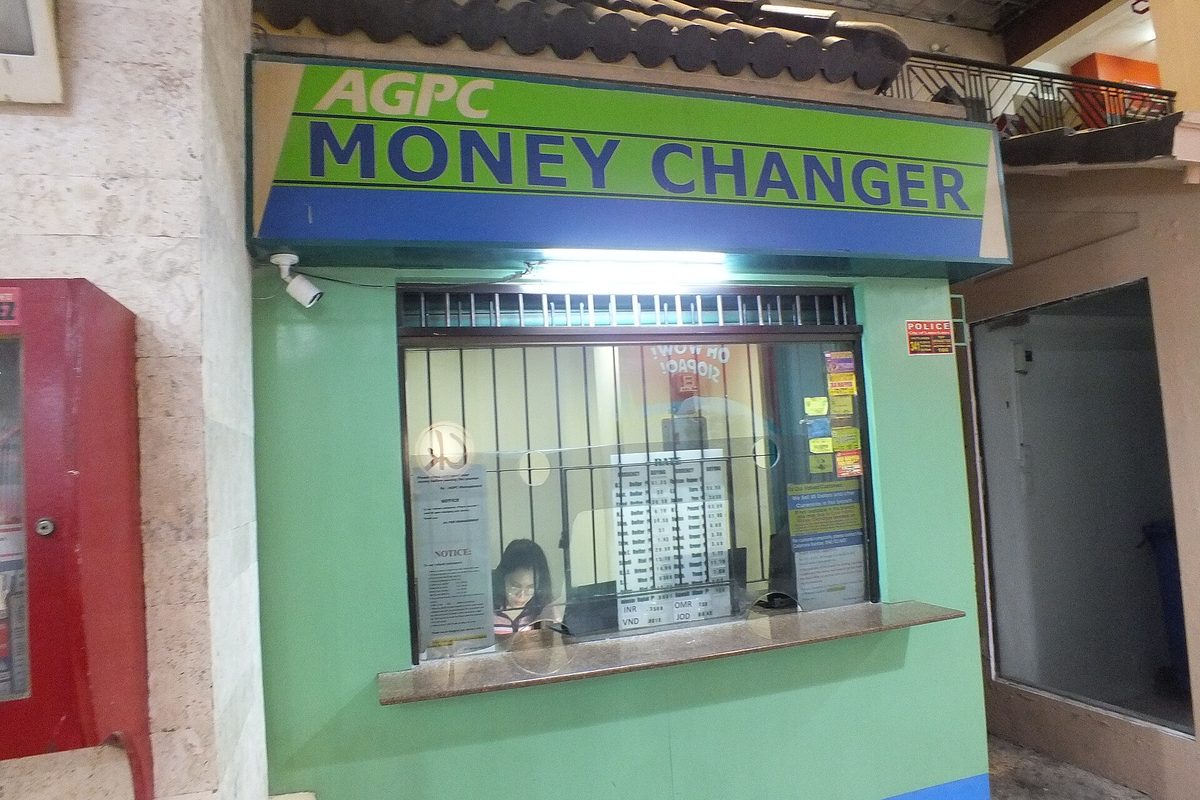
If you’re bringing physical cash to convert, the pecking order for Philippines currency exchange runs cleanly from best to worst rates. Where you swap your dollars or euros makes a bigger difference than most travelers expect. The best deals in the country are at authorized money changers inside major malls — established names like Sanry’s, Czarina and the Lhuillier counters in SM and Ayala malls. They’re BSP-licensed and routinely beat banks and airports by 1–3%. Bring your passport for larger exchanges.
- Mall money changers (best): top rates, fast, legitimate. This is where locals go.
- Banks (good): Metrobank, BDO, BPI and Landbank exchange major currencies at decent rates — slower, with forms, but safe.
- Airport arrival counters (okay in a pinch): rates have improved and they’re authorized, but not generous. Change just US$50–100 to cover your first night, then get the rest in the city.
- Hotel front desks (avoid): typically 3–5% worse. Emergencies only.
US dollars are the easiest currency to exchange and accepted at virtually every changer; euros, pounds, Australian and Singapore dollars and yen are fine in cities but harder in the provinces. One thing money changers are fussy about: they reject torn, scribbled-on, heavily worn or very old foreign notes. Bring clean, crisp bills, ideally newer-series, or you may be turned away. And don’t try to pay for things directly in dollars — you’ll need pesos for everything, at a worse implied rate if a vendor even accepts it.
Tipping in the Philippines: who, when and how much
Tipping isn’t compulsory in the Philippines, but it’s genuinely appreciated, and tourism workers earn modest wages where a little goes a long way. The key thing to understand first is the service charge, which is not the same as a tip.
Most sit-down restaurants add a 10% service charge to the bill automatically. Under a 2019 law (Republic Act 11360), 100% of that pooled service charge must be distributed to the rank-and-file staff — not pocketed by management. So if you see “service charge” on the bill, the staff are already getting it, and any extra tip is optional. A tip you hand directly to your server is separate from that pool and goes straight to them. So: check the bill first.
Rough benchmarks I work from (all in cash, in pesos):
- Restaurant with service charge: nothing extra required; leave ₱50–100 (US$1–2) for genuinely good service if you like.
- Restaurant with no service charge: around 10% of the bill.
- Tour guide (full day): ₱200–500 (US$3.50–9) per person — guides work hard and this is standard.
- Island-hopping boat crew: ₱100–200 (US$2–3.50) per person for the day.
- Hotel porter: ₱50–100 (US$1–2) per bag; housekeeping similar per day.
- Spa / massage therapist: ₱100–200 (US$2–3.50) on top of the listed rate.
- Jeepney / tricycle / Grab drivers: not expected; rounding up to the nearest ₱5 or ₱10 is a kind gesture.
Carry small bills for this — trying to tip a boat crew with a ₱1,000 note nobody can break defeats the purpose. And hand tips over in person where you can; it’s warmer and it lands with the right person.
Money scams and how to dodge them
The Philippines is welcoming and most money trouble is avoidable with a little awareness. The classics:
- ATM skimming. The real risk. Card-reader overlays and pinhole cameras turn up on standalone machines in tourist zones — convenience stores near the strip, dim resort kiosks, airport-corridor machines. Use ATMs inside SM, Ayala or Robinsons malls or in bank branches, give the card slot and keypad a wiggle before inserting, cover your PIN, and turn on transaction alerts so you see any odd charge instantly. Our honest Philippines safety guide goes deeper on staying street-smart.
- The DCC “favor.” An ATM or card terminal offering to bill you in your home currency isn’t being helpful — it’s Dynamic Currency Conversion at a lousy rate. Always pick pesos.
- Money-changer sleight of hand. Stick to mall and bank changers, count your pesos before you walk away, and ignore street touts quoting rates that look too good — they make it back by short-counting or palming notes.
- Distraction and “friendly stranger” setups. Be wary of someone striking up conversation right as you withdraw, or an over-friendly new acquaintance steering you to a particular bar or shop where the bill mysteriously balloons. Common around Manila tourist areas.
- Taxi meter games. Less a “money scam” than a hassle — insist on the meter, or just use Grab, where the fare is fixed in-app.
Frequently asked questions
How much cash should I carry in the Philippines?
For day-to-day spending in cities, ₱2,000–3,000 (US$35–50) covers a comfortable day. Heading to islands, carry more — a reserve of ₱10,000–15,000 (US$170–260) is sensible because ATMs are scarce and unreliable out there. Withdraw your island budget in the last major city you pass through, and split the cash across pockets and bags rather than one wallet.
Are US dollars accepted in the Philippines?
Not for everyday purchases — you’ll need pesos for transport, food, markets and most shops. Dollars are simply the easiest currency to exchange, accepted at virtually every money changer, bank and airport counter. Convert to pesos rather than trying to pay in USD; on the rare occasion a vendor takes dollars, the implied rate is poor. Bring clean, newer bills, as changers reject worn or torn notes.
Can tourists use GCash in the Philippines?
Yes, but you must first buy a local Philippine SIM card, because GCash sends its verification code by SMS to a local number — there’s no workaround. Register with that SIM and your passport. Funding a foreign account is the fiddly part; you can load cash at partner outlets like 7-Eleven or Cebuana Lhuillier. For a short trip it’s rarely worth the setup; for a month or longer, it’s handy.
Which ATM is cheapest for foreign cards in the Philippines?
Among the big banks the difference is small: Metrobank, BPI and UnionBank charge roughly ₱200 per foreign-card withdrawal, while BDO is about ₱250. The real bargain is HSBC, which charges no foreign-card fee and allows up to ₱40,000 per transaction — but it only has a few branches in Manila and Cebu. Always withdraw the maximum to spread the flat fee.
Should I tip in the Philippines?
It’s appreciated but not mandatory. Check your restaurant bill first: many add a 10% service charge that, by law, goes entirely to staff, so an extra tip is optional. Where there’s no service charge, around 10% is normal. Tip tour guides ₱200–500 a day, boat crews ₱100–200, and porters ₱50–100 a bag — always in small-bill cash, handed over directly.
Is it safe to use ATMs in the Philippines?
Generally yes, if you’re sensible. Use machines inside malls (SM, Ayala, Robinsons) or bank branches during the day, avoid isolated standalone ATMs, inspect the card slot and keypad for skimming devices, and cover your PIN. Turn on transaction notifications before you travel so you catch any unauthorized charge fast. Bank-branch ATMs are the lowest-risk option.
Sources and photo credits
Photo credits
- Photo: Marek Ślusarczyk (Tupungato) Photo portfolio / CC BY 3.0 via Wikimedia Commons — source
- Photo: Bangko Sentral ng Pilipinas (photographer) (CC0) via Wikimedia Commons — source
- Photo: PaulGorduiz106 / CC BY 4.0 via Wikimedia Commons — source
- Photo: National Historical Commission of the Philippines (CC0) via Wikimedia Commons — source
- Photo: Shubert Ciencia / CC BY 2.0 via Wikimedia Commons — source
- Photo: Reyrefran / CC BY-SA 4.0 via Wikimedia Commons — source
- Photo: Wide Awake! / CC BY 4.0 via Wikimedia Commons — source
Sources
- Bangko Sentral ng Pilipinas — First Philippine Polymer Banknote Series
- Bangko Sentral ng Pilipinas — reference exchange rates
- BDO Unibank — ATM and branch locator
- GCash Help Center — SIM registration and verification
About this guide: PhilippinesTourism.org tracks Philippine ATM fees, withdrawal caps, the peso exchange rate and GCash rules for tourists against bank and central-bank sources, last verified September 2026.