Things to Do in Manila
Manila gets dismissed as a place to escape on the way to the beaches, and that is a mistake I keep watching people make. Give the capital two focused days and it pays you back: 450 years of layered history inside a walled city, the oldest Chinatown on the planet, free national museums, and bay sunsets that locals plan their evenings around. This guide ranks what to actually do, with honest verdicts, real 2026 prices, and the stuff I quietly skip.
I have walked these districts in heat, in rain, and in rush-hour gridlock, so the advice here is about sequence and timing as much as the sights. Peso prices convert at roughly PHP 58 = USD 1; treat them as ballparks and confirm at the gate, because fees creep up most years. For where to stay and how the city fits together, start with our Manila travel guide (overview).
The best things to do in Manila, ranked at a glance
If you read one section, read this table. I have ranked the experiences I would defend in an argument, with the area, how long to budget, a hedged 2026 cost, and a one-line verdict. Detailed write-ups follow.
| Rank | Thing to do | Area | Time needed | Cost (2026) | Verdict |
|---|---|---|---|---|---|
| 1 | Walk Intramuros & Fort Santiago at golden hour | Intramuros | 3-4 hrs | ~75 PHP ($1.30) Fort Santiago | The one unmissable thing |
| 2 | National Museum complex (3 museums) | Rizal Park edge | Half day | Free | World-class, costs nothing |
| 3 | Eat through Binondo (Chinatown) | Binondo | 2-3 hrs | ~500-900 PHP ($9-16) of food | Best food experience in the city |
| 4 | San Agustin Church & Museum | Intramuros | 1-1.5 hrs | ~200 PHP ($3.45) museum | Oldest stone church; worth it |
| 5 | Sunset on Manila Baywalk / Dolomite Beach | Roxas Blvd | 1-2 hrs | Free | Free nightly show; do not swim |
| 6 | Rizal Park (Luneta) people-watching | Ermita | 1-2 hrs | Free | Pair with the museums next door |
| 7 | Quiapo Church & market chaos | Quiapo | 1-2 hrs | Free | Intense; keep your wits up |
| 8 | Day trip to Tagaytay & Taal Volcano | 2 hrs south | Full day | ~2,500-4,000 PHP ($43-69) tour | Best escape from the concrete |
| 9 | BGC & Bonifacio High Street | Taguig | 2-3 hrs | Free to wander | Manila’s polished modern face |
| 10 | Manila Ocean Park | Behind Quirino | 2-3 hrs | ~400-1,000 PHP ($7-17) | Only if traveling with kids |
The pattern: the most rewarding things in the capital cluster in two walkable zones (Intramuros, plus the Rizal Park museum strip) and cost almost nothing. Build your first day around those before spending money anywhere else.
Intramuros and Fort Santiago: where to start
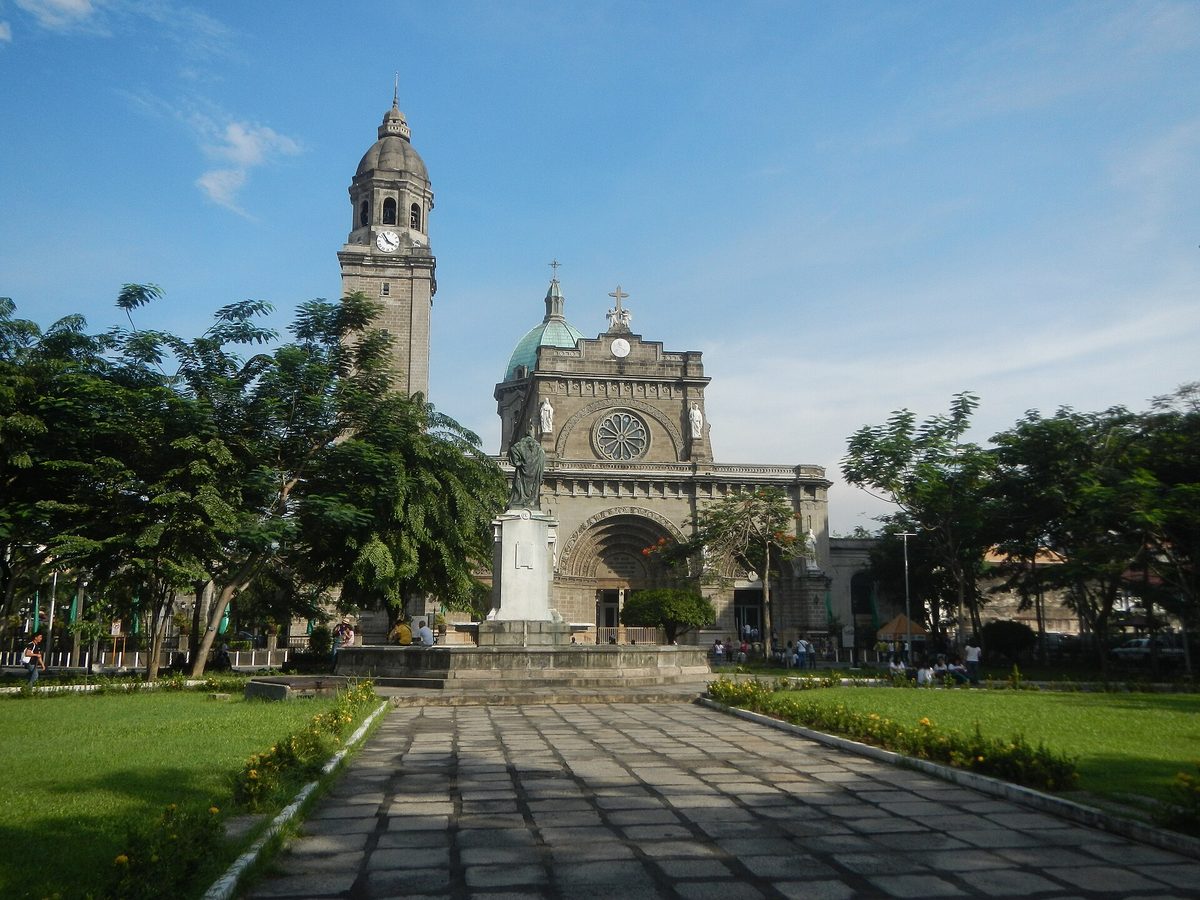
Intramuros is the 16th-century Spanish walled city, the historic core that the rest of Manila grew up around. The stone walls run roughly 4.5 kilometers, bombed close to rubble in the 1945 Battle of Manila and patiently rebuilt since. It is compact, mostly flat, and best covered on foot. My honest timing tip: arrive by about 4 p.m. so the worst heat has passed and you finish at golden hour, when the walls turn amber and the kalesa (horse-drawn carriage) drivers come out.
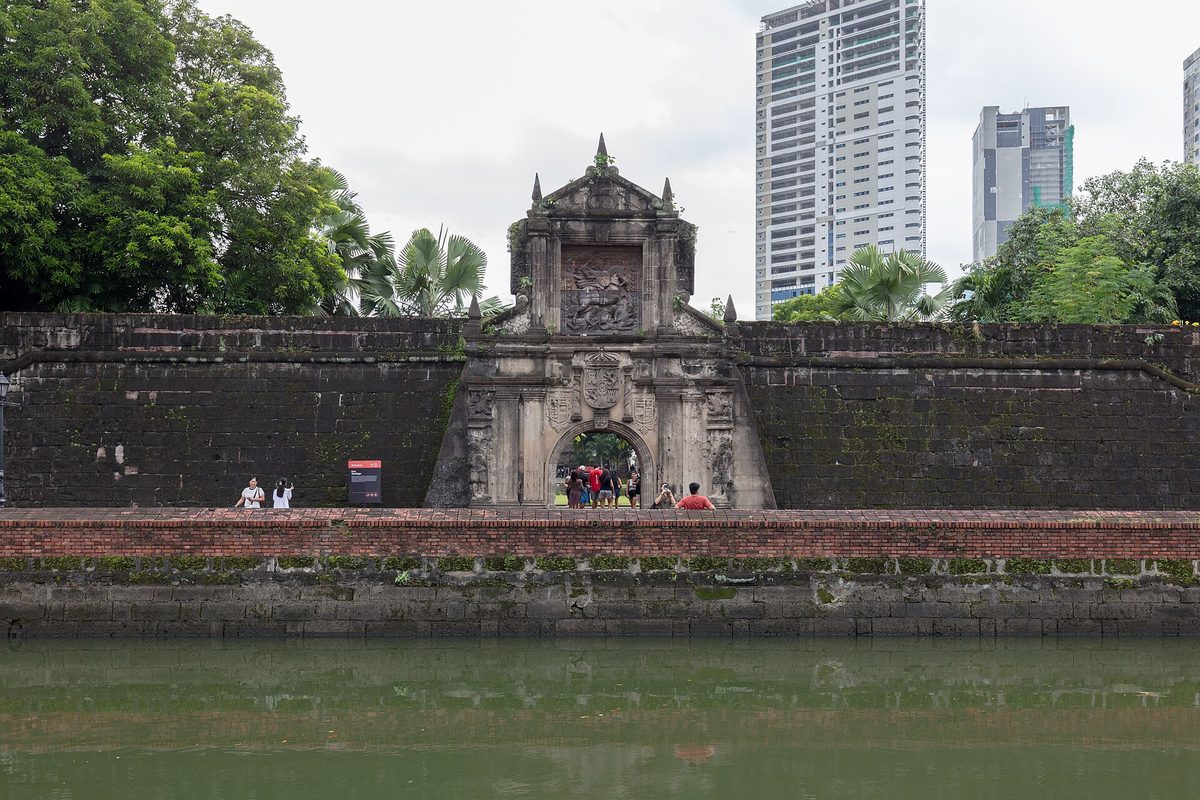
Fort Santiago is the anchor. Entry runs around 75 PHP (~$1.30) for adults, with a discounted ~50 PHP for students, seniors, and PWDs. Inside the citadel you get the moat, the dungeon, the Plaza Moriones gardens, and the Rizal Shrine marking the cell where national hero Jose Rizal spent his final night before his 1896 execution. Brass footsteps in the courtyard trace his last walk to the firing squad. Budget 60-90 minutes and read the Rizal exhibit properly; it is the through-line for half the history in this city.
For getting around Intramuros itself, you can rent a bamboo bike near Plaza Roma or take a kalesa, but agree the price first and in writing on your phone if you can; quotes balloon for tourists and 1,000 PHP for a short loop is not unusual. Honestly, the district is small enough that walking beats both. If you want the full lay of the land on neighborhoods, transport, and where to base yourself, the Manila travel guide (overview) goes wide where this guide goes deep.
San Agustin Church and Museum
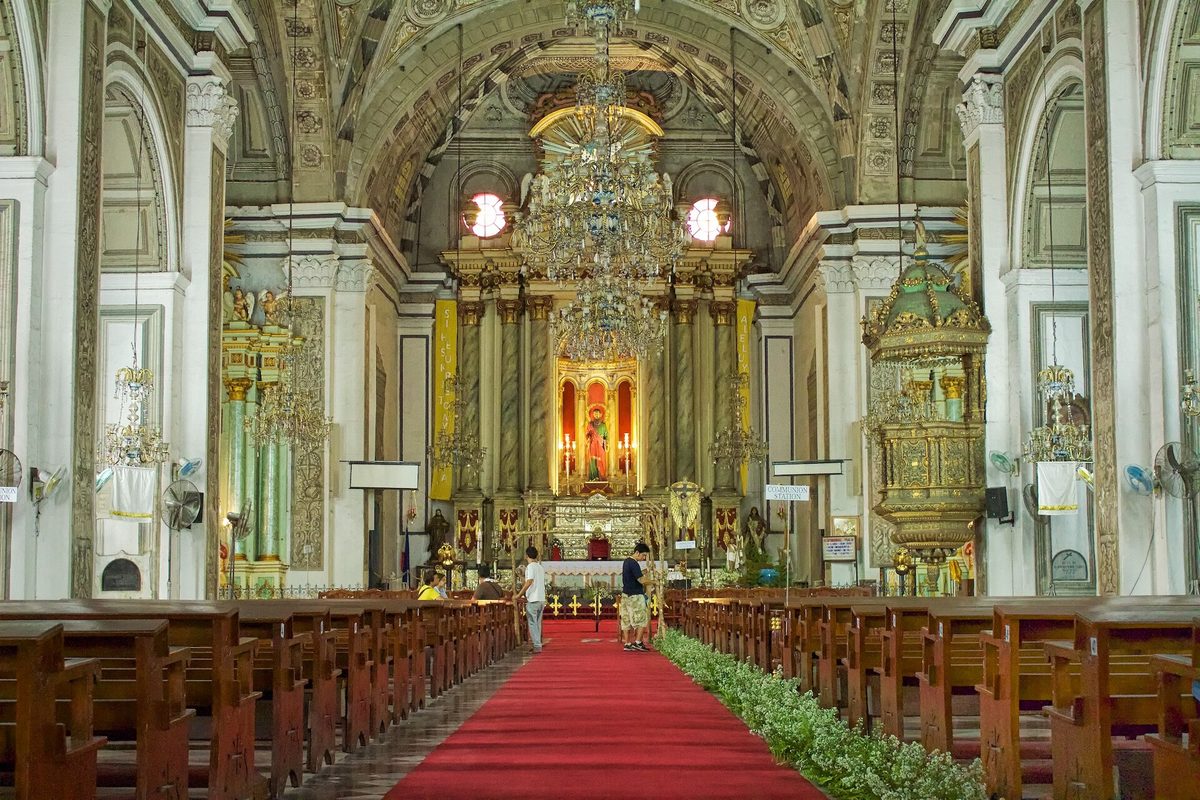
A two-minute walk from Casa Manila, San Agustin Church is the oldest stone church in the Philippines (completed 1607) and a UNESCO World Heritage Site. The church itself is free to enter when no Mass or wedding is on; the adjoining San Agustin Museum, set in the old monastery, costs around 200 PHP (~$3.45). That fee buys the best-value hour in Intramuros: a serene cloister, religious art, and a choir-loft view down the nave. Look up inside the church at the ceiling, which appears carved and three-dimensional but is actually flat, painted in trompe l’oeil by Italian artists in the 1870s. It is the detail visitors remember longest.
Casa Manila, across the plaza, is a reconstructed Spanish-colonial mansion with period furniture across three floors for about 75 PHP (~$1.30). It is a quick, worthwhile peek into how the colonial elite lived. Skip the more aggressive “light and sound” attractions inside Intramuros unless you have kids to entertain; they are overpriced for what they deliver, and your money goes further on the museum and the fort.
The National Museum complex: free, and genuinely world-class
On the eastern edge of Rizal Park sit three museums that are, by law, completely free: the National Museum of Fine Arts, the National Museum of Anthropology, and the National Museum of Natural History. Republic Act 11333 scrapped admission fees in 2019, and as of 2026 they remain free to everyone, local or foreign. Hours are roughly Tuesday to Sunday, 9 a.m. to 6 p.m. (closed Mondays). This is the single best-value cluster of things to do in Manila, full stop.
Start with Fine Arts for Juan Luna’s enormous 1884 Spoliarium, which fills an entire wall and is worth the visit on its own. Cross to Natural History for the dramatic “Tree of Life” structure under the dome and the taxidermied “Lolong,” once the largest crocodile in captivity. If your time is tight, do those two and save Anthropology for a return trip. Bring a refillable water bottle, expect a bag check, and note the buildings are blissfully air-conditioned, which makes them a strategic midday refuge from the heat.
Rizal Park (Luneta) next door
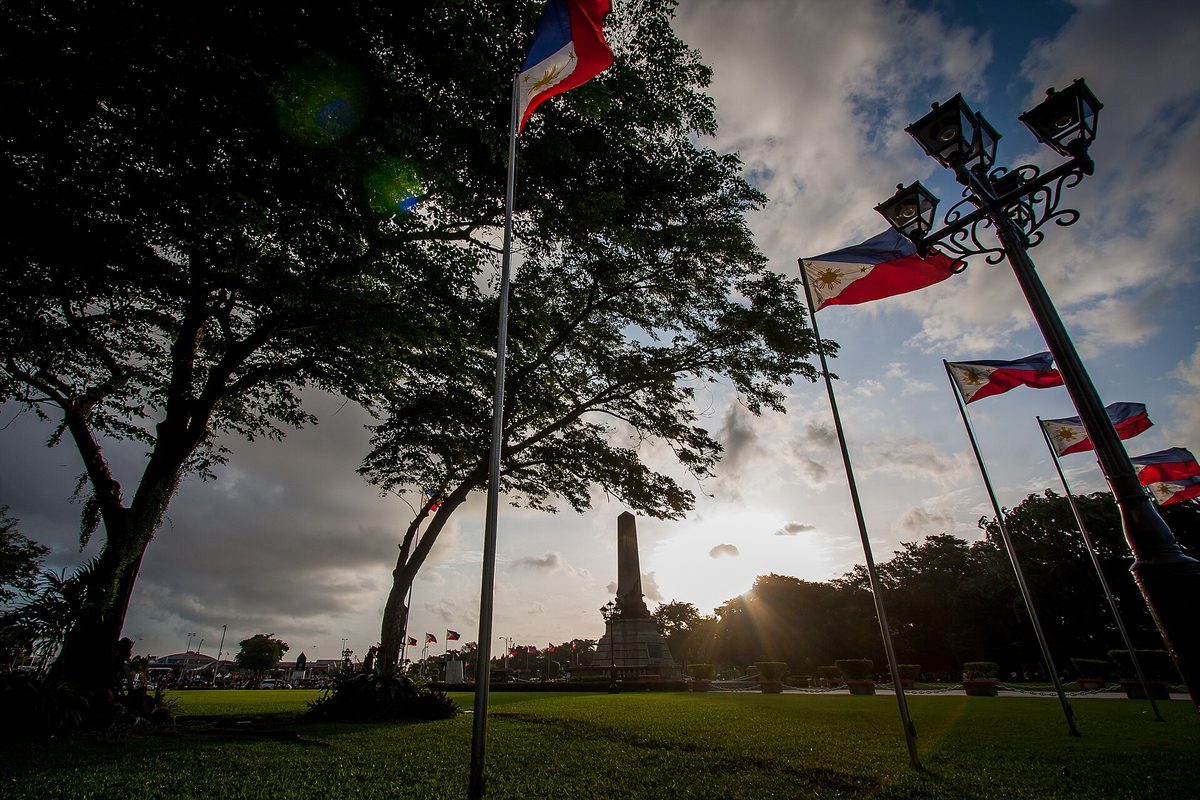
Rizal Park, also called Luneta, is the 140-acre green lung that flows right up to the museum strip, so chain them together. The Rizal Monument, guarded around the clock, marks the spot near where Rizal was executed; from there the Independence Flagpole and the open lawns spread toward the bay. It is best in the late afternoon when families, students, and chess players take over. Free, easy, and a fine place to decompress between museums. The Japanese and Chinese Gardens charge a token entry; they are pleasant but not essential.
A timing note that ties this whole zone together: the museums close at 6 p.m. and the bay sunset lands around the same hour, so the natural flow on a culture day is museums first, a wander through Rizal Park as the light softens, then a short walk or quick Grab to the Baywalk for the sunset. That single sequence covers three of my top six picks in one afternoon, costs almost nothing, and ends with the best free view in the city. Bring water, sun cover, and small bills for the vendors, and you are set for the evening.
Binondo: eat your way through the world’s oldest Chinatown
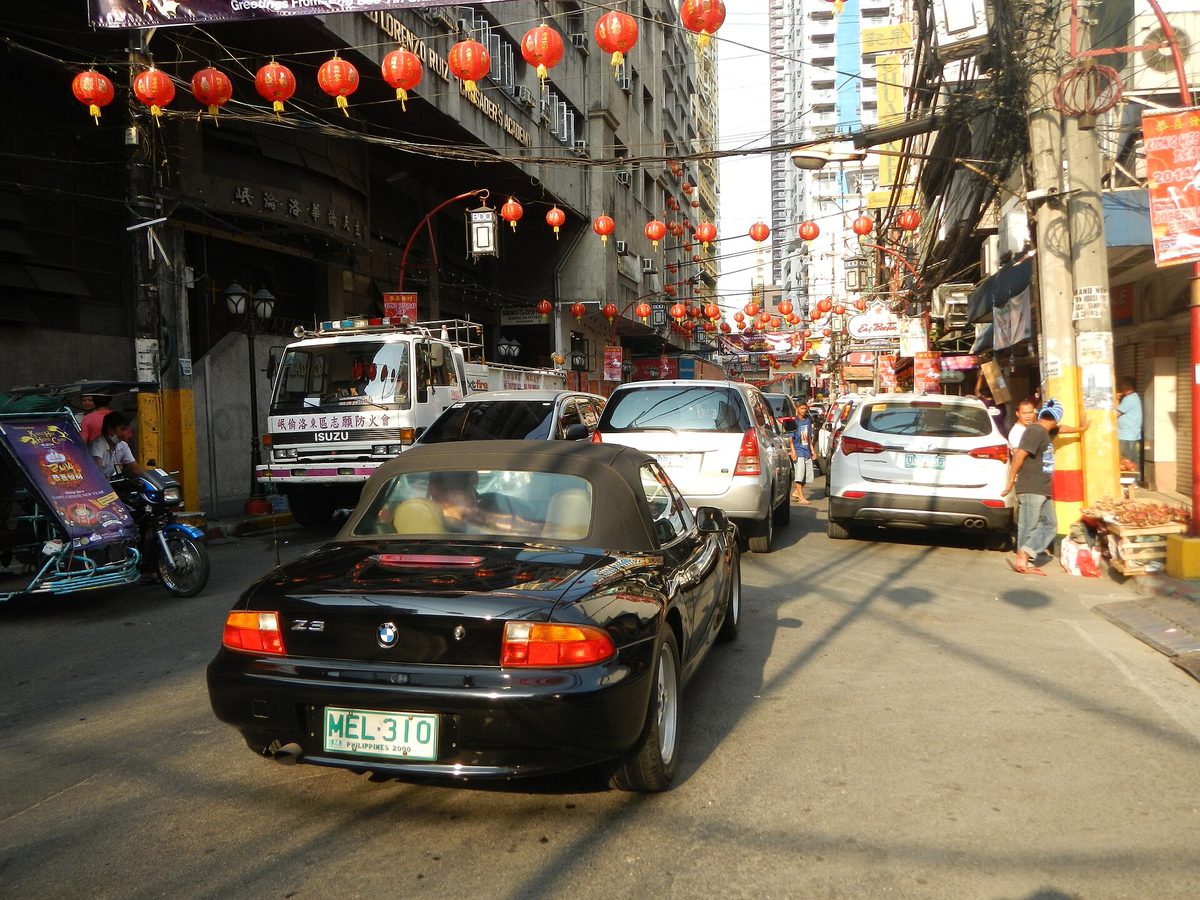
Founded in 1594, Binondo is the oldest Chinatown on Earth, and the best thing to do there is simply eat. This is, hands down, my favorite food experience in the capital. Skip a sit-down lunch and graze instead: a self-guided crawl down Ongpin Street and its alleys will fill you for 500-900 PHP (~$9-16) with room to spare.
My honest hit list, all cash-only and worth the queues: Wai Ying for hakaw and milk tea, Sincerity for its famous fried chicken, Lan Zhou La Mien for hand-pulled noodles, Quik Snack for kuchay (chive) dumplings, and New Po Heng Lumpia House tucked in an interior courtyard for fresh lumpia. Grab hopia and tikoy to take away from the old bakeries, and try warm taho (silken tofu with syrup) from a street vendor if you spot one. If decision paralysis is a risk, a guided Binondo food walk solves it, though independent grazing is cheaper and just as good.
Go mid-morning to early afternoon when the kitchens are freshest, carry small bills, and wear shoes you do not mind getting grubby; the streets are crowded and the gutters are real. Binondo is technically walkable from Intramuros, but with the traffic and the bridges I would take a short Grab between the two and save your legs for the eating.
Quiapo: the most intense thing to do in Manila
Quiapo Church (the Minor Basilica of the Black Nazarene) is the spiritual heart of working-class Manila, and stepping inside is a genuine experience: devotees on their knees, the dark statue of the Black Nazarene believed to be miraculous, and a constant low hum of prayer. The church is free. Around it sprawls one of the city’s rawest markets, selling everything from herbal remedies and candles to cut-price electronics under the Quiapo bridge.
One date to know: every January 9, the Traslacion procession of the Black Nazarene draws staggering crowds; in 2026 organizers counted roughly 9.6 million devotees over a procession that ran more than 30 hours. It is one of Asia’s largest religious gatherings and extraordinary to witness from the edges, but it is not a casual sightseeing day; if you are not there specifically for it, avoid central Quiapo on that date entirely.
On any normal day, Quiapo rewards curiosity but demands street smarts. Pickpocketing is a real risk in the market crush, so leave the good camera at the hotel, carry only what you need, and stay alert. If you are weighing how cautious to be across the city generally, our honest take on whether is Manila safe for tourists breaks down the districts where you can relax and the ones where you should not.
Manila Bay sunset and the Baywalk
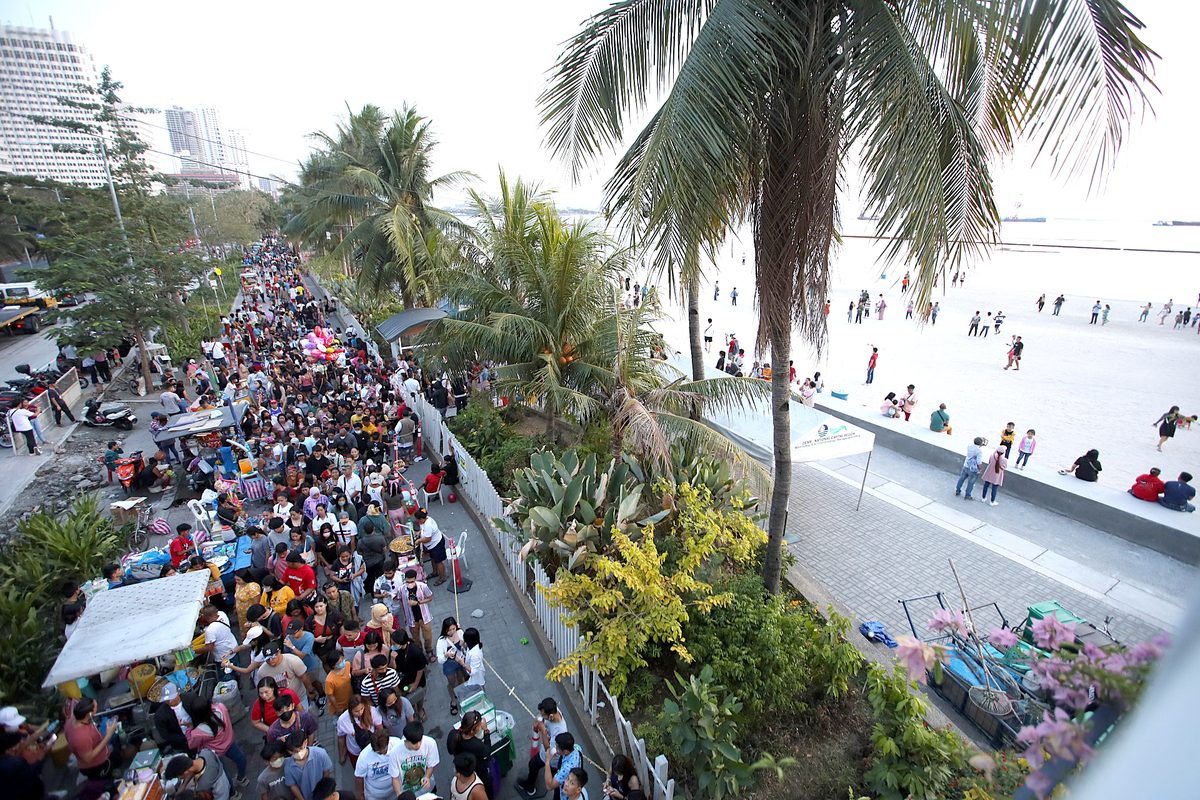
The sunset over Manila Bay is the city’s free nightly headline act, and the Baywalk along Roxas Boulevard is where to catch it. Find a seawall spot by around 5 p.m., grab a fish ball skewer or a cold drink from a vendor, and watch the sky go orange behind the silhouetted ships. It is genuinely one of the better urban sunsets in Southeast Asia, and it costs you nothing but the walk.
A section of the Baywalk is the controversial Dolomite Beach, an artificial white-sand overlay created with crushed dolomite from Cebu. Entry is free and it photographs well at sunset, but here is the honest part: do not swim. The water carries high fecal-coliform levels and swimming is banned outright; this is a place to stroll and take photos, not to wade. Treat it as a viewing platform and you will not be disappointed. If actual swimmable sand is what you are after, you will need to leave the city; our guide to the beaches near Manila covers the day-trip-able coast.
BGC and modern Manila
When the colonial-era density gets to be too much, Bonifacio Global City (BGC) in Taguig is the antidote: clean, walkable, planned, and stuffed with restaurants, rooftop bars, and large-scale street art. Bonifacio High Street is the spine, a pedestrian-friendly stretch of shops and grassy plazas modeled on European high streets. There is no entry fee; you come to wander, eat well, and gallery-hop. The murals and the changing public-art installations make it the most camera-friendly modern district in the metro.
It is also the easiest place in Manila to feel completely at ease, which makes it a good evening base if the older districts wore you out. Make all the comparisons you like to Singapore; BGC invites them. Getting there from the historic core is a 30-60 minute Grab depending on traffic, so I would pair it with a Makati dinner rather than bouncing back and forth. If you want art over shopping, the galleries and the rotating sculptures along the High Street give you a couple of unhurried hours; if you want nightlife, neighboring Poblacion in Makati is the grittier, more interesting bar district once the sun goes down.
Day trips: the best escape from the city
Two focused days cover Manila’s core, and a third is well spent escaping it. The standout day trip is Tagaytay, about two hours south, where the ridge looks down on Taal Volcano, a volcano in a lake on an island in a lake. The cool air alone is a relief. Most travelers do it as a tour for roughly 2,500-4,000 PHP (~$43-69) per person, or rent a car with driver. One caution worth repeating: Taal is an active volcano, and access to the volcano island itself opens and closes with alert levels, so check the PHIVOLCS bulletin before planning anything ambitious; from the Tagaytay ridge the view needs no boat trip.
Corregidor Island, the WWII fortress at the mouth of Manila Bay, is the other classic, toured as an open-air museum of ruined batteries and barracks; verify current ferry schedules before you commit, as service has been intermittent. For the rice-terrace-and-volcano bucket list further afield, slot Manila into a wider Philippines itinerary rather than trying to day-trip the impossible.
Getting to the attractions: airport and transport notes
Most visitors land at Ninoy Aquino International Airport (NAIA), and the 2026 situation is worth knowing before you book a hotel. International flights now run mainly out of Terminal 1 and Terminal 3 after a mid-2026 airline reshuffle, with Terminal 4 reopening for some domestic service; crucially, your arrival and departure terminals can differ, so check your specific airline’s current terminal rather than assuming. There is still no direct train from the airport, so for a first arrival I would book an airport Grab or a hotel transfer rather than wrestle a connecting jeepney with luggage.
Once you are in the city, Grab is the default for foreign visitors: fares are fixed and shown upfront, the ride is tracked, and you skip the meter haggling that plagues street taxis. The LRT and MRT rail lines are cheap and beat traffic along the main corridors if you buy a Beep card and travel outside the 7-10 a.m. and 5-8 p.m. crush, but they are crowded and not luggage-friendly. Within Intramuros and the Rizal Park strip, just walk. Across longer hops, build in a 20-30 minute traffic buffer, because Manila gridlock is not a myth. For the full nationwide picture of jeepneys, ferries, and domestic flights, see our guide to getting around the Philippines.
What to skip in Manila (an honest list)
Not everything that ranks on the big aggregator lists deserves your hours. My candid skips:
- Star City and most indoor theme parks unless you are entertaining kids on a rainy afternoon; the rides are tired and the value is poor.
- Mall-hopping as a “sight.” SM Mall of Asia and the megamalls are genuinely huge, but a foreign visitor with two days should not spend one inside a mall that resembles malls back home. Pop in for air-con and a meal, not as a destination.
- Swimming anywhere in Manila Bay, Dolomite Beach included, for the water-quality reasons above.
- Overpriced kalesa “tours” quoted in the thousands of pesos. A short novelty ride is fine; a long one is a tourist tax.
- Driving yourself. Manila traffic is punishing and parking is worse. Use Grab and your feet instead.
What to do in Manila by traveler type
Same city, very different ideal days depending on who you are:
| You are… | Build your day around |
|---|---|
| A first-timer (1-2 days) | Intramuros + Fort Santiago in the afternoon, the National Museum complex in the morning, a Binondo food crawl, and a bay sunset to close. |
| A culture & history traveler | San Agustin Museum, the full National Museum complex, Casa Manila, and Rizal Park, with a Corregidor day trip if ferries are running. |
| A foodie | A long Binondo morning, then BGC or Poblacion (Makati) for dinner and bars. |
| A family with kids | Manila Ocean Park, Rizal Park’s open lawns, and a daytime Intramuros bike or kalesa ride. |
| A budget traveler | The free museums, free Rizal Park, free Baywalk sunset, and street-food Binondo; total spend under 1,000 PHP for a full day. |
| Short on time (layover) | One zone only: Intramuros at golden hour, or the National Museum complex if it is a daytime gap. |
For broader inspiration once you leave the capital, our roundup of things to do in the Philippines covers island hopping, diving, and the festivals worth planning a trip around.
Frequently asked questions
What is the number one thing to do in Manila?
Walk Intramuros and tour Fort Santiago, ideally in the late afternoon into golden hour. It packs the most history, atmosphere, and photogenic value into a few hours, costs about 75 PHP for the fort, and sits next to San Agustin Church and Casa Manila so you can chain several sights on foot in one compact, walkable district.
Is two days enough for Manila?
Two focused days cover the essentials comfortably: one for Intramuros and the bay sunset, one for the National Museum complex, Rizal Park, and a Binondo food crawl. A third day is worth adding only if you want a Tagaytay or Corregidor day trip. Manila is a base and a layover city more than a week-long destination.
Are the National Museums in Manila really free?
Yes. Under Republic Act 11333, the National Museum of Fine Arts, Anthropology, and Natural History all dropped admission fees in 2019, and as of 2026 entry remains free for everyone, local or foreign. They are open Tuesday to Sunday, roughly 9 a.m. to 6 p.m., and closed Mondays. Bring a water bottle and expect a quick bag check at the door.
Is it safe to walk around Manila as a tourist?
The main tourist districts (Intramuros, Rizal Park, BGC, Makati) are fine to walk by day with normal big-city caution. Markets like Quiapo and Divisoria see real pickpocketing, so carry little and stay alert there. Use Grab rather than flagging street taxis, and avoid empty areas after dark. See our full breakdown of whether Manila is safe for tourists for district-by-district detail.
What free things are there to do in Manila?
Plenty. The three National Museums are free, Rizal Park is free, the Manila Bay sunset and Baywalk are free, Quiapo and San Agustin churches are free to enter, and simply wandering Intramuros costs nothing if you skip the paid interiors. A full, satisfying day in the capital is genuinely possible for under 1,000 PHP including street food.
How do I get around Manila between attractions?
Use the Grab app as your default; fares are fixed, the car is tracked, and it spares you taxi-meter haggling. Jeepneys and the LRT/MRT are cheap but crowded and tricky for first-timers. Walk within Intramuros and within the Rizal Park strip, and budget extra time in the 7-10 a.m. and 5-8 p.m. rush hours, when even short hops can crawl.
Sources and photo credits
Photo credits
- Manila Cathedral, Intramuros — Judgefloro (CC0) via Wikimedia Commons
- San Agustin Church interior, Intramuros — Ray in Manila / CC BY 2.0 via Wikimedia Commons
- Fort Santiago gate, Intramuros — Diego Delso / CC BY-SA 4.0 via Wikimedia Commons
- Binondo (Chinatown) street, Manila — Ramon FVelasquez / CC BY-SA 3.0 via Wikimedia Commons
- Manila Bay / Dolomite Beach, Roxas Boulevard — PNA photo by Avito C. Dalan (CC0) via Wikimedia Commons
- Rizal Park (Luneta), Manila — Froi Rivera / CC BY-SA 4.0 via Wikimedia Commons
Sources
- National Museum of the Philippines — official site (free-admission policy, hours)
- Intramuros Administration — official site (Fort Santiago, Casa Manila)
- PHIVOLCS — Taal Volcano alerts and bulletins
- Philippine Department of Tourism — official travel portal
About this guide: PhilippinesTourism.org is an independent Philippines travel resource; this guide was researched and verified June 2026.