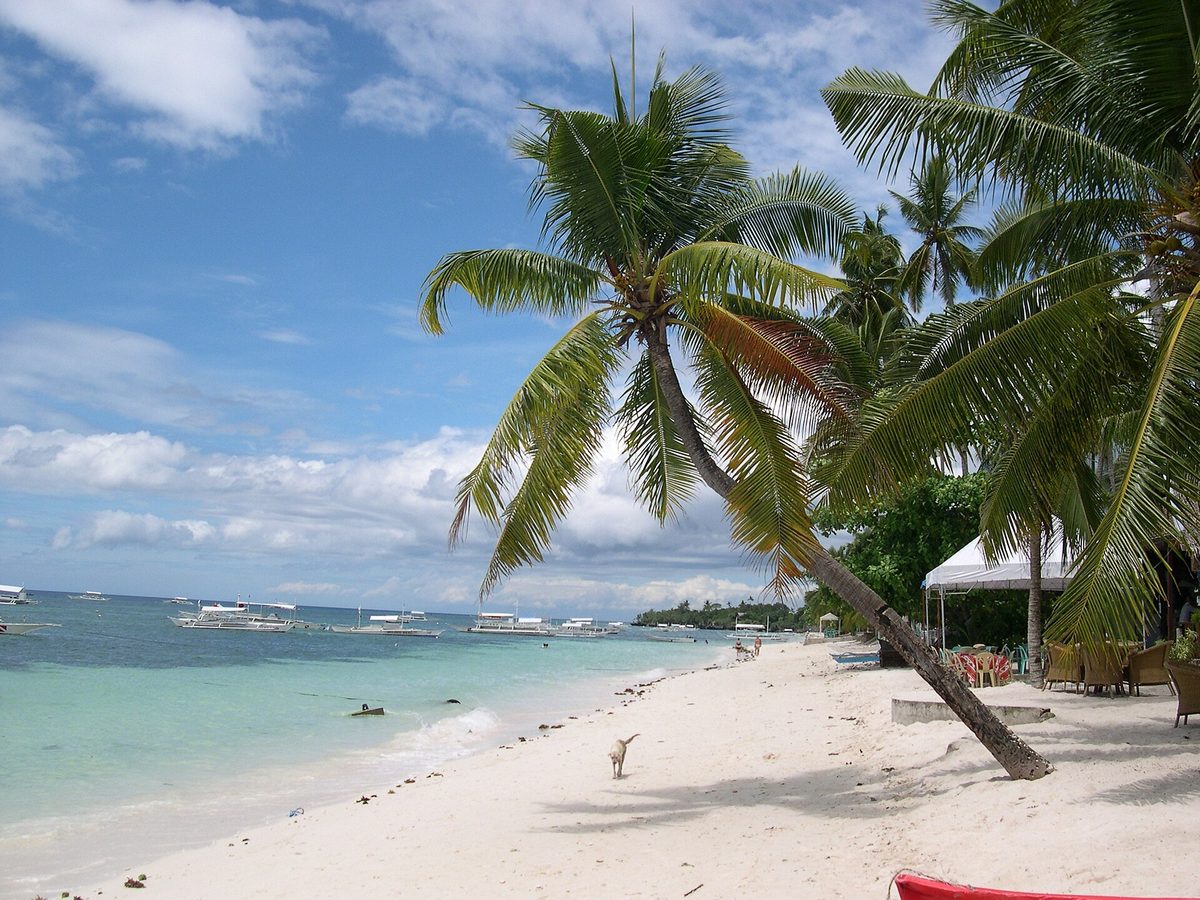
Panglao Island and Alona Beach Guide
Panglao Island is the teardrop-shaped landmass off Bohol’s southwest corner that does most of the province’s beach-and-dive work. An international airport sits on it, and the reef runs almost all the way around. This guide takes it beach by beach, as the coastal half of a wider Bohol itinerary.
At a Glance: Panglao’s Five Main Beaches
If you only have time to skim one thing, skim this. These are the five beaches travelers actually choose between when booking accommodation. Prices reflect typical 2026 high-season rates for a double room with breakfast.
| Beach | Vibe | Sand | Sunset | Stay price band | Best for | Downsides |
|---|---|---|---|---|---|---|
| Alona | Busy, neon, party-adjacent | Soft white, narrow at high tide | So-so (faces south) | ₱2,800-12,000 ($44-$190) | First-timers, divers, nightlife | Crowds, jet-ski noise, hawkers |
| Dumaluan | Resort-quiet, family | Powdery, wide | Decent | ₱4,500-15,000 ($71-$238) | Couples, families, swimmers | Less walkable dining |
| Bolod | Sleepy, residential | White, shallow flats | Good | ₱3,000-9,000 ($48-$145) | Kids, low-key stays | Tide goes very far out |
| Doljo | Very quiet, end-of-road | Coarser, some seagrass | Best on Panglao (faces west) | ₱2,500-22,000 ($40-$350) | Honeymooners, writers | Need a scooter or trike for dinner |
| Momo | Hidden, almost no resorts | White, rocky in spots | Strong | ₱1,800-4,500 ($29-$71) | Day-trippers, budget | Very limited food and amenities |
Where Is Panglao?
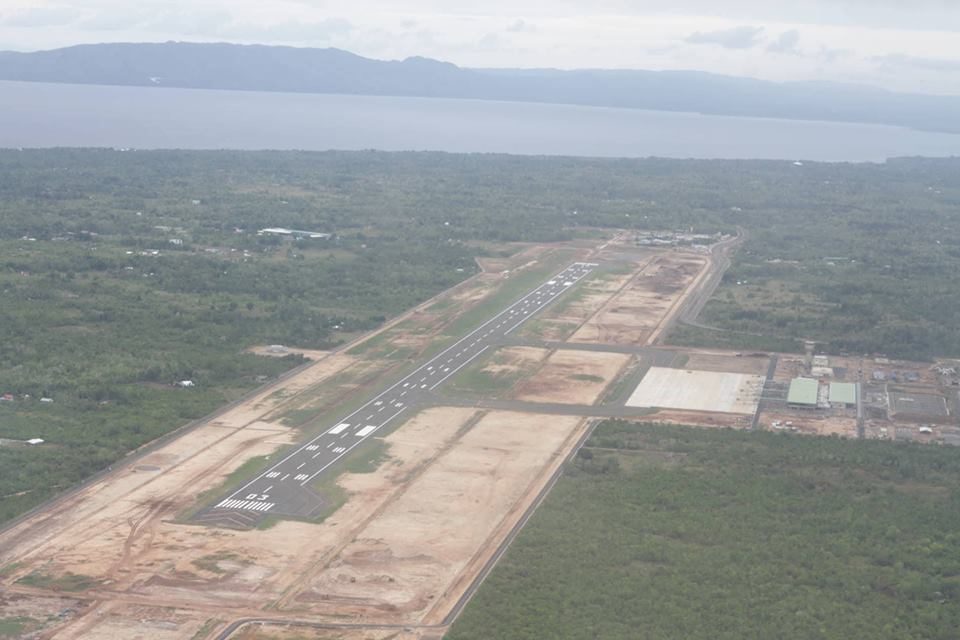
Panglao sits off the southwest tip of Bohol in the Central Visayas. Two short bridges connect it to Tagbilaran, Bohol’s capital, so technically you can walk from the mainland if you really want to. The island is about 16 km long and 7.5 km wide, small enough that no corner is a long scooter ride from the airport. Administratively it’s split between two municipalities, Panglao and Dauis, but visitors rarely think about that line.
For trip planning, the simplest mental model is this: the south coast is where you swim, the west coast is where you watch the sun set, the north coast is where the airport and a couple of caves sit, and the east is mostly residential. The Chocolate Hills, Loboc River and tarsier sanctuary are all on the Bohol mainland, an hour or two inland by car. I cover those separately in the Chocolate Hills guide and the broader things-to-do-in-Bohol roundup.
Getting to Panglao: Airport and Ferry Routes
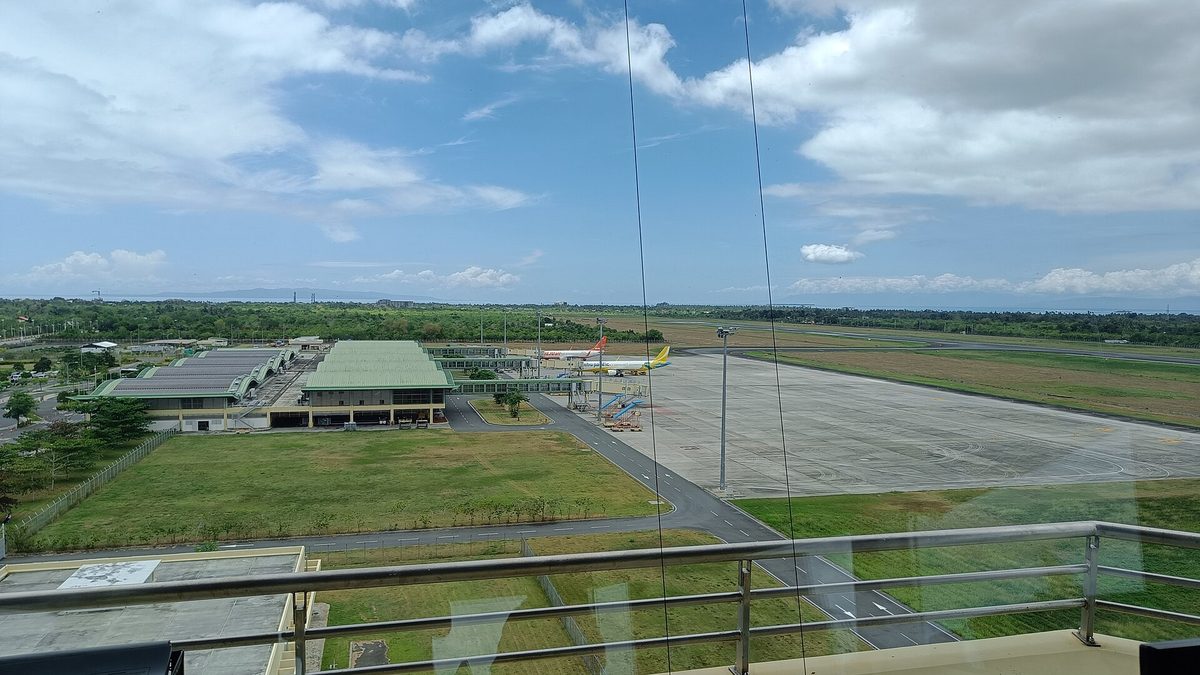
Most travelers fly in. Bohol-Panglao International Airport (airport code TAG) opened in 2018 on Panglao itself, so you land a short ride from the beaches. From the terminal, Alona takes roughly 10 minutes by tricycle (₱150-200), Dumaluan and Bolod 12-15 minutes, and Doljo around 25 minutes, depending on traffic.
Direct flights as of October 2026
- Manila (MNL) to TAG: Philippine Airlines, Cebu Pacific and Philippines AirAsia all fly the route; check the day’s schedule and flight time when you book. Promo fares hover around ₱2,500-4,500 one-way; walk-up rates can hit ₱8,000+.
- Cebu (CEB) to TAG: check Cebu Pacific’s timetable for a direct flight on your date. With the fast ferry right there, sailing is usually the simpler choice.
- Davao (DVO) to TAG: Cebu Pacific lists 10 flights a week; confirm the days and flight time for your travel date.
- International: Seasonal direct flights from Seoul (ICN) on Jeju Air and Jin Air, plus charter and scheduled services from Taipei, Hong Kong and Kuala Lumpur. Routes change every season, so verify before booking a multi-leg itinerary around them.
Coming by ferry from Cebu
If you’re already in Cebu and want to skip the airport, the fast ferry to Tagbilaran is the move. OceanJet runs fast ferries on the route daily, and the crossing takes about 2 hours; check the operator’s timetable for the day’s departures. Tourist-class fares sit around ₱800-1,200 ($13-$19). From Tagbilaran Pier it’s a 25-minute taxi or van ride to Alona (₱600-800). Full schedules, terminal tips and the case for flying vs. sailing are in the Cebu to Bohol ferry guide.
The Beaches of Panglao
The fundamental thing to understand: Panglao’s beaches all have different orientations and different reef structures, which means they behave very differently at low tide and in storm season. Here is what I tell friends.
Alona Beach
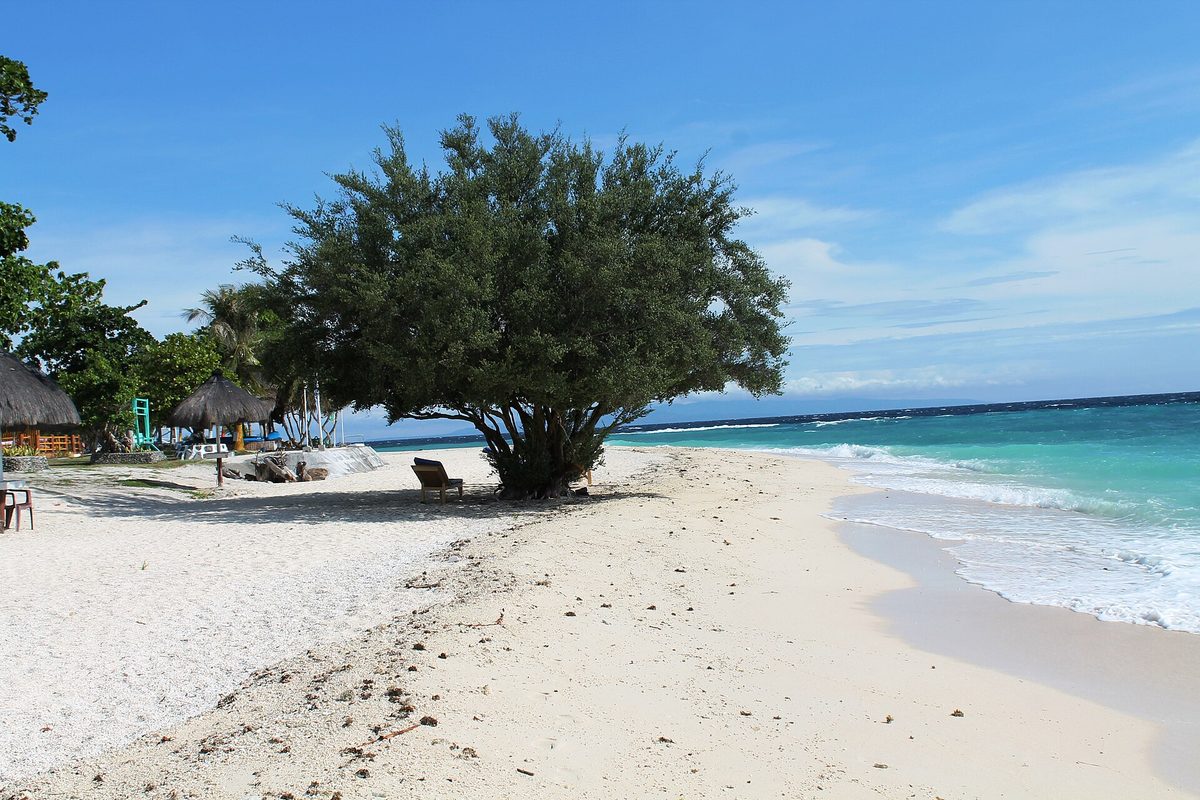
The strip everyone knows: about 1.5 km of white sand on the south coast, lined three-deep with dive shops, beach bars, massage huts and resorts. The water is bathtub-flat inside the reef, and at low tide the lagoon gets very shallow. Evenings are loud, with bars and live music along the strip. If you want convenience and don’t mind people, you stay here.
Dumaluan Beach
A long stretch of fine white sand with calm, shallow water, farther east along the south coast from Alona. The vibe is gated resorts with day-pass beach access, and the water is calmer and clearer than Alona because there’s less boat traffic. Bohol Beach Club and South Palms anchor the strip. This is where I send couples who want Alona’s water without Alona’s noise.
Bolod Beach
Bolod is the next bay over from Dumaluan and arguably the best swimming beach on the island for small kids. Resorts here include some smaller boutique places and several family-run pension houses at the budget end.
Doljo Beach
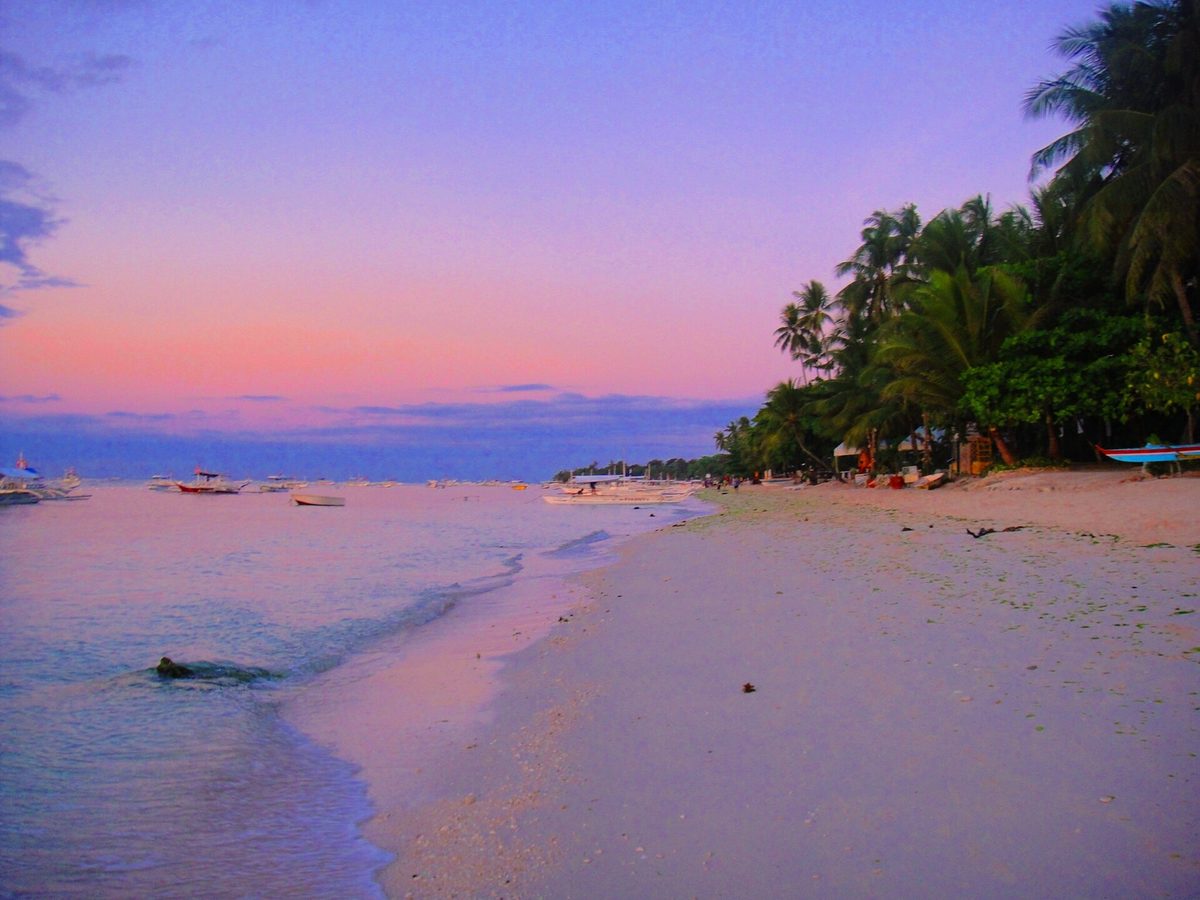
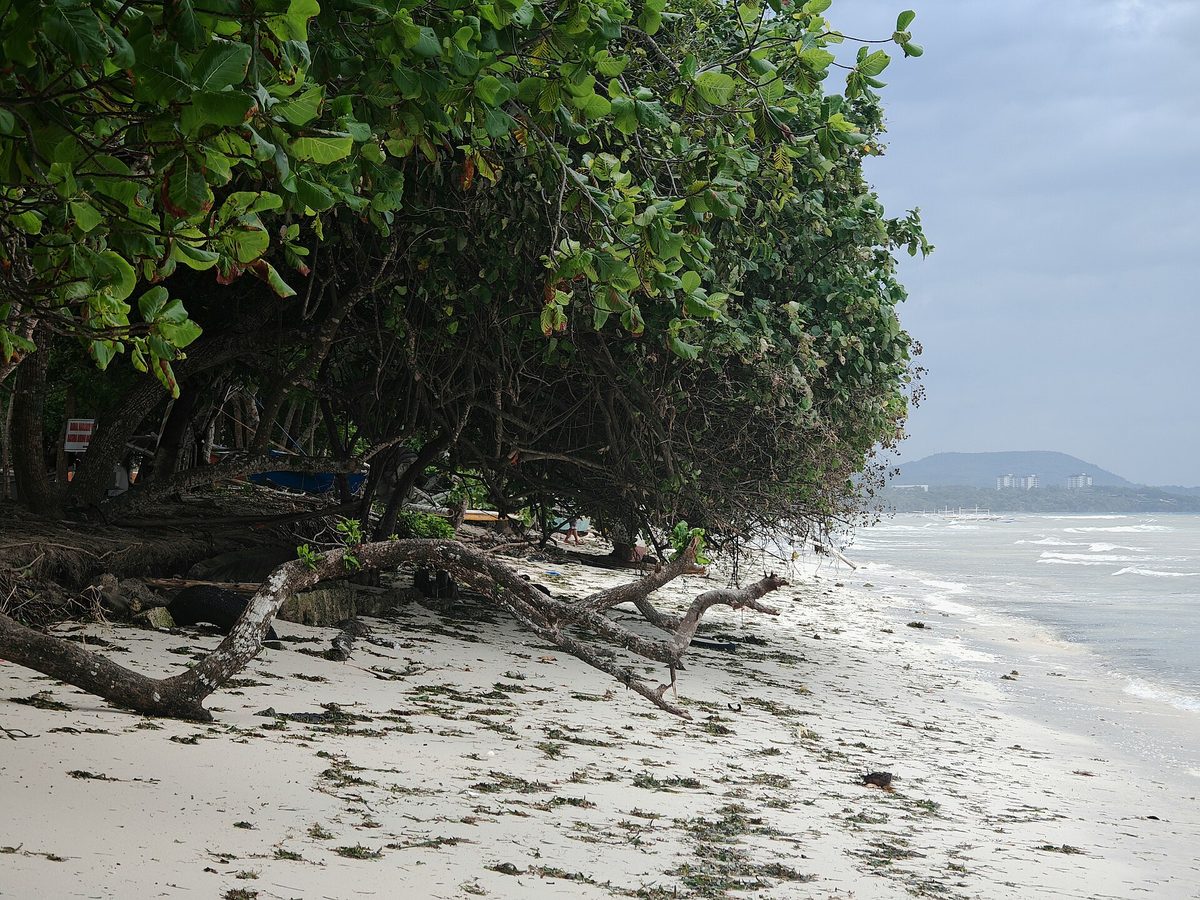
On the northwest tip. The reef off Doljo Point is good enough for shore diving, as are Momo Beach and the Alona House Reef. The big draw is sunset: Doljo faces west, and on clear evenings the sky behind the palms goes gold-pink-purple. Quietest of the main beaches by a long shot.
Momo and Bingag
Tiny, semi-public, with very little infrastructure. Worth a scooter trip if you want a day where you actually see local fishermen pulling in nets. Bring your own water. Don’t expect a restaurant.
Alona Beach: An Honest Take in 2026
Time to be candid. Alona Beach is no longer the laid-back stretch the older guidebooks describe. The sand is still pretty, the food is still good, the dive scene is excellent, but the strip is loud, the touts can be aggressive, and the once-clear water inside the reef now sees enough sunscreen sheen and boat fuel on a busy weekend that I no longer swim there at midday.
What still works: the dive shops (more on that below), the breakfast cafés, the easy walking access to ATMs, pharmacies and mini-marts, and the warm welcome from longtime resort staff. What does not: the hard sell on “private island hopping”, jet skis too close to swimmers, and the noise of competing bars once the evening gets going.
My current rule: stay one street back from the beach (cheaper, quieter, and you walk to the sand in 90 seconds), eat dinner at one of the established beach restaurants, and do your actual sunset swim at Dumaluan or Doljo. If you’ve already booked Alona-beachfront, ask for a room facing the gardens rather than the strip.
Quieter Alternatives to Alona
If Alona sounds like a hard pass, here is where to point your booking instead.
- Dumaluan if you want a real beach with restaurants on site, just no street-side party.
- Doljo if you want sunset and silence and don’t mind a scooter ride for dinner.
- Bolod if you have kids who need shallow water and you’d rather rent a house than a resort room.
- Anda (eastern Bohol, about 2.5-3 hours by car from Panglao) if you want what Alona was 20 years ago. I cover it in the best beaches in the Philippines roundup.
What to Do on Panglao
Scuba diving and snorkeling
This is the real reason people fly all the way to Panglao. The reef along the south and southwest is one of the best easy-access dive zones in the Philippines, and shops run boats out every morning. Expect 2,500-3,200 PHP ($40-$50) per fun dive including gear, or 22,000-28,000 PHP for a four-day Open Water course. Quality varies a lot between operators; look for SSI or PADI 5-Star certification, no more than six divers per guide, and a proper safety briefing before every dive. Genesis Divers, established in 1994, is one of the older names. Avoid the “₱1,200 try-dive” leaflets on the beach; that’s where the equipment-failure stories come from.
For snorkelers, the close-in reef at Alona has degraded badly, but Balicasag Island (45-minute banca ride) and the reef off Doljo Beach are still alive.
Balicasag Island and dolphin watching
The classic Panglao day trip is an early-morning boat out to look for dolphins on the open water between Panglao and Balicasag, followed by snorkeling at Balicasag and a stop at the Virgin Island sandbar, which reopened in February 2026 under stricter rules and has no vendor stalls. Ask your operator for the departure time and what’s included. Expect to pay ₱1,800-2,500 ($29-$40) per person on a joiner boat, or ₱4,500-6,000 for a private banca up to six people. Skip the “interactive” dolphin chase boats; the responsible operators keep distance and turn off engines when pods approach.
Hinagdanan Cave
A short underground chamber in Dauis with a swimmable freshwater pool lit by skylight holes in the limestone roof. Confirm the entrance and swimming charges at the gate. The cave is cool but very small, and the floor is slippery. Go early. Combine with a scooter loop past Dauis Church and the Bohol Bee Farm.
Stand-up paddleboarding and kayaking
The flat lagoon inside Alona’s reef is ideal for SUP at sunrise before the boats start. Several Alona shops rent boards for ₱400/hour or ₱1,200/half-day. For something better, paddle out from Doljo at dawn; the water there is genuinely clear and there are usually one or two turtles inside the lagoon.
Smaller things that punch above their weight
- Bohol Bee Farm tour: ask at the farm for tour times and prices, and save room for the organic ice cream.
- Sunday market at Alona Plaza: grilled tuna belly, fresh halo-halo, ₱300 dinner.
- Scooter loop around the western coast: quiet coastal roads, timed to finish at Doljo for the sunset.
- Sea-firefly kayak tours from Lila on the Bohol mainland: bioluminescent plankton in the mangroves after dark.
Where to Stay on Panglao Island
Picking a base on Panglao is more about beach choice than star rating. Here is how I think about the Panglao resorts landscape in 2026.
Alona Beach
- Henann Resort Alona Beach (₱8,000-14,000) — the big anchor on the strip. 400 rooms, multiple pools, gardens you can lose yourself in. Service is solid, breakfast buffet is genuinely good.
- Amorita Resort (₱13,000-22,000) — perched on the cliff at the western end of Alona. Quieter than the beachfront places, with infinity pools overlooking the Bohol Sea.
- Alona 42 Hostel (₱700-1,400 dorm) — the backpacker move. Two streets back, clean, social.
Dumaluan and Bolod
- Bohol Beach Club (₱9,000-16,000) — old-school resort with a private wide stretch of Dumaluan. Rooms and facilities have had a major renovation. Best for couples who don’t want a party.
- South Palms Resort (₱10,000-18,000) — long beachfront, kid-friendly, two pools.
- Bolod Beach guesthouses (₱2,500-5,000) — cheaper, family-run, the move for a week-long stay.
Doljo and the quieter resorts
- Eskaya Beach Resort — closed for redevelopment; the resort plans to welcome guests to its redesigned villas in 2027.
- Mithi Resort and Spa (₱6,000-11,000) — beachfront in Bingag, Dauis, on half a kilometer of white sand. Big pool.
- Linaw Beach Resort (₱4,500-7,000) — on Danao Beach, set in a secluded tropical garden; reliable mid-range.
Booking tip: rates on Panglao can swing 30-40% between Sunday-Wednesday and Thursday-Saturday in high season. Land midweek if your dates are flexible. November-May is dry season and prime diving visibility; June-October has more rain and the occasional typhoon, but also half-price hotel rooms.
Where to Eat on Panglao
Food on Panglao has improved a lot in five years. The current short list:
- Shaka Alona — superfood bowls, smoothies, the breakfast everyone Instagrams. Real coffee. ₱350-500 a plate.
- Giuseppe Pizzeria — wood-fired pizza on the Alona back road. Italian-run, properly chewy crust. ₱450-700.
- Pearl Restaurant at Linaw — Filipino fine-dining, sit on the open terrace. Try the kinilaw and the adobo flakes. ₱700-1,200.
- Bohol Bee Farm Restaurant — organic vegetables, malunggay pesto, honey ice cream. Worth the scooter ride. ₱400-800.
- Trudis Place — local Filipino plates, no frills, ₱200 per dish.
- Alona Night Market — every evening, grilled seafood by weight, ₱500 feeds two.
Day Trips from Panglao
Panglao is small enough that you’ll want at least one day off the island. The big ones:
- Countryside tour (Loboc River cruise, Tarsier Sanctuary, Chocolate Hills) — full day, ₱2,500-3,500 per person joiner, ₱5,500 private car. The whole Bohol mainland highlight reel in 8 hours. See the standalone Chocolate Hills guide.
- Anda — allow 2.5 to 3 hours by car each way, but it’s the laid-back beach Panglao used to be. Best as an overnight.
- Cabilao Island — small dive island off northwest Bohol. Hammerhead season is February-May.
- Cebu City day trip — fast ferry over, lunch in Cebu, fast ferry back. Doable but tight; better as a stopover on the way home.
Practical Tips and Costs
Money
ATMs cluster on the Alona Beach Road and at Tagbilaran’s malls. Carry cash for trikes, market food and dive shops; cards are accepted at the bigger resorts and restaurants. Conversion rates in October 2026 hover around 63 PHP to 1 USD; tipping is appreciated but not obligatory (₱50-100 per service is normal).
Getting around
Tricycles are everywhere. The municipality prescribes tricycle fares, so ask the driver for the current tariff and agree the price, shared or chartered, before getting in. Scooter rental runs ₱400-600/day; bring an international driver’s permit. Grab covers Tagbilaran and nearby areas; check the app for your exact pickup on Panglao and keep a tricycle as a backup.
Connectivity
Globe and Smart both have 4G/LTE coverage across Panglao, with 5G in the Tagbilaran-airport corridor. A 30-day tourist SIM is around ₱300 with 8GB of data. Resort Wi-Fi is generally fine for video calls.
Weather and crowds
- December-February: dry, cooler, peak crowds and rates.
- March-May: hot and dry, with good underwater visibility at Balicasag.
- June-September: southwest monsoon, with more frequent showers; rates drop by roughly 30%.
- October-November: typhoon window. Most storms track north of Bohol, but flights do get cancelled. Buy travel insurance.
What things cost
- Mid-range Panglao resorts double room: ₱4,500-9,000 ($71-$145)
- Local breakfast: ₱180-350
- Dinner for two with drinks at a beach restaurant: ₱1,200-2,200
- Two-tank fun dive: ₱5,000-6,400 ($79-$100)
- Joiner island-hopping with dolphin watch: ₱1,800-2,500
- Tricycle from airport to Alona: ₱150-200
How Panglao Fits a Wider Philippines Trip
Panglao pairs naturally with Cebu (an hour by ferry) and with the Visayas island chain in general. A common loop I recommend: fly into Cebu, three days exploring Moalboal sardines or Oslob whale sharks, ferry to Bohol, three days on Panglao, then either fly out from TAG or ferry to Siquijor for two final nights. If you only have a week and want pure beach, fly straight into Panglao. If you want to compare it to other top island bases before committing, the best islands in the Philippines roundup is the broader picture.
FAQ: Panglao Travel Questions
Is Panglao the same as Bohol?
Not quite. Panglao is a small island connected by two bridges to Bohol’s mainland; Bohol is the much larger province it sits within. The Chocolate Hills, Tarsier Sanctuary and Loboc River are all on Bohol’s main island, not Panglao. When people say “we went to Bohol” they often mean Panglao plus a day trip inland.
Is Alona Beach worth visiting?
Yes, but with caveats. The beach itself is still pretty, the dive scene is genuinely world-class, and the food and bar options are the best on the island. The water inside the reef is busier and less clean than it used to be, and the strip is loud at night. Visit, eat, dive, then sleep one street back or move to Dumaluan after a couple of days.
Which is better: Panglao or Boracay?
Different products. Boracay’s White Beach is the more spectacular single beach, with finer sand and better sunsets. Panglao wins for diving, day-trip variety (Chocolate Hills, Loboc, tarsiers all an hour away), quieter alternative beaches, and easier transport via its own international airport. Choose Boracay for a pure beach week with party energy; choose Panglao if you want beach plus reef plus rural countryside in one trip.
How many days do you need on Panglao?
Three full days lets you cover one Balicasag-and-dolphins day, one countryside day, and one slow beach day. Five days is the sweet spot if you want to actually dive (two dive days plus the above). A week if you want to add Anda or Cabilao. I would not bother with less than three nights, given the flight cost to get here.
Can you fly directly to Panglao?
Yes. Bohol-Panglao International Airport (TAG) sits on the island itself, a few kilometers from Alona Beach. Domestic direct routes include Manila (Cebu Pacific, PAL and Philippines AirAsia) and Davao (Cebu Pacific); check Cebu Pacific for any current Cebu flight. International direct service includes seasonal flights from Seoul, Taipei, Hong Kong and Kuala Lumpur. Always reconfirm international routes a month before flying; schedules change.
When is the best time to visit Panglao?
March to May for the best diving visibility and reliably dry weather. December to February if you can handle peak rates and want cooler evenings. June to September is the cheap, green, drizzly option. October to November has typhoon risk but also great underwater conditions between storms.
Sources and photo credits
Photo credits
All images on this page are sourced from Wikimedia Commons under their respective Creative Commons licenses, with attribution to the photographers in each image caption and in the meta file accompanying this article. If you are a photographer and believe an image should be credited differently, please reach out via our editorial contact page.
Sources
- Bohol Provincial Tourism Office — DOT-accredited enterprise lists (May 2026) and provincial visitor-arrival tables.
- Philippine Department of Tourism (DOT) Region VII — Central Visayas tourism information.
- Bohol-Panglao International Airport (TAG) operator updates — schedule and route changes verified October 2026.
- Philippine Statistics Authority (PSA) — population and tourism establishment data for Panglao and Dauis municipalities.
- OceanJet and 2GO Travel published schedules, fare tables verified October 2026.
About this guide: PhilippinesTourism.org is an independent Philippines travel resource. This article was last researched and verified October 2026.