The Chocolate Hills: Bohol’s Surreal Centerpiece
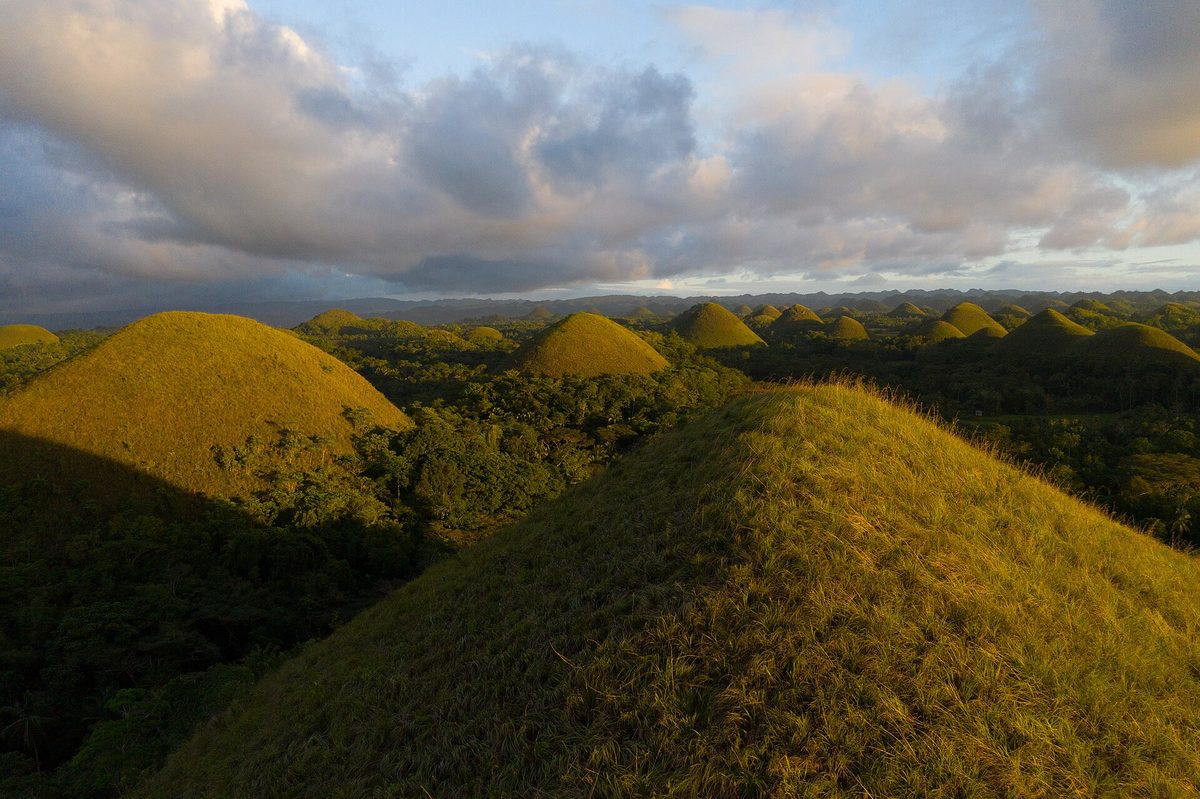
The Chocolate Hills are Bohol’s calling card: more than 1,200 cone-shaped mounds rolling across the island’s interior, turning brown in the dry months and a deep green the rest of the year. This guide to the chocolate hills bohol is the version I wish I had on my first trip — current 2026 fees, the real difference between Carmen and Sagbayan, and the honest case for skipping the steps if you’ve got bad knees.
At a Glance: Where to Actually See the Chocolate Hills
Three places get called "the Chocolate Hills viewpoint" and they are not the same experience. Here is how I’d pick between them in 2026.
| Viewing site | Entrance fee (2026) | Drive from Tagbilaran | What you actually see | Best for |
|---|---|---|---|---|
| Carmen Main Viewing Deck (Chocolate Hills Complex) | ~₱150 / $2.40 per person for non-Bohol residents | ~1h 30m (about 50 km) | The classic 360-degree panorama with hundreds of hills in every direction; the famous "I love Chocolate Hills" sign | First-timers; sunrise photos; people who want the iconic shot |
| Sagbayan Peak | Closed by the local government in 2024; confirm it has reopened and ask the gate price | Further than Carmen (the park is about 18 km from the Carmen complex) | A wider, less dense field of hills with a sliver of sea on a clear day; quieter platform | Travelers who hate crowds, if the park is open again |
| Chocolate Hills Adventure Park (CHAP) | ₱100 / $1.60 entry, activities priced separately (The Rush bike zip ₱750; Unlimited Rides package ₱1,550 including entrance) | ~1h 20m (about 50 km, just before Carmen) | The hills from a bike zip 150 feet above them rather than from a viewing deck; ziplines and a bike-zip across the valley | Adrenaline lovers; teenagers; people who want to ride over the hills, not just look at them |
If you only do one, do Carmen at sunrise. If you have a half day and small children, Sagbayan is calmer once it has reopened. CHAP is the "I want to do something, not just look" option.
Bohol sits in the central Visayas and pairs naturally with Cebu — if you’re still mapping out the wider trip, our Bohol travel guide covers the island end to end, and the Cebu and Bohol itinerary shows how to stitch the two together over a week.
What Are the Chocolate Hills?
The Chocolate Hills are a field of conical karst mounds covering roughly 50 square kilometers across the central Bohol municipalities of Carmen, Batuan, Sagbayan, Bilar, Valencia, and Sierra Bullones. Estimates of the count range from about 1,260 to over 1,776 individual hills, depending on which survey you trust. Most are 30 to 50 meters tall; the biggest tops out near 120 meters.
Geologically, they are not volcanoes and they are not, despite the legend, giant mud cakes. They are eroded marine limestone laid down in the Late Pliocene to Early Pleistocene, when this part of Bohol sat underwater. Tectonic uplift pushed the limestone above sea level; rainfall, surface water, and groundwater then dissolved the softer rock between hardened cores, leaving these symmetrical domes behind. Geologists call the result "cockpit karst," and you can find similar (less dramatic) versions in Cebu, Siquijor, and parts of Bicol.
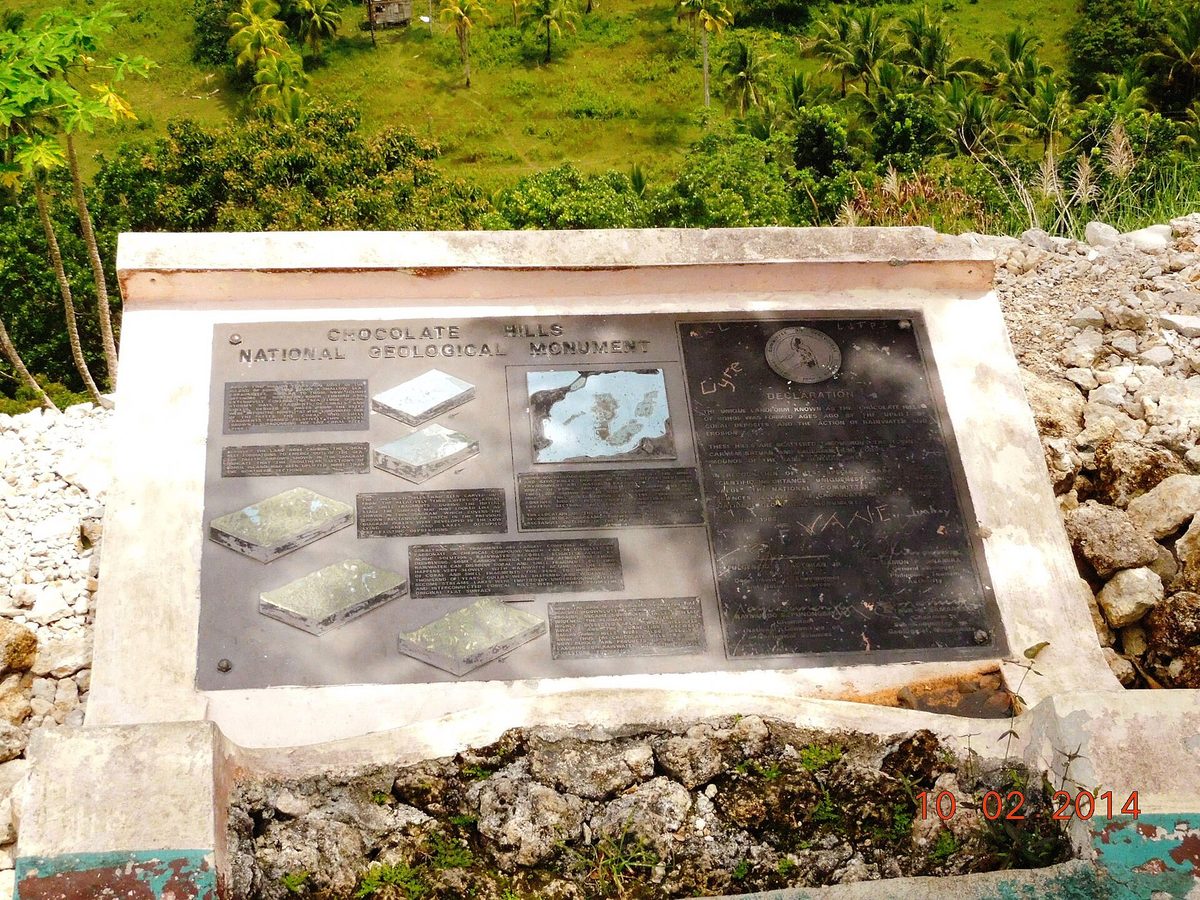
The hills sit on a bronze plaque-worthy list of protections: declared the country’s third National Geological Monument in 1988, protected again by Proclamation 1037 in 1997, and folded into the Expanded National Integrated Protected Areas System Act of 2018. They are on UNESCO’s tentative World Heritage list and form part of the Bohol Island UNESCO Global Geopark.
Why Are They Called the Chocolate Hills?
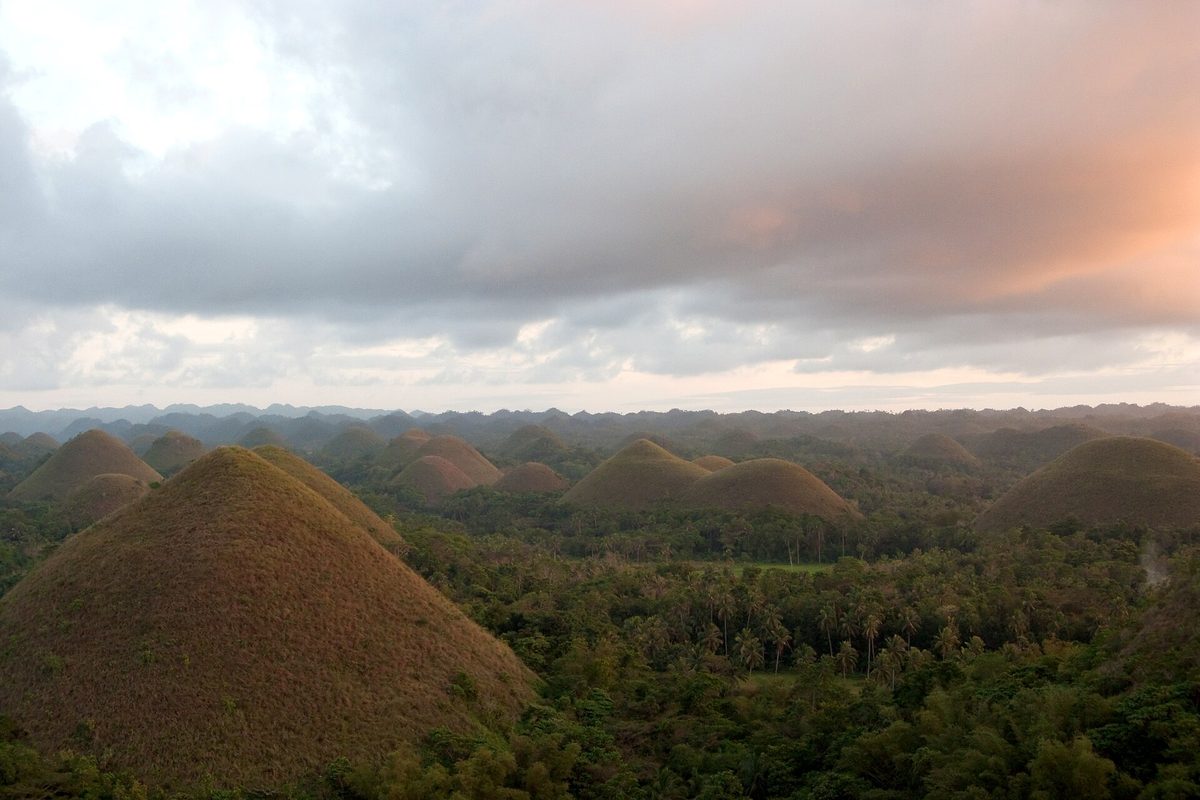
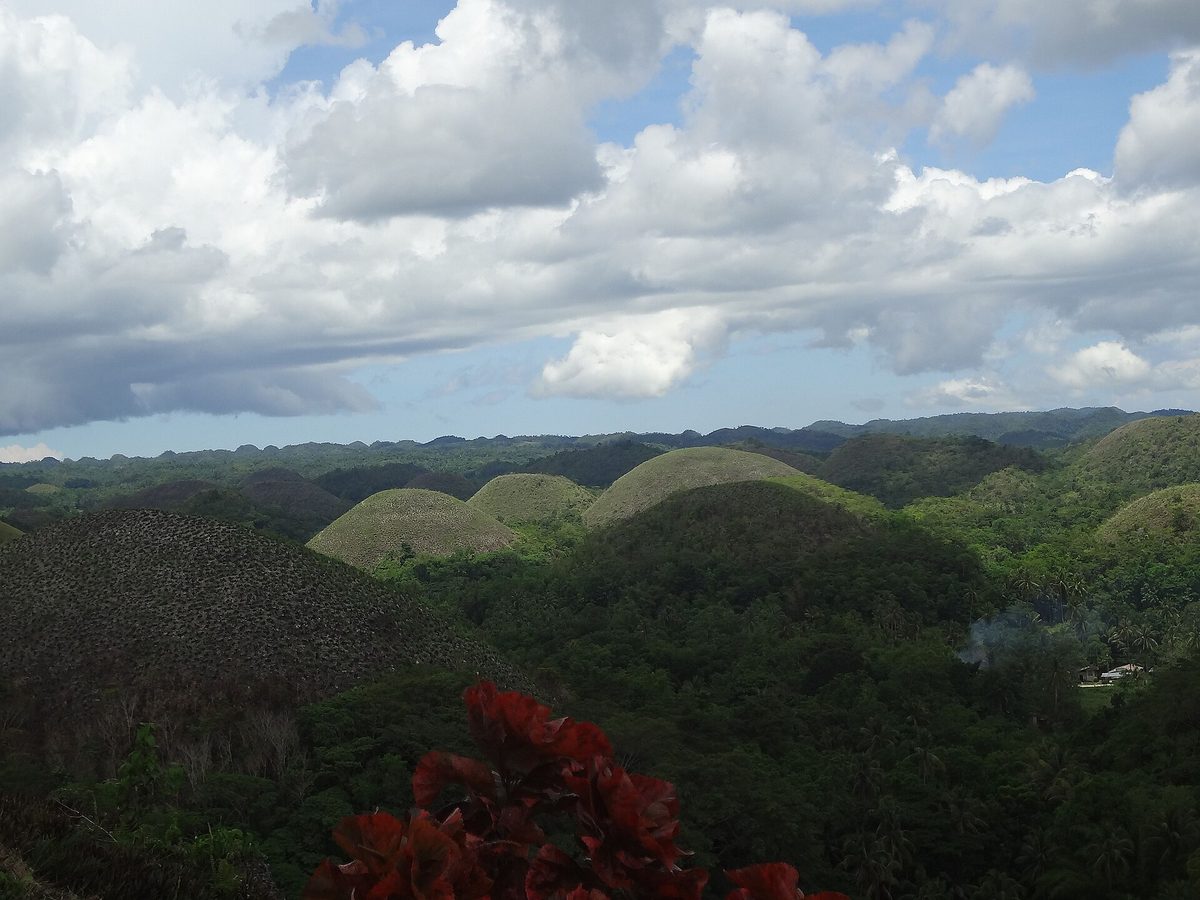
The grass covering each mound — mostly cogon (Imperata cylindrica) and wild sugarcane (Saccharum spontaneum) — dries out during the dry season and turns a deep cocoa brown. From a distance, the field looks like rows of Hershey’s Kisses tipped onto a table. The brown phase is what put Bohol on travel-magazine covers, but it lasts only a couple of months a year.
The Legends Locals Will Tell You
Three origin stories circulate, and your tour guide will pick one. The most romantic is Arogo and Aloya: a young giant falls in love with a mortal woman, she dies, and his tears harden into mounds across the valley. The second has two giants flinging mud at each other across the island until both collapse, their ammunition left behind. The third is my favorite — giant children baked mud cakes under coconut-shell molds, were called home before the contest ended, and the half-finished cakes hardened into hills. Stick around for sunset and you can see why people invented stories.
Best Time to See Chocolate Hills Bohol (Brown vs Green Season)
This is the single question I get asked most, and the honest answer surprises people: the hills are green for most of the year. The famous brown only shows up after a sustained dry stretch, typically late February through May, with March and April the most reliable.
- March to May (peak brown): Driest, hottest, most photogenic if you want the chocolate look. The dry grass burns, too: a grass fire scorched two of the Carmen hills on 30 April 2024. Go at sunrise.
- December to February (green-to-brown transition): My personal favorite. Cooler temperatures, blue skies more often than not, and some hills already turning while others stay green — a patchwork effect that photographs beautifully.
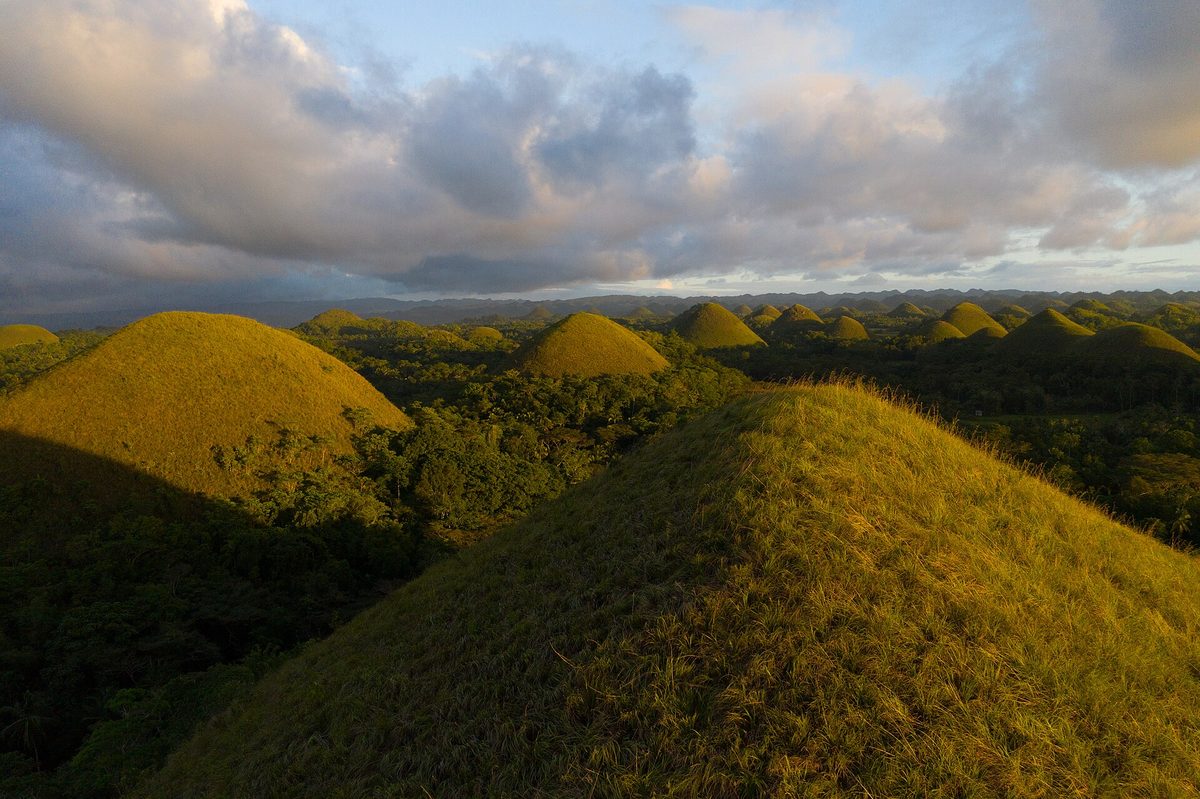
- June to October (lush green): The hills look like rows of croquettes covered in moss. Tropical and gorgeous in its own right, but pack a rain shell — afternoon showers are the norm.
- August to early November (typhoon window): Rain can sock in for days and the viewing deck disappears into cloud. If you visit in this window, build in buffer days and check forecasts the morning of.
Within the day, sunrise wins by a wide margin. The light is soft, crowds are nonexistent before 7 a.m., and on humid mornings mist pools between the hills like steam off a coffee cup. Sunset is a close second but you’ll share the deck with packed tour vans. Avoid 11 a.m. to 2 p.m. unless you enjoy harsh light, sweat, and queueing for selfies.
Carmen Main Viewing Deck: The Classic
This is the government-run Chocolate Hills Complex, perched on top of one of the hills in the municipality of Carmen. It is the photograph you have already seen a hundred times. The entrance fee for visitors from outside Bohol is about ₱150 (around $2.40) per person (confirm at the gate); Boholanos pay less. Parking is included. If you are planning a sunrise visit, confirm the opening time with your driver or hotel the day before.
Getting to the deck means a climb of a little over 200 steps; the municipality counts 220 to the highest deck. Take it at your own pace. At the top: a panoramic platform with the famous bronze geological plaque, a paved walking circle, and the iconic "I love Chocolate Hills" sign one terrace down.
Things I wish someone had told me on my first visit:
- The viewing deck and other facilities were badly damaged in the magnitude 7.2 Bohol earthquake of 15 October 2013, and in October 2018 the provincial development council sought funding to restore them. The current platform is solid, but the railing is high — short visitors will want to bring something to stand on for clean foreground-free photos.
- Ask the staff at the complex before you fly a drone; permission is not a given, least of all once the deck fills up. If you want aerial footage, fly at sunrise from the parking area or, better, from a designated spot a kilometer down the road.
- There is a small café and convenience kiosk at the base. Bring water for the climb anyway — the steps are exposed and there is no shade.
- ATV rides around the base are still sold online. Ask at the booth before assuming any "ATV tour" you find is currently running.
Sagbayan Peak: The Quieter Cousin
About 18 km from the Carmen complex, Sagbayan Peak is a mountaintop park that the local government closed in 2024; it was still shut in April 2025, so check that it has reopened before you plan a stop. It sits higher in elevation, which on a clear day gives you a glimpse of the Camotes Sea separating Bohol from Cebu — a view you simply do not get from Carmen.
The trade-off: the hills here are spread thinner. You see them in clusters rather than the dense field that defines Carmen. Photographs from Sagbayan look good; they do not look like the Bohol postcards. What you get instead is breathing room.
Sagbayan used to pair the viewpoint with a small theme park, including a captive tarsier viewing area. If the park is open again, ask at the gate which attractions are running and what each costs before you pay.
For a more responsibly run tarsier experience, the Philippine Tarsier Foundation sanctuary in Corella is the better choice if you can fit it in.
Chocolate Hills Adventure Park (CHAP)
Just before the Carmen complex on the main highway, CHAP is the adrenaline option. The signature ride is the "bike zip" — a bicycle suspended from a cable across a valley between two hills, with hundreds of feet of empty air beneath you. There is also a more traditional zipline, a wall climb, and a few photo decks at ground level.
Admission to the grounds is ₱100, with rides à la carte: The Rush bike zip costs ₱750, and the Unlimited Rides package is ₱1,550 with entrance included. None of it is heart-stopping by serious adventure-park standards, but the setting is spectacular — you ride out over the hills rather than looking at them from a deck.
At CHAP you pedal a bike zip 150 feet above the hills instead of viewing them from a platform. If you’ve already done Carmen and the panoramic shot didn’t connect with you, an hour here changes the relationship to the landscape.
How to Get There: From Tagbilaran, Panglao, and Loboc
Bohol’s interior road network has improved a lot since the post-2013-earthquake rebuild. The main route to Carmen is paved and well-marked, though shoulders are narrow and you will share the road with tricycles, goats, and the occasional carabao. Plan your timing around the views, not the distance.
From Tagbilaran City
Tagbilaran is the provincial capital and the arrival point for the Cebu ferry. From the city proper, the Chocolate Hills Complex in Carmen is roughly 50 km away, about an hour and a half in a car or van. A private van runs around ₱2,500 to ₱3,500 round trip; a habal-habal (motorcycle taxi) about ₱1,500 with a wait. For ferry timing and onward connections, see the Cebu to Bohol ferry guide.
From Panglao Island (Alona Beach)
This is where most travelers actually sleep. From Alona Beach to the Carmen viewing deck, allow up to about two hours, depending on traffic through Tagbilaran. A standard countryside tour van costs ₱3,000 to ₱4,500 for a full day (Chocolate Hills + tarsier + Loboc River cruise + a couple of stops). If you rent a scooter (around ₱500 a day for a 150cc PCX), allow 2 hours to Carmen with a fuel stop. The roads are good, the hills appear in the distance about 20 minutes before you arrive, and the ride itself is half the experience.
From Loboc
If you sleep in Loboc — my preference if I’m staying in Bohol’s interior — the drive to Carmen is around 35 km, roughly 50 minutes when the roads are clear. Loboc is also a short drive from the Philippine Tarsier Foundation sanctuary in Corella and lets you do a full countryside loop without backtracking through Tagbilaran.
What to Bring and Practical Tips
- Cash. The entrance booth takes peso bills; card terminals at the complex are unreliable. Bring small notes — change is slow.
- Closed shoes or proper sandals. The concrete steps and the upper paved circle are easy enough, but flip-flops are slippery on wet stone.
- Water and a sun hat. Bohol’s interior is hot and there is no shade on the climb. Carry more water than you think you need, even for a short visit.
- Insect repellent. Mosquitoes are mild at the Carmen deck itself but heavy in Sagbayan’s wooded sections at dusk.
- A wide-angle lens or your phone’s panorama mode. A single frame doesn’t capture how the hills wrap around you — a panorama does.
- Cash for the comfort room. Public restrooms cost ₱5 to ₱10. The toilets at the complex are clean enough; the ones at the foot of the steps are not.
- Patience for the shuttle. Carmen runs a small shuttle from the lower lot up to the steps. At off-peak times you can drive up and skip it; midday you wait.
Common Mistakes (Skip This If…)
I love the Chocolate Hills. I also think a lot of people set themselves up to be disappointed by them. Honest takes:
- Skip Carmen if you came for "chocolate" and you are visiting in August. You will get green croquettes, not brown chocolate. They are still beautiful; they are not the photograph you arrived with.
- Put Carmen first if you only have a half day. Sagbayan Peak is calmer, but its view doesn’t deliver the "wait, what?" reaction that makes the trip memorable, and it has to have reopened before you plan a stop.
- Skip CHAP if you are nervous about heights. The bike zip looks scarier than it is, but if you cannot enjoy ziplines elsewhere, you won’t enjoy this one either.
- Skip the midday tour bus. If your only option is a guided tour that arrives at the deck between 11 and 2, weigh whether you’d rather do an early sunrise scooter run and skip the deck entirely from the bus.
- Skip the "climb a Chocolate Hill yourself" fantasy. A few hills near the road look climbable. They are private land or protected zone, the grass hides rocks and rebar from old fencing, and the locals do not appreciate it. Look, don’t climb.
The 2024 resort controversy — a private development built inside the protected zone, after which the Ombudsman placed Bohol Governor Erico Aris Aumentado and 68 other officials on six-month preventive suspension in May 2024 — is a reminder that the Chocolate Hills are under real pressure. Respect the marked perimeters, leave nothing behind, and tip the staff who keep the place running.
Where to Eat and Sleep Nearby
You do not have to sleep near the hills to see them, but you can, and it changes the visit. Most travelers base in Panglao for the beaches and day-trip into the interior; a smaller number stay in Loboc or Carmen for a quieter, more rural night.
Eating Around Carmen
The Chocolate Hills Complex has a basic café with rice meals, sandwiches, and surprisingly decent coffee — fine for a quick bite, not a destination. For a proper lunch, head south to the floating restaurants on the Loboc River; the buffet lunch with a river cruise runs around ₱850 per person. In Carmen town proper, look for any carinderia (small eatery) labeled "Tindahan ni Lola" or similar — expect ₱120 to ₱180 for a full meal of rice, ulam, and soup.
Sleeping Near the Hills
- Nuts Huts (Loboc). Backpacker-leaning eco-lodge on a bend in the Loboc River, roughly 50 minutes by road from Carmen. Bungalows from around ₱1,500. Wake up to mist on the river.
- Loboc River Resort. Mid-range option with garden cabanas and a riverside pool, around ₱4,500 to ₱6,500.
- Fox & The Firefly Cottages (Loboc). Boutique-y, well-run, and the firefly river cruise from their dock is the best one in town. Around ₱5,000 to ₱7,500.
- Sagbayan-area homestays. A handful of small homestays in Sagbayan town itself (search "Sagbayan homestay" on Booking.com) run ₱1,200 to ₱2,500. Basic, friendly, and handy for Sagbayan Peak once it reopens.
For full island-wide accommodation breakdown by area, the Bohol guide linked above ranks the main bases. If you’re choosing between Bohol and its bigger neighbor for the wider trip, the Cebu vs Bohol comparison may save you a planning argument.
Where the Chocolate Hills Fit on a Bohol Itinerary
One day is enough if you start early. A common "countryside loop" from Panglao looks like this: leave Alona at 5 a.m., arrive Carmen for sunrise around 5:45 a.m., spend an hour on the deck, drive to the Philippine Tarsier Foundation in Corella by 9:30 a.m., lunch on the Loboc River with the floating-restaurant cruise around noon, swing by the Bilar man-made forest and the Baclayon Church on the way back, and be home in Panglao for sunset on Alona Beach. Long day, but doable.
If Bohol is part of a bigger Visayas swing, pairing it with Cebu is the natural move — ferries run multiple times daily. For a wider lens on which Philippine destinations to combine, our roundup of the best islands in the Philippines ranks where Bohol sits relative to Palawan, Siquijor, and Siargao. And if you’re still wide-open on what to do with your trip, the country-wide things to do in the Philippines guide is a good first read.
Frequently Asked Questions
How much is the entrance fee to Chocolate Hills?
The Carmen main viewing deck charges about ₱150 (around $2.60) per person for visitors from outside Bohol (confirm at the gate); Boholanos and students pay a discounted rate of around ₱50. Sagbayan Peak was ordered shut in 2024, so ask locally whether it has reopened; the Chocolate Hills Adventure Park has a separate ₱100 admission with rides priced individually. Bring small peso notes — the booths take cash only.
Are the Chocolate Hills worth visiting?
Yes, with one caveat. The hills are a rare landscape: the only other known set of hills like them is on the island of Java, in Indonesia. The caveat is your expectations: in the green season they are emerald rather than chocolate, the famous deck is crowded by 10 a.m., and the 200-plus steps are real. If you arrive at sunrise, accept whatever color the hills happen to be that month, and treat it as one stop on a wider Bohol countryside loop, it is worth every peso.
How long do you need at the Chocolate Hills?
Plan 60 to 90 minutes at the Carmen viewing deck: 10 to 15 minutes for the climb, 30 to 45 minutes on the platform for photos and the geological plaque, and a buffer for the descent and a quick coffee at the café. If you add Chocolate Hills Adventure Park, and Sagbayan Peak once it reopens, to Carmen, budget a full day with lunch in Loboc. Most people regret rushing through Carmen more than they regret skipping Sagbayan.
Can you climb the Chocolate Hills?
You can climb the developed viewing hill at Carmen via its concrete steps, and, when the park is open, the platform at Sagbayan Peak via a paved path. The whole field is a protected Natural Monument under Proclamation 1037, so stay on the marked visitor routes and go up any other hill only on a guided activity, such as the province’s Chocolate Hills Close Encounter hikes. The grass also hides loose rock, old fencing, and ground-nesting wildlife. The view is built for looking from above, not climbing from below.
Why are they called Chocolate Hills?
During the dry season (typically March through May), the cogon and wild sugarcane covering each hill dries out and turns a deep cocoa brown. From a distance, the field looks like rows of chocolate kisses spilled across the valley. The brown phase only lasts a couple of months — the rest of the year the hills are green — but it was distinctive enough to give them their global name.
Is there a Chocolate Hills tour from Cebu?
Yes, several operators run day tours from Cebu City that include the Cebu–Tagbilaran fast-ferry round trip, a van transfer, and the countryside loop with tarsier sanctuary and Loboc River cruise. Expect a very long day that starts before dawn, with departure and return times set by the ferry and tour you book. It is a hard push and you will see Bohol through a bus window. If you can spare even one overnight in Panglao or Loboc, do that instead — the math always works in favor of staying.
Sources and photo credits
Photo Credits
- Aerial view of the Chocolate Hills — Photo by rogel tura, license CC0, via Wikimedia Commons.
- Carmen main viewing deck — Photo by Judgefloro, license CC BY-SA 4.0, via Wikimedia Commons.
- Chocolate Hills at sunset — Photo by Vyacheslav Argenberg, license CC BY 4.0, via Wikimedia Commons.
- Green-season Chocolate Hills — Photo by rogel tura, license CC0, via Wikimedia Commons.
- Stairs to the Carmen viewpoint — Photo by shankar s. (Dubai, United Arab Emirates), license CC BY 2.0, via Wikimedia Commons.
Sources
- UNESCO World Heritage Centre — Chocolate Hills Natural Monument tentative listing
- Proclamation No. 1037 (1997), Official Gazette of the Republic of the Philippines
- Bohol Provincial Government — Provincial Tourism Office
- Chocolate Hills — Wikipedia (geological background, declared protections, 2013 earthquake and 2024 controversy timelines)
About this guide: PhilippinesTourism.org is an independent Philippines travel resource. This article was last researched and verified October 2026.