Coron Island Hopping and Tours
If you only have time for one boat day in Coron, take the classic Kayangan Lake and Twin Lagoon route first, then add a far-island beach day if you can spare a second morning. That order gets you the two sights everyone comes for, and it leaves the white-sand islands as a slower, less-crowded encore. Below I break down every package, every fee, and the stops I would honestly skip.
I have run these boats in both seasons, paid the fees in cash to the boatman, and watched Kayangan go from empty to mobbed in the span of one hour. So this guide is less a brochure and more the briefing I wish someone had given me at the pier.
Coron tours at a glance: the main packages compared
Coron is not as rigidly standardised as El Nido and its lettered Tours A to D, but in practice operators sell the same three building blocks under a dozen brand names. Here is how the day tours actually shake out in 2026. Prices are typical joiner (group) rates per person; they shift with fuel, season, and how much lunch the operator throws in, so treat them as a ballpark and confirm when you book.
| Tour (common names) | Headline stops | The vibe | Best for | Rough 2026 joiner price |
|---|---|---|---|---|
| Tour A / “Coron Island Loop” | Kayangan Lake, Twin Lagoon, CYC Beach, Skeleton Wreck | The bucket-list circuit; busiest water in Coron | First-timers who want the iconic shots | around PHP 1,500–2,200 ($26–38) |
| Tour B / “Reefs & Wrecks” | Barracuda Lake, Twin Lagoon, Banul Beach, Skeleton Wreck | Lakes plus snorkelling, a touch quieter than A | Snorkellers and freedivers | around PHP 1,500–2,200 ($26–38) |
| Tour C / “Malcapuya / Calamianes” | Malcapuya Island, Bulog Dos, Banana Island | Far white-sand beaches; long boat ride out | Beach lovers who want powder sand | around PHP 1,800–2,800 ($31–48) |
| Tour D / “Coron Ultimate” | Kayangan, Twin Lagoon, Siete Pecados, CYC, a beach | A greatest-hits mashup of A and a reef stop | People with only one boat day | around PHP 1,800–2,500 ($31–43) |
| “Super Ultimate” / private charter | Your pick, in your order, at your pace | Flexible, early starts, beat the crowds | Groups of 4–6 and crowd-avoiders | around PHP 5,000–8,000 ($86–138) per boat |
The single most useful thing on that table is the bottom row. Split a private boat between four to six people and you land near the joiner price per head while keeping the freedom to leave the pier at dawn. That is the whole game in Coron, and I will come back to it.
How Coron island hopping actually works
Almost every guesthouse, dive shop, and corner travel desk in town sells boat tours, and they all push off from the same municipal pier on Busuanga Island. Coron Island itself, where the famous lakes and lagoons sit, is a UNESCO-protected ancestral domain of the Tagbanua people. You cannot stay on it; you visit by bangka and you leave by sunset. That ownership matters because it shapes both the rules and the fees.
Joiner tours versus a private boat
A joiner (group) tour puts you on a shared bangka with 6 to 12 strangers for a fixed route, lunch included, departing around 8 to 9am and back by 4 to 5pm. It is cheap, sociable, and you go where everyone else goes at the time everyone else goes. A private charter costs more on paper but you set the departure, the order, and how long you linger. The math that surprises people: a private boat split four or five ways often costs about the same per person as a joiner seat, and a 6am start is the difference between sharing Kayangan with three other swimmers or with three hundred.
My honest take after doing both: solo or as a couple on a budget, take the joiner and accept the crowds. As a group of four or more, charter every time. The flexibility is worth far more than the modest premium.
The fees stack up, so budget for them
This is where Coron quietly gets more expensive than the sticker price, and where most blogs gloss over the detail. On a joiner tour the entrance fees are usually bundled into your rate. On a private boat you pay them yourself, in cash, handed to your boatman at each stop. Either way, know what you are funding. As of 2026 the fees stack roughly like this:
- Coron / Calamianes environmental fee: around PHP 300, a one-time arrival fee that some operators collect at the start.
- Kayangan Lake: around PHP 300 per person.
- Twin Lagoon: around PHP 200.
- Barracuda Lake: around PHP 200.
- Malcapuya Island: around PHP 300 (it crept up from PHP 150 a few years back).
- Banana Island, Bulog Dos, Banul Beach, Skeleton Wreck, Siete Pecados: around PHP 100–150 each.
- Snorkel mask and fins: around PHP 100–200 a day to rent.
Add it up and a full day can tack on PHP 600–900 in fees per person on top of the boat. None of it is a scam; the money is meant to fund the Tagbanua community and conservation. But carry small bills, because nobody at a limestone lake is making change for a PHP 1,000 note. For context on how this compares with the rest of the region, our Palawan travel guide lays out the wider province.
Where to base yourself and reach the pier
You will sleep in Coron town on Busuanga Island, not on Coron Island itself. The town is small and walkable, with guesthouses, dive shops, and a night market clustered within a few blocks of the waterfront. Almost everywhere can arrange a boat, so there is no need to book tours online at a markup before you arrive; walking the pier the evening before routinely beats the web price, and you can read the boat and meet the crew first. From most of town the municipal pier is a short walk or a quick tricycle ride. If you are chartering privately and want the dawn start, confirm with your boatman where and when to meet, because the pier is quiet and dark at 6am and you do not want to be wandering it looking for a stranger.
One more logistics note that trips people up: Coron sits on Busuanga, a separate island from Palawan’s mainland, reached by its own airport (Francisco B. Reyes, often called Busuanga or USU) or by ferry. If you are pairing Coron with Puerto Princesa and the Underground River on the mainland, that is a separate flight or a long ferry rather than a quick hop. Build in a buffer day at the start so a delayed flight or a rough crossing does not eat your only boat morning.
The signature lagoons and lakes
Three bodies of water carry Coron’s reputation, and they are genuinely worth the hype. The catch is timing. Every one of them is sublime at 7am and a swimming-pool scrum by 10. Plan around that single fact and you have basically cracked Coron.
Kayangan Lake: the postcard, and the crowds
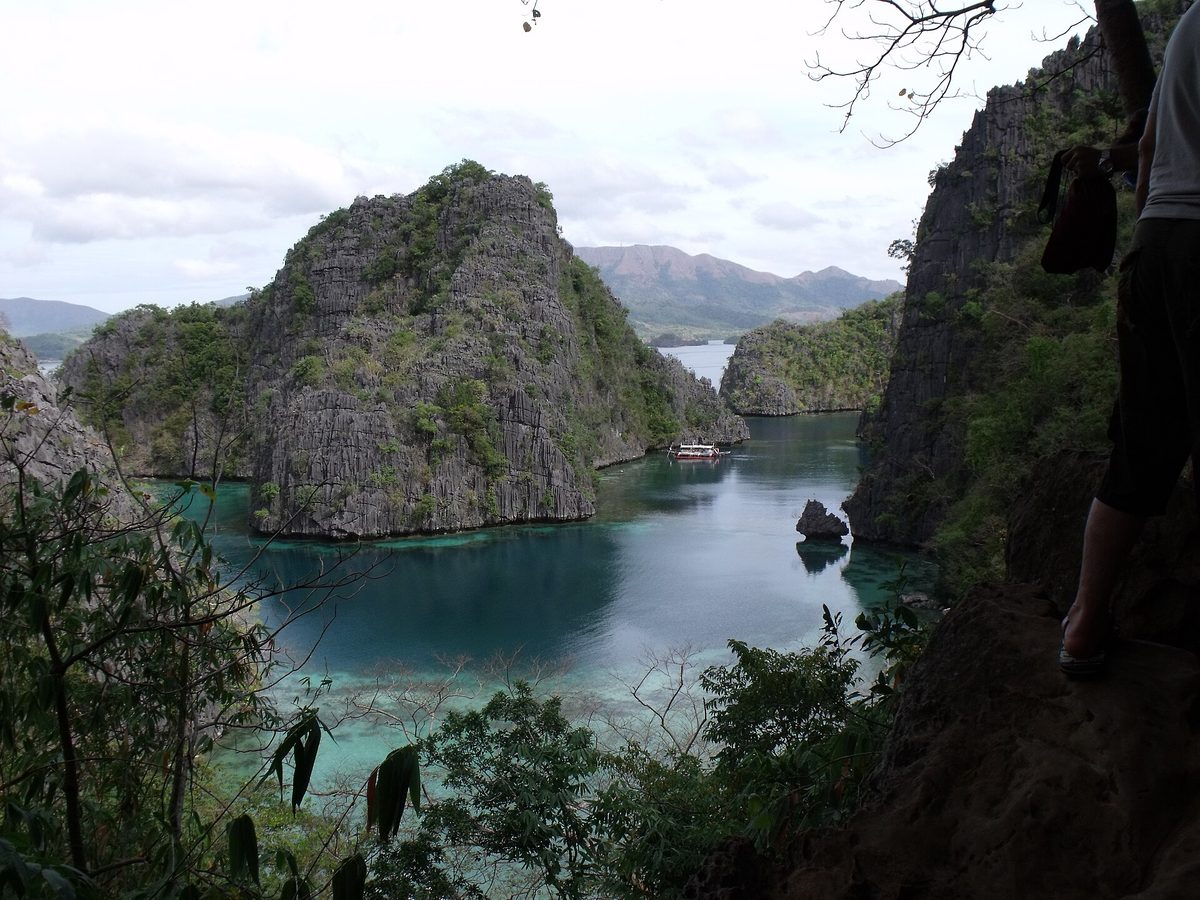
Kayangan is routinely billed as the cleanest lake in the Philippines, and floating in it you believe it. You dock, climb a steep flight of limestone steps to the viewpoint that launched a million feeds, then descend to the brackish lake itself, ringed by karst. The water is clear enough to freedive, with little needlefish hovering at the surface. Lifejackets are mandatory and, unlike at some stops, there is usually someone enforcing it. The lake also has a fixed exit time and a steady stream of arrivals, so a slow group can feel rushed. Get there at opening, around 7:30am, or arrive after the late-morning wave thins out.
Twin Lagoon: swim through the rock
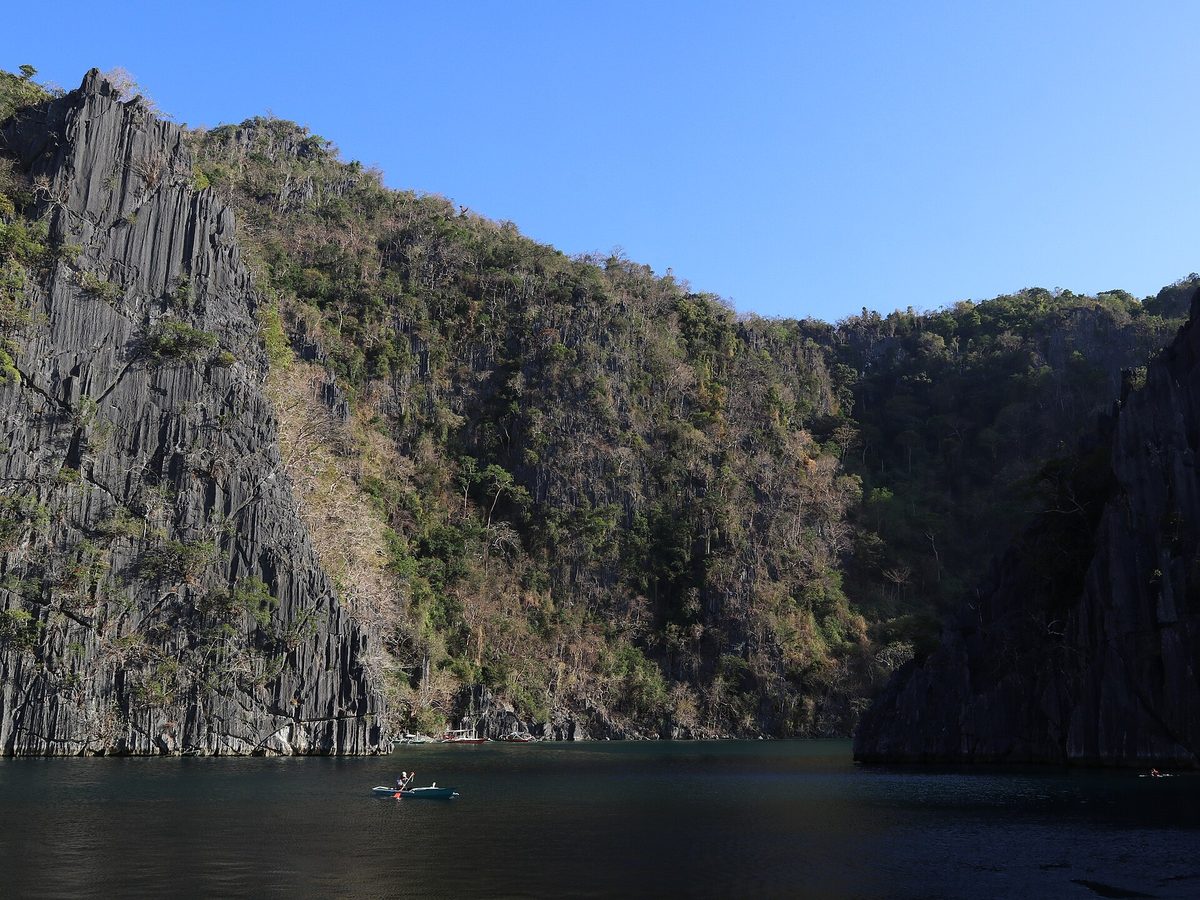
Twin Lagoon is two basins separated by a low limestone wall. At low tide you duck under the rock through a small gap; at high tide you climb a wooden ladder over it, which is the easy option if tight spaces unnerve you. The payoff is the second lagoon, where warm surface water gives way to a cold, shimmering layer where fresh and salt water meet. It is a strange, lovely sensation. The lagoon gets jammed with boats before noon, so this is the one I would hit first thing on a private charter, or pray your joiner reaches early.
Barracuda Lake: the quiet alternative I prefer
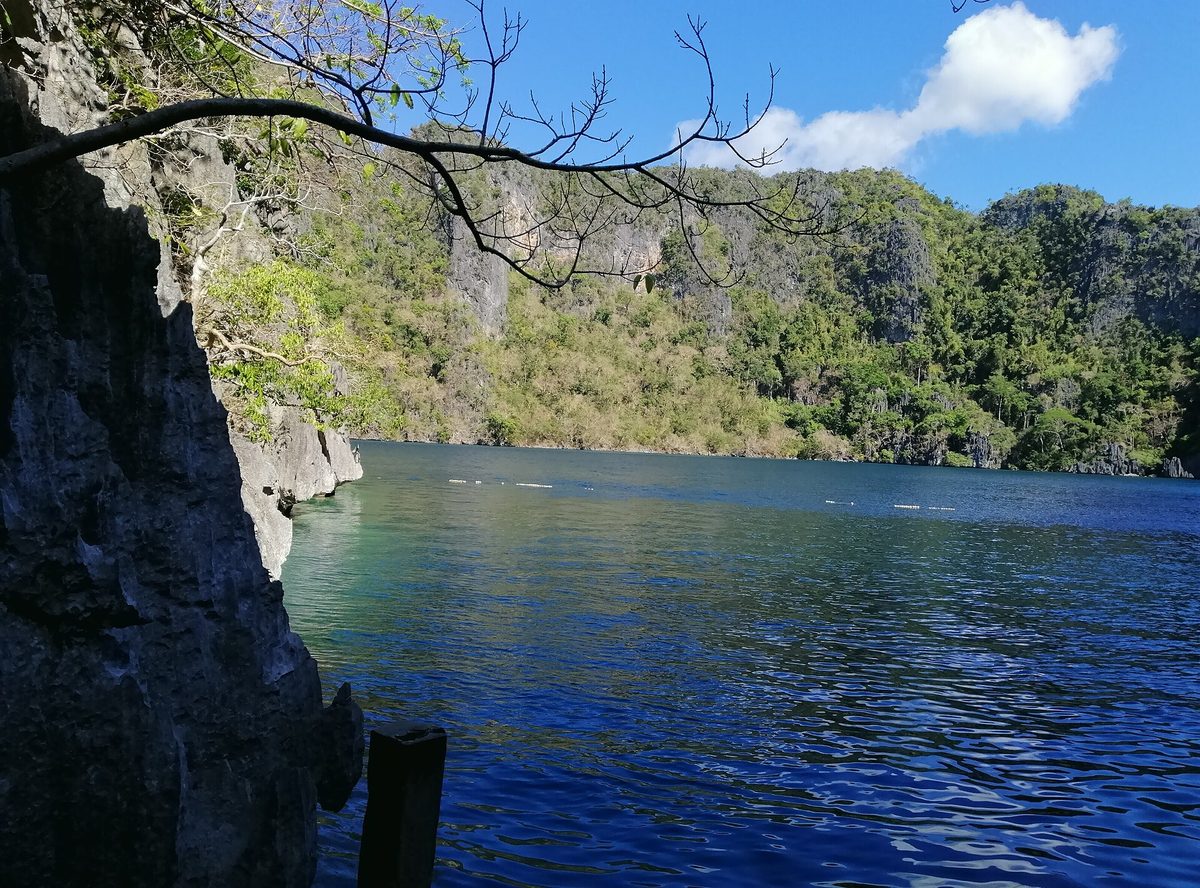
Barracuda Lake is the local secret that keeps not being a secret. It looks remarkably like Kayangan, ringed by jagged cliffs, but draws a fraction of the crowd, especially in the afternoon once the morning boats have moved on. It is famous among divers for a dramatic thermocline where the water turns startlingly warm at depth, but non-divers get plenty just snorkelling the calm, glassy shallows. If you only have patience for one lake in peace, this is my pick. The serious version of all this is underwater: see our guide to diving in the Philippines for Coron’s wreck and lake dives.
The main day-tour packages, explained
Once you understand the three building blocks, the branded packages stop being confusing. Operators shuffle the same stops and slap on names like Ultimate, Super Ultimate, Island Escapade, or Reefs and Wrecks. Here is what is really inside them.
Tour A and Tour D: the lakes and lagoons circuit
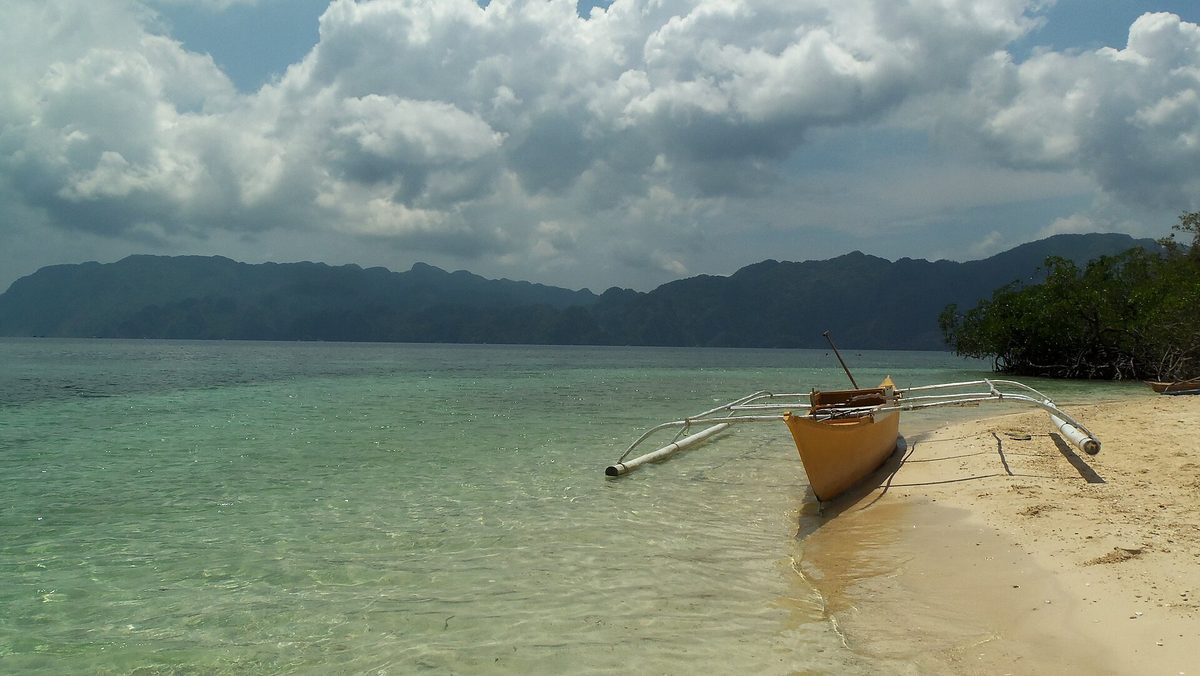
Tour A is the must-do for first-timers: Kayangan Lake, Twin Lagoon, a lunch stop at CYC Beach (a modest sandbar that gets packed with tour groups), and a snorkel over the Skeleton Wreck. “Ultimate” and “Super Ultimate” packages bolt on an extra reef like Siete Pecados or a second beach to justify a higher price. If you have one boat day, a well-run Tour A or Ultimate covers the essentials. The downside is obvious: it is the most popular route, so the lakes are at their busiest exactly when you arrive.
Tour B: lakes plus better snorkelling
Tour B swaps in Barracuda Lake and leans harder into the water, usually pairing it with Twin Lagoon, Banul Beach, and the Skeleton Wreck. If you would rather drift over coral than queue on limestone stairs, this is the stronger pick, and it tends to be a touch quieter than A. Many people who do two boat days run A on day one for the bucket list and B on day two because, frankly, it is the more relaxed experience.
Far-island and white-sand tours: Malcapuya, Banana and Bulog
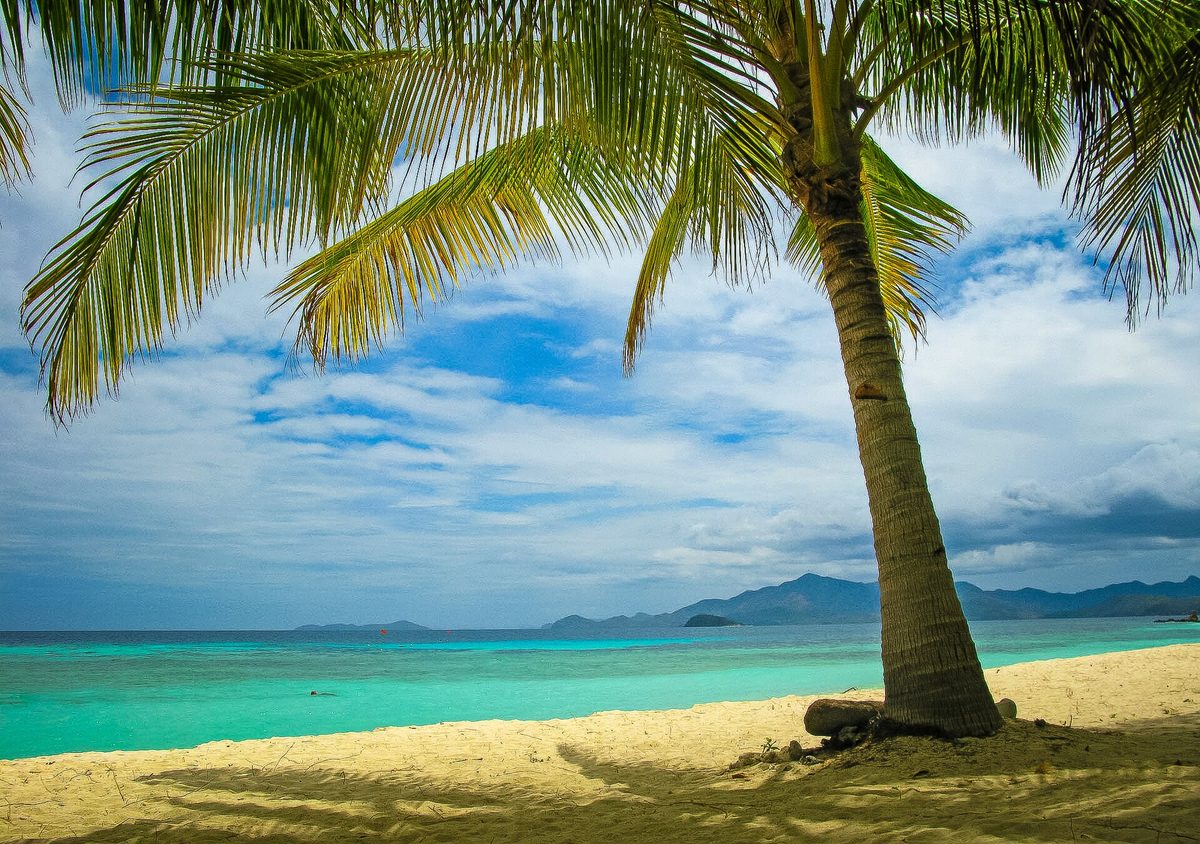
The lakes are the spectacle, but the postcard beaches live further out, roughly 1.5 to 2 hours by boat toward the Calamianes. Malcapuya Island is the headline act: powder-white sand, clear shallows, and a coral garden off one end. Plenty of travellers rate it the best beach in the whole Coron area, and because it is far, it draws fewer people than the lakes. Bulog Dos delivers a photogenic sandbar strung between islets, and Banana Island is the hammock-and-coconut chill stop. These usually come bundled as the Malcapuya or Calamianes day tour, separate from the Coron Island circuit because of the distance.
My advice: do not try to cram the far beaches and the lakes into one day. The boat time alone will leave you sunburnt and shortchanged on both. Give the white-sand islands their own slower morning. If beaches are your priority overall, our roundup of the best islands in the Philippines puts Coron in context with the rest of the country.
A question I get constantly: should you do Coron or its more famous neighbour across the bay? They are different flavours of the same archipelago. Coron is lakes, lagoons, and wrecks with clearer water and cheaper private boats; the other is sheer karst cliffs and a tighter cluster of lagoons. If you are weighing them, our honest El Nido vs Coron comparison breaks down who each one suits, and plenty of travellers do both by boat or short flight rather than choosing.
Wreck and snorkel stops: Skeleton Wreck and Siete Pecados
You do not need a tank to brush against Coron’s wartime history. The Skeleton Wreck, a sunken Japanese vessel sitting around 10 to 12 metres down, is shallow enough that confident freedivers can drop to it, while everyone else snorkels the striped fish near the surface. Honestly, from the surface it is more idea than spectacle, so set expectations accordingly. Siete Pecados (“Seven Sins”) is the better pure snorkel: a protected marine park with healthy coral and dense schools of fish, best in the morning before the visibility gets stirred up. If you want to go deeper on the reefs, see our guide to snorkeling in the Philippines. Coron’s real underwater trophies, though, are its deep WWII wrecks, which are a diving story rather than a snorkelling one.
Best season and the case for an early start
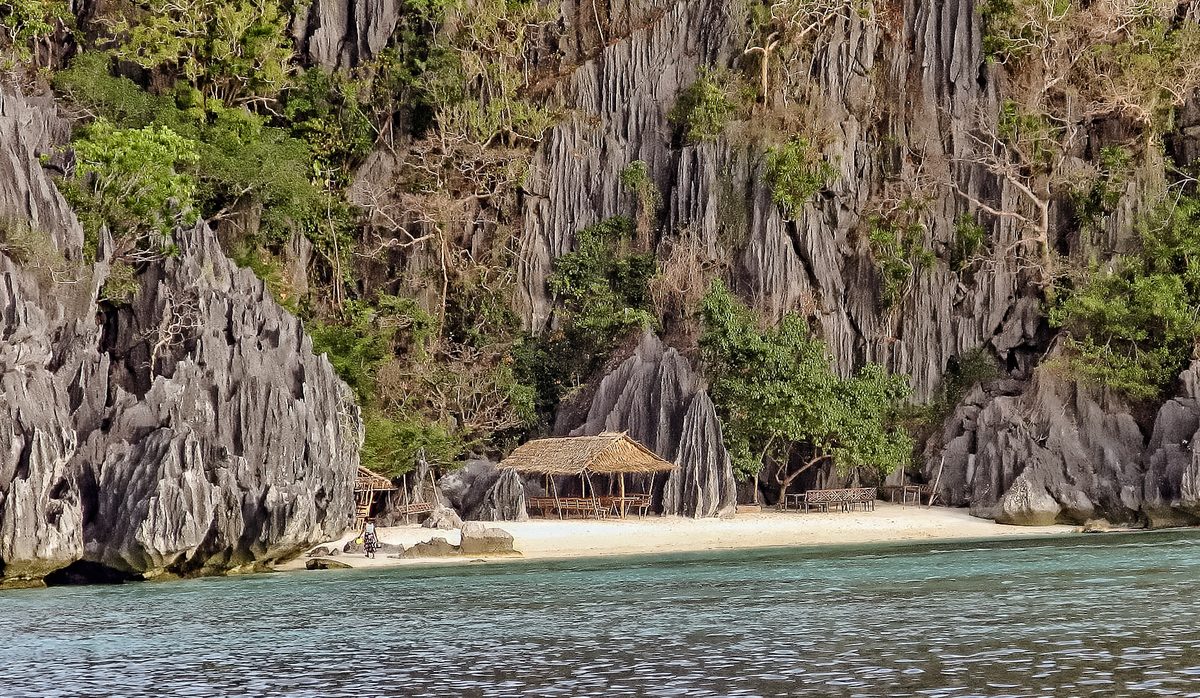
Coron’s dry season runs roughly November or December through May, and that is when you want to be here: calmer seas, reliable sun, and the clearest water. The shoulder of the dry season, around late November to February, balances good weather with slightly thinner crowds. From June to November the southwest monsoon brings rain and the occasional cancelled boat day; it is not a write-off, but check the forecast and keep your itinerary flexible. One seasonal heads-up: roughly April through June you can run into small jellyfish, including the odd box jellyfish, in shallow water. Tour boats carry vinegar, a rash guard helps, and your boatman will know the day’s conditions.
The early start is the single best decision you can make in Coron. The lakes and lagoons are transformed before 8am, calm and near-empty, and ruined by mid-morning. Joiner tours leave too late to win this race, which is the real argument for a private boat and a 6am push-off. If you are stuck on a group tour, simply being first off the boat at each stop buys you a few precious minutes of quiet.
If you can give Coron three boat-friendly days, the ideal rhythm is simple. Day one, the Tour A lakes circuit while your enthusiasm is highest. Day two, either the far Malcapuya beaches for white sand or a wreck dive if you are certified, since Coron’s sunken Japanese fleet is world-class and sits at recreational depths. Day three, a flexible buffer to revisit your favourite stop in the early-morning quiet, chase weather you missed, or simply do nothing on a beach. Two days covers the highlights; three lets Coron breathe.
Practical tips for a smoother boat day
- Book the night before. Tickets for Kayangan and the lagoons are arranged in advance, and on a private charter your boatman needs time to sort them. Lock it in before 5pm.
- Bring cash in small bills. Fees are paid per stop, in pesos, and no one has change for big notes.
- Wear real shoes. Kayangan’s limestone steps are steep and uneven; flip-flops are a sprained ankle waiting to happen. Reef shoes also save your feet on coral.
- Pack reef-safe sunscreen, a dry bag, and water. The sun reflecting off the water will cook you, and tour lunches are basic, so bring a snack.
- Sit amidships if you get seasick. The bangka bounces in any swell; the middle is the calmest seat, and the run to the first stop can be choppy.
- Bring your own mask if you can. Rentals are cheap but often leaky, and you will use it every day.
What is overhyped, and what to skip
Time for the honest part. Coron’s water genuinely lives up to the photos, but two things are oversold. First, the crowds at Kayangan and Twin Lagoon are real and getting worse; if you turn up on a midday joiner tour expecting serene solitude, you will be disappointed, and that is on the timing, not the place. Second, fee creep is real. The per-site fees have climbed steadily, and a day that looks cheap at the pier can quietly add the better part of PHP 1,000 once every stop charges you. Neither is a reason to stay home, just a reason to plan.
What I would actively skip: paying extra for an “Ultimate” package that simply adds a mediocre beach you will spend twenty rushed minutes at. CYC Beach is fine but forgettable, and the Skeleton Wreck underwhelms from the surface. If you are not a strong swimmer or freediver, do not pick a tour built around the wreck. And if your whole reason for coming is empty white sand, the closer Coron Island beaches are not it; spend your money on the far Malcapuya day instead. Coron is one of the best places for island hopping in the Philippines, but only if you play the timing right.
Coron tours FAQ
How much does a Coron boat tour cost in 2026?
A joiner (group) day tour runs around PHP 1,500–2,800 ($26–48) per person depending on the route, with lunch usually included. A private boat is roughly PHP 5,000–8,000 ($86–138) for the whole bangka, which works out similar per head if four to six of you split it. Budget another PHP 600–900 per person for stacked entrance fees on top.
Which Coron tour should I do first?
Do the Tour A circuit first: Kayangan Lake and Twin Lagoon are the sights you came for, and you want them in the bag in case weather scrubs a later day. If you have a second boat day, follow it with Tour B for better snorkelling or the Malcapuya far-island tour for white sand. Cramming lakes and far beaches into one day is a mistake.
Is Kayangan Lake or Twin Lagoon better?
They are different rather than ranked. Kayangan is the iconic viewpoint-and-clear-lake experience with the famous photo; Twin Lagoon is the swim-through-the-rock adventure with its eerie warm-then-cold thermocline. Most tours include both, so you rarely have to choose. If forced to, I would not miss Kayangan, but Twin Lagoon is the more memorable swim.
How do I avoid the crowds in Coron?
Start early, full stop. The lakes are calm and near-empty before 8am and packed by 10. The reliable way to beat the rush is a private boat with a 6am departure, since joiner tours leave too late. Failing that, target quieter stops like Barracuda Lake in the afternoon, when the morning boats have moved on.
Do I need to know how to swim?
It helps, but lifejackets are mandatory at the lakes and lagoons and you can float comfortably without strong swimming skills. Twin Lagoon offers a ladder over the rock wall if you would rather not swim under it. That said, the Skeleton Wreck and deeper snorkel stops reward confident swimmers, so pick a beach-and-lake tour if you are nervous in the water.
How many days do I need in Coron?
Two to three days is the sweet spot: one day for the Tour A lakes circuit, a second for either far-island beaches or a wreck dive, plus a buffer for weather. With only one day, do Tour A and accept that you are sampling rather than savouring. Divers should add at least one more day for Coron’s WWII wrecks.
Sources and photo credits
Photo credits
- Kayangan Lake, Coron — André Héroux, CC BY 3.0, via Wikimedia Commons
- Twin Lagoon, Coron — Patrickroque01, CC BY-SA 4.0, via Wikimedia Commons
- Barracuda Lake, Coron — Madcel, CC BY-SA 4.0, via Wikimedia Commons
- CYC Beach, Coron — Lawrence Ruiz, CC BY-SA 4.0, via Wikimedia Commons
- Malcapuya Island, Palawan — Ray in Manila, CC BY 2.0, via Wikimedia Commons
- Limestone beach, Coron — Ray in Manila, CC BY 2.0, via Wikimedia Commons
Sources
- Philippine Department of Tourism — official travel portal
- UNESCO — Coron Island Protected Area (Tagbanua ancestral domain)
- eTravel — official Philippine arrival registration
About this guide: PhilippinesTourism.org is an independent Philippines travel resource; details were researched and verified July 2026.