
Cheap Flights to the Philippines: Routes and Timing
Cheap flights to the Philippines are mostly about two decisions: when you book and how you route. Fly in the rainy shoulder months, set a fare alert three to five months out, and accept one Asian layover, and a round-trip from the US or UK can land hundreds below the holiday-season price. Here is how I do it.
Fares to the Philippines follow the calendar more than most travellers expect. The same week in December that crushes your wallet is dirt cheap in late September. The nonstop that looks tempting is often double the one-stop. Below is a by-origin, by-month playbook, with 2026 fare ranges and named airlines, not vague “book early” filler.
Cheap flights to the Philippines at a glance (2026)
These are rough round-trip economy ranges for 2026 at the cheap end of the calendar (shoulder/low season, booked ahead). Peak dates run well above the top of each range. Treat them as planning anchors, not quotes.
| Origin region | Typical round-trip range (2026) | Usual routing | Airlines I’d check first |
|---|---|---|---|
| US West Coast (LAX/SFO/SEA) | ~$650–$1,000 (₱38,000–₱58,000) | Nonstop, or 1 stop via TPE/NRT/ICN | Philippine Airlines, United, EVA Air, Korean Air |
| US East Coast (JFK/ORD) | ~$800–$1,300 (₱46,000–₱75,000) | PAL nonstop, or 1 stop via Asia/Middle East | Philippine Airlines, EVA, ANA, Qatar Airways |
| UK & Europe (LHR and hubs) | ~£480–£750 (₱35,000–₱55,000) | 1 stop from the UK; Air France nonstop from Paris | Qatar, Emirates, Singapore Airlines, SWISS, Oman Air |
| Australia (SYD/MEL/BNE) | ~A$450–A$750 (₱17,000–₱28,000) | Nonstop or 1 stop via SIN | Cebu Pacific, Philippine Airlines, Qantas, Scoot |
| Intra-Asia (SIN/KUL/HKG/BKK) | ~$70–$250 (₱4,000–₱15,000) | Nonstop, budget carriers | Cebu Pacific, AirAsia, Scoot, Jetstar |
The cheapest time to fly to the Philippines
If you can pick your dates, this is the single biggest lever you have. The cheapest time to fly to the Philippines is the rainy and post-holiday low season, when demand from leisure travelers and overseas Filipinos drops and airlines discount to fill seats. Get this one decision right and the rest is fine-tuning.
Cheapest months: September, October, then February and early March
Across US, UK and Australian origins, September is the standout cheap month, with October close behind. These fall in the rainy season, which scares off beach-focused tourists but rarely ruins a trip if you watch the typhoon forecast. After the New Year rush burns off, late January through early March is the second cheap window, with February often the lowest fares of the year from the US.
Months to avoid if you want cheap fares
December is the most expensive month, full stop. Christmas and New Year pull in the entire diaspora, and economy fares from the US can double versus September. June and July (northern-hemisphere summer holidays) run a close second, and Holy Week (the days around Easter, late March or April) spikes both international fares and domestic flights inside the country. If you must travel over these peaks, book early and treat the fare ranges above as a floor you will probably blow past. There is no clever routing that fully beats peak-season pricing; the demand is simply too high.
Cheapest days and a quick caveat
Midweek departures, especially Tuesday and Wednesday, tend to undercut weekend flights, and afternoon departures sometimes price lower than prime-time slots. These shave a modest amount off, nothing like the month-level swings, so do not contort your whole itinerary chasing a Tuesday. The shoulder-season discount is worth real money; the day-of-week discount is a rounding error by comparison. For the bigger picture on seasonality and what the weather actually does to your trip, see our guide to the cheapest time to visit the Philippines, which digs deeper into the seasonal demand curve.
How far ahead to book
For long-haul economy to the Philippines, the realistic sweet spot is three to five months before departure. Transpacific fares from the US generally bottom out in that window; book inside six weeks and you are usually paying a premium, while booking eleven months out rarely beats a good mid-range alert. Airlines release seats in fare buckets, cheapest first, and that cadence is what you are timing.
The exception is peak travel. For December, summer, or Holy Week, push your booking earlier, four to six months ahead, because the cheap fare buckets sell first and only the expensive ones remain as the date nears. If you are coming from elsewhere in Asia on a budget carrier, the math flips: Southeast Asian short-hauls are often cheapest one to three months out, and seat sales appear with little notice. My rule of thumb is simple. Set an alert the moment your dates firm up, and pull the trigger when a fare lands in the ranges above rather than gambling on a deeper drop.
Which airport to fly into: Manila, Cebu, or Clark
Your arrival airport quietly shapes the fare. Manila has a broad choice of international airlines, which makes it the natural place to start a long-haul search. Still, compare fares and schedules into Cebu and Clark for your dates, because the right choice depends as much on where you are ultimately going as on the headline fare.
- Manila (NAIA, MNL) — a major gateway with a wide range of international airlines. Worth knowing: NAIA changed international terminal assignments in March–April 2026, and switching terminals means collecting your bags and transferring landside. If you have a self-transfer here, the only reliable source for your terminal is the one printed on your own booking. Leave a generous margin between terminals; JAL, for one, recommends more than 180 minutes for connections that involve a terminal change.
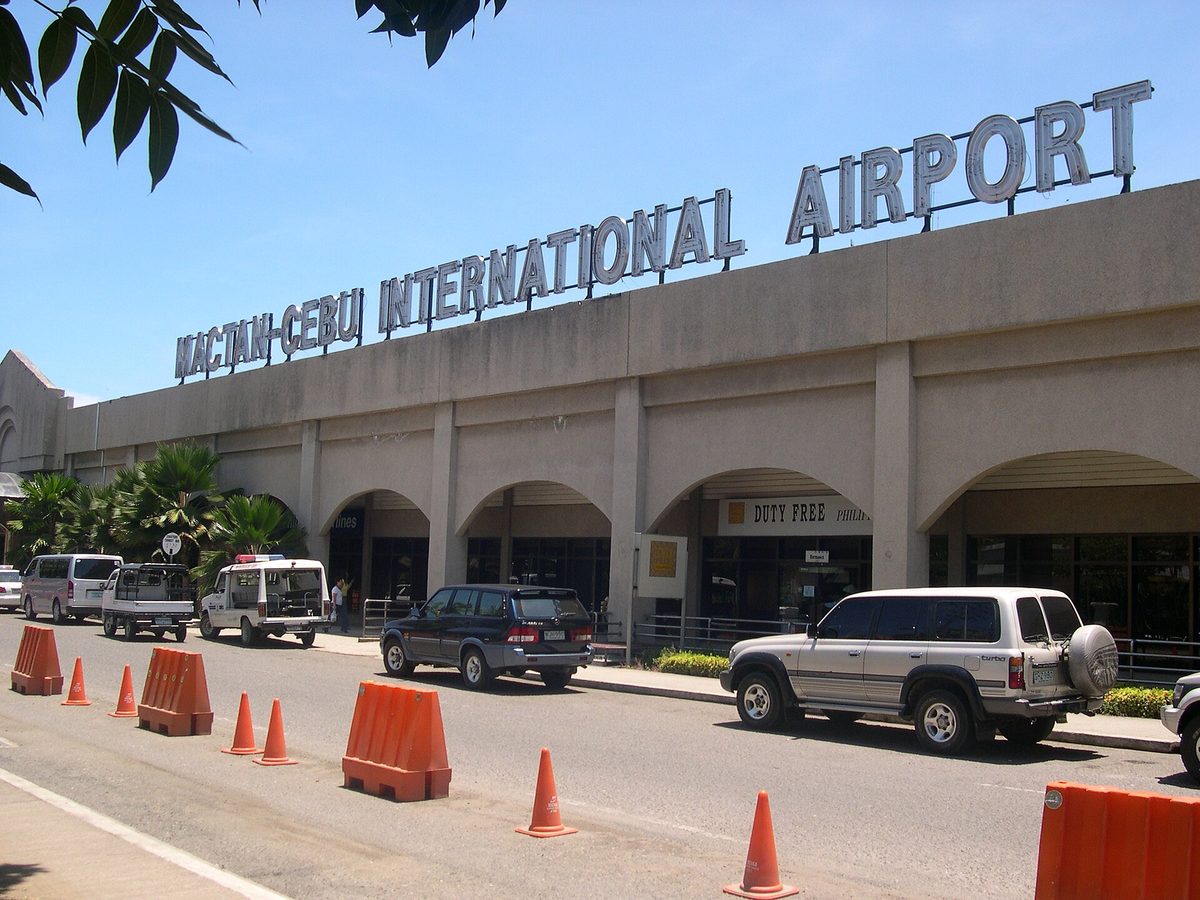
- Cebu (Mactan–Cebu, CEB) — a clean, modern second gateway with growing international service. If the Visayas (Bohol, Cebu, Siargao, Palawan via Cebu) is your destination, flying into Cebu can save you a backtrack through Manila. Long-haul options are thinner, so compare both.
- Clark (CRK) — north of Manila, increasingly a budget and regional hub, and now the base for turboprop hops to El Nido and Coron after those moved off NAIA. Worth pricing for intra-Asia routes; factor in the road transfer into Metro Manila by P2P bus or Grab, which depends on traffic and where in the city you are heading.
One trick that genuinely cuts cost: if your final stop is a domestic island, sometimes a cheap international fare into Cebu plus a short hop beats an expensive Manila fare plus a backtrack. Run both. Our guide to domestic flights covers the onward leg, and for island-hopping by sea the ferries guide is often cheaper still.
Cheap routings and the best layover hubs
This is where the real savings hide. A nonstop is comfortable, but a single well-chosen Asian or Middle Eastern layover can sometimes cost noticeably less. The competition among connecting hubs is fierce, and that is your leverage.
From the US: route via East Asia (or PAL nonstop)
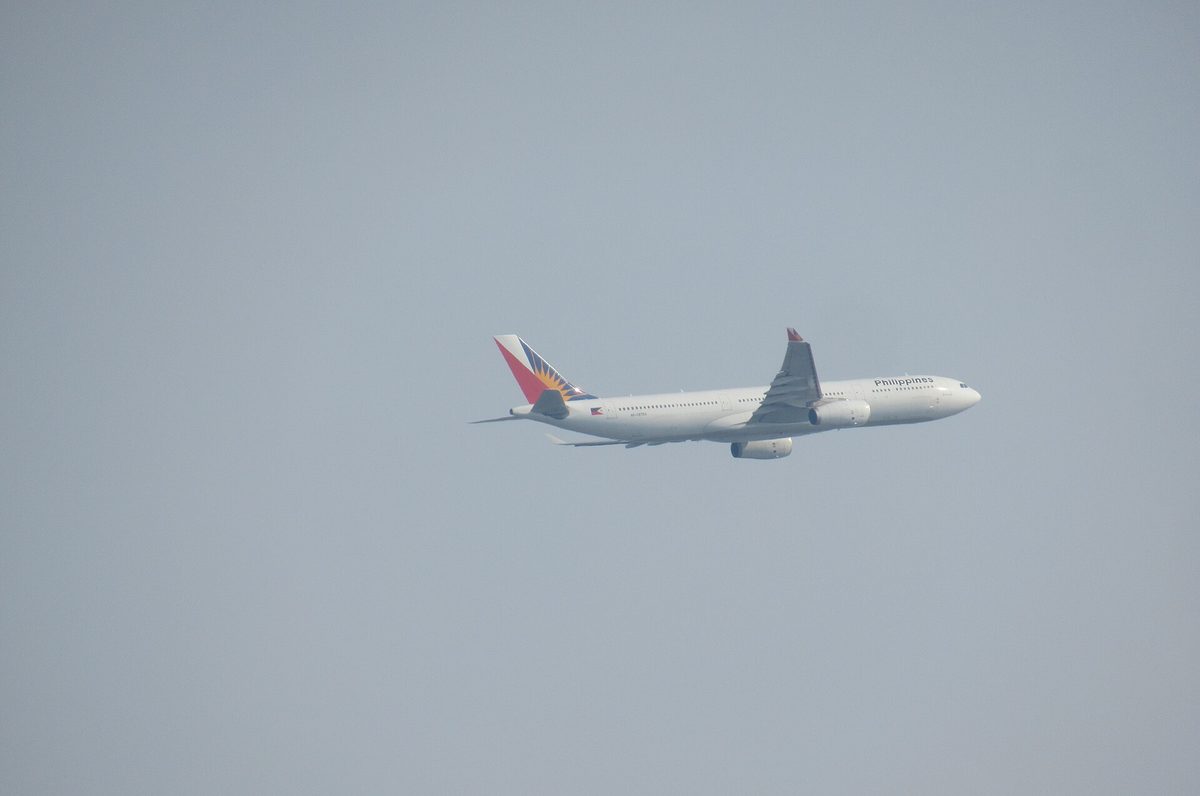
From the US West Coast, Philippine Airlines, United, EVA Air and Korean Air are my first checks. PAL flies nonstop to Manila from Los Angeles, San Francisco, Seattle, New York and Honolulu, and it is adding a new nonstop Chicago–Manila route from November 9, 2026. Nonstop saves time but is not always the cheapest fare. For value, a one-stop via Taipei (EVA, STARLUX), Tokyo (ANA, JAL), Seoul (Korean, Asiana) or Hong Kong (Cathay) is usually the play. Genuinely low-cost transpacific fares are scarce from the US; a budget carrier like ZIPAIR can get you across the Pacific to Tokyo cheaply, but you would then ride a separate carrier onward to Manila, so it only pays off if the all-in, two-ticket total actually beats a full-service one-stop. From the East Coast, the same Asian connections apply, and a Gulf carrier through Doha or Dubai can be price-competitive despite the longer mileage.
From the UK and Europe: mostly one-stop
Flights from London to Manila usually involve a change of plane, and that is fine because the connecting hubs compete hard. From continental Europe, Air France’s Paris–Manila nonstop is back from October 19, 2026. The cheapest and most comfortable options route through the Gulf or Asia: Qatar Airways (Doha), Emirates (Dubai), Singapore Airlines (Singapore), and value picks like SWISS (Zurich), Oman Air (Muscat) and XiamenAir (China). September fares from London have dipped toward the low £400s round-trip on the sharper one-stops, occasionally under £400. Qatar’s Doha hub is a strong option for the Philippines because of its breadth and frequent sales, and its stopover program lets you tack on a cheap night in Doha. The cheapest Chinese-carrier routings can be a notch lower again, with the trade-off of longer connections and a possible visa consideration for some passport holders, so read the fine print.
From Australia: nonstop is competitive
Australia is the happy exception where nonstop is often the cheap option. Cebu Pacific flies Sydney and Melbourne to Manila on A330neos, Philippine Airlines and Qantas also serve the route nonstop, and Scoot connects via Singapore on the budget end. From Australia, the booking sweet spot skews a touch later, roughly two to three months out, with October pricing especially well. Because nonstop is already cheap here, a layover usually saves little, so I only route via Singapore from Australia when the connection genuinely undercuts the direct fare.
Layover hubs ranked for the Philippines
If you are choosing a connection, my rough order for price-plus-ease into Manila: Doha (Qatar) and Singapore for breadth and reliability; Taipei and Seoul for efficient, often-sharp Asian connections; Hong Kong, Tokyo, Kuala Lumpur and Bangkok for budget-carrier feeds. The Middle Eastern hubs win from Europe; the East Asian hubs win from North America. If you have the time, several of these hubs run cheap or free stopover programs, turning a connection into a two-for-one trip.
Nonstop versus connecting: is the time worth the money?
People ask me whether the nonstop is “worth it,” and the honest answer is that it depends on what your time is worth and how much you hate airports. Depending on the itinerary, a nonstop from the US West Coast can save many hours each way and spare you the fatigue of a 3am connection, but how much more it costs than a one-stop varies with your dates. If you are flying once a year to see family and the extra few hundred dollars is real money, the connection is the rational choice and a decent hub like Taipei or Doha is no hardship. If you are short on leave days or simply value the directness, pay up for the nonstop with open eyes.
From the UK, flights to Manila normally connect, so the main question is which connection. From Australia the calculus inverts again: nonstop is so competitive that paying extra to connect rarely makes sense. The framework I use is to price the cheapest connection and the cheapest nonstop side by side, then ask whether the gap is worth the hours. Some years it plainly is; some years the nonstop is barely more and the decision makes itself. Run the numbers for your own dates rather than assuming one is always cheaper.
Budget-airline long-haul: where it works
True low-cost long-haul to the Philippines is real but limited. From Australia and around Asia it works well: Cebu Pacific runs long-haul itself, AirAsia X feeds through Kuala Lumpur, Scoot through Singapore, and Jetstar covers parts of Australia. These can be dramatically cheaper than full-service carriers if you travel light and skip the extras.
From the US, however, compare complete itineraries and their all-in totals rather than hunting for one budget ride. A low-cost carrier such as ZIPAIR can get you across the Pacific to Tokyo cheaply, but no budget airline carries you onward from Tokyo to Manila on the same ticket, so “budget long-haul from America” mostly means a cheap full-service one-stop rather than a single ultra-low-cost ride. The catch with any low-cost ticket: the headline price excludes nearly everything. Cebu Pacific and AirAsia price bags, seat selection and meals as add-ons, and buying a checked bag at the airport instead of online is punishingly expensive. Pre-pay every bag when you book, and run the all-in total before you congratulate yourself on the base fare. Picture a ₱1,500 base fare with a ₱2,000 bag and a paid seat added on: that is not the bargain the search result implied, and bag prices vary by route and by when you buy.

Cheap flights to Philippines: fare-alert and tool tactics
Finding cheap flights to Philippines routes is less about secret hacks and more about letting the tools watch the market while you do not. Here is the workflow I trust.
- Use aggregators to scan, airlines to book. Google Flights, Skyscanner, Kayak and momondo are excellent for comparing routes and spotting which hub is cheapest on your dates. Once you find a fare, I usually book direct with the airline so changes and refunds are simpler.
- Set alerts and walk away. Google Flights price tracking, Hopper and Airfarewatchdog will email you when your route drops. Set one the day your dates firm up; do not refresh manually for weeks. The whole point is to stop watching.
- Search the whole month, and flank Manila. Use the calendar/grid view to see the cheapest day, and price Manila against Cebu and Clark. The “explore” map view often reveals a hub you would not have guessed.
- Compare round-trip against two one-ways. On some routes, mixing carriers, say a Gulf carrier out and an Asian carrier back, beats a single round-trip. Aggregators surface these “split” itineraries automatically.
- Consider a self-transfer carefully. Booking two separate cheap tickets through a hub can beat one through-fare, but you own the risk: if leg one is late, no one re-books you, and at NAIA you must collect bags, exit, change terminals and re-check in. Leave a long buffer, or only self-transfer if you can absorb a missed connection.
A few tactics that can lower your fare
Beyond the basics, these are the moves that can quietly cut a fare. None of them is a gimmick; they are just ways of using how airlines price.
- Book in the local currency of a cheaper market when it is allowed. The same flight can list at a different price on an airline’s regional site. It does not always work and you must watch foreign-transaction fees, but it is worth a five-minute check on a big fare.
- Be flexible by a few days around your target month. A departure shifted from a Saturday in late August to a Tuesday in early September can cross from peak into shoulder pricing. The calendar view makes this obvious at a glance.
- Watch for airline seat sales, especially Cebu Pacific and AirAsia. The Philippine low-cost carriers run frequent flash sales on both international and domestic routes. If your dates are flexible and you are coming from within Asia or Australia, waiting for a sale can beat any aggregator price.
- Do not over-optimize a small fare. The hours you spend chasing the last $30 are worth more than $30. Lock in a good shoulder-season fare in the ranges above and spend your energy on the trip, not the spreadsheet.
The hidden costs that wreck a “cheap” fare
A low base fare is not the final price. Before you celebrate, add these in.
- Baggage. On budget carriers, bags are extra and cabin allowance is small. Pre-buy by weight tier online; airport rates hurt.
- Proof of onward travel. Visa-free visitors are routinely asked to show an onward or return ticket at check-in or immigration. A genuine return solves this; if you are going one-way, you may need a throwaway onward ticket. Check the latest visa requirements before you fly.
- Getting from the airport. From NAIA, use Grab or an official airport taxi rather than the touts; budget for traffic. This is a small cost but a classic first-hour headache.
- Seats, meals and changes. On low-cost tickets these are all add-ons, and a “cheap” fare with two checked bags and assigned seats can quietly match a full-service one that includes them.
For the full picture of what a trip actually costs once you are on the ground, see our Philippines travel cost breakdown. And once you have landed, our pillar guide to getting around the Philippines covers the planes, ferries and Grab rides that get you to the islands.

What is happening to fares in 2026
Some new routes are arriving in 2026. Philippine Airlines is leaning hard into the US market with a brand-new Chicago nonstop from November 9, Air France’s Paris–Manila nonstop returned on October 19, and Cebu Pacific keeps expanding its long-haul and international network with new aircraft. AirAsia continues to add seat sales across the region. None of this makes peak December cheap, but there are more routings to play off against each other.
The flip side is that demand has been strong too, and fares across Asia have not been cheap in recent years, so the savvy move is unchanged: travel in the low season, book in the three-to-five-month window, stay flexible on hub and arrival airport, and let a fare alert do the watching. Do that and you will consistently beat the travelers who book late, fly at Christmas, and pay for the privilege.
Frequently asked questions
What is the cheapest month to fly to the Philippines?
September is usually the cheapest, with October close behind, both in the rainy low season. After the holidays, late January through early March is the next cheap window, and February is often the lowest fares of the year from the US. December, northern-hemisphere summer, and Holy Week are the most expensive.
How far in advance should I book flights to Manila?
For long-haul economy, three to five months ahead is the sweet spot. Push earlier, four to six months, for December, summer or Holy Week, when cheap fare buckets sell first. Short-haul flights to Manila from elsewhere in Asia are often cheapest one to three months out, with seat sales appearing on short notice.
Are flights to the Philippines cheaper with a layover?
Often, but not always. A single well-chosen connection can undercut a nonstop, so price both for your dates. From the US, route via Taipei, Tokyo, Seoul or Hong Kong; from the UK and Europe, via Doha, Dubai or Singapore. From Australia, nonstop is frequently competitive, so a layover saves less.
Which US cities have nonstop flights to the Philippines?
Philippine Airlines flies nonstop to Manila from Los Angeles, San Francisco, Seattle, New York and Honolulu, with a new Chicago nonstop launching November 9, 2026. United also flies San Francisco–Manila nonstop. Nonstop saves time but is rarely the cheapest option; a one-stop via Asia usually wins on price.
Should I fly into Manila or Cebu for a cheaper trip?
For long-haul, Manila usually has the cheapest fares thanks to more routes and competition. But if your destination is the Visayas, a cheap fare into Cebu plus a short hop can beat an expensive Manila fare plus a domestic backtrack. Price both, including the onward leg, before deciding.
Is it cheaper to fly into Clark instead of Manila?
Sometimes, for intra-Asia routes, Clark undercuts Manila. It is also now the base for turboprop flights to El Nido and Coron. Allow for the road trip into Metro Manila, which runs long in heavy traffic and can erase the savings if Manila is your actual destination.
Sources and photo credits
Photo credits
Images are sourced from Wikimedia Commons under their respective licenses. See individual photo credits below each image and the attribution list at the foot of this page.
Sources
- Philippine Airlines — US route network and 2026 schedule updates (philippineairlines.com)
- Cebu Pacific — fares, baggage rules and long-haul routes (cebupacificair.com)
- Manila International Airport Authority / New NAIA Infra Corp — NAIA terminal information (miaa.gov.ph)
- Skyscanner, momondo and Google Flights — 2026 fare ranges and seasonality data (used as comparison tools)
About this guide: PhilippinesTourism.org publishes independent, on-the-ground Philippines travel guides. Information verified October 2026.