Anilao: World-Class Macro Diving Near Manila
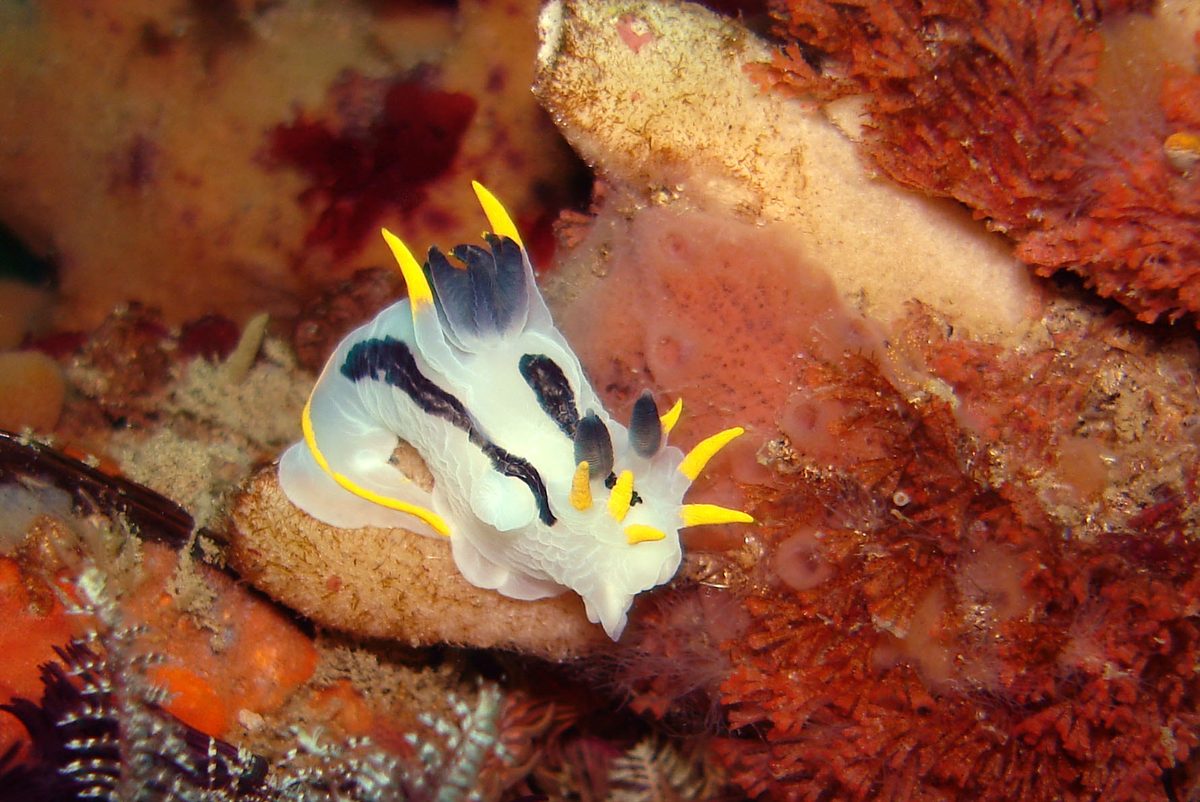
Anilao is the closest world-class diving to Manila: a cluster of dive resorts in Batangas, about two and a half to three hours south of the capital, fronting more than fifty named dive sites. It is the macro and muck capital of the Philippines, often called the Nudibranch Capital of the World. Come for the critters, not big animals.
I have dived Anilao on weekend runs out of Manila and on longer photo-focused trips, in warm March water and in the chilly January thermocline. This guide gives you the dive sites that actually earn the boat ride, an honest read on cost (Anilao is not cheap), what macro diving is and who genuinely loves it, and exactly who should book somewhere else.
Anilao dive sites at a glance
Here is the quick-reference table I wish I had on my first trip. Depths are approximate and shift with the tide; “level” is my honest read on who will enjoy each site, not a hard certification rule. Boat rides from the resorts are short, usually five to twenty minutes.
| Dive site | Type | Highlight | Level |
|---|---|---|---|
| Secret Bay (Mainit Muck) | Black-sand muck | Blue-ringed & mimic octopus, hairy frogfish; top night dive | All / macro |
| Twin Rocks | Coral pinnacles | Marine sanctuary, anthias clouds, resident turtle | Beginner+ |
| Mainit Point (Mato Point) | Current point | Schooling jacks, trevally, occasional reef sharks | Advanced |
| Basura (“Bahura”) | Muck slope | Frogfish, nudibranchs, octopus on rubble | All / macro |
| Anilao Pier | Muck / pier dive | Critters under the jetty; easy shore-style entry | Beginner+ / macro |
| Sombrero Island | Reef & slope | Healthy hard coral, fish life, good viz | All |
| Kirby’s Rock | Seamount | Black coral, sea fans, schooling fish in current | Advanced |
| Cathedral | Reef / marker site | Underwater cross, fish feeding, easy profile | All |
One sentence if that is all you have time for: Anilao is built for divers who like to hover over a square metre of sand for forty minutes finding things the size of a grain of rice. If that sounds like heaven, read on. If it sounds like watching paint dry, I will tell you where to go instead.
Why Anilao, and what “macro” and “muck” actually mean
The pitch is simple and it holds up: nowhere else this close to a major airport gives you diving this good. You can finish work in Manila on a Friday, drive down that evening, and be underwater by breakfast on Saturday. That convenience is the whole reason Anilao exists as a dive destination, and it is why the boats fill up on weekends and empty out midweek.
But you need to know what kind of diving this is before you commit, because Anilao disappoints people who arrive expecting the wrong thing. This is macro and muck diving. “Macro” means small subjects: nudibranchs, shrimp, tiny fish, things you photograph with a close-up lens. “Muck” means diving over black volcanic sand and rubble rather than pretty coral walls; the bottom looks like nothing until you slow down and start spotting the bizarre, brilliantly camouflaged animals living on it. Anilao Batangas sits beside the Verde Island Passage, a stretch of water marine scientists have flagged as a global centre of shorefish biodiversity, and that richness is exactly what concentrates along this coast.
The people who love Anilao are underwater photographers, critter hunters, and divers who have already ticked off reefs and want something stranger. The people who leave grumbling came hoping for sharks, mantas, big schools, and dramatic walls. You will see the occasional reef shark or trevally at the current sites, but that is not the point of the place, and pretending otherwise sets you up to be let down.
The best Anilao diving sites, site by site
There are over fifty named sites along a coastline barely ten kilometres long, which is part of what makes Anilao remarkable. These are the ones I think are worth your air, ordered roughly from gentlest to most demanding.
Secret Bay (Mainit Muck) – the legendary muck dive
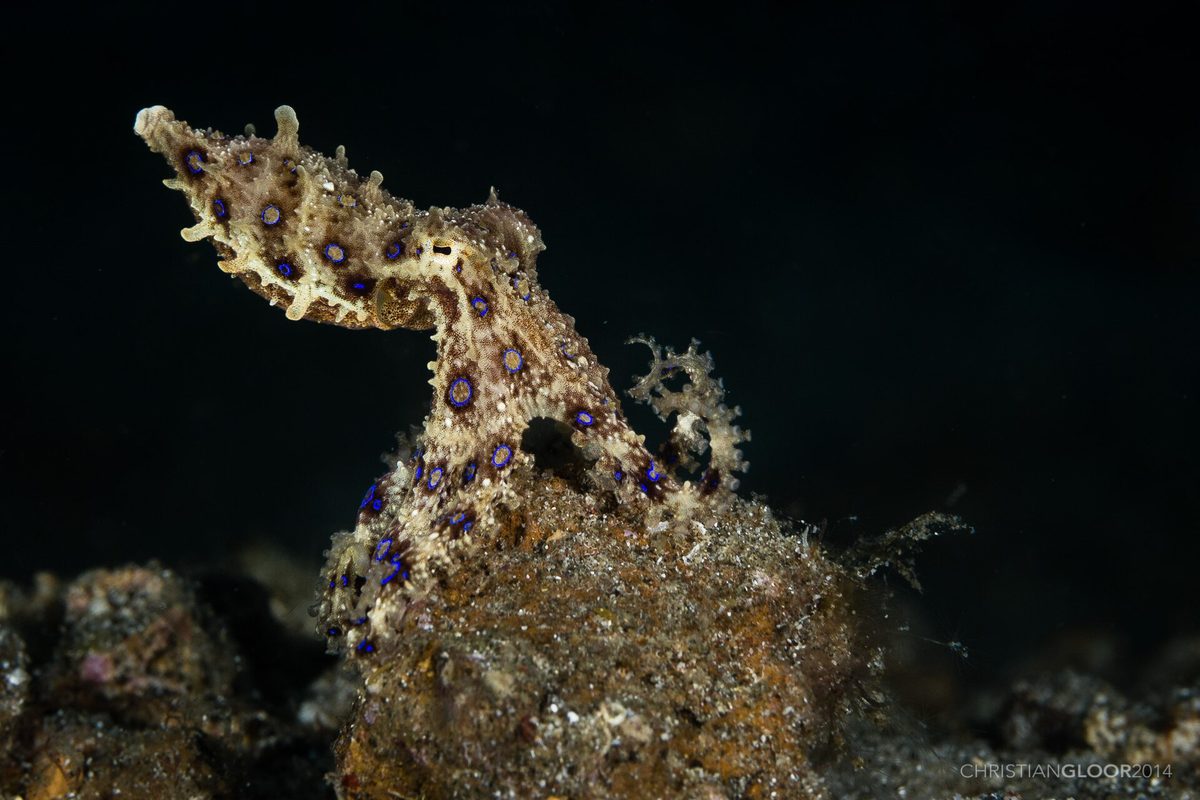
If Anilao has one signature site, this is it. Secret Bay, also called Mainit Muck, rarely tops five metres of visibility and the bottom is black sand and rubble, which is precisely why macro photographers rate it among the world’s great muck dives, in the same breath as Lembeh in Indonesia. Blue-ringed octopus, mimic octopus, flamboyant cuttlefish, hairy frogfish, and ghost pipefish all turn up here with a regularity that borders on unfair. It is also the premier night dive in the area, when the octopuses and the weird crustaceans come out to hunt. One real tip from experience: get in at slack tide, roughly an hour before high, because the silty bottom turns to soup in any current and visibility drops to near nothing.
Twin Rocks – the friendly sanctuary
Two submerged pinnacles sitting side by side, Twin Rocks is a marine sanctuary and one of the most beginner-friendly sites in Anilao. The shallow shelf sits around eight metres so you get long, relaxed bottom time, while the base drops to roughly twenty-two metres for divers who want more. The coral here is among the healthiest in the area, and it hosts enormous shimmering clouds of anthias and a resident hawksbill turtle. This is the site I send first-timers and rusty divers to.
Basura (“Bahura”) and Anilao Pier – critters in the rubble
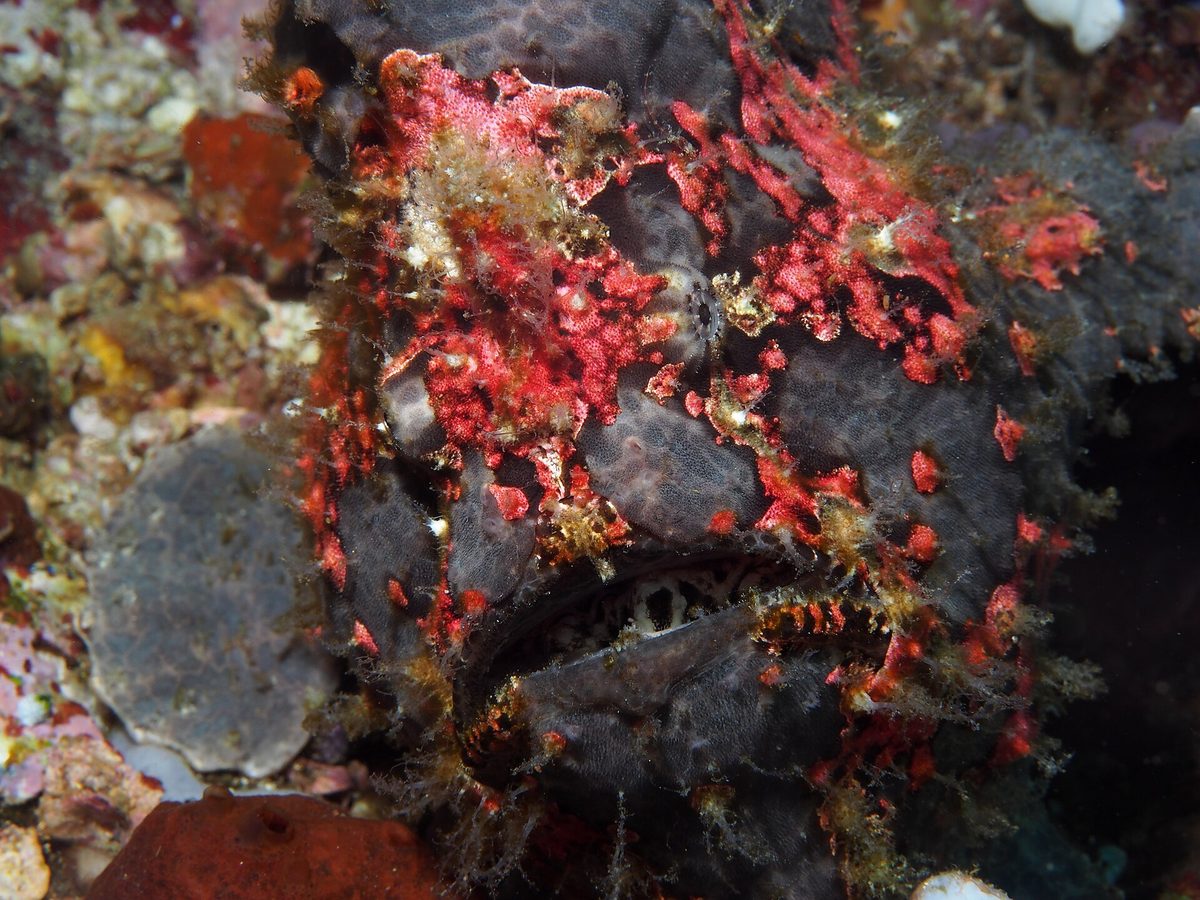
“Basura” literally means rubbish, which tells you exactly what kind of site it is: an unglamorous muck slope that photographers adore. Frogfish, nudibranchs, and octopus live in the rubble and discarded debris, and the lack of scenery forces you to dive slowly and actually look. Anilao Pier is similar in spirit, a muck dive under and around the jetty with an easy, shore-style entry, and it is a favourite for second dives and dusk dives. Neither site will photograph well as a landscape. Both will fill a memory card with critters.
Mainit Point and Kirby’s Rock – where the current lives
For divers who want some action, the current sites deliver. Mainit Point (sometimes Mato Point) can run strong and pulls in schooling jacks, trevally, and the occasional reef shark; it is an Advanced-level dive when the current is up, and the current is the whole reason the fish are there. Kirby’s Rock is a seamount rising from around thirty metres to just a few metres below the surface, draped in black coral trees and sea fans, with schooling fish and rare bigger visitors at depth. These are the closest Anilao comes to a “big” dive, and they are genuinely good, but manage expectations: this is not Tubbataha.
Sombrero Island and Cathedral – reef breaks from the sand
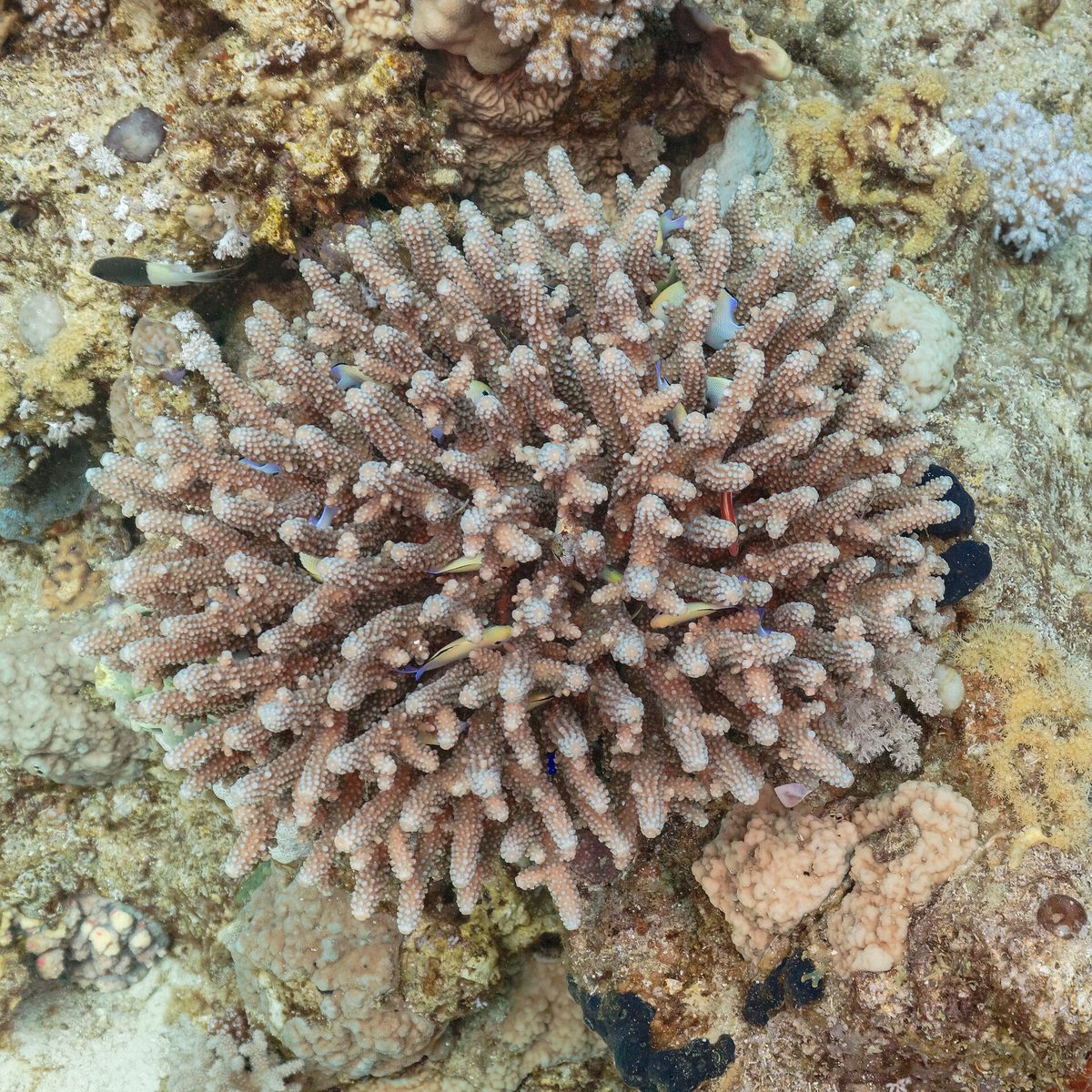
Not everything in Anilao is muck. Sombrero Island, named for its hat shape, offers healthy hard coral, good fish life, and the best visibility in the area on a clean day, a welcome change of pace after a morning of staring at sand. Cathedral is a well-known marker site with a submerged cross where guides sometimes feed fish; the profile is easy and it is a reliable, relaxed dive. Both are good places to bring a non-photographer buddy who needs scenery to stay interested. For a wider sense of how Anilao stacks up against the country’s reefs and walls, see our roundup of the best dive sites in the Philippines.
The critter list: nudibranchs and the weird stuff
This is what you are really coming for, so here is an honest inventory of what shows up. Nudibranchs are the headline: dozens of species in every colour, which is how Anilao earned the “Nudibranch Capital” tag. Beyond them, the regular cast includes hairy and painted frogfish, several octopus species (including the venomous blue-ringed and the shape-shifting mimic), flamboyant cuttlefish, ghost pipefish, pygmy seahorses, mantis shrimp, and an endless supply of shrimp, crabs, and gobies tucked into the coral and rubble.
You do not find these animals by swimming. You find them by hovering, by following your guide’s pointer, and by trusting the local spotters who know exactly which patch of sand the rhinopias has been sitting on for the past week. A good guide is the single biggest factor in what you will see here, far more than which resort you choose. Tip them well; they earn it.
Underwater photography in Anilao
Anilao is, frankly, a destination built for camera divers, and it shows in how the diving is run: long bottom times, shallow profiles, and guides trained to find subjects and then back off so you can shoot. If you are serious about macro, this is one of the best places in Asia to do it, and the off-Manila convenience means you can come back often to refine your craft.
A few practical notes. Bring your macro setup and a focus light; a snoot is worth packing if you shoot one. The muck sites silt up fast, so good buoyancy is not optional, both for your shots and out of respect for the other photographers sharing a tiny patch of sand. Shooting at depth on cooler-water days is genuinely cold during long hovers, so think about thermal protection before your fingers stop working. And if you only snorkel, know that the muck sites give you almost nothing from the surface; you would be better off with our guide to snorkeling in the Philippines for clearer, shallower reefs elsewhere.
Anilao dive resorts and honest prices for 2026
Anilao is resort-based. There is no dive town, no strip of cheap shops to walk between, no nightlife: you pick a resort, you eat there, and you dive with their boats and guides. Options range from simple dive lodges to comfortable mid-range places like Buceo Anilao, Eagle Point, Halo Anilao, and Pier Uno, plus higher-end photography-focused resorts. Most run packages bundling room, meals, and a set number of dives, which is usually better value than paying à la carte.
Now the honest part: Anilao is not budget diving, and the per-dive cost is where it adds up. A recurring, fair complaint from long-time divers is that costs stack, boat fee, guide fee, air or Nitrox, and weights can each be charged separately, so a “cheap” dive is rarely as cheap as it looks. As a rough 2026 guide, expect individual boat dives in the region of ₱1,800 to ₱3,500 (roughly US$30 to US$60) per dive depending on group size, with solo divers paying the most and groups of three to four the least. A Discover Scuba session runs around ₱4,000 to ₱4,500 (about US$70 to US$80).
On top of the diving, budget for fees that are not always quoted up front: an Anilao dive-park or marine fee of roughly ₱300 per person per boat-diving day, plus a small daily environmental or municipal charge. These are usually collected at checkout and are easy to forget when you are pricing a trip. All figures here are ballpark and shift year to year; confirm the current rate with your resort before you book, and ask specifically what is and is not included.
My honest take: if you value your weekends and you live in or near Manila, Anilao is worth the premium for the sheer convenience and the quality of the macro. If you are a budget traveller flying in from abroad with time on your hands, you will get more diving for your money, and arguably better reefs, in places like Dauin, Moalboal, or Bohol.
Getting to Anilao from Manila
Anilao is reached by road, not by air or ferry, which is exactly what makes it a viable weekend trip. From Manila you take the South Luzon Expressway (SLEX) and the STAR Tollway toward Batangas, then turn off toward Mabini and Anilao. Door to door it is around two and a half to three hours in light traffic, and meaningfully longer if you leave during a Friday-evening rush or a holiday exodus, when the expressway clogs badly.
Most divers either drive their own car or arrange a private van transfer through their resort, which is the simplest option and worth it if you are hauling camera gear and dive kit. Public transport is possible (a bus to Batangas City, then a jeepney toward Anilao) but slow and awkward with luggage, and not something I would recommend with a full photo rig. The last stretch down to the resorts is a steep, narrow, winding road, so factor that in if you are driving yourself. For the bigger picture on transport options around the country, our guide to getting around the Philippines covers buses, vans, and ferries.
Best season and water temperature
Anilao dives year-round, but the dry season from around November to May is the prime window, with April and May the warm, calm peak. The dry months bring the best visibility, typically around fifteen to twenty metres on a good day at the reef sites (the muck sites are deliberately murky regardless of season, that is the point). Weekends in peak season get busy, so midweek is calmer if you can swing it.
The water-temperature detail catches a lot of visitors out. From roughly January to March, Anilao runs noticeably cooler, dipping to around 23 to 26°C with a distinct thermocline at depth. For a quick fun dive that is fine in a 3mm, but for the long, motionless macro hovers that define Anilao, that water gets cold fast. I bring a 5mm and a hood for winter trips and I am glad of it every time. From March through May the water warms back toward 27 to 29°C and the whole experience is more comfortable.
The rainy and typhoon season, roughly June to October, brings choppier seas, reduced visibility, and the chance of cancelled boats, though mornings are often still diveable. Your target date in mid-October sits right at the tail of that wetter window, just before conditions settle into the dry-season sweet spot, so build in a buffer day if a storm is brewing. For planning a wider trip, see our guide to the best time to visit the Philippines.
Verde Island Passage day trips
When you want a break from the sand, Verde Island is the day trip to take. Sitting in the Verde Island Passage between Batangas and Mindoro, it offers proper wall diving, the famous “Verde Drop-off” with sloping reef walls, sea fans, and clouds of fish, a genuine change of character from the muck closer to the resorts. It is a longer boat ride and conditions can be current-swept, so it tends to be an Advanced-friendly outing, but on a calm day it is one of the most rewarding dives in the region and a reminder of just how biodiverse this stretch of water is. Most Anilao resorts run Verde trips as a premium add-on; ask when you book if it is on your wish list, as boats go when there is demand and weather.
Who should skip Anilao
I would rather you spend your money well, so here is the honest steer. Skip Anilao if you are chasing big animals: there are no whale sharks, no mantas, no thresher-shark dawn dives here, and the reefs, while healthy in spots, are not the country’s most dramatic. Skip it if your idea of a great dive is a fish-packed wall in forty metres of visibility, you will find that elsewhere. Skip it if you are purely a snorkeller, because the signature muck sites offer little from the surface. And think twice if you are a brand-new, nervous diver who needs constant scenery to stay engaged, though the gentle sanctuary sites like Twin Rocks do work well for learners.
Anilao is for the macro-curious, the photographers, and the Manila-based divers who want serious diving without serious travel. If that is you, it is one of the most rewarding and convenient dive destinations in Asia. For the full overview of the country’s underwater options, head back to our pillar guide to scuba diving in the Philippines, and if you are travelling with non-divers, our roundup of beaches near Manila covers where they can spend the day.
Anilao dive trip FAQ
Is Anilao good for beginner divers?
Yes, with the right site choice. Many Anilao sites are shallow, current-free, and close to shore, which makes them ideal for new and rusty divers, and several resorts run PADI and SSI courses. Sites like Twin Rocks and the gentle reef slopes suit beginners well. The strong-current points such as Mainit Point are better left until you have more experience and good buoyancy control.
What is the best time of year to dive Anilao?
The dry season from November to May is best, with April and May the warm, calm peak and the clearest visibility at the reef sites. January to March is still very diveable but the water cools to around 23 to 26°C with a thermocline, so bring a thicker wetsuit. The June-to-October rainy season can mean choppy seas and cancelled boats, though mornings are often fine.
How much does diving in Anilao cost in 2026?
Budget roughly ₱1,800 to ₱3,500 (about US$30 to US$60) per boat dive depending on group size, plus a dive-park fee of around ₱300 per person per boat-diving day and a small daily environmental charge. Most resorts sell packages bundling room, meals, and dives, which usually works out cheaper. Anilao is pricier than many Philippine dive spots, so always confirm exactly what is included before booking.
What animals will I see diving in Anilao?
Mostly small ones. Anilao is famous for macro life: nudibranchs in huge variety, hairy and painted frogfish, blue-ringed and mimic octopus, flamboyant cuttlefish, ghost pipefish, pygmy seahorses, mantis shrimp, and countless crabs and gobies. You may spot the occasional reef shark or schooling jacks at the current sites, but big pelagics are not why people come. This is critter diving.
Is Anilao better than Puerto Galera or Dauin?
It depends on what you want. Anilao beats both on convenience from Manila and rivals anywhere in Asia for macro. Puerto Galera offers more varied diving and a livelier town across the water; Dauin near Dumaguete is comparable muck diving and is often noticeably cheaper. Long-time divers debate this endlessly. For pure macro close to the capital, Anilao wins; for value on a longer trip, the southern sites are strong.
Do I need to stay at a dive resort in Anilao?
Effectively, yes. Anilao has no dive town or independent shop strip; the diving is organised through resorts, which provide the boats, guides, gear, and meals. You pick a resort that matches your budget and dive with them. This is part of why costs are higher than in town-based destinations, but it also means logistics are simple once you have chosen a place. Book ahead for peak-season weekends.
Sources and photo credits
Photo credits
Images sourced from Wikimedia Commons under the licenses noted. Full attribution:
- anilao-diving-nudibranch.jpg – Photo: Canonfodr / CC BY-SA 3.0 via Wikimedia Commons
- anilao-diving-frogfish.jpg – Photo: Rickard Zerpe / CC BY-SA 2.0 via Wikimedia Commons
- anilao-diving-reef.jpg – Photo: Diego Delso / CC BY-SA 4.0 via Wikimedia Commons
- anilao-diving-batangas-coast.jpg – Photo: Fiszi37 / CC BY 4.0 via Wikimedia Commons
- anilao-diving-octopus.jpg – Photo: Christian Gloor from Wakatobi Dive Resort, Indonesia / CC BY 2.0 via Wikimedia Commons
Sources
- PADI – Scuba diving in the Philippines (dive region overview)
- Philippine Department of Tourism
- Verde Island Passage – centre of marine shorefish biodiversity
- Divezone – Anilao, Batangas dive review (sites, seasons, conditions)
About this guide: PhilippinesTourism.org is an independent Philippines travel resource. Routes, prices and dive-site conditions were verified October 2026; confirm current details with operators before you book.