The Best Beaches in Cebu
Here is the thing nobody tells you before you book: Cebu City has no swimming beach. The mainland coast around the city is working port, fishing boats, and ferry wakes. The good sand is all a boat or a long drive away, and the gap between the best of it and the overhyped rest is enormous. This guide ranks the best beaches in Cebu honestly, with real 2026 prices, travel times from the city, and clear calls on which are worth the trek.
I have split them into beaches you can reasonably do as a day trip from Cebu City and beaches that only make sense as an overnight (or longer). Get that distinction right and you will love Cebu. Get it wrong and you will spend your holiday on buses.
The best beaches in Cebu at a glance
Prices below are 2026 figures I verified while writing this, in Philippine pesos with a rough US dollar conversion (about 58 PHP to $1). Ferry fares and sanctuary fees change with fuel surcharges, so treat them as a guide and confirm on the day.
| Beach / area | Best for | Getting there from Cebu City (+ time) | Rough 2026 cost | Crowd level |
|---|---|---|---|---|
| Bantayan (Santa Fe) — north | A real beach holiday; powder-soft sand | Bus to Hagnaya (~3 h) + ferry to Santa Fe (~1.5 h); ~4.5–5 h total | Ferry ~₱305–384 ($5–7) each way; beaches free | Moderate; busy on weekends |
| Malapascua (Bounty Beach) — north tip | Divers; dawn thresher sharks | Bus/van to Maya (~4–5 h) + bangka (~30 min) | Boat ₱200 ($3.50); dives ~₱1,800–2,500 ($31–43) | Low–moderate |
| Moalboal — White Beach (Basdiot) — south | Sand, sardine run, easy access | Bus from South Terminal (~3–4 h); board “Bato via Barili” | Bus ~₱210 ($3.60); beach entry ₱10–20 | Moderate–high |
| Mactan resort beaches — by the airport | Convenience, infrastructure, families | Grab/taxi ~30–45 min from city; 15–20 min from airport | Day-use ₱1,300–2,600 ($22–45) | High |
| Mactan island hopping (sandbars) | Snorkeling, sandbars, day trip from the city | Drive to Mactan + boat to the islets (~30–45 min) | ~₱1,500–2,500 ($26–43) joiner + fees | Moderate |
| Sumilon Island sandbar — off Oslob | A photogenic day trip; pairs with whale sharks | Bus to Oslob (~3–4 h) + short boat to the sandbar | Day tour ~₱2,000 ($34) weekday; +₱500 weekend | Moderate |
| Tingko Beach (Alcoy) — south | Cheap, calm, family-friendly day stop | Bus to Alcoy (~2.5–3 h) | Entry ₱10–50 (under $1) | Low |
| Camotes (Santiago Bay) — east | Off-the-radar overnight; very quiet | Ferry from Danao (~2 h) or Mactan (~1.5 h) | Ferry ~₱300–500 ($5–9) | Very low |
If you only remember one line: for the best sand, go to Bantayan; for the best day trip near the city, go island hopping off Mactan or south to Sumilon; for diving, go to Malapascua or Moalboal; and skip paying a Mactan resort just to lie on imported sand. Cebu earns its place among the best beaches in the Philippines precisely because the great stuff is spread across islands rather than crammed onto one strip.
Day trip from Cebu City, or worth an overnight?
This is the question that decides your itinerary. The honest truth is that the best beaches near Cebu City for a quick visit are not the famous ones up north; Cebu is a long, thin island, and the beaches at its tips are genuinely far from the city. A few places work as a day trip if you start early; others are a waste unless you sleep over.
Realistic day trips from Cebu City: Mactan island hopping (you are on the boat within an hour of leaving your hotel), Tingko Beach in Alcoy, Hermit’s Cove in Aloguinsan, and — if you are disciplined about timing — the Sumilon sandbar combined with Oslob whale sharks. Each of these is back-by-dinner doable.
Worth an overnight (or two): Bantayan and Malapascua both eat half a day in transit each way; doing either as a day trip is self-punishment. Moalboal is borderline — you can day-trip the sardine run, but with three to four hours each way you will see it from the bus more than the water. Camotes needs an overnight minimum because the ferry timings box you in. For these, build them into a multi-day plan; a south Cebu itinerary loops Moalboal, Kawasan, and Oslob without backtracking to the city between each.
A note on the roads: the Cebu South Coastal Road and the highway south have improved, but “improved” is relative. Buses still stop, overtake, and crawl through towns. Budget the higher end of every time estimate here, especially on weekends and Philippine holidays.
Bantayan Island: the best sand in the Cebu region
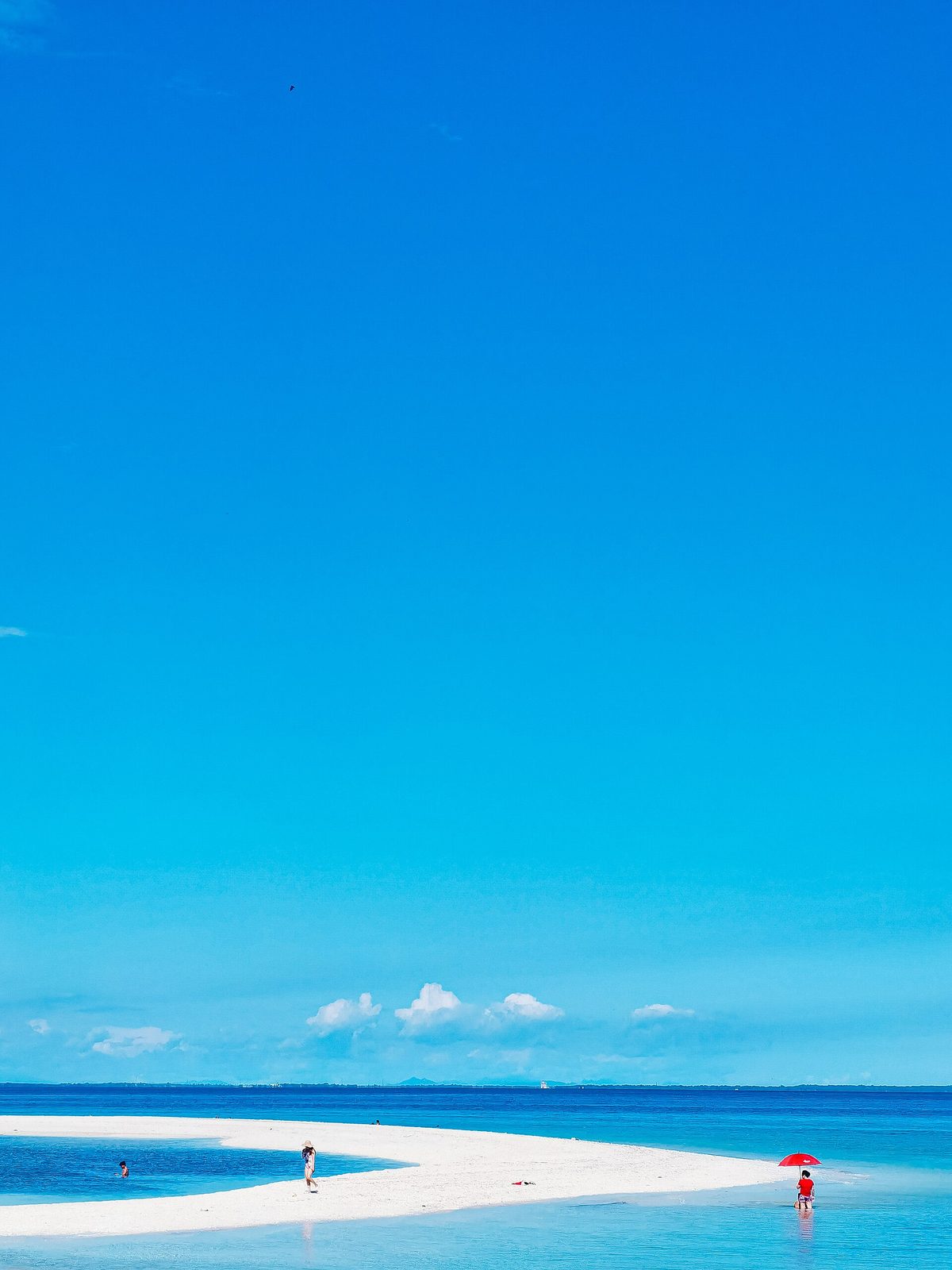
If you want the postcard — flour-soft white sand, water so shallow and clear you can wade out 50 metres and still see your feet — Bantayan is the answer. It sits off the northwest tip of Cebu, and the resort strip clusters around Santa Fe on the island’s east coast. The sand here genuinely rivals Boracay’s, with a fraction of the noise and a fraction of the price.
Kota, Sugar and the Santa Fe beaches
Bantayan has the finest of the white beaches in Cebu, and the signature stretch runs from Kota Beach through the Santa Fe beachfront: a long, wide ribbon of powder with palms behind it and a sandbar that surfaces at low tide. It is calm, family-friendly, and made for sunset. Paradise Beach and Virgin Island on the quieter shores trade restaurants for seclusion and better snorkeling — Virgin Island is a short boat hop and arguably the prettiest water on the trip. You will read the old name “Sugar Beach” a lot; it points at this same powder-sand stretch. Bantayan Island’s sugar-white sand is the reason people make the long haul north, and it does not disappoint.
What it costs in 2026: the beaches themselves are free; you pay for food, drinks, and a tricycle from the pier (₱100–150). Beachfront guesthouses run ₱500–2,000 ($9–34) a night, with mid-range resorts that have pools at ₱1,000–2,500.
Getting there: take a Ceres bus from the Cebu North Bus Terminal to Hagnaya pier (about 2.5–3 hours, ₱120–150), then the ferry from Hagnaya to Santa Fe (about 1.5 hours). New fare rates were posted in early 2026: budget roughly ₱305 on Island Shipping or about ₱384 on the Super Shuttle Ferry once the terminal fee is added, each way. The last crossing from Hagnaya is around 5:30 pm, so a missed bus can strand you overnight on the mainland. All in, plan four and a half to five hours door to door.
The September 2025 earthquake — what is actually affected
You may have seen headlines about a magnitude 6.9 earthquake that struck offshore of northern Cebu on 30 September 2025. Here is the factual picture as of mid-2026, because the internet is full of stale panic. The island’s beaches and island-hopping trips stayed open and are operating normally; the Department of Tourism kept Bantayan accessible. What the quake did damage was built heritage and one specific attraction: the historic Santa Fe and Bantayan town churches took structural damage (facade and bell tower), and Ogtong Cave remains closed for safety evaluation after rockfalls, with no confirmed reopening date at the time of writing. So: come for the sand, but do not build your plan around the cave, and check the latest before you travel.
My verdict: worth the long trip, full stop — but only as a two-night-minimum stay. This is the beach I send people to when they say “I just want to do nothing on great sand.” For a deeper plan, see our guide to Bantayan Island’s sugar-white sand.
Malapascua: thresher sharks at dawn, white sand by day
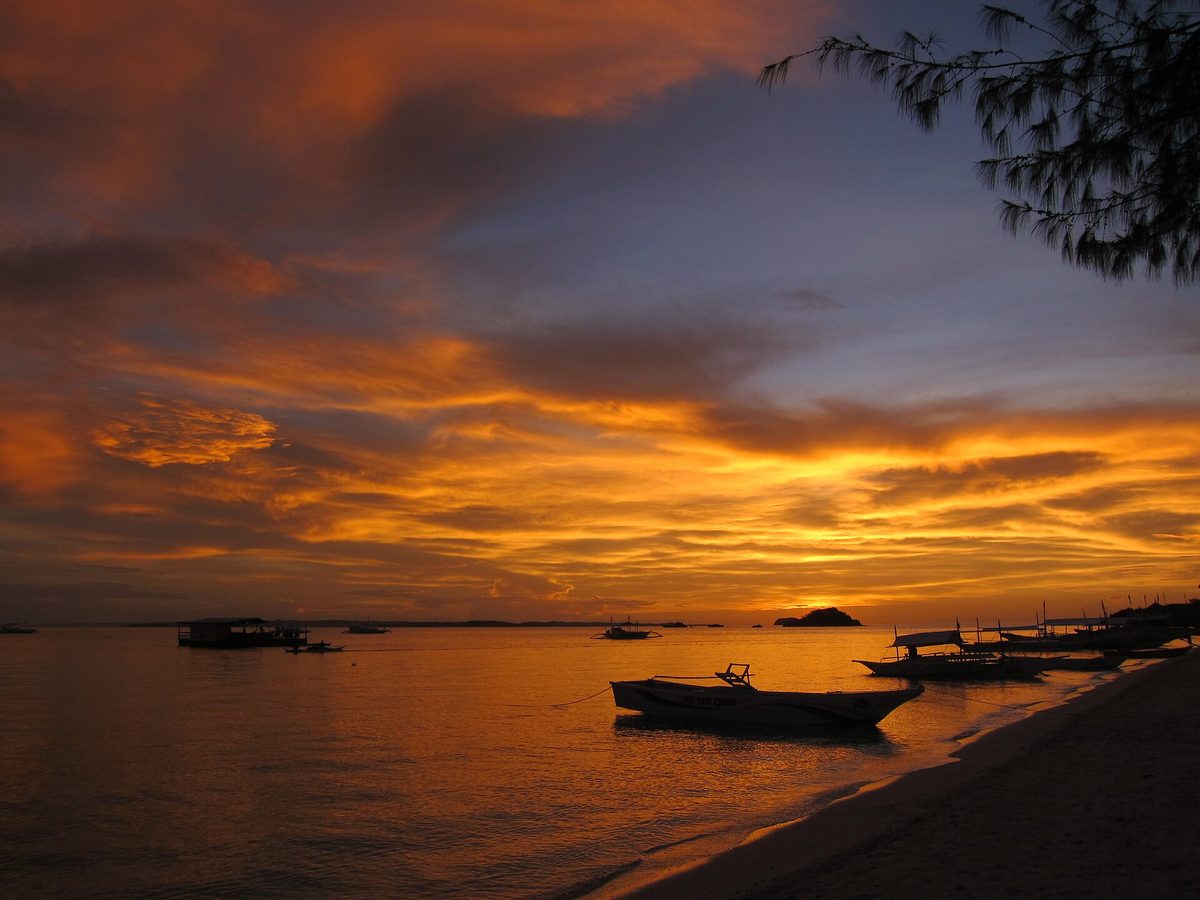
Malapascua is a tiny, car-free island off Cebu’s northern tip, and it is famous worldwide for one thing: it is the only place where you can reliably dive with thresher sharks at sunrise. The sharks — graceful, six-metre animals with scythe-like tails — come to a cleaning station to be groomed by smaller fish. For divers, this is a bucket-list morning. For everyone else, Malapascua is a quietly lovely beach island that happens to be a long way away.
Bounty Beach and the diving
Bounty Beach is the main strip: a compact half-kilometre of genuine white sand with clear water and good snorkeling off the reef at either end. It is not as broad as Bantayan, but it is the real thing, and the island’s dive shops and beach bars line it. The thresher dives now run at Kimud Shoal (the action shifted here from the older Monad Shoal site), where sighting rates sit above 90% on a typical dawn dive. Boats leave in the dark for a roughly 5 am descent.
What it costs in 2026: the beach is free. A thresher dive runs about ₱1,800–2,500 ($31–43) per dive, but the real day cost is higher once you add the marine park fee (around ₱300/day), a Kimud Shoal protection fee (around ₱100), and a per-boat fuel surcharge (around ₱500). A two-dive dawn day with rented gear lands near ₱5,000–6,000 ($86–103). Guesthouses start around ₱500; dive resorts run ₱1,500–3,000.
Getting there: it is a haul. Bus or van from Cebu City to Maya port takes roughly four to five hours, then a public bangka across to the island runs ₱200 and takes about 30 minutes. Many dive resorts will arrange a private transfer if you would rather not wrestle the public route with luggage.
My verdict: a clear yes for certified divers, and worth at least three nights so you get multiple shots at the sharks. If you do not dive, the beach is pretty but the journey is hard to justify for sand alone — pick Bantayan instead. You can read more in our Malapascua guide.
Moalboal: sardine run yes, sandy beach sort of
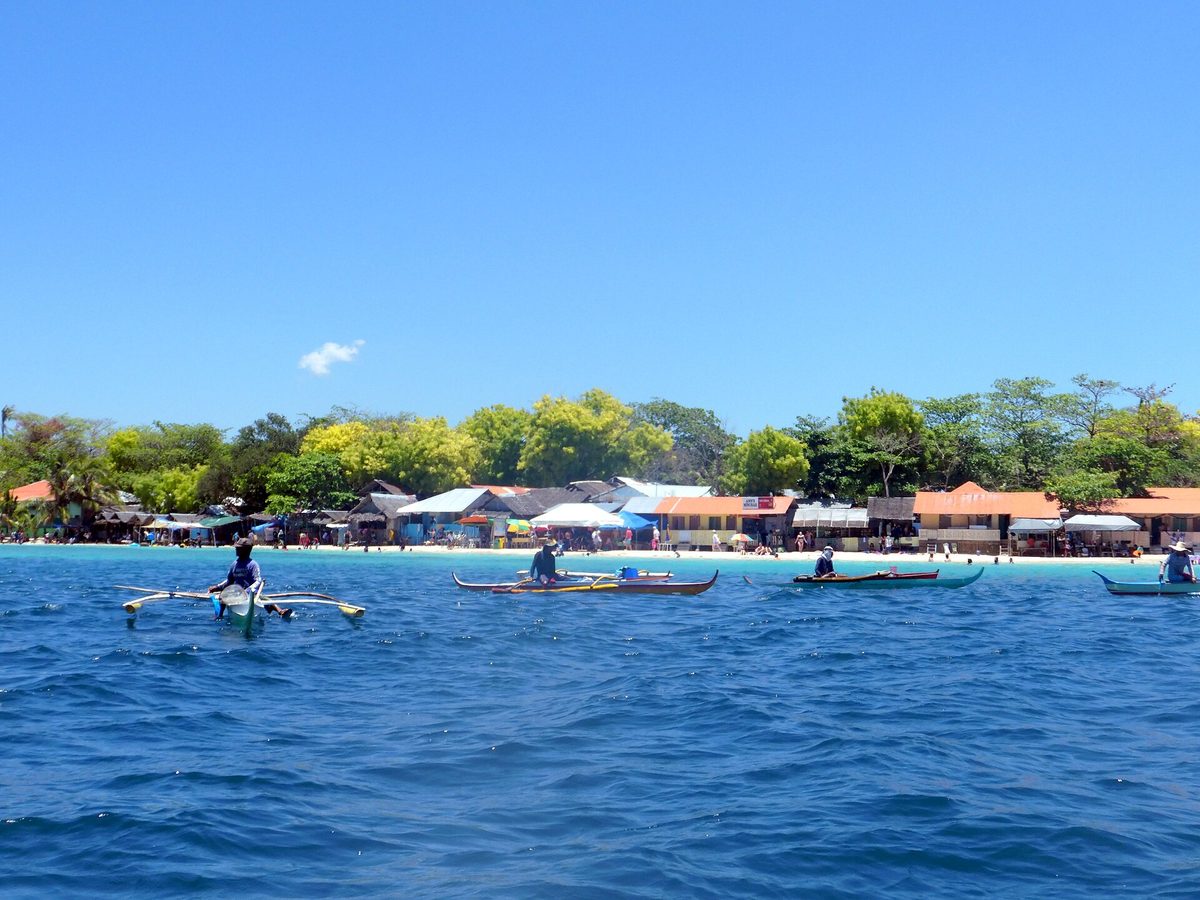
Moalboal, on Cebu’s southwest coast, is the budget-traveller and diver hub of the south. It earns its fame from the sardine run: a swirling bait ball of millions of sardines that hangs just metres off the shore, reachable by snorkelling straight off the seawall with no boat needed. It is one of the most accessible big-wildlife encounters in the country. The catch is that Moalboal’s most famous waterfront is not really a beach.
Panagsama vs White Beach (Basdiot)
Panagsama Beach is where the dive shops, bars, and the sardine run are — but the “beach” here is largely a rocky shore and seawall, not sand. You come to Panagsama to get in the water, not to lie on it. For actual sand, head a few minutes north to White Beach (Basdiot), a one-kilometre stretch of fine, pale sand with turquoise shallows and snorkeling off the front. That distinction trips up a lot of first-timers who book “Moalboal beach” and arrive at a wall of dive shops.
What it costs in 2026: White Beach entry is a token ₱10–20. The sardine run is free to snorkel if you swim out yourself; a guided snorkel or dive trip (often combined with Pescador Island’s wall) costs more and is worth it for the turtles and the wall. The run is most reliable roughly September through March.
Lambug Beach, Badian: 30 minutes south, near Kawasan Falls, Lambug is the quiet, sandy alternative — wide, calm, with starfish in the shallows and far fewer people. Badian charges a small environmental fee (about ₱45 for locals and ₱65 for foreign visitors). Bring your own food; the infrastructure is minimal, which is the appeal.
Getting there: from the Cebu South Bus Terminal, a Ceres aircon bus runs about ₱210 and takes three to four hours. Board one marked “Bato via Barili” — never “Bato via Oslob,” which loops to the opposite coast and adds hours.
My verdict: go for the diving and the sardine run, not for a classic sand day. If sand is the priority, sleep at White Beach or detour to Lambug. Full details are in our Moalboal guide.
Mactan Island: the honest take on the resort beaches
Mactan is where Cebu’s airport sits, connected to the city by bridge, and it is where most first-timers assume they will find Cebu’s best beaches. They will not. I want to be straight about this because the marketing is loud and the reality is not.
Why the resort day-use beaches underwhelm
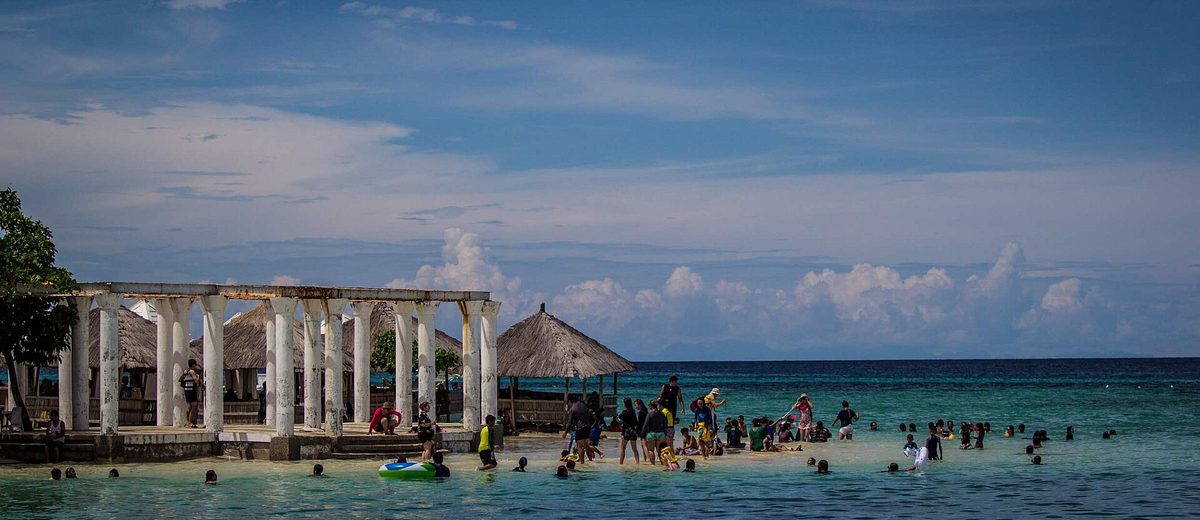
The big resort beaches along the Maribago–Punta Engaño belt — the Shangri-La, Crimson, and the day-use clubs — are largely man-made or seawalled: imported sand groomed into narrow strips, with house reefs that have seen better decades. The water sits close to the city’s ports and ferry lanes, so it is calmer but not as clear as the outer islands. And you pay handsomely to access it: 2026 day-use rates run roughly ₱1,300–1,500 at Cebu White Sands, around ₱2,588 at Solea (with a ₱1,000 food credit), and ₱1,500–2,500 at the luxury names. That is real money for sand you would find better, and free, an hour away.
None of this means Mactan is useless. If you have an early flight, kids who need a pool and a buffet, or you simply want a comfortable resort day with zero logistics, it does that job well. Just go in knowing you are paying for convenience and infrastructure, not for the Philippines’ best beach.
The real reason to be on Mactan: island hopping
The genuine draw off Mactan is the cluster of islets and sandbars a short boat ride out: Hilutungan (Gilutongan) Marine Sanctuary with its drop-off wall, Nalusuan with its long jetty and reef, Caohagan for fresh-grilled seafood lunches, Sulpa, and the showstopper Pandanon, whose white sandbar stretches out at low tide. This is a legitimate, beautiful day trip you can do straight from the city.
What it costs in 2026: a joiner/shared island-hopping tour runs about ₱1,500–2,500 ($26–43) per person including lunch and snorkel gear; a private boat for a group is roughly ₱2,500–5,000 total. On top, expect marine-sanctuary entrance fees of about ₱150–300 per person per island, paid on the spot. Bring cash and reef-safe sunscreen.
My verdict: skip paying a resort just for a day on the sand; spend that money on a boat instead and snorkel the sanctuaries. If you want a resort stay, book a night and enjoy the pool — but treat Mactan’s resort beaches as comfort, not as the headline.
Sumilon Island: the shifting sandbar day trip
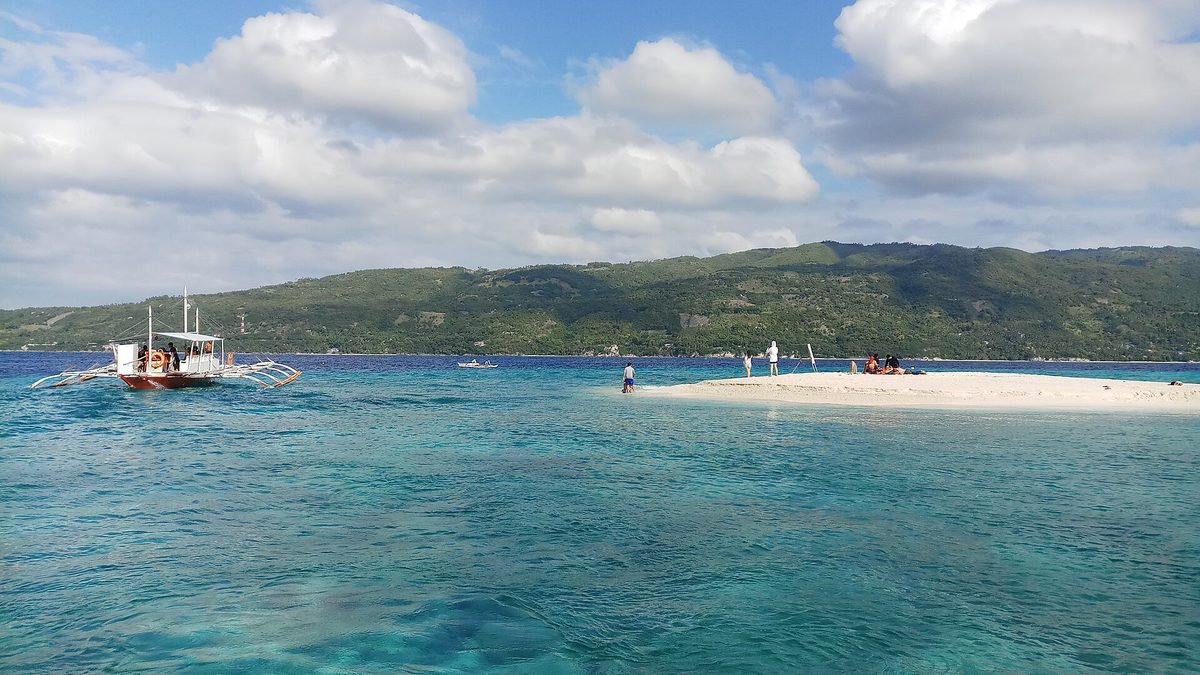
Off the southern town of Oslob, Sumilon Island has a sandbar that moves — it changes shape and position with the tide and season, and at low tide you can walk a long tongue of white sand with open water on both sides. It is one of Cebu’s most photogenic spots and pairs naturally with Oslob’s whale-shark watching for a full, if early, day out.
What it costs in 2026: the easiest route is a day-tour package, around ₱2,000 ($34) per person on weekdays with roughly a ₱500 surcharge on weekends and holidays; these usually bundle the boat transfer, the sandbar, snorkeling, and Bluewater Sumilon resort access. If you arrange it yourself, the boat is about ₱1,500 per boat plus a ₱50 environmental fee, with an added charge (around ₱2,200) if you want resort/swim access. Check the tide tables before you commit — the sandbar is at its dramatic best at low tide, and the experience is genuinely different four hours later.
Getting there: Oslob is roughly three to four hours south of Cebu City by bus (board “Bato via Oslob” this time), then a short boat to Sumilon. Many visitors combine it with the 6 am whale-shark briefing in Oslob, which means a very early start from the city.
My verdict: a worth-it day trip for the photo and the snorkeling, especially tacked onto whale sharks — but it is a long day, and the sandbar is tide-dependent, so time it or be disappointed.
South Cebu’s easy beaches: Tingko, Hermit’s Cove and more
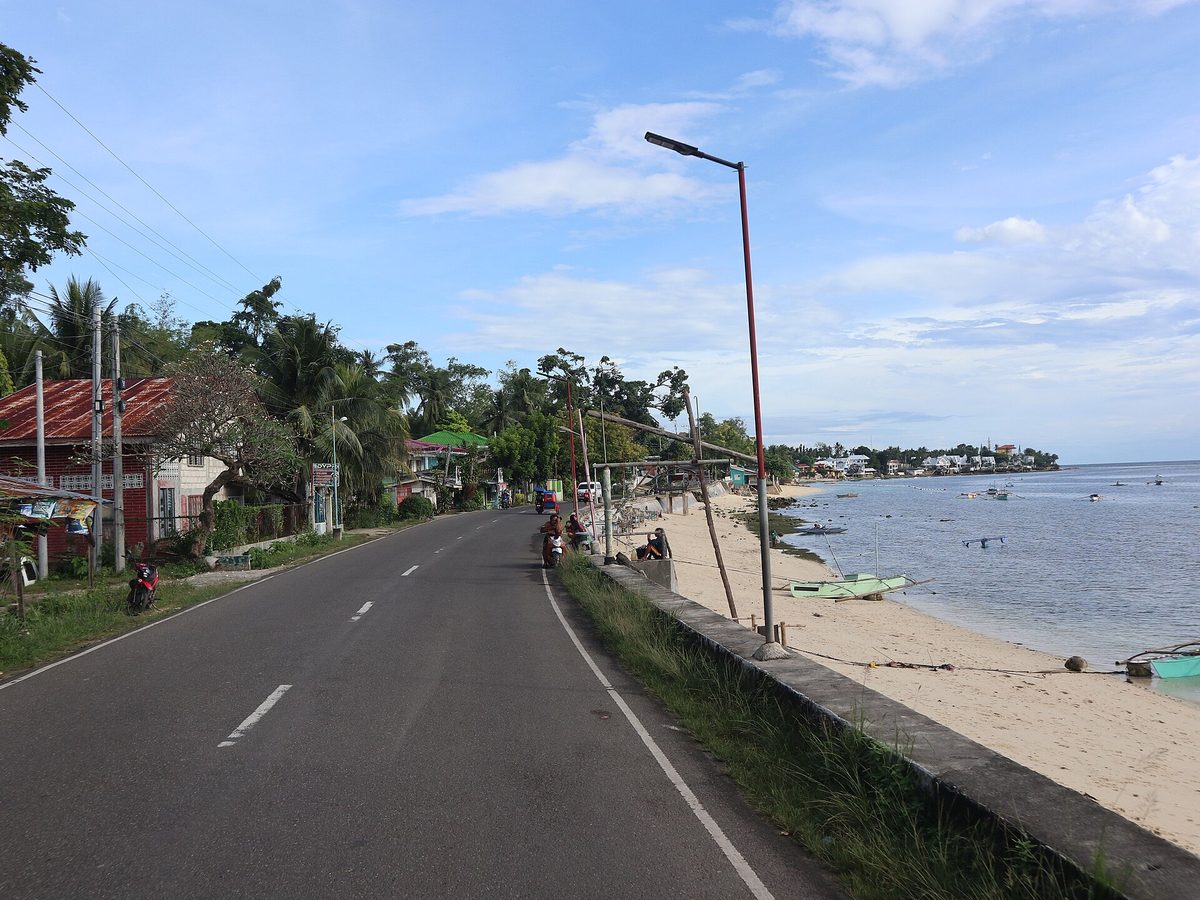
Between the city and Oslob, the south coast hides a string of low-key beaches that rarely make the listicles but make excellent, cheap day stops — especially if you are already road-tripping south.
Tingko Beach (Alcoy) is the pick of them: a long, calm stretch of pale sand with gentle turquoise water, about two and a half to three hours south. Entry is a token ₱10–50 depending on which access you use. It is genuinely family-friendly and almost never crowded on weekdays. Dalaguete Beach Park, just up the coast, is another budget-friendly option locals favour for picnics.
Hermit’s Cove (Aloguinsan), on the west coast, is a small, pretty cove reached by descending a roughly 200-step staircase to a mix of rocky and sandy shore. Entry is about ₱100 and includes the use of free BBQ grills; it is open 6 am to 6 pm. Aloguinsan also fronts the Bojo River, a community-run mangrove cruise worth combining if you are out this way.
Badian and Lambug (covered under Moalboal above) round out the southwest. None of these are destinations you fly across the world for, but as add-ons to a southern loop they are easy wins — calm water, real sand, almost no fees, and barely a tour bus in sight.
Camotes Islands: the quiet overnight east of Cebu
The Camotes Islands sit off Cebu’s east coast — a small group (Pacijan, Poro, Ponson, Tulang) sometimes nicknamed the “lost horizon of the south.” They deliver white-sand beaches without the tourist machinery or pricing of Bantayan, precisely because the ferry timings make a day trip impractical and keep the crowds away.
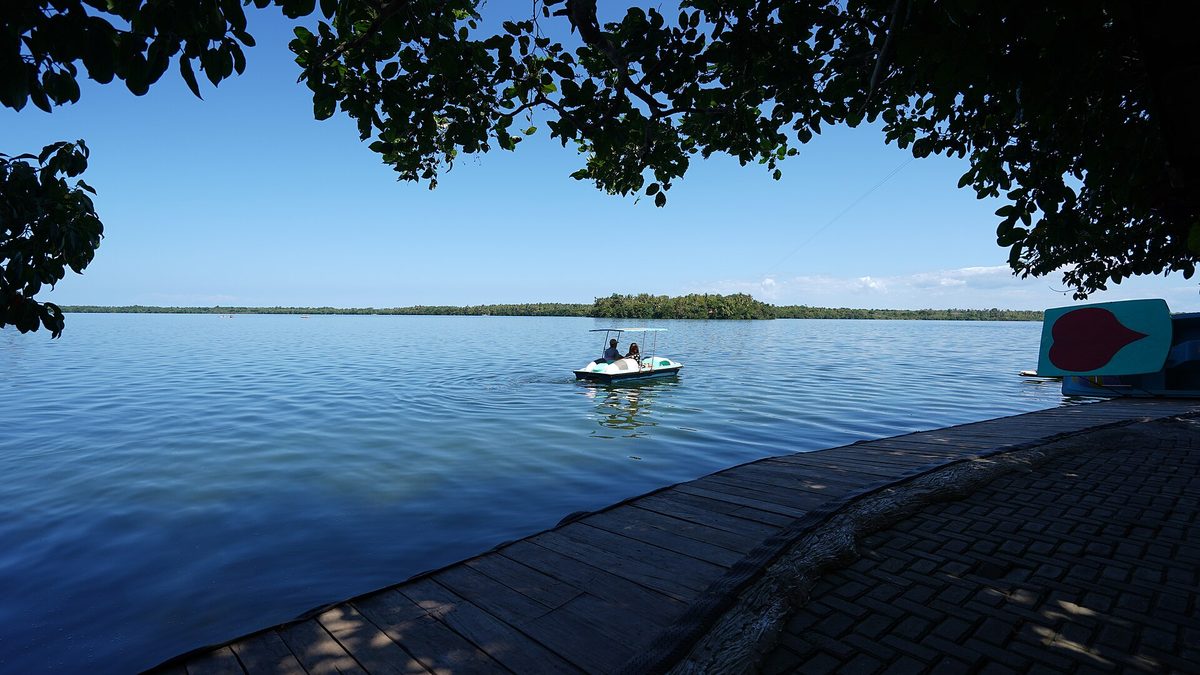
Santiago Bay on Pacijan is the headline: a wide, walkable white-sand shoreline that stretches out at low tide, with local food stalls and very few visitors. Mangodlong offers a scenic cove framed by dramatic rocks, and Lake Danao — a large freshwater lake with paddle boats and a zipline — is the islands’ other signature attraction (it is the lake pictured above, not a beach, but it is a lovely stop).
What it costs and getting there: ferries run from Danao (north of the city) to Consuelo on a RoRo, about ₱300–320 ($5–6) and around two hours, with a handful of daily sailings; a faster craft from Mactan to Consuelo runs about ₱500 and 1.5 hours. Entrance fees on the islands are minimal (free to about ₱100). Guesthouses are basic and cheap, ₱400–800 a night.
My verdict: a quiet, rewarding overnight for travellers who want sand to themselves and do not mind simple facilities — but not a first-timer’s pick, and not a day trip. Plan one or two nights so the ferry schedule works in your favour.
One that is not Cebu: Kalanggaman Island
You will see Kalanggaman Island and its famous double sandbar on plenty of “Cebu beaches” lists. It is stunning — and it is in Leyte, not Cebu. It is most commonly reached from Malapascua or Maya as a day tour, so it can slot into a north-Cebu trip, but it is not a Cebu beach. I mention it only so you are not surprised when the boat crosses a provincial boundary. If you are island-collecting, it is one of the Philippines’ most dramatic sandbars, but plan it from the Leyte or north-Cebu side.
When to go, and how to plan around the seasons
Cebu is warm year-round, with sea temperatures sitting around 27–29°C. What changes is rain and sea state. The island is somewhat sheltered by its neighbours in the Visayas, so it sees less direct typhoon impact than Leyte or Samar — but “less” is not “none,” and you should still watch PAGASA advisories in the wet months.
| Season | Months | What to expect | Good for |
|---|---|---|---|
| Dry / peak | December–April | Clear skies, calm seas, best visibility; busiest and priciest, especially around Sinulog (January), Holy Week and Christmas | Everything — beaches, diving, sandbars |
| Shoulder / best value | November & May | Mostly good weather, thinner crowds, better rates; November is the sweet spot | Beach holidays without the peak-season prices |
| Wet / typhoon | June–October | More rain and choppier seas; August–September are the wettest and carry the highest storm risk; still often swimmable between systems | Budget trips and divers who can stay flexible |
The sardine run at Moalboal is most reliable roughly September to March, and thresher-shark dives at Malapascua run year-round at dawn. If your trip lands in the wet season, keep your ferry-dependent islands (Bantayan, Malapascua, Camotes) loose in the plan, leave buffer days for cancelled crossings, and have a mainland or south-coast plan B.
Frequently asked questions
Does Cebu City have any good beaches?
No — not for swimming. The city’s own coastline is industrial: ports, fishing boats, and ferry traffic. To reach real sand you have to travel, whether that is a 30-to-45-minute hop to Mactan for a resort or island-hopping day, or a longer haul north to Bantayan and Malapascua or south to Moalboal, Oslob, and Alcoy. Plan transport into every beach day.
What is the closest beach to Cebu City?
Mactan Island is the closest, roughly 30 to 45 minutes by car, and it is where the resort day-use beaches and island-hopping departures are. The honest caveat is that Mactan’s resort sand is largely man-made and the day-use fees are steep (₱1,300–2,600 in 2026). For the money, an island-hopping boat to the nearby sandbars is a better use of a day than lying on a groomed resort strip.
Are Mactan’s beaches worth the money?
For convenience, sometimes; for great sand, no. The resorts charge ₱1,300–2,600 for day use of imported, seawalled sand with tired house reefs. If you want a comfortable, low-effort day with a pool and lunch — or you have an early flight — they do the job. If you want the Philippines’ best beach, that budget goes much further on a Bantayan overnight or a Mactan island-hopping trip to the sanctuaries.
Is Bantayan Island still open after the 2025 earthquake?
Yes. The magnitude 6.9 earthquake offshore of northern Cebu on 30 September 2025 damaged heritage buildings — the Santa Fe and Bantayan churches — and Ogtong Cave remains closed for safety checks as of mid-2026. But the beaches and island-hopping operate normally, and the Department of Tourism kept the island accessible. Come for the sand; just verify the church and cave status if those are on your list.
What is the best beach in Cebu for families?
Bantayan’s Santa Fe beaches and Tingko Beach in Alcoy are the easiest for families: both have shallow, calm water and gentle entry. Tingko is a cheap south-coast day trip; Bantayan is a relaxed multi-day base. Sumilon’s sandbar is a fun half-day for older kids, and Mactan’s resorts suit families who want pools and infrastructure over pristine sand.
How many days do I need for Cebu’s beaches?
For one great beach plus a day trip, three to four days works — for example, two nights on Bantayan plus a city day, or a southern loop through Moalboal, Oslob, and Sumilon. To combine north and south, or to add Malapascua’s diving, give yourself a week or more; the transit times between the island’s tips are the real constraint, not a shortage of beaches.
Sources and photo credits
Photo credits
- Lake Danao in Camotes Island.jpg — Photo: choypictures (CC0) via Wikimedia Commons (source)
- Pandanon Island, Bohol.jpg — Photo: StrangerNbystander / CC BY-SA 4.0 via Wikimedia Commons (source)
- Kota Sandbar.jpg — Photo: Herbertkikoy / CC BY-SA 4.0 via Wikimedia Commons (source)
- Cebu South Road, Tingko Beach (Alcoy, Cebu; 01-20-2023).jpg — Photo: Patrickroque01 / CC BY-SA 4.0 via Wikimedia Commons (source)
- Malapascua.JPG — Photo: Htkava / CC BY-SA 3.0 via Wikimedia Commons (source)
- Moalboal, Cebu (49537777631).jpg — Photo: Matt Kieffer from London, United Kingdom / CC BY-SA 2.0 via Wikimedia Commons (source)
- Sumilon Island sandbar.jpg — Photo: Warrendering / CC BY-SA 4.0 via Wikimedia Commons (source)
Sources
- Philippine Department of Tourism — destination accessibility and advisories for Cebu and Bantayan Island after the September 2025 earthquake.
- PHIVOLCS — official record of the magnitude 6.9 northern Cebu earthquake, 30 September 2025.
- The Manila Times — 2026 Hagnaya–Santa Fe (Bantayan) ferry fare update.
- Municipality of Santa Fe / Bantayan Island LGU and Municipality of Alcoy — local beach access and fee information.
About this guide: PhilippinesTourism.org is an independent Philippines travel resource. Prices and details were verified August 2026; confirm current fees and schedules before you travel.