Moalboal Travel Guide: Sardines, Turtles and Beach Life
Moalboal, Philippines is a small dive town on the southwest coast of Cebu, about three hours from Cebu City, famous for a permanent sardine run you can snorkel for free, resident sea turtles meters from the beach, and easy boat access to Pescador Island. It is the country’s easiest world-class underwater experience.
I have come back to Moalboal three times now, and the pull is always the same: nowhere else lets you walk off a beach and swim into a tornado of a million sardines without a boat, a guide, or a single peso changing hands. This guide is the honest version of how to do it well, what everything actually costs in 2026, and how to spend your days depending on whether you came to dive, to backpack, or to do as little as humanly possible. For the wider island, pair this with our Cebu travel guide.
Top Things to Do in Moalboal at a Glance
Prices are typical 2026 rates and convert at roughly 58 PHP = $1. Treat them as ballparks and confirm when you book.
| Experience | Rough cost (per person) | Time needed | Best for |
|---|---|---|---|
| Sardine run snorkel (DIY off Panagsama) | ~PHP 100–300 ($2–5) gear + fees | 1–2 hours | Everyone — the unmissable one |
| Snorkeling with sea turtles (same beach) | Free if you have gear | 30–60 min | Families, first-timers |
| Pescador Island boat trip (joiner) | ~PHP 500–800 ($9–14) + PHP 100 fee | Half day | Snorkelers, divers |
| Fun dive (2 tanks, Pescador / house reef) | ~PHP 3,000–4,500 ($52–78) for two | Half day | Certified divers |
| Open Water certification (3 days) | ~PHP 18,000–25,000 ($310–430) | 3–4 days | New divers |
| Kawasan canyoneering (in Badian) | ~PHP 1,800–2,500 ($31–43) | Most of a day | Thrill-seekers |
| White Beach (Basdaku) day | ~PHP 10–50 entry + scooter | Half to full day | Couples, families, sunbathers |
If you only have one morning, you already know what to do: rent a mask and go find the sardines. Everything else is a bonus.
The Sardine Run at Panagsama Beach
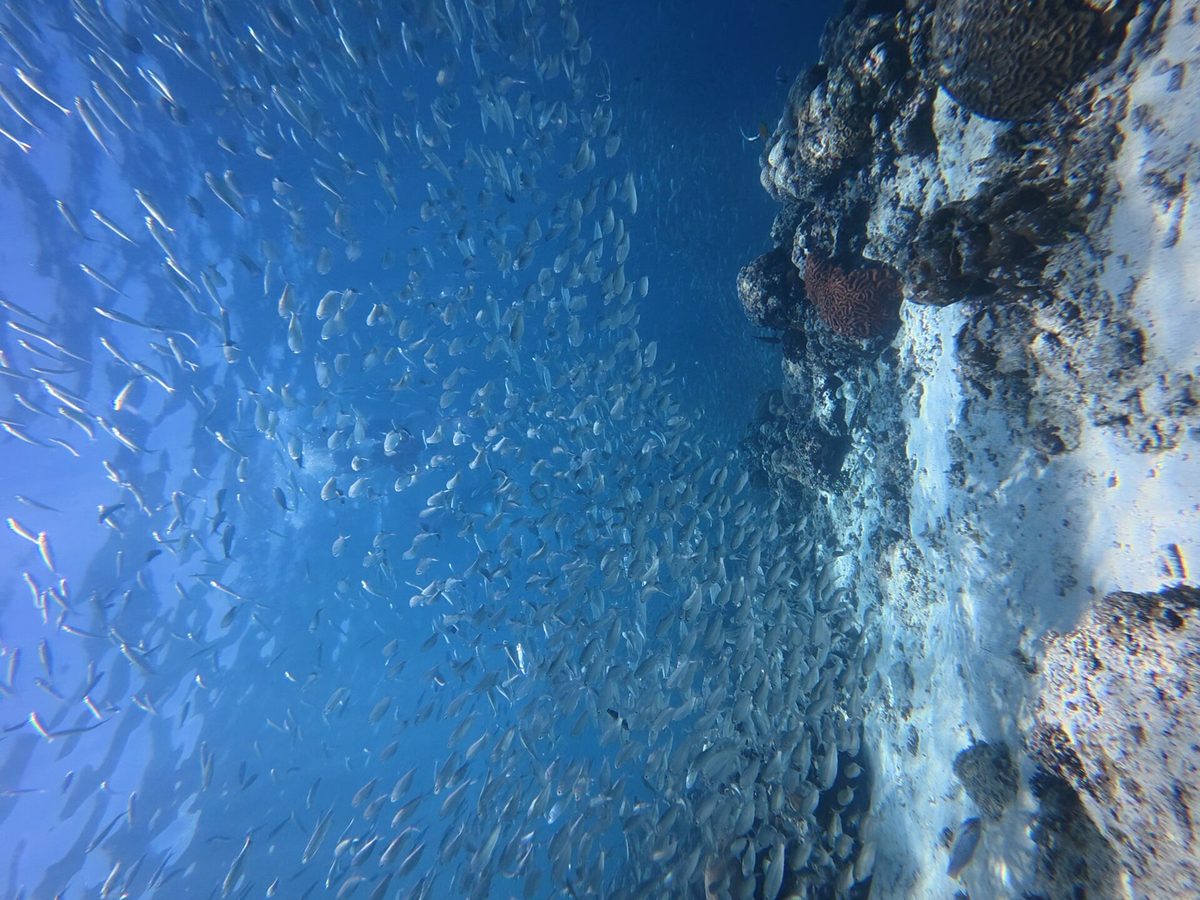
This is the reason Moalboal is on the map, and it lives up to it. About 20 to 30 meters off Panagsama Beach, a bait ball of several million sardines hangs in the water in more or less permanent residence. They are not on a seasonal migration like the famous South African sardine run, where you charter boats and pray. Here they are there 365 days a year, and you reach them by walking off the beach and kicking out a little way.
Here is how I do it. Rent a mask and snorkel from any dive shop along the strip; the rate is a flat 100 PHP almost everywhere, a little more if you want better fins. Walk into the water near the long yellow pier in front of Marina Village Dive Resort, swim out to the obvious reef drop-off, and look down. The school moves around, but it rarely strays far from that wall. Within a few minutes you will be hovering over a living silver tornado that folds, splits, and reforms as you drift through it. Freedive down into the middle of it and the whole mass parts around you like a curtain. It is genuinely one of the best things you can do in the water anywhere in the Philippines, and it costs less than a beer back home.
Go early. Around sunrise to about 8am the schools sit closer to shore, the water is glassiest, and you can have the place nearly to yourself before the tour boats arrive. By late morning the boats are buzzing around and you spend more energy watching for propellers. An honest caveat most guides skip: during the southwest monsoon (the habagat, roughly July to October) Panagsama can get choppy, visibility drops, and some mornings the sardines push out deeper. They are still there, but conditions matter, which is why the dry season is the safe bet if the sardines are your whole reason for coming. For more on seasonal timing across the country, see our guide to the best time to visit the Philippines.
One more thing worth saying plainly: this is a working reef, not an aquarium. Net fishing is banned here to protect the schools, though local fishermen are still allowed to line-fish a small catch at sunset, which strikes me as a fair balance between tourism and livelihoods. Wear reef-safe sunscreen, or better, a rash guard, and keep your fins off the coral.
Swimming with Sea Turtles
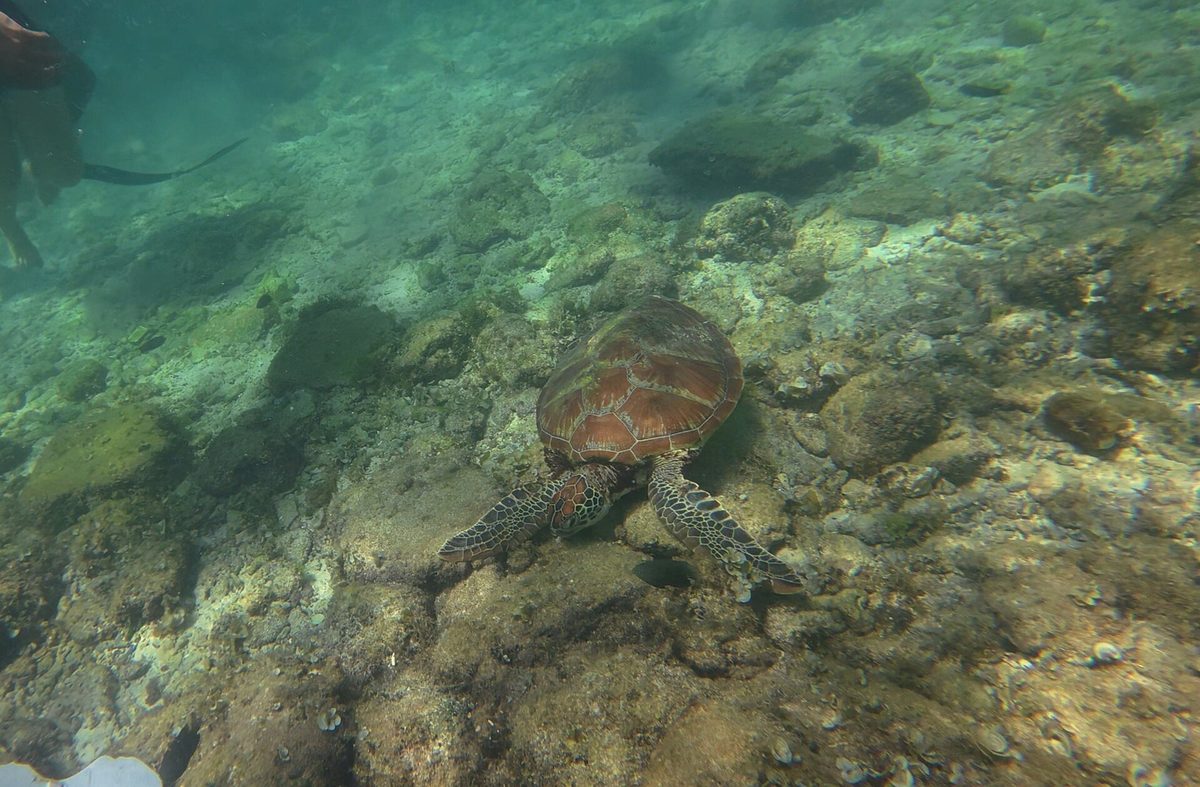
The sardines get the headlines, but the turtles might be what you remember most. Green and hawksbill turtles graze on the seagrass beds in the shallows at Panagsama, usually in two to four meters of water, just inshore of the reef drop-off where the sardines hang out. On every visit I have spotted at least one within the first few minutes of swimming out, and often three or four over a morning. They are completely habituated to people and will carry on munching seagrass or paddle slowly up for a breath while you hover nearby.
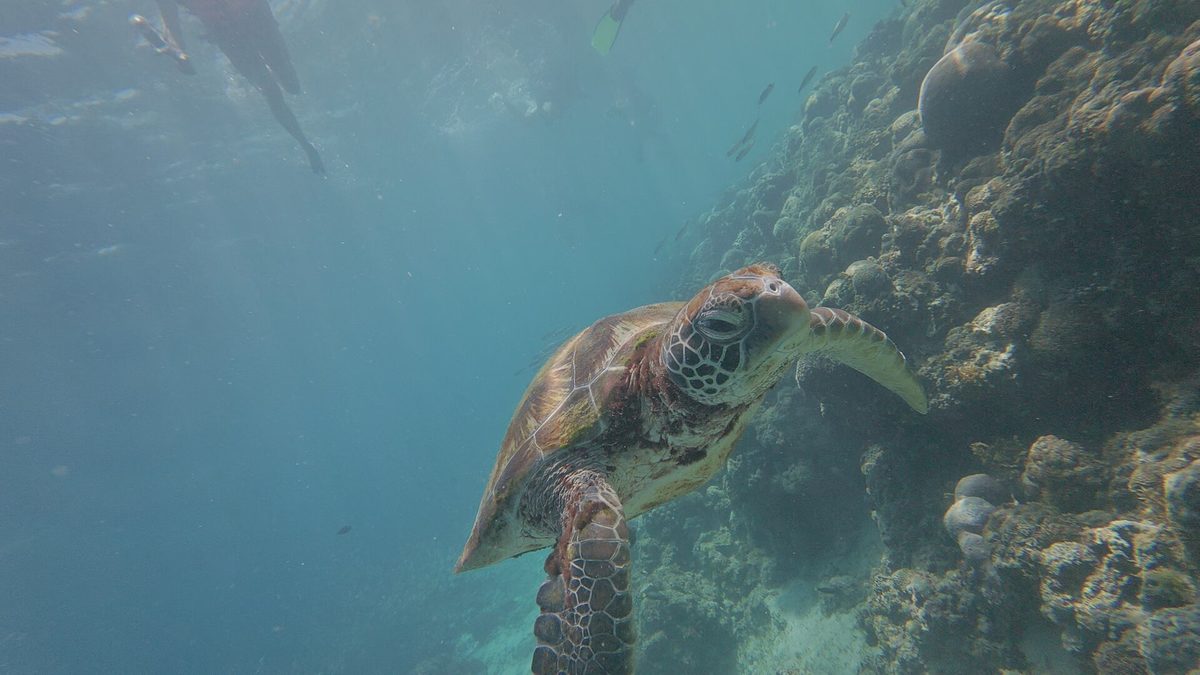
The rule here is simple and enforced: do not touch, chase, or crowd them. Keep at least a couple of meters of distance, never block a turtle heading for the surface, and resist the urge to grab a selfie that puts your hand near its shell. Touching marine life carries a fine, and frankly the turtles were here long before any of us. If you want to plan more turtle and reef time on the rest of your trip, our roundup of the best snorkeling spots in the Philippines points you to the clearest water elsewhere.
Pescador Island
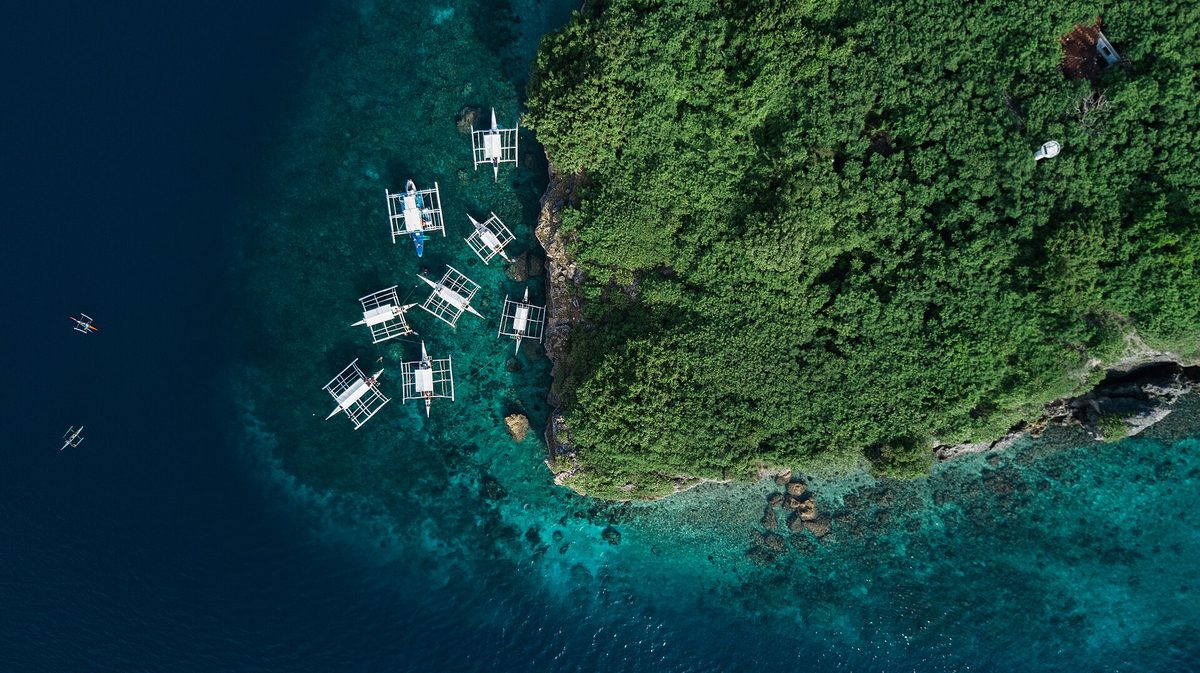
When you are ready to get off the shore, Pescador Island is the obvious move. It is a tiny uninhabited rock about a 15 to 20 minute bangka ride off Panagsama, ringed by a plunging coral wall that drops into deep blue. Visibility here is often outrageous, regularly over 30 meters, and the reef is thick with hard and soft coral, frogfish, lionfish, and the occasional bigger visitor cruising the wall. You do not need to be a diver to enjoy it; the shallow coral around the island is excellent for snorkeling too.
Most boat trips bundle three stops into a half day: Pescador for the reef, a turtle point, and the Panagsama drop-off for the sardines. On costs, you have two routes. A joiner boat (you share with others) runs roughly 500 to 800 PHP per person, plus a 100 PHP environmental fee for the island. Renting a private boat for your group costs more like 2,500 to 5,000 PHP depending on size, which works out cheaper per head once you are four or more. Book through your guesthouse or any dive shop the evening before, and ask to leave early for the clearest water and the best turtle odds.
Diving and Freediving in Moalboal
Because the reef wall sits a stone’s throw from the beach, Moalboal is one of the easiest and cheapest places on Earth to get underwater properly. There are dozens of dive shops along Panagsama, most of them PADI or SSI centers running daily boats to Pescador plus shore dives straight off the house reef. Prices cluster within a couple of hundred pesos of each other, so choose on vibe, instructor rapport, and safety record rather than chasing the lowest rate.
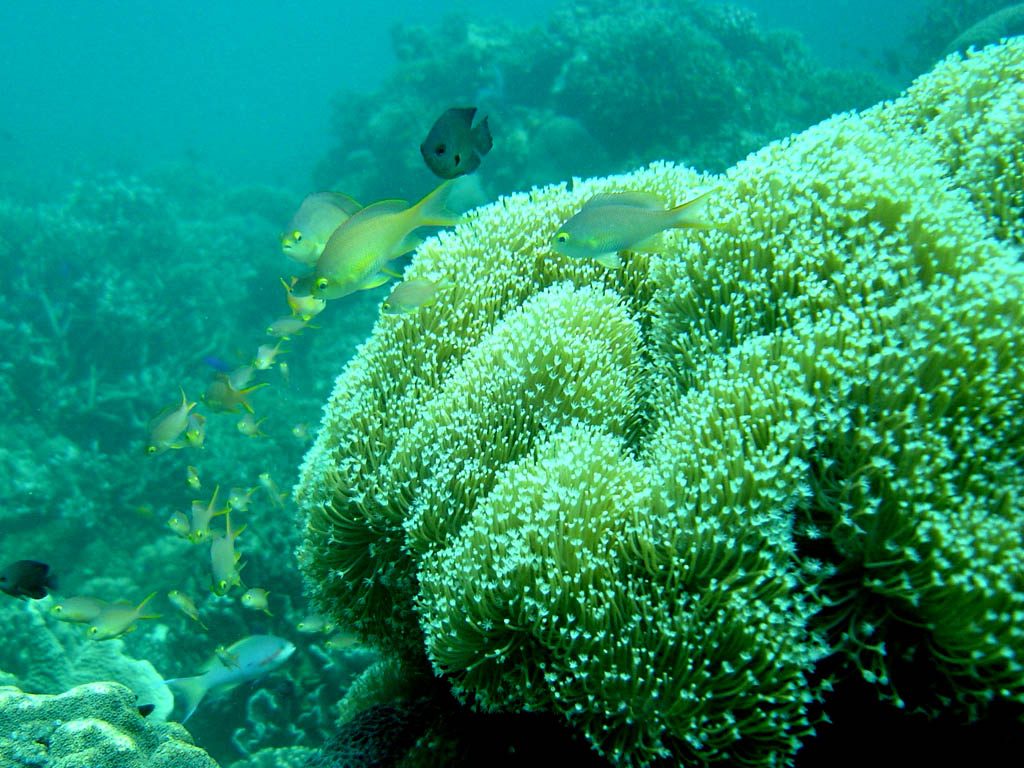
For certified divers, a two-tank fun dive runs somewhere around 3,000 to 4,500 PHP, plus the municipality’s 100 PHP per-dive fee. A full Open Water certification, three to four days, lands around 18,000 to 25,000 PHP, which is a fraction of what you would pay in Europe or Australia for the same card in colder, murkier water. Advanced divers come here for the macro life too: the house reef is full of tiny, strange creatures, and Moalboal has a real reputation for muck diving and underwater photography.
Over the last decade Moalboal has also become the freediving capital of the Philippines. The water off Panagsama is deep, warm, and clear within meters of shore, which makes for near-perfect training conditions, and several dedicated freediving schools run beginner courses. Learning to glide down through the sardine ball on a single breath is a different, quieter thrill than scuba, and it is one of the more addictive things you can pick up here. If diving is the main event of your wider trip, our overview of diving in the Philippines maps out where else to point your fins.
Canyoneering to Kawasan Falls
No Moalboal trip is complete without the canyoneering, even though the action technically happens next door in Badian. Moalboal is the basecamp everyone books it from. The route is a four-to-five-hour downstream obstacle course through the narrow Matutinao River canyon: jumping off ledges, sliding down natural water chutes, scrambling over boulders, and floating through gorges of cartoonishly blue water, finishing at the multi-tiered Kawasan Falls. The jumps start gentle and escalate to a knee-wobbling 10 to 12 meters, and every single one is optional.
You must go with a guided, accredited operator; your guesthouse can arrange it, and a package with guide, helmet, life vest, and lunch runs around 1,800 to 2,500 PHP. Book the first morning slot to beat the crowds. Because it is a whole adventure in itself, I have kept it brief here; it is worth a full guide of its own, and it sits high on most lists of the best things to do in Cebu.
White Beach (Basdaku) and the Beaches
Here is the honest truth that the dreamy drone shots leave out: Panagsama itself is not a sandy beach. It is mostly sea wall and coral rubble, brilliant for walking straight into the water to dive and snorkel, useless for lying on a towel. If you came picturing powder-white sand, you want White Beach, locally called Basdaku, about 15 minutes north by scooter or tricycle.
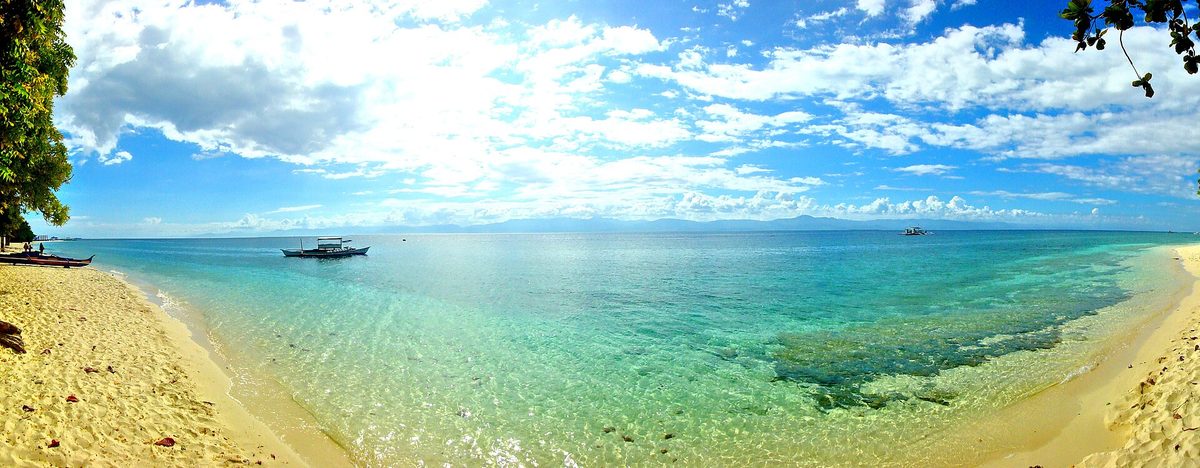
Basdaku is a long stretch of genuine white sand, hugely popular with Filipino families on weekends and pleasantly mellow midweek. It is the spot for actual swimming, beach volleyball, renting a kayak, or doing nothing at all with a fresh buko in hand. It faces west, so it serves up the best sunsets in Moalboal, the sky going orange over the Tañon Strait toward Negros. Entry is a token fee of 10 to 50 PHP. Bring a few small bills for the beach and a drink, and stay for the sunset.
Why Moalboal Cebu Is Worth the Trip
Plenty of Cebu towns have one good thing. What makes this town special is the stacking: a free, world-class sardine run and resident turtles off one beach, a deep dive wall fifteen minutes by boat, the country’s best canyoneering up the road, and a proper sunset beach in the other direction, all in a town small enough to cross in a tricycle. You can fill a lazy two days or a serious diving week without repeating yourself. It is not polished or luxurious, and that is the appeal. It still feels like a working dive town that happens to sit on top of something extraordinary, rather than a resort built to extract you. After three visits I am still not bored of it.
Where to Stay and Eat in Moalboal
Moalboal splits into two distinct bases, and where you sleep shapes your whole trip. Panagsama Beach is the action hub: walking distance to the dive shops, the sardines, the bars, and the restaurants, but with almost no real beach. Stay here if you came to be in the water daily. Options run from social backpacker hostels to comfortable dive resorts with ocean-view rooms and a pool. Basdaku (White Beach) is the relaxation hub: actual sand, quieter nights, family-friendly resorts, but you will want to rent a scooter (around 400 PHP a day) to reach the Panagsama restaurants and dive scene.
The food scene along Panagsama punches above the town’s size thanks to a big expat and backpacker crowd. For breakfast, the smoothie-bowl cafes are the pre-dive ritual. For proper Filipino food, the small local kitchens off the strip do excellent sisig and kare-kare for a fraction of the beachfront prices, and they are usually the busiest tables for good reason. The waterfront bars are where you land at sunset for a cold San Miguel, a game of pool, and the day’s diving stories. A practical heads-up: Moalboal still runs largely on cash. There are ATMs in the town center, but they run dry on weekends, so withdraw what you need in Cebu City before you arrive.
How to Get to Moalboal from Cebu City and the Airport
Moalboal sits about three hours southwest of Cebu City, and getting there is straightforward. You have three sensible options.
By bus (cheapest). From the Cebu South Bus Terminal on N. Bacalso Avenue, board a yellow Ceres Liner bus signed “Bato via Barili” or “Moalboal.” Crucially, do not take the “Bato via Oslob” bus, which runs down the opposite coast. An air-conditioned bus costs roughly 150 to 250 PHP and takes about three hours, longer if you hit Cebu City rush hour, so catch one before 6am if you can. The early drive up through the Carcar and Barili hills is genuinely lovely.
By van. Shared vans leave from a downtown terminal and cost a little more than the bus, but they only depart once full, so you can lose an hour waiting. Fine if one is already loading, frustrating if not.
By private car or Grab (fastest). A private taxi or GrabCar straight from the airport or city to your resort runs around 2,500 to 3,500 PHP one way and takes roughly two and a half to three hours door to door. Split between four people with dive gear, it is the easy, comfortable choice.
Whichever you take, the bus and van drop you at the Moalboal town center, still three to four kilometers from the beaches. From there a tricycle to Panagsama or Basdaku costs around 150 to 200 PHP for the whole cab. Agree the price before you climb in.
What It Costs and the Best Time to Go
Moalboal is kind to a budget. The headline experience, the sardine run, is effectively free: 100 PHP for mask rental and roughly the same in incidental fees. Beyond that, a backpacker can get by on very little, while divers and tour-takers spend more by choice than necessity. Rough daily ballparks: a hostel bed from around 600 to 900 PHP, a comfortable private room from 1,800 PHP up, scooter hire 400 PHP a day, and meals from 150 PHP at a local kitchen to 400 PHP-plus on the waterfront. The big-ticket items, canyoneering and diving, are priced in the table near the top of this guide. For a fuller breakdown across the country, see what what things cost in the Philippines.
On timing: the dry season, roughly December to May, gives you the calmest seas and clearest water, and it is the safe choice if diving or the sardine run is your priority. January to April is the sweet spot. The southwest monsoon from about June to October can churn up Panagsama and cut visibility, though you trade that for thinner crowds and softer prices. The sardines are present year-round regardless; it is the conditions, not the fish, that swing with the seasons. August, when this guide publishes, sits in the green shoulder: expect the odd rainy afternoon and the occasional rougher morning, but plenty of clear windows and far fewer people than peak season.
Moalboal by Traveler Type: Divers, Backpackers, and Couples
The town flexes to fit very different trips, so here is how I would play it depending on who you are.
For divers
Base yourself on Panagsama, within stumbling distance of your dive shop. Moalboal can easily fill a week: the house reef wall is a shore dive whenever you like, Pescador delivers the dramatic wall and visibility, and the macro life rewards slow, repeat dives. Tack on a freediving course if you have never tried it, and consider this town a launchpad to Cebu’s other big underwater draws, from thresher sharks up north to whale sharks done more ethically than the controversial Oslob feeding operation south of here.
For backpackers
This is your kind of town. The sardine run is the best few-dollar thrill in the country, the social hostels on Panagsama make meeting people effortless, and canyoneering is the obvious adrenaline splurge. Rent a scooter, chase the quieter inland waterfalls, eat at the local kitchens, and end your days at the waterfront bars. Two to three days hits the highlights; stay longer if the pace suits you, because it usually does.
For couples
Split your stay. Do a night or two on Panagsama for the sardines, turtles, and a boat trip to Pescador, then move to a quieter Basdaku resort for sand, slow mornings, and that west-facing sunset with a drink in hand. It is not a manicured honeymoon resort scene, but the mix of adventure by day and unhurried beach evenings is hard to beat for the money.
Moalboal FAQ
Is the Moalboal sardine run free?
Yes. Swimming with the sardines off Panagsama Beach costs nothing; you simply walk into the water and kick out about 20 to 30 meters to the reef drop-off. The only outlay is snorkel gear if you do not have your own, which rents for a flat 100 PHP at any dive shop along the strip, a little more for upgraded fins and a better mask.
What is the best month to visit Moalboal?
The dry season from December to May gives you the calmest seas and best underwater visibility, with January to April the sweet spot. The sardines and turtles are there year-round, so any month works in principle, but the southwest monsoon (roughly June to October) can bring choppier mornings and reduced visibility at Panagsama.
Do you need to scuba dive to see the sardines?
Not at all. The schools sit in just 1 to 10 meters of water, so snorkeling and freediving give you a fantastic top-down view and let you swim down through them. Scuba lets you hang underneath the bait ball for a different perspective, which is worth doing if you have time, but it is in no way required to enjoy the run.
How do I get from Cebu City to Moalboal?
Take a yellow Ceres bus from the Cebu South Bus Terminal signed “Bato via Barili” or “Moalboal” (not via Oslob); it costs around 150 to 250 PHP and takes about three hours. Shared vans are slightly pricier and leave when full. A private car or Grab runs roughly 2,500 to 3,500 PHP and is fastest, ideal for groups with dive gear.
Can I see sea turtles in Moalboal?
Almost certainly, yes. Green and hawksbill turtles graze the seagrass in the shallows right off Panagsama Beach, usually in 2 to 4 meters of water just inshore of the sardine drop-off. Most snorkelers spot one or two within minutes of swimming out. Keep a respectful distance of at least two meters and never touch or chase them.
Is Moalboal worth visiting?
For anyone who likes the water, absolutely. Few places let you snorkel a million-strong sardine ball and resident turtles for free, dive a world-class wall, and reach the country’s best canyoneering, all from one small town. It is rugged rather than luxurious, but that mix of access, value, and variety makes it one of the most rewarding stops in Cebu.
Sources and photo credits
Photo Credits
- Sardine run off Panagsama Beach, Moalboal — photo by Jhe098, licensed CC BY-SA 4.0, via Wikimedia Commons
- Sea turtle at Panagsama Beach, Moalboal — photo by Jhe098, licensed CC BY-SA 4.0, via Wikimedia Commons
- Pescador Island, Moalboal — photo by Ken Suarez, released under CC0, via Wikimedia Commons
- Colorful coral reef near Moalboal — photo by unknown author, Copyrighted free use, via Wikimedia Commons
- White Beach (Basdaku), Moalboal — photo by Lindström, licensed CC BY-SA 3.0, via Wikimedia Commons
- Moalboal coastline, Cebu — photo by Iampjanz, licensed CC BY-SA 4.0, via Wikimedia Commons
Sources
- We Seek Travel — Moalboal Sardine Run snorkeling guide
- WhyCebu — What to Do in Moalboal Cebu
- Philippine Department of Tourism — official travel portal
About this guide: PhilippinesTourism.org is an independent Philippines travel resource. Prices and details were verified August 2026.
1 response
Comments are closed.