
Dumaguete and Apo Island Travel Guide
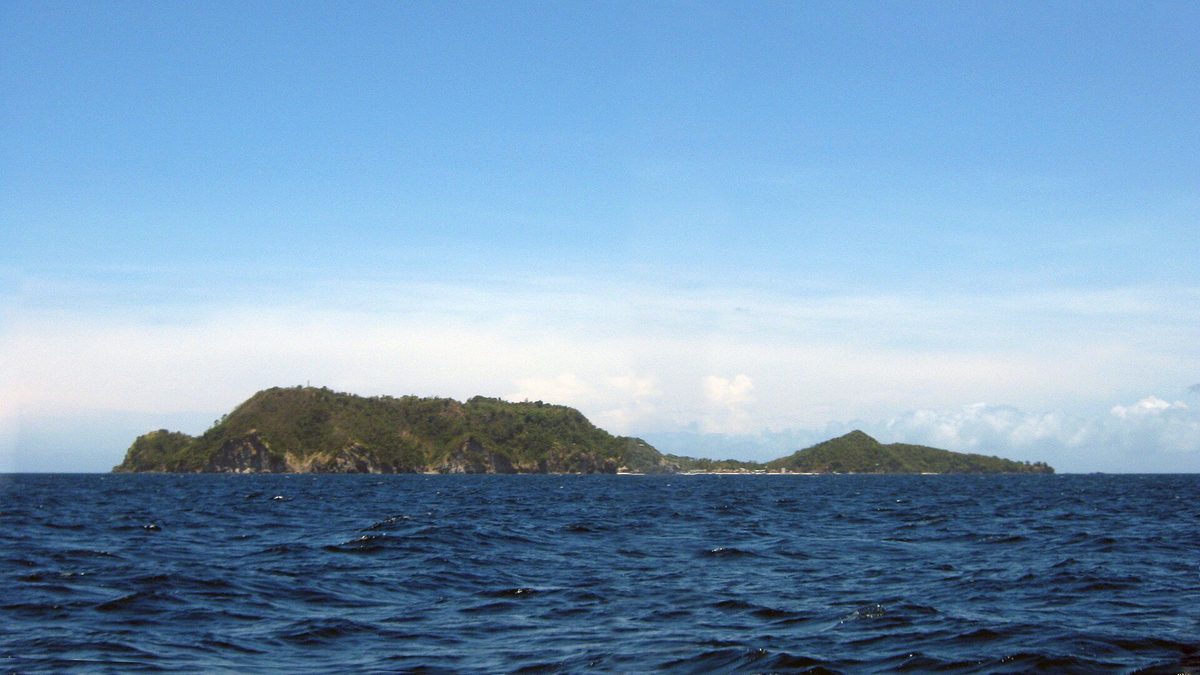
If you want to snorkel beside wild green sea turtles in clear, shallow water, the Apo Island Philippines travelers rave about is the trip to build around. This tiny volcanic island sits about 30 kilometers southeast of Dumaguete in Negros Oriental, and its reef has been a community-protected marine sanctuary since the early 1980s.
I think of these two places as a pair that does not work apart. Dumaguete, the “City of Gentle People,” gives you flights, food, a sunset promenade, and a stack of side trips. Apo Island is the rest of it: the turtles, the coral, and some of the best diving among the best islands in the Philippines. This guide covers both, with 2026 prices, real boat times, and the honest annoyances nobody warns you about.
Dumaguete and Apo Island at a glance
| Question | Short answer |
|---|---|
| What is Dumaguete’s role? | The gateway city — airport, hotels, food, nightlife, and the jump-off for Apo, Siquijor, Bais and the waterfalls. |
| What is Apo Island’s role? | A protected marine sanctuary ~30 km away, world-famous for snorkeling with sea turtles and drift diving. |
| How many days? | 3–4 nights in Dumaguete covers Apo plus one or two other trips comfortably. |
| How do I reach Apo? | Bus or van ~1 hr to Malatapay market in Zamboanguita, then a 30–45 min outrigger (bangka) boat. |
| Snorkel or dive? | Snorkel for the turtles (they are in shallow water by the beach). Dive for the walls, drift sites and bigger fish. |
| Best months? | Roughly March to June for the calmest seas; rougher and wetter in the southwest monsoon (habagat). |
One scheduling note that trips people up: boats from Malatapay run every day but mainly in the morning, with the first departures around 7–8 AM and the last return usually about 3 PM. The famous Malatapay market itself is a Wednesday event. Plan your Apo day around an early start no matter what.
Dumaguete as a base: what to actually do
Dumaguete is small, walkable, and friendly in a way that earns the “City of Gentle People” tag honestly. It is a university town — Silliman University, founded in 1901, was the first American-established university in Asia, and its students give the place a youthful, café-heavy energy that most provincial Philippine cities lack. You do not come here for monuments. You come to eat well, sleep cheaply, and stage your trips.
I would give Dumaguete itself half a day to a full day, then use it as a launchpad. Here is what is worth your time in the city.
Rizal Boulevard at sunrise and sunset
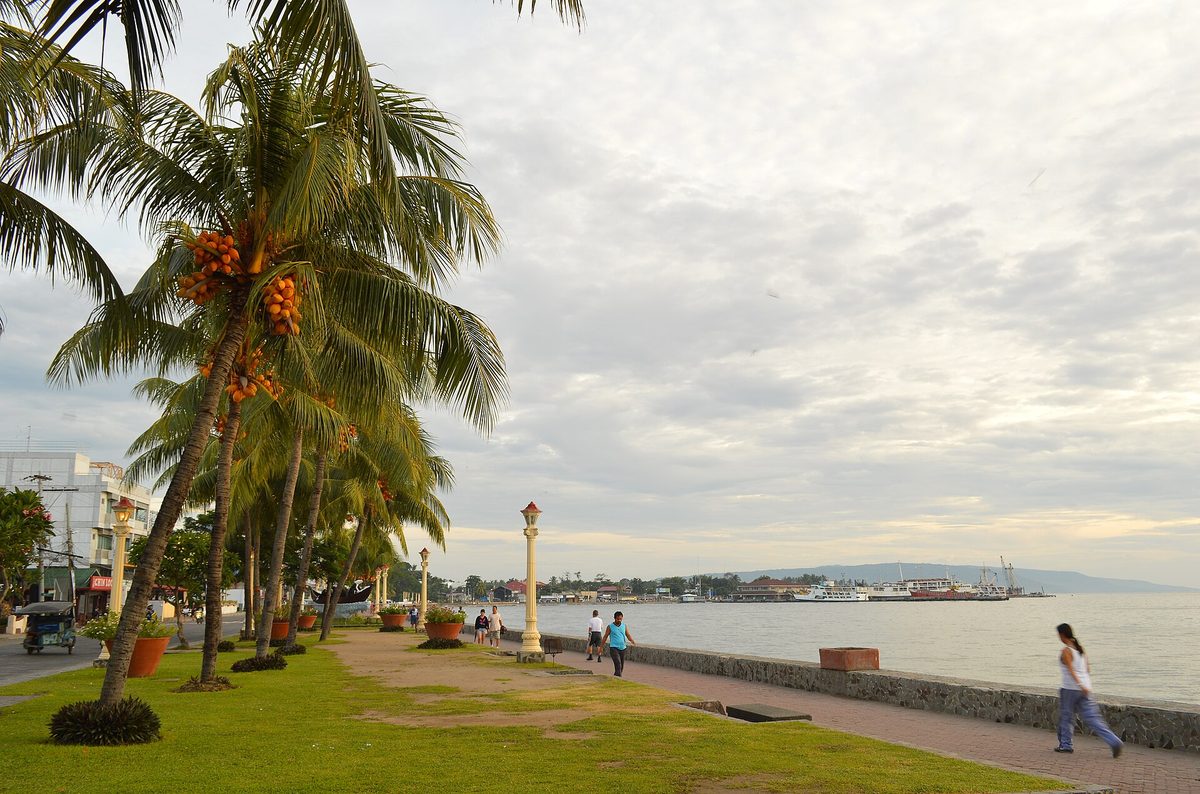
The waterfront promenade named for José Rizal is the social heart of town. It is a 780-meter palm-lined stretch facing the Bohol Sea, built back in 1916, and it changes character through the day. Come at sunrise if you are an early riser — it faces roughly east, so this is the spot to catch the sun coming up over the water from a bench. By late afternoon the cafés and bars fill up, vendors sell street food (yes, balut is here if you are brave), and families walk the seawall. I like it best just before dusk with a cold drink in hand. It costs nothing, and it tells you what the town is about.
The food scene
Dumaguete punches above its weight on food, and prices are gentle. A few specifics worth ordering:
- Sans Rival — the local institution for silvanas and the layered sans rival cake. A box of frozen silvanas travels well as a gift.
- Painit and the public market stalls for native breakfasts — sikwate (native hot chocolate), puto maya, and budbod.
- Qyosko and the Boulevard grills for cheap, generous local plates.
- Craft coffee and gelato — the student population means surprisingly good cafés, especially around Silliman.
Budget roughly 150–400 PHP (around $3–$7) for a sit-down local meal in 2026. You will struggle to spend a lot on food here even if you try.
Beyond the city center
Dumaguete’s real value is reach. From the city you can string together waterfalls, lakes, dolphins and a whole other island without ever changing hotels. I cover those side trips lower down, but know going in that the city is a hub, not a beach destination in itself. If you want sand and coral right in town, you will be let down — the swimming is out at Apo and along the Dauin coast to the south. For the bus and ferry logic across the wider region, our guide to getting around the Philippines is a useful companion.
Getting to Apo Island Philippines: the Malatapay route
Apo Island has no ferry terminal and no scheduled public ferry. You get there from the mainland at Malatapay, a market beach in the town of Zamboanguita, where motorized outrigger boats (bangka) shuttle visitors across. The whole trip from Dumaguete takes about 1.5 hours door to reef. Here is how it breaks down.
Step one: Dumaguete to Malatapay
From Dumaguete’s Ceres bus terminal, take a southbound bus or van toward Zamboanguita or Bayawan and ask to be dropped at Malatapay. It is roughly a 1-hour ride covering around 30 kilometers. As of 2026 the fare is small — figure on around 25–55 PHP (under $1) one way, a little more for an air-conditioned van. A private tricycle or habal-habal will do it too if you would rather not wait, but it costs more. If you have booked a tour, a van usually collects you from your hotel and this step disappears.
Step two: Malatapay to Apo by boat
Walk down to the Malatapay shoreline, register at the tourism desk, and hire a bangka. Boats are priced per boat, not per head, on a sliding scale by group size. Based on 2026 rates I have cross-checked, expect roughly:
| Item | Approx. 2026 cost (PHP) | Approx. USD |
|---|---|---|
| Round-trip boat, up to 3 pax | ~3,500 | ~$60 |
| Round-trip boat, up to 6 pax | ~4,000 | ~$69 |
| Round-trip boat, up to 9 pax | ~5,000 | ~$86 |
| Island entrance / environmental fee (foreigner) | ~100–300 per person | ~$2–$5 |
| Snorkeling fee | ~100 per person | ~$2 |
| Mandatory snorkeling guide | ~300 per group | ~$5 |
| Mask, snorkel & fins rental | ~100–200 | ~$2–$3 |
| Terminal fee | ~5–25 per person | under $1 |
The crossing takes 30 to 45 minutes depending on the sea. Treat all of the above as “around” figures — fees creep upward year to year and exact amounts vary with who is staffing the desk. If you are solo or a couple, the boat is the expensive part; sharing it with other travelers is how you bring the per-person cost down, which is exactly why joiner tours exist.
Should you just book a tour?
For most first-timers, yes. A joiner or private day tour from Dumaguete bundles the van, the boat, the fees, a guide, and usually lunch into one price, typically somewhere around 1,500–2,500 PHP per person (roughly $26–$43) in 2026 depending on group size and inclusions. It removes the haggling and the worry about boat availability. Go DIY if you are a confident traveler with a group to fill a boat and you enjoy the logistics. Go with a tour if you want to show up and snorkel. I have done it both ways and on a solo trip the joiner tour is the obvious call.
Diving and snorkeling Apo Island: turtles, coral and the sanctuary
This is the reason you came. Apo Island’s reef is one of the great conservation success stories in the Philippines — Silliman University’s marine lab started working with the islanders in 1979, a no-take sanctuary was set up in 1982, and in 1994 the wider area was declared the Apo Island Protected Landscape and Seascape. Decades of protection show: the coral is dense and healthy, the fish are unbothered, and the green sea turtles graze in numbers you rarely see anywhere else this accessible.
Snorkeling with the turtles
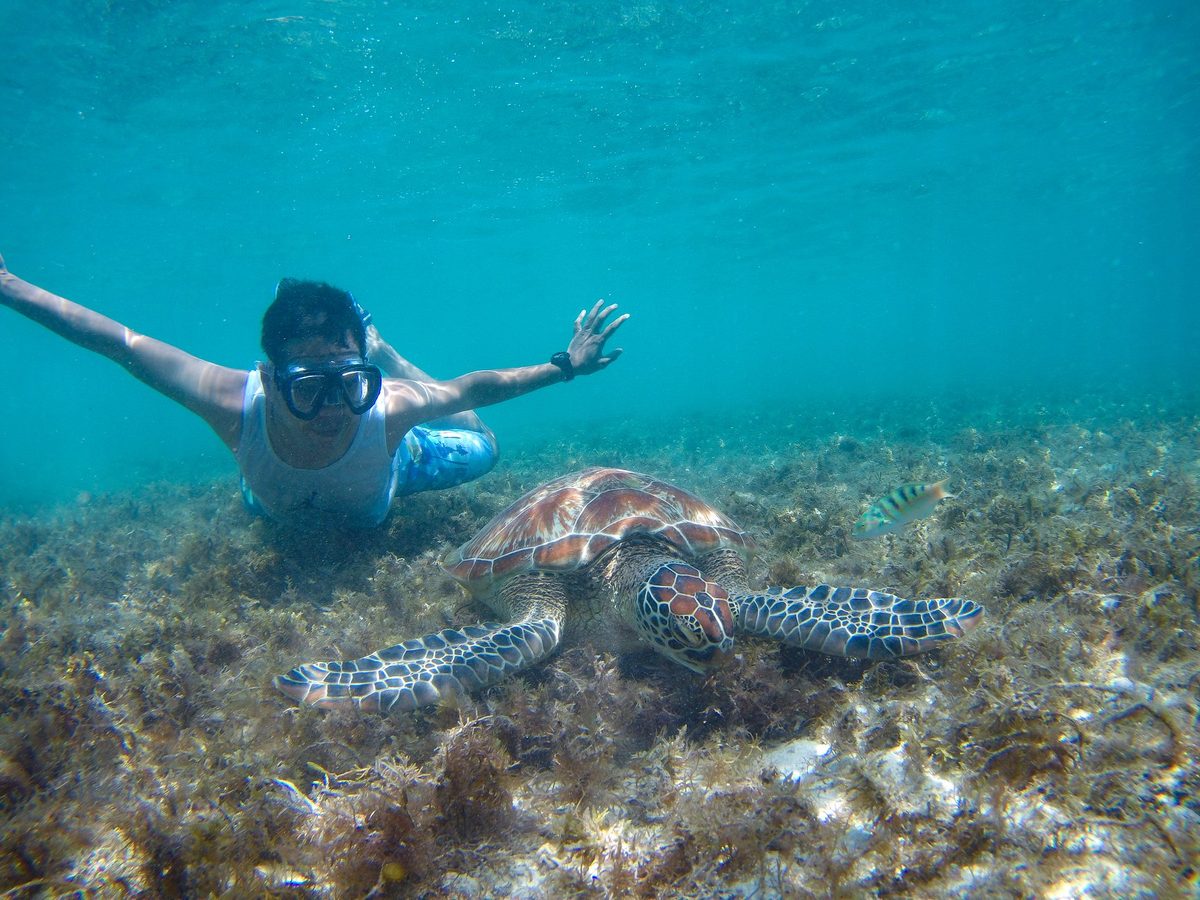
You do not need to dive to have the headline experience. The green turtles feed on seagrass in water as shallow as two or three meters, often a short swim from the beach at the area most boats call Turtle Point. Your guide will fin out ahead and point them out; on a normal morning you will see several, sometimes a dozen, sometimes one the size of a coffee table calmly chewing seagrass while you hover above. It is genuinely one of the few wildlife encounters in Asia that feels ethical rather than staged, because the animals are wild and free and the rules keep people at a distance.
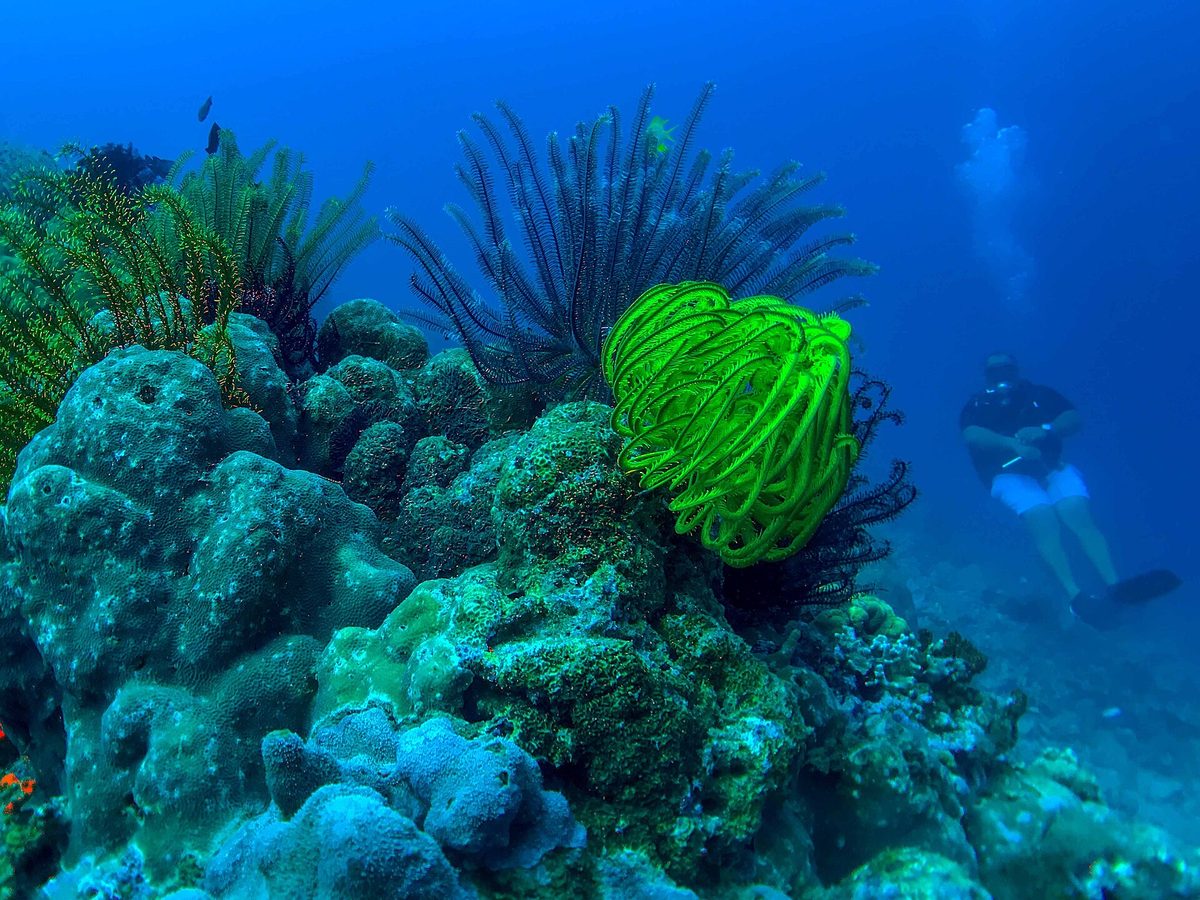
The coral gardens are almost as good as the turtles and get far less attention. After the turtle spot, most snorkel trips move to one or two reef sites where the hard coral is massive and the visibility, on a calm day, is excellent. Bring or rent a life vest if you are not a strong swimmer; the guides are happy to free-dive down with a GoPro to grab footage for you. If snorkeling is your main reason for the trip, our broader guide to snorkeling in the country puts Apo in context with the other top spots.
The no-touch rules, and why they matter
Read this part before you get in the water. The sanctuary rules are simple and strictly enforced: do not touch the turtles, do not chase them, do not touch or stand on the coral, no sunscreen except reef-safe formulas, and keep a respectful distance. A panicked turtle that bolts for the surface to breathe can hurt itself. Standing on coral kills it. The whole reason this reef is still spectacular is that the community has guarded it for forty years — do not be the tourist who undoes that. Guides will call you out, and good for them.
Scuba diving Apo Island
For certified divers, Apo is a destination in its own right and regularly lands on “best dive sites in the country” lists. The reef drops into walls and slopes with strong, nutrient-rich currents that bring in big fish. Standout sites:
- Rock Point West — a broad, shallow coral garden from about 5 meters sloping to 20, good for relaxed reef diving and great visibility.
- Coconut Point — the famous drift, nicknamed the “washing machine” for its powerful current. An advanced site down to around 30 meters where you fly past schooling fish. Not for nervous beginners.
- Mamsa Point — named for the local word for trevally; expect schooling bigeye trevally and jacks on the west side.
- Chapel and Cogon — pretty, current-fed reefs with dense soft and hard coral.
In 2026, single dives at Apo through Dumaguete and Dauin dive shops run roughly 2,300–2,900 PHP (about $40–$50) per dive including gear and marine fees, with multi-dish day packages a little cheaper per dive. Most operators are clustered along the Dauin coast just south of the city, which also happens to be world-class for muck diving — tiny critters like frogfish, nudibranchs and blue-ringed octopus on black volcanic sand. Pair a couple of Apo reef days with a Dauin muck day and you have one of the best diving weeks in the country. For the bigger picture, see our overview of diving in the Philippines.
Where to stay: Dumaguete, Dauin, or overnight on Apo
You have three honest options, and they suit different travelers.
Dumaguete city is the default and the one I recommend for most people. You get the widest range of hotels and guesthouses, easy food, ATMs, and every side trip on your doorstep. Budget guesthouses run roughly 800–1,500 PHP a night in 2026; comfortable mid-range hotels around 2,000–4,000 PHP; a handful of nicer places above that. Stay here if you want one base for Apo plus Siquijor, Bais and the falls.
The Dauin coast, about 20–30 minutes south of the city, is where the dive resorts are. If diving is the whole point of your trip, basing here puts you closer to both Apo and the Dauin muck sites and lets you roll out of bed onto a dive boat. Expect resort pricing, from mid-range dive lodges to genuinely upscale places.
Overnight on Apo Island is for a specific kind of traveler. There are a few simple lodges and homestays — Apo Island Beach Resort, Liberty Lodge, and a scattering of family-run rooms. Staying lets you snorkel at dawn before the day-trip boats arrive, which is magic. But be realistic: accommodation is basic, options are few, and the island runs on a limited power supply, so brownouts are frequent and air-conditioning is not a given. I would only stay over if you specifically want that quiet early-morning reef to yourself and you are relaxed about rustic conditions. Otherwise, day-trip it and sleep in Dumaguete.

What a trip costs in 2026
Negros Oriental is one of the better-value corners of the Philippines. Rough per-person daily budgets, excluding flights:
| Style | Per person / day (PHP) | Approx. USD |
|---|---|---|
| Backpacker (guesthouse, street food, DIY transport) | ~1,500–2,500 | ~$26–$43 |
| Mid-range (good hotel, restaurants, a tour or two) | ~3,500–6,000 | ~$60–$103 |
| Comfort / diving (dive resort, multiple dives daily) | ~7,000+ | ~$120+ |
A standalone Apo day trip lands somewhere around 1,500–2,500 PHP per person on a shared tour, or less per head if you fill your own boat. Carry cash — Apo Island has no reliable card payments, and you will want pesos for fees, the boat, lunch and tips. The math at $1 to about 58 PHP in mid-2026 makes the whole region feel cheap to most foreign visitors.
When to go
Seasons matter here more than in many places, because everything hinges on whether the boats can cross comfortably. The sweet spot is roughly March to June, the tail of the dry season, when the Bohol Sea is calmest and visibility is best. This is when I would plan an Apo trip. The southwest monsoon (habagat), roughly June or July into October, brings wind, swell and rain; boats still run on calm days but crossings get bumpy and trips can be cancelled at short notice. The Philippine typhoon season overlaps this window, though Negros Oriental sits a little south of the worst typhoon tracks. Whenever you come, go in the morning — wind and chop build through the afternoon, usually picking up around 3 PM, and the ride back gets rough. For a country-wide breakdown, see our guide to the best time to visit.
Day trips beyond Apo
Apo is the star, but Dumaguete sits inside a cluster of trips worth at least a day each. If you have built in 3–4 nights, pick one or two.
- Siquijor — the “island of fire,” known for healers, folklore, white beaches and waterfalls. Fast ferries run from Dumaguete port in under an hour. It works as a long day trip, but it rewards an overnight; many travelers pair Dumaguete and Siquijor into one loop.
- Bais dolphin watching — about 45 km and an hour north, Bais runs morning boat trips into the Tañon Strait where pods of dolphins (and occasionally whales) appear, mainly March to October. Go early; the sea is calmest just after sunrise.
- Casaroro Falls — a dramatic cascade in the uplands of Valencia, only about 13 km from the city. It is a steep stair-and-trail walk in, then a cold plunge pool as the reward. Allow a half day.
- Balinsasayao Twin Lakes — two crater lakes ringed by forest near Sibulan, around 14–15 km out and roughly an hour by road including the rough final stretch. Cool, quiet, and good for a kayak or a walk between the lakes.
- Pulangbato Falls and the Valencia highlands — often combined with Casaroro on the same uplands run, with red-tinged rocks and hot springs nearby.
From Dumaguete you can also push further into the region — ferries connect to Cebu and the wider Visayas, so it slots neatly into a longer route, and if you are drifting south the volcanic island of Camiguin sits across the Bohol Sea. If you are island-hopping the south, our Cebu travel guide pairs well, and you can compare sand at the country’s best beaches in the Philippines.
Honest notes before you go
The things I wish someone had told me plainly:
- Boat schedules are weather-dependent and morning-biased. There is no fixed timetable. Boats run daily but mostly in the morning, with the last return usually around 3 PM, so arrive at Malatapay early. The Wednesday market day at Malatapay is colorful but makes the beach busier.
- Brownouts on Apo are normal. If you overnight, expect power cuts and bring a charged power bank and a flashlight. The mainland is fine.
- Seasickness is real on the crossing. The bangka is small and the strait can be choppy, especially on the afternoon return. If you are prone to motion sickness, take a tablet 30–60 minutes before boarding and sit low and central.
- Respect the no-touch turtle rules. It is not a suggestion. Keep your distance, never touch or chase the turtles, and stay off the coral. Reef-safe sunscreen only.
- Bring cash and reef shoes. No ATMs on the island, and the beaches are pebble and rock rather than soft sand, so footwear helps.
- It is not a beach-lounging island. Apo is about the water and the wildlife, not powdery sand. Set your expectations on snorkeling and diving, not sunbathing — if a postcard beach is what you are really after, the Palawan vs Boracay question is the one to settle instead.
Frequently asked questions
Can you snorkel with turtles at Apo Island?
Yes — this is the main reason people visit. Green sea turtles graze on seagrass in shallow water, often just two to three meters deep and a short swim from the beach, so you do not need to scuba dive. A guide is mandatory and will lead you to them. The rule is strict: look and photograph, but never touch or chase the turtles.
Is Apo Island worth visiting?
Yes, easily, if you like the water. The combination of reliably seeing wild sea turtles in shallow water, genuinely pristine coral, and world-class diving in one small place is rare. It is less worth the effort if you want a sandy beach to laze on or you do not enjoy snorkeling, since the island is rocky and the whole experience is about what is underwater.
How do you get from Dumaguete to Apo Island?
Take a southbound bus or van about an hour to Malatapay market in Zamboanguita (around 25–55 PHP), then hire an outrigger boat for the 30–45 minute crossing. Boats are priced per boat, roughly 3,500–5,000 PHP round trip by group size, plus small entrance, snorkeling and guide fees. A booked day tour bundles all of this together.
How much does an Apo Island trip cost?
A shared day tour from Dumaguete runs roughly 1,500–2,500 PHP (about $26–$43) per person in 2026, including transport, boat, fees, guide and usually lunch. Going DIY can be cheaper per head if you fill a boat with a group, but the boat itself is the big fixed cost, so solo travelers usually save by joining a tour.
Do you need to be a diver to enjoy Apo Island?
No. Snorkelers get the turtles and the best of the shallow coral gardens, which is plenty for most visitors. Diving unlocks the walls, the drift sites like Coconut Point, and the bigger pelagic fish, so certified divers get an extra layer — but a non-diver will not feel they missed the point.
Can you stay overnight on Apo Island?
Yes, in a handful of simple lodges and homestays. The payoff is having the reef to yourself at dawn before day-trippers arrive. The trade-off is basic rooms and frequent brownouts, since the island runs on limited power. Most travelers day-trip from Dumaguete and only overnight if they specifically want that quiet early-morning water.
Sources and photo credits
Photo credits
- apo-rizal-boulevard-dumaguete.jpg — Photo: Marion Paul Baylado / CC BY-SA 3.0 via Wikimedia Commons (source)
- apo-island-boat-malatapay.jpg — Photo: Achilezweb / CC BY-SA 4.0 via Wikimedia Commons (source)
- apo-island-sea-turtle.jpg — Photo: Missvain / original by User:TheCoffee / CC BY-SA 3.0 via Wikimedia Commons (source)
- apo-silliman-university-dumaguete.jpg — Photo: National Historical Commission of the Philippines (CC0) via Wikimedia Commons (source)
- apo-island-reef-coral.jpg — Photo: Mike Gonzalez (TheCoffee) / CC BY-SA 3.0 via Wikimedia Commons (source)
- apo-island-diver-reef.jpg — Photo: Austin Rex Lobaton / CC BY-SA 4.0 via Wikimedia Commons (source)
Sources
- Silliman University — history of the Apo Island Marine Conservation Program and the Apo Island Protected Landscape and Seascape.
- Philippine Department of Tourism — official Philippines travel information.
- PhilAtlas: Dumaguete City — geography and profile of the gateway city.
- PAGASA — Philippine climate and monsoon (habagat) seasons.
About this guide: PhilippinesTourism.org publishes independent, on-the-ground Philippines travel guides. Information verified June 2026.