Grab, Jeepneys and Tricycles: Local Transport Explained
The honest answer for most visitors is short: download Grab, use it for almost everything in the cities, and try a jeepney once for the fun of it. Beyond Grab, the Philippines runs on jeepneys, tricycles, app motorcycle taxis like Angkas, the occasional metered taxi, and buses for longer hops. Here is how each one actually works in 2026, with real fares.
Getting around a Philippine city means choosing between jeepneys, tricycles, habal-habal, metered taxis, motorcycle taxis and Grab, and each one has its own unwritten rules. For the big picture on moving between islands, start with our pillar on getting around the Philippines; this piece is about getting around once you are on the ground in a city or town.
At a glance: every way to get around in 2026
Here is the quick comparison I wish existed when I started. Fares are 2026 figures and move with fuel prices, so treat them as a starting point. USD is rough at around ₱63 to the dollar.
| Mode | What it is | Rough 2026 fare | Best for | Watch-outs |
|---|---|---|---|---|
| Grab | App ride-hail (cars + GrabTaxi) | Short city hop ~₱150–350 ($3–6); airport runs ₱400–900+ | Tourists, airport transfers, anything door-to-door | Surge in rain/rush hour; cars scarce in small towns |
| Metered taxi | White street taxis (Manila, Cebu, Davao) | Flagdown ~₱45 + ~₱14/km | When no Grab shows and you can insist on the meter | “Broken” meters, fixed-price quotes, airport touts |
| Jeepney | Shared fixed-route minibus | From ₱14 (traditional) / ₱17 (modern e-jeepney) | Cheap short hops, soaking up local life | No English route signs; mind your bag and phone |
| Tricycle | Motorbike with a sidecar | ₱20–150 depending on town & distance | Last-mile rides, small towns, beach areas | Agree the price before you sit; “special trip” markups |
| Motorcycle taxi (Angkas/JoyRide/Move It) | App-booked motorbike, one passenger | ~₱50–60 base (first 2km) in Metro Manila | Beating gridlock when you are travelling light | Metro Manila & Cebu mainly; helmet on, no big luggage |
| Bus / P2P | City and intercity buses; point-to-point express | City ~₱15+; P2P ₱100–300; long-haul varies | Longer hops, Manila–Clark, province runs | Traffic; terminals can be chaotic; book P2P seats early |
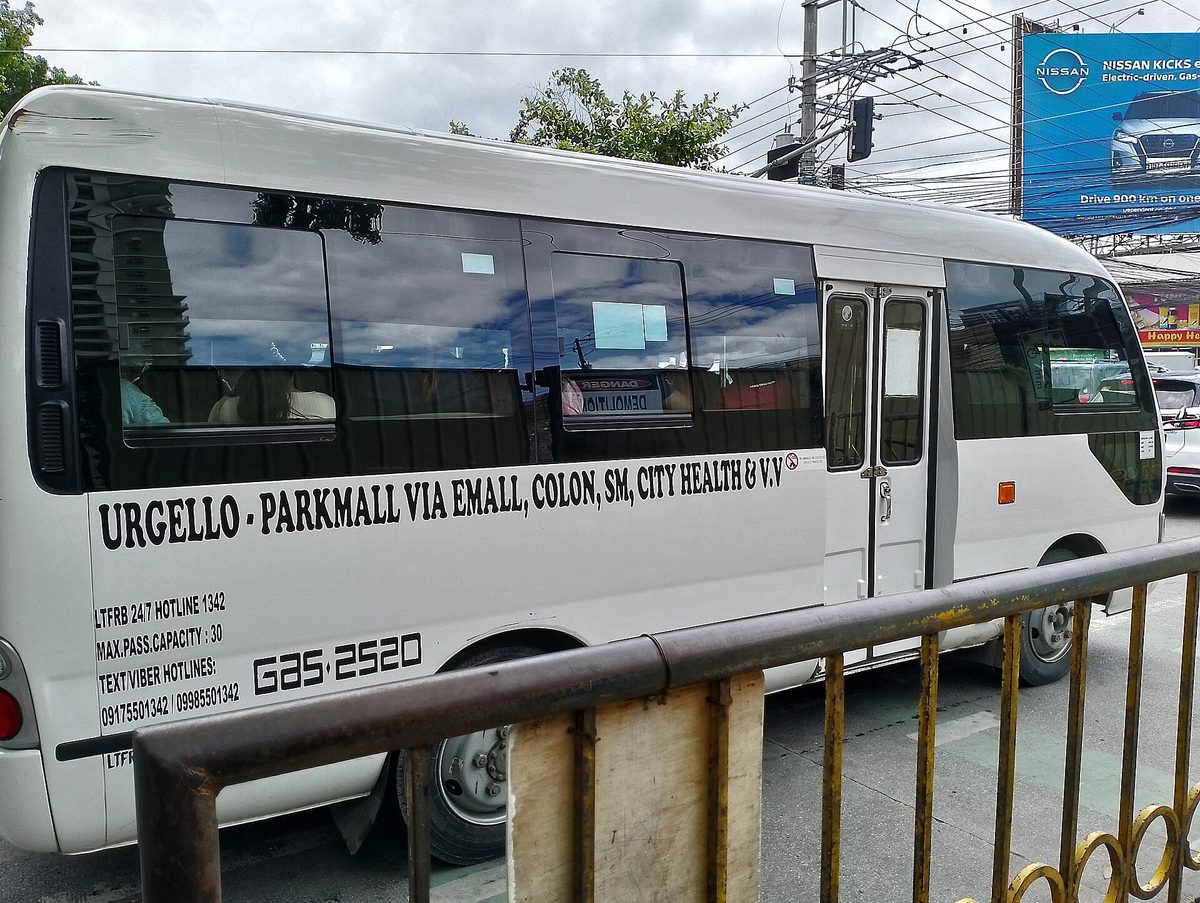
| UV Express | Shared air-conditioned van, fixed route | ~₱50–150 by route | Faster point-to-point than a jeepney | Leaves when full; cramped; fixed endpoints only |
If you only read one section, make it the Grab one below. It is the single biggest stress-reducer for a first trip, and it sidesteps most of the tourist scams that target people standing confused at the curb.
How Grab Philippines works (your default for cities)
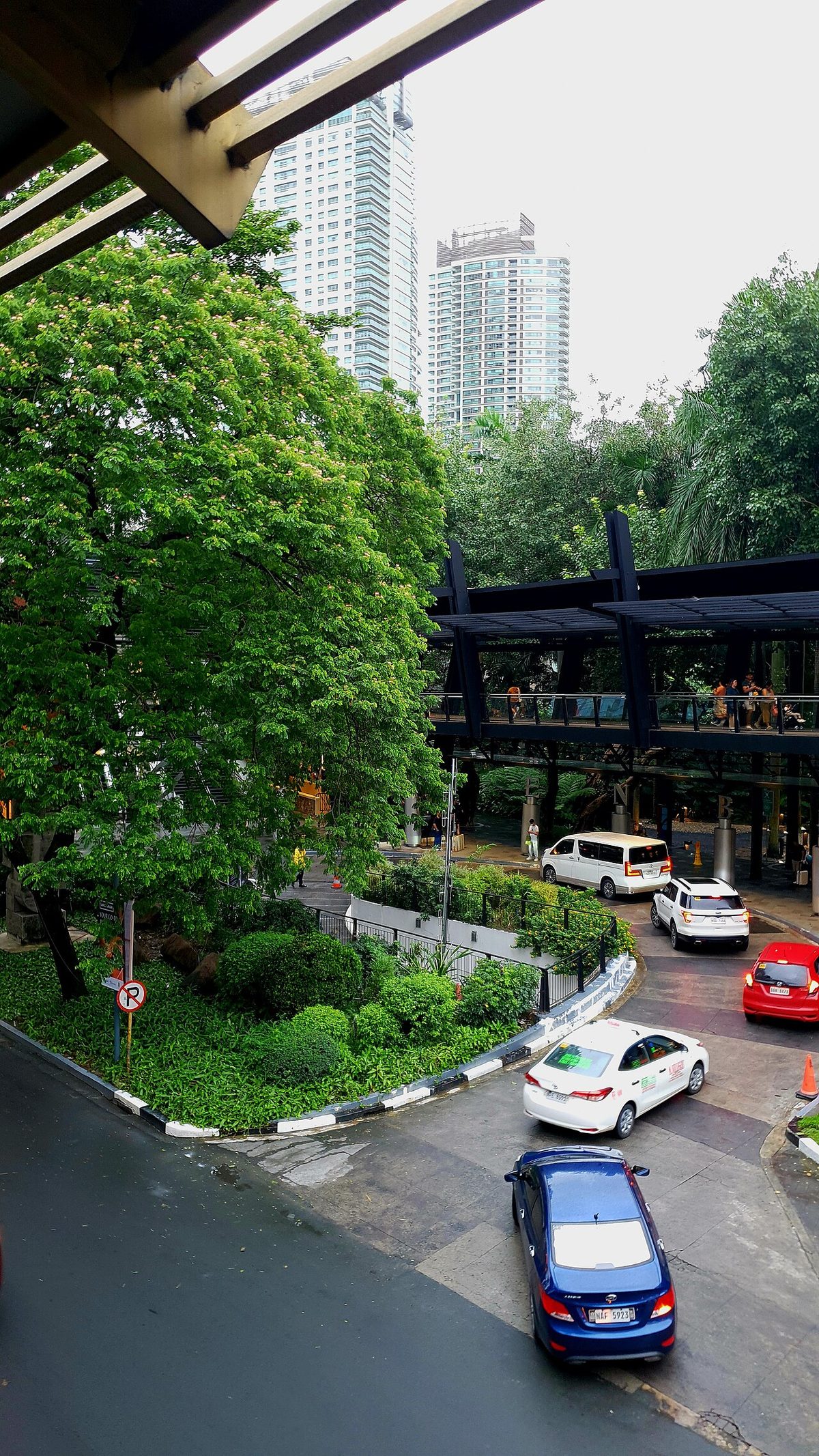
Grab is a major ride-hailing app in the country, and for visitors it is the closest thing to a no-brainer. You book a car (GrabCar) or a metered taxi through the app (GrabTaxi), the fare for GrabCar is shown and locked before you confirm, and you get the driver’s name, plate number, and live location. No haggling, no “meter is broken,” no being quoted a tourist price because you have a suitcase.
Which cities Grab covers
Grab works across Metro Manila, Cebu, Davao, Iloilo, Bacolod, Cagayan de Oro, and the Clark/Angeles area, among others. That said, coverage is a real thing to plan around: in big-city cores you will usually get a car in a few minutes, but in smaller towns and rural areas matching can be slow or nonexistent. Do not build a tight schedule (a ferry, a flight) around a Grab magically appearing in a low-demand spot. Have a backup, whether that is a hotel-arranged car or a tricycle stand down the road.
Cash, card, and the new features
You can pay cash or link a card or GrabPay wallet. Cash is fine and sometimes simpler, but carry small bills, because drivers rarely have change for a ₱1,000 note on a ₱180 ride. Card payment means no fumbling and a clean receipt, which I prefer at airports. One feature worth knowing is Group Ride, which lets you invite friends, add a stop and split the bill. The core ride experience is the same as it has been: book, verify the plate, get in, go.
Surge, and how to dodge it
Grab uses dynamic pricing, so fares climb with demand. Expect higher fares at busy times such as rush hour, and the moment it rains in Manila (and it rains hard). If your trip is flexible, the cheapest move is patience: check the fare, then check again in 15 to 20 minutes once the spike passes, or walk a couple of blocks away from a mall exit or terminal where everyone else is also tapping “book.” If the trip is time-critical, just pay the surge. The calm choice is worth more than the ₱120 you saved while getting soaked.
My quick Grab tips
- Pin the right pickup. Many airports and malls have designated Grab pickup points. Standing at the wrong curb is the number-one reason for cancellations. Move to the marked loading zone.
- Send one landmark note. “Hotel driveway, beside the pharmacy, white luggage” beats a drifting map pin every time.
- Check the plate before you open the door. Every ride, no exceptions. Match plate, then car model and colour.
- Keep a little cash. Cards occasionally fail at the worst moment; cash gets you home.
Jeepneys: how to ride the Philippines’ icon
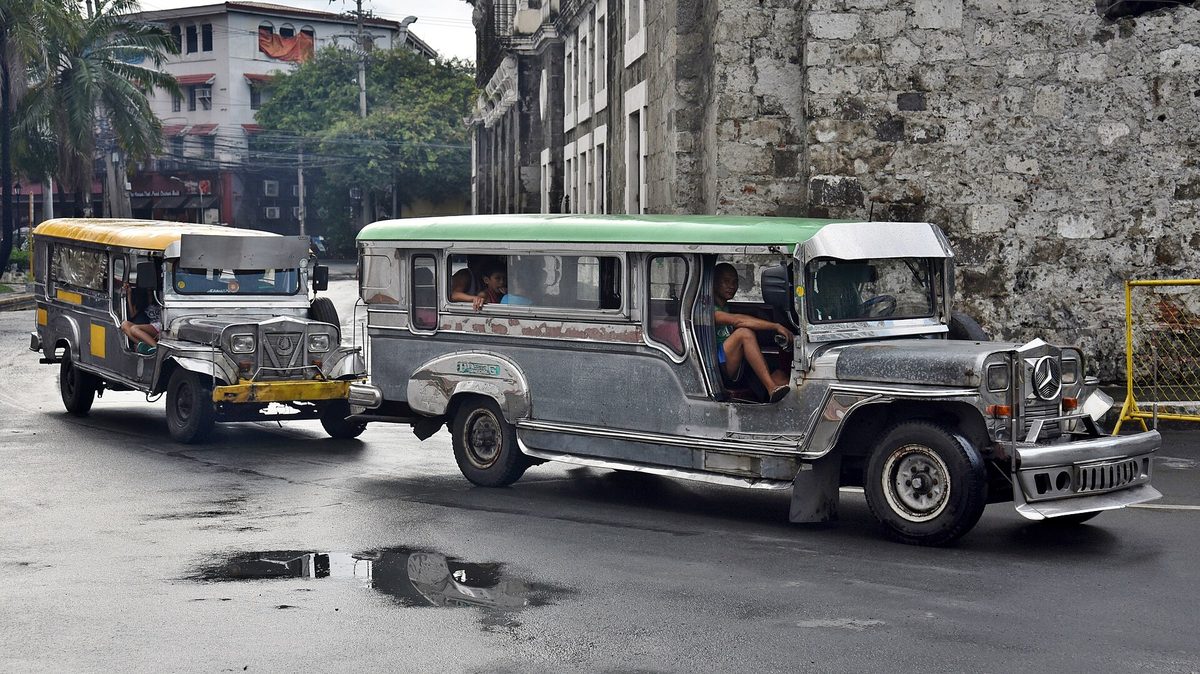
The jeepney is the loud, chrome-plated soul of Philippine streets: a stretched jeep with two long benches in the back, a hand-painted route on the side, and anywhere up to twenty passengers crammed in knee-to-knee. Riding one is genuinely fun, dirt cheap, and a little confusing the first time. It is also the most local thing you can do for under thirty cents. Here is the no-panic version.
How to actually ride one
- Know your route. Jeepneys run fixed routes, shown on the side panel or on a signboard. If you are unsure, just ask; Filipinos are warm about pointing lost tourists in the right direction.
- Flag it down. Stand at the roadside or a stop and put your hand out, palm down, with a small wave. It will pull over (or just slow down).
- Climb in the back and slide along the bench. If you have a bag, sit toward the middle rather than by the open doorway.
- Pay down the line. Hand your fare to the person next to you and say “bayad po” (my payment). It gets passed hand-to-hand up to the driver, and your change comes back the same way. This relay system is half the charm.
- Say “para” to stop. When you want off, call out “para!” (stop) or rap a coin on the metal handrail. The driver pulls over and you climb out the back.
Fares and the exact-change rule
Under the fare adjustment that was suspended in March 2026 and implemented in September, the minimum is around ₱14 on a traditional jeepney (covering the first 4km) and about ₱17 on a modern e-jeepney, with a little more added for each kilometre after that. So most short rides cost less than a cup of coffee. Carry coins and small bills; handing a driver a ₱500 note for a ₱14 fare during rush hour will earn you a look. Tell the person collecting how many of you are paying (“two passengers”) so the right change comes back.
The modern jeepney rollout (why some look different now)
You will notice two kinds of jeepney: the classic WWII-descended one and a newer, boxy, often electric “modern” jeepney with a side door, air-conditioning on some units, and a tap-card or cash fare box. That is the Public Utility Vehicle Modernization Program at work, the government’s long, controversial push to phase out older jeepneys and consolidate solo drivers into cooperatives. It has rolled out in phases, faced strikes and pushback from drivers worried about the cost, and is still incomplete in 2026, with route rationalization ongoing. For you as a rider the practical upshot is simple: you may board either type on the same trip, and the modern ones cost a couple of pesos more. Both still answer to “para.”
Tricycles and habal-habal: the last mile
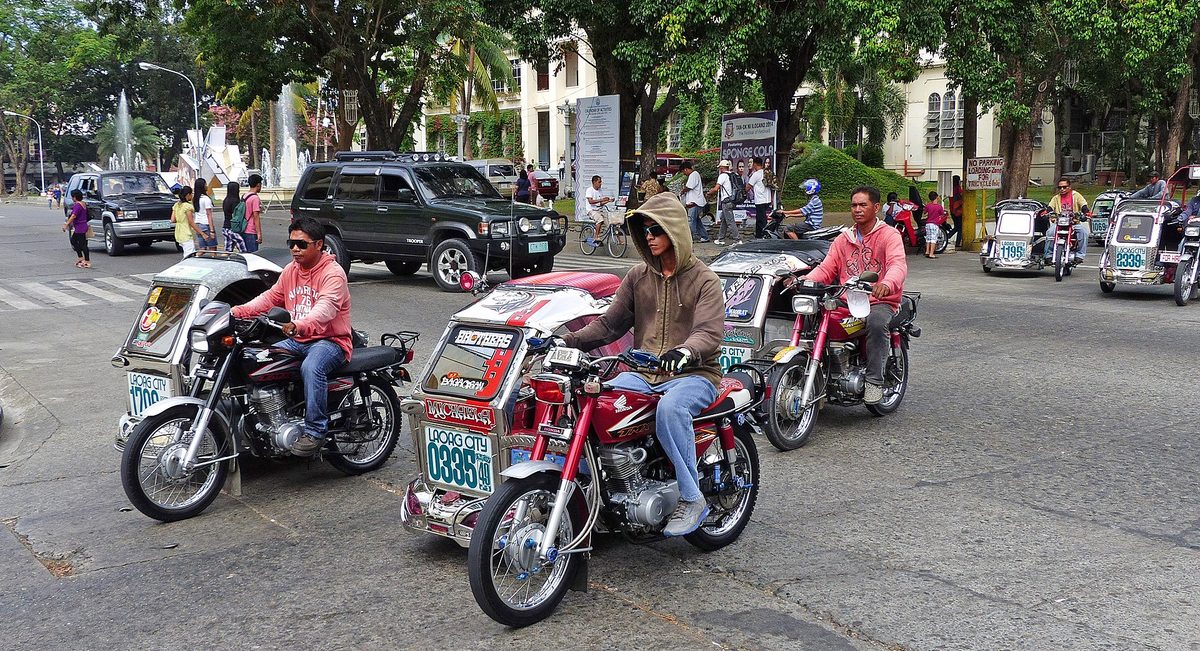
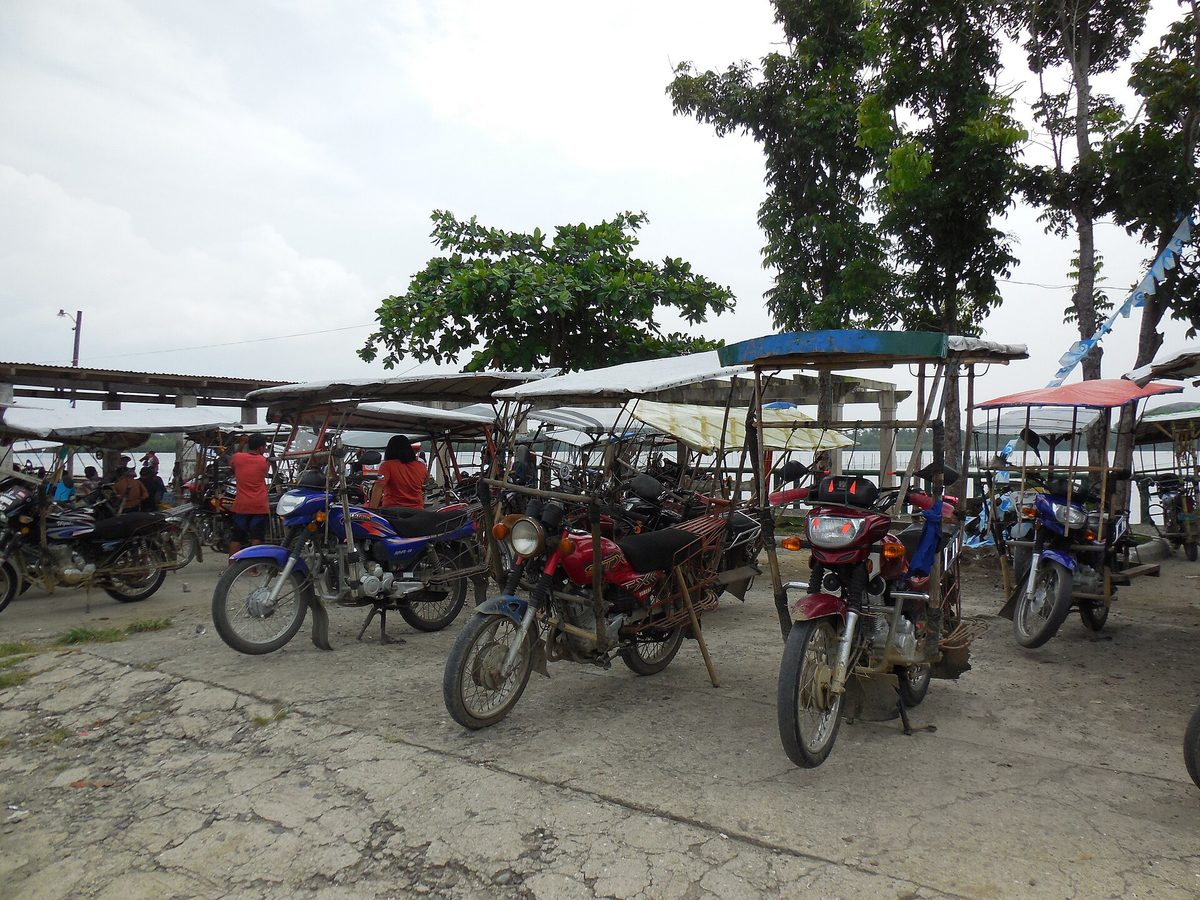
Once you are off the main roads, the tricycle takes over. It is a motorbike welded to a sidecar, it goes where jeepneys do not, and in small towns and beach areas it is often the only ride around. Habal-habal is its rougher cousin, a plain motorbike that will carry one, two, or (alarmingly) more passengers up routes too rough or steep for anything else, common in the provinces and on islands.
The golden rule with both: agree the fare before you sit down. Tricycles do not run meters. A normal shared “regular” hop in town might be ₱20 to ₱30 per person; a private “special trip” to a specific spot could be ₱100 to ₱150 or more depending on distance and how touristy the area is. Ask your hotel what the going local rate is, then you will know if the first quote is the “you look foreign” rate. It usually is, and a friendly “is that the special price? what’s the regular?” often resets it. For habal-habal, the same applies, and on unfamiliar mountain roads a daylight ride in dry weather is the safer choice.
Taxis: use the meter, or just use Grab
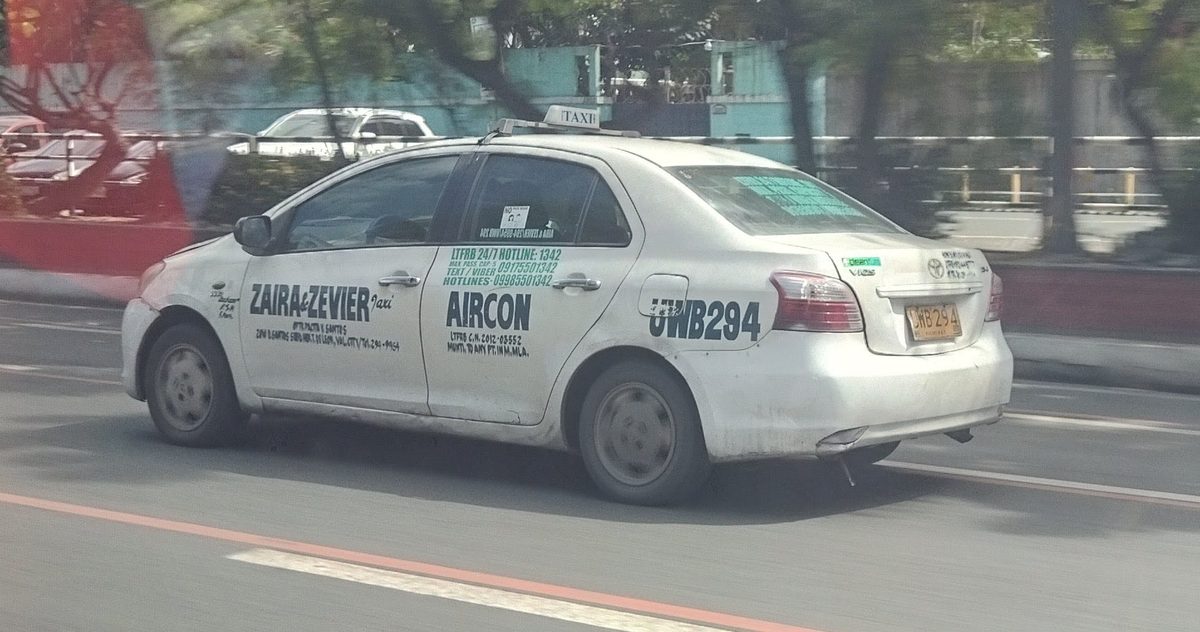
Metered street taxis still cruise Manila, Cebu, and Davao. The flagdown on a regular white Manila taxi is around ₱45, then roughly ₱14 per kilometre, which is cheap when the meter is honest. The problem is that it often is not, and this is where first-time visitors get stung.
The common taxi scams
- The “broken” meter. Driver claims the meter is busted and offers a flat fare two or three times the real cost. Decline and get another cab.
- The fixed quote. A flat price offered before you move, always inflated. The meter is almost always cheaper.
- The airport tout. At NAIA, people approach with laminated “official” rate cards showing absurd fares (there have been viral cases of cards quoting thousands of pesos, even with fake agency logos). Walk past them. Use the official taxi line or, better, book a Grab from inside the terminal.
- The “no change” gambit. Driver suddenly has no change for your big bill. Carry small notes.
A short script that works
If you must take a street taxi, here is what I say, friendly but firm, before getting in: “Meter po, salamat” (“Meter please, thank you”). If they refuse or stall, I just say “okay, no thanks” and walk to the next one. That is the whole trick. There is always another taxi, and the willingness to walk away is your only real leverage. In Manila, a GrabCar booking skips the negotiation altogether, because the fare is set before you confirm. For more on staying sharp in the capital, see our wider Manila travel guide.
App motorcycle taxis: Angkas, JoyRide, Move It
When Metro Manila traffic is a parking lot, locals reach for a motorcycle taxi, and so should you if you are travelling light. These are app-booked motorbikes that carry one passenger behind a (vetted, helmet-equipped) rider, weaving through gridlock in a fraction of the time a car takes. They run under LTFRB authorization while Congress works on a law for the sector, so book only through an app authorized in the city you are in.
The three apps, briefly
- Angkas puts safety at the front of its pitch, with a published safety record on its own site.
- Move It is backed by Grab, which acquired its business operations.
- JoyRide doubles as a car-hailing app too, so it is handy as a single install, though paying by e-wallet can mean an extra manual step.
On a typical Metro Manila route the base fare is around ₱50 for the first two kilometres, and a real-world short hop tends to land somewhere between ₱50 and ₱70 across the three apps, with the difference usually just ₱5 to ₱20. Many commuters keep all three installed and book whichever is fastest and cheapest at that moment. Journey times depend on traffic, but a bike can slip through jams that leave cars at a standstill, which is the whole point.
Two caveats: you can only bring a small bag (no big luggage on a motorbike), and you will be in traffic on two wheels, so it is not for everyone. Wear the helmet they give you, and if a rider feels reckless, end the trip.
Buses, P2P, and UV Express for longer hops
For trips too long for a jeepney but not worth a flight, you have a few options. City buses cover major corridors cheaply (from around ₱15). Point-to-point (P2P) buses are the comfortable upgrade: air-conditioned express services on set routes such as Manila to Clark, usually ₱100 to ₱300; check your route with its operator. For getting to the airport or the Clark gateway without Manila traffic eating your morning, a P2P is often the smartest pick; see how the gateways compare in NAIA vs Clark vs Cebu, and our NAIA survival guide for the terminal maze.
UV Express vans are shared air-conditioned vans running fixed routes, for roughly ₱50 to ₱150 depending on the route. They are cramped but efficient. For long-haul provincial buses (think Manila to the Bicol region or the north), you book at terminals or via online operators, and it is a whole topic of its own.
A city-by-city reality check
Manila is Grab territory, full stop. Traffic is brutal, street taxis are a gamble, and motorcycle taxis are the local hack for short distances. Use Grab as your spine, jeepneys for adventure, P2P buses for the airport runs.
Cebu is similar but smaller and easier: Grab operates here and jeepneys are everywhere. Distances are shorter, so fares are gentler.
Smaller cities and towns (Bohol, Siargao, Palawan towns, provincial centres) are patchier: Grab may run in a provincial capital such as Tagbilaran and not in the next town, so check your exact pickup in the app. Where it doesn’t run, the tricycle is king, habal-habal handles the rough routes, and you will negotiate fares in person. This is where carrying small cash and knowing the local rate from your hotel really pays off. Budgeting the whole trip? Our Philippines travel cost guide folds all of this into daily numbers.
So what should you actually do?
My honest, opinionated advice: in any city, use Grab as your default and skip street taxis unless nothing is matching. Ride a jeepney at least once in daylight for the experience (it is cheap and brilliant). Use tricycles for the last mile in small towns, agreeing the price first. Take a motorcycle taxi if you are light and brave and traffic is hopeless. And keep a little cash and a backup plan, because the one time you do not is the time the app stalls in the rain. Do that and you will move around the Philippines like you have done it before. None of this is hard once you have done it twice; the first jeepney is the only one that feels like a puzzle, and the first honest meter ride is the only one that feels like a small victory.
Frequently asked questions
Is Grab available everywhere in the Philippines?
No. Grab runs in Metro Manila, Cebu, Davao, Iloilo, Bacolod, Clark, and other cities, but outside them availability varies from town to town, so open the app at your actual pickup point to see whether any cars are around. In those places, plan on tricycles, habal-habal, or a hotel-arranged car instead, and never pin a tight connection on a Grab appearing.
How much does a jeepney cost in 2026?
Since the fare adjustment took effect in September 2026, traditional jeepneys start at around ₱14 for the first four kilometres, plus a small charge for each kilometre beyond. Modern e-jeepneys start a little higher, around ₱17. Either way most short city rides cost well under ₱30 (about fifty cents), so it is the cheapest way to get around. Carry coins and small bills.
Are motorcycle taxis like Angkas safe and legal?
Apps such as Angkas, JoyRide, and Move It run under LTFRB authorization, and Angkas in particular promotes a strong safety record. They are a fast, popular way to beat traffic, but you are on two wheels in city traffic, so wear an approved helmet, carry only a small bag, and end any ride that feels reckless.
How do I avoid getting scammed by Manila taxis?
Insist on the meter before you get in (“meter po”), and walk away if the driver refuses or quotes a flat fare. Ignore airport touts waving laminated “official” rate cards. Carry small bills so “no change” is not a problem. Easiest of all, book a GrabCar instead: the fare is fixed before you confirm, and the driver’s details and the ride itself can be tracked in the app. GrabTaxi, by contrast, shows only an estimate and still runs on the meter.
What does “para” mean and how do I pay on a jeepney?
“Para” (pah-RAH) is what you call out to make a jeepney stop so you can get off; tapping a coin on the metal rail works too. To pay, hand your fare to the passenger beside you and say “bayad po”; it gets relayed up to the driver and your change comes back the same way. Tell them how many passengers are paying so the change is right.
Should I use Grab or a taxi from the airport?
Grab, almost always. Book it from inside the terminal at the designated ride-hail pickup zone so the fare is fixed and the driver is tracked, which sidesteps the inflated “rate card” touts that work arrivals. If you do take a taxi, use the official accredited taxi line, insist on the meter, and ignore anyone approaching you with a fixed price.
Sources and photo credits
Photo credits
Images sourced from Wikimedia Commons under their respective Creative Commons licenses. See individual photo credits below each image; full attribution is listed in the page’s image metadata.
Sources
- Land Transportation Franchising and Regulatory Board (LTFRB) and Department of Transportation (DOTr) — 2026 PUV fare adjustments and motorcycle taxi pilot program.
- Grab Philippines — service coverage, payment options, and 2026 feature announcements (grab.com/ph).
- Angkas, JoyRide, and Move It — official apps and operator fare information.
- Philippine News Agency, Rappler, and Top Gear Philippines — reporting on 2026 fare hikes, airport taxi enforcement, and motorcycle-taxi regulation.
About this guide: PhilippinesTourism.org publishes independent, on-the-ground Philippines travel guides. Information verified October 2026.