Malapascua Diving: Thresher Sharks at Dawn
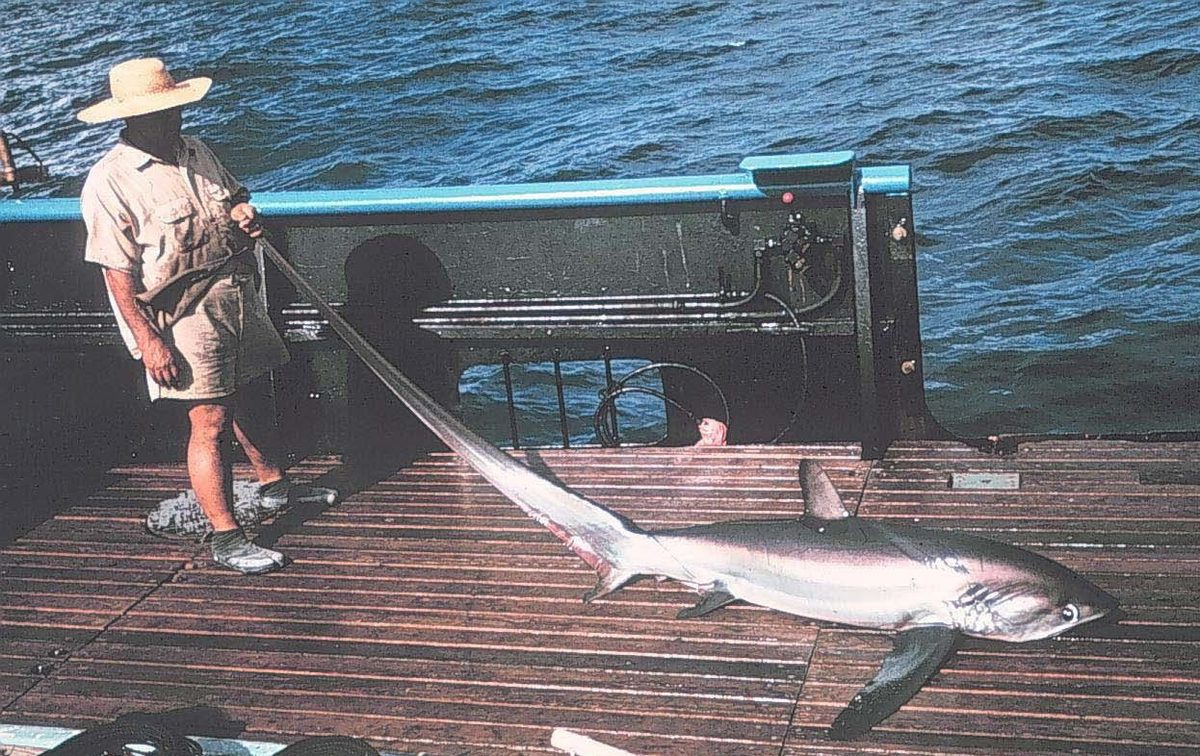
Malapascua is the one place on the planet where you can reliably dive with thresher sharks almost every morning of the year. These deep-water animals, with eyes like saucers and a tail as long as their body, rise to shallow cleaning stations off this tiny Cebu island at first light. The catch most guides get wrong: they are now at Kimud Shoal, not Monad.
I have done the pre-dawn shark boat here more than once, and I will be straight with you below about what has changed, what the dive is actually like now, and whether the early alarm is worth it for your experience level. The short version: it usually is, but for slightly different reasons than the old “threshers at dawn on Monad” legend suggests.
Malapascua at a glance: the dive sites that matter
Malapascua sits off the northern tip of Cebu, a speck of an island barely 2.5 km long with no cars, a few sandy beaches, and more than 30 dive sites in boat range. Here is how the main ones stack up. Depths and levels are typical ranges; conditions shift with tide, current and season, so treat your dive guide’s call on the day as final.
| Dive site | Highlight | Depth | Level | When |
|---|---|---|---|---|
| Kimud Shoal | Pelagic thresher sharks (current site) | ~12–30 m | Open Water+ (AOW better) | Dawn–late morning |
| Monad Shoal | Tiger sharks, devil rays, manta chance | ~16–30 m | Advanced | Dawn |
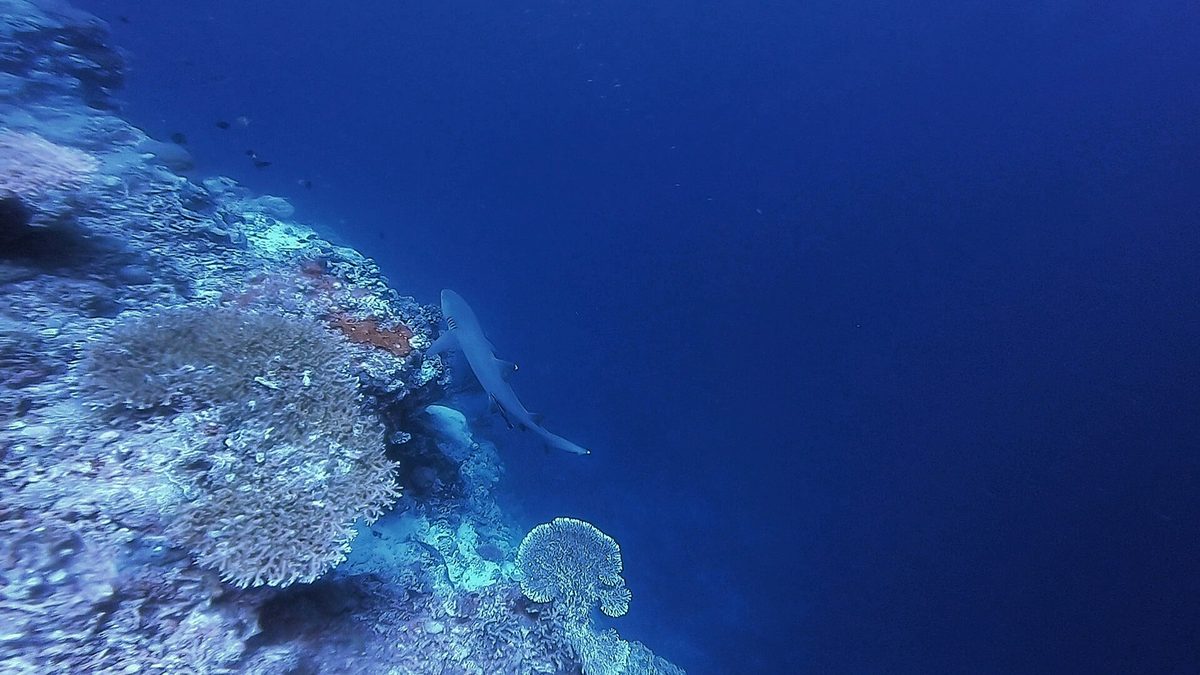
| Gato Island | White-tip reef sharks, sea snakes, swim-through | ~5–25 m | Open Water+ | Day trip |
| Lighthouse Reef | Mandarinfish mating display | ~5–12 m | All | Dusk |
| Doña Marilyn wreck | Intact ferry wreck, soft coral | ~22–32 m | Advanced | Daytime |
| Kemod Shoal / Deep Rock | Seamounts, pelagics, sea snakes | ~12–40 m | Advanced | Daytime |
Prices in this guide are 2026 estimates in Philippine pesos with rough US dollar conversions at about 58 PHP to the dollar. Dive shops adjust rates and the marine-park fees change, so confirm the day’s numbers before you commit.
The thresher shark dawn dive: the real Kimud Shoal story
This is why you came, so let me clear up the single most important fact, because a lot of older blogs and even printed guidebooks still get it wrong. For roughly two decades the thresher sharks cleaned at Monad Shoal, a sunken island that tops out around 20 metres. Sometime during the quiet pandemic years, around 2020 to 2022, the threshers shifted to Kimud Shoal, a smaller, shallower seamount about an hour by boat from the island.
The reason is the kind of thing you cannot script: tiger sharks moved onto Monad. Tigers sit several rungs higher up the food chain, and the threshers appear to have relocated for self-preservation. The Divers Alert Network and the resident dive operators both tell the same story, so this is not a rumour. If a shop or a website is still selling you “threshers at Monad,” they are either out of date or not paying attention.
It helps to know what you are looking at. The Malapascua threshers are pelagic thresher sharks (Alopias pelagicus), reaching around four metres, roughly half of that the elongated upper tail lobe they use to herd and stun schooling fish. They normally live hundreds of metres deep and hunt by night, which is exactly why a reliable, shallow, daytime encounter is so rare: this is a deep-sea animal you are meeting on a reef at recreational depth. They are harmless to divers, with small teeth built for squid and small fish, and those huge dark eyes are an adaptation to the gloom of the deep. The species is classed as Vulnerable and is fully protected here, so touching or harassing one is both illegal and pointless; patience gets you far closer than pursuit ever will.
Why the move is good news for divers
Here is the part the legacy “dawn” framing buries: the relocation actually improved the dive. At Monad the cleaning stations sat around 25 to 30 metres, which ate into your no-decompression time and left the sharks frustratingly distant in dim light. Kimud’s cleaning stations sit shallower, roughly 12 to 20 metres, with more ambient light, longer safe bottom times and sharks that tend to come closer.
The other shift is timing. The old story was strict: be in the water at first light or miss them. At Kimud the operators who log sightings daily now report threshers from sunrise right through the morning, sometimes to around midday, so a brutally early splash is no longer the only option. The “at dawn” hook is still broadly true, and the earliest dives remain the classic experience, but you are no longer racing a five-minute window. That is a meaningful, honest improvement on the old reality, and it is one of the things most pages have not caught up with.
What to expect on the dive
Kimud is a flat-topped shoal that drops away into deep blue on its flanks. You descend to the cleaning-station depth, settle into a calm hover and wait. The threshers come up from the deep to let cleaner wrasse pick parasites from their skin and gills, and the trick is to do nothing dramatic: stay low, stay still, breathe slowly, no chasing. They circle, often in twos and threes, so a shark gliding away will frequently loop back. Get it right and one can pass within a few metres, its tail swiping through the water like a slow whip.
The cleaning station is not a one-trick site, either. Devil rays show up in schools some seasons, and you may see grey reef and white-tip sharks, the occasional hammerhead, plus barracuda, batfish and tuna all queuing for the same cleaner wrasse. It is a genuinely good dive even on the rare morning the threshers are shy.
Sighting rates, etiquette and the rules that matter
Reputable operators quote sighting rates above 90% on a typical morning at Kimud, and the most established shop offers a “thresher shark guarantee,” giving you a free extra dive if a double-dive trip comes up empty. That tells you how confident they are. No-shows still happen, usually because of weather, unusual currents or a group disturbing the site, but they are the exception rather than the rule.
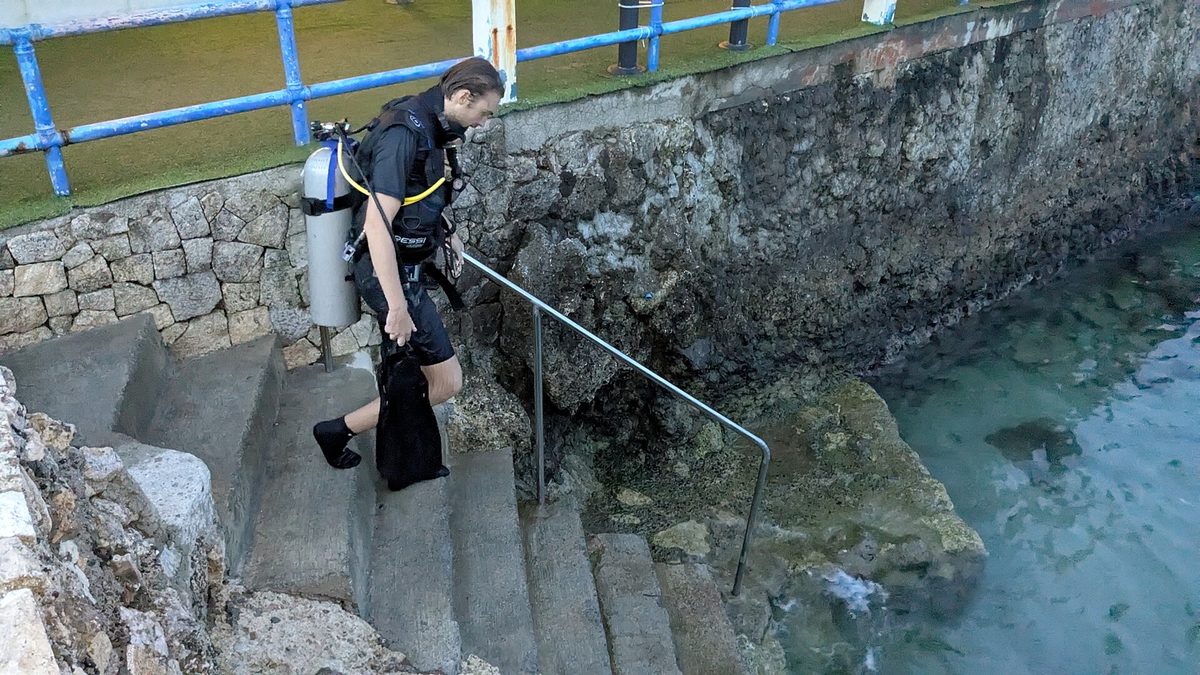
The etiquette is strict and it is enforced by the divemasters, not optional advice. The big ones: hold neutral buoyancy and never settle on the reef, because crushed coral kills the cleaner-wrasse habitat and the sharks simply leave; do not chase or try to touch the animals; and no camera strobes or flash, which spook them instantly. Continuous low video lights are usually tolerated, flashes are not. Because buoyancy is so critical, the site is treated as an advanced dive. Open Water divers can generally join but often need to dive with an instructor and may be asked to do a check-out dive first so the shop can confirm your control. If you only hold Open Water, honestly assess your buoyancy, or budget for the Advanced course on the island.
Monad Shoal and the tiger sharks now
So what is left at Monad? Tiger sharks, and that is a real draw if you understand the odds. Monad is the larger, deeper shoal, and since the threshers left it has become the island’s tiger-shark site. The catch is predictability: tiger encounters are sporadic, with operators reporting something on the order of one sighting a week, nothing like the near-daily threshers next door. Monad also still pulls in devil rays, eagle rays, the odd manta and big schools of jacks, so it is rarely a wasted dive even without a tiger.
My take: do not come to Malapascua expecting a guaranteed tiger shark. Treat Monad as a high-stakes bonus dive, usually tacked onto a Kimud morning or done on its own pre-dawn drift, and you will not be disappointed. Both shoals are protected marine parks now, part of a shark and ray sanctuary first designated in 2015, which is a big part of why the populations have held up.
Gato Island: white-tips, sea snakes and a tunnel
If the threshers are the headline, Gato Island is the dive people quietly rave about afterwards. It is a rocky islet about an hour away, a marine reserve and a protected sea-snake breeding ground, with at least five distinct sites around it. The signature is a roughly 30-metre tunnel that cuts clean through the island, often with white-tip reef sharks sleeping near the cathedral-like exit. You will share the water with banded sea snakes, which are venomous but utterly uninterested in divers, plus cuttlefish, frogfish, seahorses, nudibranchs and mantis shrimp.
Gato is usually a full-day, multi-dive trip because of the distance, and it is the perfect counterweight to the pelagic tension of Kimud: slower, macro-rich, a little eerie in the swim-through. If you have three days here, do both. I would not skip Gato to squeeze in a second shark morning.
Malapascua diving beyond the sharks: the other sites
The island earns its keep well past the famous shoals, and this is where a few quieter sites separate a good trip from a great one.
Lighthouse Reef: the mandarinfish dusk dive
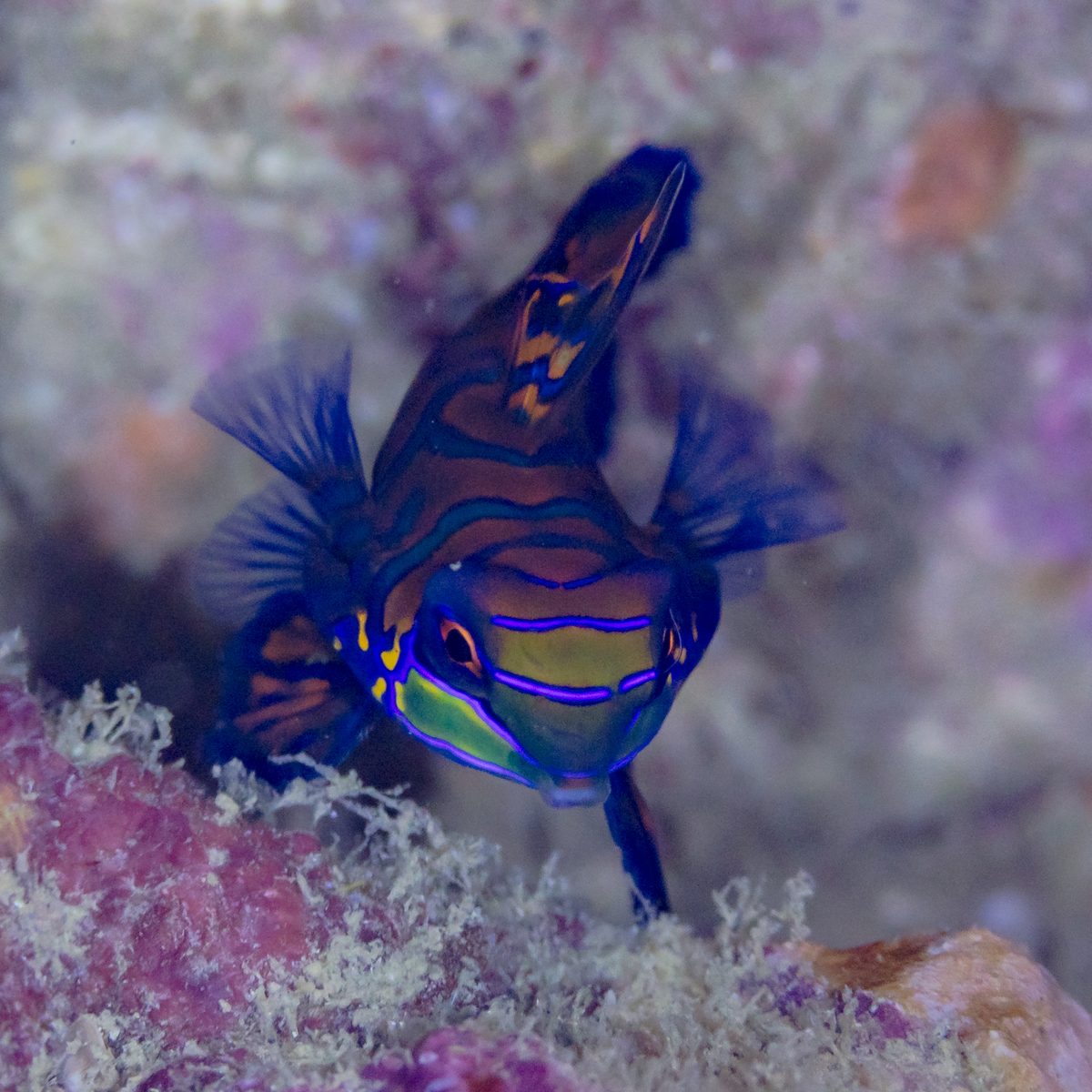
Lighthouse is a shallow, sandy site that comes alive at dusk. As the light fades, mandarinfish, those tiny, electric-patterned reef fish prized by photographers, begin their nightly courtship, the males displaying to females in short, darting rises above the coral rubble. It is a gentle dive any level can do, timed for sunset, and a complete change of pace from the deep-blue shark dives. Move slowly and keep your light low; they bolt for the reef the instant they are spooked.
It is the kind of dive that wins over people who think they are only interested in big animals. The same shallow reefs around the island hold seahorses, ornate ghost pipefish, flamboyant cuttlefish and a long list of nudibranchs, so even a relaxed afternoon check-out dive turns into a macro hunt if your guide has sharp eyes.
Wrecks: the Doña Marilyn
The Doña Marilyn is an inter-island ferry that sank in a 1988 typhoon and now lies on her side in roughly 22 to 32 metres. She is encrusted in soft coral and patrolled by scorpionfish, lionfish and schooling fish, an atmospheric advanced dive when the visibility cooperates. There is also a small, shallow Japanese World War II wreck closer to the island that even snorkellers can reach from the beach.
Kemod Shoal and Deep Rock
For experienced divers, Kemod Shoal and Deep Rock are seamounts and pinnacles that draw pelagics, sea snakes and the occasional shark, with currents that can run strong. These are advanced sites you do with a guide who knows the tides; they are not warm-up dives. They round out a quietly deep menu that justifies staying longer than the single shark morning most day-trippers come for.
Dive shops and prices: an honest breakdown
Malapascua is not the cheapest diving in the Philippines, and you should budget for that. The remoteness and the specialised shark operation command a premium over, say, diving Moalboal down the coast. Here are realistic 2026 figures, all of which you should confirm on arrival.
- Single fun dive: roughly ₱1,500–2,500 (about $26–43), with the dawn Kimud shark trip at the upper end.
- Multi-dive packages: per-dive rates drop meaningfully, often toward ₱1,400–1,500 a dive, if you book 10 or more.
- Marine-park / sanctuary fees: around ₱150–450 per person per day, cash, on top of the dive price. Some operators also add a separate Kimud-site fee and a fuel surcharge for the longer shark and Gato runs, so ask for the all-in number.
- Gear rental: roughly ₱500–800 a day for a full set.
- PADI Open Water course: around ₱19,500 in 2026 (about $335); Advanced Open Water roughly ₱16,000–22,000.
The honest trap to watch: advertised dive prices often exclude the daily park fee, the Kimud fee and the fuel surcharge, so a “₱2,000” shark dive can land closer to ₱3,500–4,000 once everything is added. Always ask each shop for the full breakdown including fees before you commit, and bring enough cash, because the single island ATM runs dry and most shops take pesos only.
On choosing a shop, walk the main beach your first evening and visit two or three. Ask the questions that matter: do you go to Kimud (not Monad) for threshers, what is the full fee breakdown, and how many divers per guide. The long-established, conservation-minded operators are worth a small premium for the shark dive specifically; this is not the place to chase the rock-bottom rate.
Is it worth the 5am alarm and the journey?
Let me give you the frank, by-experience-level call I wish someone had given me.
If you are a confident Advanced diver or better: yes, unreservedly. Reliable encounters with a deep-water shark at recreational depth simply do not exist anywhere else, and Kimud, Gato and the wrecks together make a 3 to 4 day trip that is hard to beat in Southeast Asia.
If you are a newly certified Open Water diver: still probably yes, but with eyes open. The shark dive demands good buoyancy, you may be required to take an instructor or a check-out dive, and the early start plus the deeper profiles can be a lot for dive number ten. Consider doing your Advanced course here first; the island is a fine place to learn and it transforms the shark dive.
On the alarm itself: the romantic “threshers only at dawn” pressure has genuinely eased now that they are at Kimud and visible later into the morning. The earliest boats, leaving around 4:30 to 5am for dives roughly between 5 and 7am, are still the classic and least crowded option, but if you are not a dawn person, a mid-morning slot is now a real choice. That flexibility is the single biggest practical change at Malapascua, and it is worth knowing before you book.
Getting there: Cebu to Maya to a bangka
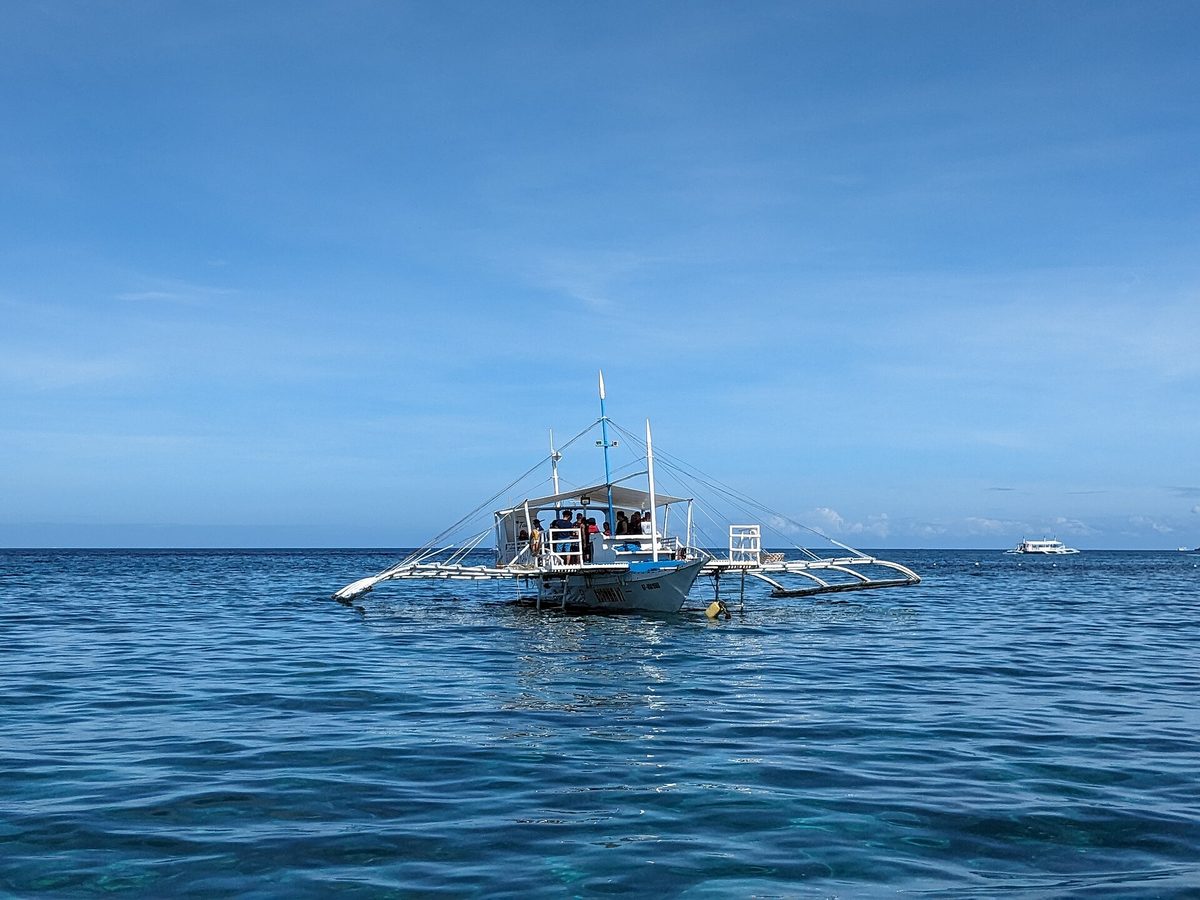
Malapascua takes some effort to reach, which is part of why it stays low-key. Fly into Mactan-Cebu (CEB), then it is roughly a four-hour drive north to the port of Maya at the tip of the island, by private transfer, van or bus. From Maya you cross by bangka, the traditional outrigger boat, a 30 to 45 minute hop to the island. Aim to reach Maya well before the last afternoon crossing, generally around 5pm, or you may be stuck overnight on the mainland or paying for a private “special trip.” Carry pesos in cash for the boat and the habal-habal motorbike taxis on the island. For the wider region, our Cebu travel guide covers onward routes, and many divers pair Malapascua with a few slow days on nearby Bantayan Island.
Where to stay and base yourself
Most diving and most beds cluster along Bounty Beach on the island’s south side, an easy strip of dive shops, resorts and restaurants you can walk end to end in minutes. Accommodation runs from simple backpacker rooms to a couple of genuinely comfortable mid-range and higher resorts, many with their own in-house dive centre, which is the most seamless way to do the dawn shark trip. For the full island picture beyond the diving, see our Malapascua Island guide. Wherever you stay, you are minutes from the boats; this is an island built around the water. There is no need to pre-book a dive package from home unless you are visiting in peak season or have only a night or two; most divers walk the beach on arrival and arrange the next morning’s shark trip in person, which keeps your schedule flexible if the weather turns.
Best time to dive Malapascua: seasons and conditions
The threshers are at Kimud year-round, so there is no closed season for the headline act. What changes with the calendar is the conditions around the dive. The dry season, roughly December to May, brings the calmest seas and the best visibility, often 20 to 30 metres, and makes the one-hour boat ride to Kimud far more pleasant; February to May is the visibility sweet spot. Water sits warm all year, around 27 to 29°C, so a 3mm wetsuit is plenty.
The rainy season, roughly June to November, still dives well in the mornings, and the sharks are just as present, but afternoon storms, rougher crossings and reduced visibility are more likely, and the typhoon season peaking July to October can cancel boats outright. If you come then, build in buffer days. The island also gets busy over Christmas, Chinese New Year and Easter, so book dive slots ahead. For planning around the wider archipelago, our guide to the best time to visit the Philippines puts the seasons in context, and Malapascua slots comfortably onto any list of the country’s premier scuba diving in the Philippines destinations.
Frequently asked questions
Can you still see thresher sharks in Malapascua?
Yes, and arguably more reliably than ever. The threshers relocated from Monad Shoal to nearby Kimud Shoal around 2020 to 2022, displaced by tiger sharks, but they are still seen on the great majority of morning dives, year-round. At Kimud they are shallower, closer and visible later into the morning than they once were at Monad. Reputable operators report sighting rates above 90% on a typical morning.
Why did the thresher sharks move from Monad Shoal to Kimud Shoal?
Tiger sharks moved onto Monad Shoal during the quiet pandemic years, and the threshers, which sit lower on the food chain, shifted to the nearby Kimud Shoal for safety. It turned out to benefit divers: Kimud’s cleaning stations are shallower, with more light and longer bottom times. Monad is now mainly a tiger-shark site, with far less predictable sightings of roughly once a week.
Do you have to dive at dawn to see the thresher sharks?
Not strictly any more. The classic dawn boat, leaving around 4:30 to 5am, is still the traditional and least crowded option. But since the threshers moved to Kimud Shoal, operators report sightings from sunrise right through the morning, sometimes to midday, so a slightly later start is now a genuine alternative if you are not an early riser.
What level of diver do I need to be for Malapascua’s thresher dive?
Open Water divers can usually join the Kimud thresher dive, but it is treated as an advanced site because good buoyancy is essential at the cleaning station. Many shops require Open Water divers to go with an instructor and complete a check-out dive first. Advanced Open Water is strongly recommended; if you only hold Open Water, consider taking the Advanced course on the island.
How much does diving in Malapascua cost in 2026?
Budget roughly ₱1,500–2,500 (about $26–43) per fun dive, with the dawn shark trip at the top end, plus a marine-park fee of around ₱150–450 a day in cash. Some operators add a separate Kimud-site fee and a fuel surcharge. Once everything is included, a two-dive shark morning often lands near ₱3,500–4,000. A PADI Open Water course runs about ₱19,500.
Is Gato Island worth adding to a Malapascua dive trip?
Absolutely. Many experienced divers rate Gato Island as the dive they remember most after the sharks. The full-day trip delivers white-tip reef sharks sleeping in a swim-through tunnel, banded sea snakes, frogfish, cuttlefish and rich macro life across several sites. It is a slower, more intimate counterpoint to the pelagic shark dives. If you have three days on the island, do not skip it.
Sources and photo credits
Photo credits
- malapascua-diving-thresher-shark.jpg — Photo: NMFS Honolulu Lab (CC0) via Wikimedia Commons
- malapascua-diving-scuba-diver.jpg — Photo: Martin Michlmayr / CC BY-SA 4.0 via Wikimedia Commons
- malapascua-diving-white-tip-shark.jpg — Photo: Wiki.mjmasangkay / CC BY-SA 4.0 via Wikimedia Commons
- malapascua-diving-mandarinfish.jpg — Photo: Diego Delso / CC BY-SA 4.0 via Wikimedia Commons
- malapascua-diving-island.jpg — Photo: Martin Michlmayr / CC BY-SA 4.0 via Wikimedia Commons
Sources
- Divers Alert Network – Malapascua (Alert Diver, 2025)
- Thresher Shark Divers – Thresher Sharks at Kimud Shoal
- PADI – Diving in Malapascua
About this guide: PhilippinesTourism.org is an independent Philippines travel resource. Routes, prices and dive-site conditions were verified October 2026; confirm current details with operators before you book.<