10 Days in the Philippines: The Sweet-Spot Itinerary
Ten days is the sweet spot for the Philippines: enough to do two regions properly, or one region slowly, without hopping a plane every other morning. The trick is keeping it to one or two travel days, not five. Pick a lane, commit to it, and you come home rested instead of frazzled.
I have flown the El Nido shuttle, sat on the Coron fast ferry when the swell was up, and done the dawn run to Oslob more times than I can count. This guide gives you three tested day-by-day routes with real transfers, real 2026 prices in pesos and dollars, and clear “I’d skip this” calls. If you are still deciding how long to go, start with our Philippines itinerary guide for the full 1–4 week picture; this page zooms in on the ten-day version that most first-timers actually book.
The three routes at a glance
Every route below assumes you land and leave through Manila or Cebu, the two cheapest international gateways. Prices are hedged 2026 figures at around 58 pesos to the US dollar; ferries and flights move with season and demand, so treat them as planning numbers and confirm before you book.
| Route | Regions | Pace | Best for | Key flights / ferries |
|---|---|---|---|---|
| 1. Palawan deep dive | Palawan only (El Nido + Coron, optional Puerto Princesa) | Relaxed | First-timers, couples, divers, anyone who hates packing up | Fly into El Nido (ex-Clark) or Puerto Princesa; El Nido→Coron fast ferry; fly out of Busuanga (Coron) |
| 2. Palawan + Visayas combo | Palawan (El Nido) + Visayas (Bohol/Panglao) | Moderate | Want lagoons and a classic beach, only one big move | Fly El Nido→Cebu (via connection); fast ferry Cebu→Bohol; fly out of Cebu or Bohol |
| 3. Visayas triangle | Visayas only (Cebu + Bohol + Siquijor) | Active | Repeat visitors, divers, road-trippers, slow-travel fans | All ferries after the first flight; Cebu→Bohol→Siquijor→Dumaguete loop |
The short version of my advice: if this is your first trip and you want the postcard, take Route 1 or 2. If you have done the headline islands already and want fewer crowds and more driving, Route 3 is the quietly brilliant one. All three are built to avoid backtracking, which is where most 10-day plans fall apart.
Why ten days is the sweet spot (and how to count travel days)
Seven days in the Philippines forces a hard choice: one region, period. Two weeks lets you sprawl across three, and three weeks puts Siargao and the rice terraces back on the table. Ten days sits in the happy middle – long enough that two regions stop feeling rushed, short enough that you do not need to take three weeks off work. If you only have a week, our 1-week itinerary keeps you to a single island group; if you can stretch it, the 2-week Philippines itinerary adds a third region without strain.
Here is the math that trips people up. A “travel day” is any day where moving between places eats the prime daylight hours. A domestic flight with a 2-hour airport buffer plus transfers easily burns half a day; an inter-island ferry can burn most of one. On a 10-day trip you can absorb two travel days comfortably and still have eight days on the water and the sand. Try to squeeze in a third region and you are suddenly at four or five travel days, which means you paid for ten days and got six. That is the single most common mistake I see, and every route below is engineered to keep you under that line.
One more honest note on arrival timing: international flights often land in Manila late at night. I count your first full day as the morning after you land, not the red-eye itself. If your inbound flight gets you in past 9pm, sleep near the airport and start fresh – do not try to connect onward the same night. For the nuts and bolts of flights, ferries and that famously chaotic Manila transit, our guide to getting around the Philippines is worth ten minutes before you book anything.
Route 1: Palawan deep dive (El Nido + Coron) – the easiest first trip
If you do nothing else, do this one. Palawan is the region that put the Philippines on every “most beautiful islands” list, and ten days lets you do its two stars – El Nido and Coron – without rushing, with an optional detour to the Puerto Princesa Underground River if you want a third base. One short flight in, one fast ferry between the two, one flight out. That is the whole logistical load. For the wider regional picture, our Palawan itinerary goes deeper on each town.
Getting in matters this year. AirSwift moved its direct El Nido flights from Manila’s NAIA to Clark International Airport (CRK) on 29 March 2026, so if you are connecting through Manila you now route via Clark, a roughly 1 hour 35 minute hop that runs about seven times a week (around ₱4,300 / $74 one-way, hedged). The budget alternative is to fly into Puerto Princesa on Cebu Pacific or Philippine Airlines, then take the 5–6 hour van north to El Nido (around ₱700–1,000 / $12–17 in a shared van). I’d pay for the AirSwift flight if your budget allows – the overland route is a real day gone.
The day-by-day Philippines itinerary 10 days plan for Palawan
- Day 1 – Arrive El Nido. Fly in via Clark (or land Puerto Princesa and transfer). Check in around Corong-Corong for sunsets or El Nido town for walkable dinners. Sunset beers, fresh fish, early night.
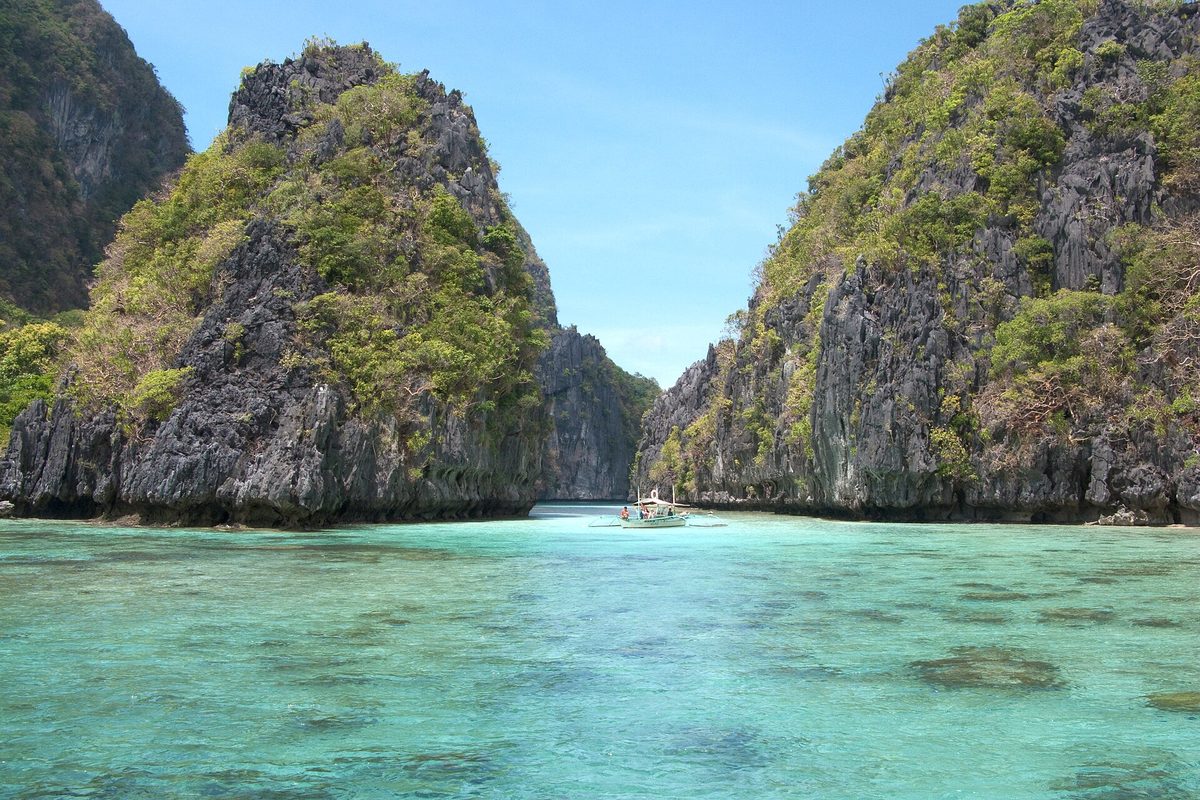
- Day 2 – Island Hopping Tour A. The classic: Big Lagoon, Small Lagoon, Secret Lagoon, Shimizu, Seven Commandos. Around ₱1,400–1,600 / $24–28 including lunch and the ₱200 eco fee. Book the night before.
- Day 3 – Tour C or Nacpan Beach. Tour C (Hidden Beach, Matinloc, Secret Beach) is the dramatic one. Prefer land? Hire a tricycle to Nacpan Beach, the long golden twin-beach an hour out. I’d do Tour C if the sea is calm, Nacpan if it is not.
- Day 4 – El Nido to Coron by fast ferry. The midday boat (typically departs around 12:30) crosses in roughly 3.5–5 hours depending on operator and swell; around ₱1,800–2,500 / $31–43. Book a day or two ahead in peak season. Arrive Coron late afternoon, climb Mt. Tapyas for sunset if you have legs left.
- Day 5 – Coron island hopping. Kayangan Lake, Twin Lagoons, Barracuda Lake, Coral Garden. The water here is the clearest in the country. Around ₱1,500–2,200 / $26–38.
- Day 6 – Coron wrecks or Maquinit. Divers: this is one of the best WWII wreck-diving sites anywhere. Non-divers: snorkel Siete Pecados, then soak in the Maquinit saltwater hot springs at dusk.
- Day 7 – Slow Coron day or Black Island. A longer boat trip to Malcapuya or Black Island, or simply a beach-and-coffee day. Ten days means you are allowed one.
- Days 8–9 – Optional Puerto Princesa + Underground River. Fly Busuanga→Puerto Princesa (or fold this in earlier). The UNESCO Underground River is worth it: DIY runs about ₱1,100–1,200 / $19–21 once you add the permit (capped at 900 visitors a day – reserve ahead), or ₱2,200–2,500 / $38–43 for a full van-and-lunch tour. If wrecks and lagoons are enough for you, skip Puerto Princesa and give the days back to Coron.
- Day 10 – Fly home. Out of Busuanga (Coron) or Puerto Princesa to Manila/Cebu for your international connection. Leave 3–4 hours for the Manila transfer.
Where to sleep: El Nido – Corong-Corong for sunsets, town for nightlife. Coron – Coron Town Proper for walkable restaurants and tour access. Both have everything from ₱900 / $16 hostel dorms to ₱9,000+ / $155 boutique rooms.

Route 2: Palawan + Visayas combo (El Nido → Cebu → Bohol)
This is the route for travellers who want the Palawan lagoons and a classic palm-fringed beach, with the Chocolate Hills and tarsiers thrown in. It involves exactly one big move – a flight from El Nido to Cebu – and one short ferry. The trade-off versus Route 1: you swap a slow Coron for a faster, more varied second region. I think it is the best all-rounder for a first visit if you want variety over depth.
The one catch is the El Nido→Cebu flight. There is no direct hop on most days, so you connect via Cebu (on Cebu Pacific) or back through Clark/Manila, which means an early start and a mid-trip travel day. Build it in deliberately rather than fighting it. Once you land in Cebu, the OceanJet fast ferry to Bohol (Tagbilaran) runs roughly every 30–45 minutes from Pier 1, takes about two hours, and costs around ₱800–1,200 / $14–21.
Day-by-day: El Nido to Bohol in ten days
- Day 1 – Arrive El Nido. Fly in via Clark. Settle into Corong-Corong, sunset, dinner in town.
- Day 2 – El Nido Tour A. The lagoons and Seven Commandos. Around ₱1,400–1,600 / $24–28.
- Day 3 – El Nido Tour C or a beach day. Tour C’s hidden beaches, or laze at Las Cabanas with a sunset San Miguel.
- Day 4 – Fly El Nido → Cebu. Connect via Cebu or Clark. This is your mid-trip travel day; expect it to eat most of the daylight. Land in Cebu, overnight near the airport on Mactan, eat a proper lechon dinner.
- Day 5 – Cebu → Bohol by fast ferry; Panglao. Morning OceanJet from Pier 1 (about 2 hours, ₱800–1,200 / $14–21). Transfer to Panglao, check in near Alona Beach, swim, decompress.
- Day 6 – Bohol countryside tour. Chocolate Hills, the Tarsier Sanctuary in Corella (the ethical one – not the roadside photo stops), the Loboc River lunch cruise, the man-made forest. A full but easy day, around ₱1,500–2,500 / $26–43 per person depending on group size.
- Day 7 – Panglao island hopping. Balicasag Island for snorkelling with turtles and a wall of sardines, Virgin Island sandbar at low tide. Around ₱1,500–2,000 / $26–34. Go early to beat the crowds and the midday chop.
- Day 8 – Beach day or Anda. Alona gets busy; if you want quiet white sand, day-trip east to Anda. Or just claim your slow day here.
- Day 9 – Back toward Cebu (or stay). If flying out of Cebu, take an afternoon ferry back and overnight on Mactan. If flying out of Bohol’s Panglao airport (Cebu Pacific and PAL serve it), stay put and enjoy a final beach morning.
- Day 10 – Fly home from Cebu (Mactan) or Bohol (Panglao). Both have decent international and domestic connections.
My honest skip call: do not try to add Boracay or Siargao to this route. People ask constantly. Each adds a flight and at least one travel day, and you will gut the very thing that makes ten days feel relaxed. Save Boracay or Siargao for a future two-week trip.

Route 3: The Visayas triangle (Cebu + Bohol + Siquijor)
This is my quiet favourite, and the one almost no page-one guide bothers to lay out properly. After your arrival flight into Cebu, the entire trip runs on ferries – no more airports until you leave. You loop Cebu → Bohol → Siquijor → Dumaguete and out, and because the legs are short you keep your travel days to a minimum while seeing three genuinely different islands. Siargao gets the surfer headlines, but Siquijor is the Visayan island that still feels like a secret: empty waterfalls, a century-old balete tree, and some of the country’s best-value diving.
Pace-wise this is the most active of the three – you are moving roughly every two to three days – so it suits repeat visitors and people who like a bit of road-trip rhythm over lying still. The ferries do the heavy lifting: Cebu→Bohol is about two hours, and Dumaguete→Siquijor is a quick fast-craft hop of about 45–60 minutes at around ₱350–550 / $6–10.
Day-by-day: Visayas triangle in ten days
- Day 1 – Arrive Cebu. Land on Mactan, overnight near the airport or in Cebu City. If you are an early bird, a sunset stroll at the Temple of Leah or a bowl of pochero eases you in.
- Day 2 – Cebu → Bohol; Panglao. Morning OceanJet from Pier 1 (about 2 hours, ₱800–1,200 / $14–21). Settle on Panglao near Alona, afternoon swim.
- Day 3 – Bohol countryside. Chocolate Hills, Corella tarsiers, Loboc cruise, Baclayon Church. Around ₱1,500–2,500 / $26–43.
- Day 4 – Balicasag island hopping. Turtles and the sardine wall off Panglao. Early start. Around ₱1,500–2,000 / $26–34.
- Day 5 – Bohol → Siquijor. There is a direct but infrequent Bohol→Larena ferry (about an hour); more reliably, ferry Bohol→Dumaguete, then Dumaguete→Siquijor (about 45–60 minutes). Either way you are on Siquijor by afternoon. Rent a scooter (₱400–500 / $7–9 a day) – it is how the island is meant to be seen.
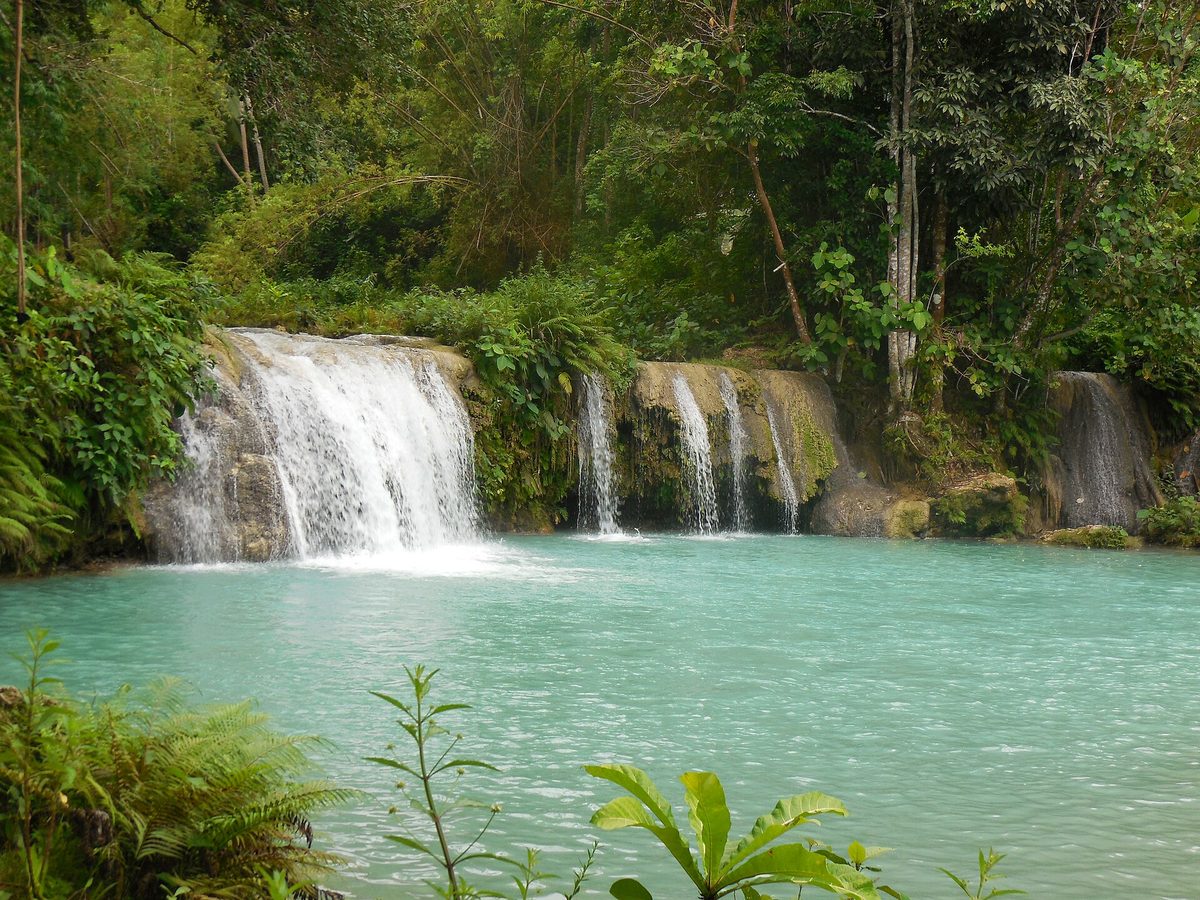
- Day 6 – Siquijor loop. Cambugahay Falls and its rope swings early before the crowds, Salagdoong Beach for cliff jumps, the giant century-old balete tree, sunset at Paliton Beach (the island’s “little Boracay,” minus the crowds).
- Day 7 – Siquijor diving or slow day. The house reefs here are superb and cheap, with frequent turtle sightings. Not a diver? A second scooter day never hurts.
- Day 8 – Siquijor → Dumaguete; Apo Island option. Cross back to Dumaguete. Energy left? Apo Island, off southern Negros, is one of the best shore-snorkelling turtle spots in the country. Or wander Dumaguete’s easy boulevard and café scene.
- Day 9 – Dumaguete → Cebu. Bus-and-ferry combo up the Negros–Cebu coast, or a short Cebu Pacific hop from Dumaguete (Sibulan) airport. Overnight Cebu.
- Day 10 – Fly home from Mactan.
Reverse it if your flights prefer Dumaguete. The triangle works equally well anticlockwise – the point is the ferry loop, not the direction. For more island-by-island ideas beyond these three, our roundup of the best islands in the country is a good companion read.
Which route fits your travel style and budget?
Three quick filters to help you choose, because the “best” ten-day route is entirely about who you are travelling as.
- First-timers and couples: Route 1 (Palawan) or Route 2 (Palawan + Bohol). Maximum payoff, minimum logistics. Route 1 if you want to barely unpack; Route 2 if you want variety.
- Divers: Route 1 for the Coron wrecks, or Route 3 for cheap, turtle-rich reefs at Balicasag, Siquijor and Apo. Both beat a generic beach holiday.
- Repeat visitors and slow travellers: Route 3. Fewer crowds, more local texture, almost no flying once you start.
- Families: Route 2. Bohol’s tarsiers, Chocolate Hills and calm Panglao beaches are genuinely kid-friendly, and the single mid-trip flight keeps meltdowns rare.
On money, a mid-range traveller should budget roughly ₱4,500–7,000 / $78–120 per person per day once you tally a decent room, two island-hopping tours, food and transfers – call it ₱45,000–70,000 / $780–1,200 for the ten days on the ground, excluding international flights. Backpackers running dorms and DIY tours can roughly halve that; couples wanting boutique resorts and private boats can easily double it. Domestic flights and ferries are the swing factor, which is exactly why booking them early matters.

When to go, and how it changes these routes
The Philippines runs on two broad seasons, and the “right” ten days depends on which one you hit. The dry season (roughly late November to May, peaking December–April) is prime time for all three routes: calm seas, reliable island hopping, classic blue-sky photos. The wet season (June–October, the southwest habagat monsoon) brings afternoon downpours and the small but real chance a typhoon reshuffles ferries and flights. For the full month-by-month breakdown, see our guide to the best time to visit the Philippines.
Practical seasonal calls: in peak swell months the El Nido→Coron fast ferry (Route 1) can get bouncy or cancel, so I keep a buffer day and avoid booking it tight against an international flight. Shoulder months (late November, early December, May, early June) are my sweet spot – mostly dry, noticeably cheaper, fewer boats jostling at every lagoon. If you must travel in the wet season, the ferry-light Visayas triangle (Route 3) gives you more ways to reroute by land if a boat gets pulled.
Booking and logistics: the honest checklist
The difference between a smooth ten days and a stressful one is almost entirely in the booking order. Here is what I actually do, in sequence.
- Lock domestic flights first, early. El Nido (AirSwift ex-Clark since 29 March 2026) and Coron/Busuanga seats sell out and climb in price as you approach peak dates. Cebu Pacific, Philippine Airlines and AirSwift are the carriers to watch. Book these before hotels – they dictate your whole skeleton.
- Book the El Nido→Coron ferry a day or two ahead in busy months; it is not always a walk-up, and the good midday boat fills. Around ₱1,800–2,500 / $31–43.
- Reserve the Underground River permit ahead if Puerto Princesa is in your plan – the park caps entries at 900 a day and walk-up slots are scarce.
- Carry cash. Island-hopping operators, tricycles and small guesthouses are cash-first. ATMs exist in El Nido, Coron Town, Tagbilaran and Dumaguete but can run dry; pull pesos in the bigger hubs.
- Mind the visa basics. Most nationalities (US, UK, EU, Australia, Canada and more) get 30 days visa-free on arrival, extendable at a Bureau of Immigration office, but airlines do enforce the onward-ticket rule – have proof of departure within 30 days or you may be denied boarding.
- Leave 3–4 hours for Manila transfers. NAIA terminal changes are real and traffic is worse than you expect. A tight self-transfer here is how good trips end badly.
None of this is hard. It just rewards doing it in the right order, a few weeks out, rather than winging the flights on arrival.
Frequently asked questions
Is 10 days enough for the Philippines?
Yes, comfortably – for two regions, not the whole country. Ten days lets you do Palawan and the Visayas, or one region in real depth, with only one or two travel days. It is not enough to add Boracay, Siargao and Banaue on top; trying to is the fastest way to spend your holiday in airports. Pick two areas, go deep, and the Philippines rewards you.
What is the best 10-day route in the Philippines for first-timers?
Palawan (El Nido plus Coron) is the easiest, highest-payoff first trip: one flight in, one fast ferry between the two towns, one flight out. If you want more variety, fly El Nido to Cebu and add Bohol for the Chocolate Hills, tarsiers and Panglao’s beaches. Both keep travel days low while hitting the postcard highlights.
How do I get from El Nido to Coron?
The fast ferry is the standard move: a midday departure (commonly around 12:30) crossing in roughly 3.5–5 hours depending on operator and sea state, for about ₱1,800–2,500 / $31–43. Operators include Phimal and the larger inter-island ferries. Book a day or two ahead in peak season, and do not schedule it tight against an international flight in case swell delays the boat.
How much does a 10-day Philippines trip cost?
On the ground, budget roughly ₱45,000–70,000 / $780–1,200 per person for ten mid-range days – decent rooms, two island-hopping tours, food, transfers – excluding international flights. Backpackers on dorms and DIY tours can roughly halve it; boutique resorts and private boats can double it. Domestic flights and ferries are the biggest variable, so book them early.
Do I need to fly into Manila?
Not necessarily. Manila and Cebu are the two main international gateways, and Cebu is often the smarter entry for a Visayas-focused trip. For Palawan, you connect onward via Clark (for AirSwift’s El Nido flights since 29 March 2026) or fly into Puerto Princesa. If you can book an international flight straight into Cebu, you skip a Manila transfer entirely.
What is the best time of year for a 10-day Philippines itinerary?
The dry season, roughly late November through May, gives the calmest seas and most reliable island hopping. I love the shoulder weeks – late November, May, early June – for fewer crowds and lower prices with mostly good weather. The June–October wet season is cheaper still but brings afternoon rain and a small typhoon risk; if you go then, favour the ferry-light Visayas triangle so you can reroute by land if needed.
Sources and photo credits
Photo credits
El Nido, Palawan — Vyacheslav Argenberg (CC BY 4.0) via Wikimedia Commons
Kayangan Lake, Coron — Mmlibranda (CC BY-SA 4.0) via Wikimedia Commons
Chocolate Hills, Bohol — Vyacheslav Argenberg (CC BY 4.0) via Wikimedia Commons
Cambugahay Falls, Siquijor — Lawrence Ruiz (CC BY-SA 4.0) via Wikimedia Commons
Puerto Princesa Underground River — ggtecson (CC BY-SA 4.0) via Wikimedia Commons
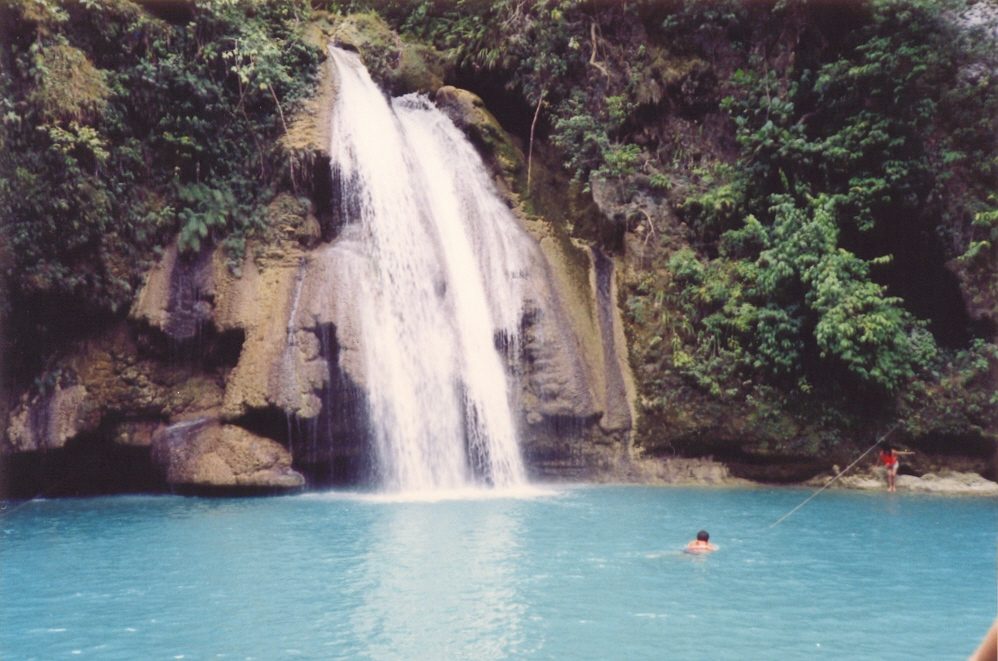
Kawasan Falls, Cebu — Magalhães (CC0 / public domain) via Wikimedia Commons
Sources and further reading
AirSwift (El Nido / Coron flight schedules and the Clark routing) ·
Cebu Pacific (domestic flight booking) ·
OceanJet (Cebu–Bohol and Dumaguete–Siquijor fast ferries) ·
Philippine Bureau of Immigration (visa-free entry and extensions)
About this guide: this is part of PhilippinesTourism.org, an independent, traveller-written resource. Routes, transfers and prices reflect our own trips and were verified July 2026. Ferry schedules, flight routings and fees change with season and demand, so confirm the live details with operators before you book.