3 Weeks in the Philippines: The Deep-Dive Itinerary
Three weeks is the sweet spot. With 21 days you finally have the room to do the Philippines properly: three distinct regions instead of a two-island highlight reel, a couple of genuine rest days, and enough slack in the schedule that one cancelled ferry doesn’t collapse the whole trip. My flagship route runs Luzon → Palawan → the Visayas, moves mostly by short domestic flights and a couple of ferries, and never asks you to fly out the morning after a long sea crossing. Most travellers enter visa-free for 30 days, so the paperwork is a non-issue.
I’ve run versions of this loop three times, and the single biggest lesson is that the Philippines punishes a rushed plan. Inter-island travel here is weather-dependent in a way Thailand or Vietnam simply isn’t, and the people who have a miserable trip are usually the ones who crammed eight stops into 21 days and watched a typhoon eat two. This guide sits inside our wider Philippines itinerary guide, which maps out routes for every trip length; this is the deep-dive version for people who have the full three weeks and want to use them well.
The 21-day route at a glance
Here is the flagship loop in one table before the day-by-day. Prices are hedged 2026 estimates, not quotes, at roughly ₱58 = $1, about where the rate sat in mid-2026.
| Leg | Nights | Region | Highlights | Getting there |
|---|---|---|---|---|
| Manila | 2 | Luzon | Intramuros, first sleep, domestic-flight hub | Your international arrival |
| Banaue & Sagada | 3 | Northern Luzon | Ifugao rice terraces, Sagada caves, cool mountain air | Night bus from Manila (~9 hrs) |
| El Nido | 4 | Palawan | Bacuit Bay lagoons, Las Cabanas sunsets | Fly Clark–El Nido (AirSwift) |
| Coron | 3 | Palawan | Kayangan Lake, WWII wreck diving | Ferry from El Nido (~3.5 hrs) |
| Cebu | 3 | Visayas | Kawasan canyoneering, Moalboal sardines | Fly Coron–Cebu (via Manila/Cebu) |
| Bohol | 3 | Visayas | Chocolate Hills, tarsiers, Panglao beaches | OceanJet ferry from Cebu (~2 hrs) |
| Siquijor | 2 | Visayas | Cambugahay Falls, slow island days | Ferry via Tagbilaran or Dumaguete |
| Buffer / fly home | 1 | — | Slack day for delays, then exit via Cebu | Ferry back, fly out of Cebu |
That’s 21 nights with a deliberate buffer baked in. Two full alternative routes sit lower down. First, the reasoning behind the pacing, the part most guides skip.
Why 21 days is the deep-dive, not just a longer sprint
The mistake I see again and again is treating three weeks as “the two-week trip plus a bit.” It isn’t. Two weeks forces a greatest-hits sprint where every day is a transfer day. Three weeks lets you slow down: a lazy beach morning without guilt, a rained-out day without panic, a rough crossing you can sit out instead of white-knuckling through.
Here is the pacing rule I’d tattoo on a first-timer’s arm: never schedule a flight the morning after a long ferry. Ferries get cancelled for weather far more often than planes, and at short notice. If your flight is the next morning, a cancelled ferry cascades into missed bookings. Leave a buffer night in the town with the airport. I build at least one full slack day into every three-week trip, usually near the end. On the trips where I needed it, it saved the whole back half of the itinerary; on the trips I didn’t, I just got an extra beach day.
The other thing 21 days buys you is the option to include Northern Luzon. Almost nobody on a two-week trip makes it up to the Cordillera mountains, because the rice terraces sit a long night-bus ride from Manila and don’t connect cleanly to the beach islands. With three weeks you can absorb that detour, and it’s the single thing that turns a beach holiday into a real cross-section of the country: cool pine air, two-thousand-year-old terraces, and barely another foreign face. It’s the part of this route I’d fight hardest to keep.
Days 1–2: Manila — land, sleep, reset
You’ll almost certainly land in Manila, and my honest advice is to give it two nights and no more on the way in. Manila is intense, sprawling, and traffic-choked, and after a long-haul flight you don’t want to fight it. Use the first day to sleep off the jet lag, eat well, and grab a Philippine SIM (Globe or Smart, around ₱300–500, roughly $5–9). On day two, see the one thing in Manila that genuinely earns the visit: Intramuros, the old Spanish walled city. Rent a bamboo bike or take a guided tour through Fort Santiago and San Agustin Church, then watch sunset over the bay. That’s Manila done well.
Book your onward mountain leg before you arrive, because the Banaue night buses sell out on weekends. I keep Manila short for a simple reason: every extra day here is a day not spent in the places you flew across the world to see. Give the capital more time on the way out if a flight forces an overnight.
Days 3–5: Banaue and Sagada — the rice terraces and mountain north
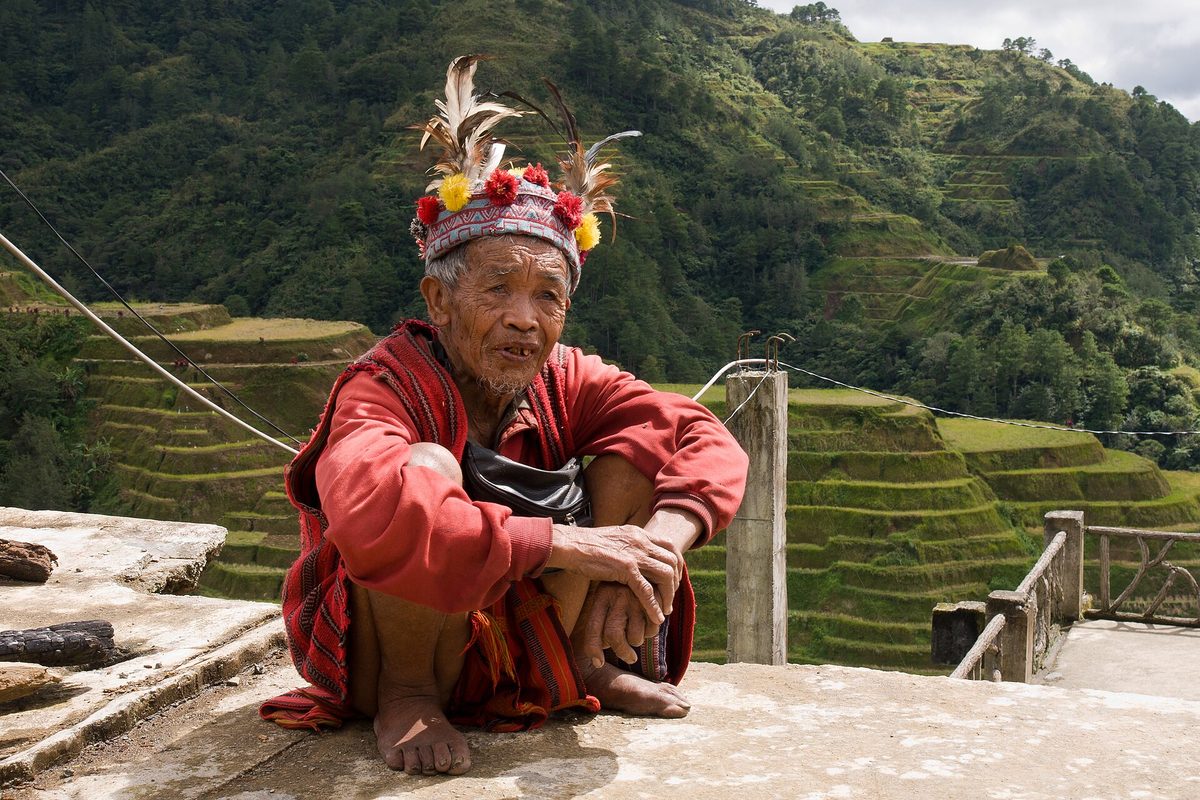
This is the leg that makes the trip a deep-dive. From Manila, take the overnight bus with Coda Lines or Ohayami Trans up to Banaue, departing around 8–10pm and arriving roughly 9 hours later at dawn. It’s about ₱760–980 (around $13–17) for a semi-deluxe or deluxe seat, and yes, you should book the deluxe; the road is winding and the extra legroom matters. You wake up to the Banaue rice terraces, the Ifugao-built amphitheatres of paddy that are often called the eighth wonder of the world. Spend your first morning at the Banaue viewpoint and then arrange a tricycle plus a short hike out to Batad, where the terraces form a near-perfect bowl. Batad is the postcard, and it takes a sweaty hour on foot to reach the village; that effort is exactly why it stays uncrowded.
On day four, transfer onward to Sagada (a few hours by jeepney and bus via Bontoc; the Bontoc–Sagada jeepney is about ₱80 and an hour). Sagada is cooler still, a tiny mountain town known for its hanging coffins, the Sumaguing cave connection traverse, and some of the best brewed coffee in the country. Day five is a slow Sagada morning before you start back toward Manila or onward to your flight. Be realistic here: this northern loop costs you two travel-heavy days, and it is worth every one of them, but only because you have 21 days to spend. On a shorter ten-day trip I’d cut it without hesitation.
Days 6–9: El Nido, Palawan — the lagoon country
Now you fly to El Nido, and there’s a 2026 detail that trips a lot of people up: AirSwift moved its El Nido turboprop flights out of Manila’s NAIA to Clark International Airport, effective 29 March 2026. Clark is about two to three hours north of central Manila by bus or van. That sounds like a hassle, but it fits this route beautifully: Clark is on the way back from the northern mountains, so you can come down from Sagada, overnight near Clark, and fly out the next morning without re-entering Manila’s traffic. The alternative is flying into Puerto Princesa and a five-to-six-hour van transfer north, which I’d only do if AirSwift fares look extortionate.

El Nido is the reason half of you are reading this. The town itself is scruffy and over-built, but you’re not here for the town; you’re here for Bacuit Bay, a maze of limestone islands, hidden lagoons, and water the colour of a swimming pool. Give it a full four nights so you can do two different island-hopping tours with a rest day between. The boat tours are lettered A through D. Tour A (Big Lagoon, Small Lagoon, Secret Lagoon, Shimizu Island) is the famous one and runs about ₱1,200–1,500 per person; Tour C (Hidden Beach, Secret Beach, Matinloc Shrine) is the more dramatic, slightly pricier option at around ₱1,500–1,800. Budget a little extra for the Big Lagoon entrance and kayak (roughly ₱200 plus ₱150). My honest take: do Tour A and Tour C, skip B, and don’t cram all four. Two tours plus a sunset beer at Las Cabanas Beach is the right amount of El Nido.
On your rest day, rent a scooter and ride out to Nacpan Beach, a four-kilometre stretch of sand that still feels half-empty on a weekday. This is the kind of unscheduled day three weeks lets you have and two weeks doesn’t. For a deeper breakdown of the area, our Palawan guide goes tour-by-tour.
Days 10–12: Coron — shipwrecks and the best lake in the country
From El Nido you take the ferry north to Coron, and this is exactly the kind of crossing the buffer rule is built around. Montenegro Lines runs the fast craft between El Nido and Coron, usually a single morning departure from El Nido (recently around 6am, though the timetable shifts, so confirm when you book) and taking roughly 3.5–4 hours, for around ₱1,760–2,200 (about $30–38). It’s a real open-water passage and it gets bumpy; if the sea is rough they cancel, which is precisely why you should never book a same-evening onward flight from Coron. Land in Coron, sleep, and make the next day the active one.
Coron is Palawan’s other half and, for my money, the more spectacular one. Kayangan Lake is the postcard you’ve seen a hundred times: a short steep climb delivers you to that iconic viewpoint over the karst, then down to swim in startlingly clear brackish water (entrance about ₱300).

The standard Coron Tour A loops Kayangan, the Twin Lagoon, CYC Beach, and a shallow shipwreck, for roughly ₱1,500–2,000 per person in a group boat. And then there’s the diving: Coron sits on a fleet of WWII Japanese wrecks, sunk in 1944, now soft-coral-draped and diveable from beginner depths to technical. Even as a casual diver, they were a highlight of my whole month here. Three nights gives you a tour day, a dive day, and a slow day.
The Visayas: how this Philippines itinerary 3 weeks plan finishes strong
From Coron you cross back to the wider world. There’s no useful direct Coron–Cebu flight, so you’ll connect, usually via Manila or a quick Cebu change; book it as one ticket so a delay is the airline’s problem. Give the travel a full day. The Visayas is where the trip downshifts into its gentlest, most swimmable phase, and after Palawan’s logistics that change of pace is welcome.
Days 13–15: Cebu — canyons, sardines, and street food
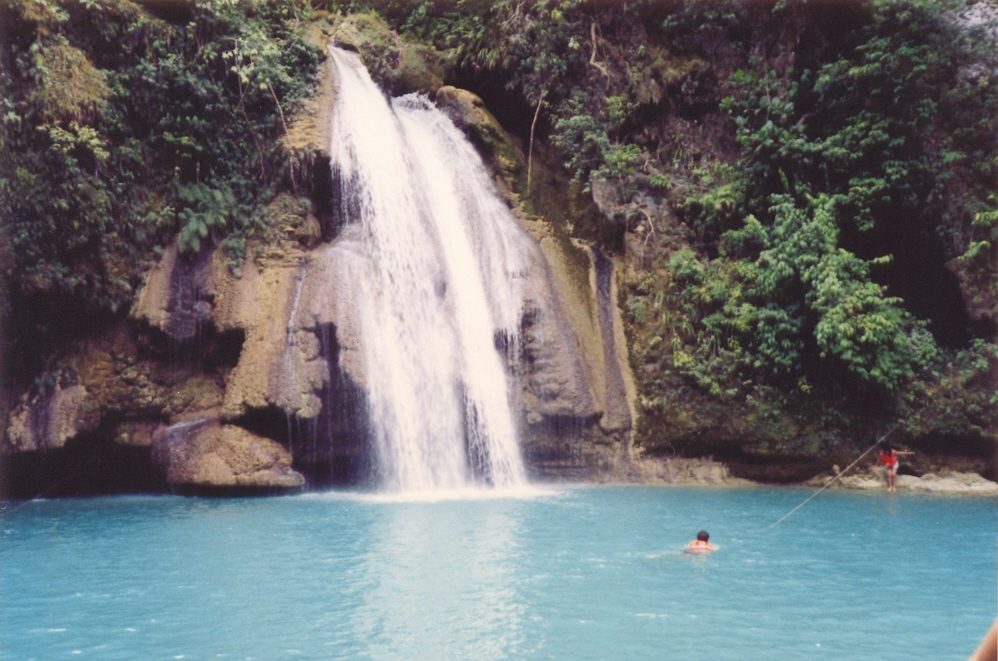
Cebu is the Visayas hub, and skipping straight past Cebu City to the south coast is the right call for this trip. Base yourself around Moalboal or Badian for two or three nights. The two unmissable things here are the Kawasan Falls canyoneering at Badian, a half-day of jumping, sliding, and swimming down a turquoise river gorge (roughly ₱1,500–2,000 with a guide and gear), and the Moalboal sardine run, where you snorkel straight off the beach into a shimmering wall of millions of sardines. The sardine run is free if you have your own mask and one of the best ten-minute experiences in the country.
On Oslob’s whale sharks, since someone always asks: I’d skip it. The animals are baited and crowded daily, and there are wilder ways to see big marine life here. Spend that morning on Osmeña Peak or a Moalboal turtle dive instead. Cebu City earns one evening for street food if your schedule allows, but I’d weight your time toward the coast.
Days 16–18: Bohol — Chocolate Hills, tarsiers, and Panglao
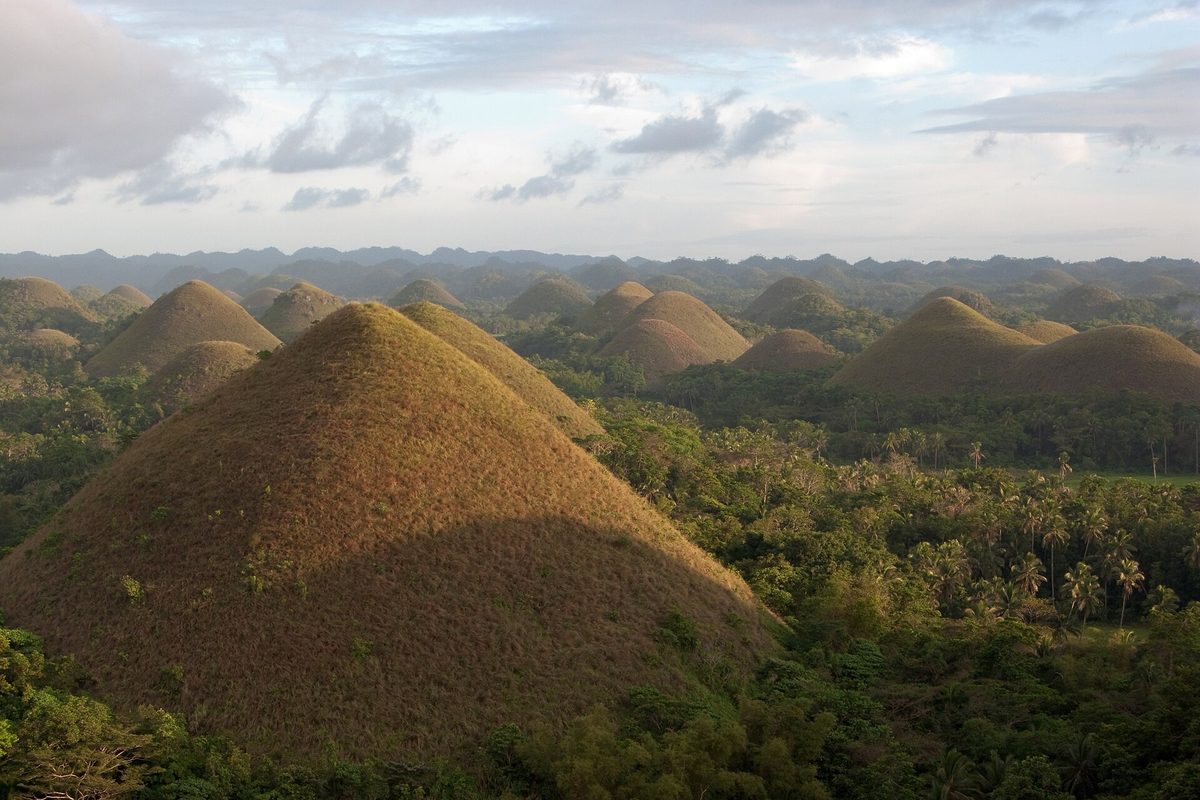
From Cebu City’s Pier 1, the OceanJet fast craft runs to Bohol’s Tagbilaran port roughly 16 times a day, takes about 2 hours, and costs around ₱500–1,600 depending on class. Bohol is the most complete single island on this whole route: it has the geology, the wildlife, and the beach all within a short drive. The Chocolate Hills are a thousand-plus near-identical grass mounds that turn cocoa-brown in the dry season, and the viewpoint near Carmen is genuinely strange and wonderful. Pair them with the Tarsier Sanctuary near Corella, where you can see the saucer-eyed primates in a genuine conservation setting (go here, not the roadside photo-op cages).
Base yourself on Panglao Island, bridged to Bohol, where Alona Beach and the quieter Dumaluan and Momo beaches let you relax between sightseeing. Panglao is also a superb, affordable dive base, with Balicasag Island’s walls a short boat ride out. Three nights covers a countryside day (hills, tarsiers, the Loboc River), a dive or beach day, and an un-rushed exit.
Days 19–20: Siquijor — the slow, slightly spooky finale
End somewhere quiet. Siquijor has a reputation across the Philippines for folk healing and witchcraft, which has kept it gloriously under-touristed, and it’s the perfect decompression chamber before a long flight home. You can reach it on an OceanJet ferry from Tagbilaran (around 2 hours, roughly ₱800–1,200) or, if you route via Negros, from Dumaguete in about an hour (roughly ₱455–754). Note that OceanJet ran a temporary fuel surcharge from March 2026, so verify the current fare when you book.

Rent a scooter (about ₱400–500 a day) and circle the whole island in a relaxed afternoon. Swing on the rope into the tiered turquoise pools of Cambugahay Falls, snorkel the marine sanctuary at Tubod, climb the old century-old balete tree with its fish-spa spring at the roots, and watch the sun drop from a beach bar with a cold Red Horse in hand. Two nights here is the right note to end on. If witchy folklore isn’t your thing, this slot also works as a second Bohol beach block or a hop to one more of the best islands in the region.
Day 21: the buffer day (and why you’ll be glad you kept it)
Your final night belongs in Cebu, near the airport, with nothing booked but a flight out. This is the buffer the whole itinerary has built toward. Ferry back from Siquijor to Dumaguete or Tagbilaran and onward to Cebu the day before you fly, not the morning of. If everything ran on time, you’ve got a free day for shopping, a proper sit-down Filipino meal, and a real bed. If a ferry got cancelled back down the line, this is the slack that absorbs it. I have never regretted this day, and twice I’ve been extremely grateful for it.
Variant 1: the beach-and-dive route (skip the mountains)
Not everyone wants a 9-hour night bus to a cold mountain town, and that’s fair. If your three weeks are about water, build around Palawan, the Visayas, and surf. Fly straight to El Nido, spend 5 nights in El Nido and 3 in Coron, route to Cebu (3) and Bohol (3) as above, and finish with 5 nights on Siargao. It’s the version I’d hand a confident swimmer or diver: wall-to-wall reef, wreck, and wave, no cultural detour, almost no cold weather.
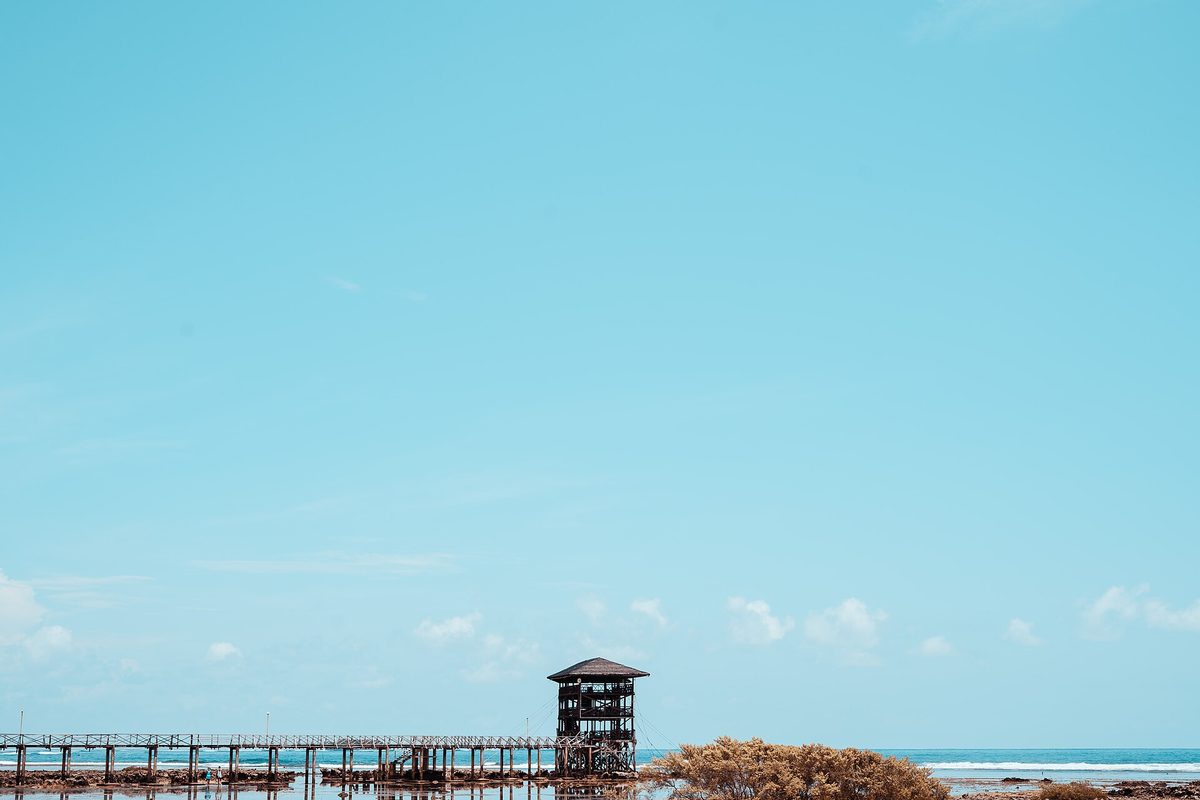
The catch is the Siargao connection, and it’s a real one. There is no reliable direct Manila–Siargao flight in 2026; Philippine Airlines pulled its turboprops from NAIA, and the Clark–Siargao route has been on and off. The dependable way in is via Cebu: a 55-minute Cebgo, PAL Express, or Sunlight Air hop to Sayak Airport, around ₱2,000–5,000 booked ahead. Coming from Bohol that’s an easy back-track through Cebu. Once there, Siargao rewards the effort: Cloud 9’s reef break, the Magpupungko tide pools, and three islands you can hop in a day. Give it five nights, because the vibe here begs you to slow down and most people wish they’d stayed longer.
Variant 2: the south-focused loop (fewest flights, most beach time)
If what you hate most about island-hopping is airports, this is your route. Stay in the central and southern Visayas and string it together with short ferries: Cebu (4) → Bohol (4) → Siquijor (3) → Dumaguete/Negros (2) → back to Cebu, then fly to Siargao (5). You touch a plane maybe twice the whole trip. The ferries are all under three hours, and the rhythm is unbeatable for anyone who finds the flagship pace a touch frantic.
The trade-off is obvious: you miss Luzon and Palawan’s lagoons, the two most iconic things in the country. I’d pick it only for a return visitor who’s already done El Nido, or anyone whose priority is rest over a checklist. For the full transport breakdown, our getting around guide is the companion to this itinerary.
How to book flights, handle the visa, and budget for 2026
Domestic flights. Cebu Pacific, Philippine Airlines, and AirAsia cover the trunk routes; AirSwift and Sunlight Air fill the small-airport gaps like El Nido and Siargao. Book the domestic legs as soon as your dates are firm, because Filipino budget fares climb steeply close to departure and the small turboprop routes sell out. A typical internal hop runs ₱2,500–6,000 (around $43–103) depending on route and how early you book. Crucially, watch which airport a flight uses: post-March 2026, several turboprop services run from Clark rather than Manila’s NAIA, and the two airports are hours apart.
The visa. Citizens of more than 150 countries, including the US, UK, EU, Canada, Australia, and New Zealand, get 30 days visa-free on arrival, which comfortably covers this 21-day trip. You need a passport valid for at least six months and proof of onward travel within 30 days, so have your exit flight booked before you land. If you ever wanted to extend, you can do so at any Bureau of Immigration office, but for three weeks you won’t need to. Most arrivals also fill in the free online eTravel form in the 72 hours before flying; do it in advance to skip a queue.
Budget, honestly. Excluding international flights, a comfortable mid-range version of this trip, with private rooms, the occasional nice resort, daily tours, and domestic flights, lands around ₱90,000–130,000 per person for the three weeks, or roughly $1,550–2,250. Hard-core backpackers doing dorms, public ferries, and street food can do it for well under half that; couples wanting boutique stays and private boats can double it. The Philippines is not as dirt-cheap as it once was, but tours, food, and transport still deliver strong value.
When to go, and how the season reshapes this route
The driest, most reliable window for this whole loop is roughly December to May, with January to April the safest bet for calm seas and the El Nido–Coron crossing. The wet season and the typhoon risk run roughly June through November, peaking around August to October. That doesn’t mean you can’t travel then, plenty of my shoulder-season trips were mostly sunny, but the buffer day stops being optional. If you’re locked into August or September, lean toward the south-focused variant, where short ferries reschedule more easily than the long open-water Palawan crossing. Cross-check the PAGASA forecast before any ferry, and don’t argue with a port authority that cancels a sailing; they cancel for good reasons.
Frequently asked questions
Is 3 weeks enough time to see the Philippines?
Three weeks is enough to see three regions properly and still rest, which is exactly why it’s the deep-dive length; give it a full month of slow travel and you could add a fourth region without speeding up. It is not enough to see the whole country; with 7,000-plus islands, nobody does that in a single trip. The smart move is depth over breadth: pick three areas, like Northern Luzon, Palawan, and the Visayas, and actually slow down in each rather than collecting stamps.
How much does a 3 week trip to the Philippines cost?
Budget roughly ₱90,000–130,000 per person (about $1,550–2,250) for a comfortable mid-range three weeks excluding international flights, covering accommodation, domestic flights, tours, ferries, and food. Backpackers can do it for under half that on dorms and public transport; boutique-and-private-boat travellers can spend double. Domestic flights and island-hopping tours are the biggest controllable costs, so book flights early.
Do I need a visa for the Philippines for 21 days?
For most nationalities, no. Citizens of 150-plus countries, including the US, UK, EU, Canada, Australia, and New Zealand, receive 30 days visa-free on arrival, which covers a 21-day trip with room to spare. You’ll need a passport valid at least six months and proof of onward travel. Fill in the free online eTravel form within 72 hours of arrival to speed up immigration.
What is the best 3 week Philippines itinerary for first-timers?
The flagship Luzon–Palawan–Visayas route in this guide is built for first-timers: it pairs the country’s most iconic sights (Banaue’s terraces, El Nido’s lagoons, Bohol’s Chocolate Hills) with enough buffer that ferry cancellations won’t wreck the trip. If you don’t want the mountain leg, the beach-and-dive variant swaps Northern Luzon for extra time in Palawan and Siargao.
Should I fly or take ferries between the islands?
Both, strategically. Fly the long trunk routes (Manila or Clark to Palawan, Coron to Cebu) to save whole days, and take ferries for the short, scenic hops where they’re comparable in time, like Cebu–Bohol or Bohol–Siquijor. The one rule that matters: never book a flight for the morning after a long ferry, because ferries cancel for weather far more often than planes do.
Is the Philippines safe for tourists?
The regions covered here, Luzon’s north, Palawan, and the Visayas, are considered safe, with the usual big-city care in Manila. Government advisories that flag parts of far-western Mindanao and the Sulu archipelago are nowhere near this route. Watch the sea, not strangers: the biggest real risk here is an over-ambitious ferry schedule in rough weather.
Sources and photo credits
Photo credits
Banaue rice terraces, Ifugao — CEphoto, Uwe Aranas (CC BY-SA 3.0) via Wikimedia Commons
Bacuit Bay, El Nido, Palawan — Vyacheslav Argenberg (CC BY 4.0) via Wikimedia Commons
Kayangan Lake, Coron, Palawan — André Héroux (CC BY 3.0) via Wikimedia Commons
Kawasan Falls, Badian, Cebu — Magalhães (Public domain) via Wikimedia Commons
Chocolate Hills, Bohol — Vyacheslav Argenberg (CC BY 4.0) via Wikimedia Commons
Cambugahay Falls, Siquijor — Lawrence Ruiz (CC BY-SA 4.0) via Wikimedia Commons
Cloud 9, Siargao — Spraken eboy2887 (CC BY-SA 4.0) via Wikimedia Commons
Sources and further reading
Facts in this guide were cross-checked against official and operator sources, including the Philippine Bureau of Immigration for visa rules, the eTravel portal, AirSwift for the Clark–El Nido route change, and PAGASA for weather and typhoon forecasting. Always verify current schedules and fares before you travel; routes and prices change.
About this guide: this is part of PhilippinesTourism.org, an independent, traveller-written resource. The route, prices, and travel times above are based on first-hand trips and were researched and verified July 2026. Inter-island schedules and fares change often, so treat every number as a hedged 2026 estimate and confirm with the operator before booking.