2 Weeks in the Philippines: The Ideal Itinerary
You can see the Philippines in fourteen days, but only if you stop trying to see all of it. The route that works almost every time is Palawan plus the Visayas: fly into Manila or Cebu, spend the heart of the trip in El Nido and Coron, then drop into Bohol, Cebu, or Siargao before flying home. Budget roughly ₱75,000–₱160,000 per person all-in, with two or three domestic flights.
I have run versions of this loop four times, twice with a backpack and twice with a roller bag and a tighter schedule, and the lesson never changes: pick two or three bases and go deep. This guide is the cluster anchor for our full Philippines itinerary guide, so if you have one week or four, start there and come back here for the classic fourteen-day version. Everything below is a real route I would hand a friend, with current 2026 transfers, honest “skip this” calls, and prices hedged for the year.
The 2-week route at a glance
Here is the classic loop in one table. Nights are where you actually sleep, not counting the day you spend in transit. This is the version I default to for first-timers.
| Stop | Nights | Why go | How you get there |
|---|---|---|---|
| Manila (arrival) | 1 | Land, sleep off the jet lag, eat well in MakBC | International arrival into NAIA |
| El Nido, Palawan | 4 | The lagoons, Tour A and C, the big-ticket scenery | Fly Clark–El Nido on AirSwift, or Manila–Puerto Princesa then van |
| Coron, Palawan | 3 | Wreck diving, Kayangan Lake, Twin Lagoon | Fast ferry from El Nido (~3.5–4 hrs) |
| Cebu & Bohol | 4 | Kawasan canyoneering, Chocolate Hills, Panglao beaches | Fly Coron–Cebu, ferry Cebu–Bohol (~2 hrs) |
| Manila (departure) | 1 | Buffer night before your flight home | Fly Cebu or Tagbilaran–Manila |
That is fourteen nights with three internal flights and one ferry. If you would rather swap the Visayas leg for surf, jump to the Siargao variant further down. If you want the deeper regional context for any single stop, our best islands rundown is the companion piece.
A frank word on pacing
Two weeks in the Philippines sounds like a lot. It is not, because inter-island flights quietly eat days. A “quick hop” from Coron to Cebu is a 20-minute trike to the airport, a check-in window, the flight, a wait for bags, and a transfer at the other end. Half a day, gone, and you have not even unpacked. Do that four or five times and you have burned three of your fourteen days sitting in departure lounges.
So the single most important decision you will make is restraint. Two or three bases, full stop. I have watched people try to bolt Banaue’s rice terraces, Siquijor, Boracay, and Palawan into one fortnight, and they come home exhausted, having seen airports. Pick a region, learn it, and leave the rest for next time. For the mechanics of moving between islands, our guide to getting around the Philippines goes deeper than I can here.
The classic 14-day route: a philippines itinerary 2 weeks plan, day by day
This is the route I keep coming back to. It front-loads Palawan, which has the scenery people fly across the world for, then gives you a Visayan change of pace before you head home. Think of it as the default 14-day template you adapt, not a rigid script. Costs are per person and hedged for 2026; convert at roughly ₱58 to the US dollar.
Day 1 — Arrive Manila
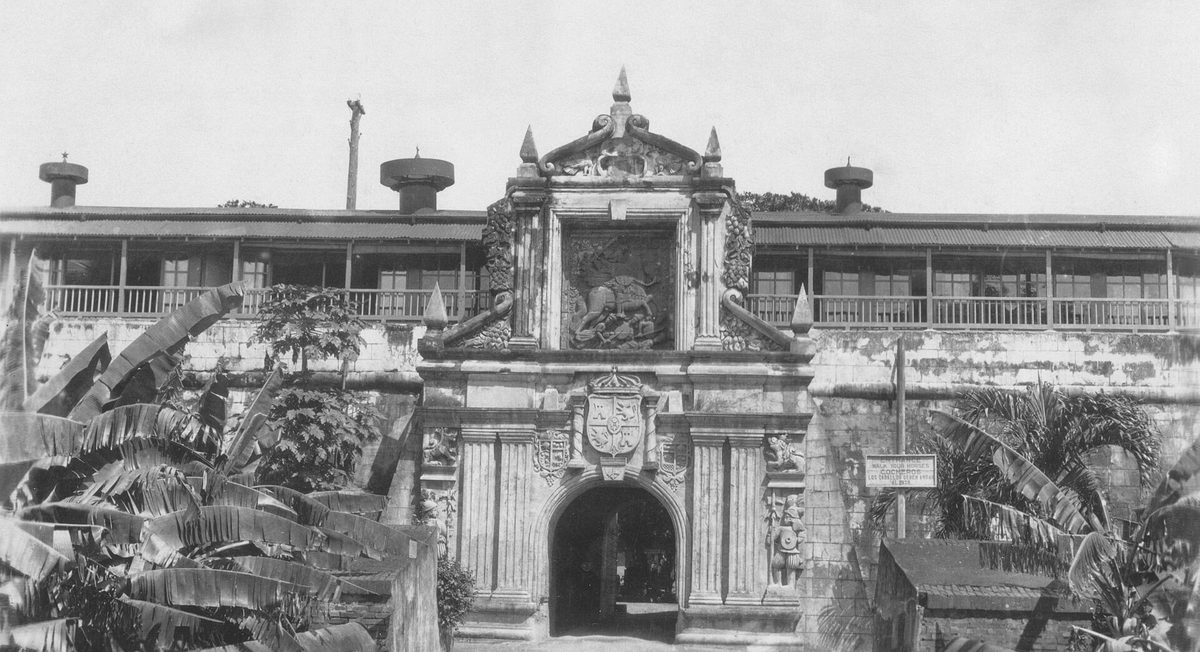
Land at NAIA, clear immigration (most nationalities get 30 days visa-free on arrival, extendable; you must complete the free online eTravel registration before you fly), and do nothing ambitious. Immigration, the taxi queue and hotel check-in all happen in English — English is spoken almost everywhere in the Philippines, which makes this an unusually gentle place to land jet-lagged. Sleep near the airport or in Makati. If you land early and have energy, walk the old stone streets of Intramuros for a couple of hours. I would not build a whole Manila stay into a two-week trip, but one night here saves you from a brutal same-day connection. A decent midrange room runs ₱3,500–₱6,000 ($60–$105). For a proper city plan, see our Manila guide.
Days 2–5 — El Nido, Palawan
This is the heart of the trip. Here is the change that trips up everyone booking in 2026: AirSwift moved its El Nido flights out of Manila NAIA to Clark (CRK) on 29 March 2026. Clark is about two hours north of central Manila, so if you fly AirSwift you either overnight near Clark or build in a generous transfer. The cheaper, slower alternative is to fly Manila to Puerto Princesa (multiple carriers, ~₱2,000–₱4,000) and take a van north to El Nido, a five-to-six-hour ride that is honestly a slog. AirSwift now sits under Cebu Pacific, and a direct Cebu–El Nido route has opened up too, which is worth knowing for the loop’s shape.
Once you are in town, El Nido is all about the water. Do Tour A (Big Lagoon, Small Lagoon, Secret Lagoon) and Tour C (Helicopter Island, Hidden Beach, Matinloc Shrine). Group tours run ₱1,200–₱1,500 per person plus a one-time ₱200 eco fee and a ₱200 national-park fee; lunch is included. Insist on an early start, because dozens of boats leave the same beach and the lagoons get crowded by mid-morning. I would skip Tour B; it is the weakest of the four and you will not miss it. If your budget stretches, a private boat for the day (₱7,000–₱10,000 split among your group) lets you linger in a lagoon after the crowds leave, and it is worth every peso. Read our dedicated El Nido guide before you pick tours.
Days 6–8 — Coron, Palawan
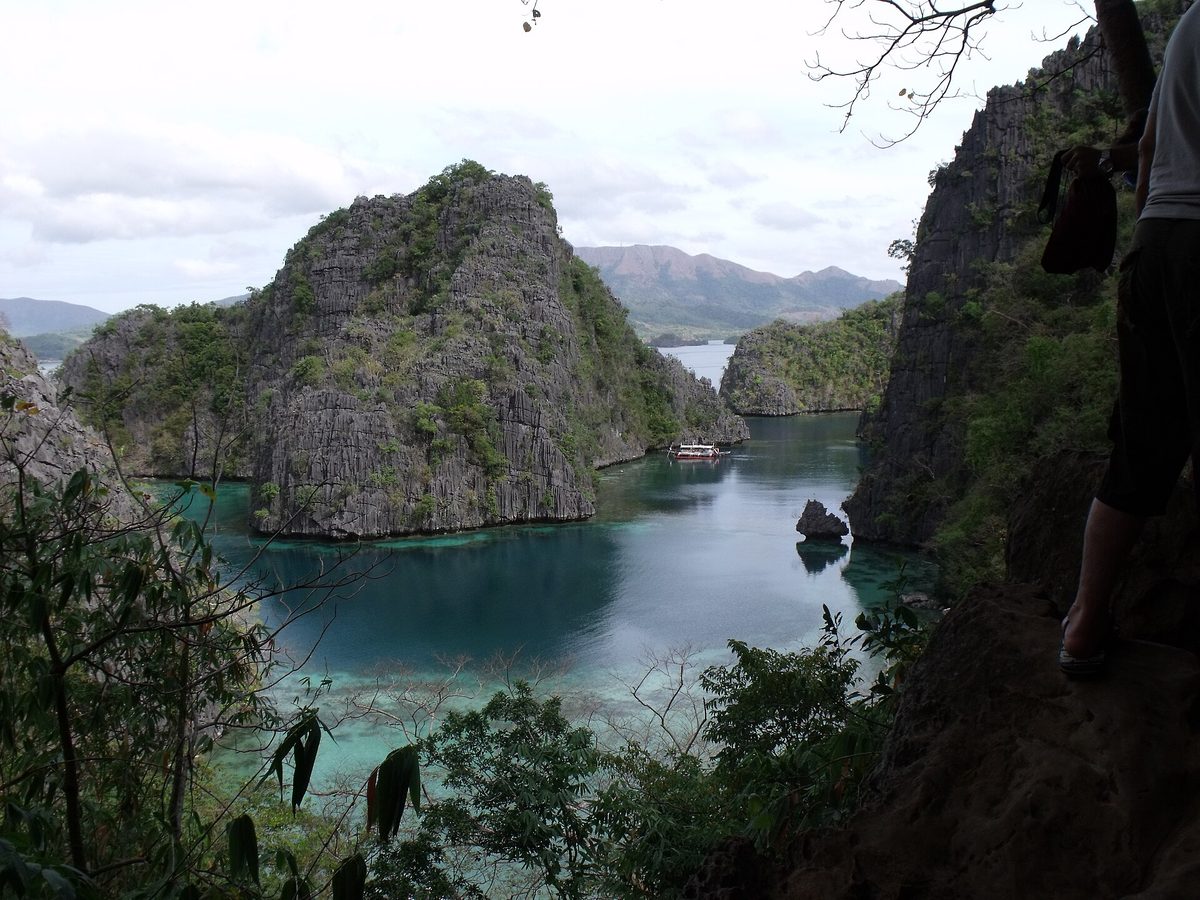
Get to Coron by fast ferry from El Nido: Montenegro Lines and Jomalia Shipping both run the crossing in around 3.5 to 4 hours for roughly ₱1,700–₱2,500 depending on operator and seat class. Book a day or two ahead in peak season, and know that rough water can stretch the trip or cancel it outright; never put the ferry on the same day as an international flight. Coron’s draw is different from El Nido’s. This is where you come for Kayangan Lake (that postcard viewpoint over the karst), Twin Lagoon, and some of the best accessible WWII wreck diving in the world. A standard island-hopping day tour is ₱1,200–₱1,800; a two-tank dive trip runs ₱4,000–₱6,000. Coron town itself is scruffy and functional, which I actually like; you are not here for the town. Our Coron guide has the dive operators I trust.
Day 9 — Fly to Cebu, ferry to Bohol
This is your big transfer day, so keep expectations low. Fly Coron (Busuanga) to Cebu on Philippine Airlines (from around ₱2,200–₱4,500; not every day has a direct, so check schedules early). From Cebu City’s Pier 1, fast ferries to Tagbilaran, Bohol leave every 30 to 45 minutes, take about 2 hours, and cost ₱800–₱1,200 (OceanJet and SuperCat are the reliable operators). Sleep on Panglao, the small island joined to Bohol by a bridge, where Alona Beach has the dive shops and restaurants. If the flight timing is ugly, just overnight in Cebu and ferry across first thing the next morning; do not stress a tight same-day connection.
Days 10–11 — Bohol & Panglao
Bohol is the easy, green, family-friendly counterpoint to Palawan’s drama. Rent a scooter or hire a van-and-driver (around ₱3,000–₱4,500 for a full day) and do the countryside loop: the Chocolate Hills at Carmen, the Tarsier Sanctuary near Corella (go to the legitimate conservation one, not the roadside cages), and the Loboc River. On Panglao, the snorkeling and diving off Balicasag Island is genuinely world-class, a 20-minute boat ride from Alona. I will be honest about the Chocolate Hills: the famous Carmen viewing complex is a quick photo stop and can feel overrun, so I keep that expectation modest and let Balicasag’s reef be the highlight. Full details in our Bohol guide.

Days 12–13 — Cebu (Kawasan & the south)
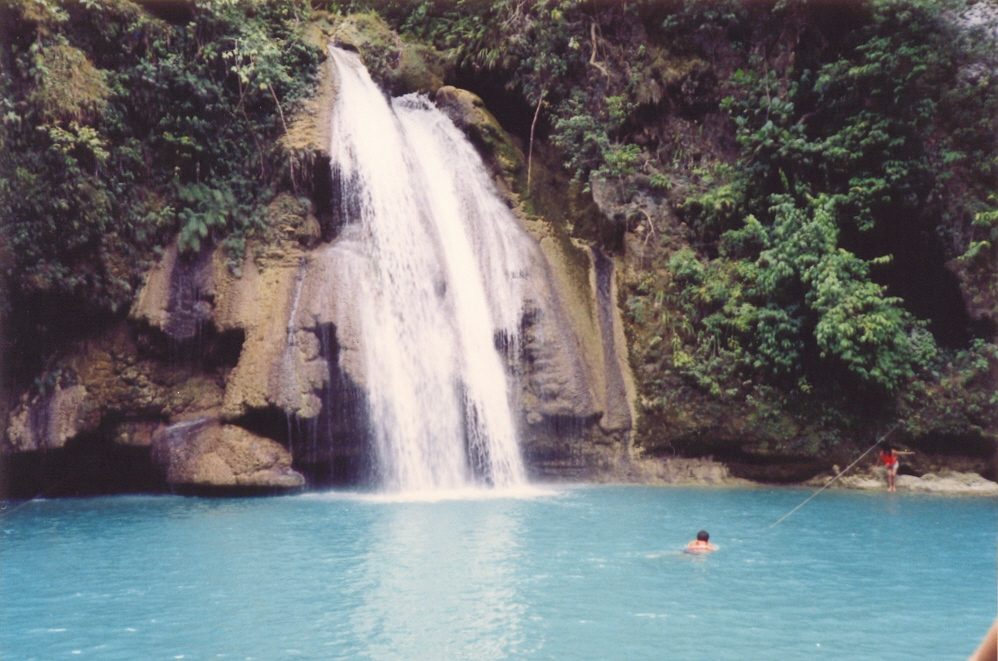
Ferry back to Cebu and base yourself in the south of the island around Moalboal or Badian for two nights, rather than in Cebu City. The headline experience is Kawasan Falls canyoneering: three to five hours of jumping off cliffs into impossibly turquoise pools, sliding down natural chutes, and swimming through a gorge. It runs ₱1,200–₱2,100 including guide, helmet, and life vest, and it is the most fun you can have for the money in the Visayas. Moalboal also has the famous sardine run, a swirling baitball you can snorkel to straight off Panagsama Beach for free. Our Cebu guide covers the whale-shark question at Oslob, which I deliberately leave off this route on welfare grounds.
Day 14 — Back to Manila, fly home
Fly from Cebu (or Tagbilaran) back to Manila for your international connection. If your flight home leaves in the evening, you can squeeze a last half-day; if it is a red-eye, give yourself a buffer night in Manila rather than gambling on a same-day domestic-to-international transfer through NAIA, which is not where you want to be cutting it fine. That buffer night is the cheapest insurance on the whole trip.
Three route variants (pick the one that fits you)
The classic loop above is my default, but it is not the only good answer. Here are three variants I have actually run or sent friends on, each tuned to a different kind of traveller.
Variant 1 — Classic: Palawan + Visayas
This is the day-by-day plan above, and the one I recommend for most first-timers. Manila (1) → El Nido (4) → Coron (3) → Bohol/Cebu (4) → Manila (1). It balances the showstopper scenery of Palawan with the gentler pace and easy logistics of the Visayas, and the transfers are all proven. If you only read one section, read this one. The supporting deep-dive lives in our Palawan itinerary.
Variant 2 — Beaches & diving
If your trip is really about being in the water, cut a city and add beach time. Manila (1) → Coron (4, diving the wrecks) → El Nido (4) → Boracay (4) → Manila (1). Coron’s wrecks and Apo Reef put it at the top of the country’s dive map, and Boracay, for all its reputation as a party island, still has the best white-sand beach in the Philippines and easy connections home. You fly Coron or El Nido to Caticlan (the gateway airport for Boracay) via Manila or Cebu. This swap trades Bohol’s countryside for more time horizontal on sand. See our Boracay guide for the lay of the land.
Variant 3 — Surf & off-beat: Siargao
For confident travellers who want fewer crowds and a surf-town rhythm, swap the Visayas leg for Siargao. Manila (1) → El Nido (4) → Coron (3) → Siargao (4) → Manila (1). The catch is the connection: there is no direct Manila NAIA–Siargao flight. You route through Cebu (about a one-hour hop, ₱1,200–₱2,500), and Philippine Airlines now also runs Manila-area Siargao flights out of Clark rather than NAIA. Siargao is for surfing Cloud 9, motorbiking to the Magpupungko rock pools, and island-hopping out to Naked, Daku, and Guyam. It is the slowest, most laid-back leg you can pick. Our Siargao guide has the surf-season timing.

What two weeks actually costs in 2026
Here is a realistic per-person budget for the full fourteen days, excluding your international flights to and from the Philippines. I have split it into three styles. These are hedged 2026 estimates; convert at roughly ₱58 = $1, and treat them as “around,” because peak-season pricing and the peso both move.
| Category | Backpacker | Midrange | Comfort |
|---|---|---|---|
| Accommodation (13 nights) | ₱13,000 | ₱39,000 | ₱91,000 |
| Domestic flights (2–3) | ₱9,000 | ₱13,000 | ₱18,000 |
| Ferries & land transfers | ₱5,000 | ₱6,500 | ₱8,000 |
| Tours, dives & fees | ₱9,000 | ₱15,000 | ₱22,000 |
| Food & drink (14 days) | ₱11,000 | ₱21,000 | ₱33,000 |
| Buffer / incidentals | ₱3,000 | ₱5,500 | ₱9,000 |
| Total (per person) | ~₱50,000 ($860) | ~₱100,000 ($1,725) | ~₱181,000 ($3,120) |
A few honest notes on these numbers. Backpackers sharing dorms and eating at carinderias (local eateries) can comfortably come in under the figure above; couples splitting private rooms land squarely in the midrange column. The single biggest lever is how many flights you take, which is one more reason to keep your bases few. Book domestic flights two to three months out on Cebu Pacific, Philippine Airlines, or AirSwift; same-week fares can triple. For a fuller breakdown by category, our trip costs and budget guide is the place to go.
When to run this route
Timing matters more here than in many countries, because the ferries and small-plane legs are weather-dependent. The dry season runs roughly November to April, and the sweet spot is December through February, when seas are calmest and humidity is bearable; March and April are hot and busy. The wet season (June to October) brings cheaper prices and emptier lagoons, but also the risk of typhoons that can ground your El Nido–Coron ferry for a day or two, so build slack into a rainy-season trip. Note that the Visayas and Palawan do not always share weather with Luzon on the same week, so check the regional forecast for your actual stops. Our best time to visit guide breaks it down month by month.
Who each route suits
One more way to choose, by traveller type rather than by region. First-timers and couples should run the classic Palawan-plus-Visayas loop; it is the most forgiving and the scenery does the heavy lifting. Divers want the beaches-and-diving variant, with Coron’s wrecks as the centrepiece. Surfers and slow travellers belong on the Siargao variant, where the whole point is to find one good break and a hammock and stay put. Families with younger kids should lean on Bohol and Panglao, where the swimming is calm, the drives are short, and a tarsier sighting reliably beats any lagoon for a six-year-old. If island-hopping boat days are the part you are most excited about, our guide to island hopping is the natural next read.
Booking and transfer tips I wish I had known sooner
A few hard-won logistics that will save you money and stress on this route. Book domestic flights early. Cebu Pacific and Philippine Airlines release seat sales months out, and the gap between a fare booked in advance and one bought the same week can be triple the price; the small AirSwift planes into El Nido and Coron sell out fastest of all in peak season. Travel light. Those turboprops enforce strict checked-baggage limits, often 10 to 15 kilos, and excess fees add up across three flights, so a single carry-on-friendly bag genuinely changes the trip.
Never schedule a ferry or domestic flight on the same day as your international departure. The El Nido–Coron crossing in particular can be delayed or cancelled by sea conditions, and a missed connection out of the country is an expensive mistake. Build a buffer night in Manila or Cebu instead. Carry cash. Card acceptance is patchy once you leave the cities; island tour operators, trike drivers, and small guesthouses want pesos, and ATMs in places like El Nido run dry or cap withdrawals. Pull out cash in Manila or Cebu before you island-hop. And register for eTravel within 72 hours of both your arrival and your departure; it is free, takes a few minutes online, and you will be asked for the QR code at the airport.
Tight on time? A 10-day version
If you only have ten days rather than fourteen, do not try to compress the full loop; drop a stop instead. The same logic runs all the way down to one week in the Philippines, where you are really choosing a single region and staying put. The cleanest cut is to skip either Coron or the Visayan leg. Manila (1) → El Nido (4) → Coron (3) → Manila (2) keeps the whole trip inside Palawan and removes the long Coron-to-Cebu transfer day entirely, which is the single biggest time sink on the classic route. Alternatively, Manila (1) → Cebu & Bohol (5) → Siargao (3) → Manila (1) skips Palawan altogether for a Visayas-and-surf trip with shorter, cheaper flights. Either way, ten days rewards going narrow even more than fourteen does.
Frequently asked questions
Is 2 weeks enough for the Philippines?
Yes, for two or three regions done properly. Two weeks is enough to combine Palawan with one Visayan island (Cebu, Bohol, or Siargao) at a relaxed pace, with time to actually swim and dive rather than just transit. It is not enough to “see the Philippines” as a whole; the country is vast and the inter-island legs are slow. Pick a loop, go deep, and save the north or the far south for a return trip.
What is the best 2-week itinerary for first-timers?
The classic loop: Manila for a night, four nights in El Nido, three in Coron, four split between Cebu and Bohol, then a buffer night in Manila before flying home. It pairs Palawan’s headline lagoons with the gentler pace and easy ferries of the Visayas, uses only two or three domestic flights, and every transfer on it is well-trodden. It is the route I hand to anyone visiting the Philippines for the first time.
How much does 2 weeks in the Philippines cost?
Excluding international flights, budget around ₱50,000 ($860) as a careful backpacker, about ₱100,000 ($1,725) for comfortable midrange travel, and roughly ₱180,000 ($3,120) or more for a comfort-level trip with nicer resorts and private boats. Domestic flights and tours are the swing factors. Booking flights two to three months ahead and keeping to two or three bases is what keeps the total down.
Do I need to fly from Clark for El Nido now?
If you fly AirSwift, yes. Since 29 March 2026, AirSwift’s El Nido flights leave from Clark (CRK), about two hours north of central Manila, not from NAIA. Plan for that transfer or overnight near Clark. Your alternatives are to fly Manila to Puerto Princesa and take a five-to-six-hour van north, or, now that AirSwift is part of Cebu Pacific, to fly into El Nido from Cebu instead and reshape your loop around that.
Is there a direct flight from Manila to Siargao?
Not from Manila’s NAIA airport. The reliable way to reach Siargao is to connect through Cebu, a one-hour hop with several daily flights for around ₱1,200–₱2,500. Philippine Airlines also runs a direct Manila-area Siargao flight, but out of Clark rather than NAIA. Factor the connection into your day; Siargao is the most time-consuming of the variants to reach, which is part of why it stays quieter.
What is the best time of year for this route?
December to February is the sweet spot: calm seas for the El Nido–Coron ferry, lower humidity, and reliable island-hopping weather. November, March, and April still work, with March and April being hot and crowded. The June-to-October wet season is cheaper and quieter but carries typhoon risk that can cancel ferries and small flights, so leave buffer days if you travel then.
Sources and photo credits
Photo credits
Big Lagoon, El Nido, Palawan — Fabio Achilli (CC BY 2.0) via Wikimedia Commons.
Kayangan Lake, Coron, Palawan — André Héroux (CC BY 3.0) via Wikimedia Commons.
Chocolate Hills, Bohol — Vyacheslav Argenberg (CC BY 4.0) via Wikimedia Commons.
Kawasan Falls, Badian, Cebu — Magalhães (CC0) via Wikimedia Commons.
Cloud 9, Siargao — Lokesh Ramachandra (CC BY-SA 4.0) via Wikimedia Commons.
Fort Santiago, Intramuros, Manila — anonymous (CC0) via Wikimedia Commons.
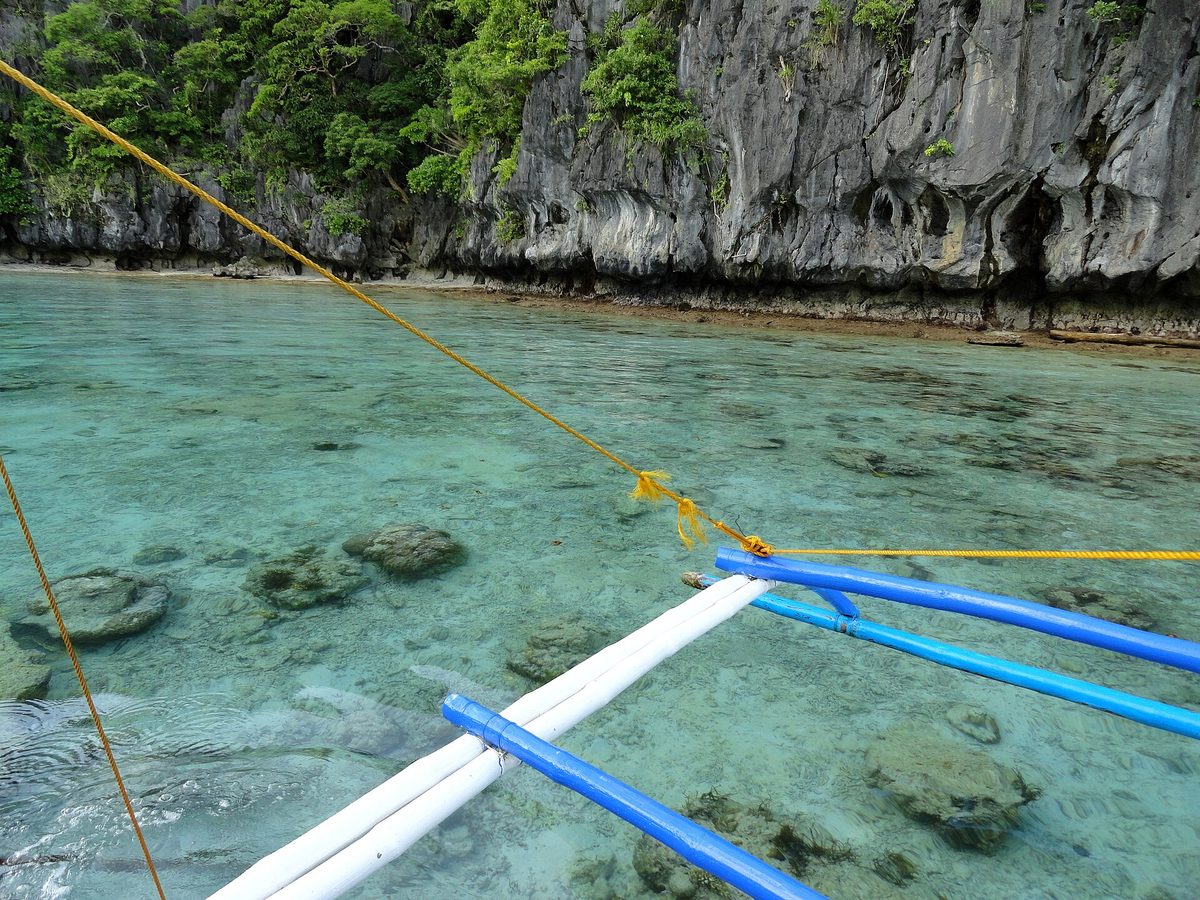
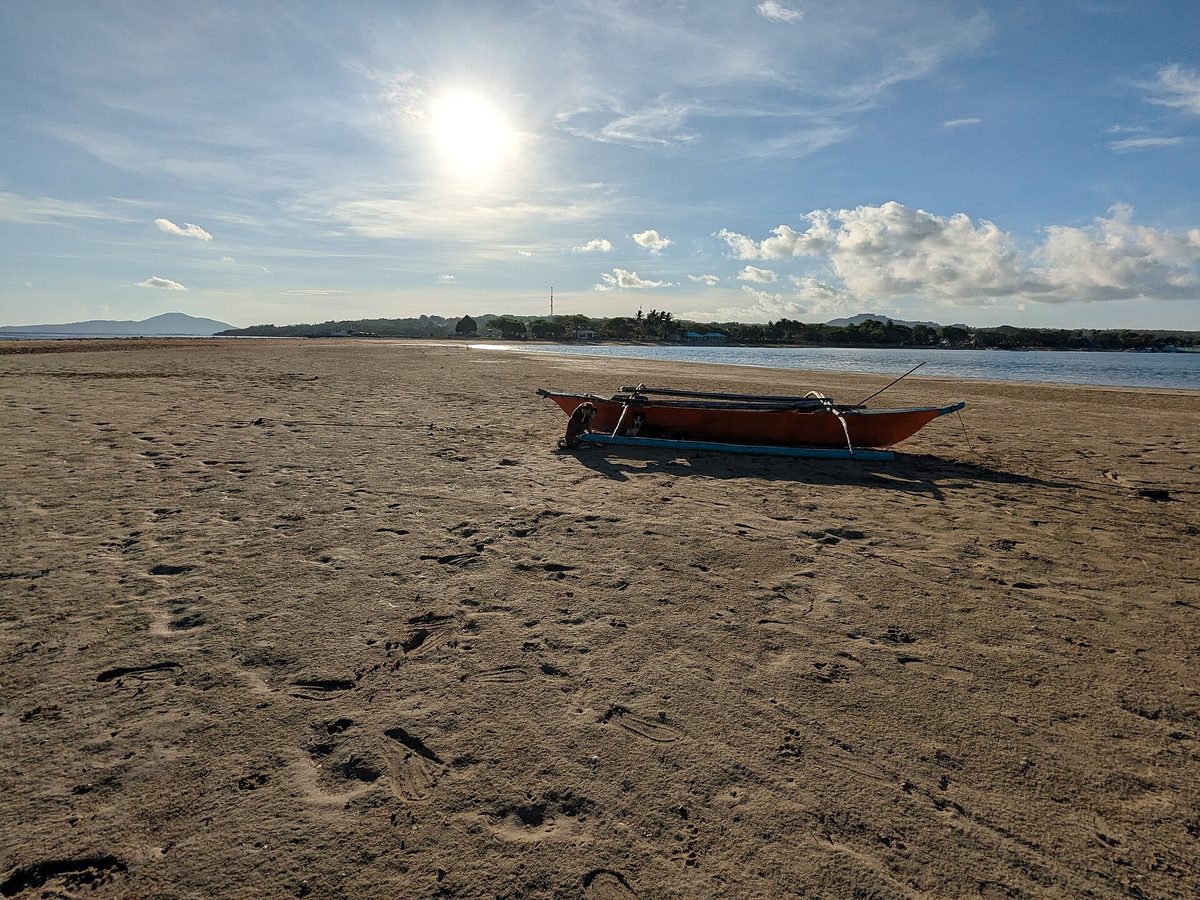
Bangka outriggers, Palawan — LuzViMindaLife (CC BY-SA 4.0) via Wikimedia Commons.
Sources and further reading
AirSwift for current El Nido and Coron flight schedules out of Clark; Philippine Airlines for domestic routes and fares; the Philippine Bureau of Immigration for visa-free entry and extension rules; and PAGASA for the seasonal and typhoon forecast before you lock in wet-season ferry days.
About this guide: this is part of PhilippinesTourism.org, an independent, traveller-written resource. Routes, transfers, and prices are drawn from first-hand trips and cross-checked against airline, ferry, and government sources; treat 2026 costs as “around” and verify perishable details before you book; verified July 2026.