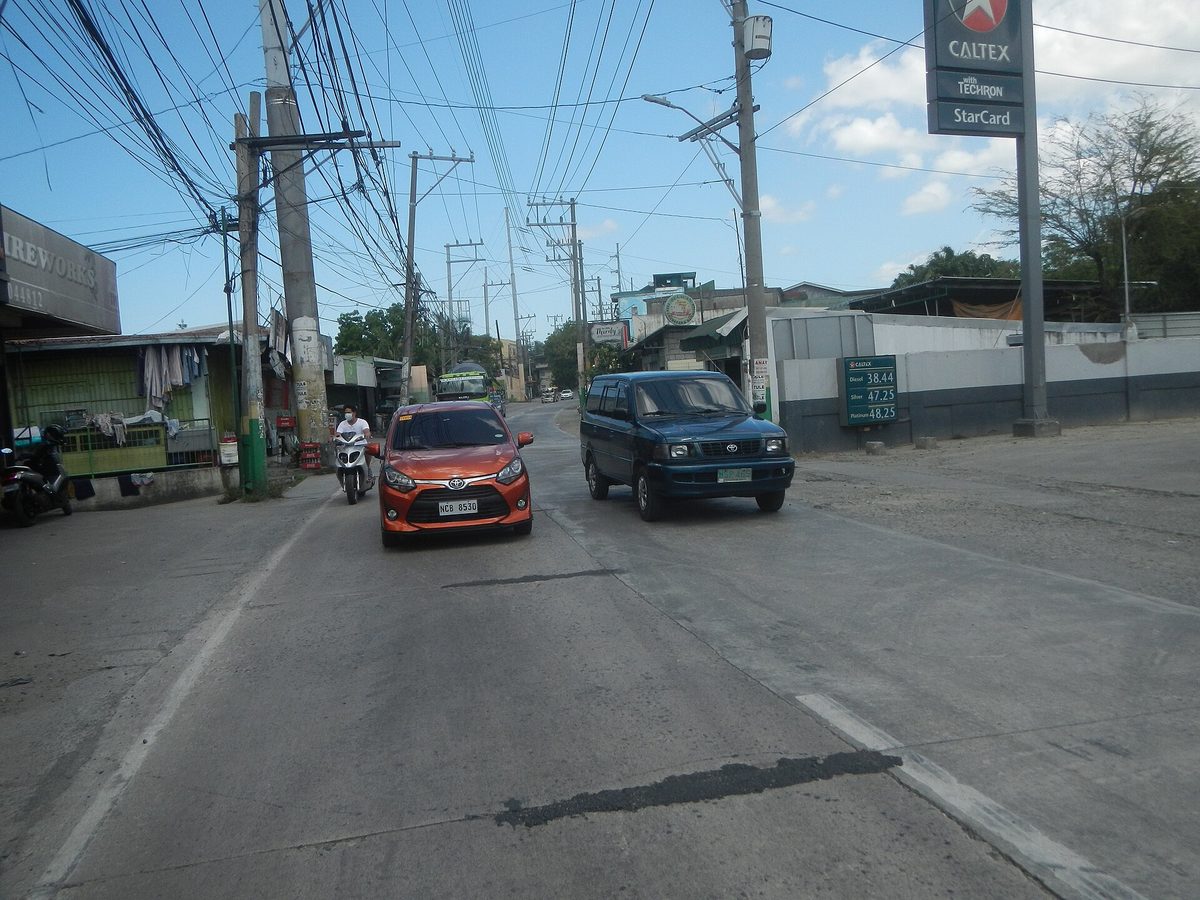
Renting a Scooter or Motorbike in the Philippines
A scooter is the single best way to unlock most Philippine islands, and on places like Siargao and Siquijor it turns a fiddly, tricycle-dependent trip into a free-roaming one. But the honest picture matters: you legally need a motorcycle-endorsed license, helmets are mandatory, and the roads are unforgiving. Here is how to do it right.
The quick verdict, island by island
Riding a two-wheeler here is a different experience from one island to the next. Some islands are made for it. A couple of cities will get you killed. Here is the at-a-glance version before we get into the detail.
| Destination | Rough daily rate (2026) | Road difficulty | Worth it? |
|---|---|---|---|
| Siargao | ~₱350–500 ($6–8) | Easy–moderate; some sandy/gravel side roads | Yes — the classic scooter island |
| Bohol (Panglao & mainland) | ~₱400–600 ($6–10) | Moderate; good main roads, busy stretches | Yes, for the interior loop |
| Moalboal / south Cebu | ~₱400–500 ($6–8) | Moderate; coastal highway has trucks | Yes, with care on the highway |
| Palawan (El Nido / Port Barton) | ~₱500–700 ($8–11) | Hard; long rough/unpaved sections | Only if you are a confident rider |
| Camiguin | ~₱400–600 ($7–10) | Easy; one quiet ring road | Yes — possibly the easiest island to ride |
| Siquijor | ~₱300–500 ($5–8) | Easy; small, lightly trafficked loop | Yes — ideal beginner island |
| Manila / Cebu City | n/a | Brutal traffic, aggressive drivers | No — skip it, use Grab |
Rates are hedged and move with season, bike model and how long you rent; treat them as a 2026 starting point, not a quote. If you want the bigger picture on how these islands connect, see our guide to getting around the Philippines.
Do you actually need a license? Yes — here is the real rule
This is the question everyone fudges, so let me be direct. To legally ride any motorized two-wheeler in the Philippines as a foreign visitor, you need a valid driver’s license from your home country that includes a motorcycle classification or endorsement. A plain car license does not cover you, not even for a 110cc scooter. There is no “it’s only a small scooter” exemption in the law — the same rule applies to a 50cc moped and a 400cc motorcycle.
That home-country license is valid for driving here for up to 90 days from your date of arrival. After 90 days you are expected to convert to a Philippine license through the Land Transportation Office (LTO). For almost every tourist, the 90-day window is all you will ever need.
Do you need an International Driving Permit?
Whether you need an International Driving Permit (IDP) on top of your home license depends on where your license was issued, so ask your rental shop before you ride, and I strongly recommend carrying one anyway. If your license is not in English, an IDP (or an embassy-certified translation) is effectively required, because checkpoint officers need to read what categories you are licensed for. An IDP is cheap, takes minutes to get from your home automobile association before you fly, and removes an entire category of hassle. Crucially, it is an accompaniment to your real license, not a replacement — carry both.
What checkpoints actually ask for
In practice, enforcement is lighter than the letter of the law, but do not bank on that. Carry your driver’s license and the bike’s registration papers, and make sure everyone on the bike is wearing a helmet. Safety checkpoints are even quicker — if you are wearing a helmet and not three-up on a Beat, you are usually waved on. Be polite, have your documents ready, and most stops last under a minute. The risk if you are riding without the right license is real, though: a fine, possible impounding of the bike, or pressure to pay your way out of it. Riding unlicensed is not a clever shortcut.
Renting a scooter in the Philippines: what it costs in 2026
Two-wheeler rentals here are genuinely cheap, which is half the appeal. Terms vary from shop to shop, so ask when the bike is due back and whether there is a better rate for a multi-day or weekly hire. Based on current shop rates across the main islands, here is roughly what you will pay per day in 2026:
- Honda Beat 110cc — ~₱300–400 ($5–6). The ubiquitous workhorse; light and easy, but underpowered two-up.
- Honda Click / Yamaha Mio 125cc — ~₱400–600 ($7–10). The sweet spot for most riders: enough poke for hills and a passenger.
- Honda PCX / Yamaha NMAX 150–160cc — ~₱600–800 ($10–13). Bigger, comfier for long days, heavier to park.
- Honda ADV 160cc — ~₱700–800 ($11–13). Mini adventure styling, handy on rough roads.
Touristy hotspots and islands with only a couple of shops charge more; competitive towns are cheaper. Weekly rates often work out to roughly two-thirds of the daily price, and month-long hires drop further still — worth asking if you are staying a while.
Which scooter is right for you?
For most travelers the answer is a 125cc automatic — a Honda Click or Yamaha Mio. It is light enough to manage if you are a nervous rider, has enough power to carry a passenger and your day bag up a hill, and is the most common bike so shops keep them well stocked. Solo and traveling light? A Honda Beat 110cc is cheaper and perfectly fine on flat islands like Siargao or Siquijor. Two of you with luggage, or planning long daily distances and rough roads? Step up to a 150–160cc PCX, NMAX or ADV; the extra power and comfort earn their keep over a full day in the saddle, even if they are heavier to wheel around at parking time. Whatever you pick, remember that loading it with a second rider and bags strains a small engine, so be honest about the weight you will carry before you choose.
Deposits, fuel and the small print
Expect a deposit, usually one of two forms: a cash bond of around ₱2,000–5,000, or your passport held until you return the bike. Do not leave your passport. Offer the cash bond instead; a held passport is a hostage if a dispute arises over a scratch. Before you ride off, ask the shop to note the fuel level and tell you how full the tank should be on return (petrol runs roughly ₱80–85 a litre in 2026, and a 125 sips it). On smaller islands you will also see roadside vendors selling fuel by the litre from glass bottles; fine in a pinch, slightly pricier than a station.
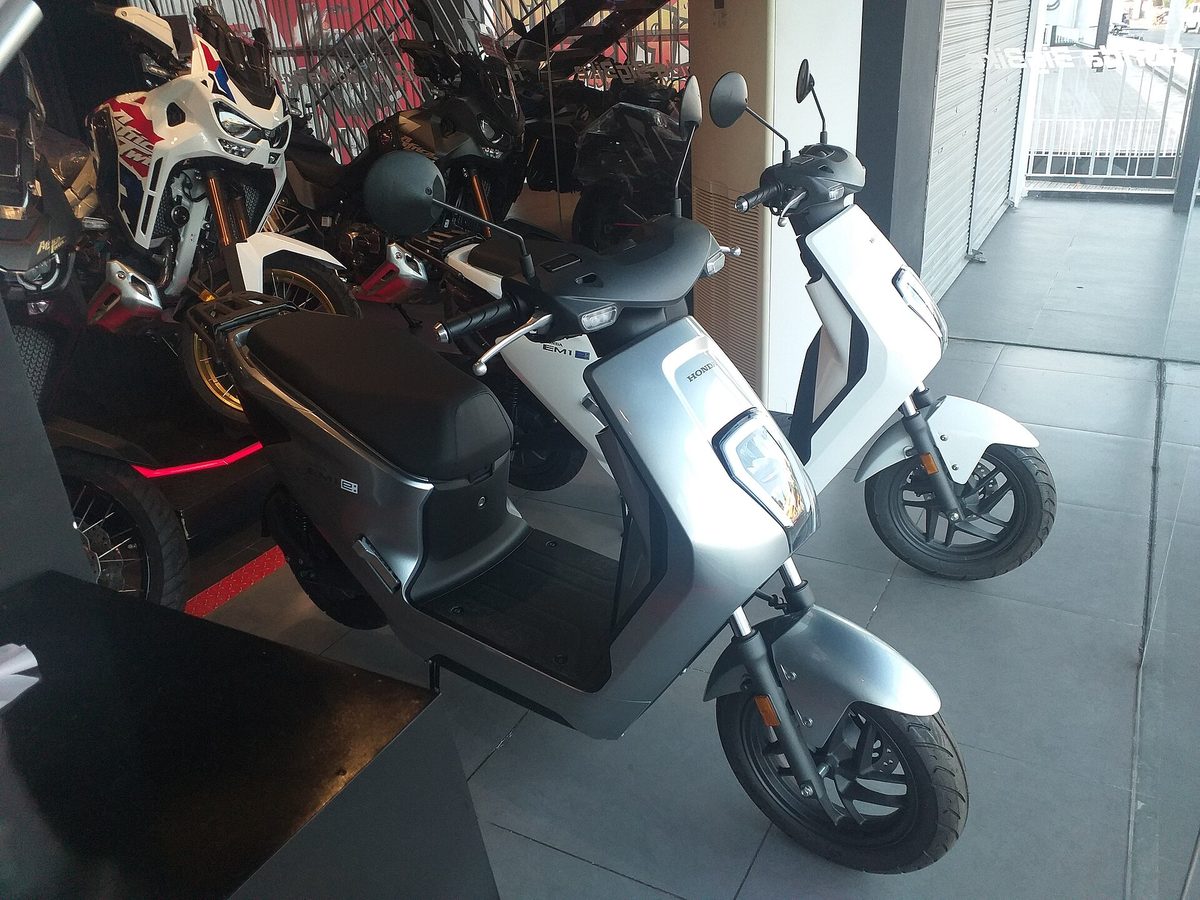
How to rent safely (so you don’t get a death-trap)
The condition of the specific bike matters far more than the brand on the tank. A neglected scooter rides badly and brakes worse, and on Philippine roads that is not a small thing. Spend ten minutes before you hand over any money.
- Rent from a dedicated shop where you can. Their bikes are generally better maintained than the one your guesthouse keeps out back. Check recent Google reviews.
- Test-ride it round the block. A good shop will not hesitate. Feel the brakes — both should stop the bike firmly — and listen for anything rough on start-up.
- Check tyres and lights. You want real tread and proper pressure for wet, gravelly roads. Test headlight, high beam, indicators, brake light and horn (you will use the horn constantly).
- Confirm the helmet. It should carry a PS or ICC sticker to be road-legal, and the chin strap must actually fasten. Ask for the most enclosed helmet they have, and bring your own if you are fussy — local “full-face” helmets often lack a chin bar.
- Photograph everything. Before you ride off, take date-stamped photos and a slow video of the whole bike, calling out every existing scratch and dent to the owner so you are both agreed on its condition. This is your single best defense against a bogus damage charge at return.
- Find the registration (OR/CR) papers — usually under the seat. You need them at checkpoints.
Riding conditions and the honest safety talk
I am not going to romanticize this part. Road crashes are a leading cause of serious injury and death for visitors in the Philippines, and tourist scooter fatalities on islands like Siargao are a grim regular occurrence in the news. The freedom is real, and so is the risk. Ride accordingly.
The roads themselves are a patchwork: a glassy new stretch of tarmac can end without warning in dirt, potholes or loose gravel, sometimes within the same kilometre. There is constant roadworks. Dogs, chickens, children and overtaking buses appear from nowhere. Rain turns painted lines and packed earth slick in seconds, and the wet season (roughly June to November in much of the country) means sudden downpours. My rules, learned the easy way by watching others learn the hard way:
- Go slow, especially into corners. Most wipe-outs happen when someone hits gravel mid-turn and loses the front. This is not a race.
- Wear the helmet, properly fastened, every single time — it is the law (more below) and it is the difference between a scare and a tragedy. Closed shoes too, never flip-flops.
- Do not ride at night in rural areas. Roads go pitch black, lighting is rare, and hazards are invisible until they are under your wheel.
- Cover up. The sun is fierce and the roads are dusty; long sleeves, eye protection and a buff over your face save you from sunburn and grit. A surprising number of riders limp home with badly burned thighs after a day in shorts.
- Never drink and ride. Obvious, routinely ignored, frequently fatal.
The helmet law, briefly
Helmets are mandatory for rider and passenger under Republic Act 10054, and they must be standards-compliant (that PS or ICC sticker). The law dates from 2010, and its fines climb with each offense: ₱1,500 for the first, ₱3,000 for the second, ₱5,000 for the third, and ₱10,000 plus confiscation of your license from the fourth on. Just wear it — this is the easiest rule to follow and the one most likely to save your life.
Insurance: the part nobody tells you
Here is the gap that catches travelers out, so read this twice. Most standard travel-insurance policies will not pay out for a motorbike or scooter accident unless you hold the correct license for it — a motorcycle endorsement at home, and often an IDP — and were wearing a helmet. Some also exclude engines above a certain size, or require you to have bought a specific “motorcycle/adventure sports” add-on. Riding on a plain car license can void your claim entirely, which on a country with eye-watering private-hospital bills is a financial catastrophe waiting to happen.
Before you so much as sit on a rental, read your policy’s two-wheeler clause, get the right endorsement and add-on, and carry proof. Our overview of travel insurance for the Philippines walks through what to look for, and it is worth knowing the medical realities on the islands before you ride. The scooter is the cheap part; an uninsured crash is not.
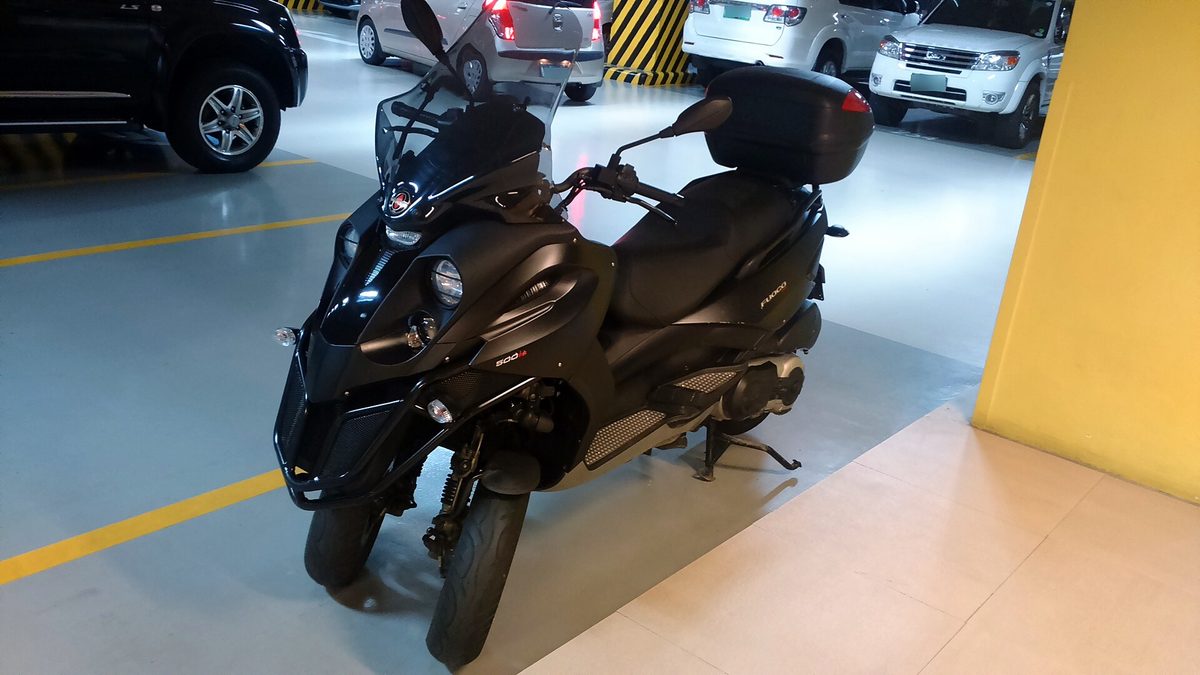
Where a scooter is brilliant — and where to skip it
Not every destination rewards two wheels equally. This is where I would and would not bother.
Siargao
The poster child. Siargao is flat, the distances between Cloud 9, General Luna, the rock pools and the palm-lined back roads are perfect scooter range, and a rental is honestly the only sensible way to explore beyond your barangay. Roads are mostly good, with the odd sandy patch out toward the coast. Rates sit around ₱350–500 a day. If you only ride on one Philippine island, make it this one — our Siargao travel guide maps out where to point the front wheel.
Bohol
A scooter on Bohol opens up the Chocolate Hills, the Loboc river road and the inland loop at your own pace, far better than a packaged tour. Panglao is easy; the mainland has busier, faster stretches that demand attention. A genuinely rewarding ride for confident beginners and up — see the Bohol travel guide for routes.
Siquijor and Camiguin
If you are nervous, start here. Siquijor’s road around the island runs about 75 km and makes an easy day’s loop by scooter, with light traffic, waterfalls and beaches strung along the way, and Camiguin also has a road that circles the island. Camiguin in particular might be the most relaxed island in the country to learn on. Siquijor rentals can dip to ₱300 a day.
Moalboal and south Cebu
Great for reaching Kawasan Falls, the sardine run beaches and the coast road, though the main highway carries trucks and buses, so keep your wits about you. A scooter beats waiting for sporadic local transport — more in our Moalboal guide.
Palawan: El Nido and Port Barton
Palawan is the one to think hard about. A scooter unlocks beaches like Nacpan and Duli long before the tour vans arrive, and reaching Port Barton or the hidden coves under your own steam is glorious. But the roads are the toughest on this list: long unpaved sections, loose gravel, mud after rain, and stretches where a slip has real consequences. Road accidents are the leading cause of serious injury for visitors here. Rentals run around ₱500–700 a day. I would only ride Palawan if you already have solid scooter experience, you stick to daylight, and you treat the rough sections with respect. If you are unsure, this is a place to take a van or a paid driver instead.
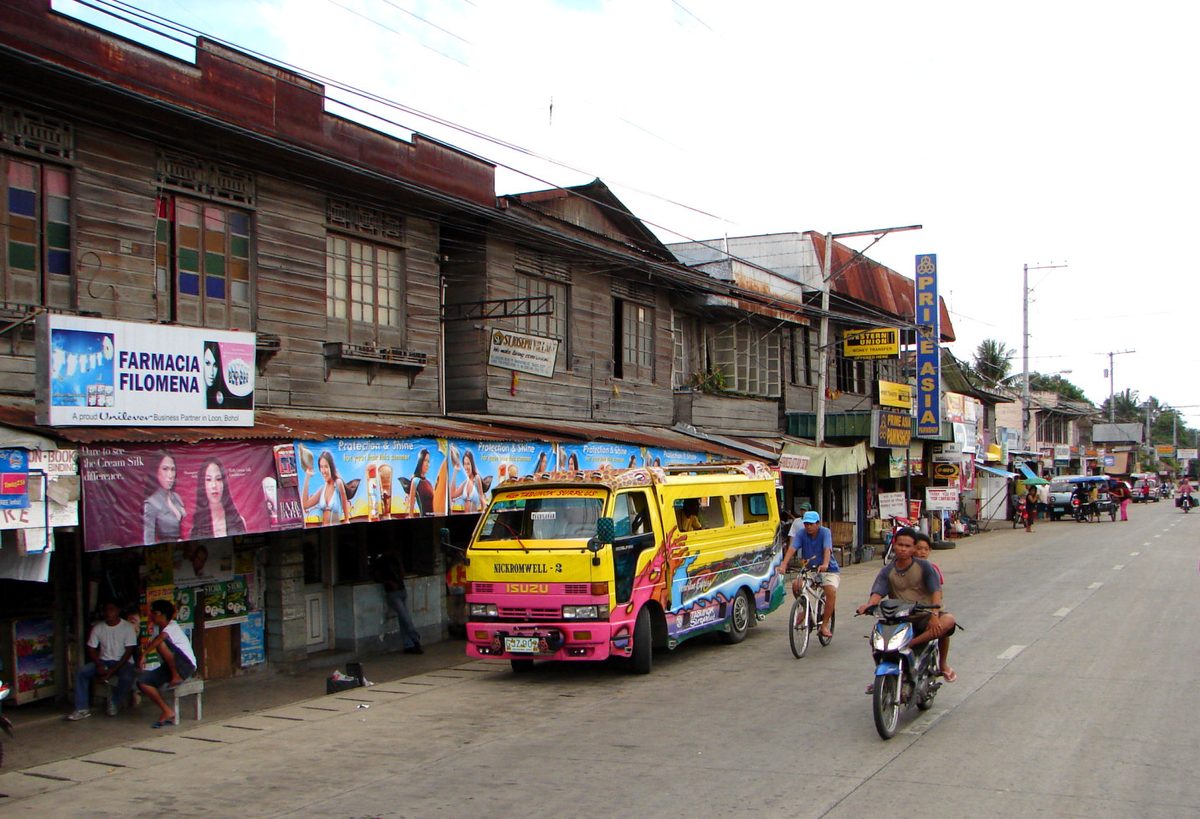
Where to skip it: Manila and Cebu City
Do not learn to ride in Metro Manila or Cebu City. The traffic is dense, fast and aggressive, lane discipline is theoretical, and the upside is nil because Grab and app-based motorcycle taxis (Angkas, JoyRide, Move It) will get you around cheaply without you risking your neck. Save the scooter for the islands and lean on local transport in the big cities.
Fuel, parking and the apps you want
Fill up before any long ride — small bikes have small tanks, and running dry in the middle of nowhere is a long, hot push. Download offline maps before you set out, because rural cell coverage is patchy and your navigation will cut out exactly when you need it; preview your route and key turns. For parking, find flat ground, never park facing downhill (the kickstand physics will drop your bike), and leave room to push the bike out backward. A phone holder for navigation is worth the few extra pesos some shops charge.
One more practical habit: keep your valuables on you, not in the under-seat compartment, which can be opened by anyone who knows the trick. Carry only the cash you need, leave the bulk of your money and your passport locked at your accommodation (another reason never to surrender the passport as a deposit), and stash a photo of your license and the bike’s plate on your phone in case you are stopped or the bike goes missing. Petrol stations thin out in rural areas, so when you see one with a long ride ahead, top up rather than gambling on the next one.
Book ahead or just walk up?
On most islands you can simply walk into a shop and ride away the same hour, and in low season that is usually the cheapest route because you can compare bikes and haggle a little. In peak season (December to around April, plus local holidays) and in smaller places with only a handful of shops, supply tightens and the good bikes go first — here it is worth messaging a well-reviewed shop a day or two ahead, or booking through your accommodation, to lock in a decent machine. Choosing the bike in person lets you test-ride it first, and it is worth asking whether the shop will collect it from your guesthouse at the end, which saves a tricycle fare on the return.
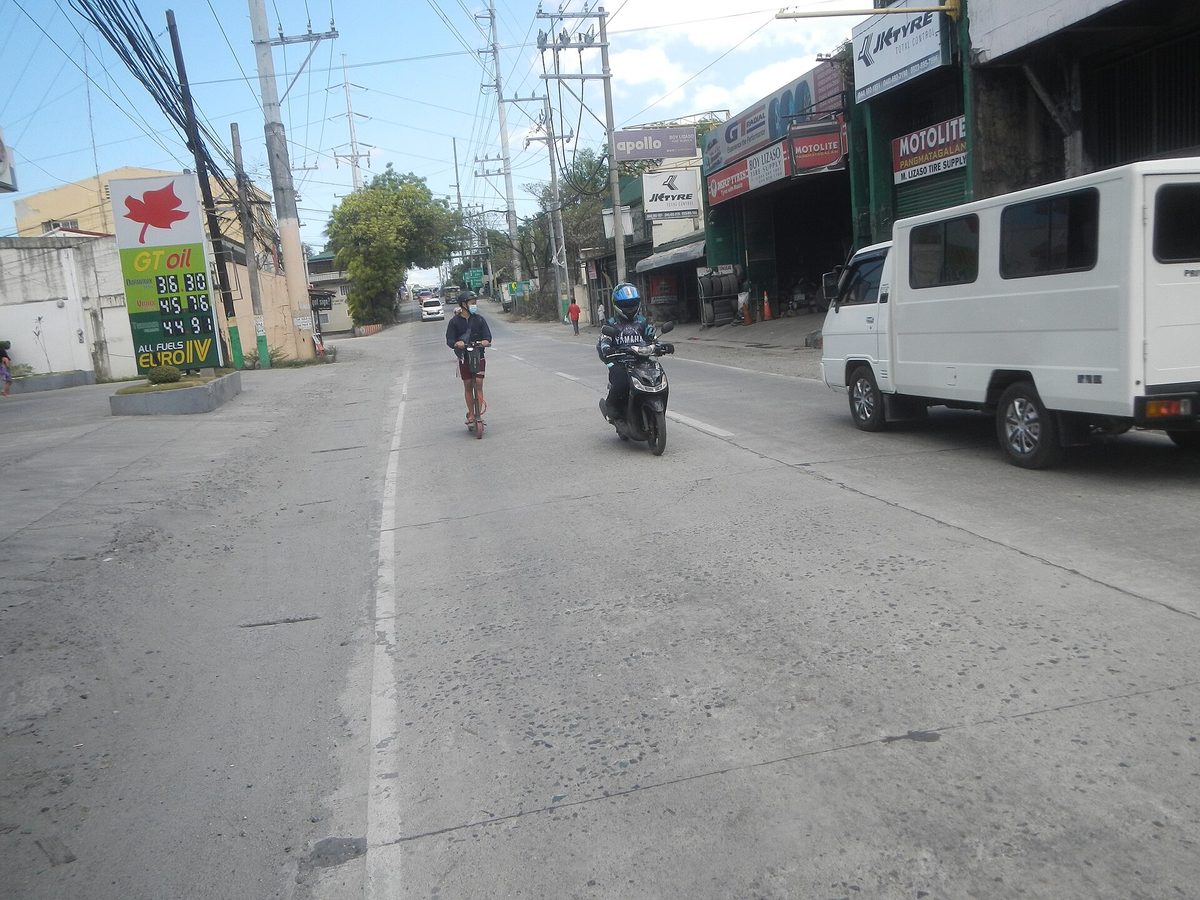
What to do if you have an accident
If the worst happens, the legal and practical steps matter. Stop — leaving the scene of an injury crash is a serious offense. Render assistance and call for help; in a medical emergency, get to the nearest hospital, and keep every receipt and record. Report the incident to the nearest police station promptly and request a written police or traffic-incident report, because your insurer and any rental dispute will require it; your policy will say how soon the insurer needs to hear from you. Photograph the scene, the bikes and any damage. Contact your insurer’s emergency line early, and if you are seriously hurt or the situation is complicated, contact your embassy. Note that if a rental bike is damaged or written off, shops will bill you for repair or replacement, and disputes do happen — which is exactly why your pick-up photos and the right insurance are worth the small effort upfront.
Frequently asked questions
Can I rent a scooter in the Philippines with just my car license?
No. The law requires a motorcycle classification or endorsement on your home license to ride any motorized two-wheeler, including small scooters. Some shops will rent to you anyway without checking, but you would be riding illegally, and your travel insurance almost certainly will not cover an accident. Get the motorcycle endorsement before you travel.
Do I need an International Driving Permit to ride in the Philippines?
Not strictly, if your home license is in English and shows a motorcycle category. That said, an IDP is cheap, smooths things at checkpoints, and is effectively required if your license is not in English. Carry both your home license and the IDP — the IDP alone is not valid.
How much does a scooter rental cost per day?
In 2026, roughly ₱300–400 (about $5–6) a day for a small Honda Beat, ₱400–600 for a Click or Mio 125cc, and ₱600–800 for bigger 150–160cc bikes. Weekly and monthly rates are significantly cheaper per day. Expect a refundable deposit of around ₱2,000–5,000 in cash.
Is it safe to ride a scooter in the Philippines?
It can be, but road crashes are a leading cause of injury for tourists, and the roads are genuinely hazardous in places. It is reasonably safe on quiet islands like Siquijor or Camiguin if you ride slowly, wear a proper helmet, avoid night riding and never drink and ride. It is not safe to learn in Manila or Cebu City traffic.
Where is the best island to rent a scooter for the first time?
Siquijor or Camiguin. Both are small, with a single quiet loop road, light traffic and short distances, so you can build confidence without battling highways. Siargao is the most fun once you are comfortable, thanks to flat roads and a tight cluster of beaches and rock pools.
Should I leave my passport as a deposit?
No. Offer a cash deposit instead, usually ₱2,000–5,000, which reputable shops accept without fuss. A held passport can become a bargaining chip in any dispute over damage, and you may need your passport for other things during your stay. Keep it with you.
Sources and photo credits
Photo credits
Images sourced from Wikimedia Commons under their respective Creative Commons / public-domain licenses. See individual credits accompanying each photo.
Sources
- Land Transportation Office (LTO) and Philippine government guidance on foreign-license validity (90-day rule) and motorcycle classification requirements.
- Republic Act 10054 (Motorcycle Helmet Act) and 2025 LTO penalty updates for helmet and standards (PS/ICC) compliance.
- Travel-insurance industry guidance on motorcycle/scooter exclusions and licensing conditions (e.g. SoutheastAsiaBackpacker, Travelfish, Big Cat Travel Insurance).
- On-the-ground rider reporting on rates, bike models and checkpoints (e.g. The Froggy Adventures, Philippine rental-shop price listings).
About this guide: PhilippinesTourism.org publishes independent, on-the-ground Philippines travel guides. Information veri