
Cloud 9 and Surfing in Siargao
Cloud 9 is the wave that put the Philippines on the world surfing map, a barreling right-hand reef break at the southeast tip of Siargao that draws pros, photographers and a whole lot of people who have never stood on a board. Here’s the honest version of Siargao surfing: Cloud 9 is genuinely world-class but it is not where you learn, the season runs roughly August to November with September and the months either side usually best, and the island has at least a dozen other breaks that suit every level. This guide sorts them out so you ride the right wave for your ability.
Siargao surf spots at a glance
Before the deep dive, here is the shortlist I’d hand a friend flying in. Levels assume the wave is working at a reasonable size; almost everything here breaks over reef, so “beginner” means gentler and more forgiving, not soft like a beach break back home.
| Spot | Level | Wave type | Best season / notes |
|---|---|---|---|
| Jacking Horse (incl. Little Pony) | Beginner | Mellow reef, peels both ways | Year-round; best low-to-mid tide, calmest Feb–May |
| Quiksilver / Rock Island (Pancit Reef) | Beginner–intermediate | Reef, gentler when small | Mar–Jun for learners; punchier Sep–Nov |
| Cloud 9 | Intermediate–advanced | Hollow right-hand reef, barrels | Aug–Nov peak; Sep–Dec biggest; high/rising tide |
| Tuason Point | Advanced | Fast, hollow left-and-right reef | Aug–Nov; 1 km from Cloud 9 |
| Stimpy’s | Intermediate–advanced | Left-hand reef, boat access | Sep–Nov; shallow, less crowded |
| Cemetery | Intermediate | Reef, fun walls | Sep–Nov; near General Luna cemetery |
| Pacifico (north) | Intermediate–advanced | Long left-hander, raw | Sep–Nov; ~1 hr north, quiet |
| Daku Reef | Beginner–intermediate | Reef off Daku Island | Combine with island hopping; calmer days |
If you only remember one thing: book a lesson at Jacking Horse, not Cloud 9, and let a local instructor decide where you paddle out each day based on the swell and tide. For the wider picture of when the island is at its best, our best time to visit Siargao guide breaks the year down month by month.
Cloud 9: the wave, the boardwalk and who it’s really for
Cloud 9 is a thick, pitching right-hander that breaks over a reef shelf in General Luna, the main tourist hub in Siargao’s southeast corner. The takeoff is steep, it throws a hollow barrel section, then offers a clean exit into the channel. Search Cloud 9 Siargao online and you’ll see it called one of the best waves in the world; Surfline rates it among the better breaks in this part of the world, and Surf-Forecast lists it as a fairly consistent reef break that works best when a northeast swell meets a southwest offshore wind. On its day, at 4 to 6 feet and clean, it is one of the best waves you can surf without a boat ride.
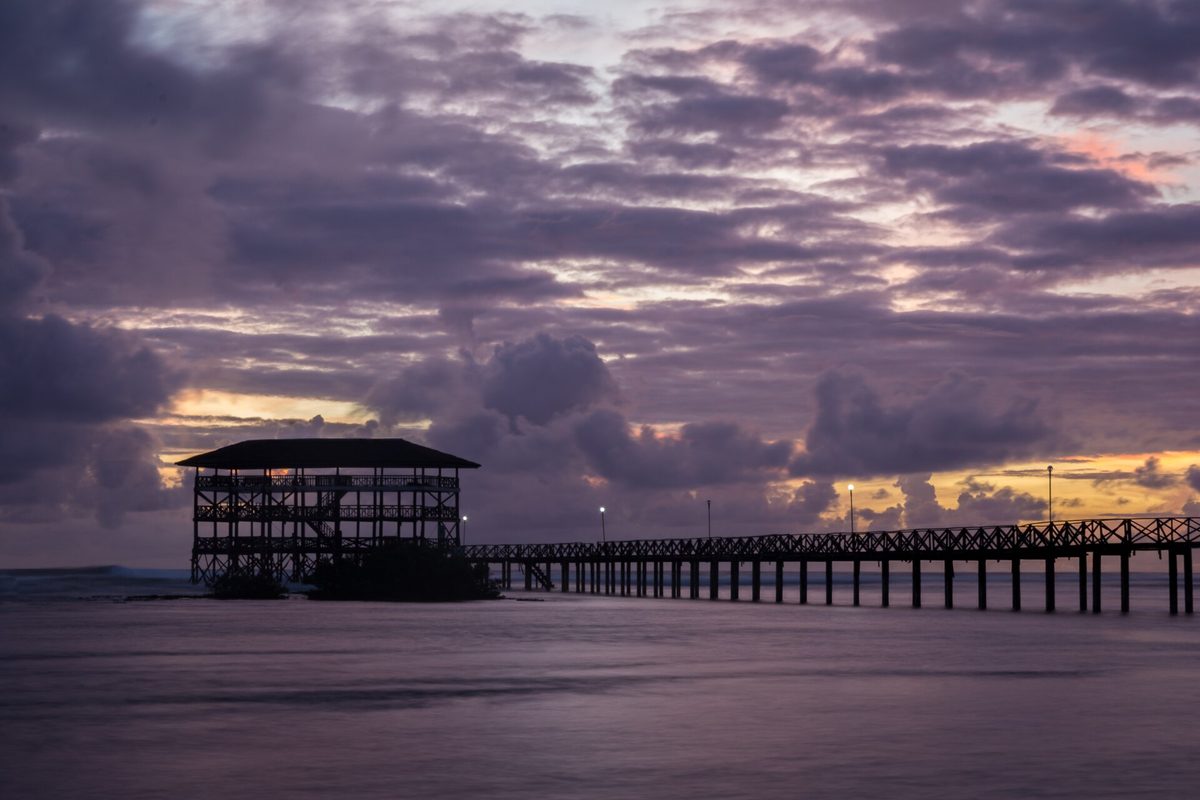
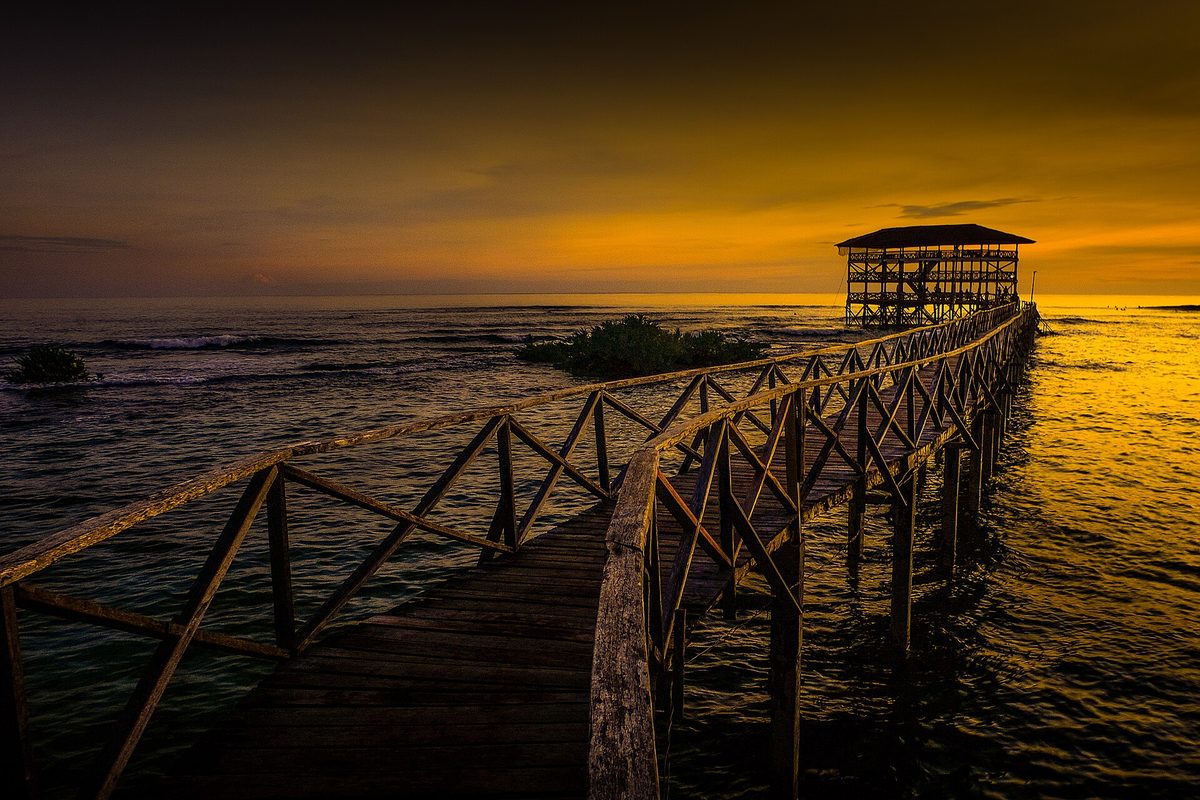
The famous structure is the boardwalk: a long wooden pier that runs out across the reef and ends in a three-storey viewing tower looking straight at the lineup. It is the single best free thing to do at Cloud 9 if you are not surfing. Go at sunrise, watch the dawn patrol pull into barrels, and you’ll understand the hype in about ten minutes. There’s usually a small entrance or maintenance fee at the boardwalk, somewhere around 50 to 100 PHP (roughly $1 to $2 as of 2026); it goes toward rebuilding the structure, which typhoons have flattened more than once. Get there early and you can often walk it for free before anyone is collecting.
Here is the part most listicles skip. Cloud 9 is an intermediate-to-advanced wave, and beginners should not start here. The takeoff is fast, the reef is shallow on the inside, and on a good swell you are sharing a tight peak with fifteen to thirty surfers who all want the same set wave. Locals have nicknamed it “Crowd 9” for a reason, and as of 2025 there has been a real push to keep first-timers and surf schools off the main peak so it can function as an experienced surfers’ wave again. If you have never surfed, or you’ve had a handful of lessons, you will spend your session getting in the way, missing waves, and risking a reef cut. That’s not gatekeeping; it’s just the truth of a crowded reef break.
So who is it for? Confident intermediates with a reliable pop-up and solid paddle fitness can have the time of their lives at Cloud 9 when it’s 3 to 5 feet. Once it pushes past 6 feet, with heavier lips and faster walls, it becomes a genuinely serious wave best left to advanced surfers. Know which of those you are before you paddle out.
Where beginners should actually surf in Siargao
The good news is that the island’s beginner wave is about 200 metres from Cloud 9. Jacking Horse breaks just to the side of the Cloud 9 pier, peels relatively gently, and has an inner section locals call Little Pony that is about as forgiving as reef gets, ideal for learning to pop up and ride straight. You can take your lesson here and still watch the pros barrel themselves a couple of hundred metres away, which is half the fun.
Across the pier, Quiksilver (also written Quicksilver) and the nearby Rock Island, also called Pancit Reef, work for beginners and improvers when the waves are small, and step up to a fun intermediate wave when the swell fills in. A little further afield, Guiwan (also spelled Giwan or Guiuan) is a mellow, somewhat overlooked spot about a 20-minute drive from General Luna that instructors use for learners and nervous intermediates. Daku Reef, off Daku Island, is another softer option you can fold into an island-hopping day.
The single biggest lever for beginners is the tide. At Jacking Horse, lower tides usually serve up the smaller, slower, more manageable waves you want when you’re learning; the reef is also less of a worry when the wave is gutless. Your instructor will time the session around this, which is exactly why you hire one rather than just renting a board and winging it.
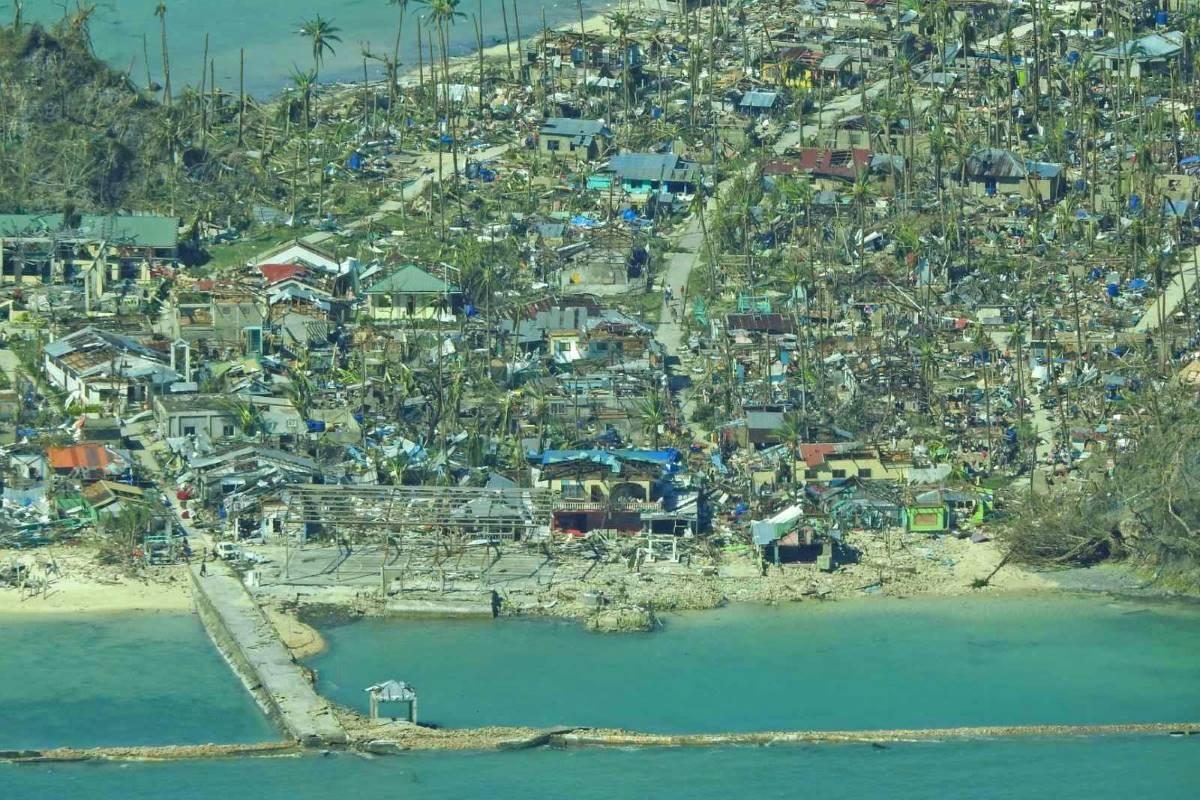
Siargao is a small, palm-cloaked island in the far southeast of the Philippines, off the northeast tip of Mindanao, and the surf is woven into almost everywhere you’d want to go. Most breaks cluster around General Luna in the southeast, but the teardrop-shaped island has waves scattered along its east coast too, which is what makes a week here feel like a proper surf trip rather than one famous wave.
Intermediate and advanced spots worth the trip
Once you’re comfortably riding along the face and reading a peak, Siargao opens up. The island has roughly a dozen quality breaks within reach of General Luna, and the conditions shift day to day, so variety is the whole point.
Tuason Point sits about a kilometre from Cloud 9 and is the obvious next step up: a fast, hollow reef break that delivers powerful, punchy waves, especially in peak season. It’s exciting and it’s unforgiving, so treat it with respect. Cemetery, named for the local graveyard it breaks in front of (nothing more sinister than that), is a fun intermediate wall on the right day. Stimpy’s is a left-hand reef a boat ride offshore, powerful and fast over a shallow reef, less crowded precisely because you need a banca to reach it. Pancit Reef / Rock Island and Daku round out the southern options.
For something rawer and quieter, head north. Pacifico, about an hour up the east coast, is one of Siargao’s longest left-handers, raw and powerful, with a sleepy small-town feel that makes the drive worth it. Further along the east shore you’ll find expert-only spots like Pilar, Caridad and Burgos, all far enough from the crowds that you may surf them nearly alone. Pansukian Reef, out near Naked Island, throws long barreling rides for those who can handle them. None of these are signposted with neon arrows; ask a local instructor or a shop in General Luna, and treat the drive as part of the adventure. If you want to string the north together with snorkeling and beach stops, see our wider rundown of things to do in Siargao.
Siargao surfing seasons: when to come for your level
Siargao works year-round, but the wave you’ll get depends heavily on the month, so match the season to your ability.
Peak swell, roughly August to November. This is when groundswell and windswell line up and Cloud 9 turns on. Surf-Forecast’s stats show September delivering clean, surfable conditions around 60% of the time, the best clean-wave odds of the year, while November and December tend to bring the biggest, most powerful surf. If you’re an intermediate or advanced surfer chasing barrels, this is your window. It overlaps with the rainier, more typhoon-prone half of the year, so build in flexibility and watch the forecast.
Calmer, roughly February to May. The dry months bring smaller, gentler, cleaner-faced waves, which is exactly what beginners and early intermediates want. April through June often sees the flattest conditions, a treat for surf students and a frustration for experts. If your trip is mainly about learning to surf, aim for this side of the year; you’ll get more forgiving waves and thinner crowds.
For 2026 specifically, plan around the bigger picture: surf is most reliable from late August into November, with the heaviest weeks usually November to December. Because the island sits in the typhoon belt, no calendar is a guarantee, conditions can swing from flat to firing within a week. Cross-check Siargao against the rest of the country in our guide to the best time to visit the Philippines if you’re building a longer trip.
Tides, reef cuts and staying safe on a reef break
Nearly every wave in Siargao breaks over coral, and that changes the safety calculus completely from a sandy beach break. Two things matter most: the tide and how you fall.
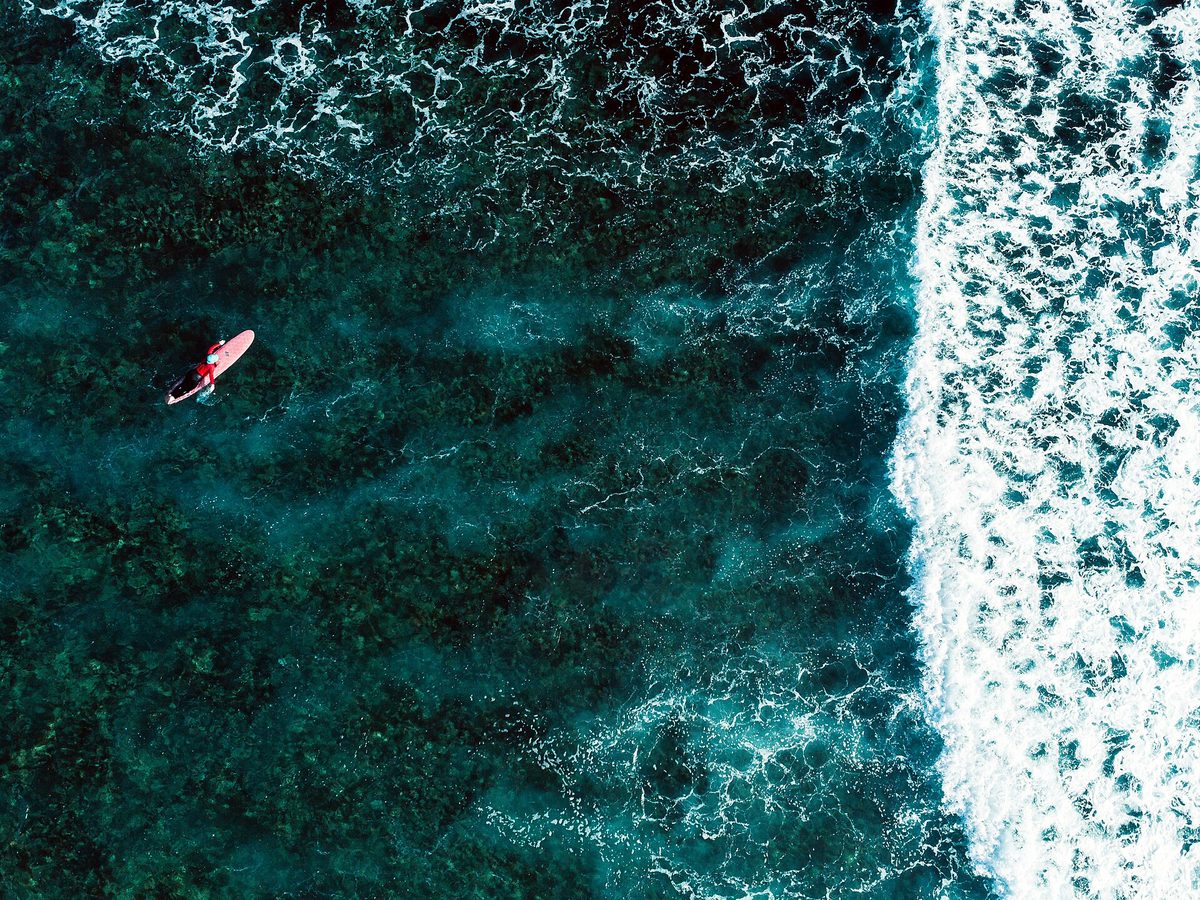
Cloud 9 and most of the southern reefs are best around high or rising tide, when there’s more water over the shelf. At low tide the reef gets dangerously shallow in places, which is when cuts and worse happen. The Cloud 9 reef itself is, in many surfers’ experience, more mossy than razor-sharp, with the odd rock, so booties are not strictly mandatory there. But plenty of Siargao’s reefs are sharper, and reef booties are cheap insurance, especially for beginners and on unfamiliar breaks. When you wipe out, train yourself to fall flat and shallow rather than diving down head-first, protect your head with your arms when you come up, and never put a hand or foot down to stand on the coral. It damages a living reef and it shreds you.
A few more honest safety notes. Cloud 9 has real rip currents; the channel that helps you paddle out can also drag you, so learn to read it. Don’t paddle out to a reef break beyond your level just because your friends did; the consequences here are sharper than a beach. And if you’re at all unsure about Siargao as a destination generally, our is Siargao safe guide covers the wider picture; the surf risks above are far more relevant to most visitors than anything else.
Surf lessons and board rental: what it costs in 2026
Siargao surf lessons are cheap by world standards, and General Luna near the Cloud 9 pier is where the instructors cluster. Prices below are typical 2026 ballparks; always confirm on the day, and assume the figures creep up over time. The peso has hovered around 60 to the US dollar through 2026, which I’ve used for the conversions.
- Group or private lesson: around 500 to 1,000 PHP per hour (roughly $8 to $17), usually including the board and an instructor. Most people do one to two hours per session.
- Board rental without an instructor: around 200 to 300 PHP per hour, or roughly 300 to 500 PHP for a full day ($5 to $8).
- Surf camp packages: multi-day deals bundling accommodation, daily lessons, board use and breakfast, often the best value if surfing is the main event.
You’ll find boards and instructors at established spots near the pier and along the General Luna strip, names like Fat Lips, Kermit, Harana and Kawili come up again and again, and most guesthouses can arrange someone reliable. Surfing here is so woven into a Siargao trip that it features near the top of any list of things to do on the island.
One practical note on basing yourself: staying in or near General Luna puts you within a tuk-tuk ride of the Cloud 9 pier, the rental shops and the morning instructor gathering, which matters because the best sessions are often at first light. Many people pick a guesthouse with an in-house surf school precisely so they can roll out of bed and into a dawn lesson.
Finding a good instructor or guide
The quality of your trip rests almost entirely on your instructor, and the good news is that Siargao runs on a small-village network where almost everyone knows everyone. You can simply turn up at the surf stalls by the Cloud 9 pier and hire someone for an hour, instructors typically station themselves at Jacking Horse, and all the locals I’ve dealt with speak excellent English.
If surfing is the whole reason you came and you want to improve fast, go one step further: book ahead with a surf school and ask for the same instructor across your stay. Continuity makes a real difference; a guide who watched you yesterday knows what to fix today. For complete beginners it’s less critical, you can find someone on the beach without any planning, and switch if the fit isn’t right. Either way, listen to them on where to paddle out. A local who surfs these reefs daily knows which spot suits the swell, tide and your level far better than any app.
Surf etiquette on a crowded reef
Cloud 9 gets busy, and a reef break punishes bad etiquette harder than a beach does. The basics keep everyone safe and keep you from being “that tourist.” One surfer per wave: the rider closest to the breaking part (the peak) has priority, so don’t drop in on someone already up and riding. Don’t paddle straight through the takeoff zone; go around via the channel. Wait your turn rather than paddling around people to snag every set. And if you’re a beginner, this is one more reason to stay at Jacking Horse, you simply won’t have the wave-reading speed to share a packed Cloud 9 peak without causing collisions. Respect the locals who surf here every day, and the vibe stays friendly.
The Siargao Cup and competition season
Cloud 9 has hosted competition since 1995, when the first contest was a small local affair. It has since grown into the Siargao International Surfing Cup, and the event keeps leveling up. For 2026 it runs as a World Surf League-sanctioned Qualifying Series QS6000 event at Cloud 9, scheduled across roughly October 16 to 25, 2026, and presented by the Philippine Sports Commission. That status means international pros chasing ranking points toward the WSL Challenger Series, so the level of surfing on display is the best you’ll ever see on this reef.
If your trip lands in that late-October window, it’s a spectacle worth planning around, but go in with eyes open. Accommodation in General Luna books out and prices spike, the Cloud 9 lineup is reserved for competitors during heats, and the town is at its busiest. Watching from the boardwalk tower is free and unforgettable; trying to score your own Cloud 9 session mid-contest is not the move. If you’d rather avoid the crush, surf one of the other breaks while the event runs, or time your visit for a quieter stretch of the peak season.
What gear to bring
You don’t need much, and you can rent or buy most of it on the island, but a few things are worth packing. The water sits around a warm 29°C, so a rash vest or rash guard is all you need for warmth and sun and chafe protection; no wetsuit required. Bring or buy reef booties for the sharper breaks and for peace of mind as a beginner. Reef-safe sunscreen and a zinc stick matter under the equatorial sun and are kinder to the coral. If you’re particular about your board, bring your own, though shops in General Luna rent everything from soft-tops to performance shortboards. Add ear protection if you’re prone to surfer’s ear, plenty of water, and basic first-aid for the inevitable small reef nick. That’s genuinely it.
Is Cloud 9 overhyped? An honest verdict
Yes and no. The wave itself is the real deal: when Cloud 9 is on, clean and a solid size, it is a world-class barrel and absolutely lives up to the legend. What’s overhyped is the idea that Cloud 9 is the point of surfing in Siargao, or that everyone who comes should ride it. For beginners it’s the wrong wave, often a frustrating, crowded, slightly risky experience that has little to do with the dreamy photos. The boardwalk and the spectacle are worth it for anyone; the wave is worth it specifically for intermediates and up.
The better framing is this: come to Siargao for the island’s whole spread of waves, not one famous peak. Learn at Jacking Horse, watch Cloud 9 from the tower at dawn, drive north to Pacifico for a long empty left, and let local instructors steer you to whatever’s firing that day. Do that and you’ll leave thinking the place was underhyped, not overhyped. Siargao is also genuinely Mindanao’s standout surf island, and it anchors a region full of other great waves; for the bigger context, see our overview of surfing in the Philippines. This whole cluster sits inside our broader Siargao travel guide if you’re planning the rest of the trip.
Frequently asked questions
Can a beginner surf Cloud 9 in Siargao?
Not really, and you shouldn’t try. Cloud 9 is an intermediate-to-advanced reef break with a fast, shallow takeoff and a crowded lineup; as of 2025 there’s an active effort to keep first-timers and surf schools off the main peak. Beginners learn instead at Jacking Horse, the gentler wave about 200 metres from the Cloud 9 pier, where instructors are based and the reef is far more forgiving.
What is the best time of year for surfing in Siargao?
For sizeable, barreling waves, come in the peak swell window of roughly August to November; September offers the best clean-wave odds and November to December the biggest surf. If you’re learning, the calmer dry months of February to May (April–June can be flattest) bring smaller, gentler waves and thinner crowds. Siargao does have rideable surf year-round for some level.
How much do surf lessons cost in Siargao?
As of 2026, expect around 500 to 1,000 PHP per hour (roughly $8 to $17) for a lesson including the board and an instructor, with most people doing one to two hours. Renting a board solo runs about 200 to 300 PHP per hour or 300 to 500 PHP a day. Multi-day surf camp packages that bundle lodging and lessons are often the best value.
Is Cloud 9 free to visit if I’m not surfing?
The boardwalk and three-storey viewing tower are the highlight for non-surfers, and there’s usually only a small entrance or maintenance fee, around 50 to 100 PHP, which funds rebuilding the structure after typhoons. Arrive early, around sunrise, and you can often walk the boardwalk for free before anyone’s collecting, and catch the best light on the dawn surfers.
Do I need reef booties to surf in Siargao?
It depends on the spot. The Cloud 9 reef is comparatively mossy with the odd rock, so many surfers skip booties there. But several other Siargao reefs are genuinely sharp, and for beginners or anyone surfing an unfamiliar break, booties are cheap protection. Just as important: learn to fall flat and shallow, protect your head, and never stand on the coral.
When is the Siargao Surf Cup in 2026?
The 2026 Siargao International Surfing Cup is a World Surf League Qualifying Series QS6000 event held at Cloud 9, scheduled across roughly October 16 to 25, 2026, presented by the Philippine Sports Commission. Expect elite international surfers, packed accommodation in General Luna, and the main peak reserved for competitors during heats. Watching free from the boardwalk tower is the move.
Sources and photo credits
Photo credits
All images via Wikimedia Commons under their respective licenses:
- Cloud 9 aerial — Photo: Lokesh Ramachandra / CC BY-SA 4.0 via Wikimedia Commons
- Cloud 9 boardwalk and viewing tower — Photo: JupitReyes / CC BY-SA 4.0 via Wikimedia Commons
- Surfer on a Siargao reef break — Photo: Michael Angelo Luna / CC BY-SA 4.0 via Wikimedia Commons
- General Luna shoreline — Photo: ChaasPrime / CC BY-SA 4.0 via Wikimedia Commons
- Siargao Island aerial view — Photo: Philippine Coast Guard (CC0) via Wikimedia Commons
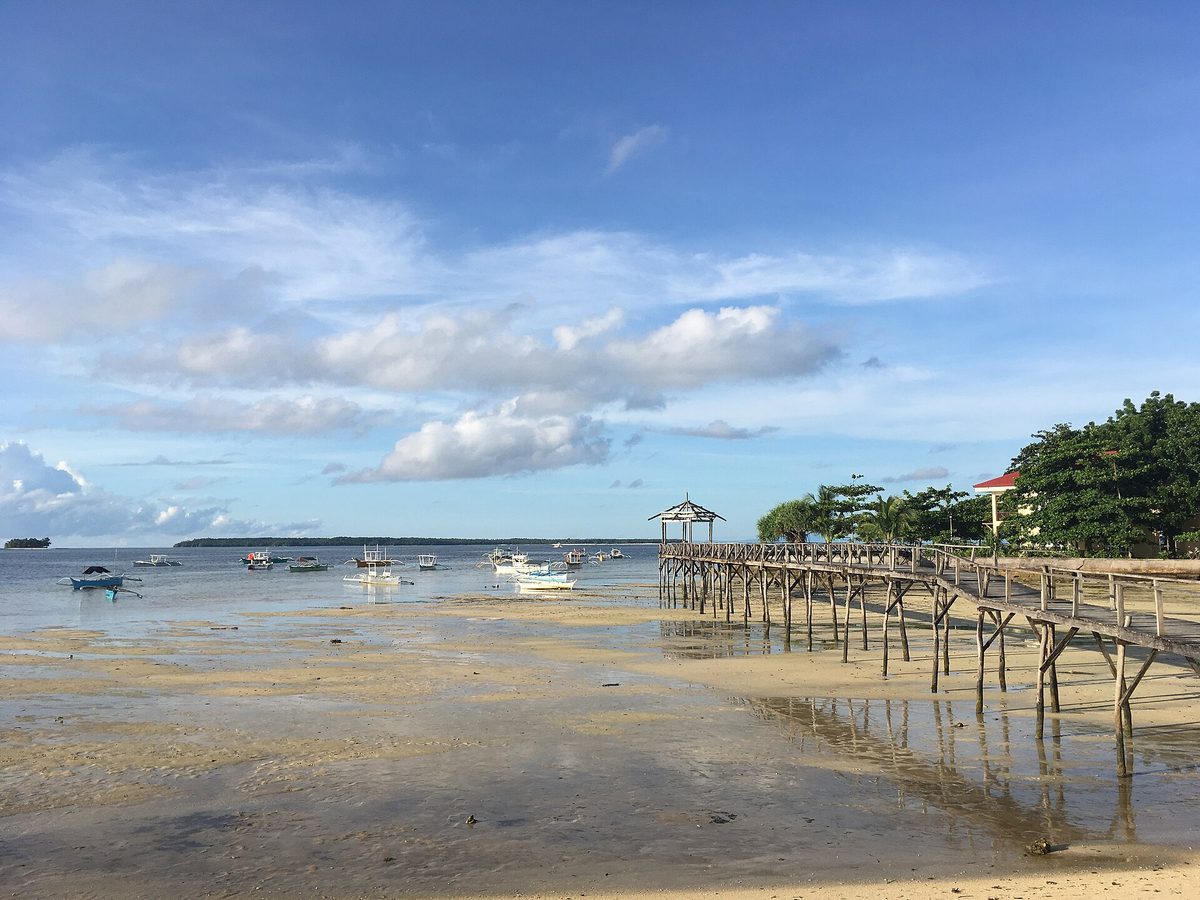
- General Luna boats and shoreline — Photo: Billy Palatino / CC BY-SA 4.0 via Wikimedia Commons
Sources
- Surf-Forecast.com — Cloud 9 spot guide, season stats and tide notes
- World Surf League — 2026 Philippines events (Siargao Cup QS6000)
- Philippine News Agency — WSL Qualifying Series at Cloud 9, Siargao
- Guide to the Philippines — Siargao surf spots and lesson overview
About this guide: PhilippinesTourism.org is an independent Philippines travel resource. Prices and schedules were verified June 2026; confirm current details before you travel.