Tarsiers in Bohol: Where to See Them Ethically
The Philippine tarsier is a tiny primate, and in Bohol you can see one in something close to its real habitat, in the forest sanctuary at Corella. The catch: not every “tarsier place” you’ll be pitched on the island is actually a sanctuary. Some are conservation forests. Some are caged exhibits. A few are roadside operations that should not exist. Here’s how to tell them apart and where I send my own friends.
The Quick Comparison: Where to See Tarsiers in Bohol
Before we go deep, the short version, because most people land in Bohol with only a half day to spare on this.
| Site | Philippine Tarsier & Wildlife Sanctuary (Corella) | Tarsier Conservation Area (Loboc / Bilar border) | Roadside cage stops |
|---|---|---|---|
| Run by | Philippine Tarsier Foundation Inc (PTFI), partnered with DENR-BMB | Local LGU / private operator, not PTFI | Private, unregulated |
| Habitat | Forest reserve, tarsiers free in native trees | Managed site, closer to an exhibit than a forest reserve | Small enclosures |
| Drive from Tagbilaran | Shorter drive | Longer drive | Varies; often along the Chocolate Hills loop |
| Drive from Panglao (Alona) | Shorter drive | Longer drive | Varies |
| Entrance fee (2026) | Small fee; guides quote 60-170 PHP (~$1-3) | Around 80-100 PHP per adult (~$1.30-1.60) | Around 60-80 PHP, but tips are aggressively encouraged |
| Viewing setup | Open forest paths, ranger-guided, no handling, no flash | Short loop trail, tarsiers on low branches inside a fenced area | Caged or branched stops where handlers reposition tarsiers |
| My recommendation | Yes. Go here. | Skip if you can swing Corella. Tolerable as a last resort, not a substitute. | Hard no. Don’t pay to support these. |
If you read nothing else, read that table. For tarsiers Bohol travelers want to see in something like real habitat, the Corella sanctuary is the answer.
What Is a Philippine Tarsier?
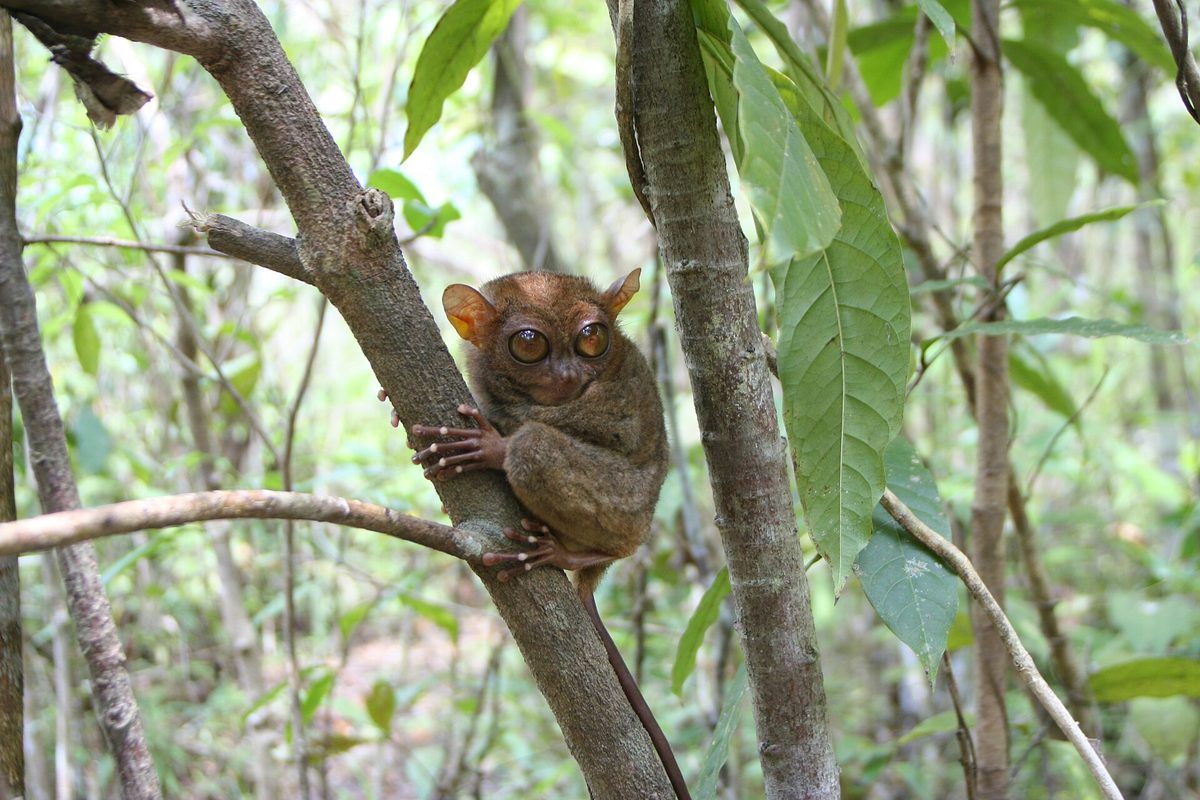
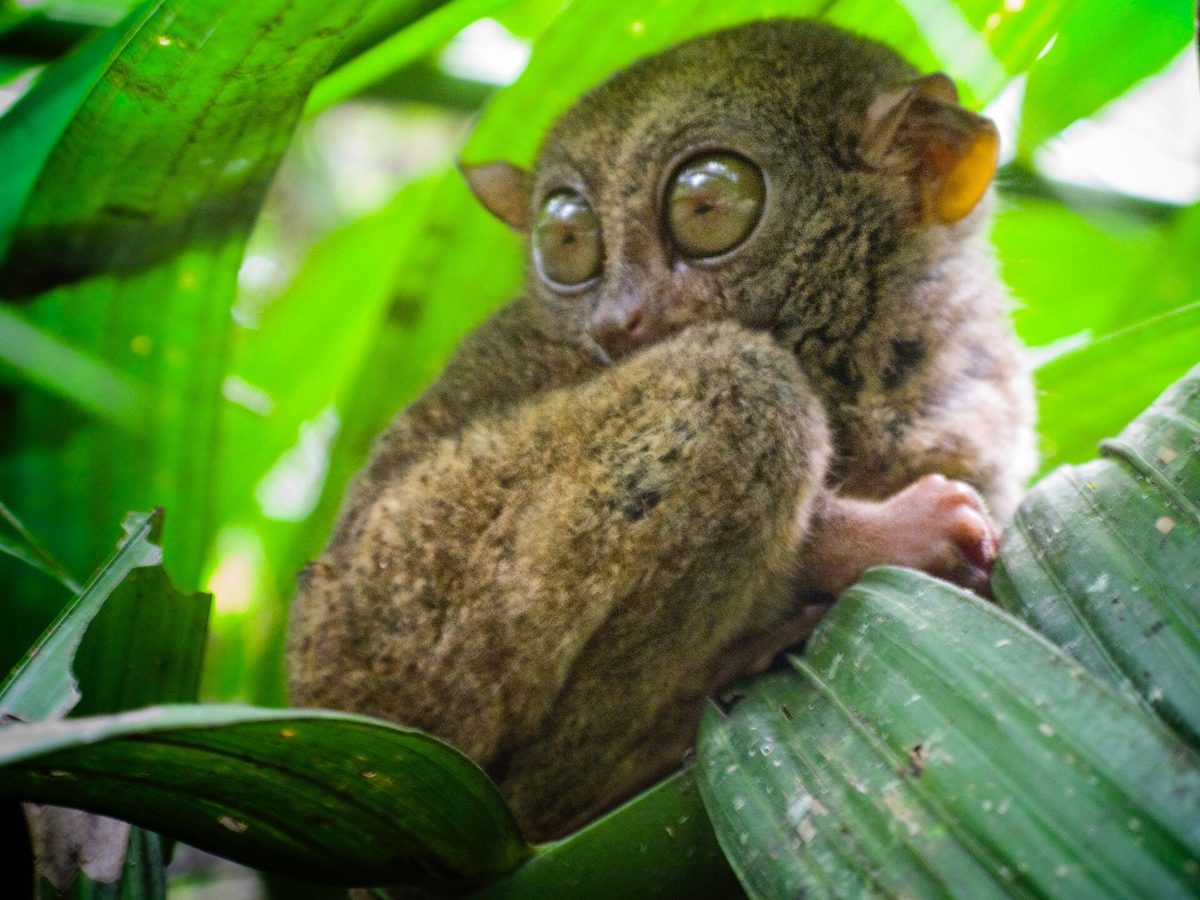
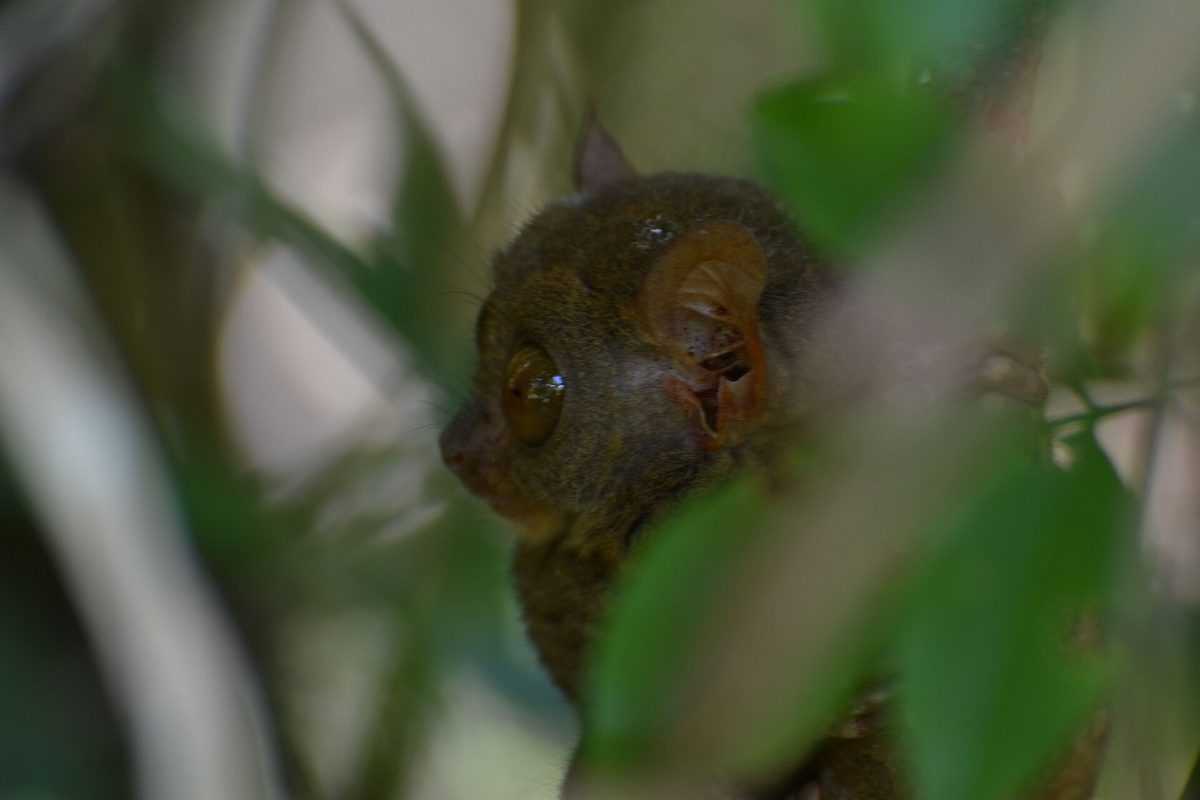
The Philippine tarsier (Carlito syrichta, formerly classified as Tarsius syrichta) is a tiny nocturnal primate about the size of an adult human’s fist. Adults weigh roughly 80 to 160 grams. The body is around 9 to 16 cm long, with a tail nearly twice that length. Their eyes are the wild part: enormous for an animal this size and fixed in the skull, so they swivel their heads up to 180 degrees to look around. They are obligate carnivores, feeding almost entirely on live insects, plus the occasional small lizard or bird.
They are also extraordinarily fragile. Tarsiers are wired to be active at night and to sleep in shaded foliage during the day. When they’re stressed, by noise, flash photography, handling, or unfamiliar crowds, their stress response can spike to the point of cardiac arrest. There are well-documented anecdotes from biologists and sanctuary staff of captive tarsiers banging their heads against cage bars and dying within days of capture. That’s why the rules at any legitimate viewing site read more like a hospital ward than a zoo.
The International Union for Conservation of Nature lists the species as Near Threatened on the IUCN Red List, with a declining population trend driven mainly by habitat loss across Bohol, Samar, Leyte, and parts of Mindanao. That habitat loss is why protected forest like the Corella reserve matters so much.
Why Bohol Is the Tarsier Heartland
Tarsiers exist in pockets across the central and southern Philippines, but Bohol is where the species got its first protected reserve, its most active conservation program, and the bulk of its international press. The Philippine Tarsier Foundation Inc was set up here, and on 23 June 1997 President Fidel Ramos signed Proclamation 1030, declaring the Philippine tarsier a specially protected faunal species. The Foundation runs a forest sanctuary in Canapnapan, Corella, in the rolling hills inland from Tagbilaran.
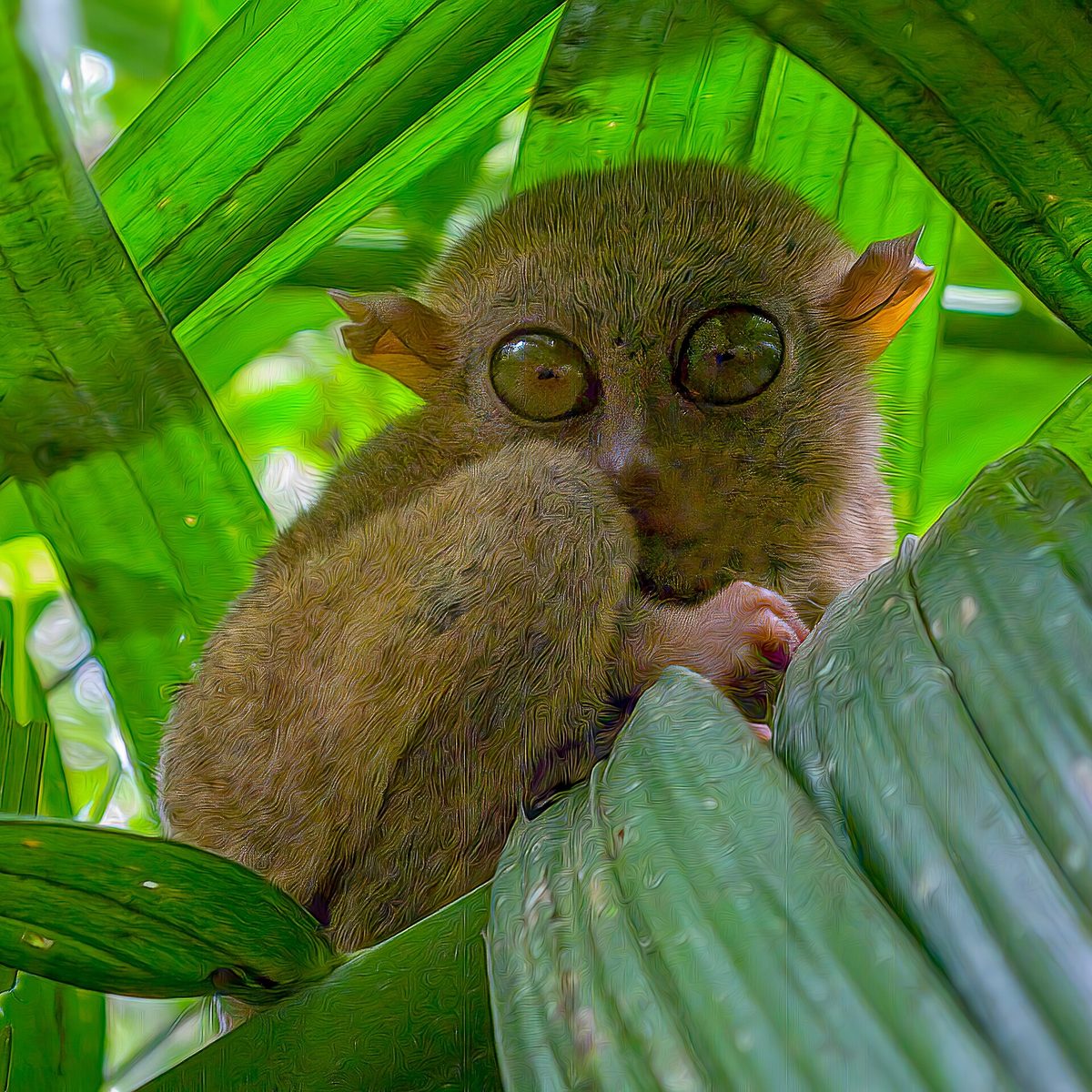
What makes Bohol special is the combination of secondary forest, abundant insects, and a network of villages willing to keep the surrounding land lightly used. Tarsiers don’t need pristine old-growth, they need messy second-growth with thick understory, ferns, vines, and a steady supply of crickets, grasshoppers, and moths. That’s exactly what the inland Corella-Sikatuna-Bilar corridor still has, even with logging pressure and agricultural conversion eating at it from the edges.
The flip side is that easy access has produced a parallel industry of tarsier “experiences” built to sell tickets to anyone driving the Chocolate Hills loop. Bohol’s tarsier story over the last twenty years has really been two stories at once: a serious, science-led conservation program in Corella, and a wave of opportunistic exhibits elsewhere. Knowing which one you’re walking into is the entire job for a visitor.
A bit of recent history helps make sense of why standards vary so wildly across sites only ten kilometers apart. Carlito Pizarras, sometimes called the “tarsier man,” grew up catching the animals for his father’s small private collection in the 1980s, then turned his expertise toward conservation and helped found PTFI. That hands-on lineage is part of why Corella’s rangers can find tarsiers on demand without disturbing them; they were trained by people who tracked the species their whole lives. The result is a steep gradient: one PTFI-managed reserve doing real science at the top, and a long tail of smaller operations below.
Tarsiers Bohol: The Two Real Sanctuaries (Corella vs Loboc)
This is the section everyone scrolls to. Both sites use the word “sanctuary.” Only one of them, the Corella site, fits the technical definition.
Philippine Tarsier & Wildlife Sanctuary, Corella
This is the one run by PTFI. The visitor entrance sits on a side road off the main Tagbilaran-Sikatuna highway, on a hillside above a deep forested gully. You pay your entrance fee, watch a short briefing, and then walk a quiet trail with a ranger who has already scouted that morning’s sleeping tarsiers. The animals are not staged. They’re sleeping in the forest where they chose to settle for the day, often three to five meters off the trail in dense foliage, sometimes much closer.
What I love about Corella is that it doesn’t feel like a “show.” Some days you see four or five tarsiers. Some days you see one. The rangers don’t apologize for that, because the whole point is that the animals are wild. They’ll tell you about the breeding program, the rescue cases, and the broader research happening here. Entrance fees go back into habitat management, ranger salaries, and the small visitor center.
Practical details, as of 2026:
- Entrance fee: a small fee per adult (guides quote 60 to 170 PHP, about $1 to $3)
- Hours: daytime visits; check current opening hours and last entry with the Philippine Tarsier Foundation before you go
- Time on site: allow 45 to 75 minutes
- Where: barangay Canapnapan, Corella, Bohol, inland from Tagbilaran City
- How: tricycle from Tagbilaran (around 300-500 PHP one way for a charter), motorbike rental, or as part of the standard Bohol countryside tour
Bohol Tarsier Conservation Area, Loboc / Bilar
Often labeled just “Loboc tarsier,” this site is in Loboc, on the usual countryside-tour route, and that is where its foot traffic comes from. Buses and vans stop here because it’s convenient, not because it’s better. Handlers sometimes redirect visitors toward the animals.
The Loboc operation is not run by PTFI. The setup is closer to a managed exhibit than a forest reserve. If you do stop, keep your voice down and your distance, whatever the group around you is doing.
Is it the worst place in Bohol? No. The animals are not in cages in the strict sense, they have branches and partial canopy, and you can find quiet moments early in the day. But it’s a noticeable step down from Corella, and the standards are looser. If your tour driver insists on this stop because it’s “on the way,” ask for Corella instead. It is genuinely a small detour, not a separate day trip.
Where to See Tarsiers Bohol Tourists Should Skip
The places I won’t name individually, because they cycle through different signage and rebrands, are the small roadside cages and homestay-style “tarsier viewing” stops along secondary roads, particularly near the Chocolate Hills loop and some stretches between Loboc and Carmen. The patterns to recognize:
- Handwritten signage promising “Tarsier here!”
- A single small wire or wooden enclosure, sometimes draped with cloth
- One or two tarsiers visibly awake during the day, often clinging to a stick the handler is holding
- Staff asking if you want to “hold” or “touch” the tarsier for the photo, or to “use the flash, it’s okay”
- No briefing, no rules sheet, no signage from PTFI or DENR
Touching a tarsier, holding one, or photographing one with a flash is enough stress to potentially kill the animal. I know that sounds dramatic. Veterinary and field reports from researchers like Carlito Pizarras (the “tarsier man” of Corella) and the team at PTFI back it up. A tarsier that looks calm in a stranger’s hand is often a tarsier that has already given up.
If a driver or local guide offers to take you to a private spot off the main road for a “better” or “closer” tarsier experience, the right answer is no. Even a polite no, framed as “we already booked Corella,” is enough.
How to Behave Around Tarsiers
At the Corella sanctuary, the rangers will brief you. At any other site, behave as if they had. The non-negotiable rules:
- No flash, ever. Tarsiers’ giant eyes have no protective tapetum the way a cat’s do. Bright light is physically painful.
- No touching. Don’t reach toward branches. Keep at least one meter, ideally more, from any tarsier.
- Voices at library volume. Whisper. Not normal indoor volume, whisper.
- No selfie sticks, no extended monopods near the animals. Sudden poking motions register as a predator strike.
- Phones in silent mode. Vibrations on a wooden boardwalk carry.
- Move slowly. No quick lunges to “get the shot.”
- Don’t crowd the ranger. Let people in your group take turns at the closest viewing position.
If you want a good photo, use a zoom lens, your phone’s 2x or 3x optical if you have it, and lean on natural diffused light. Tarsiers often sleep in shadow. A modern phone’s “night mode” without flash handles it fine.
Getting There and What It Costs
Most travelers come from one of two bases: Tagbilaran City or Panglao Island (Alona Beach area). Both are workable.
From Tagbilaran City
Take the road toward Sikatuna and Corella. By tricycle, you’re looking at around 300 to 500 PHP one way for a private charter (about $5 to $9). A round-trip charter with two hours of waiting time usually runs 700 to 1,000 PHP. Habal-habal motorbike taxis are cheaper, around 200 PHP one way, if you’re comfortable riding pillion. Grab is available in Tagbilaran proper, but arrange your ride back from Corella before you go in.
From Panglao or Alona Beach
You’ll need to cross to the Bohol mainland by one of the bridges from Panglao and then drive inland. Most people fold Corella into a half-day or full-day Bohol countryside tour that also covers the Chocolate Hills, Loboc River, and the man-made forest near Bilar. A private van for that loop runs around 3,000 to 4,500 PHP (about $50 to $70) for the whole car, not per person. Self-driving a scooter is doable but the inland roads have surprise potholes; not recommended after rain.
Total budget for the tarsier visit
For two people doing only the Corella sanctuary as a half-day side trip from Tagbilaran, budget around 1,000 to 1,500 PHP all-in, transport and entrance included. If you visit as part of a full Bohol countryside tour, the sanctuary itself charges a small entrance fee (guides quote 60 to 170 PHP).
Best Time of Day to Visit
Go early if you can. The fewer people on the trail, the better for the animals and for you.
The tarsiers themselves don’t really care about the hour, they’re going to be sleeping during your whole visit, but how peaceful the trail feels affects how long you can comfortably stand in one spot watching one.
Avoid coming during heavy rain. The trail gets slippery, the canopy drips on lenses, and tarsiers tuck deeper into foliage where you can’t see them.
Combine Your Tarsier Visit With What Else
The Corella sanctuary is small enough that you don’t want it to be your whole day. The natural pairings:
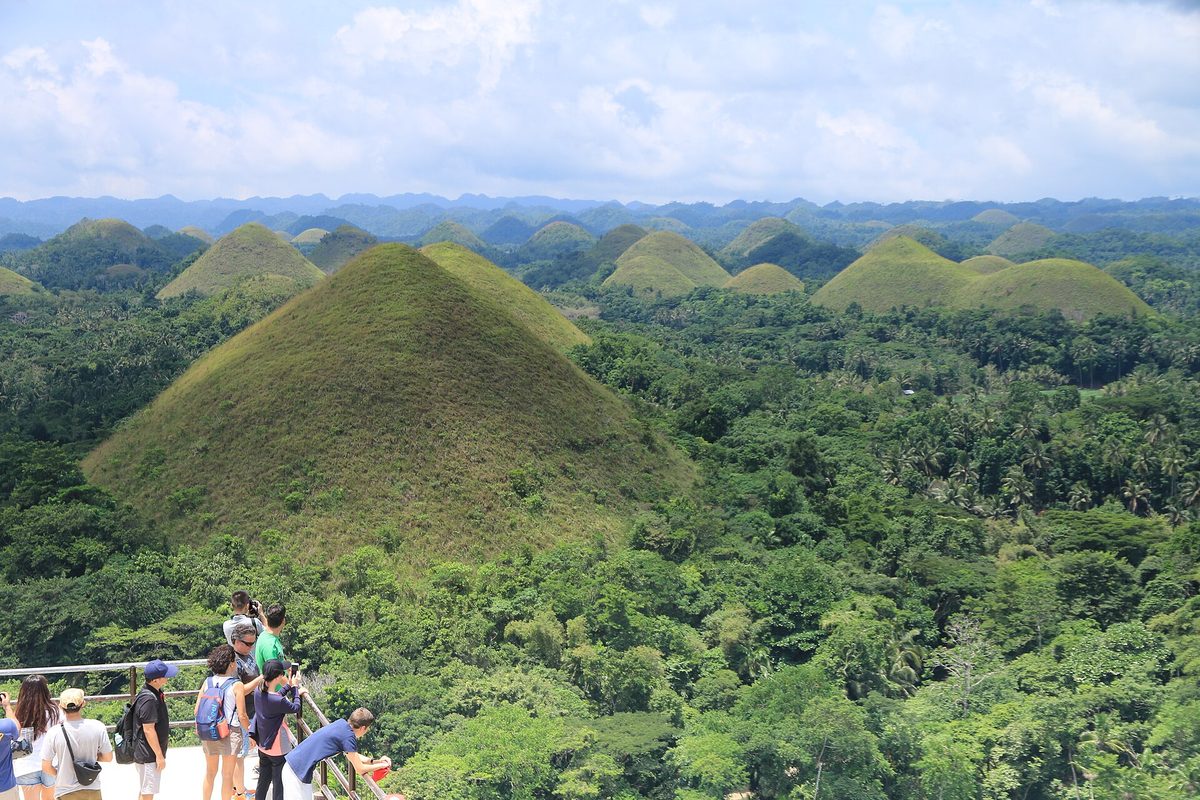
- The Chocolate Hills in Carmen, further inland from Corella. The most famous landscape in Bohol and the obvious anchor for a countryside day.
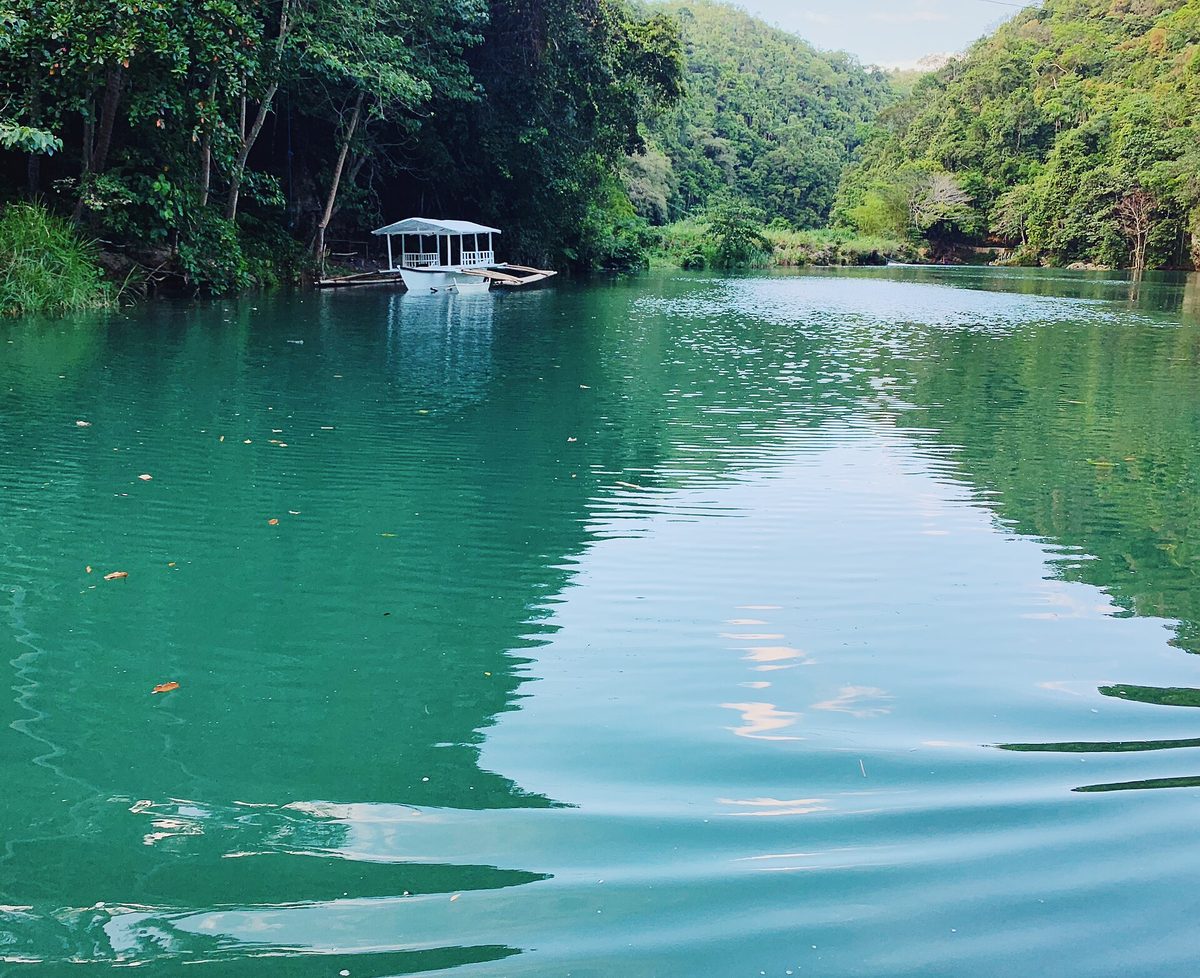
- Loboc River and the lunch cruise. A floating buffet cruise along a jungle-banked river. Touristy, yes, but pleasant and a useful midday pause. Loboc town itself is on the route between Corella and the Chocolate Hills.
- Bilar man-made forest. A two-kilometer stretch of road tunneled by mahogany trees planted in the 1960s. Photogenic, free, and adds five minutes to the drive.
- Baclayon Church. A Spanish-era stone church, damaged in the 2013 earthquake.
- Panglao Island and Alona Beach if you’re not already staying there. Snorkeling, diving, and the dolphin/whale-shark boat trips from Panglao’s south coast are the natural beach contrast to the inland day.
For broader planning across the island, our Things to Do in Bohol guide and the umbrella Bohol Travel Guide have the full menu. If you’re still building out your wider Philippines itinerary, the Things to Do in the Philippines hub is the right next click.
What I’d Actually Tell a Friend
If you have only one day in Bohol’s interior, do the countryside loop and tell your driver up front that you want the Corella sanctuary, not Loboc, for the tarsiers. Pay the entrance fee. Don’t tip handlers for “extra access,” because at Corella there isn’t any to give. Spend 45 to 60 minutes on the trail. Take a slow breath when you first see one of these animals, then a few photos, then keep walking.
Don’t make the tarsiers the entire reason you go inland. They’re one short stop in a much longer day. The Chocolate Hills, the Loboc River, the Bilar forest, and the long views from the central plateau are what fill the hours around it.
FAQ
Where can I see tarsiers in Bohol?
The best place is the Philippine Tarsier and Wildlife Sanctuary in Corella, run by the Philippine Tarsier Foundation Inc. The other option that comes up on tours is the Bohol Tarsier Conservation Area near Loboc, which is more of a managed exhibit and not run by PTFI. Skip any roadside cage stop, no matter how cheap.
Is it ethical to visit tarsiers?
At Corella, yes. The site exists specifically to fund habitat protection, no handling is allowed, no flash, and visitor numbers and distance are controlled. At Loboc, it’s borderline; the animals are visibly more habituated to crowds and the standards are looser. At unmarked private stops, no, it’s not ethical and your entrance fee directly funds the practice.
Can you touch a Philippine tarsier?
No. Touching, holding, or even reaching toward a tarsier is enough stress to potentially trigger cardiac arrest in these animals. Any site that offers to let you hold one for a photo is not following the basic welfare guidelines that conservation biologists have been publishing since the 1990s.
How much does it cost to see tarsiers in Bohol?
Entrance to the Corella sanctuary is a small fee (guides quote 60 to 170 PHP per adult, about $1 to $3). The Loboc Conservation Area is around 80 to 100 PHP. Transport will be your bigger cost: roughly 300 to 1,000 PHP for a Tagbilaran round trip, or it’s bundled into a 3,000 to 4,500 PHP countryside van tour from Panglao.
What’s the difference between Corella and Loboc tarsier sites?
Corella is a forest reserve where wild tarsiers sleep in native trees, run by the Philippine Tarsier Foundation. Loboc is a small fenced garden with handlers pointing out tarsiers on low branches, run by local operators and not by PTFI. Corella feels like a quiet nature reserve; Loboc feels like a roadside attraction. Same animal, different ethics and different experience.
Can you see tarsiers at night, when they’re actually active?
Not at the public sanctuary, no; visits are by day, so ask the sanctuary for its current hours. This is one of the trade-offs of tarsier tourism: you’ll see sleepy tarsiers in the day, which is the only ethical compromise that protects the animals from chronic disturbance.
Sources and photo credits
Photo Credits
- tarsiers-bohol-philippine-tarsier-corella.jpg — Photo: Jeroen Hellingman / CC BY-SA 3.0 via Wikimedia Commons
- tarsiers-bohol-eyes-closeup.jpg — Photo: Ray in Manila / CC BY 2.0 via Wikimedia Commons
- tarsiers-bohol-forest-habitat.jpg — Photo: . Ray in Manila / CC BY 2.0 via Wikimedia Commons
- tarsiers-bohol-corella-entrance.jpg — Photo: Judgefloro / CC BY-SA 4.0 via Wikimedia Commons
- tarsiers-bohol-sleeping-tarsier.jpg — Photo: shankar s. from Dubai, united arab emirates / CC BY 2.0 via Wikimedia Commons
- tarsiers-bohol-chocolate-hills-combo.jpg — Photo: Øyvind Holmstad / CC BY-SA 4.0 via Wikimedia Commons
- tarsiers-bohol-loboc-river.jpg — Photo: Kris Fulgencio / CC BY-SA 4.0 via Wikimedia Commons
Sources
- Philippine Tarsier Foundation Inc (PTFI) field and visitor guidance, including statements distinguishing the Corella sanctuary from non-affiliated tarsier sites.
- Department of Environment and Natural Resources, Biodiversity Management Bureau (DENR-BMB) Region VII, on protected faunal species and reserve management in Bohol.
- IUCN Red List, Carlito syrichta (formerly Tarsius syrichta) species assessment, Near Threatened status.
- Bohol Provincial Tourism Office, current fee and operating hour guidance for accredited tarsier sites.
- Neri-Arboleda et al., foundational ecological studies on Philippine tarsier home range and habitat use in Bohol’s secondary forest.
- Proclamation No. 1030 (1997), declaring the Philippine tarsier a specially protected faunal species.
About this guide: PhilippinesTourism.org is an independent Philippines travel resource. This article was last researched and verified October 2026.