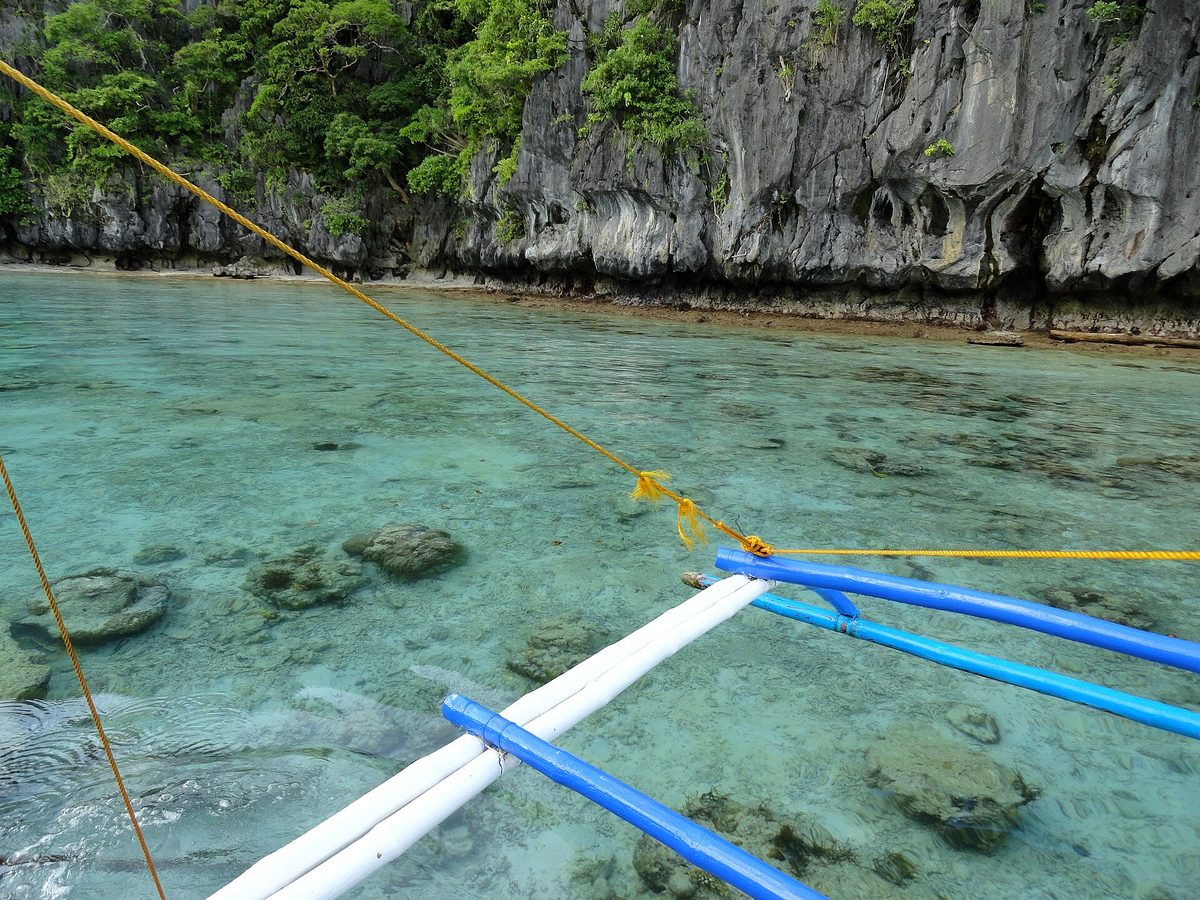
El Nido Island Hopping: Tours A, B, C and D Explained
If you only have time for one boat day in El Nido, take Tour A. It strings together Big Lagoon and a couple of easy beaches in calm, sheltered water, and it is the closest thing to a greatest-hits reel of Bacuit Bay. Want snorkeling and dramatic hidden coves instead of lagoons? Then Tour C is the one to book, and ideally you do both.
The four routes are lettered A, B, C and D, and the differences between them are real once you know what each one actually visits. This el nido island hopping guide breaks down every stop, the 2026 prices and fees nobody mentions until you are standing at the pier, and which tour or combination is genuinely worth your day.
El Nido island hopping tours at a glance
Here is the quick version. Prices are the rough 2026 joiner (shared-boat) rate for the tour itself, before the eco fee and any lagoon entrance fees, which I cover just below.
| Tour | Headline stops | Vibe | Best for | Rough 2026 joiner price |
|---|---|---|---|---|
| Tour A | Big Lagoon, Secret Lagoon, Shimizu Island, Seven Commandos Beach | Calm lagoons, a bit of everything | First-timers and anyone doing only one tour | around ₱1,200–1,500 (~$21–26) |
| Tour B | Snake Island, Entalula Beach, Cudugnon Cave, Cathedral Cave, Pinagbuyutan Island | Caves, sandbars and coves | Travelers who already did A and C and want something different | around ₱1,300–1,500 (~$22–26) |
| Tour C | Hidden Beach, Secret Beach, Talisay Beach, Matinloc Shrine, Helicopter Island | Hidden beaches and the best snorkeling | Snorkelers and strong swimmers; the scenery lover’s pick | around ₱1,400–1,800 (~$24–31) |
| Tour D | Small Lagoon, Cadlao Lagoon, Paradise Beach, Pasandigan Cove | Quiet lagoons and empty beaches | Repeat visitors who want Small Lagoon without the crowds | around ₱1,200–1,400 (~$21–24) |
Two things to fix in your head before you read on. First, you cannot do a combination tour any more, so plans like “Tour A and C in one day” are off the table. Second, Big Lagoon and Small Lagoon are no longer allowed on the same trip, which is exactly why Small Lagoon now lives on Tour D rather than Tour A.
How the El Nido boat tours actually work
Every tour follows the same shape. Boats leave the main beach around 9:00 am (in practice you wait around a while first; this is island time) and you are usually back by about 4:00 to 5:00 pm, in time for a drink at sunset. Each route makes five stops grouped by geography to keep boat time down, and the standard joiner price includes a buffet lunch cooked on board or on a beach, drinking water, a snorkel mask and a life jacket, plus pickup and drop-off in town.
Joiner vs private tours
A joiner, or shared, tour puts you on a bangka outrigger with other travelers. It is cheap, sociable and completely fine. A private charter gives you the whole boat, the freedom to linger, and the option to run the route in reverse to dodge the day-tripper crowds. Through an established operator, a private El Nido tour ran from roughly ₱10,700 for Tour A up to about ₱11,600 for Tour C per boat in 2026 (around $185–200 for the whole boat), so for a group of four or more the per-person cost can land close to a joiner. More on the charter option further down.
The eco fee and other costs nobody warns you about
The big one is the El Nido Eco-Tourism Development Fee (ETDF), the “eco tax” you pay before boarding. In 2026 it is around ₱400 (about $7) for non-Palawan-resident tourists, it is valid for 10 days, and crucially you pay it once and reuse the receipt for every tour inside that window. It is not bundled into the tour price, and the money is collected for the municipality to fund reef protection across the Bacuit Bay marine reserve, not pocketed by your operator. Students, seniors and children pay reduced rates, and under-sixes go free. The fee has crept up over the years, so older blogs quoting ₱200 are out of date.
On top of that, a few stops charge their own entrance fee that is also not in the tour price. Big Lagoon on Tour A and Small Lagoon on Tour D each carry an entrance fee of around ₱200, and the Matinloc Shrine on Tour C is roughly ₱200 if you actually want to climb up and walk around. Kayak rental at the lagoons runs about ₱300 per kayak on Tour A and around ₱600 on Tour D, where there are two lagoons. None of these are huge, but they add up, and they are cash-only, so bring small bills. For how El Nido fits into a wider Palawan trip, our Palawan travel guide maps out the region.
El Nido Tour A explained
Tour A is the famous one, and with Tour C it is the most booked route in town. The theme is a bit of everything: two lagoons, a snorkel stop, a lunch island and a big social beach. If you do a single day on the water, this is my pick, because Big Lagoon alone justifies the trip.
The stops: Big Lagoon, Secret Lagoon, Shimizu Island, Inadawan (Inatula) Island and Seven Commandos Beach.
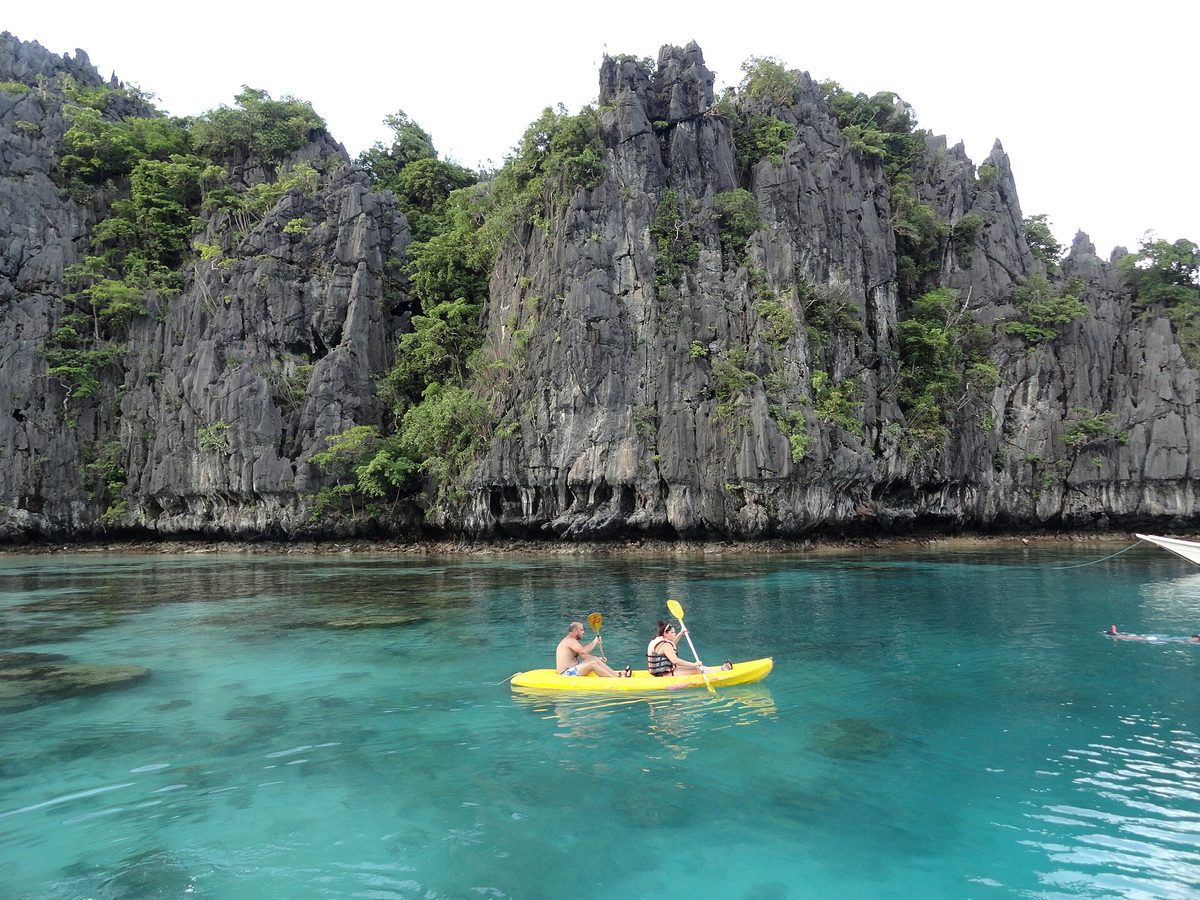
Big Lagoon is the icon, and rightly so. You enter through a shallow channel into a long sheet of jade water walled by limestone, with roughly 45 to 60 minutes to explore. Rent a kayak (the ₱300 is worth it) and paddle to the far end, where the crowds thin and a quiet enclave opens up past the day-tripper bottleneck near the entrance.
Secret Lagoon is the weakest stop on the route, in my honest opinion. You squeeze through a small gap in the rock, one person at a time, into a shallow pool, and the queue to get in and out can eat your whole visit. The limestone walls look great from a drone; at water level it is a quick look and a shuffle back out.
Shimizu Island is the usual lunch stop, with a snorkel before or after depending on the crowd. Inadawan Island (you will also hear it called Inatula) is a short snorkel where guides may swap the exact spot based on conditions. Seven Commandos Beach closes the day: a long sandy beach with bars, swings and volleyball that gets busy, but empties out beautifully if you can linger. Tour A stays inside sheltered water the whole time, which is why it suits nervous swimmers and families. If snorkeling is your main reason to be here, our guide to snorkeling in the Philippines is worth a look before you choose a route.
El Nido Tour B explained
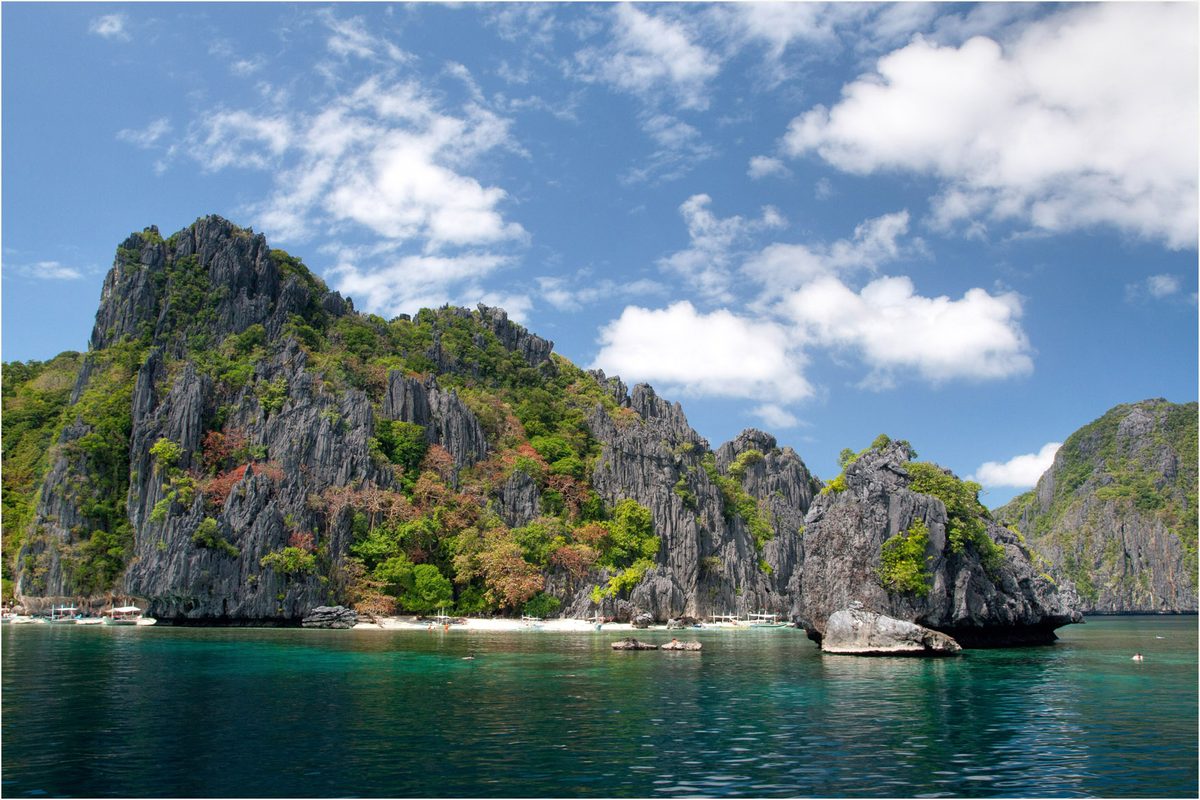
Tour B is the quiet one, themed around caves and coves further south in Bacuit Bay. It is the least hyped of the four and, honestly, the one I would drop first if your days are limited, but it has a couple of genuinely good stops and far smaller crowds than A or C.
The stops: Snake Island, Entalula Beach, Cudugnon Cave, Cathedral Cave and Pinagbuyutan Island.
Snake Island is the highlight, named for the S-shaped sandbar that links two islands. At low tide you can walk the sandbar out into the bay, and a short hike gives you the postcard view from above. It is often the lunch stop. Entalula Beach is a clean white strip with good swimming and snorkeling over the reef.
Cudugnon Cave sits on its own little beach and has real history; it has been an archaeological site and a wartime refuge, and your guide will talk you through it. Cathedral Cave, by contrast, is a let-down. Since around 2024 you cannot go inside (sea snakes and rough water), so the boat just pulls up to the mouth for a photo and you sit there while other boats queue behind you. Pinagbuyutan Island, with its lone-standing karst tower and coconut palms, is a pretty and often-quiet finish.
El Nido Tour C explained
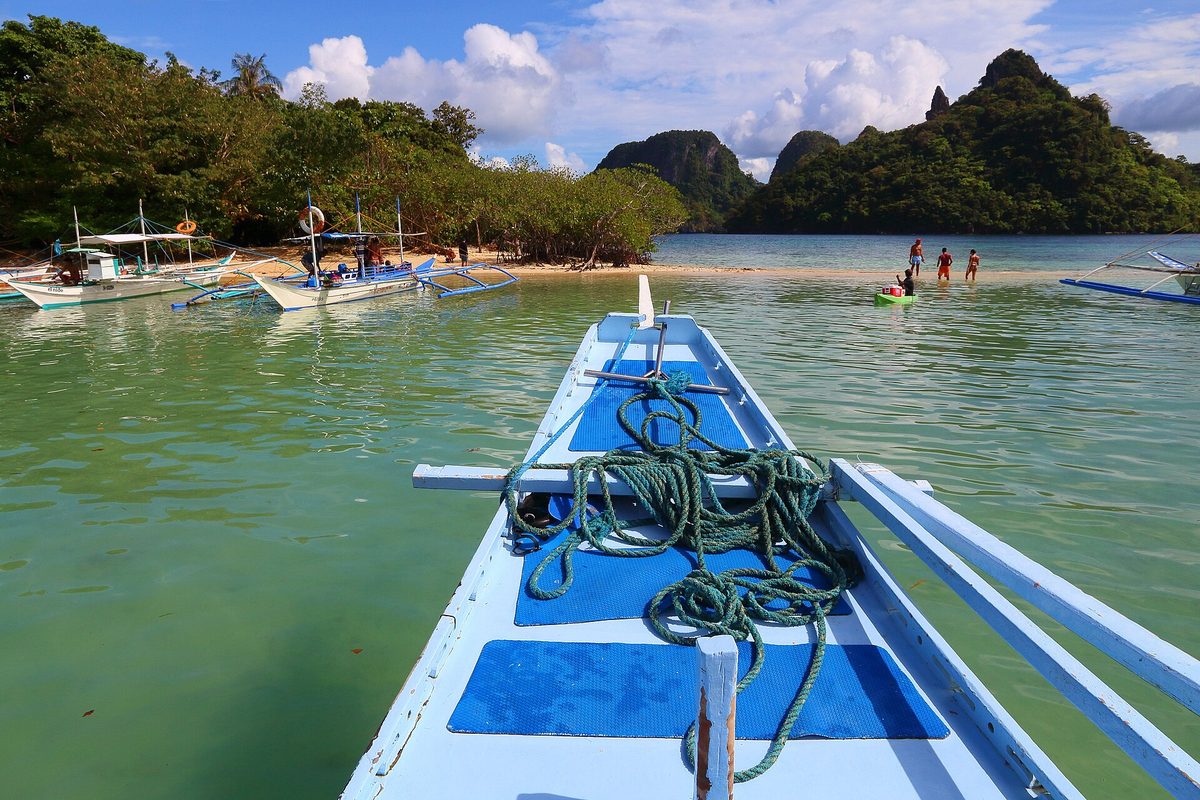
Tour C is the other heavyweight, and the one many people end up rating their favorite. The theme is hidden beaches, and it has the best snorkeling and the most cinematic scenery of any route, particularly the channel between Tapiutan and Matinloc islands. The trade-off: it sits further out in open water, so it is the route most likely to be cut short or rerouted when the wind is up.
The stops: Helicopter (Dilumacad) Island, Hidden Beach, Talisay Beach, Secret Beach and Matinloc Shrine.
Helicopter Island, officially Dilumacad, is named for its silhouette and opens the day with a snorkel and a beach walk. Hidden Beach earns its name; you swim through a gap in the cliffs into a sheltered pocket of turquoise that you would never spot from the boat. Talisay Beach, set in that gorgeous Tapiutan channel, is usually lunch, with excellent snorkeling straight off the sand.
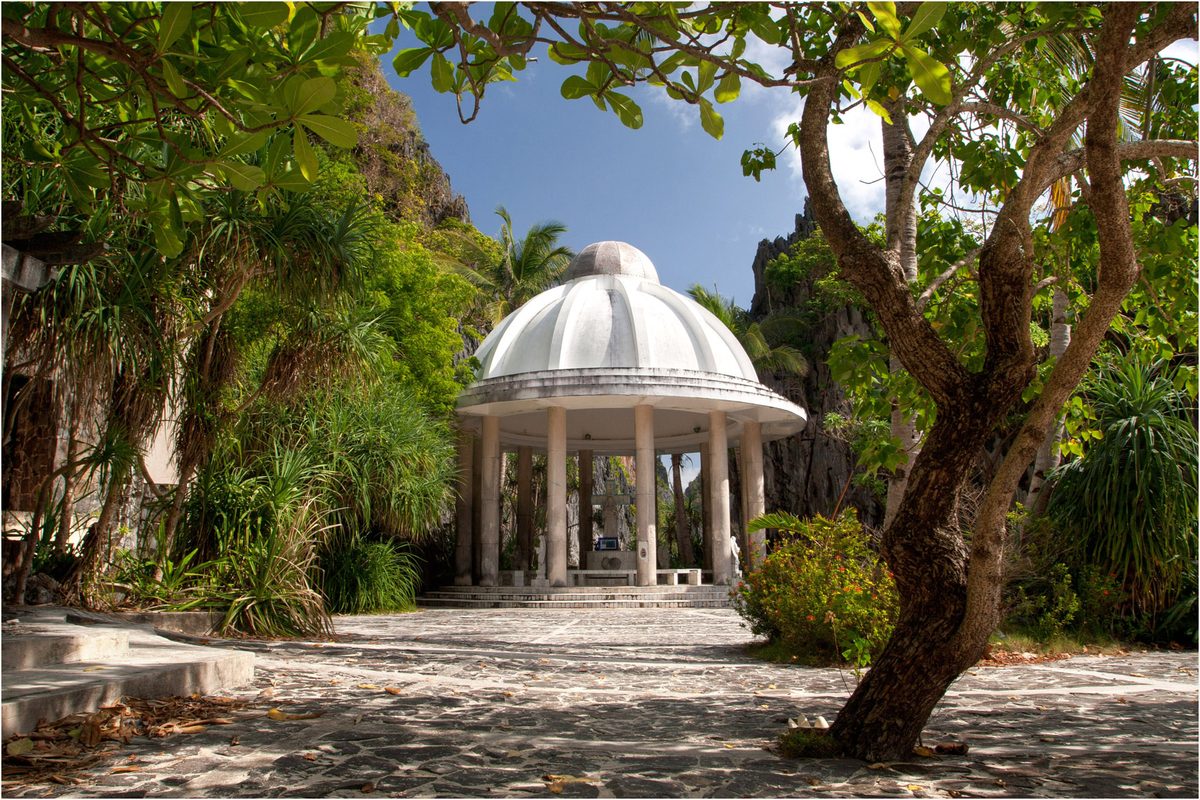
Secret Beach was my single favorite stop across all four tours. You swim through a narrow slot in the rock and a hidden lagoon-beach opens up, with little angelfish in the shallows and nooks in the limestone to explore. Matinloc Shrine closes the route: a neglected shrine and an abandoned mansion with a viewpoint up the rocks. It is on private land, the roughly ₱200 fee is optional, and plenty of boats vote to skip it; I would only pay if you want the climb and the panorama.
El Nido Tour D explained
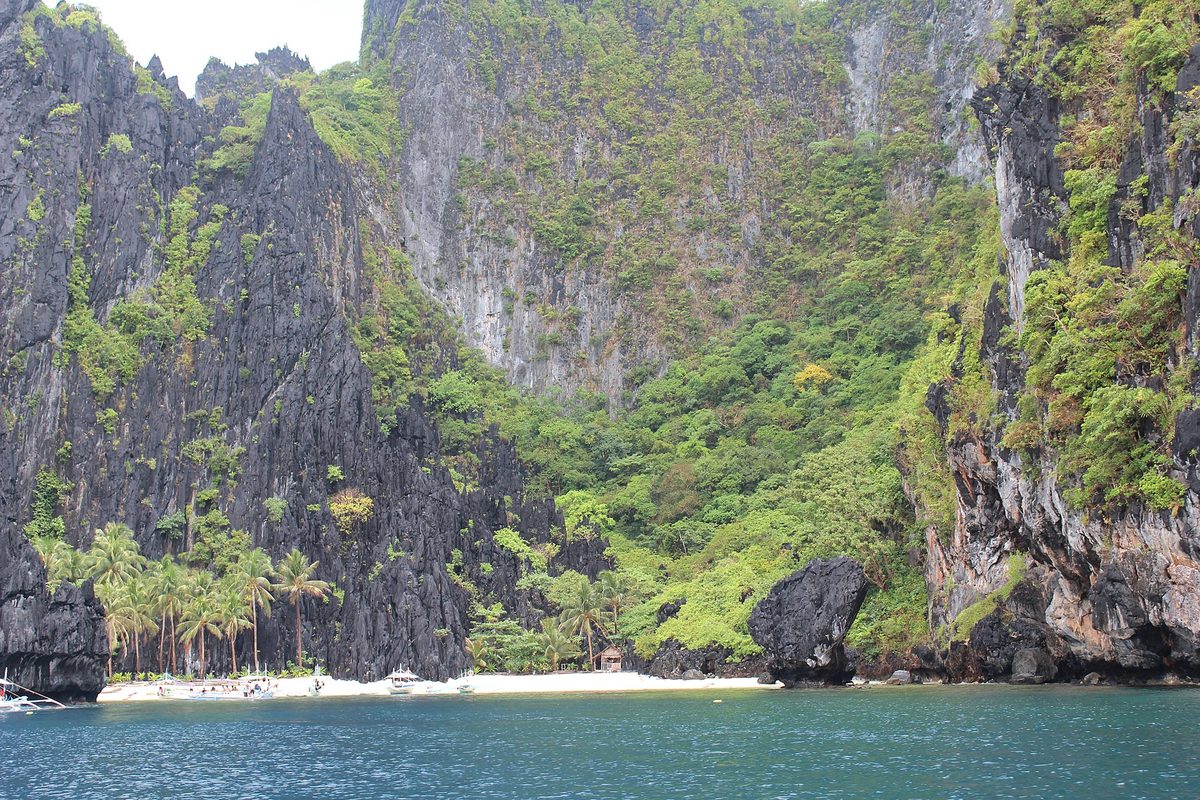
Tour D is the least popular route, and I think that is a mistake on travelers’ part. It concentrates on Cadlao Island, the big one you see straight off El Nido town, and its theme is lagoons and empty beaches. Because Big and Small Lagoon can no longer share a day, Small Lagoon now sits here, which alone makes Tour D worth serious consideration.
The stops: Small Lagoon, Cadlao Lagoon, Pasandigan Cove, Paradise Beach and a quiet lunch beach (you will see it listed as Bukal or Serenity Beach).
Small Lagoon is the draw: you kayak through a small gap in the rocks into a silent, cut-off pool that rivals Big Lagoon and, on a good day, with a fraction of the crowd. Cadlao Lagoon is the rare lagoon with a beach attached, so you can paddle, then pull up on the sand for shade and a swim. Pasandigan Cove and Paradise Beach are reef-and-sand snorkel-and-relax stops, and because fewer boats come this way you are often sharing them with one other group, or nobody. Budget for around ₱600 in kayak rental here, since you will want one at both lagoons.
Combo tours and the best plan by number of days
Combination tours that crammed two routes into one day are no longer permitted, so you simply do one full route per day. Here is how I would sequence it depending on how long you have on the water.
- One day: Tour A. Big Lagoon is the signature El Nido experience, the water is calm, and you get lagoons plus beaches in one go.
- Two days: Tour A then Tour C. This is the classic pairing and covers the full range, the famous lagoons on one day and the best snorkeling and hidden beaches on the other.
- Three days: add Tour D for Small Lagoon and the quiet Cadlao beaches. I would take D over B unless caves are a priority for you.
- Four days: add Tour B to complete the set, and spread the days out rather than doing four in a row, because the beaches start to blur together. Honestly, at that point I would take the ferry north and give one of those days to Coron island hopping instead, which is a completely different kind of day on the water.
One money tip: do all your tours inside a 10-day window so you only pay the ₱400 eco fee once. Booking several routes with the same agency may also shave a little off the price. If you are still weighing El Nido against the wreck-diving capital up north, our El Nido vs Coron comparison breaks down which base suits which traveler.
The private charter option
If your budget stretches, or you are a group of four or more, a private boat changes the day. You set the pace, you can run the standard route in reverse to reach the headline stops before the joiner armada arrives, and nobody rushes you off Secret Beach. With an established operator, private versions of the lettered tours started at roughly ₱10,700 to ₱11,600 per boat in 2026; cheaper local charters can be arranged from around ₱6,000 to ₱10,000 depending on the boat and season. Split between six people, that is often comparable to a joiner, with far more freedom. You still cannot combine banned routes or visit both lagoons in a day, private or not, because those rules apply to everyone.
Best season and sea conditions
The dry season, roughly late November through May, is prime time, with the calmest seas and clearest water falling around December to April. This is when Tour C is most reliable and when the open-water snorkeling is at its best. It is also peak season, so the lagoons are busiest; an early start genuinely helps.
From around June to October the southwest monsoon brings more wind and rain. Tours still run on calmer days, but Tour C is the first to be trimmed or rerouted, and stops like Secret Beach and Hidden Beach can be skipped entirely when the swell makes the cliff entrances unsafe. If you are visiting in this window, keep your plans flexible, do Tour C on the calmest forecast day, and do not panic-book everything for consecutive mornings. Sea conditions, not the calendar, decide what you actually see.
Practical tips for the boat
- Bring a dry bag. The boat gets wet and there is nowhere dry to stash a phone or cash. A 20-litre dry bag costs around ₱350 in town if you did not pack one.
- Carry small bills. The eco fee, lagoon and shrine entrances, kayak rental and beach-bar coconuts are all cash. Break your notes before you sail.
- Reef shoes help, but are optional. Some entrances are rocky; sturdy sandals or Crocs do the job if you would rather not rent water shoes.
- Reef-safe sunscreen, a rash guard and a hat. Shade on the boat is limited and you are in and out of strong sun all day.
- Bring your own mask if you can. Rental gear is included but hit-and-miss; a mask that seals makes the snorkel stops far better.
- Start early and confirm inclusions. If you book through a street reseller rather than a reputable operator, double-check the stops, the lunch and what is and is not in the price.
What is overhyped, and what to skip
El Nido deserves its reputation, but a handful of stops are sold harder than they earn. Secret Lagoon on Tour A is the clearest example: you queue to squeeze through a hole for a shallow, ordinary pool, and it is the one stop I would happily trade for more time at Big Lagoon. Cathedral Cave on Tour B is now a from-the-boat photo and little else, so do not build your day around it. Matinloc Shrine is fine but skippable; the paid walk underwhelms a lot of visitors, and the view exists from the water too. And while Seven Commandos and Helicopter Island are pleasant, they are the most crowded, least distinctive beaches you will see, so manage your expectations and save your excitement for the lagoons and Secret Beach.
The flip side: do not undervalue Tour D just because it is “least popular.” Quieter beaches and an uncrowded Small Lagoon were a highlight, and the same instinct applies across the region. For broader inspiration on where the water is at its best, see our roundup of the best beaches in the Philippines.
El Nido boat tour FAQs
Which El Nido tour is the best?
There is no single best tour, only the best for you. For most first-timers it is Tour A, thanks to Big Lagoon and its calm, sheltered route. Keen snorkelers and beach hunters usually prefer Tour C. If you have two days, do both; they complement each other almost perfectly and cover the full range of what Bacuit Bay does well.
Can you do Tour A and Tour C in one day?
No. Combination tours were banned to ease pressure on the islands, so each route is now a separate full-day trip. Big Lagoon (Tour A) and Small Lagoon (Tour D) also cannot be visited on the same day. To see the highlights of both A and C, simply book them on consecutive days, ideally within your 10-day eco-fee window.
How much does an El Nido boat tour cost in 2026?
Budget around ₱1,200 to ₱1,800 (roughly $21 to $31) for a joiner tour, plus the one-time ₱400 eco fee and small lagoon or shrine entrances of about ₱200 each. All in, one day usually lands near ₱1,800 to ₱2,400 per person. Private boats run from about ₱6,000 to ₱11,600 for the whole boat.
Is the eco fee included in the tour price?
No. The Eco-Tourism Development Fee, around ₱400 for non-resident tourists, is paid separately at the booking office or before boarding, and it is valid for 10 days. Keep the receipt and reuse it for every tour in that window. Lagoon and Matinloc Shrine entrance fees are also separate, so always carry cash in small bills.
What should I bring island hopping in El Nido?
A dry bag, plenty of small-denomination cash, reef-safe sunscreen, a rash guard and hat, and your own snorkel mask if you have one. Sturdy sandals or reef shoes help at rocky entrances. Lunch, drinking water, a life jacket and basic snorkel gear come with the tour, so you mostly need sun protection and a way to keep valuables dry.
How many tours should I do in El Nido?
Two is the sweet spot for most visitors: Tour A and Tour C cover the lagoons, the best snorkeling and the standout beaches. With a third day, add Tour D for Small Lagoon and quieter sands. Doing all four is rewarding but better spread out with rest days, since the beaches start to feel similar. Our El Nido travel guide helps you fill the days in between.
Sources and photo credits
Photo credits
- Kayakers paddling into Big Lagoon on an el nido island hopping tour — Photo: Fabio Achilli from Milano, Italy / CC BY 2.0 via Wikimedia Commons
- The narrow rock entrance to Small Lagoon in El Nido — Photo: Fabio Achilli from Milano, Italy / CC BY 2.0 via Wikimedia Commons
- View over Tapiutan Strait from the Matinloc Shrine viewpoint on El Nido Tour C — Photo: Tuderna / CC BY 3.0 via Wikimedia Commons
- Limestone karst and clear water at Shimizu Island — Photo: Tuderna / CC BY 3.0 via Wikimedia Commons
- Hidden cove of Secret Beach reached through a gap in the cliffs on El Nido Tour C — Photo: Chermione16 / CC BY-SA 4.0 via Wikimedia Commons
- The curving sandbar of Snake Island seen from above on El Nido Tour B — Photo: Marek Ślusarczyk (Tupungato) Photo portfolio / CC BY 3.0 via Wikimedia Commons
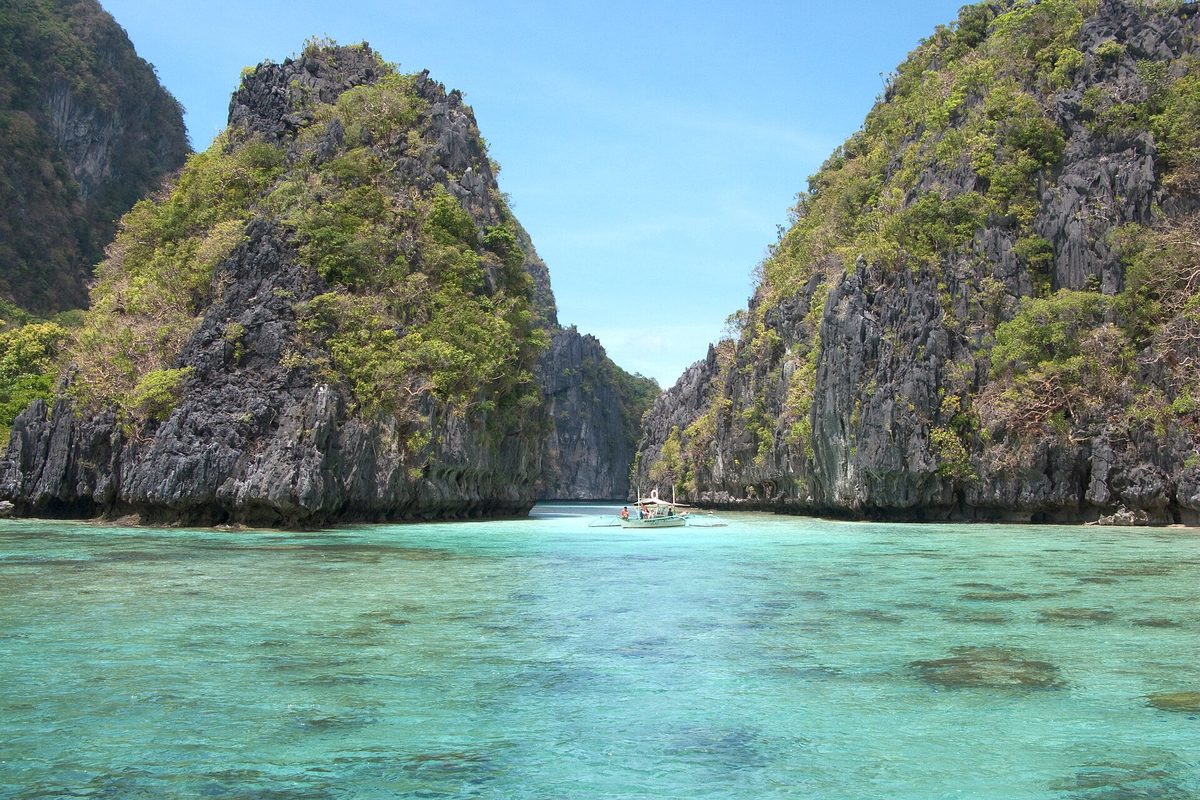
- Karst islands scattered across Bacuit Bay off El Nido town — Photo: Vyacheslav Argenberg / CC BY 4.0 via Wikimedia Commons
Sources
- El Nido Paradise — Eco-Tourism Development Fee (ETDF) rates
- El Nido Paradise — El Nido Tours A, B, C and D
- The Browne Town — El Nido island hopping tours compared (all four)
- Municipality of El Nido — fees that fund environmental protection
About this guide: PhilippinesTourism.org is an independent Philippines travel resource; details were researched and verified July 2026.