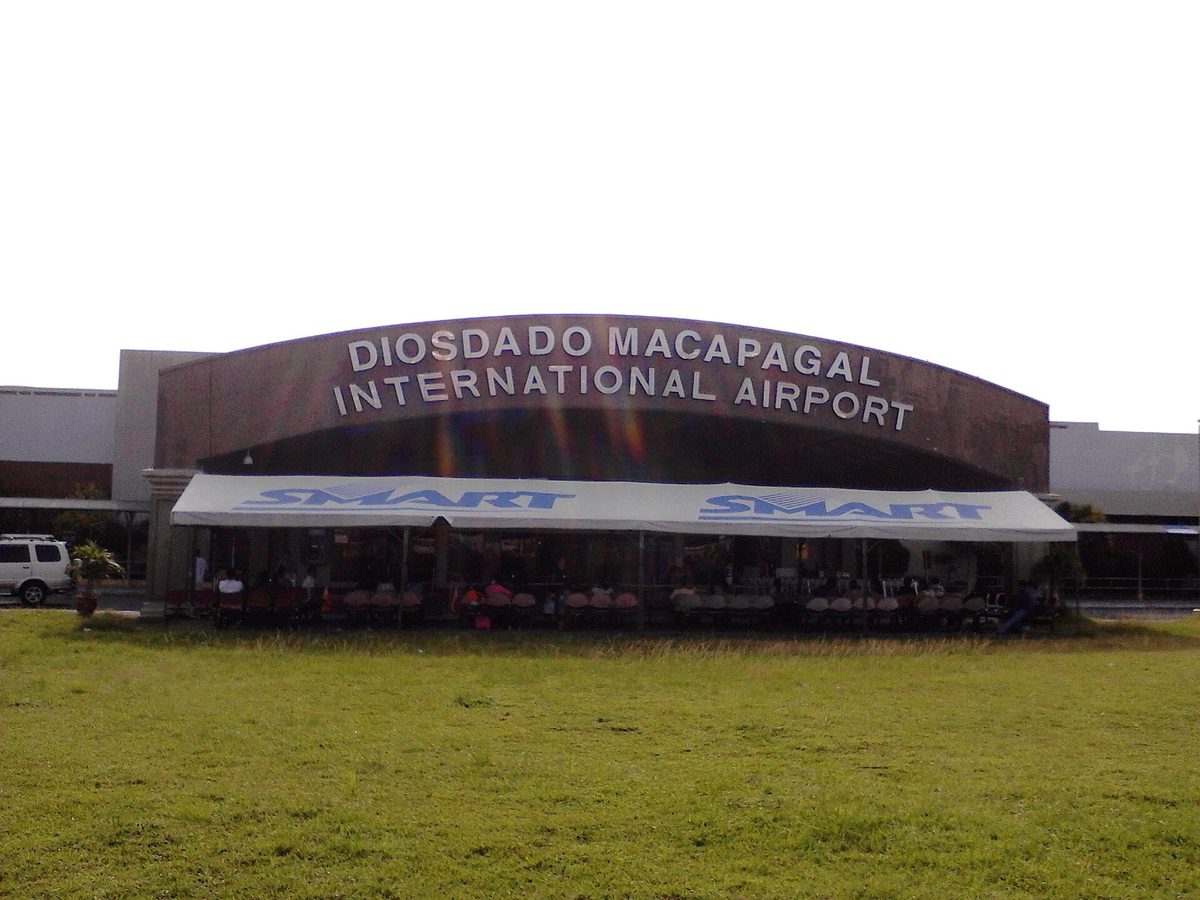
NAIA vs Clark vs Cebu: Which Airport Should You Use?
The honest answer to which airport to fly into Philippines is this: pick by where your trip actually goes, not by the name you recognize. Manila’s NAIA has the most flights and the worst hassle; Clark is the calm northern gateway and now serves Palawan’s small airports; Mactan-Cebu is the clear move if your trip is the islands. Here is the full breakdown.
The right airport flips depending on whether you are headed to Makati, to the rice terraces, to El Nido, or straight to Bohol. So before you commit to a fare, let me walk you through how I actually decide, with 2026 routes, hedged costs, and the terminal shuffle that catches almost everyone out.
At a glance: NAIA vs Clark vs Cebu
Here is the quick comparison I wish someone had handed me on my first trip. Use it as a starting filter, then read the deeper sections for the nuance that actually changes decisions.
| NAIA (Manila, MNL) | Clark (Pampanga, CRK) | Mactan-Cebu (CEB) | |
|---|---|---|---|
| International routes | Extensive network, with Asian and long-haul services | Smaller; mostly Asia, plus Doha | Strong Asia + Gulf, some long-haul |
| Location / access | Inside Metro Manila; brutal traffic, Terminals 1–3 not connected airside (check your booking) | ~80 km north of Manila; calm, P2P bus or Grab to the city | On Mactan Island beside Cebu City; downtown time depends on traffic |
| Crowds / hassle | Busiest and most chaotic; allow extra time | Spacious, modern, usually quick through immigration | Modern award-winning terminal; relaxed and easy |
| Onward domestic | A major domestic hub with onward flights across the country | Fewer domestic, but now the gateway to El Nido & Coron | Excellent Visayas/Mindanao links + ferries next door |
| Best for | Manila, most onward connections, the most fare options | North Luzon, Palawan turboprops, dodging Manila traffic | Cebu, Bohol, Siargao, Dumaguete, Boracay — the islands |
For the bigger picture on moving around the archipelago once you land, see our pillar guide to getting around the Philippines.

NAIA (Manila): the most routes, the most hassle
Ninoy Aquino International Airport is the default for a reason. It is the busiest airport in the country and serves a long list of international airlines, so if you want a nonstop from North America, a Gulf carrier, or a cheap connection through Tokyo, Seoul, Taipei, Hong Kong, or Singapore, NAIA gives you plenty of choice. It is also a major domestic hub with connections across the islands, which matters enormously if your trip needs an onward flight to somewhere off the main tourist map.
The flip side is well documented. NAIA is congested, immigration lines can crawl, and Manila traffic between the airport and the city is genuinely punishing at the wrong hours. If your flight lands in the evening rush, even the short hop to Makati can take far longer than the distance suggests, so allow plenty of extra time. None of this means you should avoid NAIA — it means you should plan around it.
One useful upside: because so many airlines compete here, NAIA usually posts the lowest headline international fares in the country, and it is the one airport where you can realistically choose between a dozen carriers on a single route. If price and flexibility top your list, that competition works in your favor.
The 2026 terminal reshuffle (check your booking)
Here is the part that trips people up. Since the San Miguel-led New NAIA Infra Corp. took over operations, the terminal map has been actively reorganized through 2026, and assignments have shifted more than once. Passenger flights use three terminals, and as a rough guide as of late 2026:
- Terminal 1 — international legacy carriers; Philippine AirAsia’s international flights moved here from T3 in March 2026.
- Terminal 2 — domestic: Philippine Airlines, PAL Express and AirAsia Philippines.
- Terminal 3 — international full-service, including Japan Airlines (here since April 1, 2026), Air China, China Eastern, Vietnam Airlines, Royal Brunei and Shenzhen Airlines. Cebu Pacific, domestic and international, flies from T3 as well.
The crucial detail: the terminals are not connected airside. Transferring between them means exiting, taking the free inter-terminal shuttle or a Grab, and re-checking in, so a terminal change needs a long gap: Japan Airlines, for one, recommends more than 180 minutes for a connection that involves one. Because assignments kept moving in 2025–26, the only reliable source is the terminal printed on your own booking. Read it twice, and if you have a tight international-to-domestic connection at NAIA, give yourself more cushion than you think you need. Our NAIA survival guide goes deep on navigating each terminal and the transfers between them.
Getting from NAIA to the city
Grab is the default: figure on around ₱300–700 (roughly $5–$11) to Makati or BGC depending on surge and tolls (2026), with the journey time down to the traffic, so plan around rush hour. Official coupon taxis from the airport queue are a fine backup with fixed, posted pricing. Whatever you do, skip the touts inside the arrivals hall who quote a flat fare with a straight face; the meter or the app will almost always be cheaper.

Clark (CRK): the calm gateway to the north — and now Palawan
Clark International Airport in Pampanga, about 80 km north of Manila, is the one I quietly recommend to a lot of travelers. Its modern terminal, opened in 2022, is spacious and far calmer than NAIA. Traffic on the way out is minimal compared with Metro Manila, and the whole place simply feels less frantic.
The international network is smaller but real: Clark’s routes include Hong Kong, Taipei, Singapore, Seoul (Incheon), Bangkok, and Doha via Qatar Airways. Carriers include Cebu Pacific, Philippine Airlines, EVA Air, Scoot, and the Korean budget lines like Jin Air and Jeju Air. It is not where you will find the widest long-haul choice — there are few true intercontinental nonstops — but for one-stop Asia connections it holds its own.
Why Clark now matters for Palawan trips
This is the development most guides have not caught up with, and it changes the math for two of the country’s marquee destinations. As of March 29, 2026, all of Cebu Pacific, Cebgo and AirSwift’s turboprop flights moved from NAIA to Clark. In practice:
- El Nido (Lio Airport): the old Manila–El Nido service ended. El Nido is now served by frequent Clark–El Nido turboprop flights — there is effectively no direct NAIA–El Nido flight anymore. (Cebgo took over AirSwift’s flights on July 1, 2026.)
- Coron (Busuanga): the Manila turboprop service to Coron also moved to Clark.
So if El Nido or Coron is your goal and you are routing through the Manila area, Clark is now the airport you want, not NAIA. This is worth knowing before you book a cheap NAIA fare and then discover your onward island flight leaves from two hours up the expressway. Affected travelers during the transition got free rebooking, travel funds, or refunds, but the cleaner move now is simply to book into Clark from the start.
Getting from Clark to Manila (and back)
How long the drive between Clark and Manila takes depends on traffic and on where in the capital you start, so leave a buffer. The Genesis P2P (point-to-point) buses are the easy, cheap option: fares run roughly ₱350–520 (about $6–$8) depending on the route, with services linking Clark Airport to NAIA and Trinoma (2026); check Genesis’s current routes and fare chart before you travel. A Grab or private transfer is door-to-door but naturally pricier, often a few thousand pesos for the long haul, so get a live quote in the app. If your trip is genuinely north of the capital — Pampanga, Tarlac, Zambales, Subic, Baguio and the Cordilleras — you may never need to touch Manila at all, which is the entire point of choosing Clark.
Mactan-Cebu (CEB): the Visayas hub and the nicest terminal in the country
If your trip is the islands — and for a lot of first-timers it should be — Mactan-Cebu International Airport is often the smartest place to land. It sits on Mactan Island right next to Cebu City, it is the second-busiest airport in the country, and its Terminal 2 is genuinely lovely: a wave-form roof held up by enormous glue-laminated timber arches, finished with rattan and mother-of-pearl. It won the World Architecture Festival’s transport category, beating Singapore’s Jewel Changi, and it shows. Arriving here feels like the start of a holiday, not an ordeal to survive.
Operationally it is clean and simple. Terminal 1 handles domestic and Terminal 2 international, so check your booking for which one your flight uses. From Cebu you reach Tokyo, Osaka, Seoul, Taipei, Hong Kong, Singapore, Kuala Lumpur, Macau and Doha, plus select long-haul, via carriers like Cebu Pacific, Philippine Airlines, Cathay Pacific, EVA Air, Singapore Airlines, Scoot, Qatar Airways and others. Many travelers from North America reach Cebu with a single Asian connection, which is no more painful than connecting for Manila.
Why Cebu wins for the central islands
The real magic is what is a short hop away. From Cebu you are perfectly placed for Bohol, Siargao, Dumaguete, Siquijor, Bacolod, Iloilo and parts of Leyte — reachable by quick domestic flights or, in several cases, by fast ferry. OceanJet and 2GO run frequent fast-craft and overnight services from the Cebu piers to Bohol (Tagbilaran), Dumaguete, Siquijor and Ormoc, so you can island-hop without ever returning to an airport. If your itinerary is all Visayas and Mindanao, routing through Manila just to fly back south is a waste of a day. Skip NAIA if your trip is all Visayas; fly straight into Cebu. For ideas once you arrive, see our full Cebu travel guide for where to base yourself. For a lot of travelers the choice comes down to a simple instinct: if the words on your itinerary are beaches, diving, and island-hopping rather than malls and museums, Cebu is your airport, and Manila is just a detour you do not need.
Getting from the airport to Cebu City
It is easy. Grab is the recommended option and runs roughly ₱130–250 (about $2–$4) to the IT Park or business district, with metered taxis from the official queue in a similar range. Journey time depends on where you are headed and on the Mactan bridges, which clog badly at rush hour, so allow extra if you land in the morning or evening peak (2026). Use the official taxi queue, and as everywhere, ignore anyone offering you a ride from inside the hall.
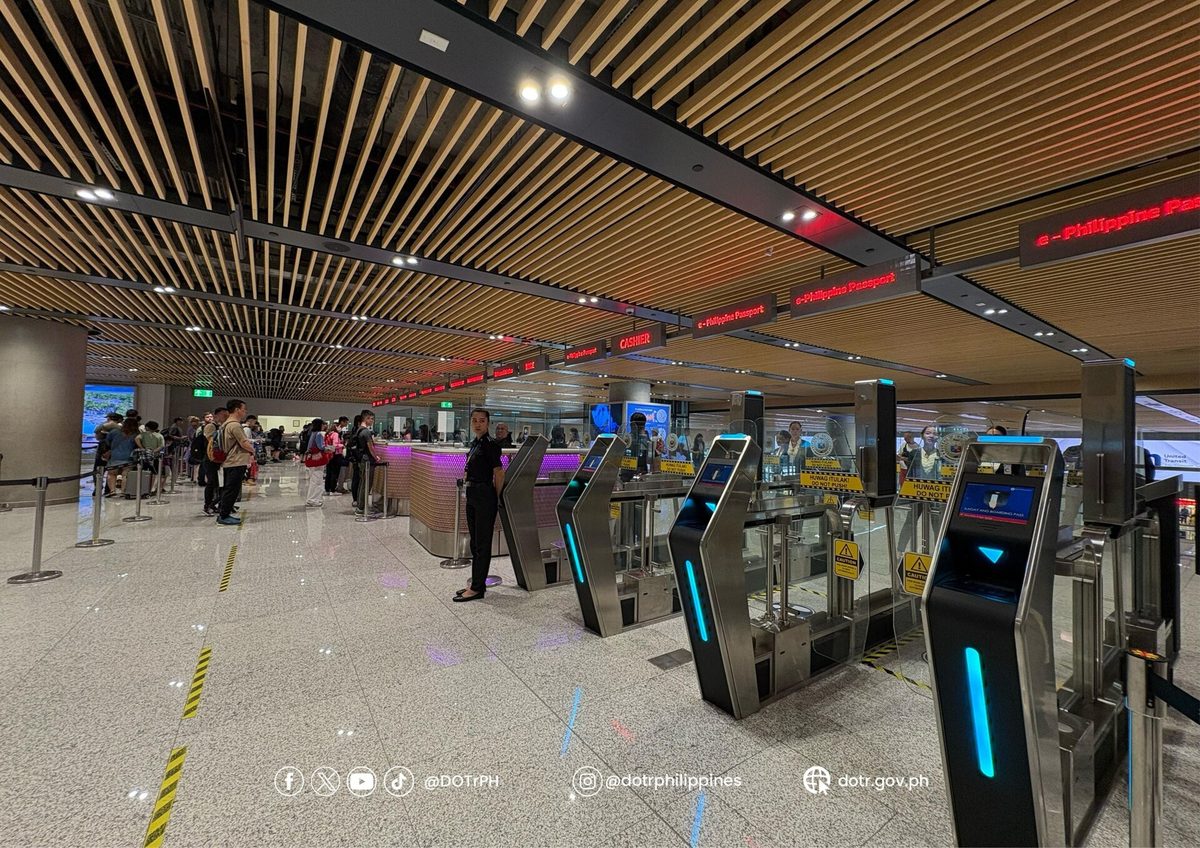
Long-haul vs Asian hub: how your origin changes the answer
Where you are flying from matters as much as where you are going. If you are coming from North America, Europe, or the Middle East, your realistic nonstop options land at NAIA, with a thinner set of long-haul services into Cebu and Clark. So a traveler from Los Angeles or London who wants the fewest connections will often start at NAIA almost by default, then take a domestic flight onward.
But if you are already connecting through an Asian hub — Tokyo, Seoul, Taipei, Hong Kong, Singapore, Kuala Lumpur, or Doha — the calculus opens right up. From those cities you can usually fly directly into Cebu or Clark just as easily as into Manila. That is the moment to ask whether bypassing NAIA entirely saves you a domestic hop. A traveler routing Doha–Cebu, or Singapore–Clark, can land much closer to their real destination and skip Manila’s congestion altogether. If your trip is islands-first and you are connecting in Asia anyway, this is frequently the smartest routing.
Which airport to fly into Philippines: decide by your trip type
Here is how I actually make the call once I know where someone is going. This is the section to screenshot.
- Manila & nearby (Makati, BGC, Cavite, Laguna, Batangas, Tagaytay): NAIA for the widest flight choice; Clark if you are coming from Asia, value a calm arrival, and do not mind the bus or transfer into the city.
- North Luzon (Pampanga, Tarlac, Zambales, Subic, Baguio, the Cordilleras, Vigan): Clark, easily. You skip Manila entirely.
- Palawan — El Nido or Coron: Clark for the turboprop connection now that those flights left NAIA. (You can also fly Cebu–Palawan, or take the longer route via Puerto Princesa.)
- Visayas (Cebu, Bohol, Siargao, Dumaguete, Siquijor, Bacolod, Iloilo): Mactan-Cebu, almost every time.
- Boracay: a special case — the closest airports are Caticlan and Kalibo on Panay, not any of these three; if you are connecting domestically, Cebu or Manila both work as your international entry.
- Mindanao (Davao, Cagayan de Oro, General Santos): often Cebu for the connection, or Davao’s own international airport if your route allows.
- Multi-region grand tour: NAIA, for the sheer density of onward domestic flights to everywhere.
Cost and connections: which is actually cheaper?
On the international ticket itself, NAIA usually offers the lowest headline fares simply because competition is fiercest there, and our guide to cheap flights to the Philippines digs into how to hunt those down. But the cheapest flight in is not always the cheapest trip. If your real destination is Cebu or El Nido, a slightly pricier direct international fare into Cebu — or a Clark arrival that drops you near your turboprop — can beat a cheap Manila fare once you add the extra domestic leg, the overnight hotel, and the terminal-transfer stress.
My rule of thumb: price the whole journey, door to door, including the onward domestic flights or ferries you will actually need. Sometimes NAIA wins on total cost; often, for island trips, Cebu quietly wins on total time and sanity. And whenever you are connecting onto a budget carrier like Cebu Pacific, pre-buy your checked bags online — airport bag fees are punishing, and the cabin allowance is small. The good news on fees: the NAIA terminal fee, ₱950 for international departures and ₱390 for domestic since September 14, 2025, is normally built into the airfare, so you will not be ambushed at departures the way travelers once were; check the fare breakdown when you book.
A few practical notes for any of the three
Whichever airport you pick, a handful of arrival habits make the landing smoother. Grab works at all three — Metro Manila, Clark/Angeles, and Cebu — so download the app and add a payment method before you fly; it spares you the meter-and-tout dance at every arrivals hall. For connectivity, buy a tourist SIM at the official Globe or Smart counters in the arrivals area (passport required, since SIMs must be registered), or set up a travel eSIM before departure so your phone is online the moment you clear immigration.
On timing: immigration moves fastest at Clark and Cebu and slowest at NAIA during peak banks of arrivals, so if you have an onward domestic flight, build in a generous buffer — especially at NAIA, where you may also need to change terminals. And keep a flexible mindset in typhoon season, roughly June through November: domestic flights and ferries do cancel for weather, so a spare day in your itinerary is cheap insurance against a missed island connection. Get these basics right and the airport you chose matters far less than the planning you did around it.
The verdict
If I had to compress it: fly into NAIA when you need the most routes, the cheapest international fares, or a multi-region itinerary with lots of onward flights, and you can stomach the congestion. Fly into Clark when your trip is north Luzon, when you want a calm modern arrival from an Asian hub, or when you are headed to El Nido or Coron on the turboprops that now live there. Fly into Mactan-Cebu when your trip is the Visayas — Cebu, Bohol, Siargao, Dumaguete — which, honestly, is a huge share of why people come here in the first place. Match the airport to the trip and the whole holiday gets easier. Planning a Manila leg too? Our Manila travel guide picks up from there.
Frequently asked questions
Which airport should I fly into for the Philippines?
It depends entirely on your destination. Choose NAIA (Manila) for the widest international and domestic connections, Clark for north Luzon and Palawan turboprop flights, and Mactan-Cebu for the Visayas. The airport closest to where you will actually spend your time almost always makes the smoothest trip.
Is Clark airport better than NAIA?
For arrival experience, often yes: Clark is newer, calmer, and quicker through immigration, with far less traffic leaving the airport. But NAIA has many more international and domestic routes. Clark wins on comfort and for trips north of Manila; NAIA wins on choice and onward connections. The Clark airport vs NAIA call really comes down to your route.
Can I still fly from Manila to El Nido?
Not directly anymore. As of March 2026, the turboprop flights to El Nido (Lio Airport) and Coron moved from NAIA to Clark. To reach El Nido by air near the capital you now fly Clark–El Nido, or connect via Cebu or Puerto Princesa. Always check current schedules when you book, as airline arrangements keep evolving.
Is Mactan-Cebu a good airport for first-time visitors?
Yes, it is one of the easiest and most pleasant airports in the country. The modern Cebu Mactan airport Terminal 2 is simple to navigate, Grab and taxis are straightforward, and you are well placed for Bohol, Siargao, and the rest of the Visayas. For an islands-focused first trip, it is often the better entry point than Manila.
How far is Clark airport from Manila?
Clark is about 80 km north of Metro Manila, and the drive time swings with traffic, so build in a buffer. The cheapest way in is the Genesis P2P bus (around ₱350–520 in 2026), with services between Clark and NAIA or Trinoma; a Grab or private transfer takes you door to door but costs more.
Which is the best airport to fly into the Philippines for cheap flights?
NAIA (Manila) usually has the lowest international fares because it has the most competition and routes, so it is often the best airport to fly into Philippines on price alone. That said, for island trips the cheapest total journey can be a direct arrival into Cebu, once you factor in the extra domestic flight, overnight, and terminal transfers a Manila routing would add.
Sources and photo credits
Photo credits
Images are sourced from Wikimedia Commons under their respective Creative Commons licenses. Full attribution for each photograph appears in the image credits accompanying this article.
Sources
- Clark International Airport (CRK) official website — routes, terminal and airline information.
- Mactan-Cebu International Airport official website — terminals and destinations.
- Manila International Airport Authority / New NAIA Infra Corp. — NAIA terminal assignments.
- Philippine News Agency & Cebu Pacific announcements — turboprop relocation to Clark (effective March 29, 2026).
About this guide: PhilippinesTourism.org publishes independent, on-the-ground Philippines travel guides. Information verified October 2026.