Siargao Island Hopping: Naked, Daku and Guyam
The classic Siargao day trip is a three-stop boat loop out of General Luna: Naked, a bare sandbar with no shade; Daku, the big island where you eat lunch; and Guyam, a tiny palm islet ringed by reef. Do it as a cheap join-in group tour or split a private boat. Here is how it works in 2026, what it costs, and how to dodge the crowds.
I have run this trip in a packed joiner boat and on a quiet private charter at dawn, and the gap between a good day and a mediocre one comes down to two things: when you leave and how you treat each island. So before the section-by-section detail, here is the loop at a glance.
The three islands at a glance
Most boats visit all three in a single morning-to-mid-afternoon loop. They are small. None of them takes more than a few minutes to walk across, and the appeal is the water and the sand, not the land. This table is the fastest way to set expectations before you book.
| Island | Size | What to do | Shade? | Snorkel? |
|---|---|---|---|---|
| Naked Island | Tiny sandbar, roughly 100 m of bare sand | Photos, swimming, sunbathing, drone shots | None at all | Poor (sand bottom, little coral) |
| Daku Island | Largest of the three; a real village | Lunch, long beach walk, palm forest, hammocks | Yes (palms, rentable huts) | Okay in patches near the reef edge |
| Guyam Island | Smallest; a palm islet you cross in 20 seconds | Snorkeling, photos, beach lounging | Some (cluster of coconut palms) | Best of the three (reef rings the island) |
If you only remember one line: bring sun protection for Naked, your appetite for Daku, and your mask for Guyam. The order your captain runs them in varies with tide and weather, but the substance of the day is the same.
Naked Island: a sandbar and nothing else
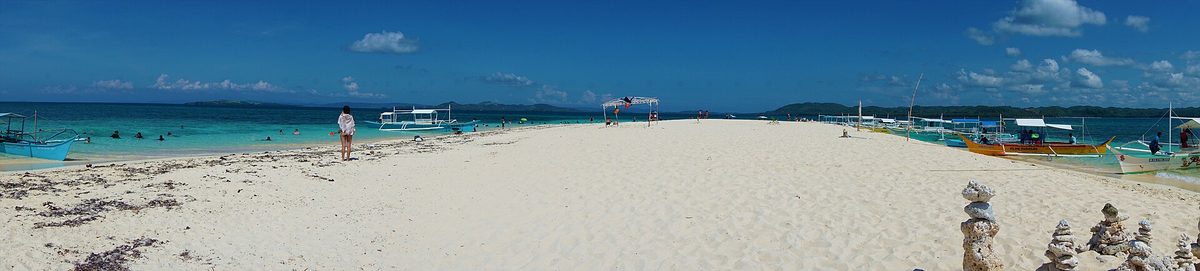
Naked Island earns its name honestly. It is a strip of fine white sand sitting in open water with no trees, no huts, no shade, and (depending on the tide) sometimes barely above the waterline. A little grass has crept in over the years from seeds dropped by birds, but for practical purposes this is a naked sandbar surrounded by clear, shallow turquoise water. Some operators also call it “Pansukian,” and a few older boatmen still say “Snake Island,” which is a different, informal name you will occasionally hear. It is the same place.
The whole point is the emptiness. There is nothing to buy and nothing to see beyond the sand and the sea, and that is exactly why it photographs so well. You walk the sandbar, swim around it, take your drone up if you have one, and lie down. People stay maybe 30 to 45 minutes here. It is the most exposed stop and the one that punishes anyone who skipped sunscreen.
Two honest warnings about Naked Island. First, the shade situation is not “limited,” it is zero, so a hat, a rash guard, and reef-safe sunscreen are not optional in the middle of the day. Second, the sandbar shrinks and shifts with the tide. Most captains time it for lower water when the bar is widest; if you arrive at high tide you may find a thinner sliver of sand and more people crowded onto it. The snorkeling here is the weakest of the three because the bottom is mostly sand, so save your mask for later.
Daku Island: lunch, locals and the only proper beach
Daku means “big” in the local Surigaonon language, and it is the largest island on the loop by a wide margin. This is the one with a long stretch of real beach, a working fishing village, palm trees you can actually sit under, and a row of food huts run by families who have been feeding island-hoppers for years. It is the lunch stop, and on most tours it is where you spend the longest, usually an hour or two.
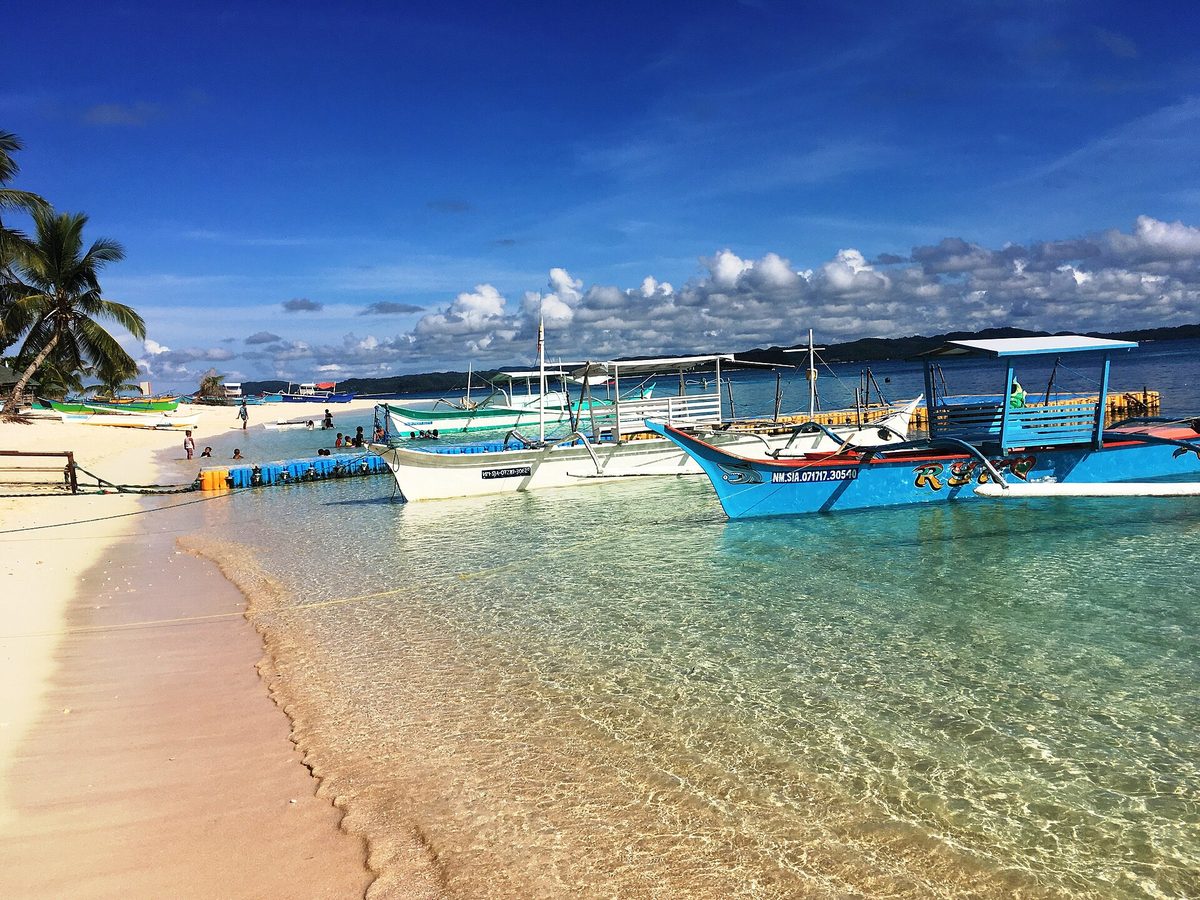
Lunch on Daku is the heart of the day. If your tour includes food, it usually arrives as a spread: grilled fish or squid, chicken, rice, a vegetable dish, and sliced mango or pineapple, eaten in one of the bamboo huts that comes with your boat fee. If you booked a bare private boat with no lunch, you have two options: bring your own food and pay a family to grill it, or buy fresh seafood and rice on the spot. Either way, budget a little cash. Hut rental and a cooked meal for a small group typically runs somewhere around 150 to 400 PHP (very roughly $2.50 to $7) per person depending on what you order, and prices are set by the families, not a fixed tariff.
Beyond the food, Daku rewards a wander. Walk the beach away from the huts and you reach a quieter palm forest and the edges of the village, where kids play and fishing boats are pulled up on the sand. This is the one island where it pays to explore on foot rather than just plant yourself in front of lunch. The swimming is good, and there are patches of okay snorkeling out toward the reef, though it is not the headline reason to come here.
Daku is also where the over-tourism question is most visible. On a busy weekend the central beach can fill with boats and day-trippers, and the trash that comes with that is real. More on how to handle that below, but the short version: walk away from the crowd and take everything you brought back to the boat with you.
Guyam Island: the postcard islet
Guyam is the smallest and, for a lot of people, the favorite. It is a near-circular scrap of sand topped with a tight cluster of coconut palms that takes about 20 seconds to cross on foot. From the water it looks like the cartoon idea of a desert island, and the reef that rings it makes this the best snorkeling stop of the three. A big coral shelf wraps most of the island, so you can wade out, drop your face in the water, and find fish without swimming far.
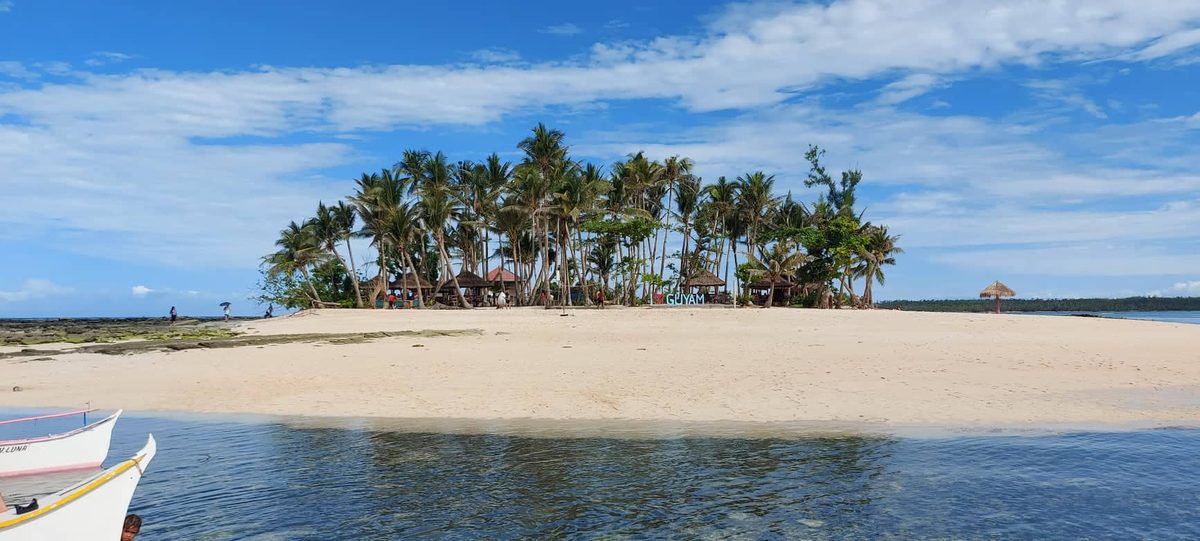
There is a little more going on here than on Naked. A local keeps an eye on the island and will climb a palm to cut you a fresh coconut for around 50 to 70 PHP (about $1). On busier days a small beach kiosk sells cold drinks, juices and snacks, though do not count on it being open. People tend to linger on Guyam longer than they plan to; the combination of palm shade, photogenic sand and easy reef snorkeling makes it hard to leave.
Two practical notes. The palms give you some shade, but not much for a full boatload, so the sun rules from Naked still apply. And because the whole island is fringed by living coral, watch your feet in the shallows and do not stand on the reef. Guyam is small enough that careless visitors do real damage fast. If underwater time is your priority, it is worth knowing how Guyam stacks up against the country’s bigger reefs; our guide to snorkeling in the Philippines puts it in context.
How to book your siargao island hopping trip: join-in vs private boat
There are two ways to do this loop, and choosing the right one is the single biggest decision you will make. Both leave from the General Luna area; the difference is whether you share the boat with strangers or keep it to yourselves.
- Join-in (joiner) group tour: You pay per head and share a larger boat with other travelers. This is the cheapest option for solo travelers and couples, and it is sociable. The trade-off is less flexibility on timing and how long you linger at each stop. Expect to pay somewhere around 1,500 to 1,800 PHP (very roughly $25 to $30) per person, which usually bundles the boat, lunch on Daku, and basic snorkel gear. Hostels, surf camps and dive shops in General Luna all sell these, and they are easy to book the day before.
- Private boat charter: You rent the whole banca and split it with your group. This is the move if there are a few of you, if you want to set your own pace, or if you want to beat the crowds by leaving at dawn. As of 2026 the official tiered rates posted at the General Luna tourism office run about 3,000 PHP for a small boat (up to about five passengers), 4,000 PHP for a mid-size boat (around seven to nine), and 4,500 PHP and up for larger groups (about 11 to 14). That works out to roughly $50 to $75 for the boat, split among everyone aboard. Lunch and gear are usually not included at that bare rate, so factor those in.
The math is simple. Solo or as a couple, the joiner tour almost always wins on price. As a group of four or more, a private boat often costs about the same per person and gives you the whole day on your own schedule. You do not need an agency or a fixed contact to arrange a private boat: you can walk up to the tourism office or the boat landing near the public market in General Luna and sort it on the spot, though booking the afternoon before saves time at the dock.
Fees, what’s included and what to confirm
On top of the boat or per-head price, there are small environmental and docking fees that are not always quoted upfront. Budget roughly 100 PHP (under $2) per person in general/terminal fees, plus modest per-boat docking charges for landing on Guyam and Daku (on the order of 50 to 100 PHP each). These go toward upkeep and the local barangays, and the exact amounts get adjusted from time to time, so treat them as a guide rather than a fixed tariff. Bring small bills in cash, because there are no card machines on a sandbar.
Before you hand over money, confirm three things: whether lunch is included or extra, whether snorkel masks come with the boat or you need to rent them in town, and roughly what time you will depart and return. A good operator answers all three without hesitation. If you care about snorkeling, double-check the mask situation, because the gear on cheap joiner boats is hit or miss and a leaky mask ruins Guyam.
Where you leave from, timing and how long it takes
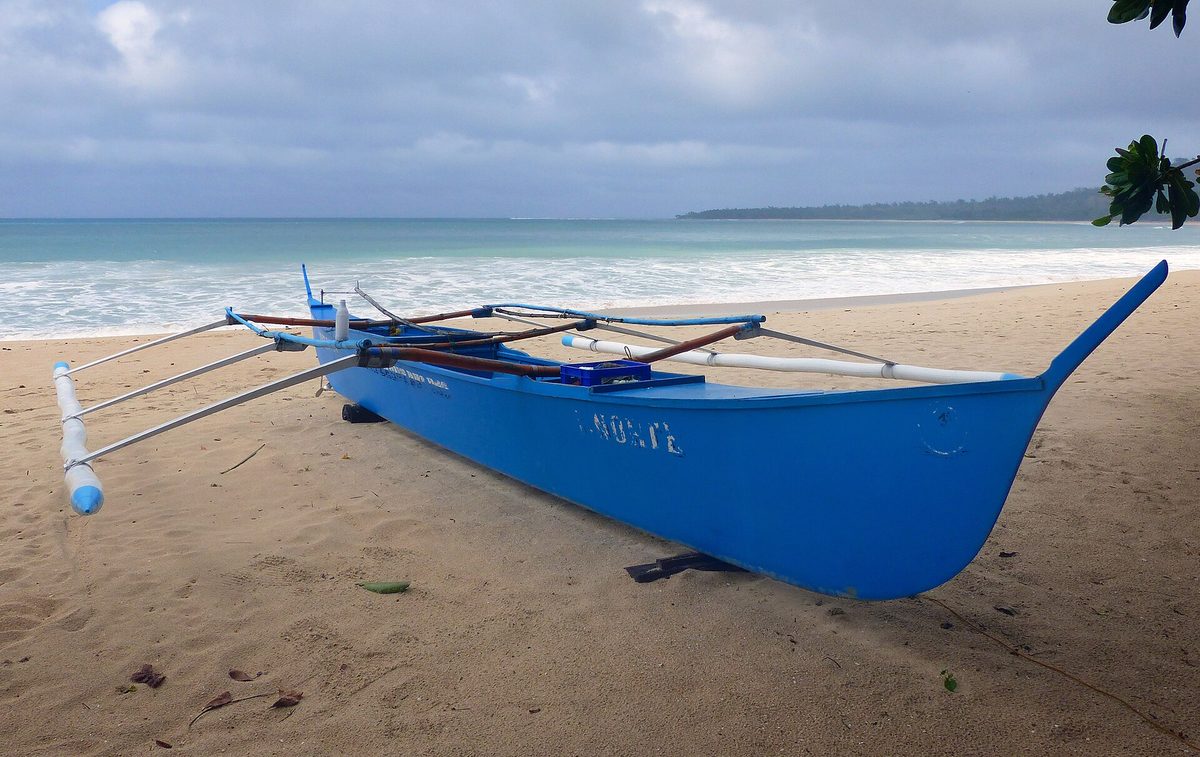
Almost all tri-island trips depart from General Luna, the main town and tourist hub on Siargao’s east coast, where most people stay. The boat landing and tourism office sit near the public market, a short tricycle ride or walk from the Cloud 9 and Tourism Road accommodation strip. A few operators run out of other launch points, but General Luna is the standard and the most convenient. If you are still sorting logistics for the wider trip, our best time to visit Siargao guide lines up the seasons with what you actually want to do.
The islands are close. Naked, Daku and Guyam sit just off the coast, and the boat hops between them take roughly 10 to 30 minutes each. A typical loop runs four to six hours door to door: leave General Luna mid-morning, do the three stops with a long lunch on Daku, and be back by mid-afternoon. You can stretch it longer on a private boat if you want a sunset on Naked, or compress it if the weather turns.
Leave early. This is the most useful sentence in the article. Boats that depart around 8 to 9 a.m. reach the islands before the bulk of the joiner fleet and before the midday heat. By late morning on a sunny weekend, Naked and Daku can be busy. A dawn or early-morning start, especially on a private boat, can mean you have a sandbar more or less to yourself for the first half hour, which is the difference between the photos you imagined and a crowd scene.
Best season for island hopping in Siargao
Siargao has two faces. The surf season that made it famous (roughly August to November, peaking in September and October) brings the swell that draws surfers to Cloud 9, but bigger swell and the northeast wind can also mean choppier water and the occasional cancelled boat day for island hopping. The calmer window for this particular day trip is generally the drier, flatter stretch from around March to early June, when seas tend to be glassy and visibility for snorkeling is at its best.
Here is the honest 2026 framing. Weather on Siargao is genuinely unpredictable year-round; a brilliant morning can turn into a tropical downpour for an hour and then clear again. Even in the calmer months you should expect the odd shower, and even in surf season there are plenty of flat, sunny days perfect for the islands. Because you can book this trip a day ahead, the smartest play is to stay flexible and go on whichever morning the forecast looks calmest, rather than locking it in weeks out. March to May gives you the best odds of calm water but also the biggest crowds and the school-holiday rush; June to October trades a little weather risk for noticeably thinner crowds.
If your dates are fixed and they fall in the rougher months, do not despair. Watch the daily forecast, ask your operator each morning, and grab the first calm window. For a fuller picture of conditions across the year, our guide to the best time to visit Siargao breaks it down month by month.
What to bring
This is a half-day on open boats and tiny islands with almost no facilities, so a little packing goes a long way. Here is what actually matters.
- Reef-safe sunscreen, a hat and a rash guard. Naked Island has zero shade and you will be on the water for hours. Reef-safe matters because you will be swimming over living coral at Guyam.
- A dry bag. The weather flips fast and spray gets everywhere. Keep your phone, camera and cash sealed. This is the item people most regret skipping.
- Cash in small bills. For fees, coconuts, lunch extras and drinks. Nowhere on the islands takes cards, and change for big notes is scarce.
- Your own snorkel mask if you have one. Rental gear on joiner boats is unreliable. Guyam’s reef is worth a mask that actually seals.
- Water and snacks. Bring more water than you think. Vegetarians and vegans especially should pack fruit and snacks, since the island food is heavily fish and meat.
- A towel, a change of clothes and sandals you can swim in.
Crowds, sustainability and travelling responsibly
Siargao’s popularity exploded in the years before and after it was crowned in glossy travel lists, and the tri-island loop is the busiest boat trip on the island. On a sunny weekend or a peak-season holiday, Naked and Daku can get genuinely crowded, with dozens of boats and the noise, litter and reef pressure that come with that. Pretending otherwise would be dishonest. The good news is that the crowding is concentrated and easy to plan around.
To actually enjoy these islands, do three things. Go on a weekday rather than a weekend. Leave early, before the joiner fleet arrives, so you get the empty-sandbar window. And on the busiest island, Daku, simply walk away from the cluster of huts toward the quieter end of the beach, where you will often find space to yourself.
The sustainability piece is not optional. These are tiny, fragile islands with living reef right at the shoreline, and small mistakes scale fast when thousands of visitors a year repeat them. Do not stand on or touch the coral, especially in Guyam’s shallows. Take every scrap of trash back to the boat, including fruit peels and cigarette butts; there is no waste system on a sandbar. Use reef-safe sunscreen. Buy your coconuts and lunch from the island families rather than bringing everything from town, because that local income is part of why the islands stay welcoming. None of this costs you anything, and it is the difference between these places surviving the attention or not. If you want to go deeper on doing this well across the country, our overview of island hopping in the Philippines covers the same principles on bigger trips.
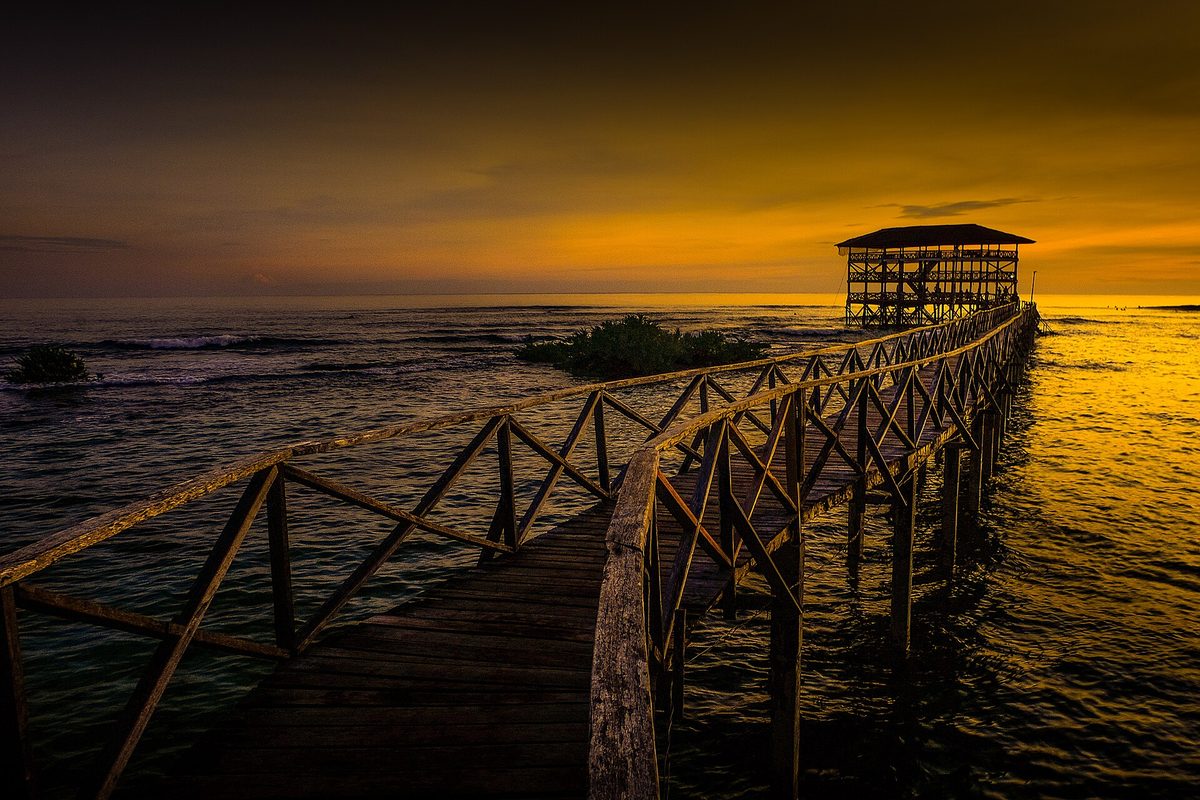
Beyond the big three: other Siargao boat trips
The Naked-Daku-Guyam loop is the headline, but it is not the only water trip on Siargao, and it is worth being clear about what is what so you do not double up or overpay. Plenty of first-timers assume one boat day covers everything, but siargao island hopping in the strict sense means just these three islands, and the other trips below are separate outings you book on their own.
- Corregidor Island: A larger, palm-covered island with a short hike to a viewpoint, sometimes added onto the tri-island itinerary for an extra fee. If you want it, say so when you book and consider dropping one of the three stops, because adding it makes for a long day.
- Sugba Lagoon and Magpupungko rock pools: A completely different kind of day, on the other side of the island, built around an emerald lagoon and tidal rock pools rather than sandbars. These are land-and-lagoon trips, not part of the tri-island boat loop, and they each deserve their own half-day rather than being squeezed onto the island-hopping boat.
- Sohoton Cove and Bucas Grande: This is the big one, and it is a separate, longer and more expensive trip, not a stop on the tri-island loop. Sohoton Cove sits within the Bucas Grande island group, a couple of hours away by boat or via a road-and-boat combination, and the headline attractions are sea caves, a stingless jellyfish lagoon and a hidden cove you enter at low tide. It usually runs as its own full-day excursion. Do not assume your General Luna tri-island boat is going there; if Sohoton is on your list, book it specifically.
If you are weighing how all of this fits into your stay, our roundup of things to do in Siargao puts the boat trips alongside surfing, food and inland adventures, and the wider Siargao travel guide ties the whole island together. Travellers who do not surf will find this loop is one of the easiest wins on the island; our take on Siargao for non-surfers goes further into that.
Frequently asked questions
How much does Siargao island hopping cost in 2026?
Reckon on around 1,500 to 1,800 PHP (very roughly $25 to $30) per person for a join-in group tour that includes the boat, lunch and basic snorkel gear. A bare private boat runs about 3,000 to 4,500 PHP (roughly $50 to $75) split among your group, with lunch and gear extra. Add roughly 100 PHP per person plus small docking fees. Bring cash, and treat every figure as an approximation, because rates and fees drift over time.
Which is better, a private boat or a joiner tour?
It depends on group size. Solo travelers and couples almost always save money on a join-in tour, and it is more sociable. Groups of four or more usually find a private boat costs about the same per head while letting you set your own pace and leave early to beat the crowds. If timing and flexibility matter to you, go private.
Do I need to book the tri-island tour in advance?
No. You can arrange this a day ahead, or even walk up to the General Luna tourism office or boat landing on the morning. Booking the afternoon before is smart because it lets you pick the calmest-looking day and saves time at the dock, but you do not need to reserve weeks out. Flexibility actually helps, given how fast Siargao’s weather changes.
Is there shade and food on the islands?
Mostly on Daku. It has palm trees, rentable bamboo huts and family-run food stalls serving grilled seafood, chicken, rice and fruit, and it is the lunch stop. Guyam has a small cluster of palms for partial shade and sometimes a drinks kiosk. Naked Island has no shade and nothing to buy at all, so come prepared with sun protection.
Is the Sohoton Cove jellyfish lagoon part of this tour?
No, and this trips a lot of people up. Sohoton Cove and the stingless jellyfish lagoon are in the Bucas Grande island group, a separate full-day excursion a couple of hours from General Luna. The Naked-Daku-Guyam loop does not go there. If you want Sohoton, book it as its own trip; do not expect your tri-island boat to include it.
What is the best time of day for island hopping?
Morning, ideally departing around 8 to 9 a.m. or earlier. You reach the islands before the main joiner fleet, the light is good, the sun is less brutal, and tides are often lower, which widens Naked Island’s sandbar. Late-morning starts on busy weekends mean sharing the sandbars with a crowd. Early is calmer, cooler and far more photogenic.
Sources and photo credits
Photo credits
- Naked Island sandbar — Lucky Ambago Purok Otso / CC BY-SA 4.0 via Wikimedia Commons
- Daku Island beach — ChaasPrime / CC BY-SA 4.0 via Wikimedia Commons
- Guyam Island islet — Azposse / CC BY-SA 4.0 via Wikimedia Commons
- Siargao coastline near General Luna — Billy Palatino / CC BY-SA 4.0 via Wikimedia Commons
- Outrigger banca boat — Bernard Spragg. NZ (CC0) via Wikimedia Commons
Sources
- Philippine Department of Tourism (philippines.travel) — official destination information for Siargao and the Philippines.
- Provincial Government of Surigao del Norte — the provincial authority covering Siargao and its municipalities.
- PAGASA — the Philippine weather bureau, for seasonal and daily marine conditions.
About this guide: PhilippinesTourism.org is an independent Philippines travel resource. Prices and schedules were verified June 2026; confirm current details before you travel.