Ferries in the Philippines: 2GO, OceanJet and How to Book
Traveling the Philippines by sea means picking between two very different things wearing the same word. A Philippines ferry is either an overnight ship the size of a small cruise liner or a 30-seat fast craft that gets you across a strait before your coffee cools. This guide covers both: the routes worth taking, the ones I’d fly instead, and exactly how to book in 2026.
Below is the honest version, including which operator to trust on which route, what the cabin classes actually feel like, and where the buy-at-the-port system still rules. Sea travel is part of how you experience an archipelago of 7,000-plus islands, and once you know the system it’s one of the best parts of getting around the Philippines.
Philippines ferry routes at a glance
Here are the crossings travelers actually take, with the operator I’d book, rough 2026 fares, and where to buy. Treat fares as ballpark (₱63 = $1 in 2026); fuel surcharges and peak-season pricing move them around.
| Route | Best operator | Duration | Rough fare (2026) | Book where |
|---|---|---|---|---|
| Cebu – Tagbilaran (Bohol) | OceanJet (fast craft) | ~2 hrs | ~₱1,000–1,560 (~$16–25) | 12go.asia / Barkota |
| Cebu – Dumaguete | OceanJet | ~4 hrs direct | ~₱1,200–1,800 (~$19–29) | 12go.asia / Barkota |
| Dumaguete – Siquijor | OceanJet / Montenegro | ~30–45 min | from ~₱350 (~$6) | Port or 12go.asia |
| Cebu – Ormoc (Leyte) | OceanJet / SuperCat | ~2.5–3 hrs | ~₱900–1,300 (~$14–21) | 12go.asia / Barkota |
| Batangas – Caticlan (Boracay) | 2GO / Starlite (RoRo) | ~10–11 hrs | ~₱2,000–3,000 (~$32–48) | 2goticket.ph / port |
| Manila – Coron (Palawan) | 2GO (weekly) | ~13 hrs overnight | ~₱3,700–4,100 (~$59–65) | 2goticket.ph |
| Manila – Cebu | 2GO | ~22–23 hrs | ~₱2,500–6,000 (~$40–95) | 2goticket.ph |
| El Nido – Coron (Palawan) | Montenegro / Jomalia | ~3.5 hrs | ~₱2,800–3,900 (~$44–62) | Port or 12go.asia |
| Caticlan – Boracay | Pumpboat (bangka) | ~10–15 min | ~₱50–100 + port fees | Buy at jetty |
One more orientation point before the table: there’s no single national ferry timetable. Each operator publishes its own schedule, prices shift with fuel and season, and the smallest bangka routes aren’t listed anywhere online at all. That fragmentation is exactly why this guide exists, and why I lean on a couple of aggregators to see the whole board at once.
The split is geographic. In the Visayas you live on fast craft (OceanJet, SuperCat, FastCat) for hops measured in hours. To reach Palawan or move between Manila and the central islands, you’re on a long-haul 2GO ship measured in half-days. Below, the operators and how to use each.
The main ferry operators (and which to trust)
Five names cover almost everything a visitor needs. Knowing who runs what saves you from booking a 12-hour overnight when a two-hour fast craft exists, or vice versa.
2GO Travel: the overnight long-haul ships
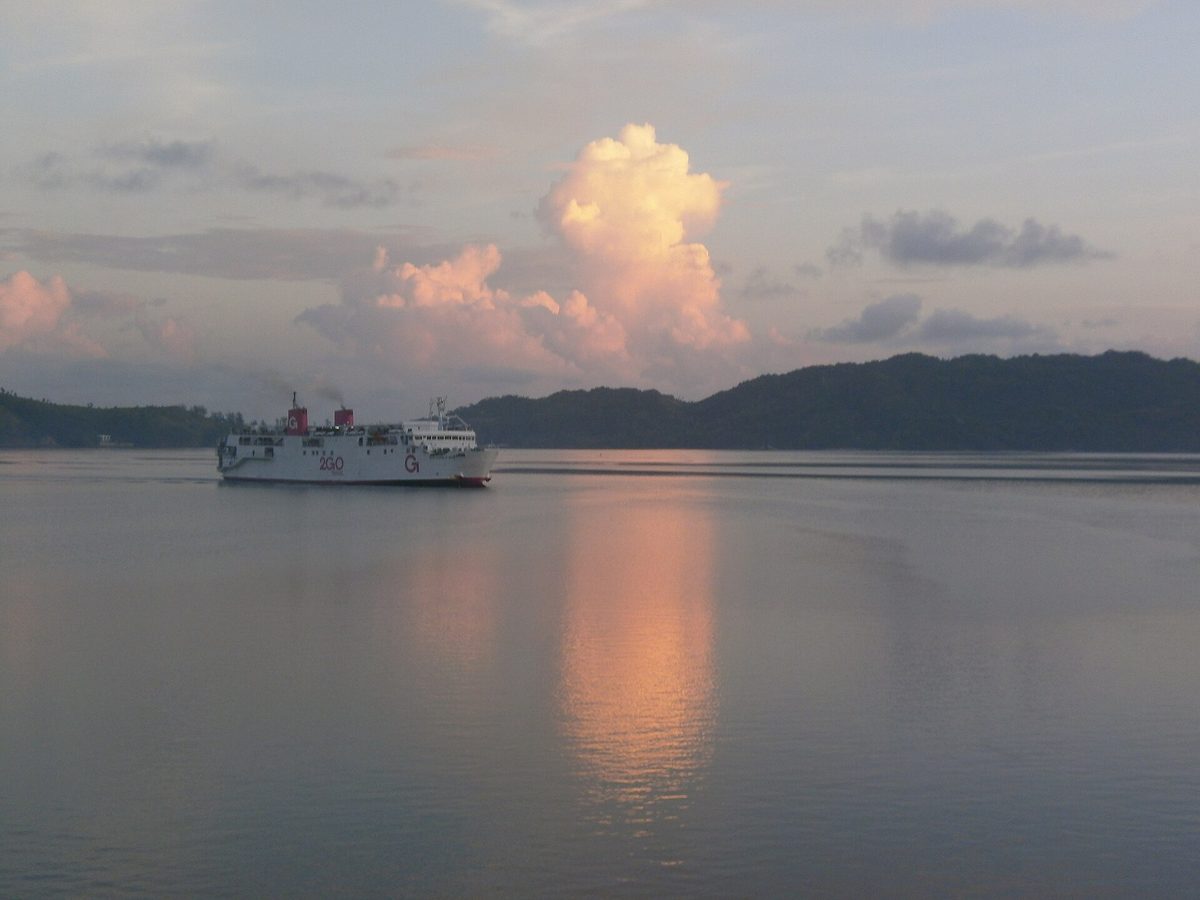
2GO is the big one, the operator behind the cruise-style ships that link Manila with Cebu, Coron, Puerto Princesa, Cagayan de Oro and more. These are proper vessels with restaurants, karaoke, a chapel, and hundreds of berths. They run on multi-day or overnight schedules, often just once or twice a week per route. If you’ve pictured a Philippines ferry as a floating hotel that sails while you sleep, that’s 2GO. Book at 2goticket.ph or 2goonlinebooking.ph, or through 12go.asia.
What 2GO does best is distance and cargo. A single ship can carry well over a thousand passengers plus vehicles and freight, which is why these routes survive even where flights exist: they move people and their boxes affordably across the archipelago. The flip side is frequency. Many 2GO routes sail only once or twice a week, so a missed sailing can mean a multi-day wait. Check the calendar carefully and build your dates around the ship, not the other way around.
OceanJet: the Visayas fast craft
OceanJet is the workhorse of the central islands’ fast-craft routes. Its bread and butter is Cebu–Bohol (frequent departures), plus Cebu–Dumaguete–Siquijor, Cebu–Ormoc, and Bohol–Siquijor. These are air-conditioned, airline-style seated boats, not ships you sleep on. Book via 12go.asia or Barkota. One quirk worth knowing: OceanJet still wants a printed ticket at most terminals, so don’t count on flashing your phone.
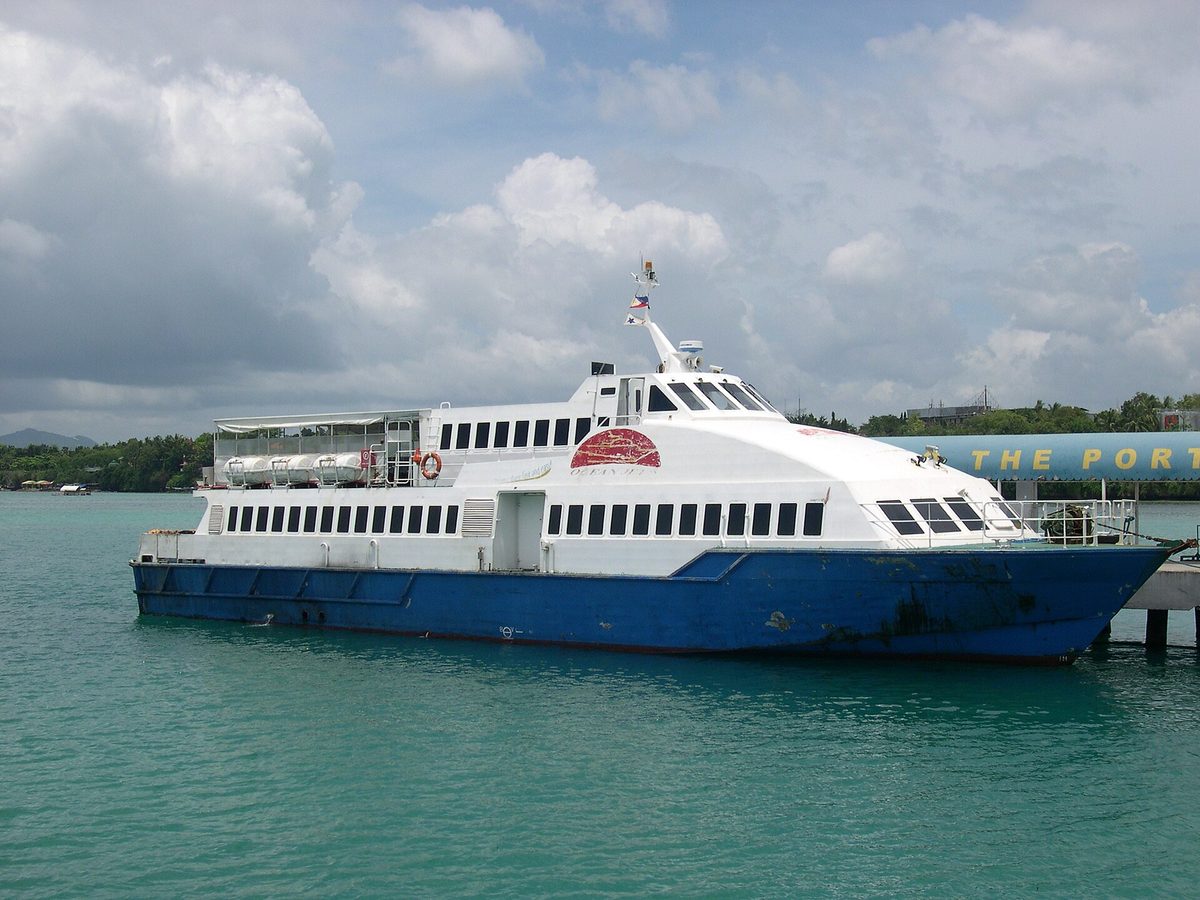
OceanJet also runs a fuel surcharge that it adjusts when global prices spike, so the fare you saw last year may have crept up. Treat the fares in my table as a guide and confirm the current price with OceanJet when you book. Capacity is the other thing to watch: on a Friday afternoon out of Cebu, the popular sailings genuinely fill, and showing up ticketless can mean waiting for the next boat.
Montenegro, FastCat, and the regional players
Beyond the big two, a handful of operators fill in the map. Montenegro Lines runs RoRo (roll-on, roll-off) ferries and fast craft, strong on Batangas–Mindoro and the El Nido–Coron crossing. FastCat and Starlite are RoRo specialists, the ones to use if you’re bringing a car or motorbike. Jomalia and Atienza Interisland Ferries handle Palawan’s Coron–El Nido and Manila–Coron RoRo runs. SuperCat, Lite Ferries and Cokaliong round out the Visayas. Most of these are reliable for their niche; the trick is matching the operator to the route rather than loyalty to a brand.
How to book a ferry in the Philippines
You have three realistic options in 2026, and the right one depends on the route and how far ahead you’re planning.
Official operator sites. For 2GO, book direct at 2goticket.ph or 2goonlinebooking.ph. It’s the cleanest way to see real cabin availability and lock a specific class on a long-haul ship. OceanJet’s own schedule pages are useful for times, though its direct online checkout is clunkier than the aggregators.
Aggregators (12go.asia and Barkota). These are the go-to platforms for fast craft, and what most travelers actually use. 12go.asia covers nearly every operator with an English interface and card payments, handy if you’re booking from abroad before you land. Barkota is the local favorite, partnering with OceanJet, 2GO, Lite, TransAsia and others, with GCash and GrabPay built in. One caveat I’ll be honest about: I’ve seen reports of third-party bookings getting cancelled close to departure with poor communication, so for a time-critical connection, book a little early and keep the operator’s contact handy.
Buy at the port. For short, frequent hops, this still works fine. Dumaguete–Siquijor, the Caticlan–Boracay pumpboat, and many small bangka and fast-craft routes are genuinely walk-up. The exceptions are holidays, long weekends, and festival dates (Sinulog in January, Holy Week), when even reliable routes sell out. In peak season, book ahead; in the quiet months, the port counter is liberating.
A practical hybrid that works well: use 12go.asia or Barkota to confirm the times and rough fare before you travel, then decide whether to pre-pay or just turn up. For a Tuesday-morning Cebu–Bohol hop in the rainy season, walking up is fine and gives you flexibility. For a Saturday in December, or any sailing you absolutely must make, pre-book. The cost of a pre-booked seat is trivial against the cost of a lost day.
Ferry classes and what to expect onboard
Comfort splits cleanly by ferry type, so I’ll handle them separately.
On a 2GO overnight ship
2GO sells a ladder of accommodation, roughly from cheapest to priciest: Super Value and Mega Value (open-plan rows of bunk beds in a shared hall), Tourist Class (air-conditioned, more comfortable bunks), Cabin Class (an enclosed room with beds), and at the top Stateroom and Suite (private rooms, sometimes with an en-suite bath). My honest take: Super Value is fine for one short overnight if you’re on a budget and travel light, but it’s a noisy, bright, communal experience. For anything 13 hours or longer, paying up to a cabin transforms the trip from “endured” to “actually rather pleasant.” There’s a galley serving Filipino meals, plenty of deck space, and outlets are scarce, so bring a power bank.
On an OceanJet or fast craft
Fast craft keep it simple with two or three tiers: Open-Air or Economy (cheapest, sometimes on the open rear deck), Tourist (air-conditioned seated cabin, where most people sit), and Business (roomier reclining seats, priority boarding). On a two-hour run like Cebu–Bohol the difference between Tourist and Business is marginal comfort for a noticeable price jump, so I usually stick with Tourist. The aircon runs cold; a light layer is not optional. Note that fast-craft tickets are typically non-refundable and name-matched to your ID, so book with the right spelling.
A word on the overnight experience itself. Expect a Super Value berth on an overnight 2GO to be communal, with the bunks close together. It’s safe and perfectly doable, but it’s closer to a crowded sleeper train than a hotel. If you sleep lightly, an eye mask and earplugs are worth more than any upgrade. Wi-Fi onboard is unreliable to nonexistent once you’re at sea, so download what you need first, and mobile signal drops out across open water on the longer crossings. Bring entertainment, water, and enough cash for the galley.
The routes travelers actually take
A few crossings come up again and again. Here’s how I’d approach the big ones.
Cebu to Bohol is the classic Visayas hop and the easiest ferry decision you’ll make: OceanJet from Cebu Pier 1 to Tagbilaran, about two hours; check OceanJet’s current timetable for departures. Book a morning slot for calmer water. Our dedicated Cebu to Bohol ferry guide walks the schedule in detail.
Visayas island-chaining is where fast craft shine. Cebu–Bohol–Siquijor–Dumaguete loops connect with a single operator on most legs, making OceanJet a genuine island hopping tool rather than just transport. Build in buffer time at each connection port; the boats don’t wait for each other.
Reaching Boracay by sea means Batangas–Caticlan on a 2GO or Starlite ship (2GO’s listed overnight sailing takes about 11 hours), then the short boat across to the island. It’s the budget route, but for most travelers a flight of about an hour wins; see our full getting to Boracay guide before you commit to the boat.
Palawan is the long-haul frontier. The Manila–Coron 2GO sails once a week, Friday evening to Saturday morning (about 13 hours overnight), and within Palawan the El Nido to Coron fast craft (check the operator’s current schedule) is the scenic link between the region’s two headline towns. If you’re basing yourself in the north, Coron makes the better hub for onward boats and dive trips.
A note on the two ferry worlds. It’s worth internalizing the regional divide because it shapes how you plan. In the Visayas, the islands sit close together and the fast-craft network is dense, so you can string together Cebu, Bohol, Siquijor, Negros and Leyte almost like a bus map, booking day-of in the quiet months. Toward Palawan and the long Manila links, the distances are large and the boats are few, so those legs need real planning, fixed dates, and a willingness to consider flying. Don’t apply Visayas spontaneity to a Manila–Coron crossing that sails once a week.
Manila to Cebu and the south is the spine of the 2GO long-haul network, roughly a day at sea but a genuine slice of Philippine life if you have the time and want the experience. From Cebu, the same ships and their fast-craft cousins fan out to Cagayan de Oro, Ozamiz and other Mindanao ports, which is how many Filipinos travel home for the holidays. As a visitor you’ll rarely need these, but they’re there, and they’re affordable, if a multi-day sea voyage appeals more than another airport.
Fly or ferry? My honest calls
This is the section competitors skip, because it doesn’t sell ferry tickets. But it’s the most useful thing I can tell you.
Take the ferry when the crossing is short and frequent (anything in the Visayas under three hours), when there’s no sensible flight (Dumaguete–Siquijor, El Nido–Coron), when you’re moving a vehicle, or when the journey is the point. A morning fast craft between islands is faster, door to door, than any flight once you count airport time.
Fly instead on the long hauls. Manila–Cebu is roughly a full day at sea (about 22–23 hours on 2GO’s schedule), while a flight takes a fraction of that time. Manila–Coron and Manila–Boracay are the same story: the overnight ship is an adventure, but if your holiday is short, a cheap domestic flight buys you a whole extra day on the beach. The overnight Batangas–Caticlan run in particular is rough across the open Sibuyan Sea; I’d fly that one unless cost is the deciding factor.
My rule of thumb: ferries for the inter-island texture of a trip, flights to cover the big distances. Mixing both is how locals actually travel.
One honest exception runs the other way. When typhoons or seat-sale chaos snarl the airports, a long-haul 2GO can be the calmer, more dependable option, because a big ship rides moderate weather better than a small turboprop and isn’t subject to the airport congestion that plagues Manila. It’s rare, but if flights are in meltdown and the seas are merely choppy rather than dangerous, the overnight ship can quietly save your itinerary.
Safety, weather, and why you need a buffer day
The single most important thing to understand about Philippine ferries: the schedule bows to the weather, every time. When the Philippine Coast Guard (PCG) issues a no-sail order ahead of a storm, every passenger ship in the affected area is grounded automatically, no matter what your ticket says. During a single typhoon it’s normal for thousands of travelers to be stranded across dozens of seaports.
Typhoon season runs roughly June to November, peaking around the later months. If you’re traveling then and a ferry leg is critical for catching an international flight home, build in a buffer day, or fly that connection. UK government travel advice warns about the safety of sea travel, overcrowded boats and storms, so skip any boat that looks overloaded or is sailing against a weather warning. Maritime safety is overseen by the PCG and the Maritime Industry Authority (MARINA), which licenses operators. Check the operator’s social media and PCG advisories the night before you sail, and don’t gamble a flight home on a fair-weather ferry.
Two more weather realities worth planning around. First, the habagat (southwest monsoon, roughly June to September) can churn up seas even without a named storm, so the open crossings, like Batangas–Caticlan over the Sibuyan Sea, get genuinely uncomfortable in those months regardless of the forecast. Second, when a no-sail order lifts, there’s a backlog: every stranded passenger tries to rebook at once, and the first sailings fill instantly. If you’ve been weathered in, get to the port early and expect a scrum. None of this should scare you off, sea travel here is routine and the safety system is conservative for good reason, but it rewards travelers who keep their plans flexible and never cut their connection to an international flight too fine.
Ports, boarding, and on-the-day tips
A few habits make port days painless:
Arrive early. For a 2GO long-haul, the operator advises arriving at the terminal 3–4 hours early; for fast craft, check your operator’s advised arrival time when you book. Ports run on their own clock.
Carry your ID and cash. Your name must match your ticket exactly, and most terminals levy a small terminal fee (and sometimes an environmental fee) paid in cash at the port, separate from your fare. The Caticlan jetty for Boracay, for instance, adds a terminal plus environmental fee on top of the bangka ticket.
Know your pier. Big cities have multiple terminals: 2GO lists its Manila port as Pier 4, Collectors Road, Tondo, and OceanJet sails from Cebu’s Pier 1. Confirm the pier on your booking, not from memory.
Pack for the aircon and the sea. A light jacket, a power bank, motion-sickness tablets if you’re prone, and snacks. Choosing a larger vessel and a seat near the centerline helps if rough water bothers you.
Mind the baggage rules. Fast craft are stricter than you’d expect: oversized bags get charged a small handling fee, and on open-air tickets you may pay for luggage handling outright. Long-haul 2GO ships are far more generous with what you can bring, which is part of why Filipinos use them to move large boxes (balikbayan boxes) between islands. If you’re hauling dive gear or a lot of luggage, the overnight ship suddenly looks more attractive than a budget flight with punishing excess-bag fees.
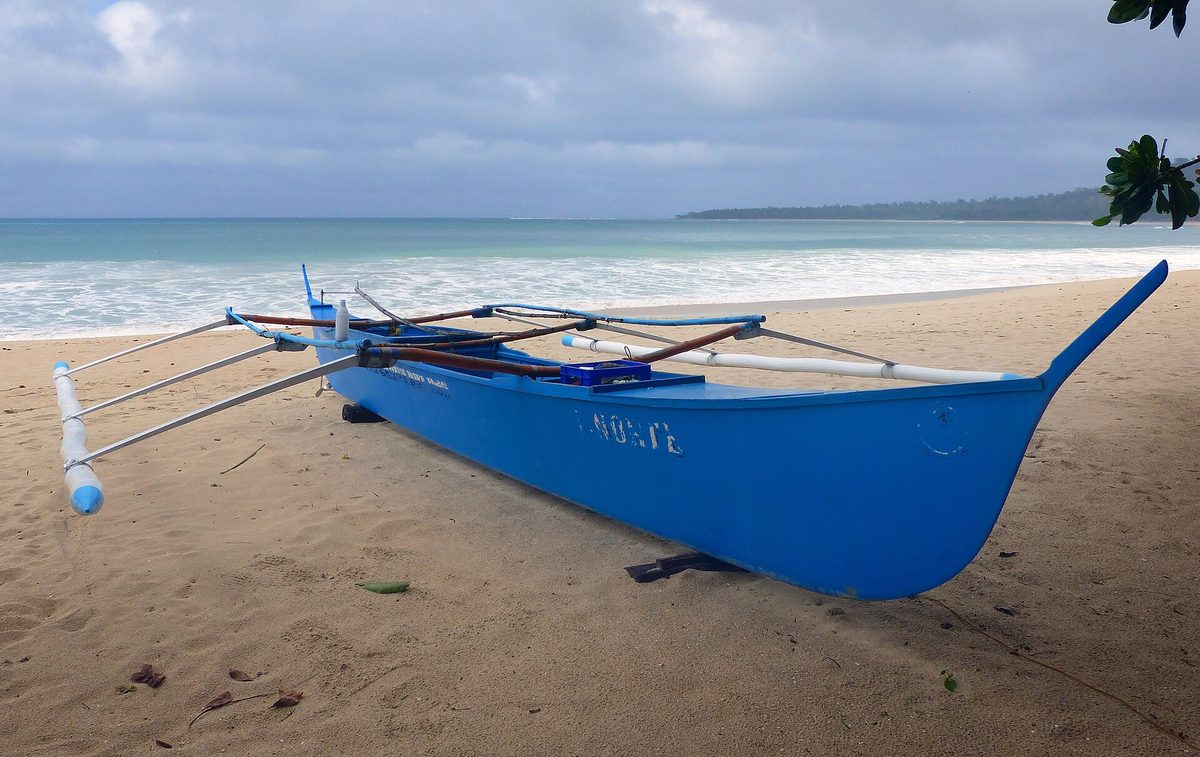
Have a backup for the small stuff. On the tiniest routes, the “ferry” is an open wooden outrigger (a bangka), and these are weather-sensitive and cash-only. They’re a wonderful, breezy way to reach a small island, but they can be cancelled when the wind picks up, so never make one the last link before a flight.
Frequently asked questions
How do I book a 2GO ferry online?
Book directly at 2goticket.ph or 2goonlinebooking.ph, where you can compare schedules, pick your cabin class, and pay by card for an e-ticket. You can also book 2GO through 12go.asia or Barkota. For long-haul routes that run only once or twice a week, reserve well ahead, especially around holidays when cabins sell out fast.
What is the OceanJet schedule for Cebu to Bohol?
OceanJet runs Cebu–Tagbilaran several times a day from Cebu Pier 1; the crossing takes about two hours. Exact times shift with demand and season, so check OceanJet’s daily schedule or your aggregator on the day. Morning sailings generally get the calmest seas.
Is ferry booking in the Philippines safe and reliable?
Booking through official operator sites, 12go.asia, or Barkota is reliable for the major fast-craft and long-haul routes. The real variable is weather: trips are cancelled outright under Coast Guard no-sail orders during storms. For short, frequent hops you can usually buy at the port, but in peak season and on holidays, booking ahead is safer.
Which is better, the ferry or flying within the Philippines?
For short inter-island hops in the Visayas (under about three hours) the ferry is faster door-to-door and cheaper. For long distances like Manila to Cebu, Coron, or Boracay, flying wins easily; a 90-minute flight beats a 13-to-23-hour ship, and budget fares often match a ferry cabin. Locals mix both depending on the leg.
Do Philippine ferries run during typhoon season?
They run, but cancellations are common from June to November. When the Coast Guard issues a no-sail order, all passenger vessels in that area are grounded until conditions are deemed safe. If a ferry leg is essential for catching a flight home, add a buffer day or fly that connection instead, and check operator advisories the night before.
Can I bring a car or motorbike on a Philippine ferry?
Yes, on RoRo (roll-on, roll-off) ferries. Montenegro Lines, FastCat, and Starlite are the main vehicle-carrying operators on routes like Batangas–Mindoro and various Visayas crossings. Vehicle slots are limited, so reserve early, arrive with time to load, and bring your registration documents.
Sources and photo credits
Photo credits
Images are sourced from Wikimedia Commons under their respective Creative Commons or public-domain licenses. Full attribution accompanies each image in the media library.
Sources
- 2GO Travel official booking (2goticket.ph) — schedules, routes, and accommodation classes
- OceanJet official site — fast-craft routes, daily schedules, and 2026 fuel-surcharge fares
- Philippine News Agency and Philippine Coast Guard advisories — sea-travel suspensions and stranded-passenger reports
- Globe / NorthPort and Cebu Port Authority route references — port and operator listings
About this guide: PhilippinesTourism.org publishes independent, on-t