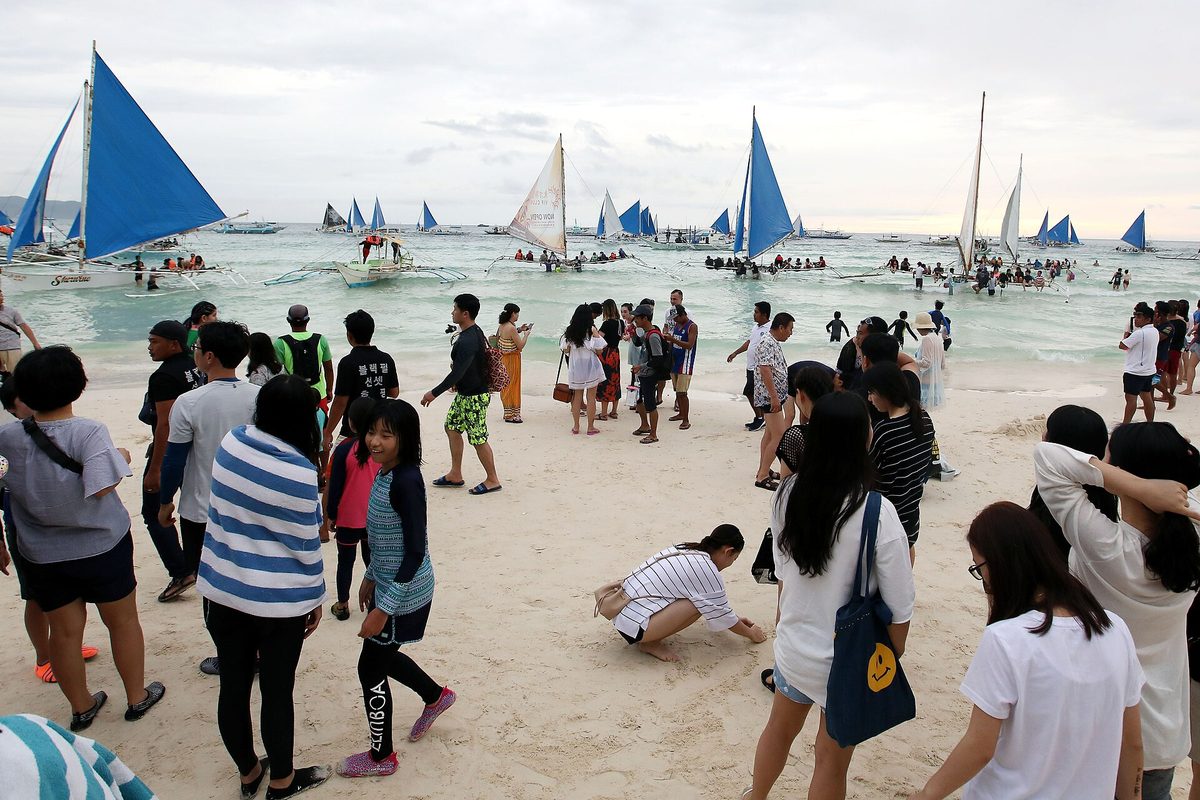
Philippines in December and January: Crowds and Christmas
December and January are when the Philippines hits its sunny, cool-dry best across the west and center, and the busiest, priciest stretch of the year. You get calm seas, low humidity, and the most heartfelt Christmas season on Earth, alongside packed flights and peak resort rates. Book early, dodge a couple of weather traps, and it is glorious.
I love this time of year here, and I also think most guides oversell it. They promise wall-to-wall sunshine and skip the parts that actually shape your trip: which islands stay gray, how brutal the Christmas booking crunch gets, and why January might suit you better than December. So here is the honest version, written in July 2026 for anyone planning the coming Dec 2026 / Jan 2027 season, with the festival dates I have verified for January 2027.
December vs January in the Philippines: at a glance
Both months sit inside the cool-dry amihan season, but they feel different on the ground. December is Christmas mania and the single most expensive fortnight of the year. January cools the prices a little and trades Christmas for a run of huge, joyous fiestas. Here is how I compare them.
| December | January | |
|---|---|---|
| Weather (west/central) | Cool, dry, sunny; calm western seas. Among the most pleasant weather all year. | Often the driest, coolest month; low humidity. Arguably peak conditions. |
| Weather (Pacific east) | Wetter and gray-ier: Siargao, Eastern Visayas, Bicol can be rainy. | Still the wet side for the east, though it can ease late in the month. |
| Crowds | High, then frantic Dec 20–Jan 2 as Filipinos travel home. | Busy, but calmer than the Christmas fortnight (spikes around festivals). |
| Prices | Peak. The Christmas–New Year window is the costliest of the year. | Still high, but the early-Jan dip after New Year is real. |
| Headline events | Simbang Gabi, Giant Lantern Festival, Noche Buena, New Year. | Black Nazarene, Ati-Atihan, Sinulog, Dinagyang. |
| Best for | Experiencing a Filipino Christmas; festive cities; beach time if you book early. | Festival-chasers; slightly easier logistics; classic island weather. |
Short version: come in December for the Christmas spirit and accept the crowds and cost; come in January for the best all-round island weather and the country’s most spectacular fiestas. Either way, this is not the season for spontaneity. For the full year in context, see our best time to visit the Philippines guide.
The weather in December and January: the cool-dry peak
From roughly December to February, the northeast monsoon, known locally as the amihan, settles over the country. For most travelers this is the good monsoon: it pushes in cooler, drier air, humidity drops, and the western and central seaboards turn calm and bright. Daytime highs sit around 86°F (30°C) on the coasts with nights near 77°F (25°C), and it genuinely feels fresher than the sticky habagat months. Up in the highlands, Baguio and Banaue can dip to 64–75°F (18–24°C), so pack a layer if you are heading north.
This is why Palawan, Boracay, Cebu, and Bohol show off in these months: flat seas for island-hopping, clear water for diving, and reliable sun. If your mental image of a Philippine beach trip is glassy turquoise water under blue sky, December and January on the western side is where you find it. Our Philippines weather by month breakdown has the regional detail if you want to fine-tune your route.
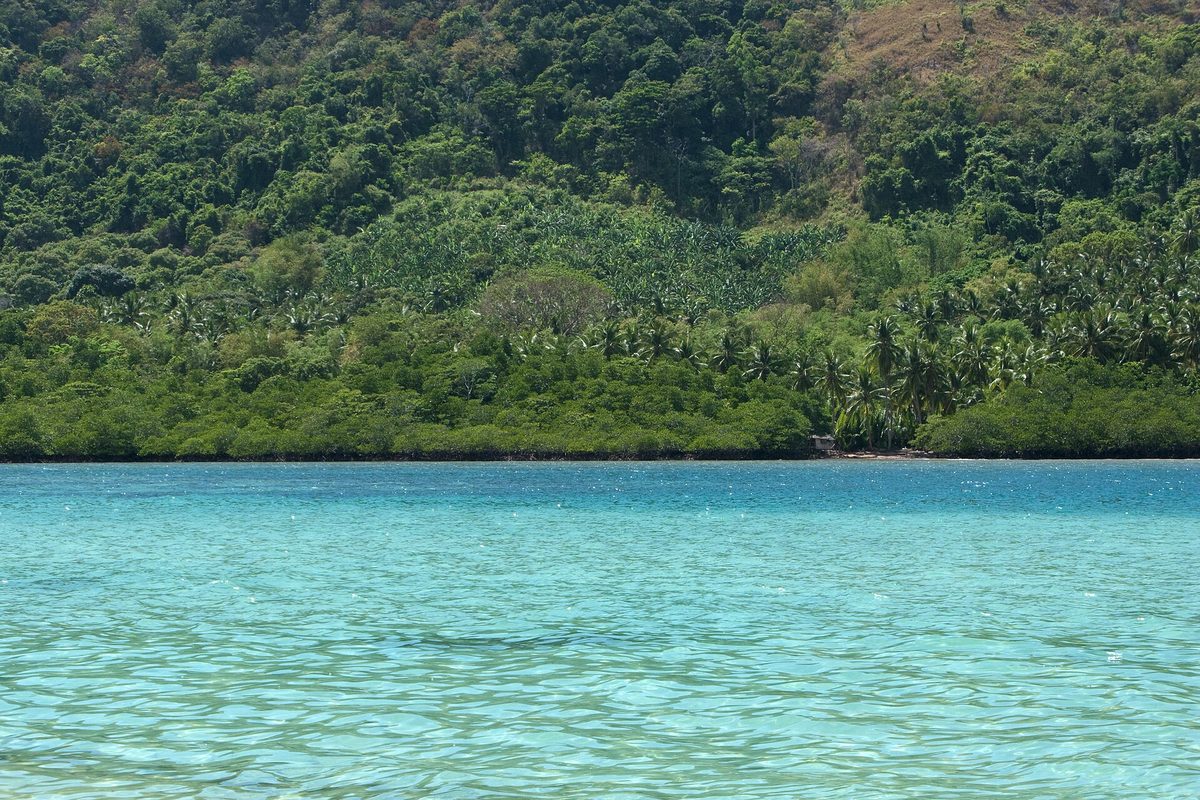
The Pacific-east rain exception (don’t get caught out)
Here is the part most December guides quietly skip. The same amihan that brings sunshine to the west picks up moisture over the Pacific and dumps it on the eastern seaboard. So while Palawan basks, the Pacific-facing east, Siargao, much of Eastern Visayas, Bicol, and eastern Mindanao, sits in its wetter, cloudier stretch. PAGASA forecasts during amihan routinely mention scattered rains and cloudy skies over Eastern Visayas, the Caraga region, and Bicol even as the rest of the country stays dry.
What this means in practice: do not book a December sun-and-sand week in Siargao expecting Boracay weather. Siargao can be gray and rainy in December and January, and while that swell is exactly why surfers turn up (the waves are often excellent), it is the wrong call if you came for tanning and flat-water island tours. If Siargao is on your list, read our best time to visit Siargao guide first so the season matches your plans. The fix is simple: in Dec–Jan, point sun-seekers west (Palawan, Boracay, Coron) and send surfers east.
What makes a Filipino Christmas special
The Philippines runs one of the longest, most wholehearted Christmas seasons anywhere. Locals only half-joke about the “-ber months”: carols start drifting through malls in September, and by December the whole country is decked out. Even if you are not religious, experiencing Christmas here is one of the most memorable things you can do in the islands, and it costs nothing to soak up.
Parol: the star lanterns
The signature decoration is the parol, a star-shaped lantern traditionally built from bamboo and translucent paper, glowing in windows, on jeepneys, and strung across whole streets. The star nods to the Star of Bethlehem, and by mid-December they are everywhere. It is the single most photogenic emblem of a Philippine Christmas, and I never tire of them.
The Giant Lantern Festival, San Fernando
Parol culture hits its peak at the Giant Lantern Festival (Ligligan Parul) in San Fernando, Pampanga, which has earned the city its “Christmas Capital of the Philippines” nickname. These are not tabletop lanterns: rival villages build spinning, electrified discs up to about 20 feet across, choreographed to music, blazing with thousands of bulbs. The marquee competition night falls in mid-to-late December (around the third week), with displays running through the holidays. If you are in or near Manila in December, it is an easy and spectacular day trip north.

Simbang Gabi and Noche Buena
The devotional heart of the season is Simbang Gabi (also called Misa de Gallo): a series of nine dawn Masses from December 16 to 24, many starting around 4am. Folk tradition says complete all nine and a wish is granted. Even as a visitor you will feel it, churches glowing before sunrise and the smell of bibingka and puto bumbong (warm rice cakes) from stalls outside. Then on Christmas Eve comes Noche Buena, the big midnight family feast after Mass, with lechon, ham, queso de bola, and far too much food. December 25 itself is quiet and family-focused, so expect many shops and offices to close.
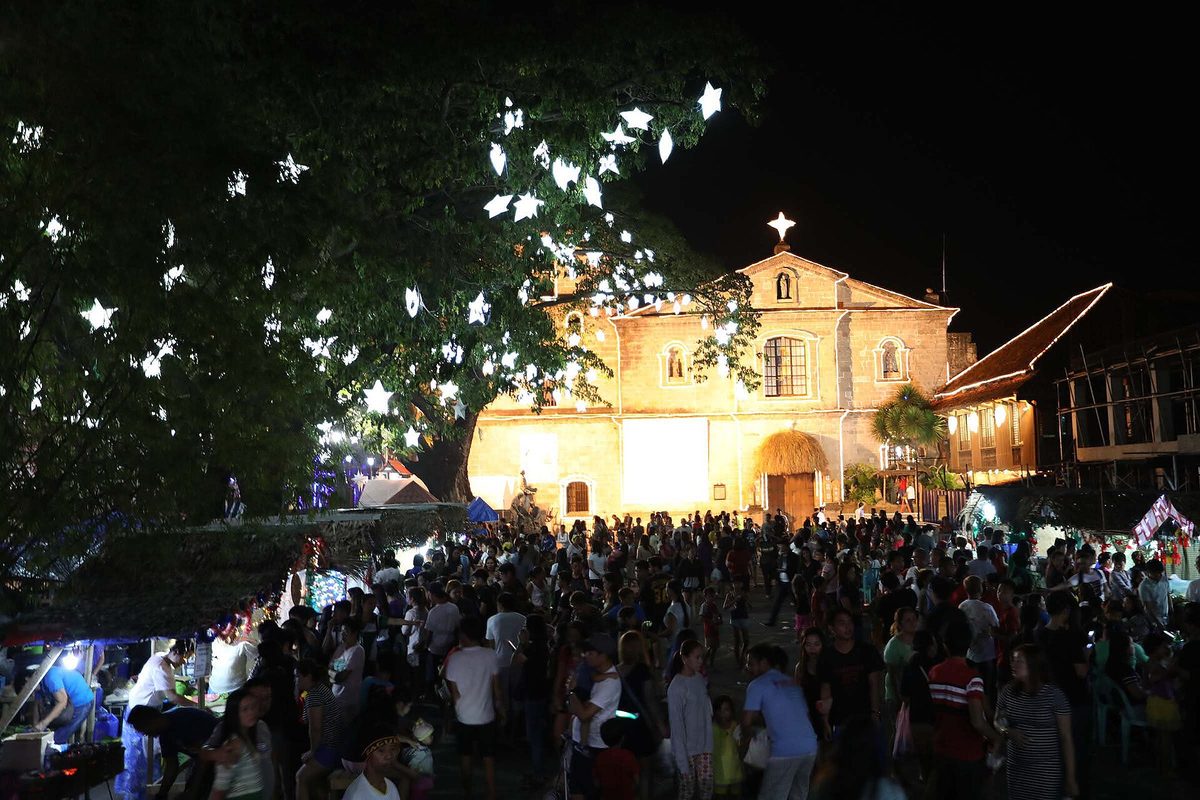
Two more things make the season feel distinctly Filipino. One is caroling: groups of kids go door to door from early December, often armed with homemade instruments (tambourines fashioned from flattened bottle caps are a classic), singing for small change and a cheery “thank you, no money, no honey” when you do not tip. The other is the food, which is half the point. Beyond the Noche Buena lechon and ham, look out for bibingka and puto bumbong (the purple sticky-rice tube cake) sold near churches after dawn Mass, queso de bola (a waxed ball of Edam cheese that appears on every holiday table), and tsokolate, thick hot chocolate whisked from tablea. If a Filipino friend or host invites you to a Noche Buena spread, say yes; it is one of the warmest welcomes you will get anywhere.
New Year in the Philippines
Filipinos see in the New Year loudly. Families gather for Media Noche, a second midnight feast, and the night explodes with fireworks and a wall of noise, the racket is traditionally meant to drive off bad luck. Round shapes are everywhere for prosperity: polka dots, coins in pockets, and a spread of round fruits on the table. Cities like Manila and Cebu put on serious pyrotechnics, with Bonifacio Global City and the Mall of Asia bayfront among the big draws. A safety note worth taking seriously: backyard firecracker injuries spike every year, so enjoy the organized displays and keep your distance from amateur fireworks.
January festivals: the Sto. Niño season (with 2027 dates)
If December belongs to Christmas, January belongs to the fiestas, and they are among the best reasons to visit the Philippines in the whole year. A cluster of enormous festivals, several honoring the Santo Niño (Holy Child), turns whole cities into days-long street parties. They also pull big domestic crowds, so plan transport and rooms well ahead. Here are the headline 2027 dates I have verified; always reconfirm closer to the time.
| Festival | Where | 2027 date | What it is |
|---|---|---|---|
| Feast of the Black Nazarene | Quiapo, Manila | Jan 9, 2027 | A massive, intensely devout procession; millions join the Traslación. |
| Ati-Atihan | Kalibo, Aklan | Third weekend (~Jan 15–17) | The “mother of Philippine festivals”: soot-painted revelers, tribal drumming, days of dancing. |
| Sinulog | Cebu City | Jan 17, 2027 (third Sunday) | The country’s grandest fiesta, a huge grand parade of dancers honoring the Santo Niño. |
| Dinagyang | Iloilo City | Jan 24, 2027 (fourth Sunday) | Fierce, theatrical tribe competitions and street dancing for the Santo Niño. |
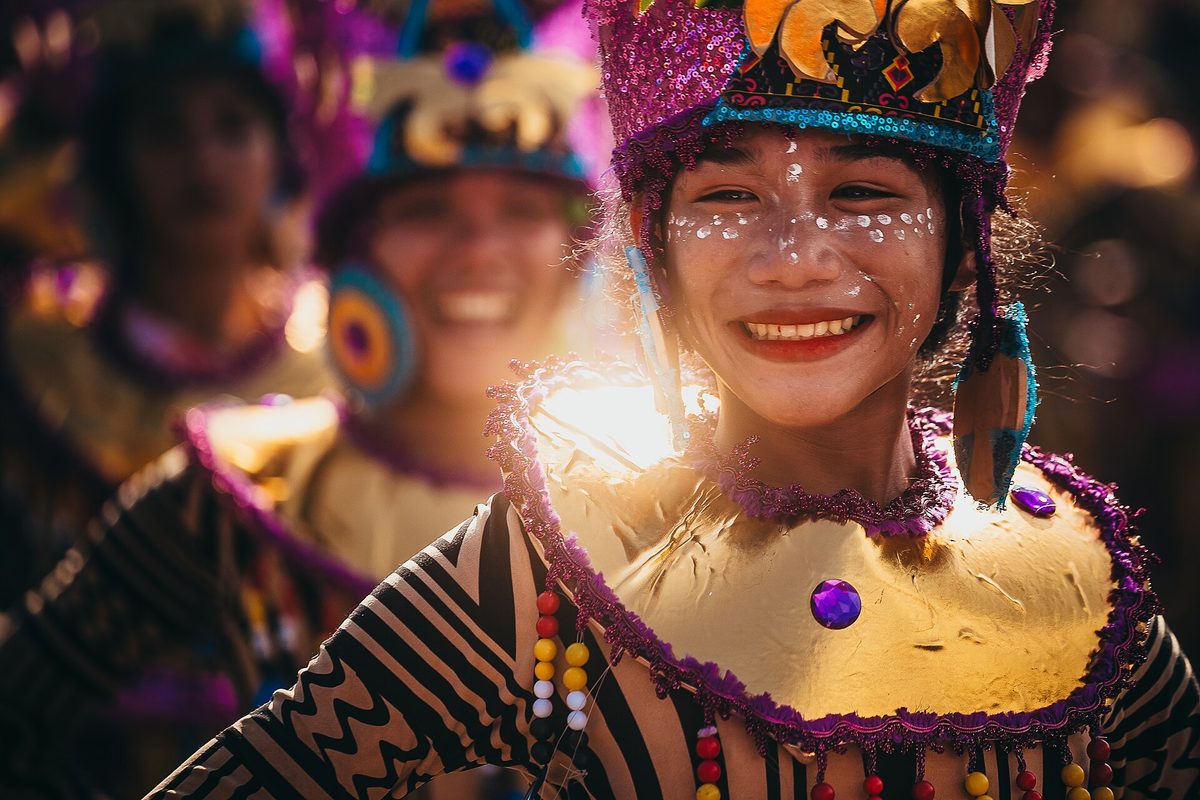
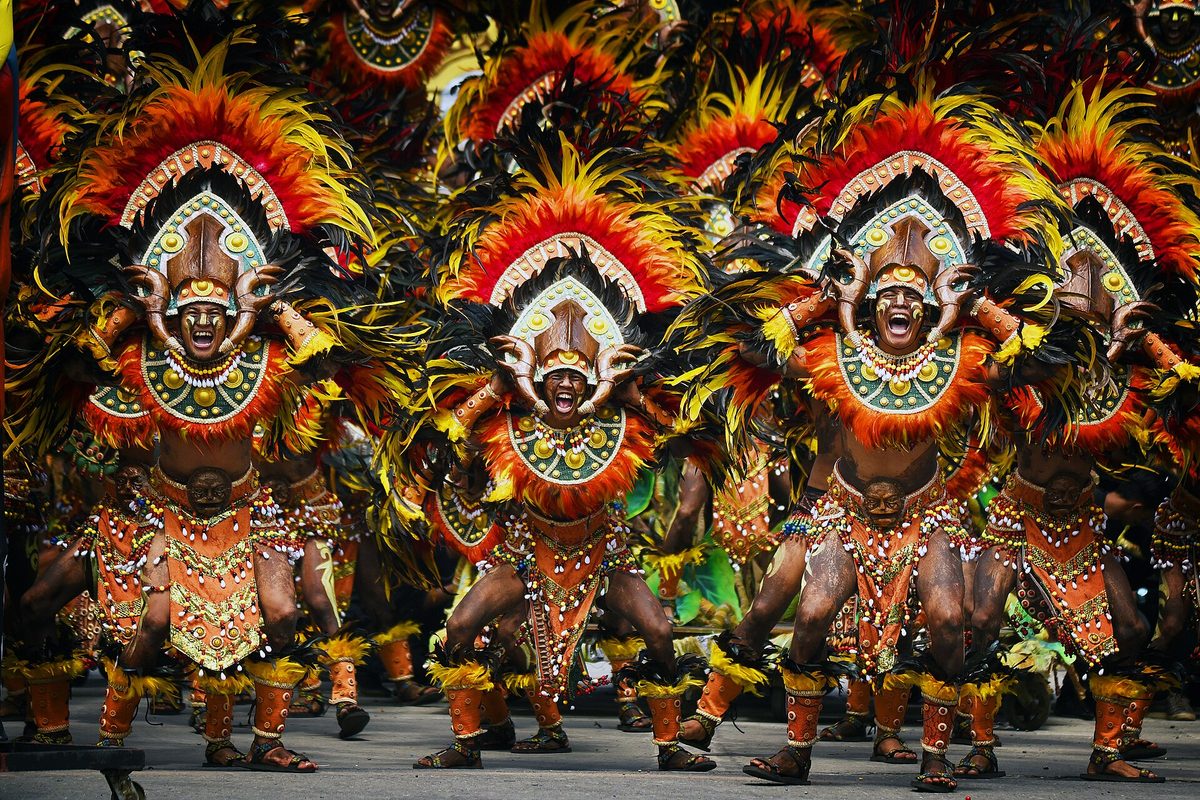
Sinulog in Cebu is the giant of the bunch. The third-Sunday grand parade draws crowds in the millions and turns the whole city into one rolling celebration of music, color, and the rhythmic two-steps-forward, one-step-back Sinulog dance. Ati-Atihan in Kalibo is the rowdy, soulful original, and it pairs beautifully with a Boracay add-on since they are close. Dinagyang in Iloilo is the most tightly choreographed, with rival “tribes” putting on jaw-dropping performances. And the Black Nazarene procession in Manila on January 9 is a different beast entirely, an overwhelming display of devotion that is moving to witness but genuinely crowded and physical at its core, so keep to the edges. For deeper coverage of all of these, see our Philippines festivals guide.
Crowds and prices: how to plan around the holiday spike
Now the honest money talk. December and January are peak season, and this is decidedly not the cheap time to visit. The crunch is sharpest in a specific window, roughly December 20 through the first week of January, when international tourists and millions of overseas Filipinos heading home compete for the same flights, hotels, and ferries at once. Domestic airfares and inter-island boats get genuinely packed and pricey around Christmas and New Year, and popular resort towns sell out.
A few things I would treat as non-negotiable for a Dec–Jan trip:
- Book early. For the Christmas–New Year fortnight, locking in flights and hotels four to six months out is normal, not paranoid. The best-value rooms go first.
- Pre-book inter-island transport. Domestic flights and ferries around the holidays fill up. Reserve seats rather than gambling on same-day tickets.
- Mind the festival cities. Cebu for Sinulog, Kalibo for Ati-Atihan, and Iloilo for Dinagyang see room rates jump and sell out far ahead. If you are not there for the festival, consider visiting those cities on different dates.
- Use the early-January dip. Once the New Year passes, prices and crowds ease noticeably (outside festival hotspots). The first couple of weeks of January, post-holiday, can be a sweet spot for the same great weather at slightly saner rates.
Roughly speaking, expect to pay a clear premium over the low and shoulder seasons, and budget accordingly (at the time of writing, around 58 PHP to 1 USD, but check the current rate). If keeping costs down is your priority, this is the wrong season, and our cheapest time to visit the Philippines guide lays out the genuinely budget-friendly months instead.
Getting around, holidays, and what to pack
A couple of practical realities shape a Dec–Jan trip beyond just booking early. First, the public-holiday calendar: December 25, December 30 (Rizal Day), December 31, and January 1 are official holidays, and the days around them go sleepy. Smaller shops, some restaurants, and many offices close on Christmas Day and New Year’s Day, and city traffic thins out as residents head home or to the provinces. Tourist areas and malls largely keep running, but do not count on a specific small eatery or local tour operator being open on the 25th or the 1st, confirm in advance.
Second, domestic transport. The Philippines is an archipelago, so most itineraries hop between islands by plane or ferry, and in this season those links are the bottleneck. Cebu Pacific and Philippine Airlines routes to Palawan, Boracay (via Caticlan), Cebu, and Siargao sell out and spike in price around the holidays. Reserve internal flights at the same time you book your international ticket, not after you arrive. If you are connecting to Boracay, remember the extra steps: fly into Caticlan (or Kalibo), then a short van and boat transfer, all of which get busy. Build in buffer time, because holiday airport queues at check-in, security, and immigration run long.
As for what to pack: this is the gentlest weather of the year, so lightweight, breathable clothing, swimwear, sun protection, and a light rain layer cover most of it. Two additions matter for these months specifically. Bring something warm, a fleece or light jacket, if you are visiting Baguio, Banaue, or anywhere in the Cordillera highlands, where December nights get genuinely chilly. And pack modest clothing (covered shoulders and knees) if you plan to attend Simbang Gabi, the Black Nazarene, or any church service, since these are real acts of worship, not just spectacles.
Where to go in December and January (and where to skip)
Because the weather splits east versus west, where you go matters more than usual this season.
Go west and central for sun. Palawan, El Nido, and Coron are at their dreamy best, calm seas, clear lagoons, prime island-hopping. Boracay delivers postcard White Beach weather (and buzzes hard over the holidays). Cebu and Bohol give you reliable sun plus, in Cebu’s case, front-row seats for Sinulog. These are the safe bets for a sunshine trip.
Be cautious with the Pacific east. Siargao, the Eastern Visayas (think parts of Samar and Leyte), and Bicol’s Pacific side are in their wetter months. Go to Siargao if you are chasing surf; think twice if you want guaranteed beach sun. It is not that these places are washed out, it is that you are rolling the dice on gray days when the west is a near-sure thing.
Consider the highlands for Christmas atmosphere. Baguio gets cool and cozy in December and leans into the festive mood, a nice change of pace from the beach if you want to feel the season.
December vs January: which is better for you?
I get asked this constantly, and the honest answer is that it depends on what you are chasing. December wins if you want to live a Filipino Christmas: the parol-lit streets, Simbang Gabi at dawn, the Giant Lantern Festival, the family warmth of it all. The trade-off is peak prices and that frantic late-December scramble.
January wins on logistics and, arguably, weather: it is often the driest, coolest month, the post-New-Year dip takes a little heat off prices, and you get the spectacular Sto. Niño fiestas. If I had to send a first-timer who mainly wants great island weather and one unforgettable festival, I would lean January (built around Sinulog or Ati-Atihan). If the magic of Christmas is the point, it has to be December.
Best for each type of traveler
- Beach and island lovers: Either month, but stay west, Palawan, Boracay, Coron. January edges it for the driest conditions.
- Culture and festival seekers: December for Christmas traditions and lanterns; January for Sinulog, Ati-Atihan, and Dinagyang. Honestly, a late-Dec-into-Jan trip catches both.
- Surfers: Head east. December and January bring swell to Siargao, just expect changeable, often cloudy skies.
- Families: January after the holidays is calmer and easier on logistics; the festivals are a thrill for kids if you manage the crowds.
- Budget travelers: This is the splurge season. Early January is the least-bad value; otherwise consider a different time of year.
- First-timers: January, anchored on one big festival and a western beach, is the most reliable introduction to the country.
The verdict: should you visit the Philippines in December?
This is the country at its most beautiful and most festive, and also its most crowded and expensive. For sun on the western islands, you can hardly do better than the cool-dry amihan months, and a Filipino Christmas or a January fiesta is the kind of travel memory that sticks for life. Just go in with eyes open: book early, send sun-seekers west and surfers east, and brace for peak-season prices. Do that, and December and January reward you richly.
FAQ: visiting in December and January
Is December a good time to visit the Philippines?
Yes, for most of the country. December falls in the cool-dry amihan season, so the western and central islands (Palawan, Boracay, Cebu) enjoy sunny days and calm seas. The catches are peak prices and heavy crowds, especially around Christmas and New Year, plus a wetter Pacific east. Book well ahead and it is one of the best months to come.
Is it rainy in December and January in the islands?
It depends where you are. The west and center are dry and sunny, that is the whole appeal of these months. But the Pacific-facing east (Siargao, Eastern Visayas, Bicol) sits in its wetter stretch, with cloudier, rainier days driven by the amihan. Plan your destinations around that split and you will largely stay dry.
How crowded and expensive is the Christmas and New Year period?
Very. The fortnight from about December 20 to early January is the busiest and priciest of the year, as international visitors and millions of returning overseas Filipinos book flights, hotels, and ferries at the same time. Reserve four to six months ahead, and expect domestic flights and inter-island boats to be packed and costly.
What festivals happen in January in the Philippines?
January is fiesta season. The big ones in 2027 are the Feast of the Black Nazarene in Manila (Jan 9), Ati-Atihan in Kalibo (third weekend, around Jan 15–17), Sinulog in Cebu (Jan 17), and Dinagyang in Iloilo (Jan 24). They draw huge domestic crowds, so book transport and rooms early and reconfirm dates before you travel.
Should I visit in December or January?
Choose December if living a Filipino Christmas, parol, Simbang Gabi, the Giant Lantern Festival, is the goal. Choose January for arguably the best island weather, slightly easier post-holiday logistics, and the spectacular Sto. Niño festivals. A trip spanning late December into January lets you experience both Christmas and a fiesta.
Where should I avoid for weather in December and January?
Avoid relying on the Pacific east for beach sun. Siargao, parts of Eastern Visayas, and Bicol’s eastern side are in their wetter months and can be gray. Siargao is still great for surfers chasing swell, but if you want guaranteed sunshine and flat seas, head west to Palawan, Boracay, or Coron instead.
Sources and photo credits
Photo credits
All images below are used under their stated licenses via Wikimedia Commons.
- Photo: Vyacheslav Argenberg / CC BY 4.0 via Wikimedia Commons — source
- Photo: Lokesh Ramachandra / CC BY-SA 4.0 via Wikimedia Commons — source
- Photo: Ramon FVelasquez / CC BY-SA 3.0 via Wikimedia Commons — source
- Photo: Government of the Philippines (CC0) via Wikimedia Commons — source
- Photo: Jumelito Capilot / CC BY-SA 4.0 via Wikimedia Commons — source
- Photo: Ranieljosecastaneda / CC BY-SA 4.0 via Wikimedia Commons — source
- Photo: Joey Razon for Philippine News Agency (CC0) via Wikimedia Commons — source
Sources
- PAGASA (Philippine Atmospheric, Geophysical and Astronomical Services Administration) — Climate of the Philippines and the amihan (northeast monsoon)
- Philippine Department of Tourism — official travel site
- Sinulog Festival, Cebu — background and schedule
- Christmas in the Philippines — Simbang Gabi, parol, and the long Christmas season
About this guide: PhilippinesTourism.org is an independent Philippines travel resource. Facts were verified July 2026; festival dates and prices change year to year, so confirm current details before you book.